Caring for a bonsai takes patience and dedication, yet many beginners still watch their trees slowly weaken despite good watering, pruning, and light. The missing piece is often a clear, consistent fertilizing plan that matches bonsai’s unique constraints in small, nutrient-poor pots.
Because bonsai live in shallow containers with limited soil, nutrients are quickly washed out by frequent watering and consumed by roots, so the tree cannot “forage” like a garden tree with deep roots. Mastering fertilization restores those nutrients in a controlled way, promoting vibrant foliage, strong roots, compact branching, and long-term health.
Why Bonsai Trees Need Regular Fertilization
In nature, full-sized trees pull nutrients from deep, rich soil that is constantly renewed by decaying organic matter and microbial life. Bonsai, by contrast, are usually grown in open, fast-draining mixes (akadama, pumice, lava, bark) that contain few long-term nutrients but are ideal for root health and watering control.
Every thorough watering leaches out soluble nutrients, so without feeding, even robust trees slowly starve, which shows up first in leaf color and growth vigor. Regular fertilization replaces what water and root activity remove, keeping the tree strong enough to tolerate pruning, wiring, repotting, and environmental stress.
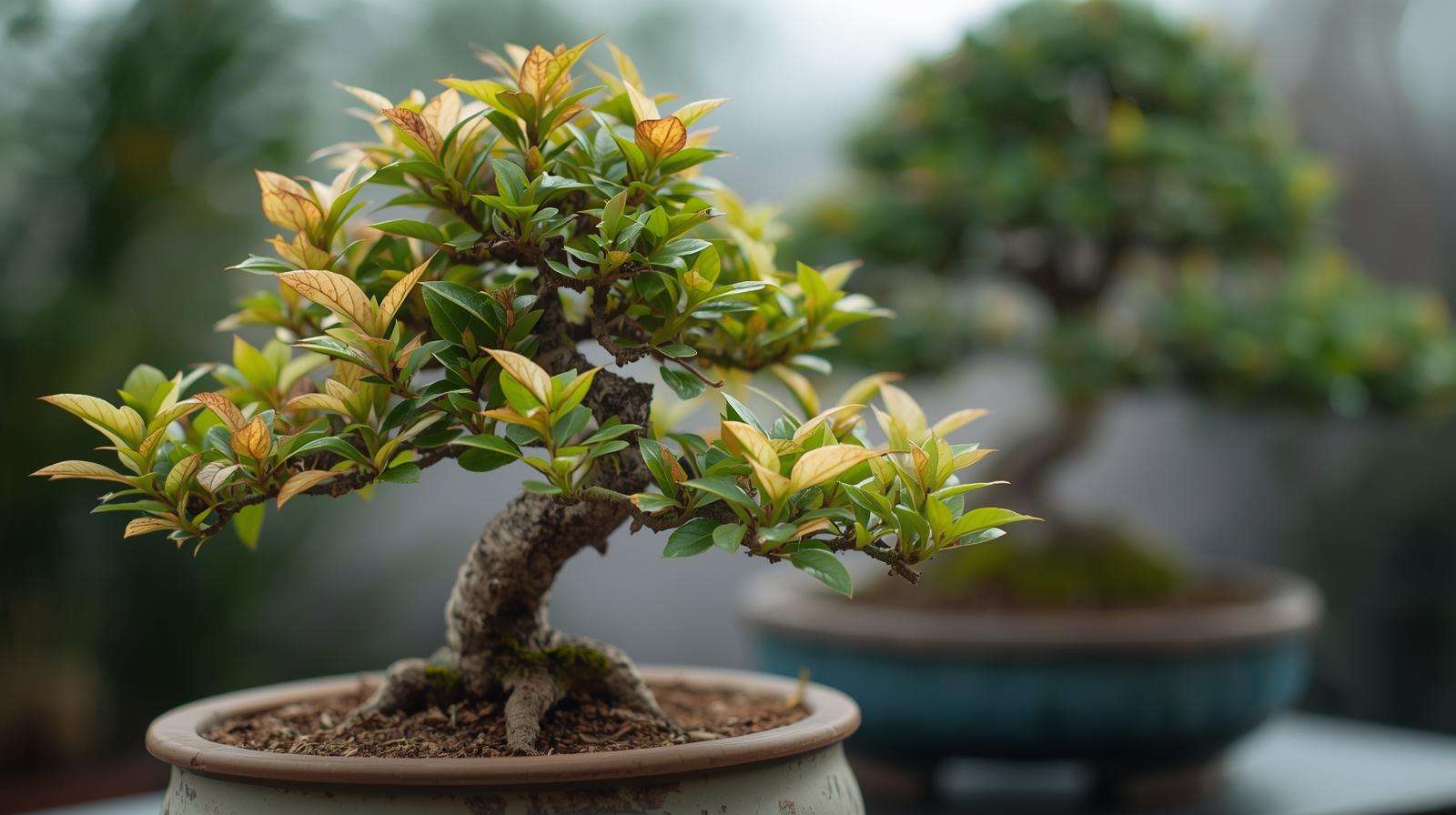
Common Signs of Nutrient Deficiency
-
Yellowing leaves (chlorosis), especially between veins or at tips.
-
Weak, stunted new shoots, often pale and thin.
-
Poor back-budding and slow recovery after pruning or wiring.
-
Higher susceptibility to pests and diseases.
-
In advanced cases, branch dieback or leaf drop.
Benefits of Proper Fertilization
-
Denser, richer-colored foliage that improves overall appearance.
-
Stronger, finer root systems that anchor the tree and boost water uptake.
-
Better ramification and shorter internodes, which create a refined silhouette.
-
Greater resilience to pests, disease, and weather extremes, extending the tree’s lifespan.
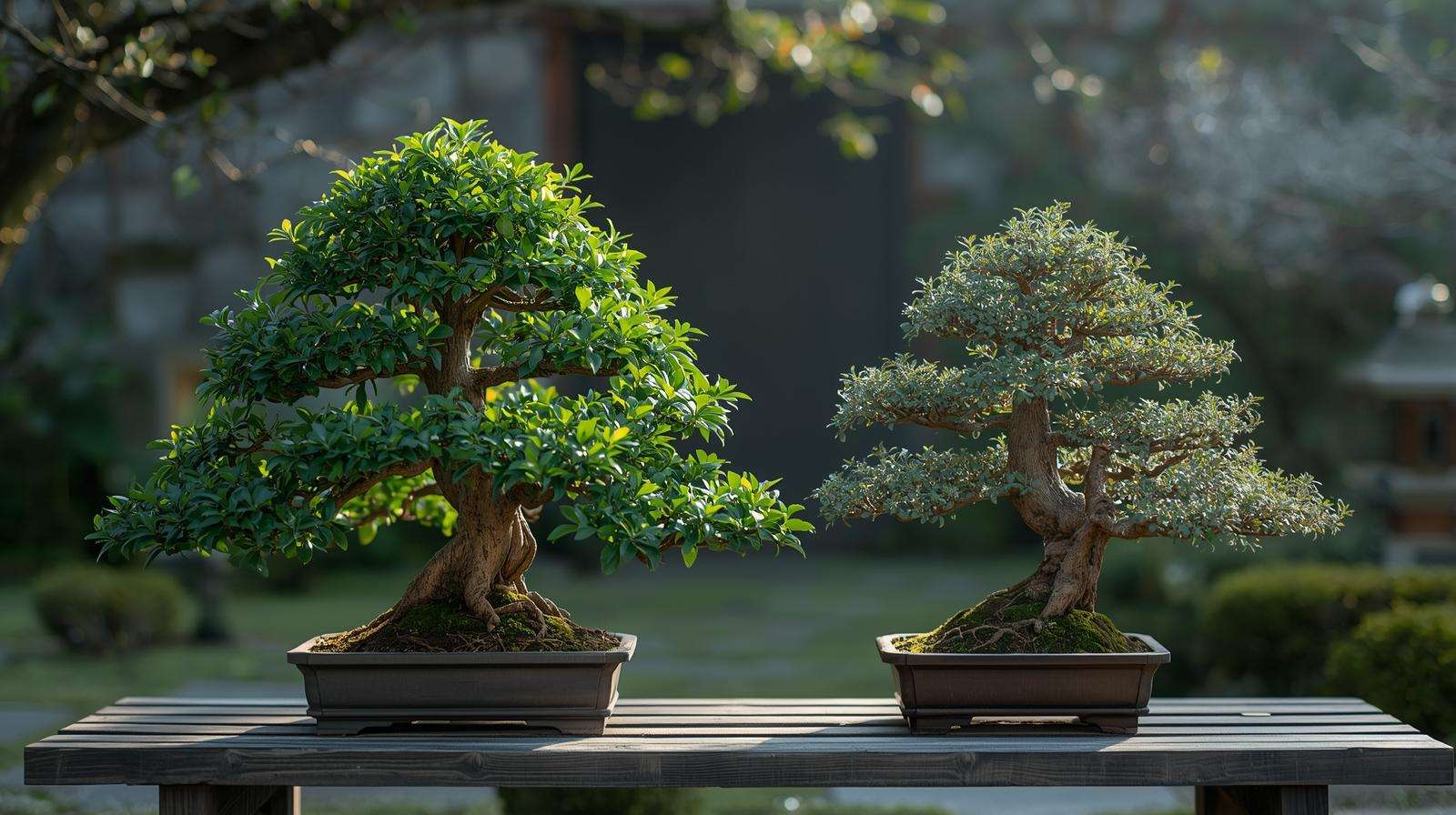
Understanding Bonsai Fertilizer Basics
What NPK Means
Fertilizers list three key numbers called the NPK ratio, which show the percentage by weight of nitrogen (N), phosphorus (P), and potassium (K). Each plays a different role in plant growth.
-
Nitrogen (N): Drives leafy, vegetative growth, stem elongation, and overall green mass. High nitrogen is useful for developing trunks and branches but can cause overly long internodes on refined trees.
-
Phosphorus (P): Supports root growth, flowering, fruiting, and energy transfer inside the plant. It is especially valuable after repotting or for flowering species.
-
Potassium (K): Improves general hardiness, disease resistance, water regulation, and cold preparation, helping growth “harden off” before winter.
Beyond NPK, good bonsai fertilizers include micronutrients such as iron, magnesium, manganese, zinc, and boron, which help prevent subtle deficiencies that often appear in inert, inorganic soils.
Balanced vs. Specialized Ratios
Balanced formulas such as 10-10-10 or lower-strength 6-6-6 suit most beginners and most species throughout the main growing season. More specialized ratios tweak NPK for specific goals: higher nitrogen for spring development or lower nitrogen and relatively higher phosphorus and potassium for root building and winter preparation.
A simple approach is to use a mild, balanced fertilizer all season and adjust only the frequency and total amount rather than constantly switching products.
Organic vs. Synthetic Fertilizers
Both organic and synthetic fertilizers can work very well on bonsai if applied correctly; the choice mainly affects how fast they act and how they interact with soil biology.
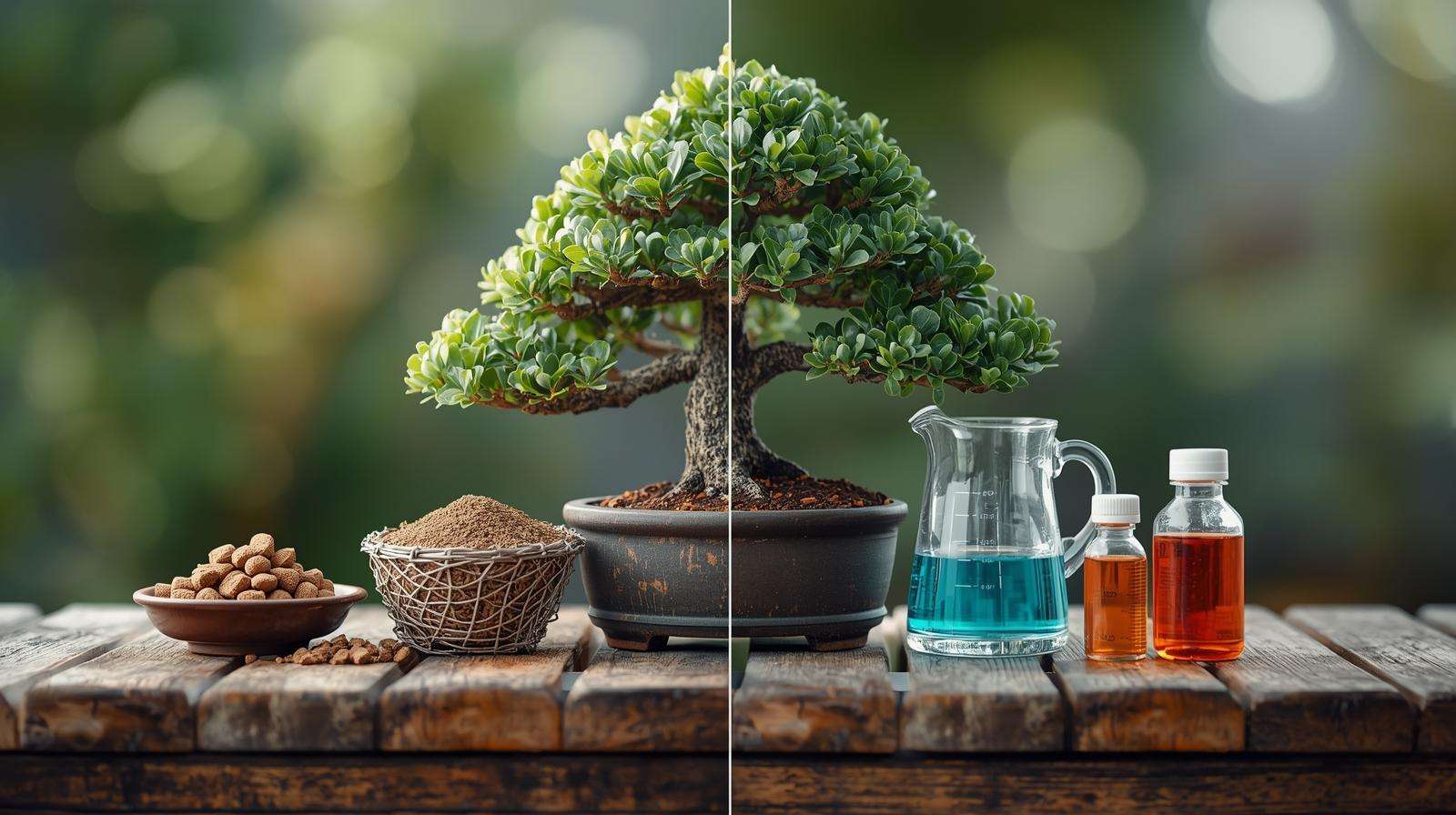
Organic Fertilizers
Organic products come from plant or animal sources (e.g., rapeseed cakes, fish emulsion, bone meal). They typically release nutrients slowly as microbes break them down, which matches the gradual needs of bonsai in active growth.
Pros
-
Gentle, slow-release feeding with reduced risk of burning roots.
-
Support beneficial soil microbes and long-term soil structure.
-
Provide a more “steady background” nutrition.
Cons
-
Slower visible results, especially in cool conditions.
-
Some types can have strong odors (e.g., fish-based products).
-
Nutrient content can be somewhat variable and weather-dependent.
Popular examples include Japanese rapeseed oil cakes (Biogold, Tamahi-style products) and other pelletized organics placed on the soil surface.
Synthetic (Chemical) Fertilizers
Synthetic fertilizers provide nutrients in immediately available forms, usually as liquids or coated pellets, for quick response and precise control of NPK levels.
Pros
-
Fast acting; tree response is often noticeable within a short time.
-
Exact NPK ratios and clear instructions.
-
Easy to dilute to the desired strength.
Cons
-
Over-application can burn roots or cause excessive, coarse growth.
-
Do not improve soil structure or biology.
-
Require careful measuring and consistent watering to avoid salt buildup.
Many enthusiasts combine both: organics as the “base diet” and synthetics in small amounts to correct deficiencies or give temporary boosts.
Fertilizer Forms and How They Work
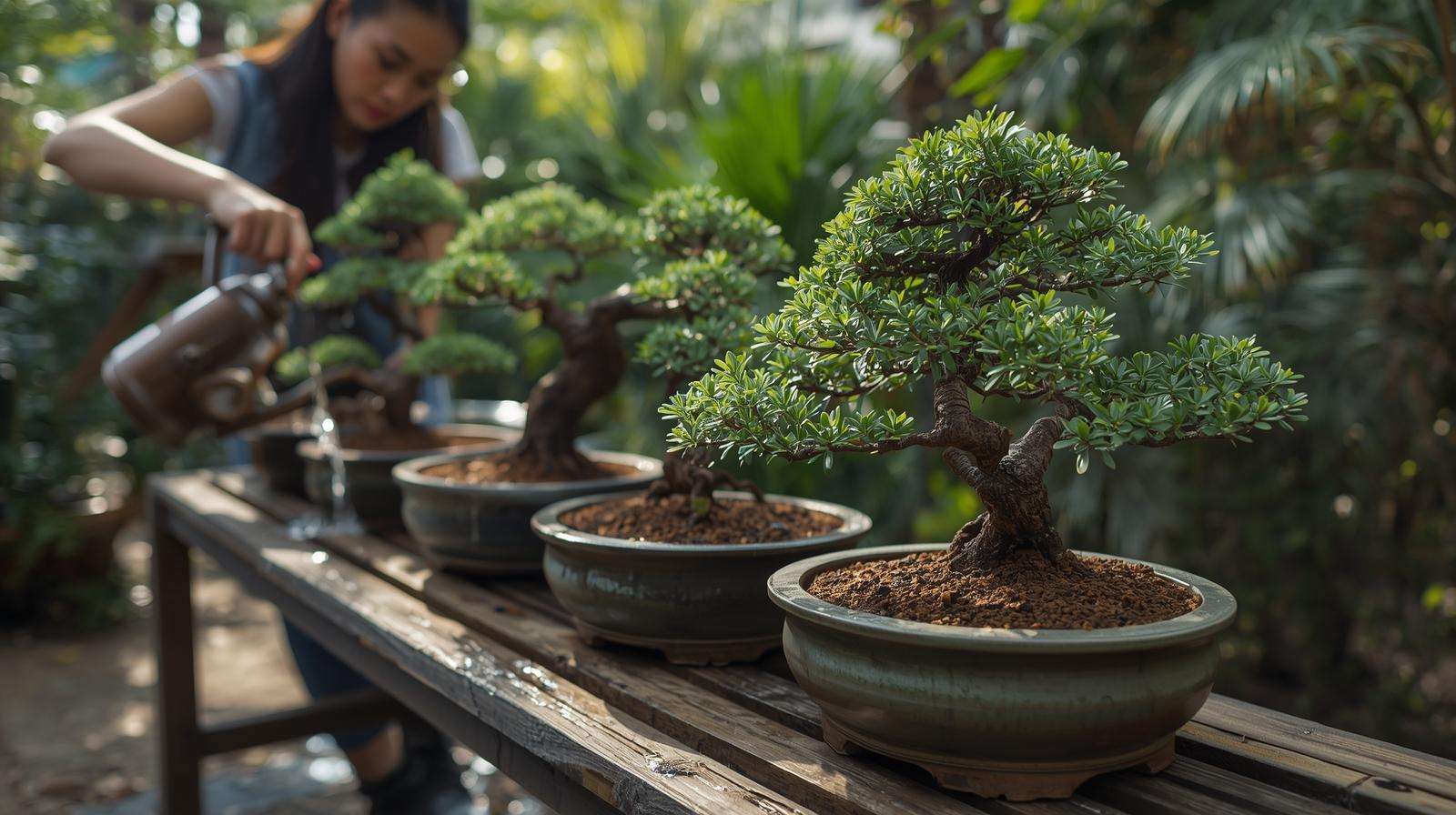
Liquid Fertilizers
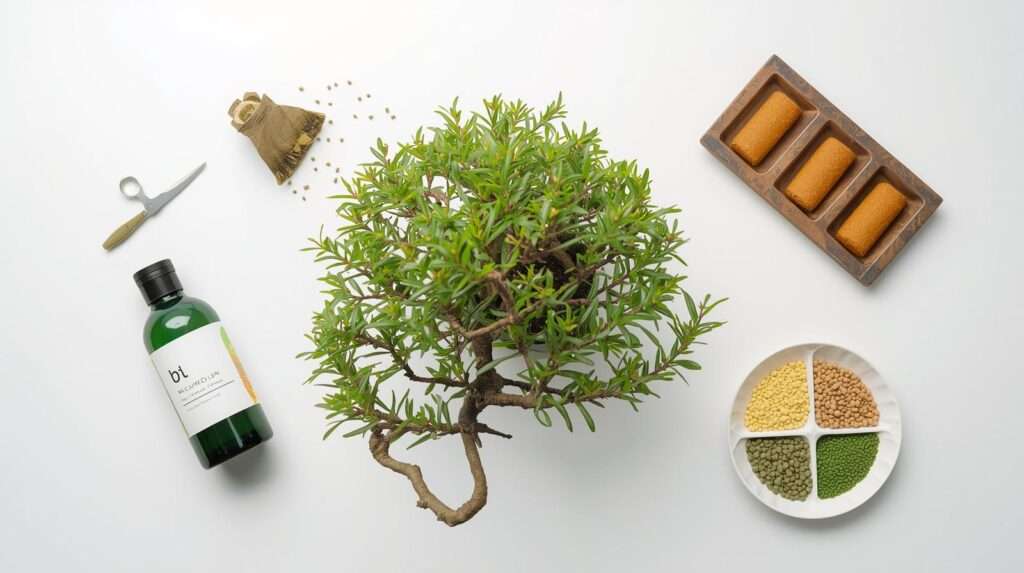
Liquid fertilizers are mixed with water and applied to moist soil, where roots can quickly absorb nutrients. They are ideal for the “weakly weekly” method: applying a half- or quarter-strength solution once a week during active growth.
Solid Pellets or Cakes
Solid organics (pellets/cakes) sit on the soil surface and release nutrients slowly with each watering, often over several weeks. Using small baskets or tea bags prevents them from breaking apart and keeps them tidy on the soil surface.
Which to Choose First?
Beginners often start with liquids for simple measuring and faster feedback from the tree, then add pellets once they understand how the tree responds to feeding. Over time, many move to a pellet-based system for convenience, with occasional liquid feeding layered on top.
When to Fertilize Your Bonsai
General Seasonal Timing
For outdoor bonsai in temperate climates, fertilizing usually starts in early spring when buds begin to swell and continues through mid-fall. Feeding typically stops a few weeks before the first expected frost so new growth can harden and the tree can prepare for winter.
Indoor or tropical bonsai, such as ficus, can be fertilized year-round as long as they are actively growing, though feeding is often reduced in low-light winter periods.
When Not to Fertilize
-
During dormancy for temperate outdoor species.
-
Immediately after repotting, especially if many roots were removed; wait about 4–6 weeks.
-
When the tree is very weak, diseased, or suffering severe pest damage.
-
During extreme heat or cold stress until the tree stabilizes.
Seasonal NPK Adjustments and Frequency
NPK Over the Season
-
Spring: Slightly higher nitrogen supports vigorous new growth and structural development on trees that are still being built.
-
Summer: Balanced formulas maintain health and steady growth without pushing excessively long internodes.
-
Late summer to fall: Lower nitrogen and relatively higher phosphorus and potassium promote root strength and winter hardiness.
A simplified method is to keep the same balanced fertilizer but gradually reduce the total amount and frequency in late summer and fall.
Frequency Guidelines
-
Young or developing trees: Weekly light feeding or pellets replaced every 4–6 weeks in peak season.
-
Mature, refined trees: Every 2–4 weeks, or pellets with slightly longer intervals, to keep growth controlled.
-
Tropical/indoor trees: Often “little and often”—for example, dilute liquid every 1–2 weeks with occasional pellets.
Watch how your tree responds; if growth becomes too strong and coarse, reduce feeding, and if new growth looks weak and pale, cautiously increase nutrition after confirming that watering and light are adequate.
How to Apply Fertilizer Correctly
Liquid Fertilizer Steps
-
Water the bonsai thoroughly with plain water so the soil is evenly moist.
-
Mix the fertilizer to the recommended or slightly weaker strength.
-
Pour the solution evenly over the soil surface until some runs out of the drainage holes.
-
Optionally follow with a light flush of plain water to distribute nutrients evenly and reduce salt buildup.
Solid Fertilizer Steps
-
Place pellets or cakes on the soil surface, avoiding direct contact with the trunk.
-
Use mesh baskets or tea bags if desired to keep them in place.
-
Space them evenly around the pot; small pots need only a few pieces, while larger trees require more.
-
Replace them every 4–8 weeks or as the product instructions suggest.
Always read and follow the product label, but for bonsai it is often safer to start slightly below full strength, especially on small or sensitive trees.
Species-Specific Fertilizing Tips
Junipers
Junipers prefer moderate, steady feeding rather than strong bursts of fertilizer. Excessive nitrogen creates coarse foliage pads that are difficult to refine. Start fertilizing when new tips extend in spring and continue with a mild balanced product through summer, tapering off well before winter.
Pines
Pines, such as Japanese black pine, are sensitive to fertilizer timing because it influences candle length and needle size. Strong feeding supports early development, while more controlled feeding on refined trees keeps needles short. Begin feeding as candles extend, use more fertilizer on developing trees, and reduce quantity on show-ready pines, particularly after techniques like decandling.
Maples
Maples benefit from moderate fertilizer that supports fine branching and delicate leaves. Heavy nitrogen can lead to large leaves and long internodes. Start feeding after the first flush of leaves hardens in spring, maintain a balanced regime through summer, and reduce or stop feeding several weeks before expected frost.
Ficus and Other Tropicals
Ficus and similar tropicals grow nearly year-round in warm conditions and respond quickly to nutrients, making them ideal candidates for frequent, dilute feeding. Use balanced liquid fertilizer at low strength every 1–2 weeks during active growth and dial back if light is poor or growth slows in winter.
Flowering and Fruiting Bonsai
Flowering and fruiting species such as azaleas and crabapples benefit from slightly adjusted feeding around their bloom period. Too much nitrogen can reduce flower production. Use balanced fertilizer for general growth and shift to lower nitrogen and relatively higher phosphorus and potassium leading up to and just after flowering.
Common Fertilizing Mistakes to Avoid
Several recurring errors cause more harm than good, especially when beginners rely on fertilizer to fix unrelated problems.
-
Over-fertilizing: Applying too strong a dose or too often can burn roots, cause salt accumulation, and push overly fast, coarse growth.
-
Under-fertilizing: Using no fertilizer for long periods in nutrient-poor bonsai soil leads to yellowing, weak shoots, and slow recovery from routine work.
-
Wrong timing: Feeding trees when dormant, freshly repotted, or severely stressed adds strain rather than support.
-
Ignoring basics: Fertilizer cannot correct bad soil, poor drainage, insufficient light, or chronic overwatering; those must be fixed separately.
A conservative, consistent approach plus careful observation almost always works better than aggressive feeding.
Advanced Fertilizing Strategies
Once the fundamentals feel comfortable, more advanced strategies can refine growth and appearance.
-
Development vs. refinement feeding: Use stronger, higher-nitrogen feeding for trees in trunk-building or primary-branch stages; move to lighter, balanced feeding on finished trees to keep internodes short and foliage compact.
-
Specialized products: Formulas tailored for conifers, flowering trees, or maintenance phases adjust NPK and micronutrients for specific goals.
-
Combination approach: Use organic pellets as a base and supplement with occasional synthetic liquid feeds when a quick response is needed (for example, after minor deficiency symptoms).
-
Water and pH management: In areas with very hard or alkaline water, using chelated iron or slight acidification helps prevent chlorosis and improves nutrient uptake.
These techniques reward patient observation and should be applied gradually so the tree’s response can be assessed over a full growing season.
Recommended Fertilizers in 2025
Many brands can support healthy bonsai if they offer balanced nutrition and micronutrients and are used correctly. The examples below illustrate typical options, not strict requirements.
| Fertilizer Type | Example Uses and Features |
|---|---|
| Organic pellets (e.g., Biogold-style products) | Slow-release balanced feeding for general bonsai care in spring and summer; often applied in small clumps across the soil surface. |
| Organic specialty mixes (flower/fruit or conifer formulas) | Adjusted ratios with lower nitrogen or higher phosphorus and potassium for flowering species or specific groups like conifers. |
| Complete liquid fertilizers (e.g., bonsai-focused or 7-9-5 types) | Provide quick, precise feeding with micronutrients; well suited to indoor and fast-growing species on a dilute, frequent schedule. |
| General-purpose balanced garden fertilizers | Can work for bonsai when diluted more than label rates and applied on a bonsai schedule, especially for beginners. |
| Organic liquid feeds (fish emulsion, seaweed blends) | Mild, biologically friendly options useful as supplements or gentle boosters; odor can be managed by strong dilution. |
Whatever you choose, apply slightly less than you think is needed at first and adjust only after you see how your trees respond over several weeks.
FAQs
How often should beginners fertilize bonsai?
Most new growers do well fertilizing actively growing trees every 1–2 weeks with a diluted liquid or using slow-release pellets renewed every 4–8 weeks, adjusting down for very refined or slow-growing trees.
Do bonsai need special fertilizer, or can general products work?
Bonsai-specific products are convenient but not essential; any balanced fertilizer with micronutrients can work if properly diluted and used on a schedule suited to potted trees.
Can fertilizer fix yellow leaves quickly?
If yellowing is caused by nutrient deficiency, correct feeding improves new growth, but existing leaves may not fully recover. Yellow leaves can also result from overwatering, poor soil, or pests, so it is important to diagnose the underlying cause.
Is it possible to grow bonsai without fertilizer?
In modern, fast-draining bonsai mixes with frequent watering, trees almost always decline without regular feeding, so fertilization is considered essential for long-term health and development.