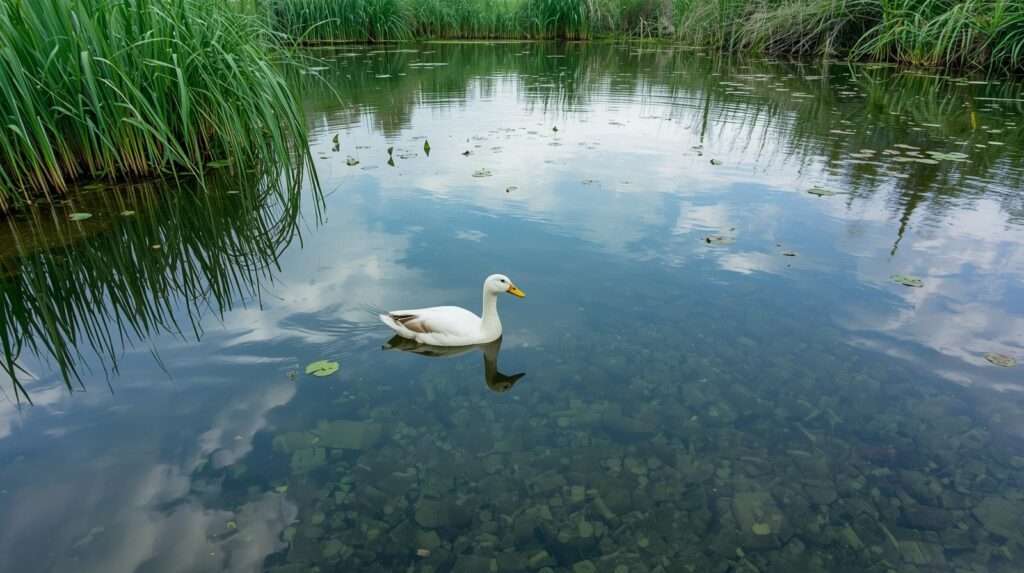
Many duck keepers spend weeks choosing the right ducks, feed, and shelter—then unintentionally undermine all of it with a pond that’s too small. Water is not just a luxury for ducks; it’s essential infrastructure. An undersized pond quickly turns into a muddy, foul-smelling problem that harms duck health and creates extra work for you.
So, how big should a duck pond be to truly support healthy ducks without becoming a maintenance nightmare?
This expert guide answers that question clearly and practically. Drawing on agricultural best practices, real-world duck-keeping experience, and animal welfare principles, you’ll learn exact pond size recommendations, how size affects water quality, and how to choose the right dimensions for your flock, land, and climate.
Understanding Ducks’ Natural Water Requirements (Expert Foundation)
Why Ducks Need Adequate Water Space
Ducks are semi-aquatic livestock, not dry-land poultry. Their bodies and behaviors evolved around regular access to open water. From an animal husbandry standpoint, proper water access supports:
-
Eye and nostril cleaning (preventing infections)
-
Feather conditioning and waterproofing
-
Thermoregulation in hot weather
-
Natural behaviors like dabbling, bathing, and preening
-
Reduced parasite pressure
A duck pond must allow full head submersion at a minimum. Anything less—regardless of how often it’s cleaned—fails to meet basic welfare standards.
How Pond Size Impacts Duck Welfare
Pond size directly affects:
-
Stress levels: Overcrowded water leads to aggression and avoidance
-
Feather health: Poorly maintained feathers lose waterproofing
-
Disease risk: Concentrated waste increases bacterial load
-
Foot and joint health: Muddy margins cause bumblefoot and strain
In agricultural settings, water space is considered part of stocking density. The same principle applies to backyard ducks.
How Big Should a Duck Pond Be?
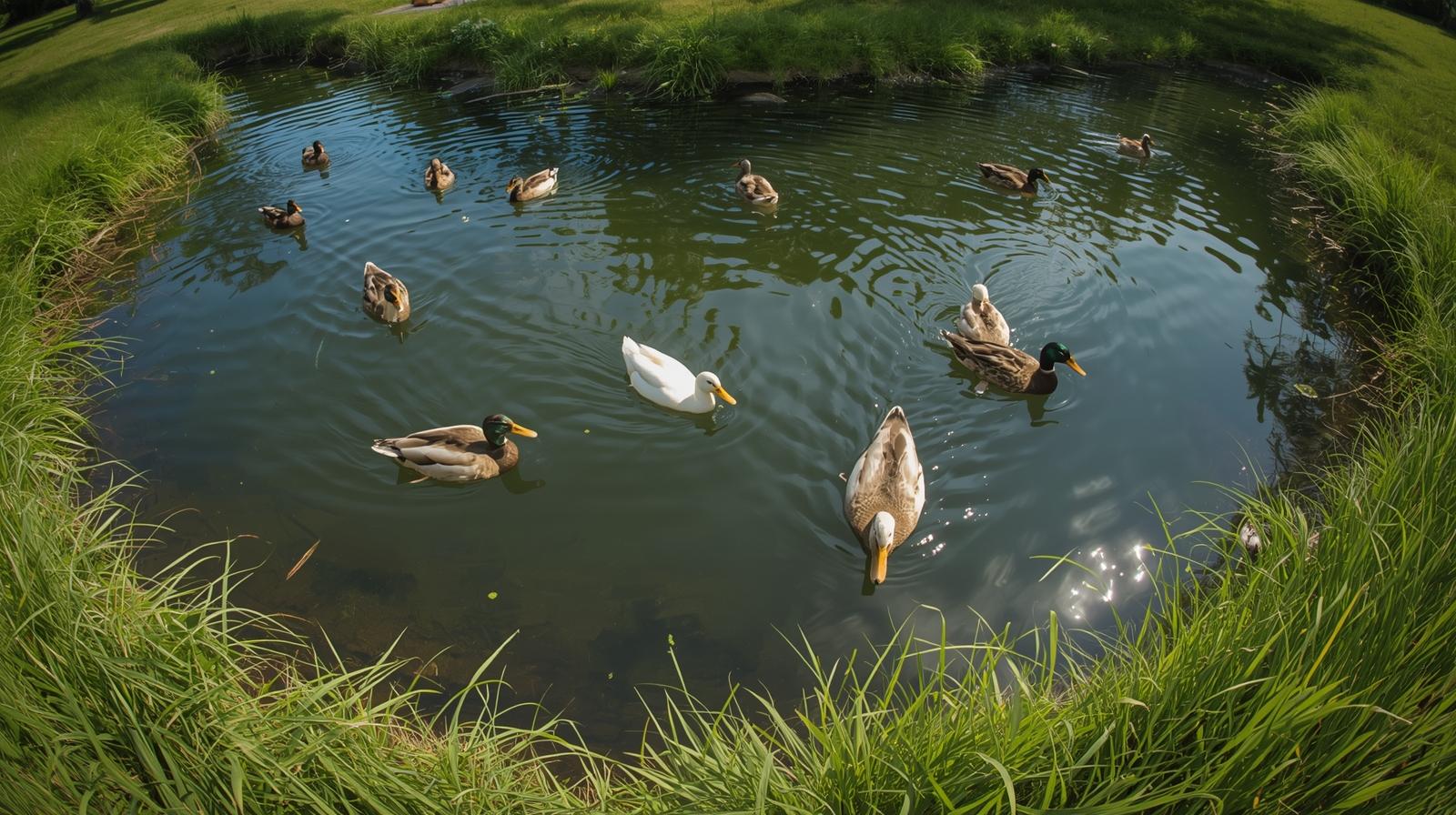
Minimum Duck Pond Size Recommendations
If you want a quick, practical baseline, here it is:
Absolute minimum guideline:
👉 At least 6–10 square feet of water surface per duck
This minimum allows basic bathing and head submersion—but it comes with higher maintenance demands.
For depth:
-
Minimum depth: 6–8 inches (for head submersion)
-
Functional depth: 12–18 inches for swimming and cleanliness
Minimums are acceptable only when:
-
Flock size is small
-
Water is changed or refreshed frequently
-
Drainage is well managed
Ideal Duck Pond Size for Optimal Health
From long-term experience, the ideal duck pond is larger than most people expect.
A healthier, easier-to-maintain rule of thumb:
👉 15–25 square feet of pond surface per duck
Why this works better:
-
Waste is diluted instead of concentrated
-
Water stays cleaner longer
-
Ducks can swim without crowding
-
Maintenance time decreases over the long term
Bigger ponds almost always mean less work, not more.
Duck Pond Size by Number of Ducks
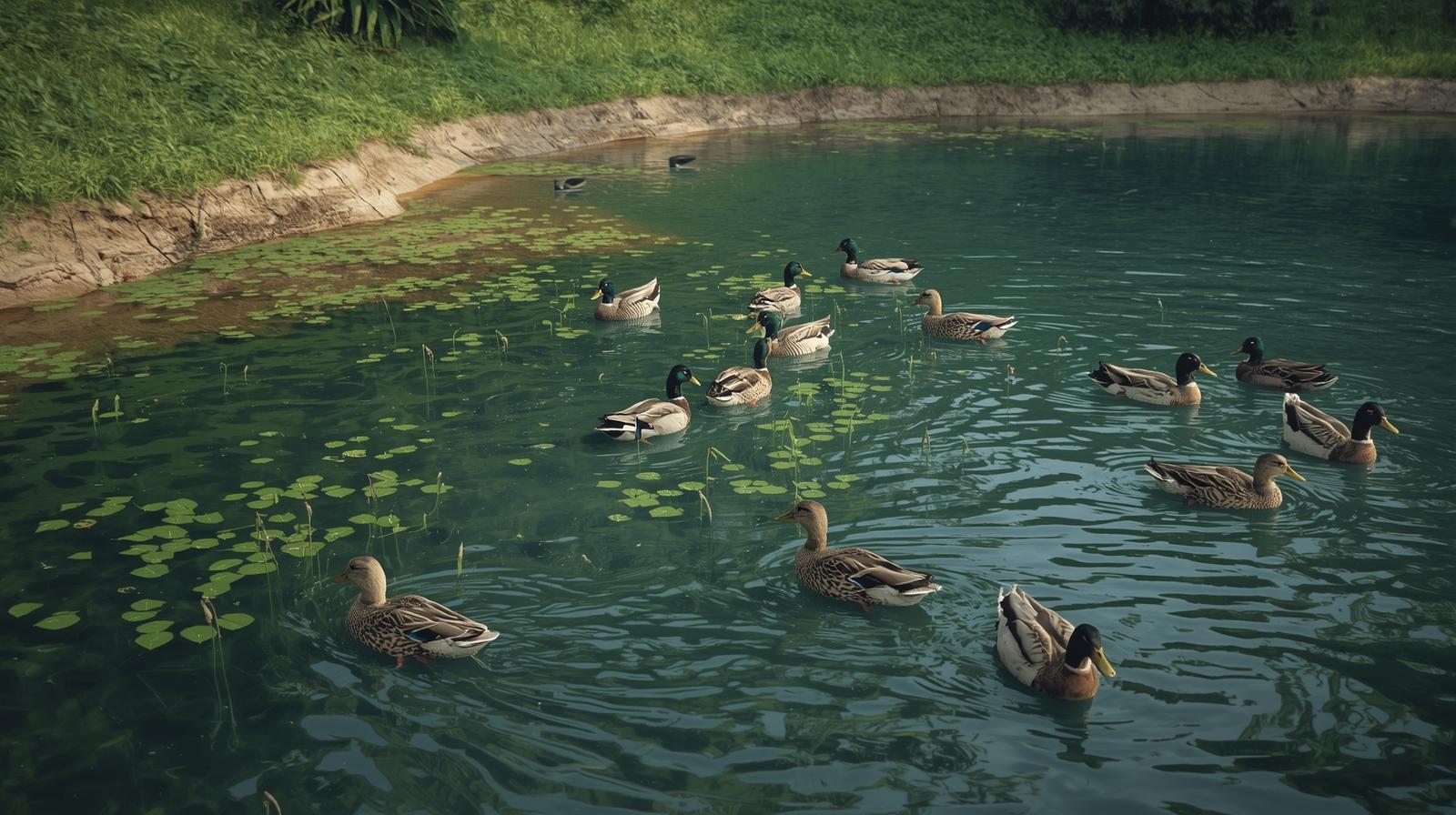
Small Flocks (2–5 Ducks)
Recommended pond size:
-
Surface area: 40–100 square feet
-
Depth: 12–18 inches
-
Example: 6×8 ft or 8×10 ft pond
Best practices:
-
Use sloped sides for easy entry
-
Avoid deep vertical walls
-
Ensure drainage around the pond edge
Common mistake:
Choosing a tiny decorative pond that looks nice but fouls within hours.
Medium Flocks (6–12 Ducks)
Recommended pond size:
-
Surface area: 120–250 square feet
-
Depth: 18–24 inches
At this scale:
-
Waste load increases significantly
-
Natural filtration becomes more important
-
Pond shape matters (longer is better than narrow)
Expert tip:
This is where many duck keepers notice that slightly oversizing the pond saves time and frustration.
Large Flocks (12+ Ducks)
Recommended approach:
-
300+ square feet total water surface
-
Consider multiple ponds instead of one massive pond
Benefits of multiple ponds:
-
Reduced crowding
-
Rotational use improves water quality
-
Easier cleaning and management
In farm settings, ducks often share larger livestock or irrigation ponds—provided access and safety are managed properly.
Duck Pond Depth: How Deep Should a Duck Pond Be?
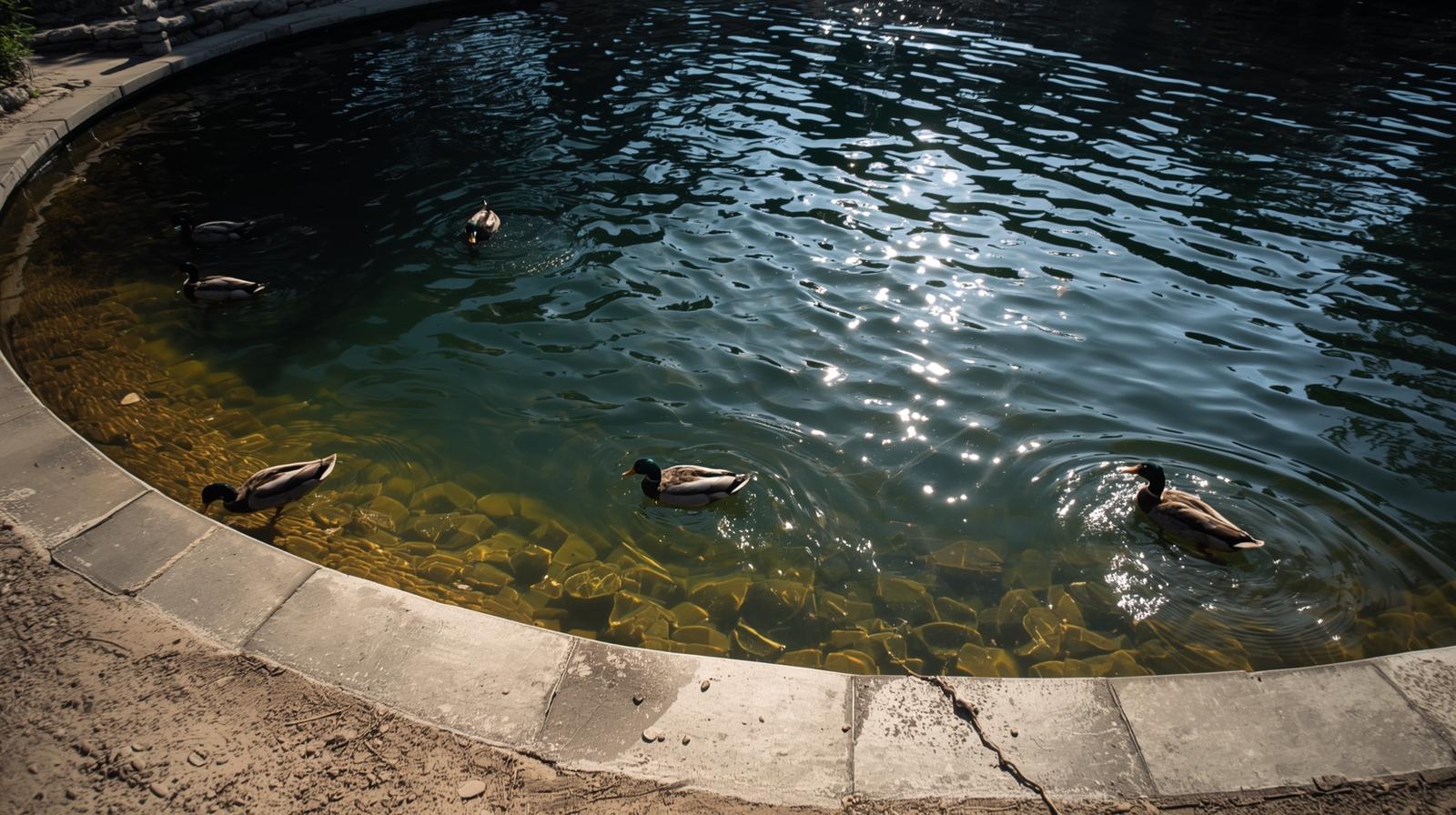
Minimum Safe Depth for Ducks
At the shallow end:
-
6–8 inches allows head submersion
-
Essential for eye, nostril, and bill cleaning
However, shallow-only ponds get dirty fast.
Ideal Depth for Swimming and Cleanliness
A well-designed duck pond includes varying depths:
-
Shallow entry zone (6–8 inches)
-
Main swimming area (12–24 inches)
-
Gentle slope instead of sudden drop-offs
Deeper water:
-
Stays cooler in summer
-
Dilutes waste more effectively
-
Reduces algae growth
Depth Considerations for Ducklings
Ducklings:
-
Are not waterproof until fully feathered
-
Need shallow water with easy exits
Best practice:
-
Use temporary shallow containers for ducklings
-
Introduce deeper ponds gradually as they mature
Factors That Influence Duck Pond Size Requirements
Duck Breed and Body Size
Not all ducks are built the same.
-
Heavy breeds (Pekin, Rouen): Need more space and gentler slopes
-
Lightweight breeds (Khaki Campbell, Indian Runner): More agile but still need swimming room
-
Muscovy ducks: Prefer larger, calmer water areas
Larger ducks displace more water and produce more waste—factor that into sizing.
Climate and Weather Conditions
Hot climates:
-
Larger ponds help ducks cool down
-
Deeper water stays cooler longer
Cold climates:
-
Smaller ponds are easier to manage in winter
-
Some keepers switch to seasonal water setups
In freezing regions, year-round ponds require planning to prevent ice hazards.
Land Availability and Drainage
Pond size must match:
-
Soil type (clay vs sandy)
-
Natural slope
-
Runoff patterns
Poor drainage can turn even a well-sized pond into a mud pit. Sometimes a slightly smaller pond in the right location works better than a large one in the wrong spot.
Stocking Density and Time Spent in Water
Free-range ducks that forage widely:
-
Place less pressure on pond systems
Confined ducks:
-
Spend more time in water
-
Need larger ponds to stay clean
Seasonal changes also matter—ducks use ponds more in summer than winter.
Water Quality, Filtration, and Pond Size
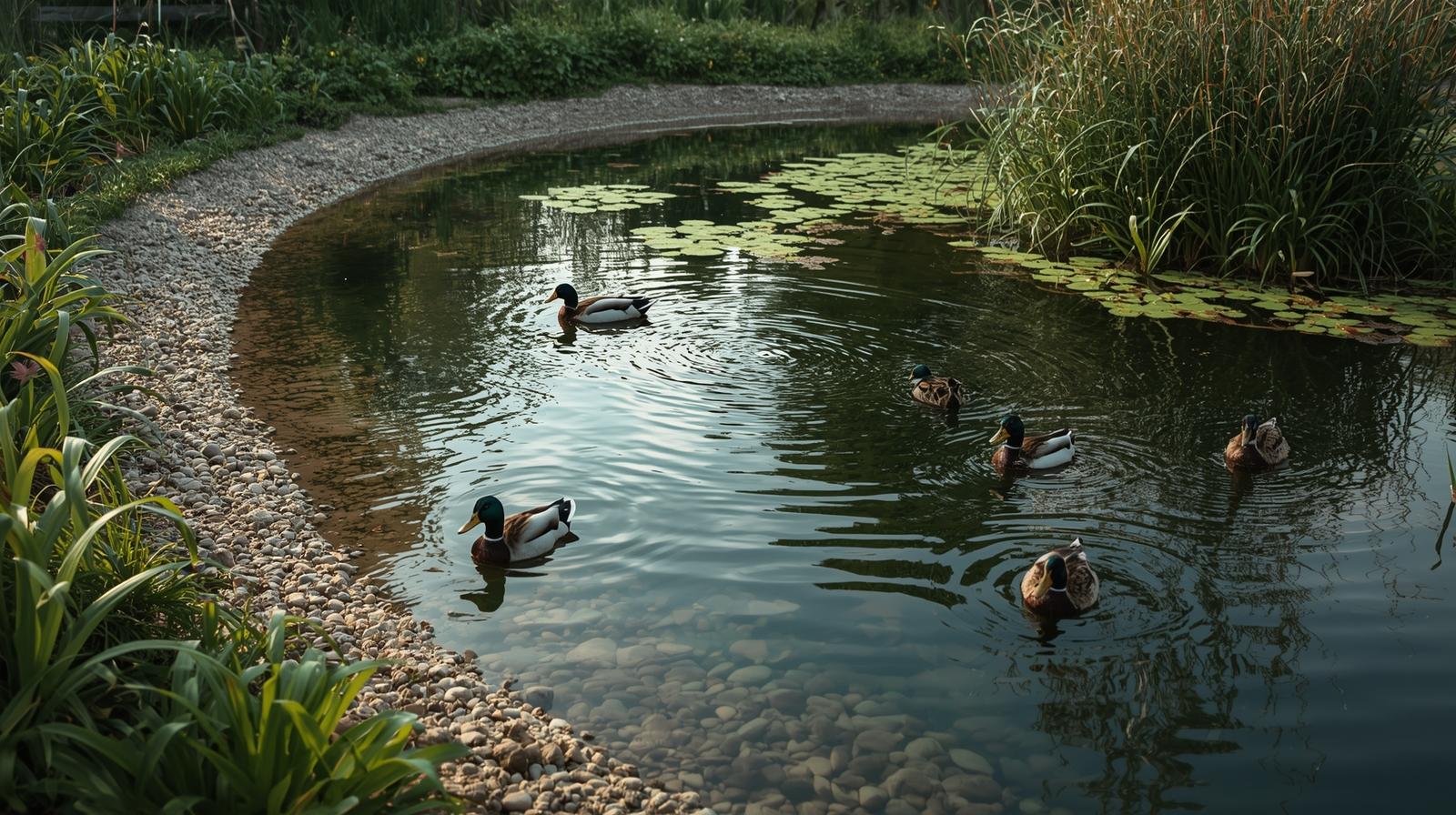
How Pond Size Affects Water Cleanliness
From a water-management perspective, pond size is your first and most effective filtration system. Larger ponds stay cleaner for longer because:
-
Waste is diluted over a greater volume of water
-
Sunlight penetrates less uniformly, slowing algae growth
-
Temperature remains more stable
-
Ducks are less concentrated in one spot
Small ponds, even when cleaned often, experience rapid spikes in:
-
Ammonia
-
Organic sludge
This is why many duck keepers find that upsizing a pond reduces overall maintenance, despite the larger volume.
Do You Need Filtration Based on Pond Size?
Under 100 square feet:
-
Mechanical or frequent manual cleaning required
-
Kiddie-pool-style management often applies
100–250 square feet:
-
Partial natural filtration possible
-
Plants and gravel help, but occasional cleaning needed
250+ square feet:
-
Natural biological balance becomes achievable
-
Minimal mechanical filtration when well designed
Filtration is not mandatory, but undersized ponds almost always require it.
Natural Pond Cleaning Strategies
Well-sized ponds can self-regulate when supported properly:
-
Aquatic plants absorb nutrients
-
Gravel zones trap solids
-
Beneficial bacteria break down waste
-
Circulation prevents stagnation
Important note: Ducks will uproot delicate plants. Use hardy species and protected planting zones.
Common Duck Pond Size Mistakes (And How to Avoid Them)
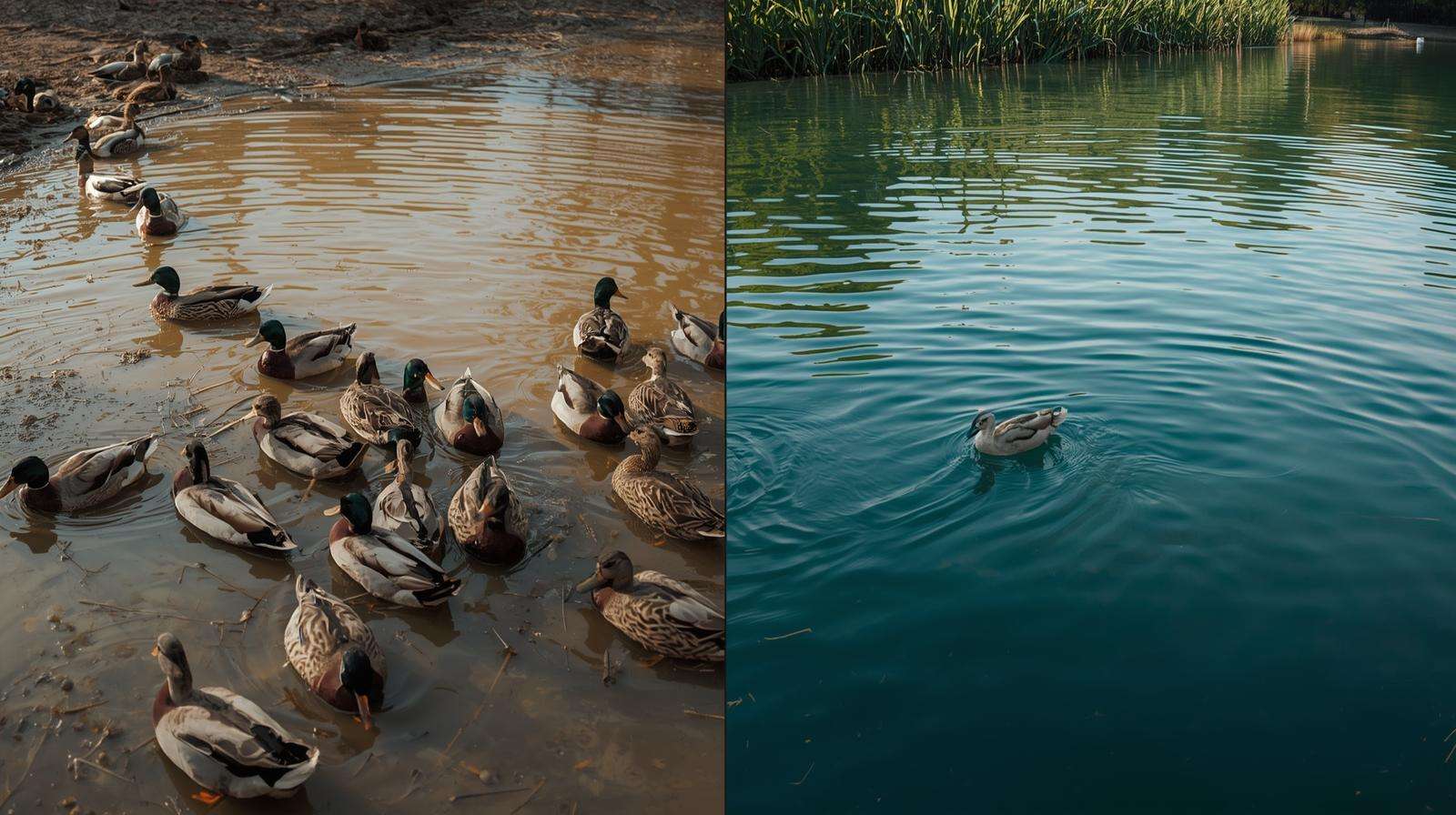
1. Building to the Minimum Only
Minimum sizes work on paper—but not always in practice. Slightly larger ponds:
-
Stay cleaner
-
Reduce stress
-
Lower labor demands
2. Ignoring Depth and Entry Design
Deep water without ramps leads to:
-
Injuries
-
Panic behavior
-
Avoidance of the pond altogether
3. Underestimating Waste Load
Ducks produce a lot of organic matter. Pond size must account for:
-
Number of ducks
-
Time spent in water
-
Feeding practices nearby
4. Poor Placement
Placing ponds:
-
Downhill from feeders
-
In low-lying mud-prone areas
-
Without drainage
…causes more problems than pond size alone.
Backyard vs Farm Duck Pond Size Needs
Urban and Suburban Backyards
In smaller spaces:
-
40–100 sq ft ponds can work well
-
Efficient shape matters more than sheer size
-
Drainage and neighbor considerations are critical
Legal and zoning restrictions may limit pond size—always check local regulations.
Rural and Agricultural Settings
Rural properties offer flexibility:
-
Larger ponds (300+ sq ft) are easier to maintain
-
Integration with pasture reduces mud
-
Ducks can become part of a regenerative water system
In these settings, bigger ponds almost always outperform smaller ones.
Expert Tips for Designing the Right-Sized Duck Pond
Design Features That Improve Any Pond Size
Regardless of size, include:
-
Sloped edges or ramps
-
Multiple access points
-
Partial shade
-
Wind protection
These features reduce stress and wear on the pond.
Reducing Maintenance Through Smart Sizing
From long-term observation:
-
Oversizing by 20–30% often cuts cleaning time in half
-
Larger ponds require fewer full clean-outs
-
Ducks remain healthier, reducing vet and treatment costs
Think in years, not weeks, when planning pond size.
Frequently Asked Questions (Expert Answers)
What is the minimum pond size for ducks?
The minimum is 6–10 square feet per duck, but larger is strongly recommended for easier maintenance and better health.
Can a duck pond be too big?
Rarely. As long as access, safety, and water quality are managed, bigger ponds usually improve outcomes.
Is a small pond better than a kiddie pool?
A properly sized pond is generally better than a kiddie pool, but poorly sized ponds are worse than well-managed pools.
How many ducks can share one pond?
It depends on surface area, depth, and time spent in water. Use 15–25 sq ft per duck as a reliable planning range.
Do ducks need a pond year-round?
Not always. In cold climates, seasonal ponds combined with deep water containers may be safer.
Can ducks share a pond with fish?
Yes, in large, well-balanced ponds—but ducks may eat small fish and disturb plants.
Final Verdict: Choosing the Right Duck Pond Size
So, how big should a duck pond be?
Big enough that:
-
Ducks can swim comfortably
-
Water stays clean longer
-
You’re not fighting mud and odor constantly
Minimum sizes keep ducks alive. Ideal sizes help them thrive.
Planning for the ideal size—within your land and climate limits—almost always results in:
-
Healthier ducks
-
Cleaner water
-
Less daily work
Actionable Takeaway for Duck Keepers
Before building:
-
Count your current and future ducks
-
Assess available space and drainage
-
Choose ideal size over minimum when possible
-
Design for access, safety, and shade
Remember: duck ponds are not decorative features—they’re working systems. Size them accordingly, and both you and your ducks will benefit for years to come.