If you only had room for one type of livestock on your small homestead, which would actually make sense long-term?
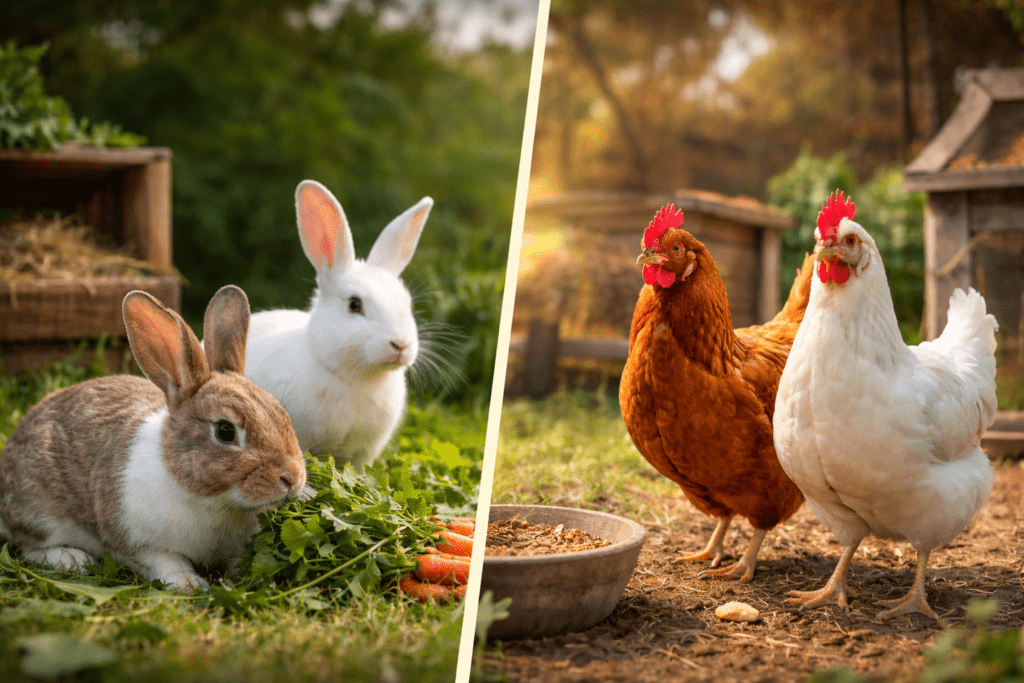
For many aspiring and established homesteaders, the decision often comes down to Rabbits vs Chickens for Small Homesteads—a choice that directly affects food security, daily workload, costs, and overall sustainability. While chickens tend to get most of the attention, rabbits quietly outperform them in several critical areas that matter most when space, time, and budget are limited.
This guide cuts through assumptions and internet myths. Drawing on real-world small-scale farming experience and practical homestead economics, you’ll get a clear, honest comparison of rabbits and chickens—so you can choose livestock that truly aligns with your goals, not someone else’s Pinterest homestead.
By the end of this article, you’ll know exactly which animal is more efficient for meat production, space usage, cost control, and sustainable living—and whether raising both might actually be the smartest option.
Understanding the Needs of Small Homesteads
What Defines a “Small Homestead”?
A small homestead typically operates under at least one major constraint:
-
Limited land (backyard, suburban lot, or under 1 acre)
-
Zoning or HOA restrictions
-
Limited time for daily livestock care
-
Tight startup and operating budgets
Unlike large farms, small homesteads must prioritize efficiency per square foot, low-input systems, and manageable labor. Every animal kept must justify its presence through food output, soil improvement, or long-term value.
Key Decision Factors When Choosing Livestock
Before comparing rabbits and chickens directly, it’s important to understand the criteria that actually matter for small homesteaders:
-
Protein output per year
-
Feed-to-meat efficiency
-
Space requirements
-
Startup and ongoing costs
-
Daily labor and maintenance
-
Noise, smell, and neighbor impact
-
Sustainability and waste recycling
This article evaluates rabbits and chickens through these exact lenses—not popularity or tradition.
Rabbits vs Chickens for Small Homesteads: A Quick Comparison
Before diving deep, here’s a high-level overview for readers who want clarity fast.
At-a-Glance Comparison
| Factor | Rabbits | Chickens |
|---|---|---|
| Space Needed | Very low (vertical housing) | Moderate to high |
| Noise Level | Silent | Moderate to loud |
| Feed Efficiency | Extremely high | Moderate |
| Meat Harvest Time | 8–12 weeks | 8–16 weeks |
| Dual Purpose | Meat + manure | Meat + eggs |
| Neighbor Friendly | Excellent | Mixed |
| Beginner Friendly | Yes | Yes |
This snapshot already reveals something important: rabbits excel where space, efficiency, and discretion matter, while chickens offer versatility through eggs.
Let’s break this down properly.
Space Efficiency: Which Animal Fits Better in Small Areas?
Housing Requirements for Rabbits
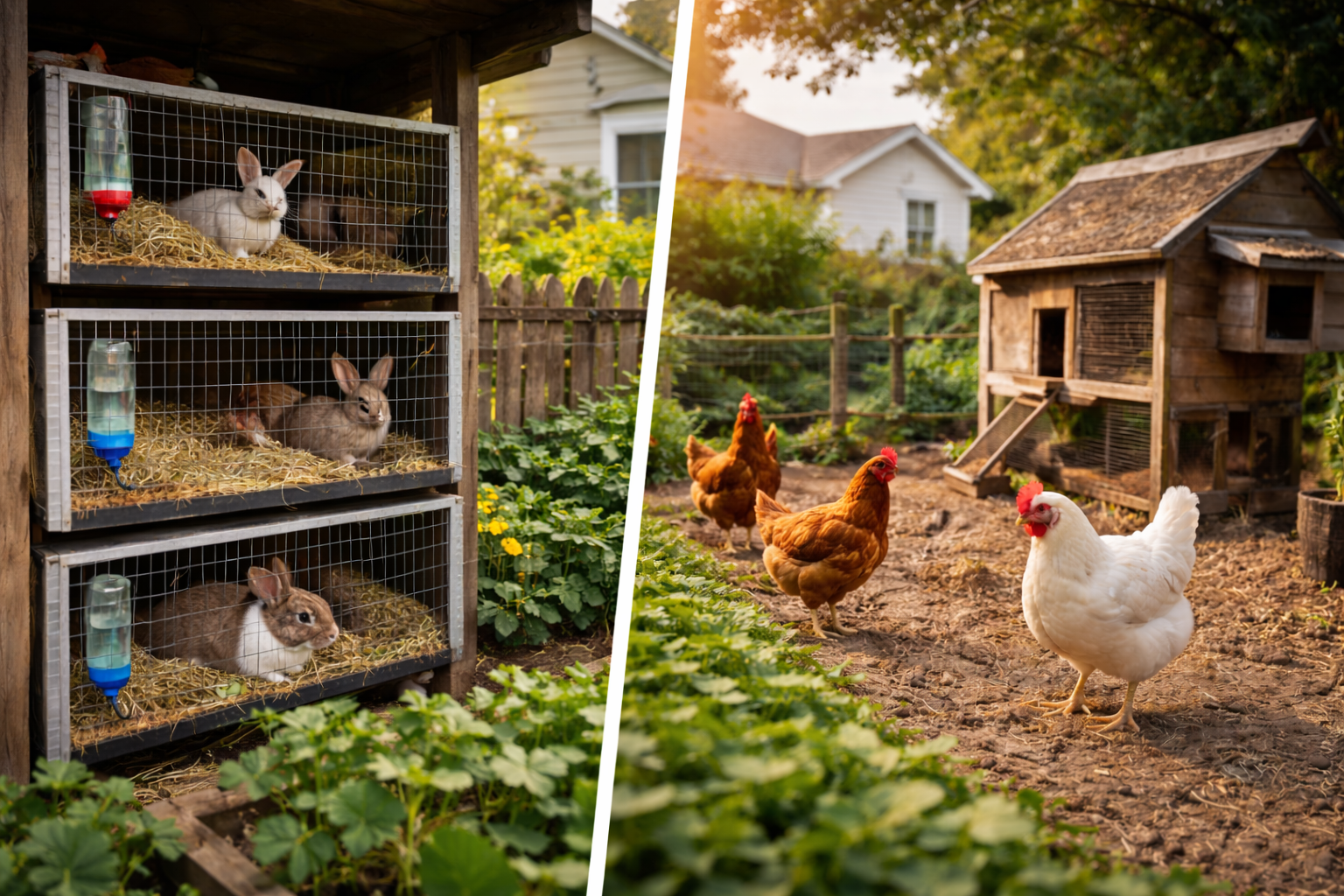
Rabbits are one of the most space-efficient livestock animals available to small homesteaders.
Key advantages include:
-
Vertical housing: Stacked cages maximize output per square foot
-
Minimal ground footprint: A single 8×2-foot cage can produce dozens of pounds of meat annually
-
Indoor or outdoor flexibility: Garages, sheds, or shaded outdoor setups work well
A small rabbitry can easily fit into:
-
A shed corner
-
A carport
-
A covered patio
-
Even a well-ventilated indoor space
This makes rabbits ideal for urban homesteads and HOA-restricted properties.
Housing Requirements for Chickens
Chickens require more horizontal space and infrastructure:
-
Coop (minimum 3–4 sq ft per bird)
-
Run space (8–10 sq ft per bird)
-
Predator-proof fencing
-
Ventilation and roosting systems
While backyard flocks are common, chickens become space-inefficient quickly if free-ranging isn’t possible.
Space Comparison Verdict
If space is your limiting factor, rabbits win decisively. They produce more meat per square foot than chickens and can be raised discreetly in environments where chickens may not be allowed at all.
Meat Production Efficiency and Yield
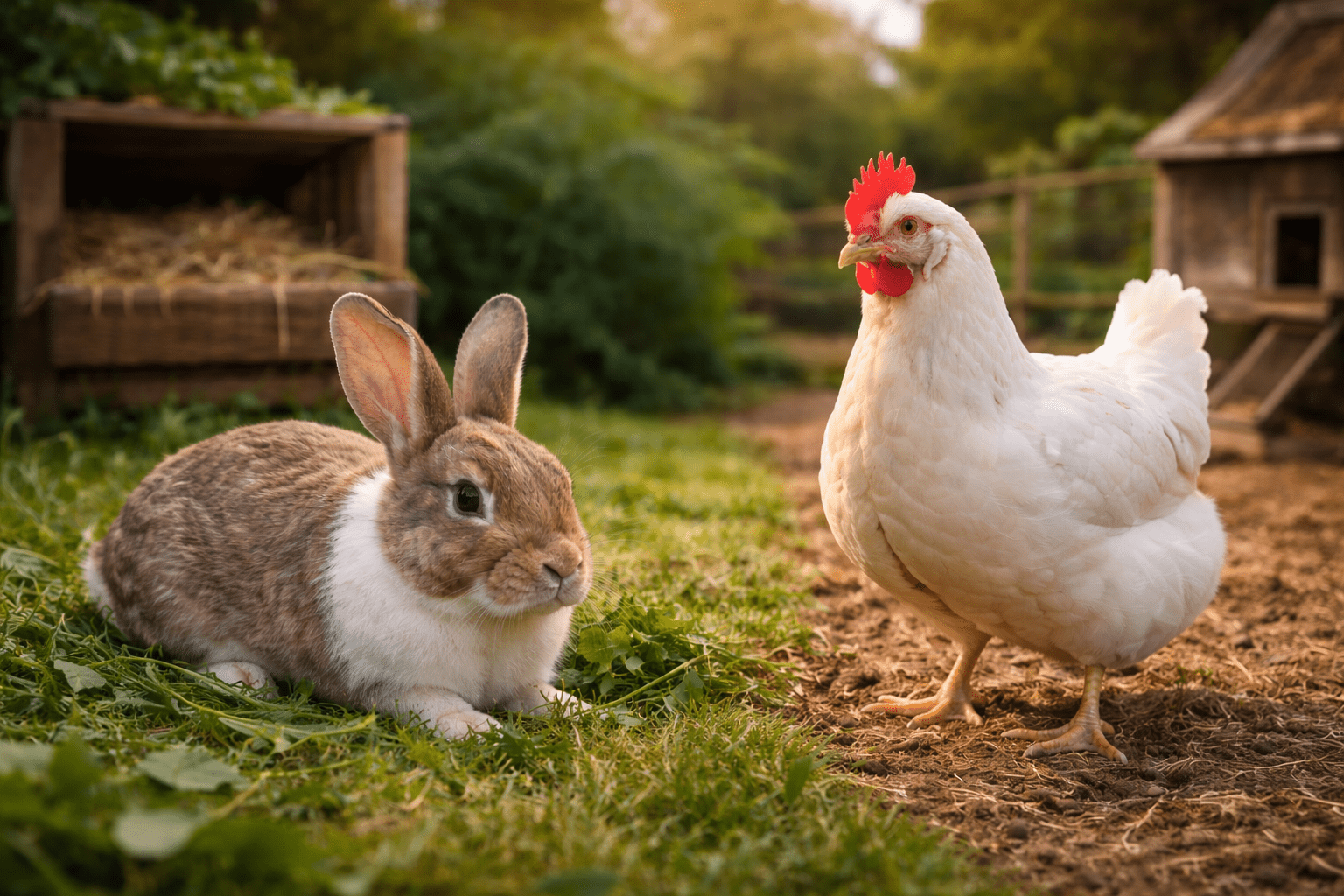
Rabbit Meat Production Explained
Rabbits are among the most efficient meat-producing animals in the world.
Why?
-
Harvest-ready in 8–12 weeks
-
Excellent feed conversion ratio
-
High reproduction rates
-
Lean, high-protein meat
A single breeding trio (1 buck, 2 does) can conservatively produce 150–300 pounds of meat per year in a very small space.
Rabbit meat is also:
-
Low in fat
-
High in protein
-
Easy to digest
-
Increasingly popular among health-conscious consumers
Chicken Meat Production Explained
Chickens offer two meat paths:
-
Broilers (meat-only)
-
Dual-purpose breeds
Broilers reach harvest weight in 6–8 weeks but require:
-
Higher feed inputs
-
Careful temperature management
-
Batch raising rather than continuous production
Dual-purpose chickens grow slower and yield less meat but provide eggs, which offsets some inefficiency.
Meat Efficiency Comparison
Per pound of feed and per square foot of space, rabbits outperform chickens in meat production. Chickens remain valuable for egg production, but strictly for meat efficiency on small homesteads, rabbits are hard to beat.
Feed Costs and Ongoing Expenses
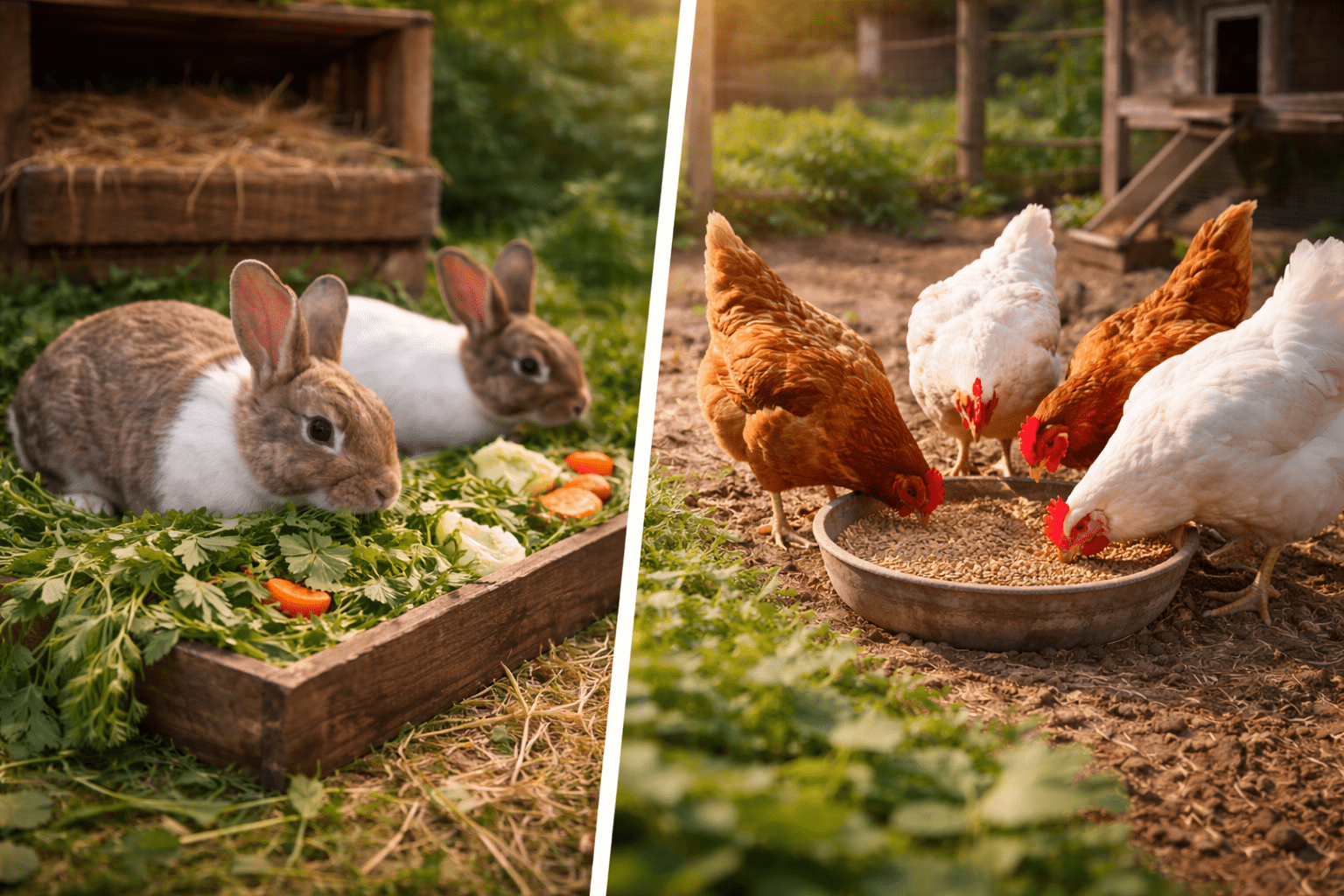
Feeding Rabbits on a Small Homestead
Rabbits thrive on:
-
Commercial pellets
-
Hay
-
Garden trimmings
-
Foraged greens
Their digestive systems efficiently convert plant matter into protein. Many homesteaders reduce feed costs further by:
-
Growing fodder
-
Using weeds and trimmings
-
Supplementing with hay grown on-site
Feeding Chickens on a Small Homestead
Chickens eat:
-
Commercial feed
-
Kitchen scraps
-
Insects and forage (if allowed to free-range)
However, egg-laying hens require consistent nutrition, calcium, and protein—making feed costs more stable but often higher long-term.
Long-Term Cost Comparison
In most small homestead scenarios:
-
Rabbits cost less per pound of meat
-
Chickens cost more but offset this with eggs
If meat efficiency is your primary goal, rabbits are typically the more economical option.
Labor, Time, and Daily Management
Daily Care Requirements for Rabbits
Rabbit care is predictable and efficient:
-
Feeding and watering
-
Occasional cage cleaning
-
Breeding management
-
Minimal predator stress
They are quiet, calm, and low-drama animals.
Daily Care Requirements for Chickens
Chickens require:
-
Daily feeding and watering
-
Egg collection
-
Coop maintenance
-
Predator vigilance
-
Seasonal management (molting, brooding, winter care)
Time Commitment Comparison
For busy homesteaders or those balancing off-farm work, rabbits typically require less daily time than chickens.
Sustainability and Environmental Impact
Rabbits and Sustainable Meat Production
From a sustainability standpoint, rabbits are often overlooked—but they are exceptionally well suited to low-input, regenerative homesteading systems.
Key sustainability advantages of rabbits include:
-
Low water usage: Rabbits consume significantly less water per pound of meat produced compared to poultry and livestock.
-
Efficient feed conversion: They turn plant-based feed into protein more efficiently than chickens.
-
Minimal land impact: No pasture is required; rabbits can be raised entirely off-ground.
-
Cold manure: Rabbit manure is “garden-ready” and can be applied directly without composting.
Because rabbits can thrive on foraged greens, hay, and garden byproducts, they fit seamlessly into closed-loop systems where waste becomes a resource.
Chickens and Sustainability
Chickens also offer sustainability benefits, especially in diversified homesteads:
-
Egg production: Continuous protein without slaughter
-
Pest control: Chickens reduce insects and larvae
-
Composting helpers: They break down kitchen scraps and compost piles
However, chickens typically require more external inputs:
-
Grain-based feed
-
More water
-
Larger land footprint
They can be highly sustainable when integrated properly—but they demand more active management.
Which Is More Sustainable for Small Homesteads?
If sustainability is defined by:
-
Lowest input
-
Minimal land use
-
Closed nutrient cycles
Rabbits edge out chickens.
If sustainability includes:
-
Daily food production (eggs)
-
Compost and pest management
Chickens may better fit a multi-function homestead.
Noise, Smell, and Neighbor Considerations
Rabbits in Urban and Suburban Settings
Rabbits are:
-
Virtually silent
-
Easy to manage odor with basic sanitation
-
Unlikely to attract attention from neighbors or authorities
For homesteaders dealing with zoning restrictions or close neighbors, rabbits are one of the least controversial livestock choices.
Chickens and Neighborhood Challenges
Chickens bring potential issues:
-
Noise (especially roosters)
-
Odor if coops aren’t cleaned regularly
-
Increased visibility and complaints
Many urban areas allow hens but prohibit roosters—limiting breeding options.
Best Choice for HOA or Close Neighbors
For discretion and compliance, rabbits are the clear winner in suburban or urban environments.
Health, Disease, and Biosecurity
Common Rabbit Health Issues
Rabbits are generally hardy but sensitive to:
-
Heat stress
-
Poor sanitation
-
Sudden diet changes
With proper ventilation, shade, and cleanliness, disease risk remains low.
Common Chicken Health Issues
Chickens face higher exposure to:
-
Avian diseases
-
External parasites (mites, lice)
-
Predator stress
Biosecurity becomes more complex with chickens, especially in mixed flocks.
Risk Management for Small Homesteads
Rabbits are easier to isolate, manage, and protect—making biosecurity simpler for beginners.
Ethical and Emotional Considerations
Emotional Attachment and Slaughter Readiness
Many first-time homesteaders underestimate the emotional aspect of raising livestock.
-
Rabbits are typically viewed as livestock first
-
Chickens often become “pets with benefits”
This difference affects processing decisions and emotional burnout.
Humane Raising and Processing
Both rabbits and chickens can be raised humanely with:
-
Clean housing
-
Low-stress handling
-
Ethical slaughter practices
However, rabbits’ calm temperament often makes humane processing less stressful for both animal and keeper.
Manure, Garden Integration, and Soil Benefits
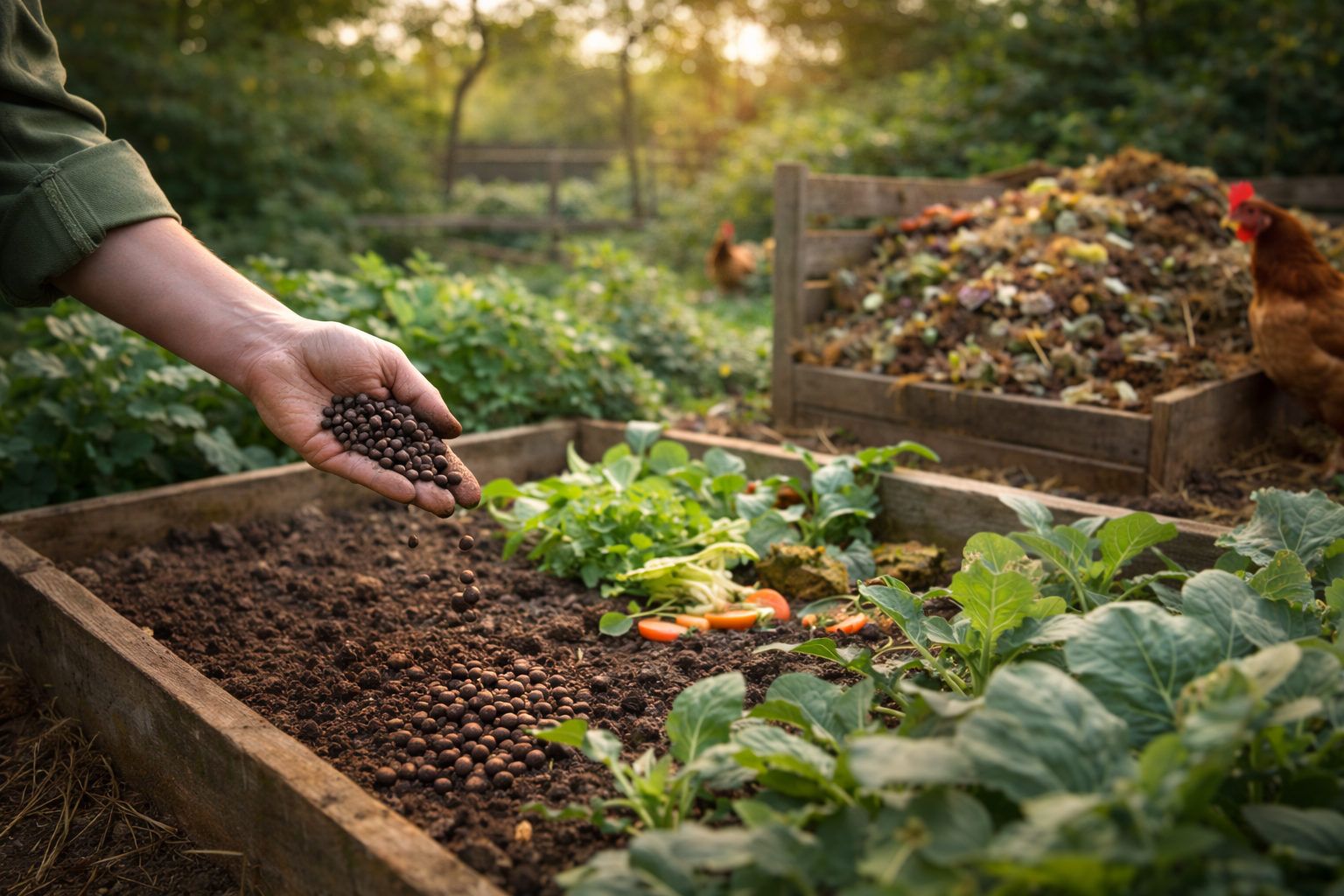
Rabbit Manure for Gardens
Rabbit manure is one of the most valuable homestead byproducts:
-
High in nitrogen and phosphorus
-
No composting required
-
Excellent for vegetable beds and fruit trees
Chicken Manure and Composting
Chicken manure is potent but “hot”:
-
Requires composting
-
Can burn plants if misused
-
Adds complexity to nutrient management
Best Animal for Garden-Focused Homesteads
For gardeners, rabbits provide simpler and safer soil enrichment.
Profitability and Homestead Income Potential
Selling Rabbit Meat and Breeding Stock
Rabbit income streams include:
-
Meat sales
-
Breeding stock
-
Manure for gardeners
Local demand for rabbit meat is often underserved.
Selling Eggs, Meat, and Chicks
Chickens offer:
-
Egg sales
-
Meat birds
-
Chicks and pullets
Egg sales provide steady, small-scale income.
Which Livestock Offers Better ROI?
-
Rabbits: Higher meat ROI per square foot
-
Chickens: More diversified income streams
Rabbits vs Chickens for Small Homesteads: Final Verdict
Best Choice for Meat-Focused Homesteads
Rabbits
Best Choice for Beginners
Rabbits or chickens, depending on comfort level
Best Choice for Sustainability and Low Cost
Rabbits
Can You Raise Both Successfully?
Yes—many experienced homesteaders do.
Practical Tips from Experienced Small Homesteaders
-
Start small
-
Learn local regulations
-
Choose breeds suited to your climate
-
Build systems before scaling
Frequently Asked Questions
Are rabbits or chickens easier for beginners?
Rabbits are often easier due to lower noise, space, and labor demands.
Which produces meat faster?
Rabbits typically reach harvest size sooner.
Are rabbits cheaper long term?
Yes, especially for meat-focused homesteads.
Can rabbits and chickens be raised together?
Yes, but housing should remain separate.
Which is better for urban homesteads?
Rabbits.
Conclusion: Choosing the Right Livestock for Your Small Homestead
The debate of Rabbits vs Chickens for Small Homesteads doesn’t have a one-size-fits-all answer—but it does have a clear logic.
Choose rabbits if you want:
-
Quiet efficiency
-
Maximum meat in minimal space
-
Lower costs and simpler systems
Choose chickens if you want:
-
Eggs
-
Compost and pest control
-
A more interactive homestead experience
And if your space allows?
The most resilient small homesteads often raise both—strategically, intentionally, and sustainably.