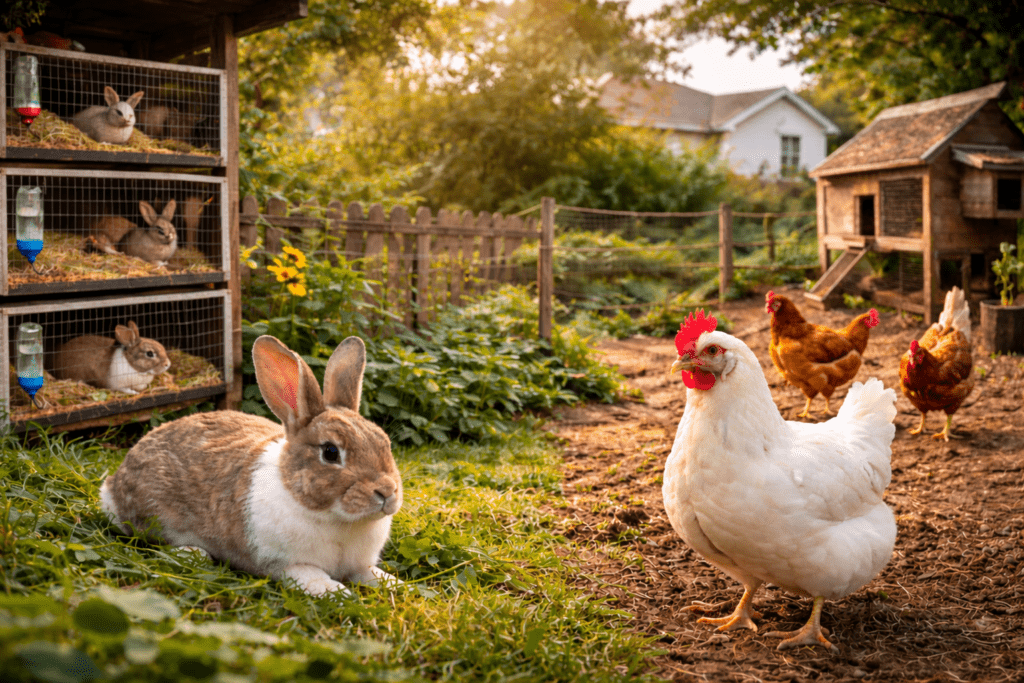
Most livestock failures on small farms don’t start with disease, feed, or breeding—they start with poor housing.
Whether you’re planning your first backyard setup or refining an existing system, housing for rabbits or chickens is one of the most critical decisions you’ll make. Housing affects animal health, productivity, daily labor, long-term costs, and even whether your livestock venture is enjoyable or exhausting.
Yet many homesteaders treat housing as an afterthought—buying animals first and scrambling to “make something work” later. This guide is written to prevent that mistake.
Drawing on practical small-scale farming experience and proven husbandry principles, this article will help you confidently choose the right housing system for rabbits or chickens based on your space, climate, budget, and ethical priorities—so your animals thrive and your homestead runs smoothly.
Understanding the Purpose of Livestock Housing
What Good Housing Must Provide (Universal Principles)
No matter the species, effective livestock housing must meet four non-negotiable needs:
-
Protection from predators
-
Shelter from weather extremes
-
Adequate ventilation without drafts
-
Sanitation that prevents disease and stress
Housing that fails in even one of these areas eventually leads to:
-
Health problems
-
Reduced productivity
-
Higher mortality
-
Increased labor and frustration
The challenge is that rabbits and chickens meet these needs in very different ways.
Why Rabbits and Chickens Have Very Different Housing Needs
Rabbits and chickens differ fundamentally in:
-
Behavior
-
Biology
-
Stress tolerance
-
Hygiene requirements
Rabbits are:
-
Quiet, prey animals
-
Extremely sensitive to heat and ammonia
-
Best housed off the ground
Chickens are:
-
Active, social foragers
-
More tolerant of temperature swings
-
Naturally ground-dwelling animals
Understanding these differences is essential before comparing housing systems.
Housing for Rabbits or Chickens — Key Differences at a Glance
Side-by-Side Housing Comparison
| Factor | Rabbits | Chickens |
|---|---|---|
| Living Style | Off-ground | Ground-based |
| Space Use | Vertical | Horizontal |
| Noise | Silent | Moderate |
| Waste Management | Simple | More complex |
| Predator Risk | High if poorly secured | High, especially at night |
| Ventilation Needs | Critical | Important |
This comparison already reveals an important truth: housing for rabbits prioritizes control and efficiency, while housing for chickens prioritizes movement and behavior.
Which Animal Is More Forgiving of Housing Mistakes?
-
Chickens tolerate imperfect housing better in the short term.
-
Rabbits suffer quickly from poor ventilation, heat, or sanitation.
This makes planning even more critical for rabbit housing, especially for beginners.
Space Requirements and Layout Planning
Space Needs for Rabbit Housing
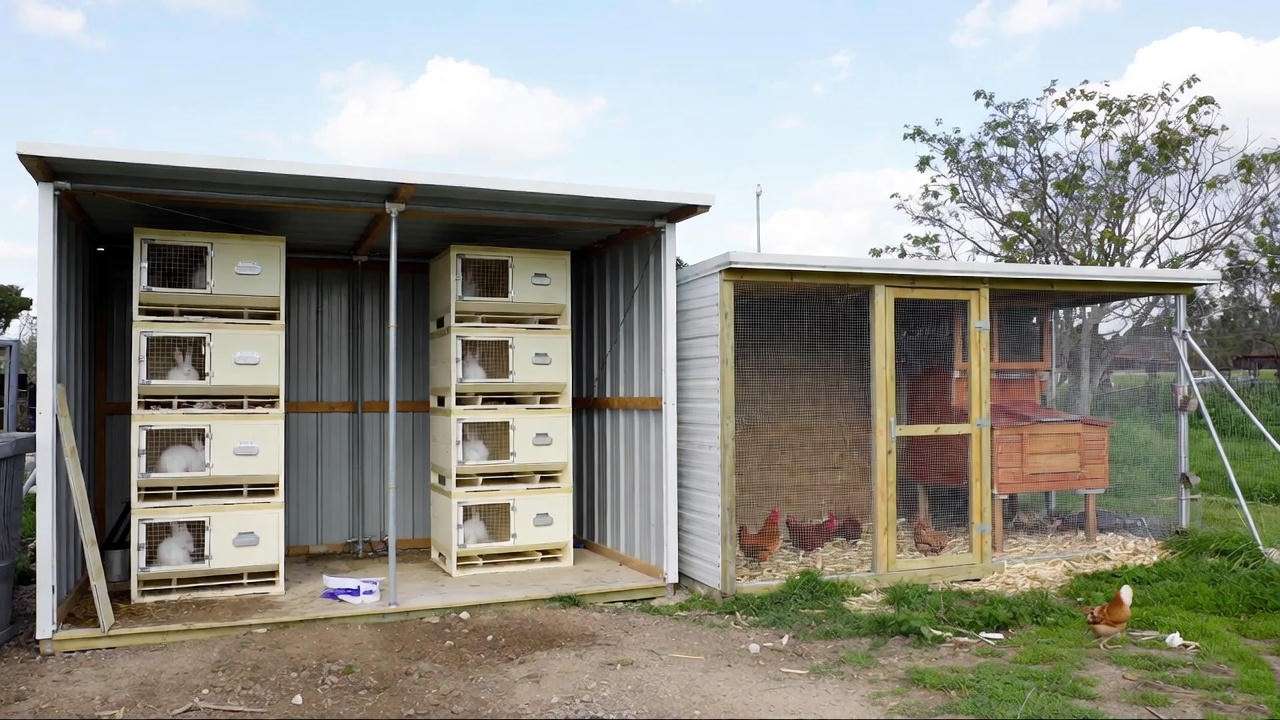
Rabbit housing is one of the most space-efficient livestock systems available.
General guidelines:
-
Medium breeds: ~3–4 sq ft per rabbit
-
Large breeds: 5–6 sq ft per rabbit
-
Does with litters need additional space
Key advantage: vertical stacking.
By stacking cages:
-
You maximize production per square foot
-
You reduce ground footprint
-
You simplify manure collection
Rabbit housing works well in:
-
Sheds
-
Garages
-
Under roof overhangs
-
Shaded outdoor structures
Space Needs for Chicken Housing
Chicken housing requires more horizontal space:
-
Coop: 3–4 sq ft per bird
-
Run: 8–10 sq ft per bird (minimum)
-
Additional space if confined full-time
Chickens also require:
-
Roosting bars
-
Nesting boxes
-
Access to outdoor space for welfare
Choosing the Right Layout for Small Properties
-
Backyards: Rabbits are often easier to accommodate
-
Urban/suburban lots: Rabbits face fewer zoning and noise issues
-
Rural properties: Chickens integrate more easily into land use
Space alone often determines whether rabbits or chickens are the better choice.
Types of Rabbit Housing Systems
Wire Cages and Hutches
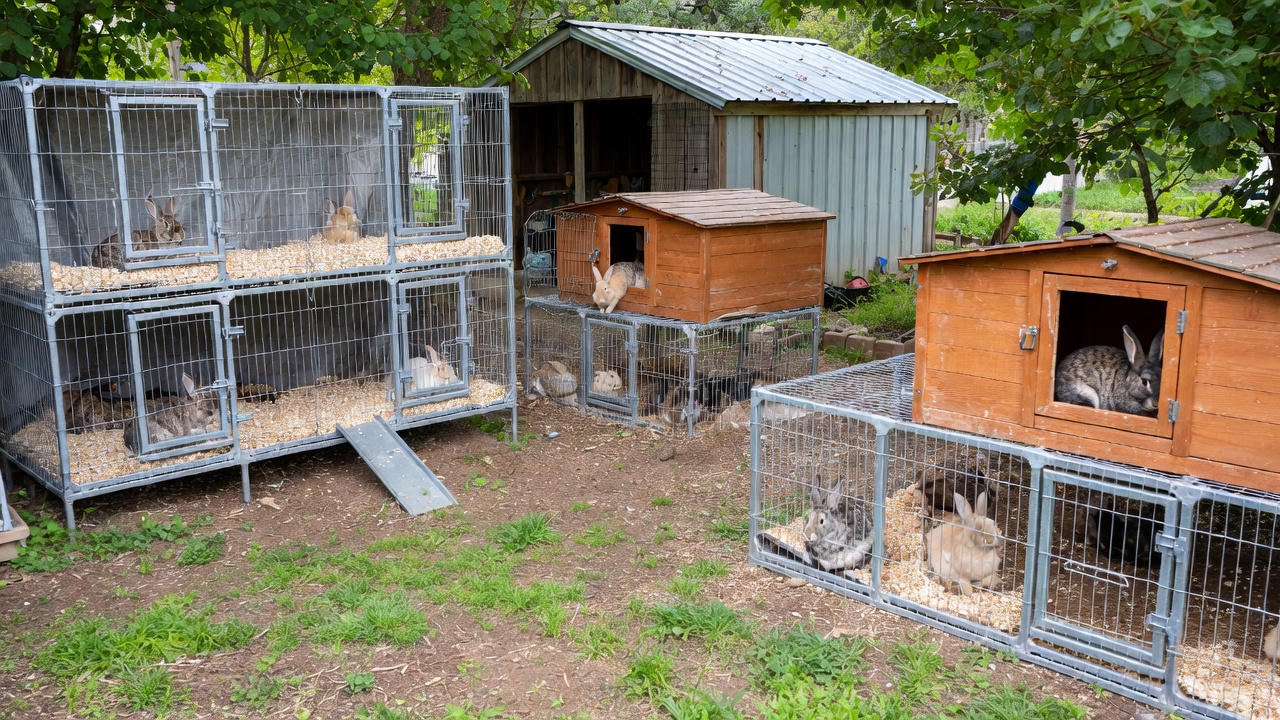
This is the most common and efficient rabbit housing system.
Advantages:
-
Excellent sanitation
-
Easy manure management
-
Reduced disease risk
-
High space efficiency
Concerns (and solutions):
-
Wire floors → use resting boards
-
Exposure → provide shade and wind protection
When designed correctly, wire cage systems are both humane and highly productive.
Colony Systems
Colony housing allows rabbits to live together on the ground.
Pros:
-
More natural behavior
-
Less equipment cost
Cons:
-
Higher disease risk
-
Fighting and breeding control issues
-
Harder sanitation
Colony systems work best for experienced keepers, not beginners.
Indoor Rabbit Housing Options
Indoor setups are increasingly popular.
Requirements include:
-
Strong ventilation
-
Odor control
-
Temperature management
Indoor housing is ideal for:
-
Hot climates
-
Urban homesteads
-
Small breeding programs
Types of Chicken Housing Systems
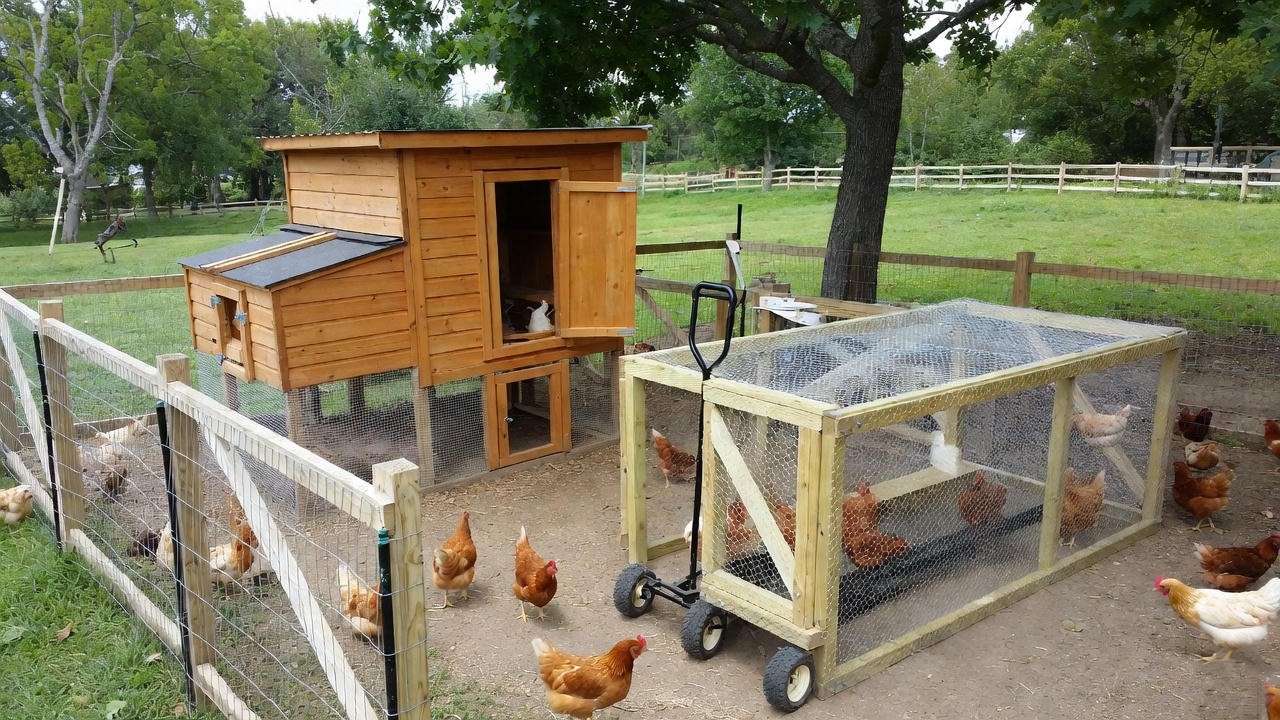
Traditional Chicken Coops
Fixed coops are the most common chicken housing option.
Key design features:
-
Raised floors
-
Ventilation near the roofline
-
Predator-proof doors
-
Easy access for cleaning
A poorly designed coop becomes a maintenance nightmare.
Chicken Tractors and Mobile Housing
Chicken tractors:
-
Improve pasture health
-
Reduce parasite load
-
Require daily or frequent movement
They are best suited for:
-
Small flocks
-
Active homesteaders
-
Meat birds
Free-Range Housing Setups
Free-range systems rely on:
-
Secure nighttime housing
-
Controlled daytime access
They work best in:
-
Rural areas
-
Low predator pressure
-
Properties with fencing or guardian animals
Predator Protection and Security
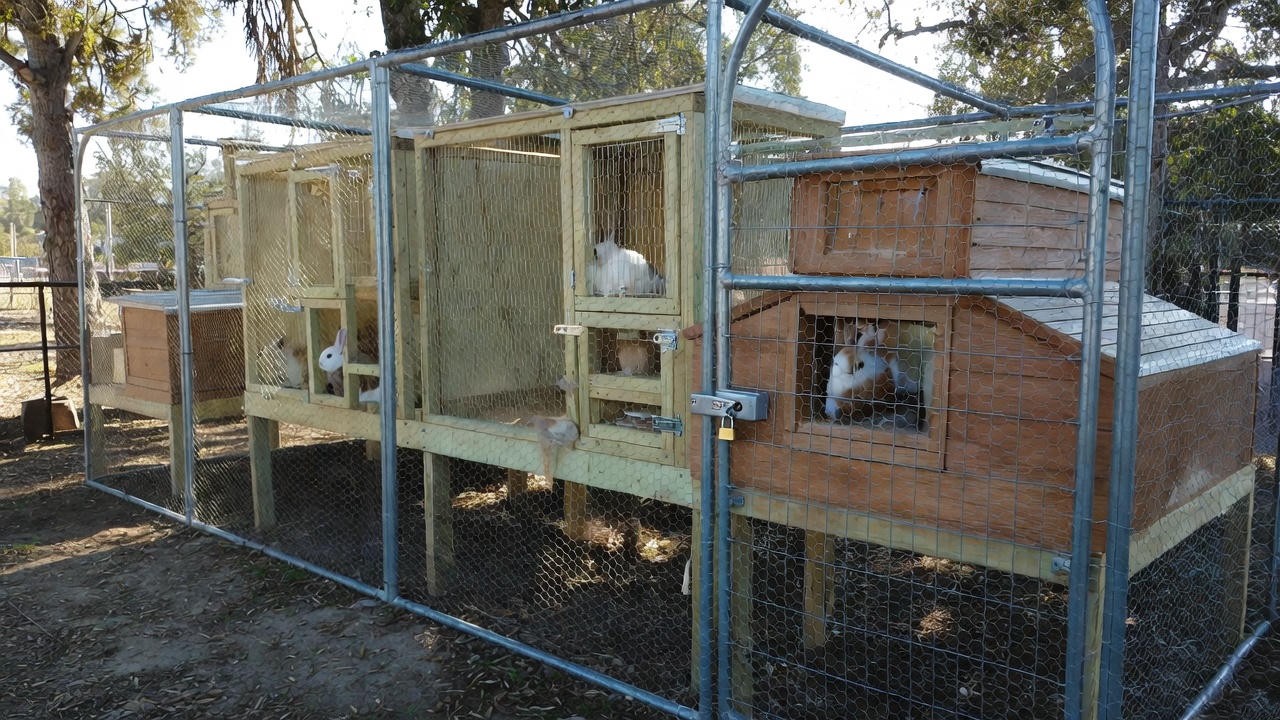
Common Predators of Rabbits
Rabbits are vulnerable to:
-
Raccoons
-
Dogs
-
Weasels
-
Hawks
-
Snakes
Housing must include:
-
Small-gauge wire
-
Secure latches
-
Elevated placement
Common Predators of Chickens
Chickens face:
-
Foxes
-
Coyotes
-
Raccoons
-
Aerial predators
Chicken housing failures often happen at night, when predators exploit weak doors or wire.
Best Practices for Predator-Proof Housing
-
Use hardware cloth, not chicken wire
-
Bury wire skirts
-
Lock doors every night
-
Avoid ground contact where possible
Predator losses are almost always housing failures, not bad luck.
Climate, Ventilation, and Seasonal Considerations
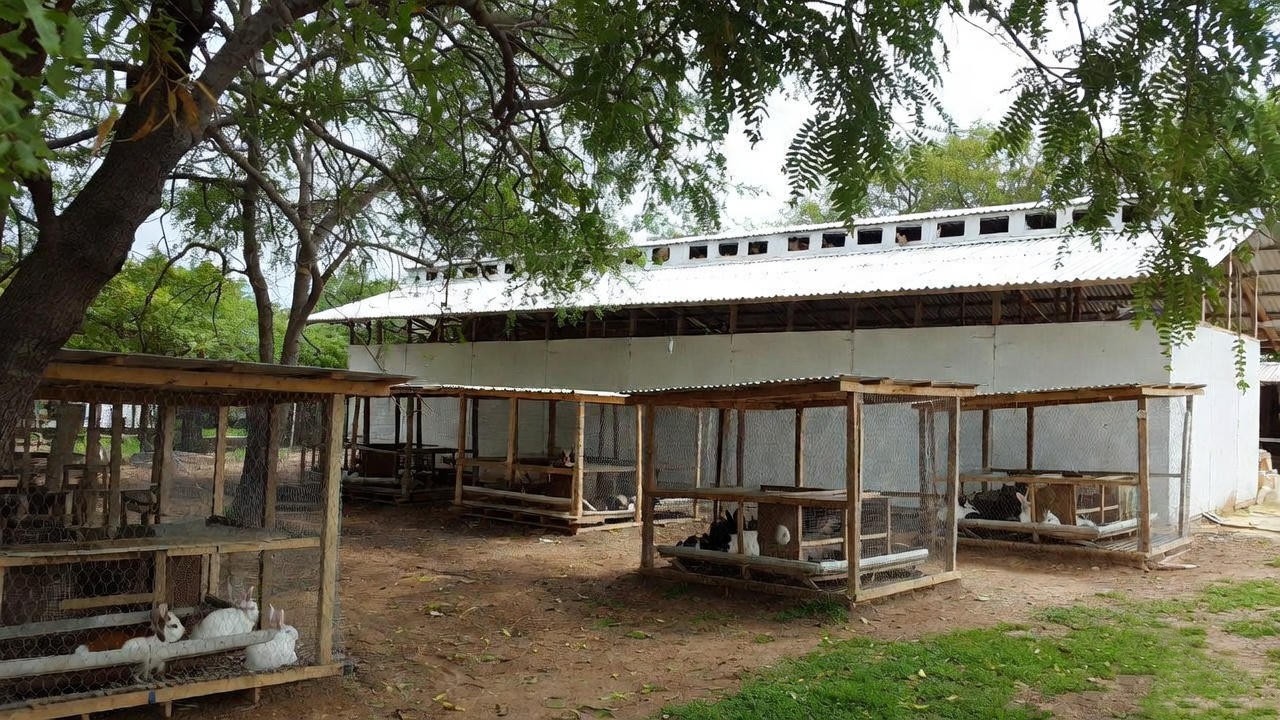
Proper housing is not just about walls and wire—it is about controlling the environment your animals live in. Climate is one of the most overlooked yet decisive factors when choosing housing for rabbits or chickens.
Heat and Cold Stress in Rabbits
Rabbits are far more sensitive to heat than cold. Temperatures above 85°F (29°C) can quickly lead to heat stress and death.
Key housing considerations for rabbits:
-
Shade is mandatory
-
Strong airflow without direct drafts
-
Roof insulation or reflective roofing
-
Frozen water bottles or cooling tiles in hot climates
Cold is less dangerous, provided rabbits are:
-
Kept dry
-
Shielded from wind
-
Given extra bedding in winter
Many rabbit losses occur not from winter cold—but from summer heat combined with poor ventilation.
Heat and Cold Management for Chickens
Chickens tolerate a wider temperature range but still require thoughtful housing design.
In hot climates:
-
Large ventilation openings
-
Open-sided coops with hardware cloth
-
Shade over runs
In cold climates:
-
Draft-free (not airtight) coops
-
Proper roost placement
-
Avoiding moisture buildup
A common mistake is over-insulating chicken coops, which traps moisture and ammonia.
Regional Housing Adjustments by Climate Zone
-
Hot climates: Rabbits require climate-conscious housing; chickens need airflow
-
Cold climates: Chickens adapt well; rabbits need wind protection
-
Humid areas: Ventilation is critical for both species
Climate should always influence housing design before livestock selection.
Cleaning, Sanitation, and Disease Prevention
Sanitation Needs for Rabbit Housing
Rabbit housing excels when sanitation is prioritized.
Best practices include:
-
Manure trays or drop-through systems
-
Regular removal of waste
-
Adequate airflow to reduce ammonia
Clean rabbit housing:
-
Reduces respiratory disease
-
Prevents flystrike
-
Improves growth and reproduction
Well-designed rabbit cages can remain cleaner with less daily effort.
Sanitation Needs for Chicken Housing
Chicken housing requires more active sanitation management.
Common challenges:
-
Wet bedding
-
Parasites
-
Ammonia buildup
Effective strategies include:
-
Deep litter systems
-
Regular coop cleaning
-
Moisture control
Chickens tolerate more mess—but poor sanitation reduces egg production and flock health.
Which Housing System Is Easier to Maintain Long-Term?
-
Rabbits: Easier daily maintenance with proper design
-
Chickens: More forgiving, but higher long-term cleaning demands
The ease of maintenance often determines whether homesteaders stick with or abandon livestock.
Cost Comparison — Building vs Buying Housing
Startup Costs for Rabbit Housing
Rabbit housing can be surprisingly affordable.
Approximate costs:
-
DIY cages: Low to moderate
-
Commercial cage systems: Moderate upfront, long lifespan
Cost-saving strategies:
-
Repurposed shelving
-
Locally sourced wire
-
Modular designs for expansion
Rabbit housing offers excellent return on investment.
Startup Costs for Chicken Housing
Chicken housing often costs more than expected.
Hidden expenses include:
-
Predator-proof fencing
-
Hardware cloth
-
Roofing and anchors
Many beginner coops fail within the first year and require rebuilding.
Long-Term Maintenance Costs
-
Rabbits: Lower repair costs, minimal wear
-
Chickens: Higher wear from scratching, moisture, and weather
Long-term costs favor simple, durable designs over aesthetics.
Animal Welfare and Ethical Housing Considerations
Welfare Needs Specific to Rabbits
Ethical rabbit housing includes:
-
Enough space to stretch and rest
-
Solid resting surfaces
-
Calm, quiet environments
Contrary to myth, well-designed cages do not harm rabbits and often improve health.
Welfare Needs Specific to Chickens
Chickens require housing that allows:
-
Dust bathing
-
Perching
-
Nesting behaviors
Crowded or poorly ventilated coops lead to stress, pecking, and disease.
Housing Choices That Improve Quality of Life
Ethical housing balances:
-
Animal comfort
-
Keeper workload
-
Environmental control
Good housing improves both welfare and productivity.
Common Housing Mistakes to Avoid
Mistakes New Rabbit Keepers Make
-
Poor ventilation
-
Housing in full sun
-
Underestimating heat risk
-
Ignoring sanitation
Mistakes New Chicken Keepers Make
-
Using chicken wire instead of hardware cloth
-
Under-sizing coops
-
Poor drainage
-
Overcrowding
How to Future-Proof Your Housing Setup
-
Build larger than current needs
-
Design for easy cleaning
-
Plan for climate extremes
Housing for Rabbits or Chickens — Which Is Right for You?
Best Housing Choice for Small Backyards
Rabbits, due to quiet, compact housing
Best Housing Choice for Low Budgets
Rabbits, especially with DIY cages
Best Housing Choice for Hot or Cold Climates
-
Hot climates: Chickens easier
-
Cold climates: Both workable with proper design
Can You House Both on the Same Property?
Yes—when housing is:
-
Separate
-
Species-appropriate
-
Strategically placed
Many experienced homesteads successfully raise both.
Expert Tips from Experienced Homesteaders
-
Design housing before buying animals
-
Prioritize ventilation over insulation
-
Build for ease of cleaning, not aesthetics
-
Learn from others’ failures
Frequently Asked Questions
Is rabbit housing cheaper than chicken housing?
In most cases, yes—especially for small-scale setups.
Can rabbits live in chicken coops?
No. Their housing needs are fundamentally different.
How much space do rabbits need compared to chickens?
Rabbits need less ground space but require controlled environments.
What is the easiest housing for beginners?
Rabbit cages or simple, well-ventilated chicken coops.
Does housing affect egg and meat production?
Absolutely—housing directly impacts health and productivity.
Conclusion: Choosing Housing That Supports Healthy, Productive Animals
Choosing the right housing for rabbits or chickens is not about trends or aesthetics—it’s about functionality, welfare, and sustainability.
Plan first. Build smart. Respect the needs of the animal.
When housing is done right:
-
Animals stay healthier
-
Labor decreases
-
Costs stabilize
-
Homesteading becomes rewarding—not overwhelming
The best housing system is the one that fits your space, climate, goals, and capacity—and supports your animals for the long term.