
Imagine walking through your farm shed or checking the wooden posts supporting your greenhouse, only to spot telltale mud tubes snaking up the walls or piles of frass (termite droppings) scattered like sawdust beneath hollow-sounding beams. Your heart sinks — termites have already been at work, silently devouring structural wood, fencing, storage bins, and even young crop plants. Termite fogger products, those readily available “bug bombs” promising quick relief, often become the first line of defense for homeowners and farmers alike. But here’s the harsh reality: termite fogger treatments rarely solve the problem and can sometimes make things worse by giving a false sense of security while the hidden colony continues thriving.
In this comprehensive guide, we’ll explain why termite foggers fall short, backed by insights from university extension services, EPA guidelines, and professional pest management consensus. More importantly, we’ll dive deep into proven natural pest control alternatives that are safer for your family, pets, beneficial insects, crops, and the environment — especially suited for agricultural settings where chemical residues could affect soil health and produce quality. Whether you’re protecting your home’s foundation or safeguarding farm infrastructure like barns, poles, and irrigation stakes, these sustainable methods offer real, long-term value without compromising eco-friendly practices.
Understanding Termites: Types, Behavior, and Why They’re a Threat to Farms and Homes
Termites are highly organized social insects that play vital roles in natural ecosystems by breaking down dead wood and aerating soil. However, when they target human structures and crops, they become serious pests. Globally, termites cause billions in damage annually — estimates range from $5 billion to over $40 billion in structural and agricultural losses, with subterranean species responsible for the majority.
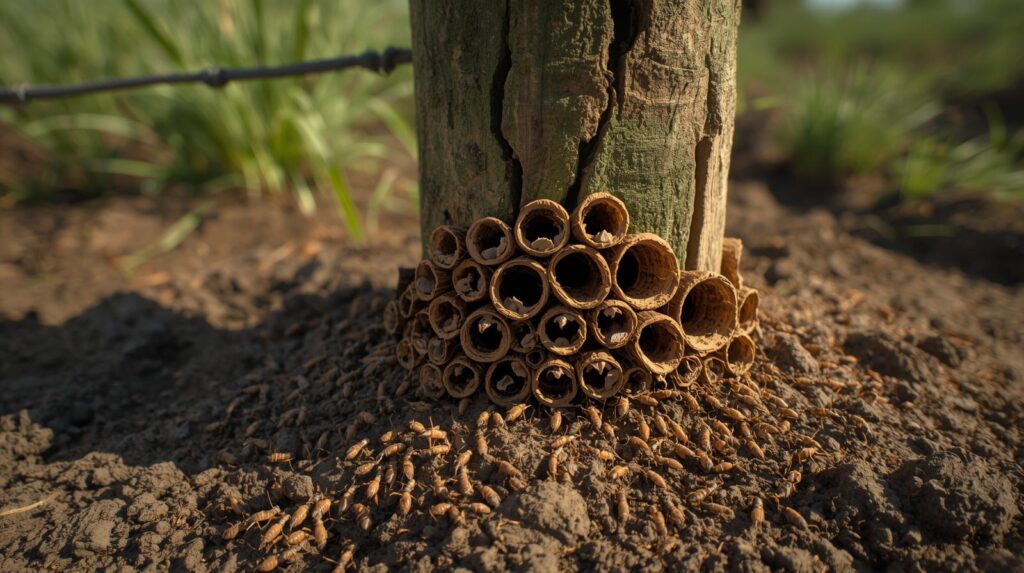
Common Termite Species
- Subterranean termites (e.g., Reticulitermes and Coptotermes species): The most destructive in most regions. They build extensive underground colonies and connect to food sources via mud tubes to maintain moisture. These are the primary culprits in farm damage, attacking wooden fences, poles, sheds, and even roots of young plants.
- Drywood termites: Live directly in dry wood without soil contact; common in arid areas. They infest furniture, beams, and stored produce crates.
- Dampwood termites: Prefer moist wood; often found in humid climates or areas with poor drainage.
Subterranean types are especially problematic on farms, where moist soil and organic matter create ideal conditions.
How Termites Damage Agricultural Assets
Termites don’t just eat wood — they tunnel through roots, stems, and crop residues, weakening plants and making them susceptible to diseases. In agriculture, species like Odontotermes and Microtermes attack cereals (wheat, maize, rice), sugarcane, cotton, legumes, vegetables, and fruit trees. They chew bark, bore into stems, and cause lodging (plants falling over), reducing yields significantly. Economic impacts are staggering: in some regions, termites contribute to hundreds of millions in annual losses, affecting smallholder farmers hardest.
Signs of Infestation
Early detection is crucial:
- Mud tubes along foundations, walls, or irrigation lines.
- Swarmers (winged reproductives) or discarded wings near windows/doors.
- Frass (pellet-like droppings) or hollow wood when tapped.
- Blistering paint, buckling floors, or weakened posts/fences.
On farms, check wooden stakes, storage sheds, and crop bases regularly — especially after rain when moisture draws termites.
Expert insight from sources like university extensions emphasizes that termites thrive in moist, organic-rich environments common on farms, making prevention a key part of sustainable agriculture.
Termite Foggers Explained: Do They Really Work?
Termite foggers, also called bug bombs or total release aerosols, release a cloud of insecticide into the air to kill exposed insects.
What Are Termite Foggers?
These products contain pyrethroids or other contact insecticides and are marketed for general household pests. People often repurpose them for termites due to ease and low cost — no drilling, no mess.
Why Termite Foggers Fail
The core issue: Termites live in hidden, protected colonies. Subterranean species tunnel deep in soil or wood; drywood ones burrow inside timber. Foggers only affect surface-exposed termites — they cannot penetrate wood, soil tubes, or galleries. There’s no residual effect once the mist dissipates, leaving the queen and colony intact to rebuild. Professional sources and user reports consistently label them ineffective: manufacturers even state foggers won’t kill termites in walls or studs.
Health and Safety Risks
Foggers disperse airborne toxins, posing respiratory risks to humans and pets. They harm beneficial insects like pollinators and can contaminate food storage areas on farms. In enclosed spaces, improper use risks fire or explosion.
Real-World Evidence
Pest control experts and forums agree: “Foggers are a crutch” with no lasting impact. Studies and extension services recommend avoiding them entirely for termites.
The Best Natural Pest Control Alternatives to Termite Foggers
Now that we’ve established why termite foggers are unreliable and potentially harmful, let’s explore effective natural termite control methods. These alternatives focus on biological, mechanical, and low-toxicity approaches that target termite biology while being safer for humans, pets, beneficial insects, pollinators, soil health, and agricultural productivity. Many are supported by university research, extension services, and field studies, making them suitable for both homes and farms where chemical residues could impact crops or livestock.
These methods work best as part of an integrated pest management (IPM) strategy: combining detection, prevention, and targeted treatment. They excel against subterranean termites (the most common destructive type on farms) but vary in effectiveness against drywood species.
Beneficial Nematodes — Nature’s Tiny Assassins
Beneficial nematodes (entomopathogenic nematodes, primarily Steinernema carpocapsae, Heterorhabditis bacteriophora, and certain strains of Steinernema riobrave) are microscopic parasitic worms that actively seek out and kill soil-dwelling pests like subterranean termites. They enter termite bodies through natural openings, release symbiotic bacteria that kill the host within days, and reproduce inside before seeking new hosts.
Research shows variable but promising results: Studies (e.g., from USDA ARS and various entomology journals) indicate strains like S. carpocapsae can achieve high mortality (up to 90%+ in lab settings) against species such as Reticulitermes flavipes and Coptotermes formosanus, though field success depends on soil moisture, temperature (ideally 50–85°F), and application timing. They are highly effective in moist agricultural soils and pose no risk to plants, earthworms, or vertebrates.
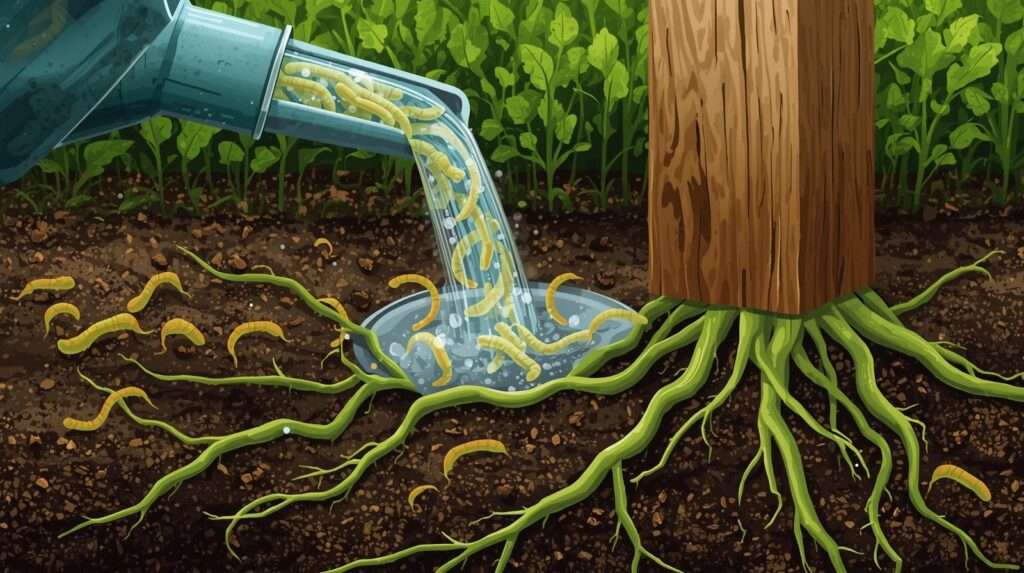
How to apply:
- Purchase live nematodes from reputable suppliers (often sold as powder or gel; look for organic-certified options).
- Mix with cool, non-chlorinated water (e.g., 1 tablespoon nematodes per gallon).
- Apply via watering can, sprayer, or irrigation system around foundations, farm perimeters, wooden poles, and crop bases — ideally in early morning or evening.
- Keep soil moist for 1–2 weeks post-application; repeat every 4–6 weeks during active seasons.
- Best for prevention and early infestations; combine with barriers for long-term control.
On farms, nematodes also target other soil pests like grubs and cutworms, adding extra value.
Diatomaceous Earth (DE) — Mechanical Dehydration
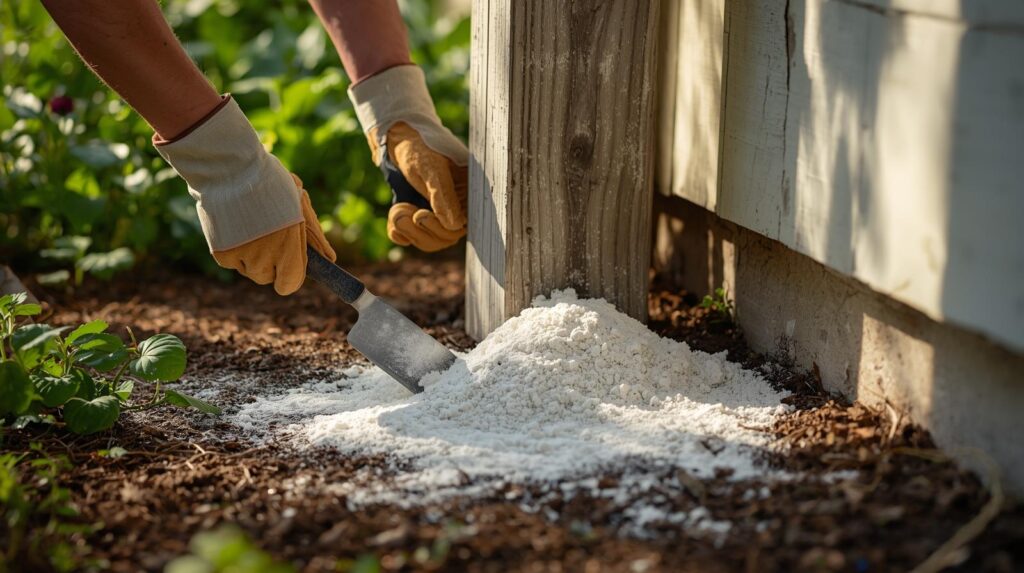
Food-grade diatomaceous earth is a natural silica powder from fossilized diatoms that abrades insect exoskeletons, causing dehydration and death. It’s non-toxic to mammals and works well as a barrier or spot treatment.
Studies (e.g., on Reticulitermes chinensis) show dry DE causes high mortality and disrupts tunneling when termites contact it directly. However, it’s less effective against hidden subterranean colonies deep in soil or wood, as termites avoid thick layers or moist conditions reduce efficacy.
How to apply:
- Use food-grade DE (not pool-grade, which contains harmful additives).
- Dust lightly around foundations, in crawl spaces, along mud tubes, garden beds, or wooden structures.
- Apply in dry conditions; reapply after rain.
- For farms: Spread around wooden stakes, storage sheds, and crop perimeters as a preventive barrier.
It’s best as a supplementary method — kills exposed workers but won’t eliminate queens in deep colonies.
Boric Acid/Borates — Proven Natural Toxicant
Boric acid (or sodium borate/borax) is a naturally occurring mineral that termites ingest, disrupting digestion and starving them (they carry it back to the colony via grooming). Borates also act as wood preservatives.
University extensions and studies confirm borates are highly effective when termites ingest them, with low mammalian toxicity (similar to table salt). Products like Bora-Care or Tim-Bor penetrate wood well when applied properly.
How to apply:
- Powder: Puff into drilled holes in infested wood or galleries.
- Solution: Mix 1 teaspoon boric acid per cup warm water; spray or inject into wood/soil contact areas. For prevention, apply to exposed wood during construction or maintenance.
- Bait: Combine with sugar or attractants in stations.
- Reapply as needed; ideal for drywood termites or preventive wood treatment on farms (e.g., sheds, fences).
Avoid heavy use near edible crops to prevent residue concerns.
Orange Oil (D-Limonene) — Citrus-Based Spot Treatment
Orange oil (extract from citrus peels, ~92% d-limonene) dissolves termite exoskeletons and disrupts respiration on contact. It’s most effective against drywood termites in accessible wood.
Research (e.g., USDA and lab studies) shows high kill rates (up to 96% in confined tests) when injected directly into galleries, but limited penetration for subterranean types or hidden colonies.
How to apply:
- Drill small holes into infested wood.
- Inject undiluted orange oil using a syringe or sprayer.
- Seal holes; reapply if needed.
- Best for localized home treatments (furniture, beams); less practical for large farm structures.
It’s eco-friendly with pleasant citrus scent but requires thorough application.
Other Promising Natural Options
- Neem oil extracts — Interferes with termite hormones and feeding; spray on wood or soil.
- Essential oils (clove, vetiver) — Repel or disrupt termites; use in barriers.
- Cardboard traps — Attract and monitor; destroy infested traps.
- Vinegar solutions — Repel minor surface activity (not colony-killing).
Integrated Natural Strategies
Combine for best results:
- Nematodes + DE barrier for subterranean prevention.
- Borates for wood treatment + orange oil for spot kills.
- Regular monitoring with traps.
Case example: On farms, apply nematodes around perimeters in spring, maintain DE barriers, and treat wooden infrastructure with borates — reducing chemical needs while protecting yields.
Prevention is Better Than Cure: Long-Term Natural Strategies for Farms and Homes
The single most effective way to manage termites is to prevent them from ever becoming established. Prevention costs far less than treatment and preserves both your property and your peace of mind. These natural, sustainable strategies focus on eliminating the conditions termites love most: moisture, wood-to-soil contact, and easy access to food sources.
Cultural and Physical Barriers
- Eliminate excess moisture — Termites require constant humidity to survive. Fix leaking pipes, improve drainage around foundations and farm buildings, clean gutters, and ensure proper grading so water flows away from structures. On farms, avoid over-irrigation near wooden posts or storage areas.
- Break wood-to-soil contact — Raise firewood, lumber, mulch, and wooden planters at least 6–12 inches off the ground. Use concrete or metal stands for poles and fences. Install physical barriers such as stainless steel mesh or sand particle barriers (particles too large for termites to tunnel through but small enough to allow drainage).
- Landscape wisely — Keep shrubs, vines, and ornamental plants at least 18 inches from foundations. Remove dead trees, stumps, and wood debris promptly — these serve as termite bridges.
Farm-Specific Prevention
Agricultural environments present unique challenges due to large land areas, irrigation systems, and abundant organic matter. Implement these tailored practices:
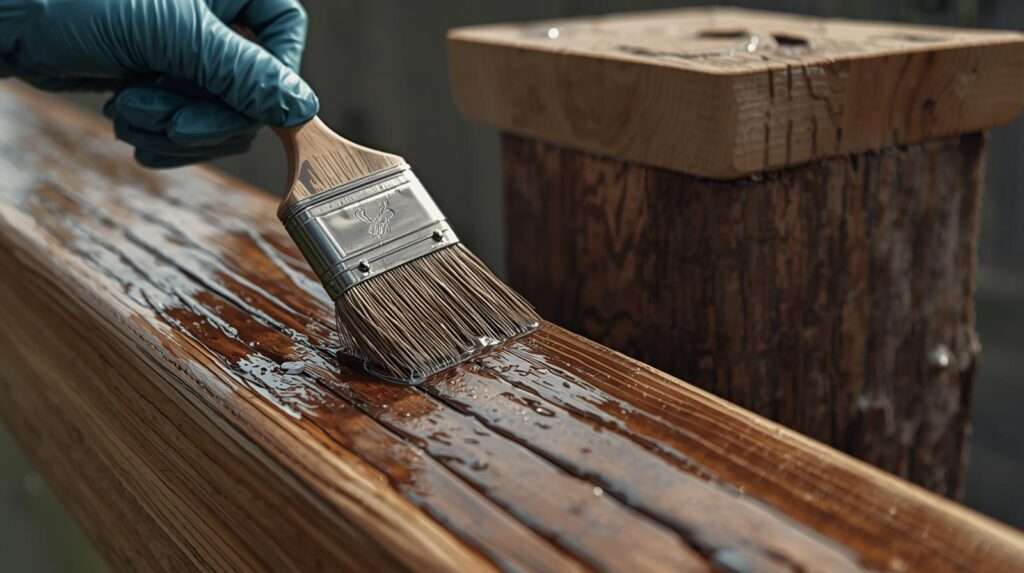
- Treat all new wooden infrastructure (fencing, trellises, storage sheds, equipment handles) with borate-based wood preservatives before installation. Borates penetrate wood and remain effective for years.
- Rotate crops where possible and remove crop residues that could harbor termites.
- Protect young fruit trees and perennial crops by applying a 12–18 inch wide band of food-grade diatomaceous earth or beneficial nematodes around the base during planting season.
- Use metal or concrete posts instead of wood in high-risk areas.
- Maintain monitoring stations (simple baited cardboard or wooden stakes placed around perimeters) and check them monthly during warm, wet seasons.
Monitoring and Early Detection
Regular inspections are your best defense:
- Walk property lines and building perimeters every 1–3 months.
- Use cardboard traps: Place flattened, moistened cardboard boxes near suspected areas; termites are attracted to cellulose and will gather underneath. Check weekly and destroy any infested traps.
- Install commercially available monitoring stations (plastic tubes with bait) around homes and farm buildings — many use cellulose or wood attractants.
By combining these preventive measures with the natural treatments discussed earlier, most farms and homes can maintain termite-free conditions for years without ever needing aggressive chemical interventions.
When to Call Professionals — Knowing Your Limits
While natural methods are powerful for prevention, early-stage control, and maintenance, severe or established infestations often require professional expertise. Signs you should call an experienced, eco-friendly pest management professional include:
- Extensive mud tubes covering large areas
- Widespread structural damage (sagging floors, buckling walls, hollow-sounding large beams)
- Active swarming indoors or multiple swarmers over several days
- Confirmed drywood termite presence in multiple locations (these are harder to treat naturally due to their hidden nature)
- Repeated failures of DIY natural treatments over several months
Look for companies that offer integrated pest management with a focus on low-impact and organic-approved solutions. Many now provide services that incorporate beneficial nematodes, borate treatments, bait stations, and physical barriers instead of relying solely on soil termiticides.
A good professional will conduct a thorough inspection, provide a written report, and offer maintenance plans that align with sustainable agriculture and environmental stewardship goals.
Frequently Asked Questions (FAQs)
Q: Do termite foggers kill the entire colony? A: No. Foggers only affect exposed, surface-level termites. They cannot reach the hidden queen, workers, or nursery deep within soil or wood, so the colony quickly recovers.
Q: Are beneficial nematodes safe for edible crops and the environment? A: Yes — when using species specifically labeled for pest control, beneficial nematodes are completely safe for plants, earthworms, humans, pets, and pollinators. They target only specific insect hosts and naturally die off when food sources are depleted.
Q: How long does boric acid take to work on termites? A: Effects can begin within days, but full colony elimination typically takes 2–8 weeks depending on colony size, as termites must carry and share the bait. Patience and proper placement are key.
Q: What is the most effective natural method for subterranean termites? A: Beneficial nematodes combined with moisture reduction and physical barriers offer the strongest long-term results for subterranean species, which are responsible for most farm and structural damage.
Q: Can orange oil treat large infestations? A: Orange oil works best for localized drywood termite infestations in accessible wood. It is not practical or effective for widespread subterranean colonies.
Q: Will diatomaceous earth harm beneficial soil organisms? A: Food-grade DE is generally safe when used sparingly. It may affect some surface-dwelling beneficial insects temporarily, but earthworms and most soil microbes remain unharmed.
Q: How often should I reapply natural treatments? A: Nematodes: every 4–8 weeks during active seasons. DE: after rain or disturbance. Borates: once applied as a wood treatment, they are long-lasting.
Q: Are these natural methods approved for organic farming? A: Many (beneficial nematodes, food-grade DE, boric acid in limited applications, and certain borate products) are OMRI-listed or allowed under organic standards. Always check labels and local regulations.

Conclusion
Termite foggers promise a quick fix, but they deliver only temporary, superficial results while exposing you, your family, your animals, and your environment to unnecessary risks. True termite control — especially in agricultural settings — requires understanding the pest, addressing the conditions that support it, and using targeted, sustainable methods that work with nature rather than against it.
By choosing beneficial nematodes, diatomaceous earth, borates, orange oil, and robust prevention strategies, you can protect your farm infrastructure, home, and crops effectively and responsibly. Start today: conduct a thorough inspection, reduce moisture, create barriers, and introduce natural controls before small problems become expensive disasters.