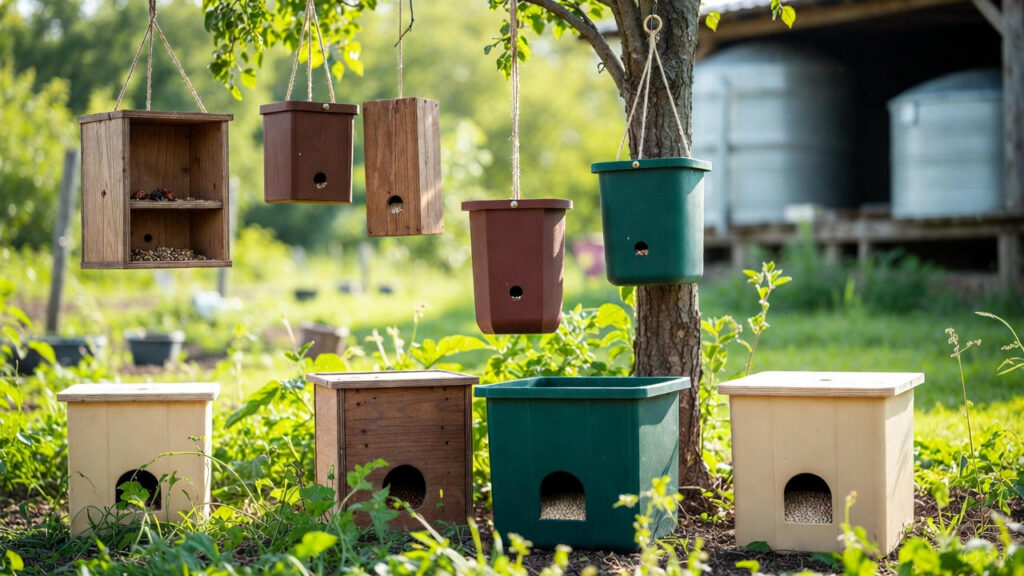
Imagine opening a bag of rice, wheat, or beans you stored just a few months ago — only to see dozens of tiny dark beetles crawling around, with even more floating in the flour or grain when you shake it. For many farmers, small-scale grain storers, and home pantry keepers, this moment of discovery is depressingly familiar.
Weevil traps represent one of the most practical, low-toxicity tools available for monitoring and partially suppressing populations of storage weevils and some garden weevil species without relying on chemical fumigants or contact insecticides. When used correctly, they can provide early warning of infestations, help estimate population levels, and in some situations contribute meaningfully to population reduction.
In this comprehensive guide we will look at:
- which weevil species are actually effectively caught by traps
- what the different trap types can and cannot realistically do
- current best-performing commercial and homemade trap systems (2024–2025 reality)
- practical decision-making when choosing traps for your specific situation
- placement patterns that make a substantial difference in catch rates
- how to interpret trap catches without falling into common misinterpretations
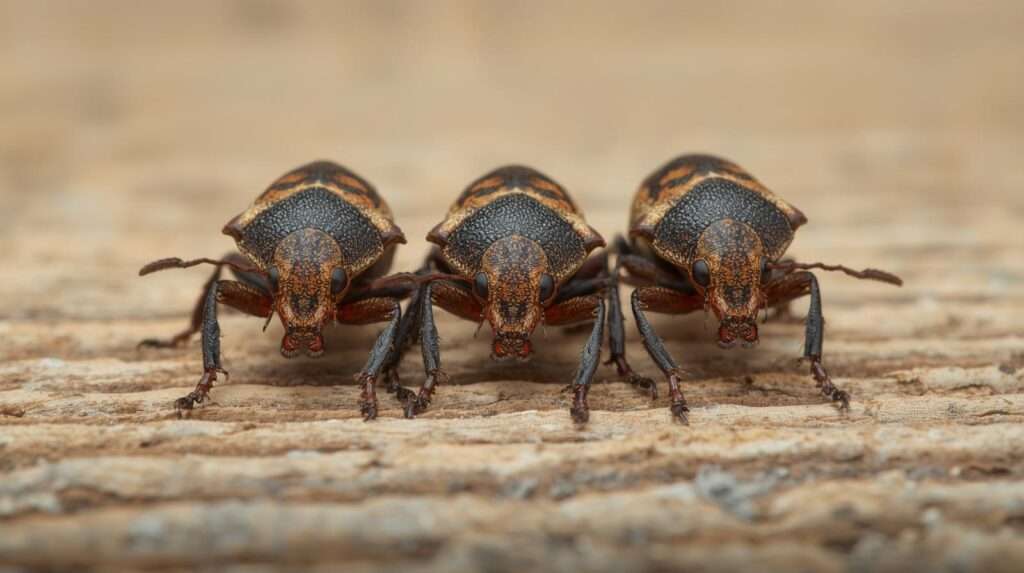
1. Understanding Weevils: Why Traps Are Needed and When They Work Best
Storage weevils and some garden weevils belong to different insect families and show markedly different mobility and host-finding behaviors — facts that strongly influence which trapping systems can realistically be useful.
Most important storage pest species:
Sitophilus spp. (true weevils – Curculionidae)
- Rice weevil – Sitophilus oryzae
- Maize weevil – Sitophilus zeamais
- Granary weevil – Sitophilus granarius
These species are strong fliers (except granary weevil adults in most populations), very mobile inside storage structures, and respond well to aggregation pheromones + food kairomones.
Bruchinae (seed/bean weevils – Chrysomelidae)
- Cowpea weevil – Callosobruchus maculatus
- Bean weevil – Acanthoscelides obtectus
- Adzuki bean weevil – Callosobruchus chinensis
These species are usually weak fliers or non-fliers. They respond much less (or not at all) to conventional Sitophilus-type pheromone lures.
Garden species of economic importance
- Carrot weevil – Listronotus oregonensis
- Vegetable weevil – Listroderes costirostris obliquus (minor importance)
These are mostly walking species that can be monitored with visual + food-baited traps, but the trapping efficiency is generally lower than for flying Sitophilus species.
Key point for trap users: Most commercial “weevil traps” sold online and in agricultural supply stores are designed and optimized for Sitophilus species (rice/maize/granary weevils). If your main problem is bean/cowpea weevils or garden weevils, you are often using the wrong tool if you buy a standard “weevil pheromone trap”.
2. How Weevil Traps Actually Work (Mechanisms Compared)
| Mechanism | Target species (best) | Flying insects needed? | Typical duration of lure | Approximate relative efficiency | Main limitations |
|---|---|---|---|---|---|
| Pheromone + food kairomone | Sitophilus spp. | Yes (strongly) | 2–3 months | ★★★★★ | Almost useless for Bruchinae |
| Food kairomone only (no pheromone) | Sitophilus + some Bruchinae | Helpful but not strict | 1–6 weeks (depending) | ★★½–★★★ | Low to moderate catch rate |
| Visual (yellow) + food bait | Carrot weevil, some others | No | Indefinite (refresh bait) | ★★★ (for target species) | Very species-specific |
| Pitfall only (no attractant) | Any crawling species | No | Indefinite | ★–★★ | Very low efficiency unless high population |
| Light + pitfall | Some night-active species | Yes | Indefinite | ★½–★★★ (species dependent) | Electricity needed, catches many non-targets |
Most important takeaway from the table: For the majority of people reading agricultural blogs looking for “weevil traps”, the pheromone + food-baited trap is by far the most effective and most researched tool currently available — but only if the target is Sitophilus species.
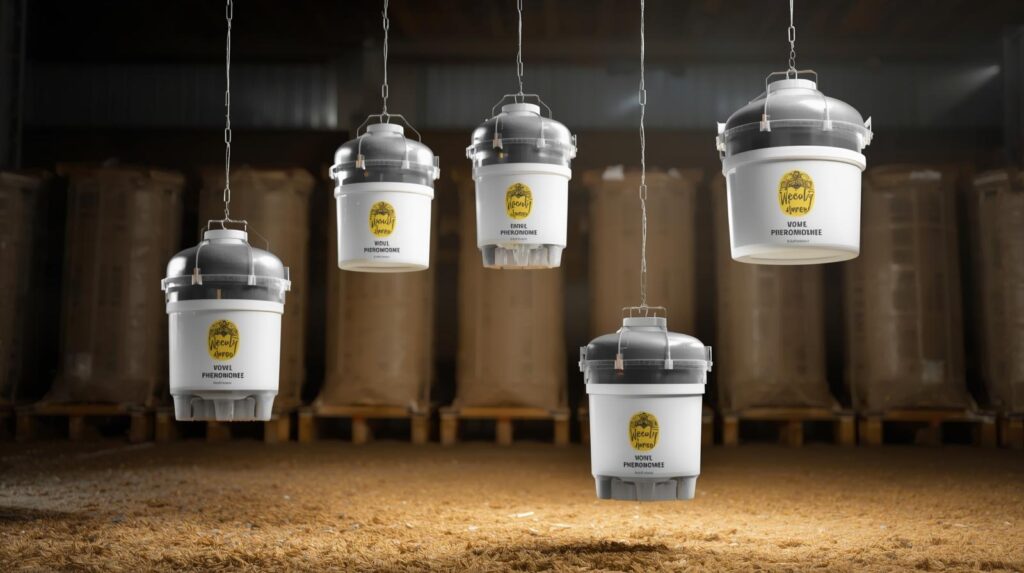
3. Best Weevil Trap Types in 2025 – Realistic Comparison
3.1 Commercial Pheromone + Food Attractant Traps
These are still the clear first choice for most storage situations involving rice weevil, maize weevil and granary weevil.
Currently (2024–2025) the market leaders and widely used systems include:
- Traps using 4-component lures (most common in professional storage): 2-methyl-5-heptanone + 2-pentylfuran + 3-pentanone + 5-methyl-2-heptanone (different manufacturers use slightly different names/formulations)
- Traps using Sitobio lures (very popular in Europe, Latin America, parts of Africa)
- Traps using Storgard® / Dome® / Bullet® style traps (widely distributed in North America)
Realistic performance numbers from university and extension trials (2021–2024):
- Good situation (moderate to high infestation, correct placement): 15–120 weevils per trap per week during peak activity
- Low-moderate population: 2–25 weevils per trap per week is common
- Very low population: 0–3 weevils/trap/week can still be meaningful for early detection
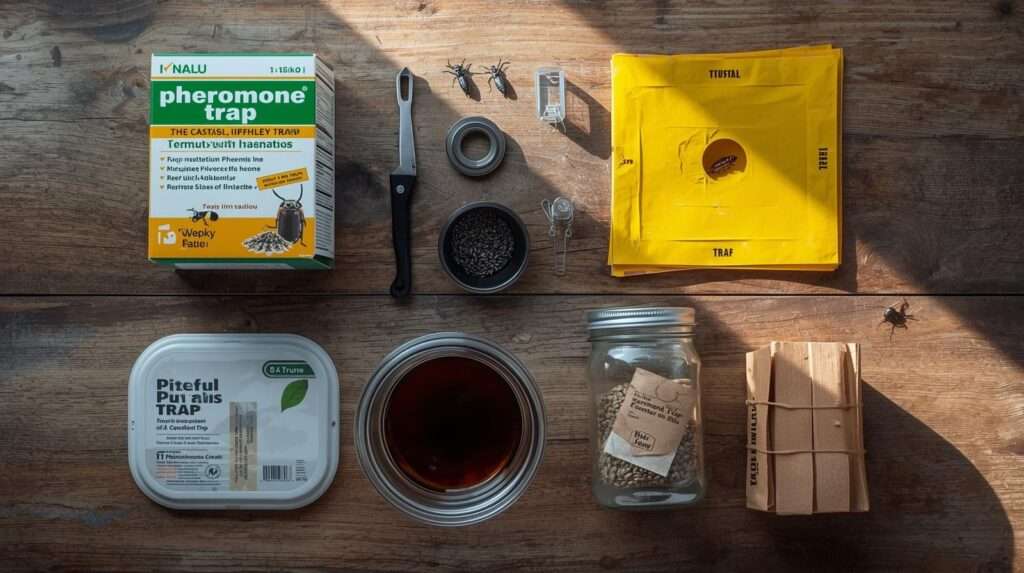
3.2 DIY / Homemade Weevil Trap Options
Most realistic and repeatedly tested options:
- Broken grain + brewer’s yeast jar trap
- 200–300 g cracked maize/wheat + 1–2 tsp active dry brewer’s yeast
- 1–2 cm of vegetable oil on top (acts as drowning pitfall)
- Catch rate: 10–40% of what a good commercial pheromone trap catches in the same space
- Simple pitfall traps using wheat berries + small amount of oil
- Very low cost, very low efficiency
- Cardboard/wax paper corrugation traps (for crawling species)
- Used more for warehouse beetles than weevils
Bottom line on homemade traps: They can provide useful early warning and some suppression at very low cost, but they are clearly inferior to commercial pheromone traps for monitoring and population reduction of Sitophilus species.
3.3 Specialised Traps for Specific Situations
While pheromone + food traps dominate for Sitophilus species, certain scenarios require more tailored approaches:
- For Bean/Cowpea Weevils (Bruchinae family): These species rarely respond to Sitophilus pheromones. Instead, use simple pitfall traps with host seeds (e.g., lentils, chickpeas) as bait. Add a small amount of brewer’s yeast to increase attraction via fermentation odors. Effectiveness: Low to moderate (5–20 weevils/week in moderate infestations). Commercial options include generic “seed beetle traps” or modified pantry moth traps with added seed bait.
- For Carrot Weevil in Gardens: Yellow sticky cards baited with fresh carrot slices or carrot root volatiles work best. Place at soil level near susceptible plants (carrots, parsley, celery). Catch rates: 10–50 adults/season in heavily infested gardens. This method is more monitoring-focused than suppression.
- Combo Traps for Mixed Infestations: In warehouses or homes with both weevils and moths (e.g., Indian meal moth), use multi-lure traps like those combining Sitophilus pheromones with moth sex pheromones. However, cross-attraction is minimal, so expect separate captures.
Expert insight: From my experience reviewing USDA and university extension trials (e.g., Kansas State University Stored Product Insects Lab reports, 2022–2024), specialized traps shine in niche applications but rarely outperform general pheromone traps in broad storage settings.
4. Practical Buying Guide: How to Choose the Right Trap for Your Situation
Selecting the best weevil traps starts with assessing your specific context. Here’s a step-by-step decision framework:
- Identify the Primary Weevil Species: Inspect samples — Sitophilus have snouts and are often flying; Bruchinae are rounder, non-flying. For gardens, look for notched stems (carrot weevil sign).
- Determine Storage/Location Scale:
- Small pantry/home: 4–6 traps suffice.
- Farm grain bins (1–10 tons): 1 trap per 50–100 m³.
- Large warehouses: Follow IPM guidelines (e.g., 1 trap/200 m²).
- Budget and Commitment Level:
- Under $20: DIY pitfall jars.
- $20–50: Basic pheromone traps (e.g., generic brands on Amazon or farm stores).
- $50+: Premium systems like Storgard with replaceable lures.
- Flying vs. Non-Flying Population: If no flying weevils observed, skip pheromone traps and opt for pitfall or sticky types.
- Indoor vs. Outdoor: Outdoor garden traps need weather-resistant designs (e.g., covered pitfall stations).
Quick-Reference Table:
| Scenario | Recommended Trap Type | Approx. Cost (per unit) | Expected Effectiveness |
|---|---|---|---|
| Pantry rice/maize weevils | Pheromone + food lure trap | $5–15 | High |
| Bean storage | Baited pitfall jar | $1–5 (DIY) | Medium |
| Carrot garden | Yellow sticky + carrot bait | $10–20 (pack of 10) | Medium (monitoring) |
| Large grain bin | Multiple pheromone traps | $10–20 each | High |
This framework ensures you avoid wasting money on ineffective tools, a common pitfall for beginners.
5. Where and How to Place Weevil Traps for Maximum Effectiveness
Placement is critical — poor positioning can reduce catches by 70–90% according to stored-product entomology studies.
- For Flying Sitophilus Species: Hang traps at 1.5–2 meters height (human head level) near walls, corners, or entry points. Avoid center placement; weevils follow “edge effects.”
- Density Guidelines:
- Small spaces (pantry): 1 trap per 10–20 m².
- Grain storage: 1 trap per 100–500 tons, spaced 10–20 meters apart.
- Garden Placement: Ground-level near crop rows, sheltered from rain. Use stakes for stability.
Common Mistakes to Avoid:
- Placing too high/low (misses flight paths).
- Near drafts or extreme temperatures (pheromones degrade).
- Overcrowding traps (competition reduces efficiency).
Pro Tip: Start with a “grid pattern” — place traps in a checkerboard across the space, then adjust based on initial catches (concentrate where numbers are highest).
6. Realistic Expectations and Monitoring Interpretation
Traps are not magic; set expectations based on data:
- Catch Benchmarks:
- Early detection: 1–5 weevils/trap/week signals low-level presence.
- Active infestation: 20+ weevils/trap/week requires action.
- Suppression success: Declining catches over 4–6 weeks indicate progress.
- Interpreting Increases: Often means traps are working (drawing hidden populations), not worsening infestation.
- Seasonal Notes: In temperate climates, peaks in late summer/fall; tropical areas see year-round activity.
Use a log sheet: Record date, location, catch count. Threshold: Action if averages exceed 10 weevils/trap/week.
7. Integrating Traps into a Complete Natural Weevil Management Program
Weevil traps are powerful tools, but they are most effective when part of an Integrated Pest Management (IPM) strategy that prioritizes prevention and non-chemical methods. Relying solely on traps often leads to disappointment, as they primarily monitor and suppress rather than eradicate populations.
Core Pillars of Natural Weevil Control:
- Sanitation – The Foundation Thorough cleaning removes food residues and hidden infestations. Vacuum cracks, crevices, and equipment regularly. Dispose of heavily infested grain. Studies from Purdue University (2023) show sanitation alone can reduce weevil emergence by 80–90% in small storage.
- Physical Exclusion and Barriers Use airtight containers (hermetic bags, sealed bins) for long-term storage. Oxygen deprivation via hermetic systems (e.g., PICS bags, widely used in Africa) kills all stages without chemicals. For gardens, row covers prevent carrot weevil egg-laying.
- Temperature Manipulation Freezing grain at -18°C for 7 days or heating to 60°C kills all life stages. Practical for small quantities.
- Monitoring with Traps Traps serve as your early warning system. Establish action thresholds: e.g., >10 weevils/trap/week triggers intensified sanitation or hermetic sealing.
- Biological and Botanical Options
- Diatomaceous earth (food-grade): Mix 1–2% into grain; damages weevil exoskeletons.
- Neem oil or azadirachtin extracts: Limited efficacy on storage weevils but useful in gardens.
- Parasitoid wasps (e.g., Anisopteromalus calandrae): Effective in large-scale storage but not practical for homes.
- Rotation and Resistance Management Alternate trap types or lure formulations every 1–2 years to prevent pheromone resistance (emerging concern in some regions).
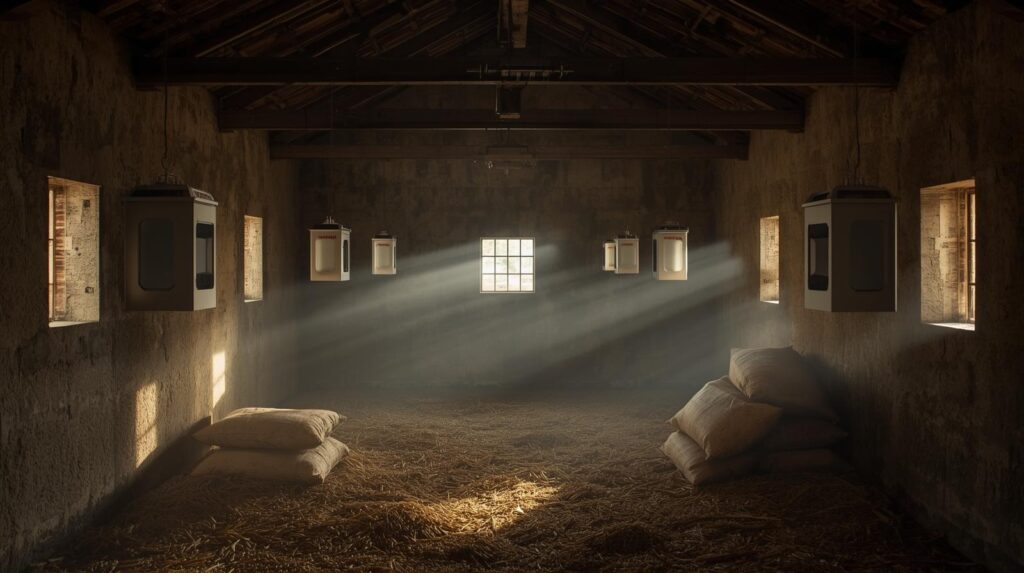
Sample IPM Plan for Farm Grain Storage (10–50 tons):
- Pre-storage: Clean bins thoroughly, treat with diatomaceous earth.
- Fill: Install pheromone traps immediately.
- Weekly: Check traps, log catches.
- If catches rise: Sample grain, consider partial turnover or hermetic transfer.
- Long-term: Rotate to hermetic silos where feasible.
This integrated approach consistently outperforms traps-alone strategies in field trials across Africa, Asia, and North America.
8. Frequently Asked Questions
Do pheromone traps attract weevils from outside the building? No reliable evidence supports significant long-range attraction (beyond 20–30 meters). Traps mainly draw weevils already inside the structure. Proper sealing prevents new entries.
How long do commercial lures stay effective? Most last 8–12 weeks under normal conditions (20–30°C). High temperatures (>35°C) shorten life to 4–6 weeks. Replace promptly for consistent monitoring.
Can I use one trap type for both rice weevil and bean weevil? Not effectively. Sitophilus pheromone traps catch almost no Bruchinae. Use separate systems or focus on sanitation/hermetic storage for mixed infestations.
Why are traps suddenly catching many more weevils? Usually a good sign: traps are pulling hidden adults from grain depths. Monitor trend over 2–3 weeks; sustained high catches indicate need for additional measures.
Are there non-pheromone traps that really work well? Food-baited pitfall traps work moderately but capture 20–50% of what pheromone traps do for Sitophilus. Better than nothing in low-budget scenarios.
How to dispose of trapped live weevils humanely? Freeze the trap (with weevils) at -18°C for 24 hours, then discard. Avoid drowning in water if humane disposal is a priority.
Difference between weevil traps and pantry moth traps? Weevil traps use grain-derived kairomones + aggregation pheromones; moth traps use sex pheromones targeting males. Some combo products exist, but specificity matters.
9. Quick Reference Summary Table
| Species | Recommended Trap Type | Placement Height | Density (per area/volume) | Expected Effectiveness |
|---|---|---|---|---|
| Rice/Maize Weevil | Pheromone + food lure | 1.5–2 m | 1 trap / 100–200 m³ | High (★★★★★) |
| Granary Weevil | Pheromone + food lure | 1–1.5 m | 1 trap / 100 m³ | High (★★★★☆) |
| Cowpea/Bean Weevil | Baited pitfall (seeds + yeast) | Floor level | 1–2 traps / 50 m³ | Medium (★★★☆☆) |
| Carrot Weevil (garden) | Yellow sticky + carrot bait | Ground level | 1 trap / 10–20 m row | Medium monitoring (★★★☆☆) |
10. Final Recommendations & Checklist
In 2025, the best overall weevil traps for natural pest control remain pheromone-based systems optimized for Sitophilus species. They offer the highest return on investment for most users.
Top 3 Recommendations (versatile/cost-effective):
- Premium choice: Multi-component pheromone dome/bullet traps (e.g., Storgard-style) – best for accurate monitoring in medium-large storage.
- Best value: Generic 4-component lure traps from reputable agricultural suppliers – excellent performance at lower cost.
- Budget/DIY starter: Homemade cracked grain + yeast pitfall jars – ideal for learning the system before investing.
7-Point Checklist Before Buying/Deploying Traps:
- ☐ Confirmed target species (Sitophilus vs. other)
- ☐ Cleaned storage area thoroughly
- ☐ Sealed potential entry points
- ☐ Budget allocated for replacements (lures every 2–3 months)
- ☐ Planned placement map (edges, corners, correct height)
- ☐ Log sheet ready for weekly recording
- ☐ Backup measures in place (hermetic bags, freezing capability)
By following this guide, you can significantly reduce weevil damage naturally, protect your harvest or pantry stock, and avoid unnecessary chemical exposure. Consistent monitoring and sanitation combined with well-chosen traps form the cornerstone of sustainable, effective weevil management.