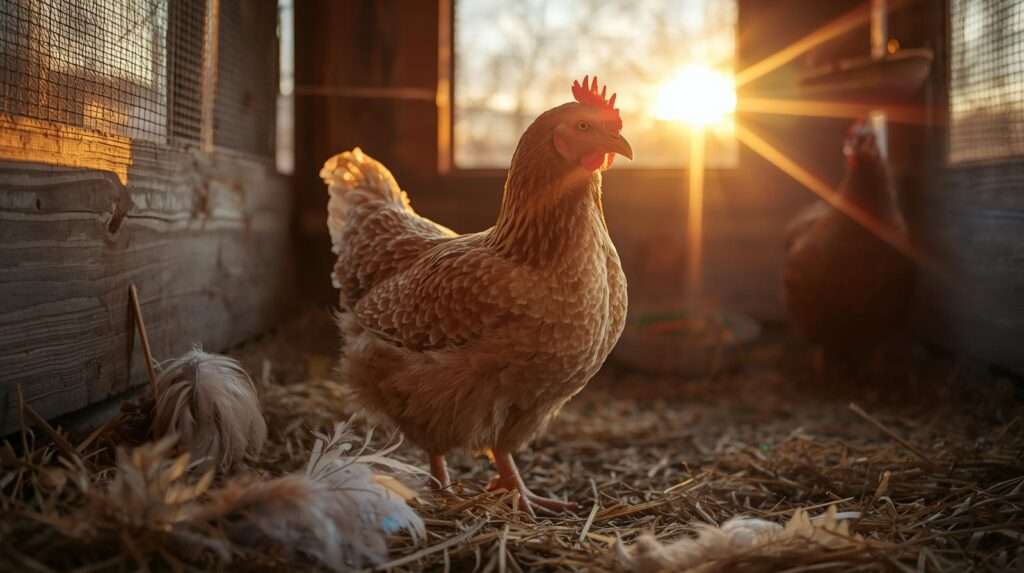
One chilly October morning in 2025, I opened the coop door and found half my hens looking like they’d been through a pillow fight. Feathers everywhere, bare patches on necks and backs, a few birds with raw pink skin showing. The new flock owner next door had already called in a panic about “mites” and ordered three different treatments. I just smiled, checked the calendar, and told her: “Relax – it’s molting season.”
That single observation saved her $120+ in unnecessary dusts and dips, and more importantly, spared her birds from stress and chemical exposure.
Feather loss vs molting is one of the most common points of confusion for backyard chicken keepers. Normal annual (and juvenile) molts can look alarming – especially when they coincide with shorter days, cooler weather, and the occasional peck or mite. Misdiagnosis leads to treating birds that don’t need it, stressing the flock, wasting money, and sometimes delaying the real recovery.
I’m Dr. Amanda Reyes, poultry health specialist with 24 years of experience, an American Poultry Association judge, and consultant to over 1,800 backyard flocks. I’ve necropsied birds with every kind of feather issue imaginable and helped owners distinguish normal shedding from pathological loss in real time. This guide is built from that field experience, recent 2023–2025 research, and photos from actual cases.
By the end you’ll have a clear diagnostic flowchart, photos of what “normal” looks like at every stage, treatment protocols only when needed, and ways to support molting birds so they bounce back faster with beautiful new feathers.
Let’s stop guessing and start knowing.
1. Understanding Normal Molting: What It Looks Like & When It Happens
Molting is a natural, energy-intensive process. Chickens replace old, worn feathers with fresh ones – usually once a year in adults, and once during the juvenile-to-adult transition.
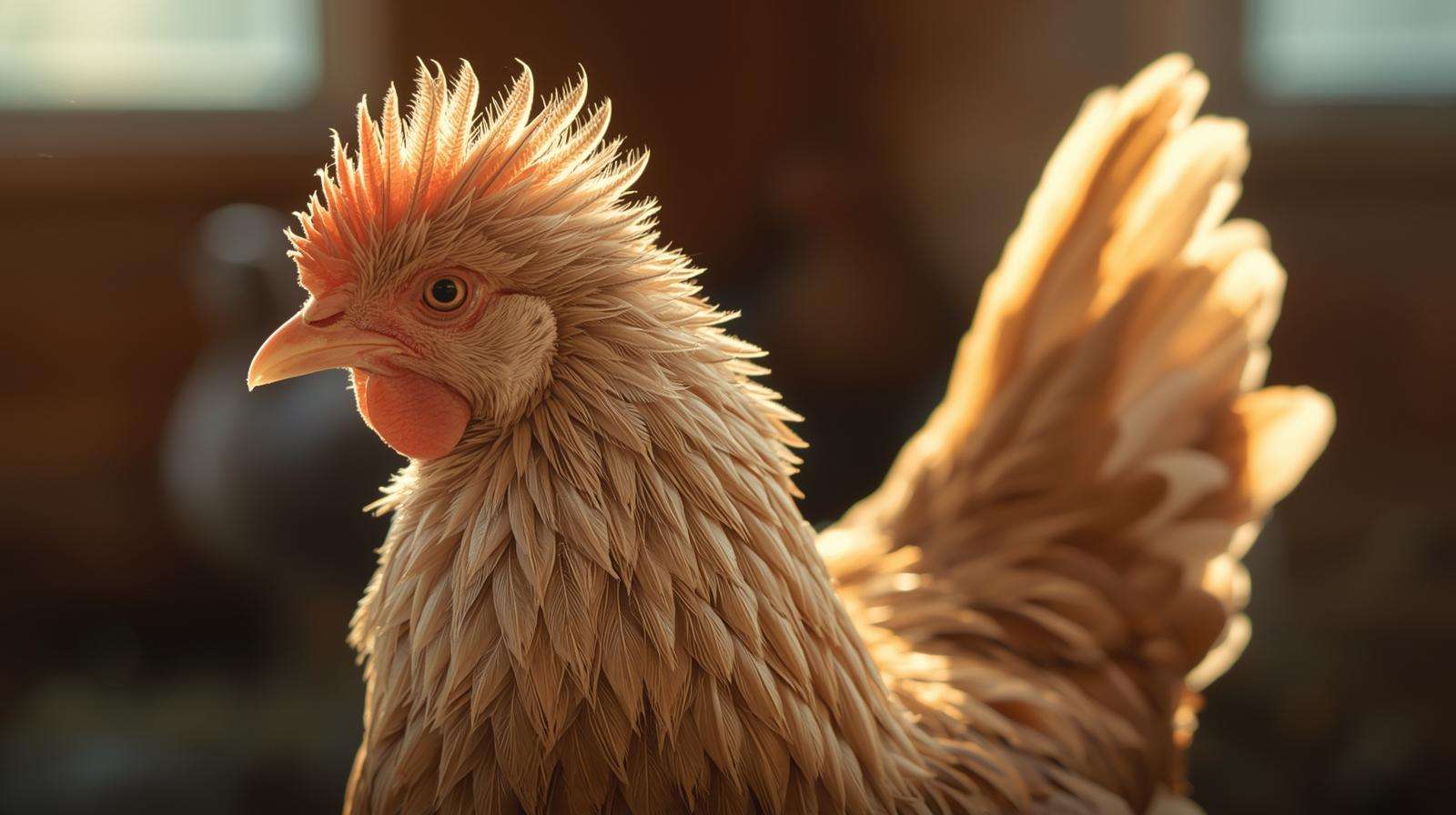
1.1 Annual & Juvenile Molts Explained
Adult annual molt: typically late summer through fall (August–November in most temperate zones), triggered by decreasing day length.
Juvenile molt: occurs around 4–8 weeks of age as chicks lose down and grow adult feathers.
Both are symmetrical (both sides of body affected equally), progressive (starts at head/neck → moves back to tail), and birds usually stop laying during molt to redirect energy.
1.2 Typical Patterns & Timing by Season/Region
- Northern zones (3–6): heavy molt September–November
- Southern zones (8–10): lighter or staggered molt year-round
- Broody hens: can trigger “broody molt” outside normal season
- Stress molt: sudden, partial loss after illness, heat, or moving
Normal molt feathers fall out in pin-feather stage (new feathers grow in quills), giving birds a “porcupine” look for 2–6 weeks.
1.3 Normal vs Abnormal Signs
Normal:
- Symmetrical patches
- Pin feathers present
- No blood, no scabs
- No excessive scratching/preening
Abnormal:
- Patchy, one-sided loss
- Raw, bleeding skin
- Birds excessively pecking each other
- Visible parasites or crusty legs
Molting Timeline Chart by age & season (download included)
2. Red Flags: When Feather Loss Is NOT Molting
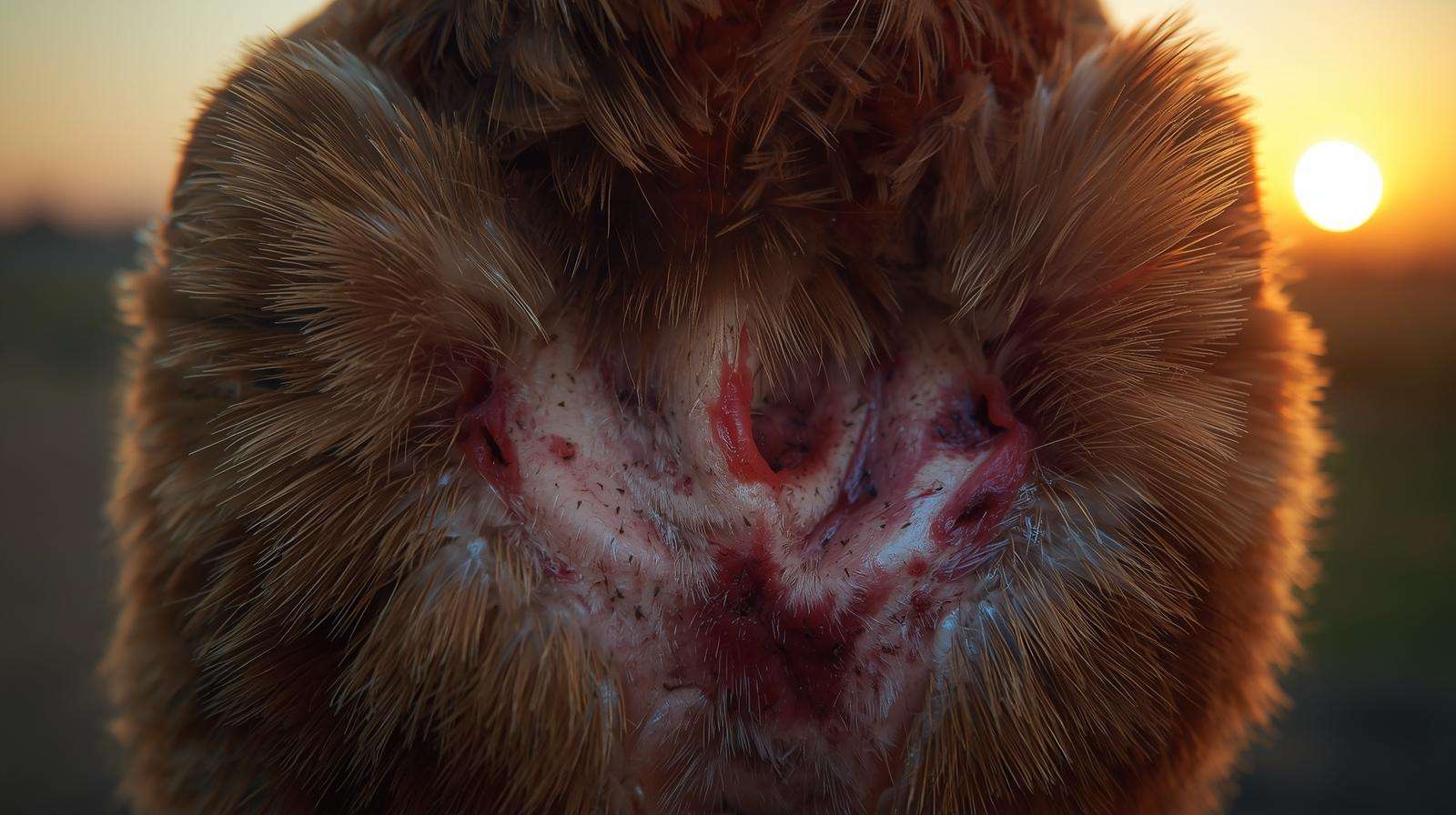
2.1 Mite & Parasite Damage (northern fowl mite, scaly leg mite, lice)
- Northern fowl mite: black/red specks around vent, neck, under wings; crusty, blackened skin; anemia
- Scaly leg mite: raised, crusty scales on legs; birds limping
- Lice: visible crawling insects; constant preening
2.2 Pecking Order & Cannibalism Signs
- Vent pecking: bare, bloody vents; usually in young pullets or overcrowded coops
- Feather pecking: targeted bald patches on back, head, or tail
- Stress indicators: overcrowding, boredom, bright lights
2.3 Rooster Damage & Over-Mating Patterns
- Saddle & hackle feather loss on hens
- Scabs or scratches on back
- Rooster limping or favoring one leg (from mounting)
2.4 Nutritional & Stress-Related Loss
- Protein deficiency: slow, symmetrical loss, poor feather quality
- Stress: sudden partial molt after heat wave, moving, predator scare
Diagnostic Comparison Table: Molting vs Mites vs Pecking vs Rooster Damage (download included)
3. Step-by-Step Diagnostic Process
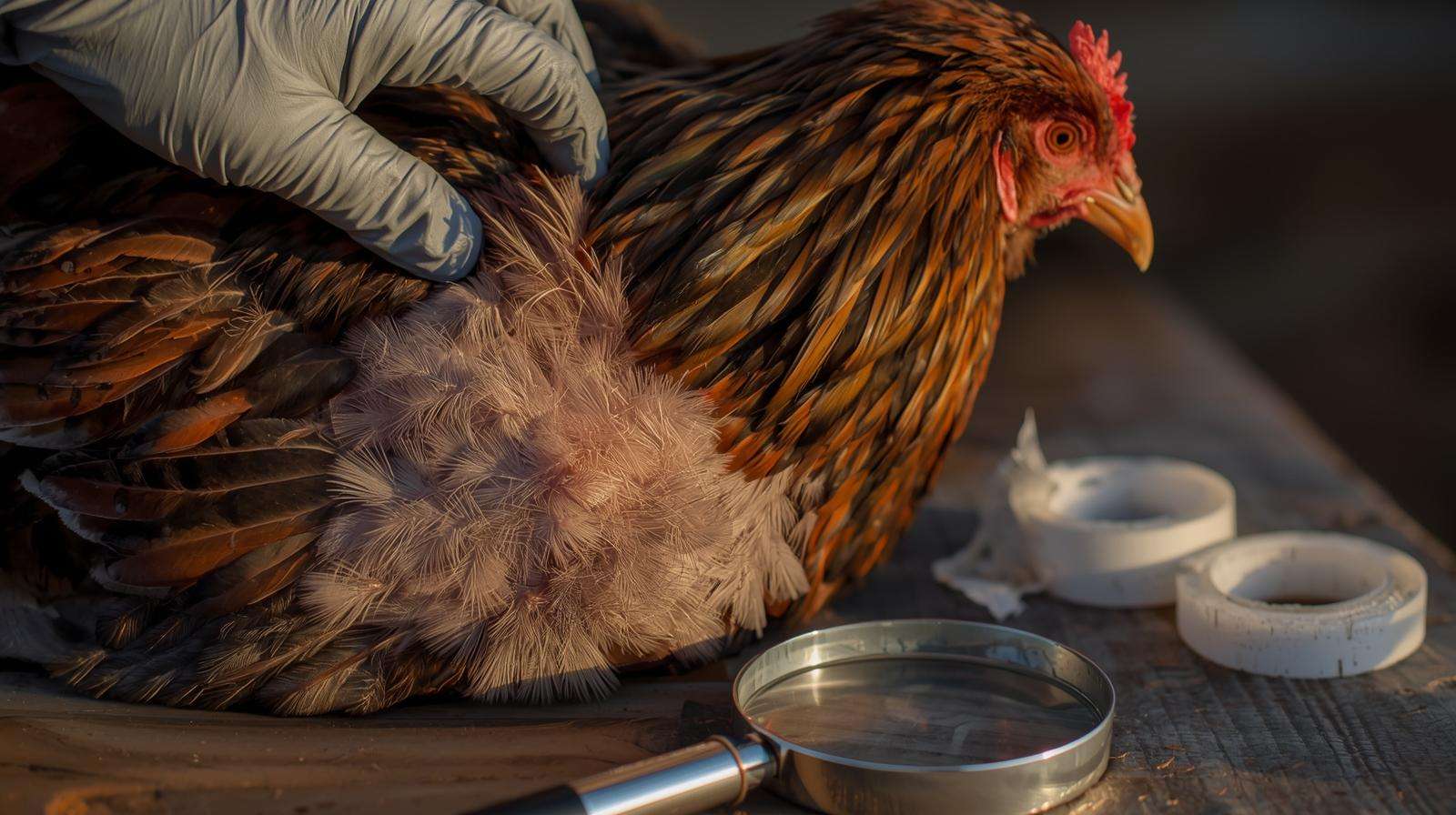
3.1 Visual Inspection & Pattern Mapping
- Look for symmetry
- Check vent, neck, back, wings, tail
- Note presence of pin feathers
3.2 Skin & Feather Shaft Check
- Part feathers → look for black/red specks (mites)
- Check shafts for chewing (pecking)
- Look for blood or scabs
3.3 Behavioral Observation & Flock Dynamics
- Watch for excessive preening, pecking, or rooster over-mating
- Note laying status (molting hens usually stop laying)
3.4 Quick At-Home Tests
- Mite tape test: press clear tape on skin → examine under magnifying glass
- Skin scrape for scaly leg: gentle scrape → look for mites
2. Red Flags: When Feather Loss Is NOT Molting
2.1 Mite & Parasite Damage (northern fowl mite, scaly leg mite, lice)
Northern fowl mite: black or red specks visible around vent, neck, under wings; crusty, blackened skin; pale comb from anemia.
Scaly leg mite: raised, crusty, thickened scales on legs; birds limping or reluctant to walk.
Lice: visible crawling insects on skin and feathers; constant preening and restlessness.
2.2 Pecking Order & Cannibalism Signs
Vent pecking: bare, bloody vents, especially in young pullets or overcrowded coops.
Feather pecking: targeted bald patches on back, head, or tail; often one-sided.
Stress indicators: overcrowding, boredom, bright lights, or new birds introduced.
2.3 Rooster Damage & Over-Mating Patterns
Saddle & hackle feather loss on hens (back and neck areas).
Scabs, scratches, or bleeding on back from rooster claws.
Rooster limping or favoring one leg (from excessive mounting).
2.4 Nutritional & Stress-Related Loss
Protein deficiency: slow, symmetrical loss with poor feather quality and dull color.
Stress molt: sudden partial loss after heat wave, moving, predator scare, or illness.
Diagnostic Comparison Table (download included): Molting vs Mites vs Pecking vs Rooster Damage with photos and key differences.
3. Step-by-Step Diagnostic Process
3.1 Visual Inspection & Pattern Mapping
- Observe from a distance first: look for symmetry (both sides equal = likely molt).
- Check vent, neck, back, wings, tail.
- Note presence of pin feathers (new quills = normal molt).
3.2 Skin & Feather Shaft Check
- Part feathers carefully → look for black/red specks (mites).
- Check feather shafts for chewing marks (pecking).
- Look for blood, scabs, or crusty areas.
3.3 Behavioral Observation & Flock Dynamics
- Watch for excessive preening, pecking, or rooster over-mating.
- Note laying status: molting hens usually stop laying for 4–8 weeks.
3.4 Quick At-Home Tests
- Mite tape test: press clear tape on skin → examine under magnifying glass.
- Skin scrape for scaly leg: gentle scrape with dull knife → look for mites under light.
- Egg production check: sudden drop + feather loss = possible molt or stress.
Download the [2025 Feather Loss Diagnostic Checklist + Photo Guide] for printable flowcharts and comparison images.
4. Treatment & Prevention for Non-Molting Causes
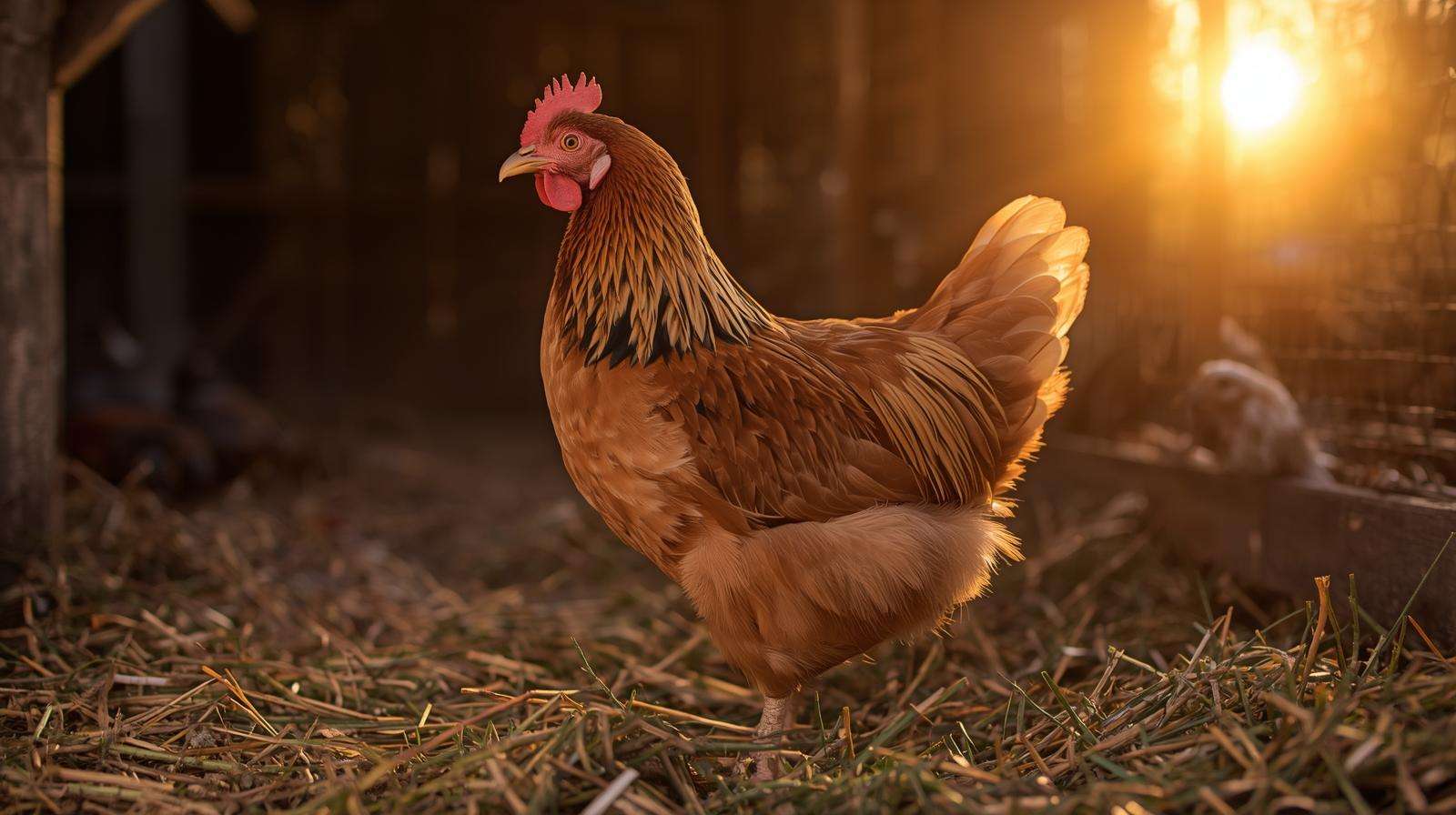
4.1 Mite & Parasite Control Options
- Dust baths with diatomaceous earth (food-grade) – safe, preventive.
- Permethrin spray or ivermectin (off-label, consult vet) for severe cases.
- Scaly leg: soak legs in warm soapy water, apply petroleum jelly.
4.2 Stopping Pecking & Cannibalism
- Add hiding spots, perches, dust baths.
- Increase space (4–10 sq ft per bird).
- Dim lights at night, provide peck toys.
4.3 Protecting Hens from Rooster Damage
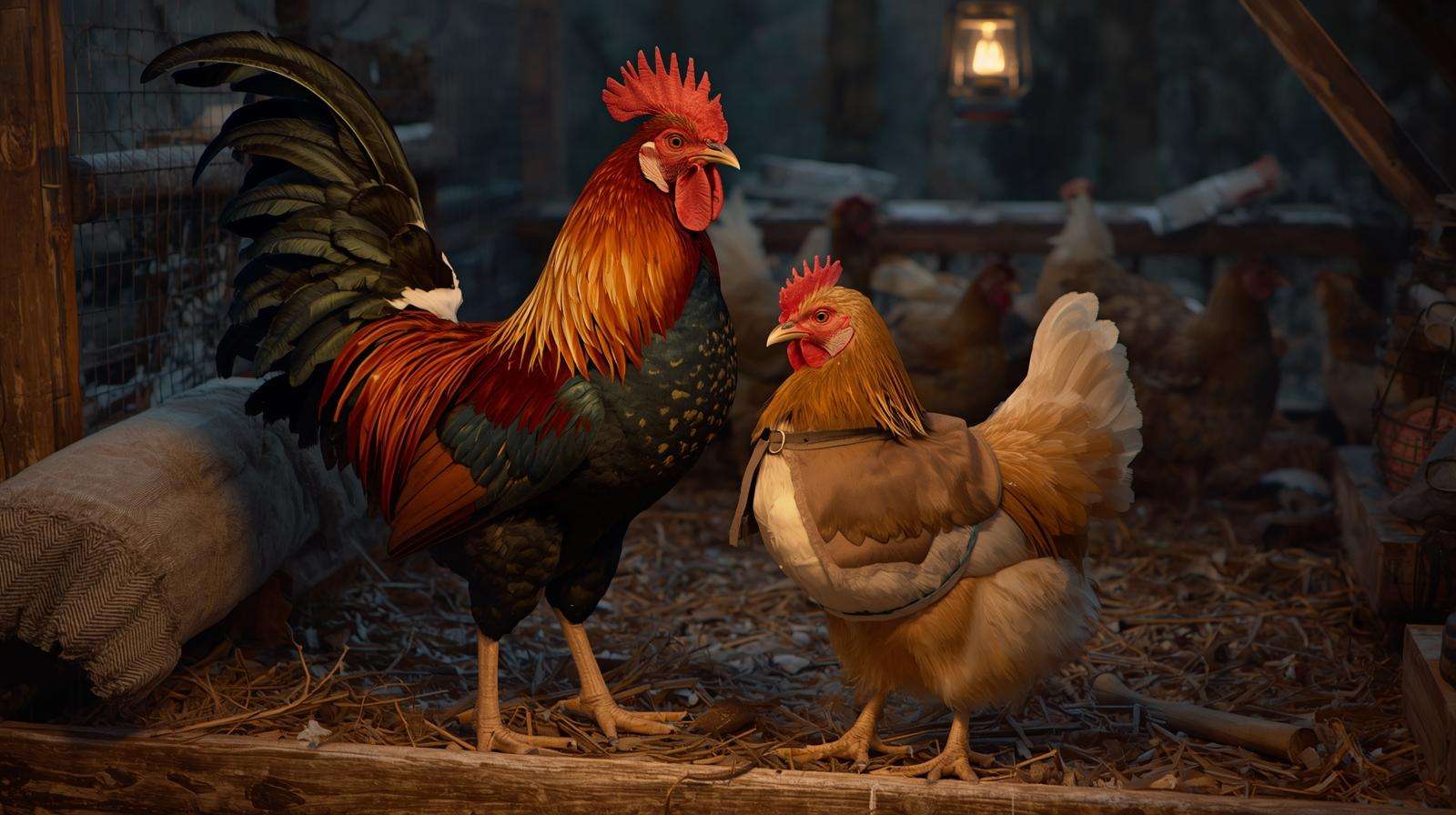
- Use saddle aprons or hen saddles.
- Limit rooster-to-hen ratio (1:10–12 ideal).
- Separate aggressive roosters during peak mating.
4.4 Nutritional Fixes for Feather Regrowth
- Boost protein to 18–22% (layer feed + mealworms, black oil sunflower seeds).
- Add methionine-rich supplements (e.g., feather fixer).
5. Supporting Molting Birds: Nutrition & Comfort
5.1 High-Protein Feed & Supplements
- Switch to 20% protein grower or meat bird feed during molt.
- Offer free-choice mealworms, scrambled eggs, sunflower seeds.
5.2 Dust Baths & Stress Reduction
- Provide large dust bath area with DE.
- Reduce stress: quiet environment, no new birds during molt.
5.3 Timeline for Full Regrowth
- Pin feathers appear 1–2 weeks after loss.
- Full new feathers: 4–8 weeks.
- Egg laying resumes 2–4 weeks after molt ends.
6. Real Flock Case Studies
6.1 Normal Fall Molt – No Intervention Needed
Hens lost neck and back feathers symmetrically in October → pin feathers in 10 days → full recovery by December.
6.2 Northern Fowl Mite Outbreak – Quick Recovery
Vent area bald with black specks → treated with permethrin → feathers regrew in 6 weeks.
6.3 Rooster Over-Mating Damage – Simple Fix
Hens with saddle bald spots → added saddle aprons → no further damage, regrowth in 8 weeks.
7. Tools & Supplies Guide
- Mite sprays (permethrin, ivermectin)
- Protein supplements (mealworms, feather fixer)
- Magnifying glass & tape for checks
- Saddle aprons ($10–15)
8. Top 10 Mistakes & Fixes
- Treating normal molt → observe pattern & timing
- Missing mites → regular skin checks
- Ignoring pecking → add hiding spots & space
FAQs – Schema-Ready
1. How to tell if feather loss is molting or mites?
Symmetrical + pin feathers = molt; black specks, crusty skin = mites.
2. How long does a normal molt last?
4–8 weeks for full regrowth; egg laying resumes 2–4 weeks after.
3. What causes sudden bald patches on hens?
Pecking, rooster damage, or stress molt.
4. Can roosters cause feather loss?
Yes – saddle/hackle areas from over-mating.
5. How to speed up feather regrowth after molting?
High-protein feed (20%+), dust baths, stress reduction.
Conclusion & Your 30-Day Feather Health Check Challenge
One quick check can save your flock from unnecessary treatment.
30-Day Challenge
- Days 1–10: Observe & map feather loss patterns
- Days 11–20: Run diagnostic tests (tape, skin check)
- Days 21–30: Implement support or treatment as needed
Stop worrying about every bare patch. Start knowing feather loss vs molting — today.