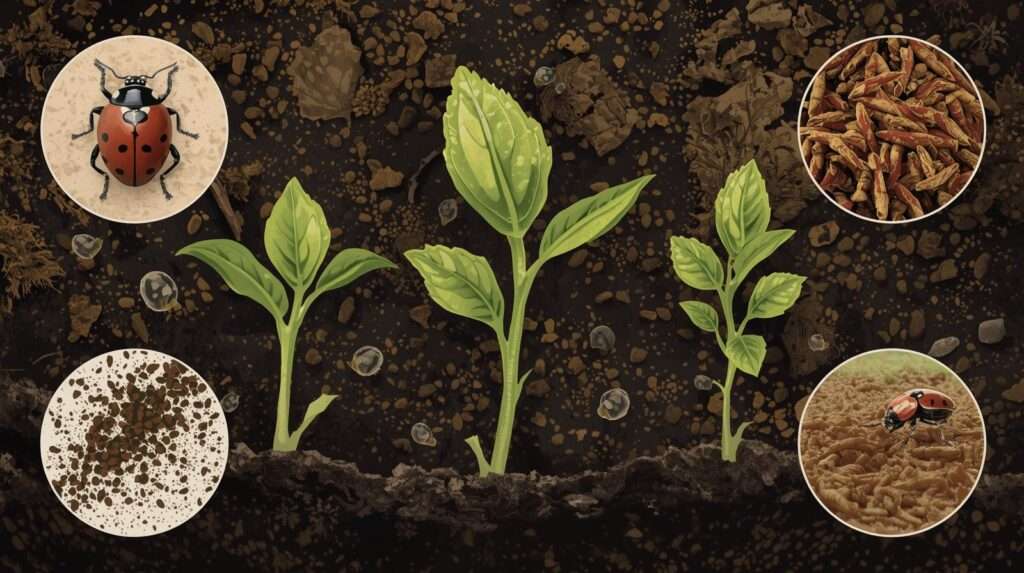
Picture this: You’ve carefully started your tomato, pepper, or lettuce seedlings indoors or in the garden bed, watching them emerge with excitement. Then, one morning, you find several mysteriously toppled over at the soil line, stems severed cleanly as if by tiny clippers, or wilting despite perfect watering. The culprit? Organic Ways to Keep Soil Insects from Ruining Seedlings Soil insects—silent, hidden pests like cutworms, wireworms, fungus gnat larvae, and root maggots—that target the most vulnerable stage of your plants.
Organic Ways to Keep Soil Insects from Ruining Seedlings are essential for gardeners who want chemical-free protection. These pests thrive in moist, organic-rich soil and can devastate young transplants and direct-sown seedlings, leading to poor stands, stunted growth, or total crop failure. The good news? You don’t need synthetic pesticides. With integrated pest management (IPM) strategies focused on prevention, biological controls, and natural barriers, you can safeguard your starts effectively.
As an experienced organic gardener and agricultural advisor drawing from university extension resources (like UC IPM, Penn State Extension, and Oregon State), this guide compiles proven, research-backed methods. We’ll cover identification, foundational prevention, and 10 detailed natural techniques to build resilient soil ecosystems while protecting your seedlings. Let’s turn potential heartbreak into thriving gardens. 🌱
Understanding the Enemy: Common Soil Insects That Attack Seedlings
Seedlings are prime targets because their tender stems and shallow roots offer easy access, with high moisture needs creating ideal conditions for pests.
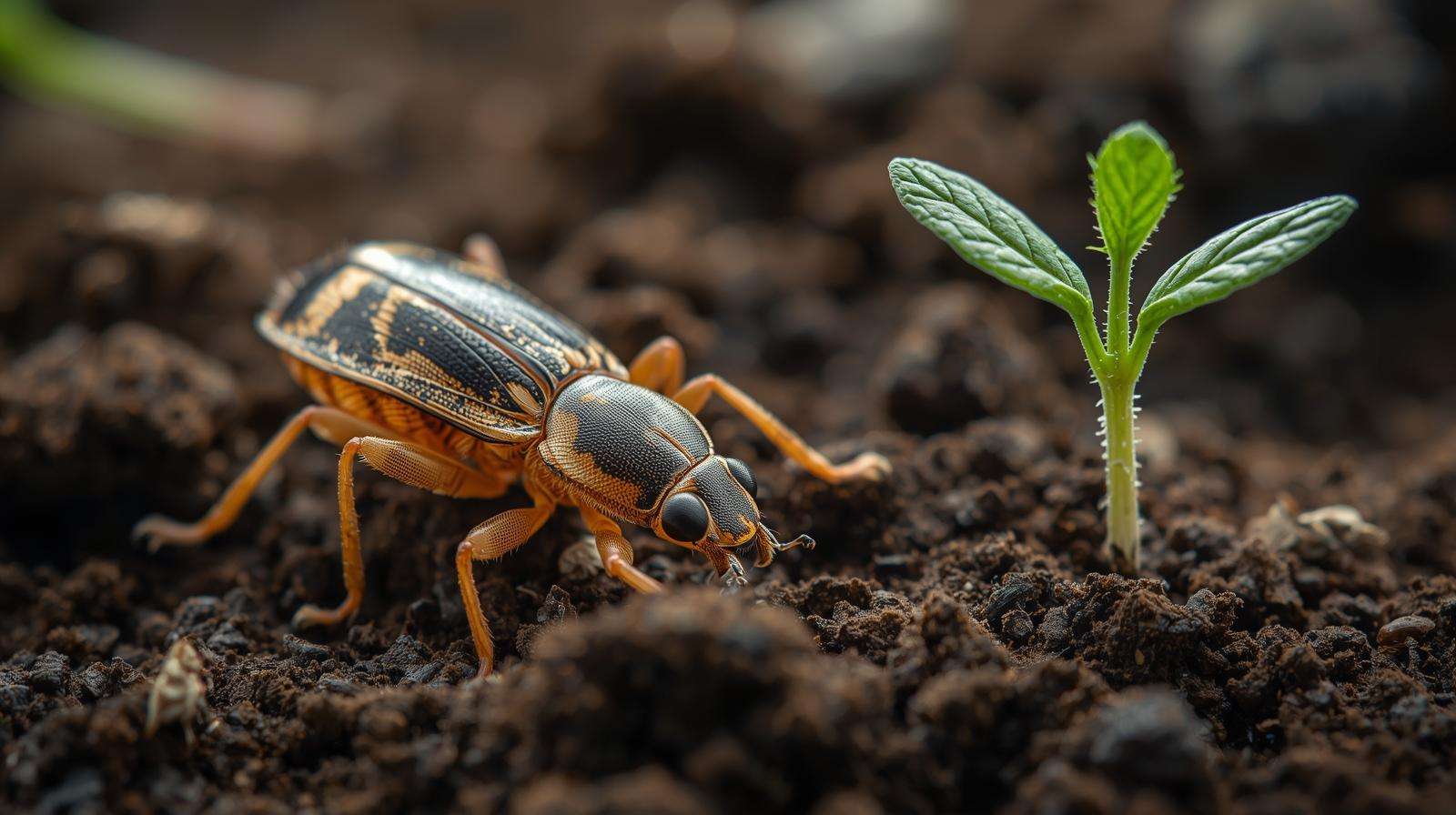
Cutworms
These nocturnal caterpillars (larvae of noctuid moths) hide in soil during the day and emerge at night to clip stems at or just below the surface. Signs include fallen seedlings with clean cuts; larvae curl into a C-shape when disturbed. Common in spring, especially after weedy fields or cover crops.
Wireworms
Slender, hard, shiny larvae of click beetles, they bore into seeds and roots, causing poor germination or wilting. Prevalent in new gardens converted from lawn or weedy areas, lasting 2–6 years in soil.
Fungus Gnat Larvae
Tiny white, legless worms with black heads in overly moist soil; they feed on fungi and organic matter but damage fine roots of seedlings, leading to damping-off (fungal collapse). Adults are mosquito-like flyers.
Root Maggots
Larvae of small flies (e.g., cabbage or onion root maggots) tunnel into roots of brassicas, onions, and carrots, causing stunting or rot. Peak in cool, wet springs.
Other occasional threats include grubs and seedcorn maggots. Correct identification—via soil digging or potato traps—is crucial for targeted control, preventing wasted effort.
Prevention First: Building a Pest-Resistant Foundation
Healthy, balanced soil is your strongest defense—vigorous plants better tolerate minor damage, while diverse microbes suppress pests.
- Crop Rotation — Rotate families (e.g., avoid planting brassicas in the same spot for 3–4 years) to disrupt life cycles of root maggots and wireworms.
- Tillage Timing — Fall or early spring tillage exposes overwintering larvae to predators and weather, but minimize to preserve soil structure.
- Organic Matter Management — Add well-composted material to boost beneficial microbes; avoid fresh manure near planting.
- Watering Wisely — Let the top inch of soil dry between waterings to deter fungus gnats and root maggots; use drip irrigation for targeted moisture.
- Planting Timing — Delay susceptible crops until soil warms (above 50°F) and pests peak passes.
- Companion Planting — Interplant marigolds (repel nematodes), alliums (deter maggots), or herbs like thyme/lavender for natural repellence.
These cultural practices form the base of effective organic IPM, reducing pest pressure before it escalates.
10 Proven Organic Methods to Protect Your Seedlings
Here are 10 battle-tested, natural approaches, drawn from extension services and field experience. Implement them layered for best results.
- Physical Barriers & Collars The simplest, most reliable method against cutworms: Create collars from toilet paper rolls, cardboard, foil, or plastic cups. Cut to 3–4 inches tall, push 1–2 inches into soil around each seedling stem. This blocks nighttime clipping. Pros: Immediate, inexpensive; cons: Labor-intensive for large areas. University extensions like UMD and PSU recommend this as first-line defense.
- Beneficial Nematodes Apply predatory species (Steinernema feltiae or carpocapsae) as a soil drench. These microscopic worms seek out and kill larvae of cutworms, wireworms, fungus gnats, and grubs. Mix with water per package (millions per treatment), apply in evening on moist soil (55–85°F). Effective for 1–2 years; reapply seasonally. OMRI-listed for organic use—safe for earthworms and plants.
- Food-Grade Diatomaceous Earth (DE) Sprinkle a thin layer on soil surface around seedlings. Sharp particles dehydrate soft-bodied pests like cutworms and fungus gnat larvae. Use food-grade only (safe, non-toxic). Reapply after rain; avoid inhaling dust. Effective against crawling insects; combine with barriers for seedlings.
- Bacillus thuringiensis (Bt) var. kurstaki Mix Bt with bran/molasses bait and scatter on soil for cutworms. Larvae ingest and die. Organic-approved; target young stages. Extensions like UC IPM endorse for caterpillar pests.
- Row Covers & Insect Mesh Use floating row covers or fine mesh to prevent adult flies/moths from laying eggs. Install at planting; secure edges. Great for root maggots and cabbage flies; allows light/air.
- Soil Drying & Cultural Adjustments For fungus gnats, reduce watering—allow topsoil to dry. Use fans for indoor airflow; potato slices as traps to monitor/remove larvae.
- Biological Controls Release predatory insects (e.g., ground beetles) or use organic bio-insecticides like spinosad soil drench. Encourage natural enemies with diverse plantings.
- Natural Repellents Neem oil soil drenches or garlic/onion sprays deter feeding. Hot pepper mixes repel maggots. Organic Ways to Keep Soil Insects from Ruining Seedlings Apply evenings; test on small areas.
- Traps & Baits Potato slices buried attract wireworms/fungus gnats—remove after days. Bran-Bt baits lure cutworms.
- Integrated Ecosystem Approach Foster biodiversity: Attract birds/beetles with native borders; maintain healthy soil food web. Long-term, this minimizes outbreaks.
Monitoring & Early Detection: Catching Problems Before They Ruin Your Crop
Inspect daily during the critical 2–4 week seedling stage. Look for wilting, clipped stems, or tiny holes. Gently dig near affected plants for larvae. Use yellow sticky traps for flying adults or potato traps for larvae.
Combining Methods: Your Organic IPM Plan for Maximum Protection
Start with prevention + barriers, add nematodes/Bt for active infestations. Seasonal timeline: Prep soil fall, apply nematodes spring, monitor weekly. Troubleshoot: If barriers fail, check for climbing cutworms; adjust moisture for gnats.
Frequently Asked Questions
What are the most destructive soil pests for tomato/pepper seedlings? Cutworms and fungus gnat larvae top the list—cutworms clip stems; gnats weaken roots.
How long do beneficial nematodes last in soil? Typically 1–2 years; annual applications recommended for ongoing protection.
Can I use these methods indoors for starting seeds? Yes—focus on drying soil, DE, and nematodes; avoid overwatering.
Are diatomaceous earth and neem safe for earthworms? Food-grade DE and neem are generally safe when used properly; they target surface/soil insects without harming worms.
When should I start prevention measures? Before planting: Till, rotate, and apply nematodes 1–2 weeks prior.
Protecting seedlings organically requires patience and observation, but the rewards—healthier plants, balanced ecosystems, and bountiful harvests—are worth it. Focus on building resilient soil, layering proven methods like collars and nematodes, and staying vigilant. Start with one or two techniques this season, track results, and expand. Your garden will thank you with stronger starts and fewer losses.Organic Ways to Keep Soil Insects from Ruining Seedlings
Share your experiences in the comments—what method worked best for you? Happy gardening! 🌿