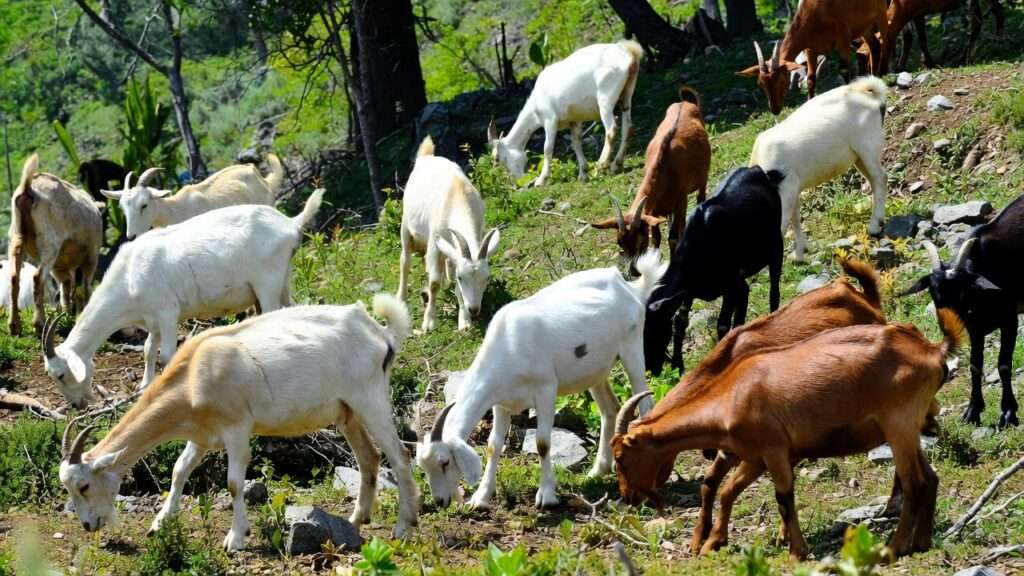
Using goats for brush clearing is one of the most effective, sustainable, and increasingly popular methods to naturally manage overgrown land in 2026. Landowners, farmers, and homesteaders facing thick tangles of multiflora rose, poison ivy, honeysuckle, blackberries, and other invasive brush often spend thousands on machinery, herbicides, or labor-intensive manual removal—only to see the problem return. Goats offer a proven alternative: they devour problem vegetation, fertilize the soil, reduce wildfire risk, and reclaim difficult terrain without chemicals or heavy equipment.
This is the power of using goats for brush clearing, an increasingly popular practice known as goatscaping or targeted grazing. As of 2026, more landowners, farmers, homesteaders, and even municipalities are embracing this sustainable approach to reclaim land effectively and affordably.
In this comprehensive guide, backed by university extension research (including Iowa State University, USDA NRCS studies), real-world case studies, and current industry practices, you’ll learn everything needed to implement goats on your property. Whether you’re dealing with steep hillsides inaccessible to tractors, poison ivy patches, or chronic invasive species, goats offer a proven, low-cost solution that improves ecosystem health and saves money long-term.
Why Choose Using Goats for Brush Clearing? Key Benefits and Advantages
Using goats for brush clearing provides multiple advantages over conventional methods, making it ideal for eco-conscious landowners seeking natural weed and brush control.
Eco-Friendly and Chemical-Free — Goats consume a wide range of undesirable plants, including poison ivy, poison oak, sumac, multiflora rose, honeysuckle, autumn olive, sericea lespedeza, and more—plants that are toxic to humans but harmless (and even nutritious) to goats. University experts from NC State and Iowa State confirm goats handle these without ill effects, eliminating the need for herbicides that can contaminate groundwater, harm pollinators, or linger in soil.
Significant Cost Savings — Traditional brush clearing with machinery or professionals often exceeds $1,000–$3,000 per acre, plus ongoing maintenance. Goat rental services in 2026 typically range from $400–$1,000 per acre (or $450–$700 per day for herds of 10–40 goats), depending on density, location, and project size. For example, smaller residential jobs might cost $450 for a half-day with 10–14 goats, while larger crews handle dense brush at $550–$650 per day. Over time, this saves 50% or more compared to mechanical or chemical alternatives, with minimal follow-up required.
Soil and Ecosystem Improvement — As natural browsers, goats deposit nutrient-rich manure that enhances soil fertility, reduces erosion on slopes, and promotes biodiversity. By targeting invasives, they allow desirable grasses, forbs, and native plants to thrive—studies show increased plant species diversity after targeted grazing. This method also lowers wildfire fuel loads by removing dry brush and undergrowth.
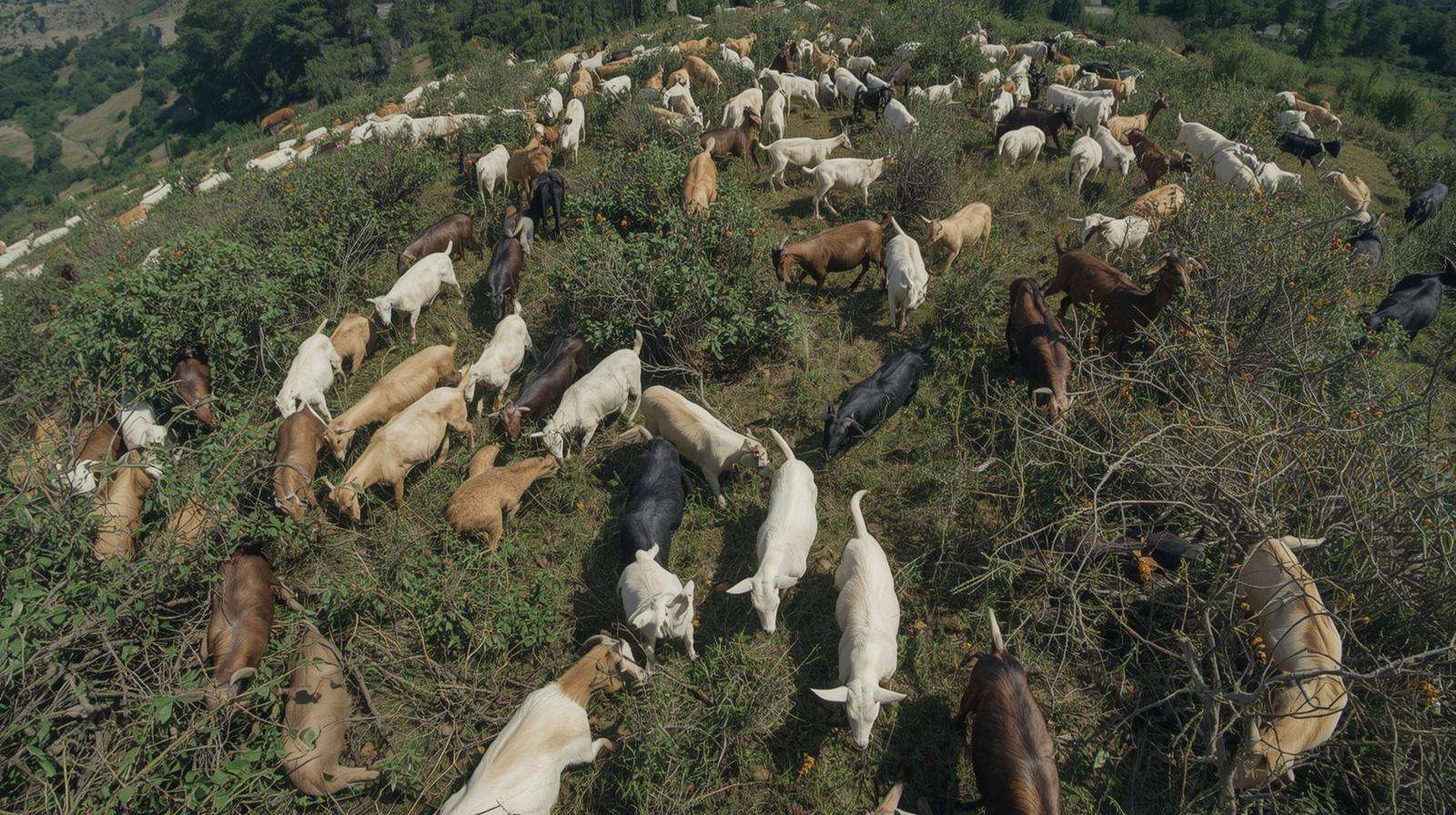
Superior Access to Tough Terrain — Goats excel in steep, rocky, or wetland areas where tractors or mowers risk damage or become stuck. Their agility lets them reach higher browse (up to 6 feet or more by climbing) and navigate obstacles effortlessly.
Additional Perks — Beyond clearing, goats provide entertainment (family-friendly “goat yoga” or watching them work), potential income from meat/milk if owning a herd, and fire prevention benefits for rural properties. USDA NRCS research demonstrates brush reduction from 45% coverage to 2–15% over multi-year grazing cycles.
These benefits make using goats for brush clearing a forward-thinking choice amid rising invasive species pressures and environmental concerns.
Best Goat Breeds for Effective Brush Clearing
Not all goats are equal for brush control—breed selection impacts efficiency, hardiness, and secondary benefits.
Top Recommendations:
- Boer goats — Large, aggressive browsers ideal for thick, dense brush; they clear quickly and gain weight rapidly on forage alone. Excellent for meat production as a bonus.
- Kiko goats — Hardy, parasite-resistant (bred in New Zealand for tough conditions); thrive in rough terrain with minimal care—perfect for long-term or remote projects.
- Spanish goats — Adaptable survivors with strong natural browsing instincts; medium-sized and resilient in varied climates.
- Crossbreeds — Often the most efficient, combining traits like parasite resistance, size, and appetite (e.g., Boer-Kiko mixes).
Other Solid Options:
- Alpines — Agile climbers that reach higher vegetation.
- Myotonic (fainting goats) — Suitable for smaller areas; docile but effective browsers.
What to Avoid — Pure dairy breeds (e.g., Nubians with large udders prone to thorn injury in dense brush); very small minis (like Pygmies) for large-scale jobs due to limited reach and intake.
| Breed | Size/Weight | Browsing Appetite | Hardiness/Parasite Resistance | Secondary Benefits |
|---|---|---|---|---|
| Boer | Large (200-300 lbs) | High | Moderate | Meat production |
| Kiko | Large | Very High | Excellent | Low maintenance |
| Spanish | Medium | High | High | Adaptable |
| Crossbreeds | Variable | High | High | Versatile |
| Alpine | Medium-Large | High | Good | Climbing ability |
Choose based on your climate, terrain, and goals—many successful operations use mixes for optimal results.
How Goats Work: Understanding Their Natural Browsing Behavior
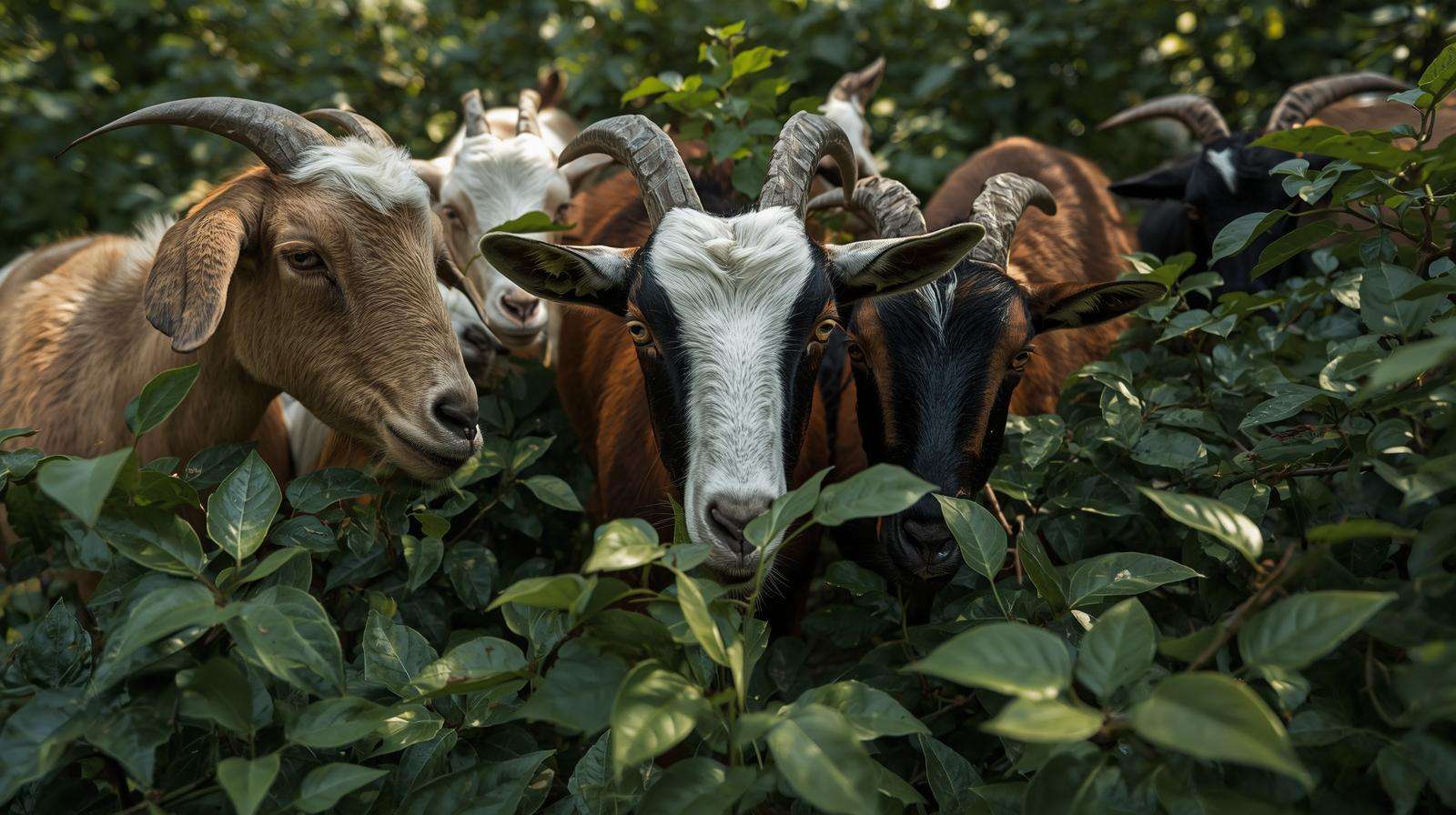
Goats are browsers, not grazers like cattle or sheep—they prefer woody plants, vines, leaves, and shrubs over grass. This makes them perfect for brush clearing.
They target preferred species first: multiflora rose, honeysuckle, poison ivy/oak, sumac, black locust, wild grape, cedar, and invasives like sericea lespedeza. By repeatedly defoliating (eating leaves and growing tips) and stripping bark, goats stress plants, exhaust root reserves, and prevent regrowth—often killing them over 2–3 years.
Limitations: Goats rarely eat mature woody trunks or deep roots; combine with follow-up mowing or targeted herbicide on stumps for full eradication. They consume up to 10% of body weight daily (3–6 lbs dry matter for a 100-lb goat), focusing on tender, green material.
This natural selectivity turns problem vegetation into fuel for healthy land regeneration.
Step-by-Step Guide: How to Implement Using Goats for Brush Clearing
Implementing using goats for brush clearing successfully requires careful planning, site assessment, and ongoing management. This step-by-step process draws from USDA NRCS guidelines, university extension recommendations (e.g., Iowa State University), and proven practices from targeted grazing operations across the U.S.
Preparing Your Land and Goats
Begin with a thorough site evaluation. Walk the property to identify dominant vegetation (e.g., multiflora rose, honeysuckle, poison ivy, blackberries, sumac, or woody invasives like autumn olive), terrain challenges (steep slopes, rocks, wetlands), potential hazards (toxic plants such as rhododendron, yew, or oleander that goats must avoid), and access points for fencing, water, and trailers.
Check local zoning, permits, and liability requirements—some areas classify goats as livestock, while others may require agricultural exemptions. Remove or flag any non-target items (e.g., debris that could injure goats).
Timing is critical: Start in late spring through early summer (May–July) when plants are actively growing with tender leaves and high nutrient value. NRCS research emphasizes that grazing after August 1 has limited impact on brush mortality, as plants store energy in roots later in the season. For best results, plan multi-year cycles: intensive initial defoliation followed by follow-up grazing on regrowth.
Secure healthy goats from reputable sources. Ensure they are vaccinated, dewormed (or parasite-resistant breeds), and hoof-trimmed. Quarantine new animals to prevent disease spread.
Stocking Rates and Herd Size
Stocking density determines speed and effectiveness. USDA NRCS recommends 8–12 goats per acre for initial heavy brush removal, adjusted by vegetation density and grazing duration.
Formula (NRCS-inspired): Total goats needed = (Acres × 8–12) ÷ Number of grazing weeks
Examples:
- For 1 acre of dense brush, 20–30 goats can achieve significant defoliation in 1–2 weeks.
- Smaller residential lots (¼–½ acre) often use 10–20 goats for 3–7 days.
- Larger properties may require 40+ goats rotated across paddocks.
Goats consume 3–6 lbs of dry matter daily (about 10% of body weight), focusing on browse. Monitor progress: Move when 70–80% of target foliage is removed to prevent overgrazing desirable plants.
Fencing and Containment Strategies
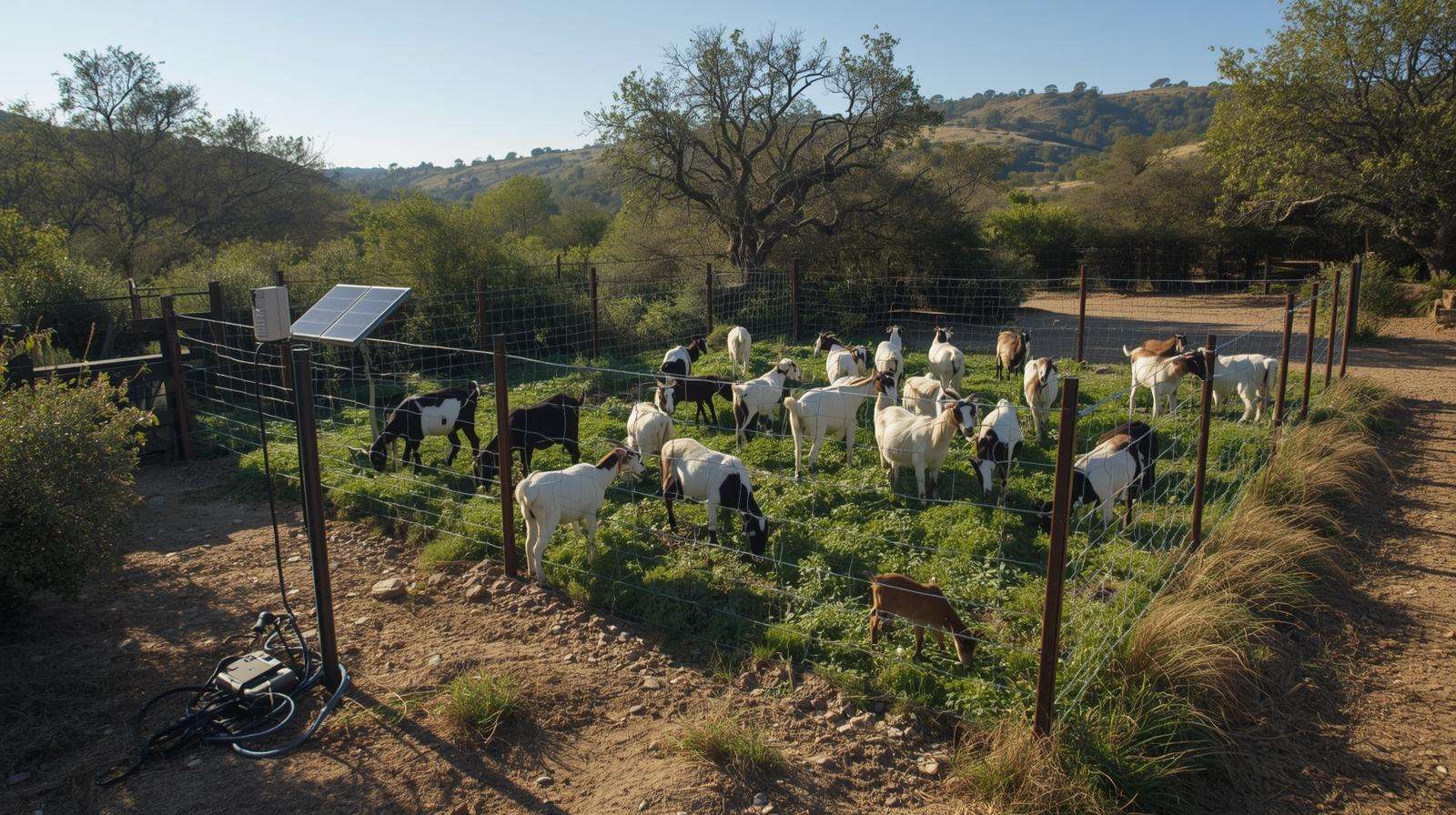
Portable electric netting is the gold standard for targeted grazing—solar-powered, lightweight, and effective against escapes and predators. Use 3–5 strands with at least 4–5 joules output; many operators use 42–48 inch net fencing.
Set up multi-paddock systems (minimum 5 paddocks recommended by NRCS) for rotational grazing. This allows regrowth recovery while concentrating goats on problem areas.
Predator protection is non-negotiable in rural or semi-rural settings: Livestock guardian dogs (Great Pyrenees, Anatolian Shepherds, or Komondors) are highly effective. Secure nighttime corrals with reinforced fencing.
Grazing Management and Rotation
Deploy goats in high-intensity, short-duration sessions: Confine to small paddocks until targets are stripped (leaves, tips, bark), then rotate. Revisit regrowth every 4–8 weeks in the first season.
Monitor with photos or transects: Track defoliation percentage, plant recovery, and soil impact. Combine with mechanical follow-up (e.g., cut-and-treat stumps with minimal herbicide) for stubborn species.
Care and Health During the Project
Provide constant fresh water (troughs or portable tanks), free-choice minerals (especially copper for goats), and shade/shelter (trees, tarps, or portable structures). Check daily for injuries, parasites, or illness.
Parasite management: Use FAMACHA scoring and selective deworming; hardy breeds like Kiko reduce needs. Avoid overfeeding grain—focus on browse to maintain natural health.
This structured approach ensures safe, effective clearing while protecting goat welfare.
Renting Goats vs. Owning Your Own Herd
Deciding between renting and owning depends on project scale, frequency, and long-term goals.
Renting (Goatscaping Services) — Ideal for one-time or occasional needs. Professional companies (found via directories like HireGoats.com) handle transport, fencing, supervision, and care. As of 2026, typical costs range from $400–$1,000 per acre, or daily rates of $450–$700 for smaller crews (10–20 goats) and $550–$850+ for larger ones (15–40 goats). Residential jobs often start at $450 for half-day to $1,400–$2,000 per acre for dense, large areas. Pros: No long-term commitment, expert management, fun spectacle. Cons: Scheduling availability (peak season Memorial Day–Labor Day), travel fees for remote sites.
Owning Your Herd — Best for ongoing maintenance, larger properties, or additional income (meat, milk, breeding). Startup costs include animals ($75–$1,200 each), fencing ($1–$3 per foot), shelter, and feed. Long-term savings accrue through self-clearing and potential revenue. Hybrid: Rent first to test efficacy, then build your own herd.
Many start with rental for proof-of-concept before investing in ownership.
Real Success Stories and Case Studies
Targeted goat grazing delivers measurable results nationwide.
- USDA NRCS and Extension Trials: In Kansas sericea lespedeza demonstrations, multi-year goat grazing (Spanish and Boer crosses) eliminated mature plants after three seasons. Iowa State and NRCS studies show brush coverage dropping from 45% to 2–15% over repeated cycles, with increased native plant diversity.
- Municipal and Public Land Projects: Mark Twain National Forest (Missouri) used goats post-2018 wildfire to defoliate over 80% of invasives, reducing seed production and aiding restoration. Parks like Adkins Arboretum (Maryland) cleared 2+ acres of vines and shrubs with 30-goat herds in days, enabling follow-up native planting.
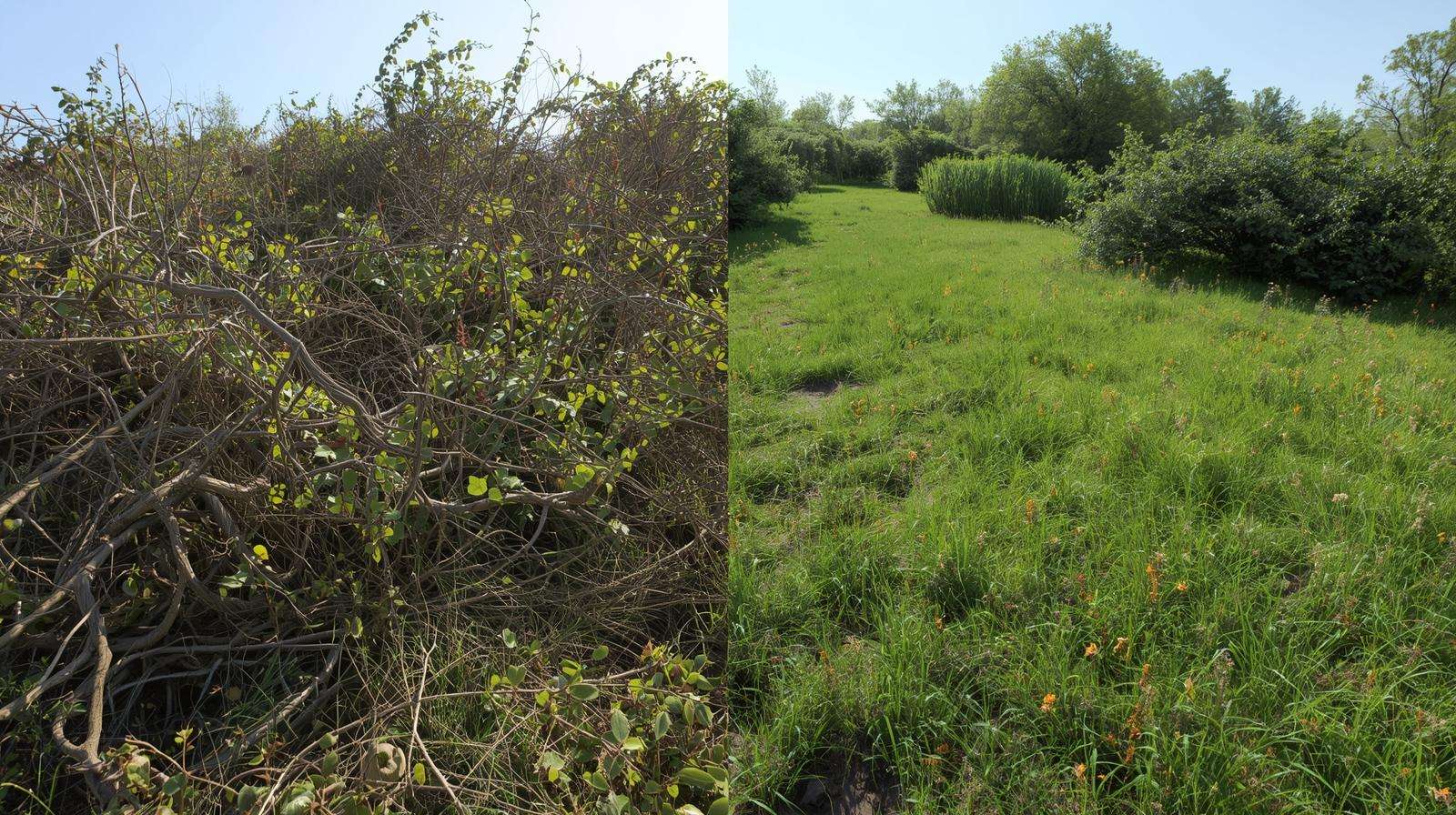
- Private and Commercial Examples: Homeowners in Oregon reduced Himalayan blackberry while boosting desirable grasses. Companies like Goats On The Go® and The Goatscaping Co. report consistent success on residential, golf course, and utility properties, with before-and-after transformations showing cleared land ready for seeding or recreation.
These cases highlight goats’ reliability for long-term invasive control and ecosystem restoration.
Common Challenges and Expert Solutions
Regrowth Management — Invasives rebound; solution: Multi-year rotational grazing plus manual stump treatment.
Containment Issues — Goats test fences; solution: High-quality electric netting, daily checks, guardian animals.
Seasonal/Weather Factors — Drought or extreme heat slows intake; solution: Provide water/shade, time projects for optimal growth periods.
Legal/Zoning — Restrictions on livestock; solution: Check ordinances, obtain agricultural status if needed.
Health Risks — Parasites/toxins; solution: Breed selection, monitoring, vet partnerships.
Proactive planning minimizes these for successful outcomes.
FAQs About Using Goats for Brush Clearing
Do goats really eat poison ivy without issues? Yes—goats metabolize urushiol (the oil causing rashes) harmlessly; many owners report no reaction after handling grazed goats.
How long does it take to clear an acre? Depends on density: 20–40 goats can significantly defoliate 1 acre in 1–4 weeks; full control often requires 2–3 seasons.
What’s the average cost in 2026? Rental: $400–$1,000+ per acre or $450–$850 daily; varies by region, herd size, and vegetation.
Can goats clear mature trees? No—they defoliate and debark young/saplings but not thick trunks; use for understory and follow up mechanically.
Are there any plants goats won’t eat? Rarely—most avoid mature trees, certain toxics (e.g., rhododendron), or very mature woody stems; test site first.
Conclusion
Using goats for brush clearing remains one of the most sustainable, cost-effective, and enjoyable ways to reclaim overgrown land in 2026. By leveraging natural browsing, you avoid chemicals, reduce erosion, enhance biodiversity, and lower wildfire risks—all while saving significantly compared to traditional methods.
Whether renting a professional herd for a quick transformation or building your own for ongoing stewardship, this approach delivers real results backed by science and real-world success. Assess your property today, connect with local providers (via HireGoats.com or extension services), and start small if needed. Your land—and the environment—will benefit for years to come.