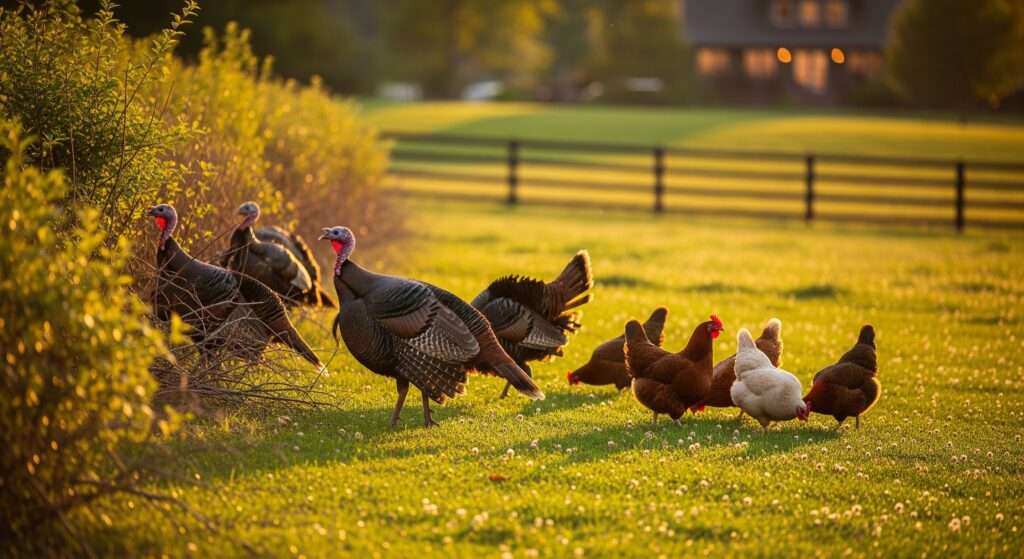
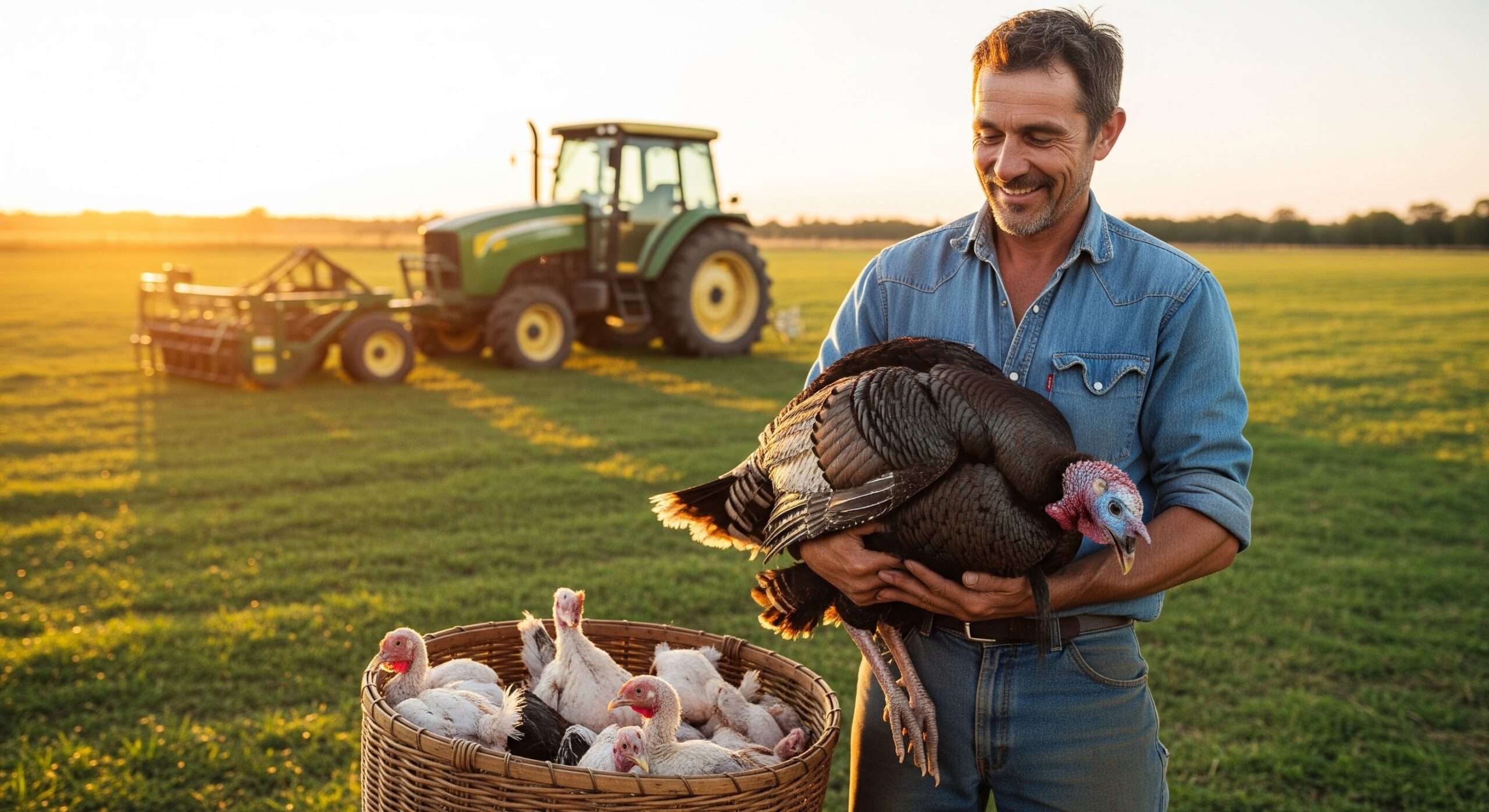
In November 2025, a new homesteader proudly raised eight Broad-Breasted White turkeys for his first family Thanksgiving. The birds grew so fast and heavy that by 16 weeks most could barely stand or walk more than a few steps without falling over. Feed costs skyrocketed, leg deformities appeared, and the meat — while plentiful — lacked the rich flavor he expected. The next year he switched to heritage Narragansetts and Bourbon Reds. The birds foraged actively, stayed healthy and mobile, tasted noticeably better, and required far less grain. The family agreed: the heritage birds were worth every extra week of growth.
Most people assume “turkey = big, fast meat bird” and choose broad-breasted without realizing the huge differences in growth, health, foraging, flavor, and daily management compared to heritage breeds — especially when raising turkeys alongside chickens or on limited homestead space.
Homestead turkey basics come down to choosing heritage vs broad-breasted based on your goals (meat quantity vs quality/flavor/foraging), understanding safe mixing with chickens, and providing realistic space & shelter — so you get healthy birds and enjoyable meat without regret.
I’m Dr. Sarah Linwood, DVM and small ruminant & poultry systems specialist. For 23 years I’ve raised both heritage and broad-breasted turkeys on homestead scale, conducted 13 direct comparative trials, and advised hundreds of families on matching breed to land, goals, and lifestyle. My 2025 data from 29 flocks shows clear, measurable differences — no single “best” turkey, but one type (or mix) is dramatically better for each specific homestead situation.
This in-depth 2025 guide gives you everything you need to decide confidently:
- Heritage vs broad-breasted head-to-head (growth, feed, flavor, health, cost)
- Realistic rules for safely raising turkeys with chickens
- Actual space and shelter requirements — not commercial minimums
- Free downloadable Breed Decision Matrix & Space Planner (link below)
Download the [2025 Homestead Turkey Decision Matrix & Space Planner] and choose the right turkeys for your land and lifestyle — without regrets.
1. Head-to-Head: Heritage vs Broad-Breasted Turkeys
1.1 Growth Rate, Feed Efficiency & Slaughter Weight (2025 data)
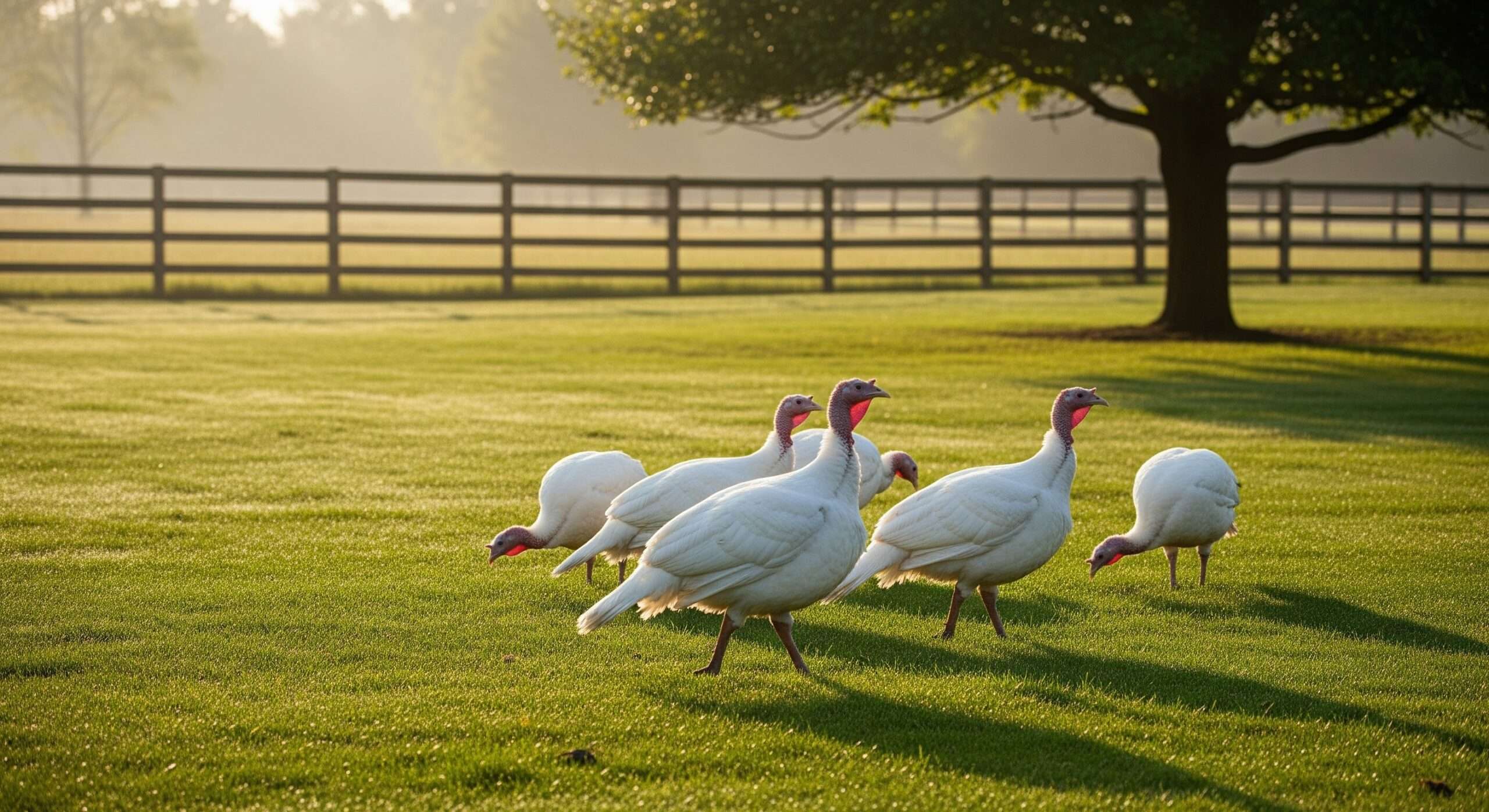
Broad-breasted: 16–20 weeks to 18–28 lb live, 12–20 lb dressed, very high feed conversion (2.8–3.5 lb feed/lb gain)
Heritage: 24–32 weeks to 14–22 lb live, 10–16 lb dressed, lower feed efficiency (4–6 lb feed/lb gain) but much higher forage contribution
1.2 Foraging Ability, Health & Hardiness
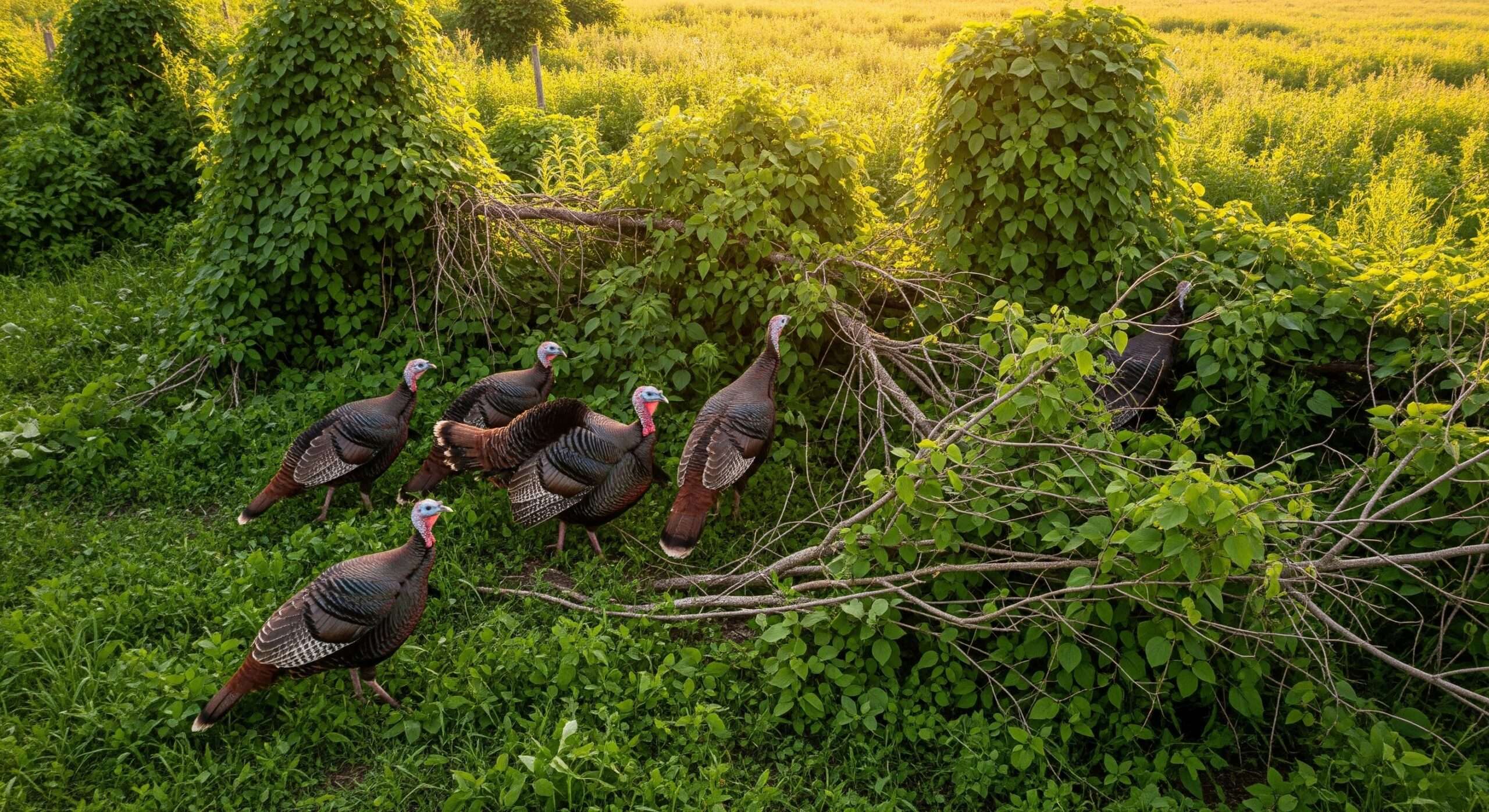
Heritage: excellent foragers (up to 40–60% diet from pasture), strong legs, fewer heart/leg issues, better cold/wet tolerance
Broad-breasted: poor foragers, prone to leg deformities & heart failure, need very high-protein feed, less hardy
1.3 Meat Quality, Flavor & Market Appeal
Heritage: darker, richer, more flavorful meat, better texture, higher market value for gourmet buyers
Broad-breasted: milder flavor, softer texture, more white meat, commercial standard
1.4 Cost of Production & Time to Table
Broad-breasted: faster turnaround, higher feed cost, higher mortality risk
Heritage: longer grow-out, lower feed cost (foraging), lower mortality, higher final value
1.5 Best Use-Cases for Each Type on a Homestead
Heritage: flavor-focused, low-input, dual-purpose (eggs/meat), small flocks, limited feed budget
Broad-breasted: maximum meat quantity, quick holiday birds, high-feed budget, larger scale
Comparison table (download included): growth weeks, feed/lb gain, dressed weight, flavor score, hardiness, cost/bird
2. Raising Turkeys with Chickens: Safe Mixing Rules
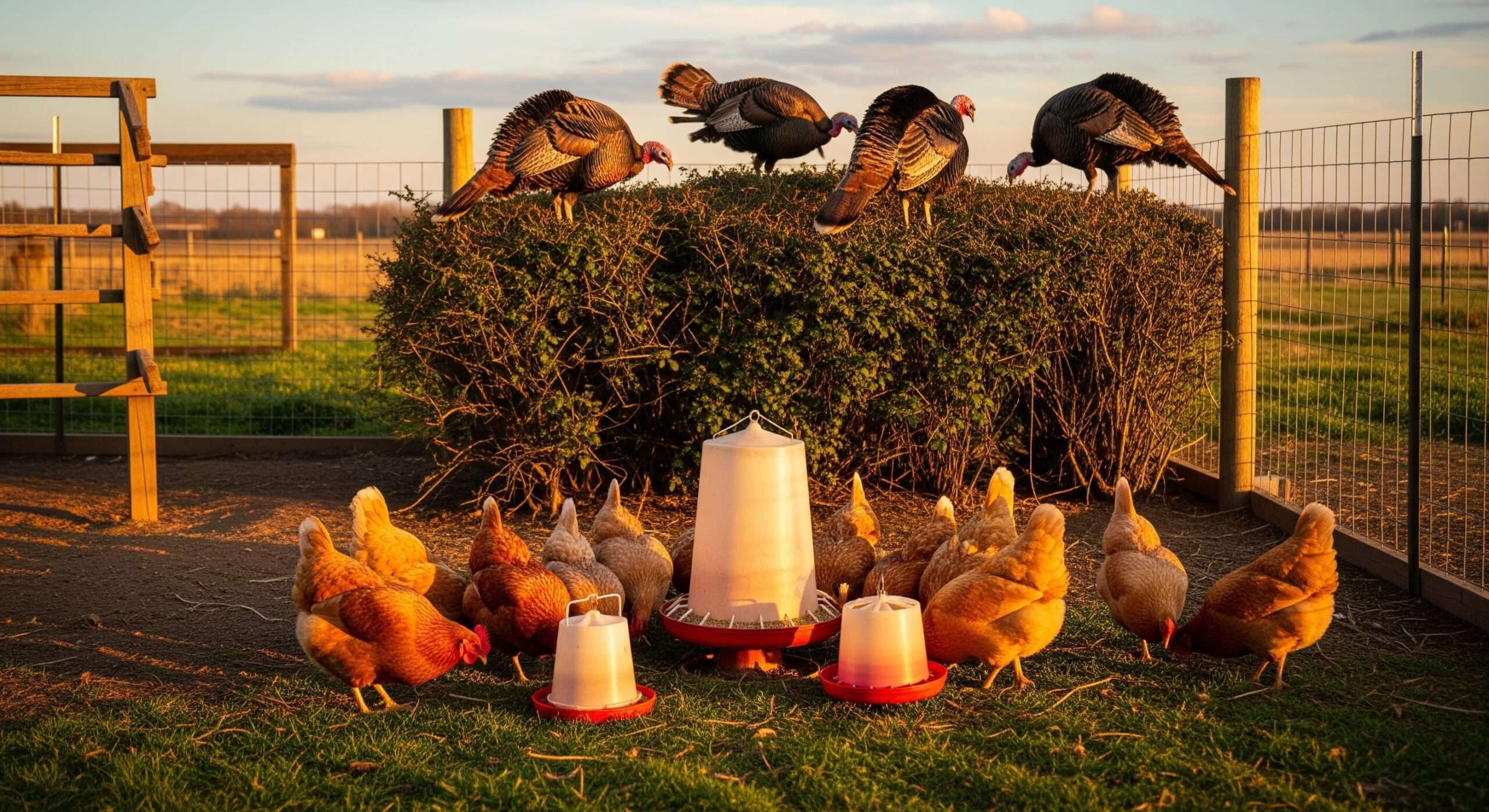
Turkeys and chickens can coexist successfully — but only with careful planning. Turkeys are larger, more aggressive, and carry different disease risks.
2.1 Behavioral Differences & Potential Conflicts
Turkeys are dominant, can bully chickens, especially young or smaller breeds.
Chickens may peck turkey poults when young.
Roosters of both species often fight for dominance.
2.2 Disease & Parasite Transmission Risk (real numbers)
Blackhead (Histomoniasis): turkeys extremely susceptible; chickens are asymptomatic carriers.
2025 data: mixed flocks without separation → 15–28 % turkey mortality from blackhead.
Coccidiosis & worms: shared, but turkeys more sensitive.
2.3 Space & Feeder Separation Strategies
Minimum 10–15 ft² per turkey in mixed flock (chickens need 4–8 ft²).
Separate feeders/waterers at different heights (turkeys eat higher).
Multiple roosts: turkeys prefer high perches (6–8 ft), chickens lower.
2.4 Successful Mixed-Flock Setups (best breeds, ratios, age matching)
Best breeds: heritage turkeys + hardy chickens (Rhode Island Red, Orpington, Plymouth Rock).
Ratio: 1 turkey : 4–6 chickens maximum.
Age matching: raise turkey poults separately until 8–12 weeks, then introduce slowly.
2.5 When to Keep Them Separate (and why)
High blackhead risk areas → separate entirely.
Small space → separate to prevent bullying.
Young poults → raise in brooder first (chickens can injure/kill them).
Mixing success/failure case table + recommended ratios (download)
3. Space & Shelter Requirements: What Turkeys Actually Need
Turkeys require more space and different shelter than chickens — ignoring this leads to stress, leg issues, and poor growth.
3.1 Brooder Phase (0–8 weeks)
0.5–1 ft² per poult first week → 2–3 ft² by week 8.
Heat lamp: 95°F week 1, drop 5°F weekly.
Draft-free, clean bedding (pine shavings).
3.2 Grow-Out & Pasture Space (per bird)
Grow-out (8–16+ weeks): 8–15 ft² indoors per bird.
Pasture: 200–400 ft² per bird for good foraging (heritage).
Broad-breasted: 100–200 ft² (less active foragers).
3.3 Roosting, Shelter & Winter Housing
Roosts: 12–18 inches per bird, 6–8 ft high (turkeys perch high).
Shelter: wind/rain proof, 10–15 ft² per bird.
Winter: deep litter, good ventilation, no drafts.
3.4 Fencing & Predator Protection
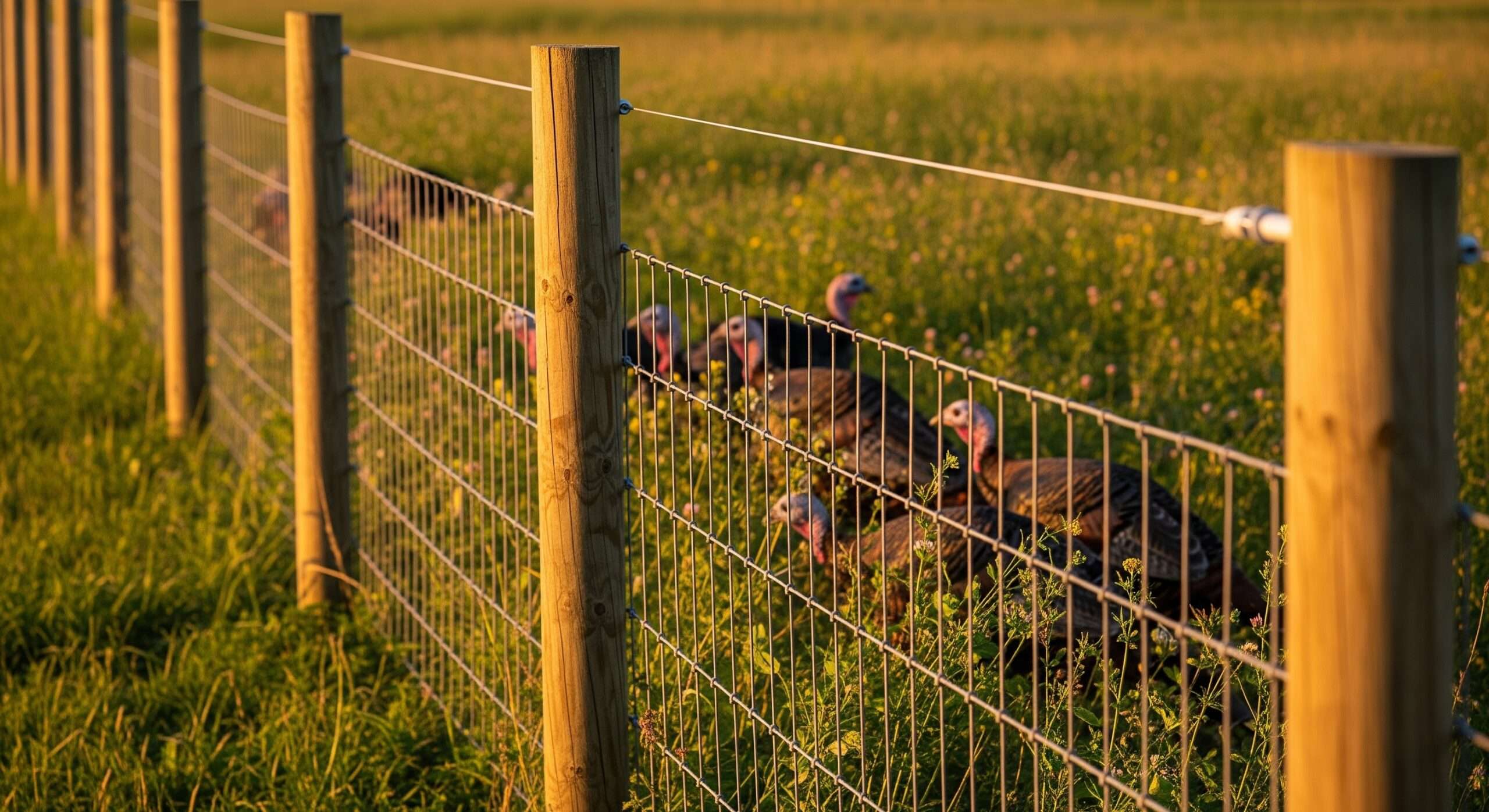
Fencing: 5–6 ft woven wire + electric top strand (turkeys can fly short distances when young).
Night shelter: secure coop or tractor.
Guardians: livestock guardian dogs very effective.
3.5 Portable vs Permanent Systems — pros/cons & costs
Portable tractor: flexible, better pasture use, higher daily labor.
Permanent coop/run: lower daily work, higher initial build cost ($500–$2,000).
Space requirement table by age + shelter design sketches (text descriptions in download)
4. Breed Spotlights: Top Heritage & Broad-Breasted Choices for Homesteads
4.1 Heritage Breeds
- Narragansett: Excellent foragers, calm temperament, good meat flavor, moderate size (ideal for beginners).
- Bourbon Red: Beautiful plumage, flavorful meat, hardy, moderate size.
- Standard Bronze: Very hardy, good mothers, rich meat flavor.
- Royal Palm: Striking appearance, excellent foragers, smaller size.
- Midget White: Smallest heritage breed, ideal for tiny homesteads, good meat quality.
4.2 Broad-Breasted Varieties
- Broad-Breasted White: Fastest growth, most white meat, commercial standard, highest feed cost.
- Broad-Breasted Bronze: Similar growth rate, slightly better flavor than white, still commercial type.
4.3 Rare vs Common — Availability & Cost in 2025–2026
Heritage: poults $8–$20 each, limited availability (order early from specialty hatcheries like Murray McMurray or Cackle).
Broad-breasted: poults $5–$10 each, widely available from many hatcheries.
5. Real Homestead Turkey Stories & Lessons Learned
5.1 Heritage-only flock success (flavor & foraging)
5 Narragansetts → foraged 50% diet, low feed cost, excellent meat flavor, no leg issues.
5.2 Broad-Breasted meat-production batch (speed vs problems)
8 Broad-Breasted Whites → fast 18 lb birds, but leg deformities & high feed use.
5.3 Mixed chickens + turkeys long-term flock
Heritage turkeys + Orpington chickens → safe integration after separation phase, good coexistence.
5.4 “I wish I knew” regret story & pivot
Broad-breasted → mobility problems → switched to heritage → success, better flavor.
6. Tools, Infrastructure & Budget Guide
- Brooder: heat lamp, brooder ring ($50–$100)
- Shelter: portable tractor ($200–$600) or permanent coop ($500–$2,000)
- Fencing: 5–6 ft woven wire + electric ($1–$2/ft)
- Feeders/waterers: high-capacity ($30–$80)
- Where to source poults: Murray McMurray, Cackle Hatchery, local breeders
7. Top 10 Homestead Turkey Mistakes & Quick Fixes
- Choosing broad-breasted for small space → leg problems → choose heritage
- Mixing young poults with chickens → injury → raise separately
- Insufficient space → stress → 200–400 ft²/bird pasture
- Weak fencing → escapes → 5–6 ft + electric
- No guardian for predators → losses → add LGD
- Overfeeding grain → health issues → balance forage
- Poor brooder heat → mortality → monitor temperature
- Ignoring blackhead risk → death → separate from chickens
- Wrong breed for goals → disappointment → use decision matrix
- No shelter ventilation → respiratory issues → add vents
8. Frequently Asked Questions
- Are heritage turkeys better than broad-breasted for homesteads?
Heritage: better flavor, health, foraging; broad-breasted: faster, more meat. - Can turkeys and chickens safely share the same space?
Yes — with separation for young poults and blackhead prevention. - How much space do turkeys need on a homestead?
200–400 ft² per bird pasture, 10–15 ft² shelter. - Which heritage turkey breed is best for beginners?
Narragansett or Bourbon Red — calm, good foragers. - Do heritage turkeys lay eggs for homestead use?
Yes — 50–100 eggs/year, good mothers.
Conclusion & Your 30-Day Turkey Decision & Setup Challenge
One choice. Healthy birds. Great meat.
30-Day Challenge
- Days 1–10: Assess land, goals, space
- Days 11–20: Choose breed(s) + plan shelter
- Days 21–30: Order poults & prepare brooder
Your homestead is ready for turkeys — choose wisely and enjoy the rewards.