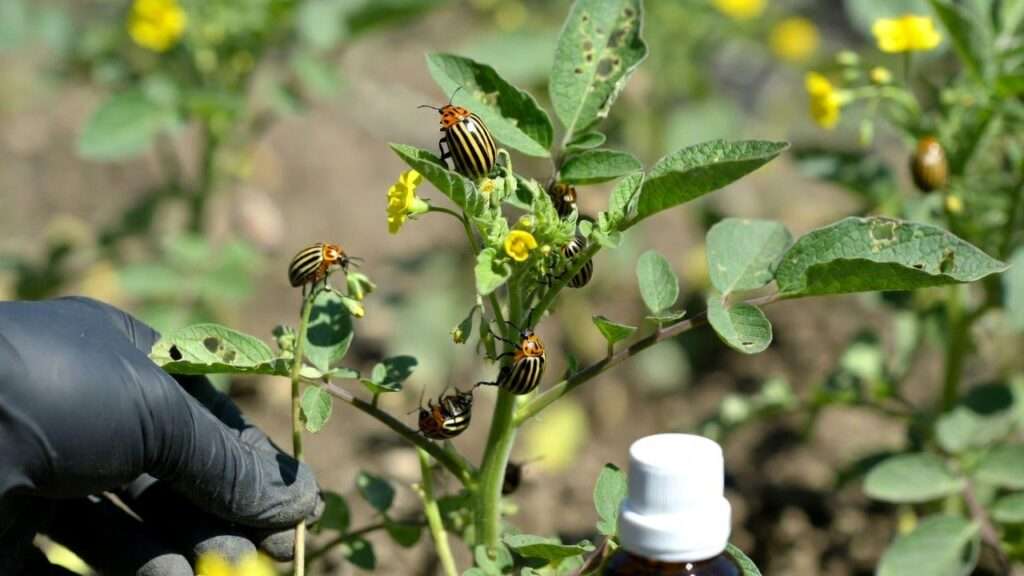
Imagine stepping into your garden on a warm spring morning, excited to see your potato plants thriving—only to discover leaves riddled with holes, skeletonized foliage, and clusters of bright orange eggs clinging to the undersides. Within days, plump red larvae appear, munching relentlessly until entire plants are stripped bare. This is the devastating work of beetles on potatoes, most commonly the Colorado potato beetle (Leptinotarsa decemlineata), one of the most persistent and destructive pests in home gardens and organic farms worldwide.
These “potato bugs” aren’t just a nuisance—they can slash yields by 30-100% through severe defoliation, especially if left unchecked during critical growth stages. As an agricultural expert with years of experience in sustainable pest management, I’ve seen firsthand how timely, natural interventions can turn the tide, preserving harvests without relying on synthetic chemicals that harm beneficial insects, soil biology, or long-term ecosystem health.
In this in-depth guide, we’ll explore why these beetles thrive on potatoes (and related nightshades like tomatoes and eggplants), their life cycle vulnerabilities, and—most importantly—7 proven natural pest control methods backed by university extension research (including University of Minnesota, Penn State, and MOFGA) and real-world organic practices. Whether you’re a backyard gardener in a small plot or managing larger organic beds, these layered strategies emphasize prevention, early detection, and eco-friendly action to protect your crop sustainably.
By the end, you’ll have a complete Integrated Pest Management (IPM) plan tailored for organic success, helping you reclaim your potato patch and boost yields naturally.
Understanding the Enemy: Colorado Potato Beetle Life Cycle and Identification
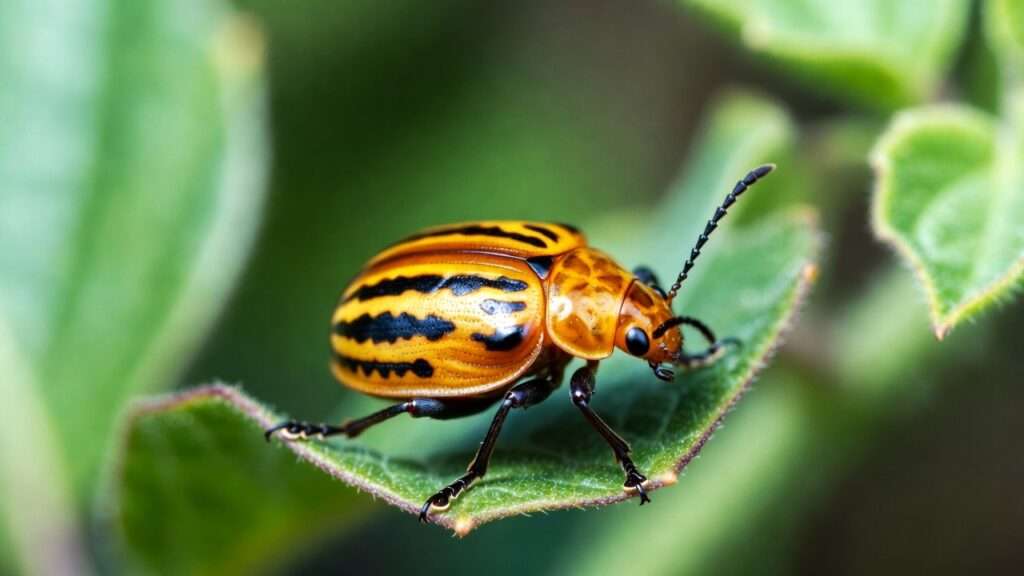
To defeat beetles on potatoes effectively, you must first know your adversary. The Colorado potato beetle, often called the potato bug, is a striped yellow-and-black adult about 1/2 inch long with 10 distinctive black stripes on its wing covers. Its head is orange-brown with black spots, and the body is convex and oval-shaped.
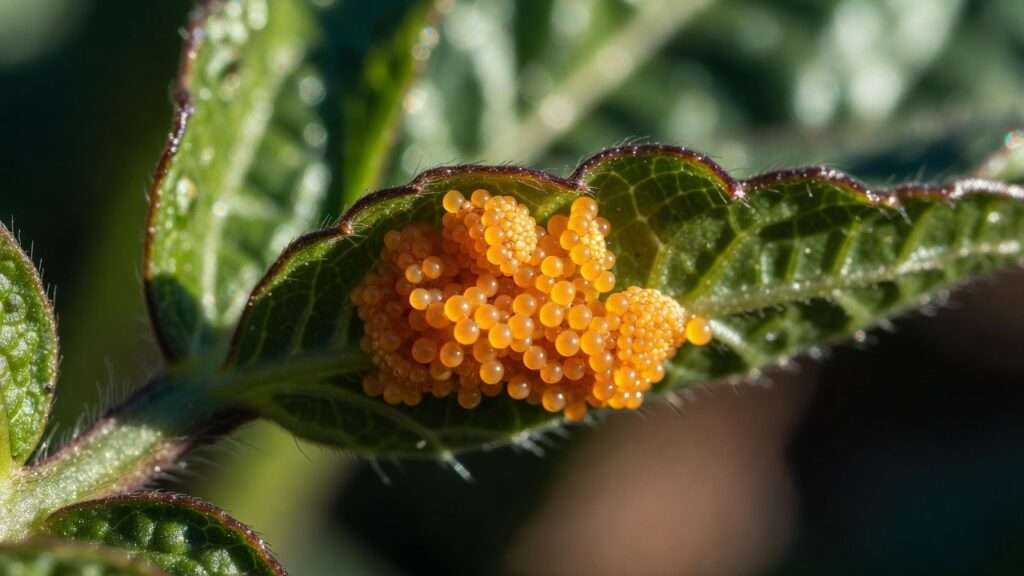
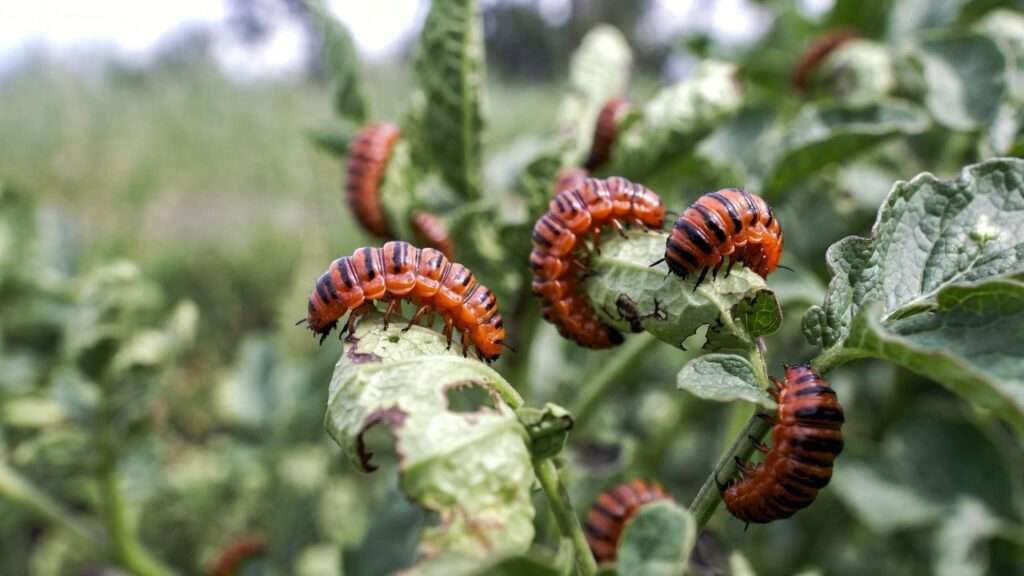
Larvae are the most damaging stage: newly hatched ones are tiny and brick-red with black heads, growing into plump, humpbacked, salmon-pink to reddish forms up to 1/2 inch long, marked by two rows of black spots along each side of the abdomen. Eggs appear as bright yellowish-orange, football-shaped clusters (20-60 per mass) glued firmly to leaf undersides—often the first sign of trouble.
Damage starts subtly: adults chew irregular holes in leaves upon emerging, but larvae cause the bulk of destruction, skeletonizing foliage from the top down. Plants can tolerate 20-30% defoliation before bloom and up to 30% during tuber bulking without major yield loss, but beyond that, tuber size shrinks dramatically, and severe cases lead to plant death.
The life cycle explains why timing is everything. Adults overwinter 4-8 inches deep in soil near last year’s potato fields, emerging in spring (often April-May in temperate zones) to feed and mate on emerging plants. Females lay 300-800 eggs over weeks, hatching in 4-10 days depending on warmth. Larvae feed for 2-3 weeks through four instars—the fourth instar alone accounts for ~75-85% of total feeding damage—before dropping to pupate in soil. One to three generations occur per season, with overlapping stages by midsummer in warmer areas.
Key vulnerability: Eggs and young (1st-2nd instar) larvae are easiest to target naturally, as larger larvae and adults develop resistance faster and cause more harm.
Prevention: Stop Beetles Before They Start (Cultural Practices)
The best defense against beetles on potatoes is preventing infestations through smart cultural practices. These foundational steps reduce pest pressure dramatically, often by 50-90% in rotated systems.
Crop Rotation – The Foundation of Organic Success Rotate potatoes (and other solanaceous crops like tomatoes, peppers, eggplants) out of the same family for at least 2-3 years—ideally 4+ in high-pressure areas. Distance new plantings at least 1/4-1/2 mile from old fields if possible, as adults walk rather than fly long distances. This starves overwintering populations and delays arrival until after peak vulnerability.
Choose Resistant or Early-Maturing Varieties Opt for early-season varieties (e.g., Yukon Gold, Red Norland) that mature before second-generation larvae peak. Some breeding lines show partial resistance, though none are fully immune—combine with other tactics.
Sanitation and Fall Cleanup Remove and destroy all plant debris at season’s end; plow or till under residues to expose overwintering adults to cold and predators. Plant cover crops (e.g., rye, clover) to suppress emergence and improve soil health.
Companion Planting and Natural Repellents Interplant potatoes with strong-scented companions like marigolds, catnip, tansy, coriander, nasturtium, onions, or horseradish—these deter adults via odor or confusion. Avoid planting near other nightshade weeds that serve as reservoirs.
Physical Barriers for Immediate Protection
- Floating Row Covers: Install lightweight spun-bonded fabric over young plants immediately after planting, securing edges tightly. Remove for pollination/flowering if needed, but covers block egg-laying effectively in small plots.
- Mulching with Straw or Organic Materials: Apply 4-6 inches of straw mulch after hilling; it hinders larvae from reaching soil to pupate, boosts beneficial insects, and suppresses weeds. Research from UMN Extension shows mulched fields have higher predator abundance and lower CPB numbers.
- Perimeter Trenches or Trap Cropping: Dig plastic-lined trenches (12+ inches deep, sloped sides) around fields to trap migrating adults. Plant early “trap crop” rows of potatoes to lure and destroy beetles before main crop.
Active Control: 7 Proven Natural Methods to Eliminate Beetles on Potatoes
When prevention isn’t enough and you spot beetles on potatoes—whether adults munching leaves or clusters of orange eggs—swift, targeted action is essential. These 7 proven natural methods form the core of an effective organic response. They draw from university extension recommendations (e.g., UMN Extension, Cornell, Iowa State, Purdue) and successful organic grower experiences, focusing on low-impact tools that minimize harm to pollinators, soil life, and beneficial insects.
Prioritize methods that target eggs and small larvae (1st–2nd instars), as larger larvae and adults are harder to control and cause the most damage (up to 75% of total defoliation from 4th instars alone). Always scout weekly, focusing on leaf undersides, and act at action thresholds: typically 1–1.5 large larvae per plant pre-bloom, or 4 small larvae/plant early season (per Cornell IPM guidelines). Combine 2–3 methods for best results—this integrated approach often reduces populations by 70–90% without chemicals.
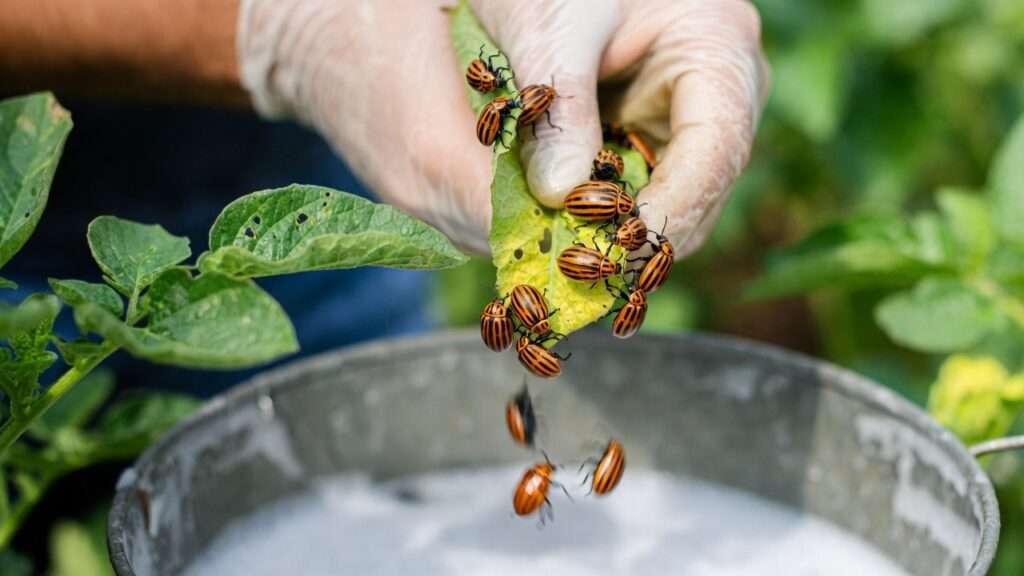
1. Handpicking and Egg Crushing (Most Effective for Small Gardens) For plots under 1/4 acre, hand removal remains one of the simplest, cheapest, and most reliable methods. Scout daily in early morning or evening when beetles are less active.
- Pick adults and larvae by hand (wear gloves if squeamish) and drop them into a bucket of soapy water to drown them.
- Flip leaves to find and crush bright orange egg clusters between your fingers or scrape them off into the bucket—destroying eggs prevents the next damaging generation.
- Tip: Focus on tops of plants first, as beetles start feeding there. In small gardens, consistent handpicking can keep infestations below economic thresholds, with many growers reporting near-complete control when combined with row covers. Pros: Zero cost, immediate impact, no risk to beneficials. Cons: Labor-intensive for larger areas.
2. Encouraging Natural Predators and Beneficial Insects While Colorado potato beetles have fewer natural enemies than some pests, a diverse garden ecosystem can significantly suppress them. Predators target eggs and small larvae most effectively.
- Key allies: Lady beetles (ladybugs) devour eggs and young larvae; predatory stink bugs (e.g., Podisus maculiventris) pierce and suck fluids from larvae; ground beetles hunt on soil surface; parasitic wasps (e.g., Edovum puttleri) lay eggs inside CPB eggs. Birds, toads, and even chickens/ducks forage on adults and larvae when allowed supervised access.
- Boost populations: Plant insectary strips with buckwheat, dill, fennel, yarrow, or alyssum to attract predators. Avoid broad-spectrum sprays (even some organics). Provide habitat like mulch, rock piles, or beetle banks.
- Research note: UMN Extension reports higher predator abundance in mulched and diversified fields, reducing CPB pressure noticeably. In diversified organic systems, sporadic infestations are more common than outbreaks. Pros: Long-term, self-sustaining control. Cons: Takes time to build; may not handle heavy outbreaks alone.
3. Diatomaceous Earth (Food-Grade) Application Food-grade diatomaceous earth (DE) is a non-toxic mechanical insecticide made from fossilized diatoms. Its sharp microscopic edges abrade insect exoskeletons, causing dehydration.
- Apply a light dust to foliage (especially undersides) and soil around plants where larvae drop to pupate. Use a duster for even coverage.
- Reapply after rain or heavy dew, as moisture reduces effectiveness. Target larvae and adults on contact.
- Safety: Safe for humans, pets, and pollinators when used dry; avoid inhaling dust (wear mask during application). Pros: Inexpensive, OMRI-listed for organic use, works on multiple stages. Cons: Less effective in wet conditions; doesn’t kill eggs.
4. Neem Oil and Other Botanical Sprays Neem oil (azadirachtin-based) acts as an antifeedant, growth regulator, and repellent—disrupting feeding, molting, and egg-laying.
- Mix: 1–2 tsp pure neem oil + 1 tsp mild dish soap (emulsifier) per quart of water. Spray thoroughly, covering undersides. Apply at dusk to avoid burning leaves or harming bees.
- Timing: Best on small larvae; repeat every 5–7 days. Products like Safer BioNeem combine neem with other botanicals for better results. Pros: Multiple modes of action reduce resistance risk; repels adults. Cons: Less potent than Bt on large larvae; sun-sensitive (reapply often). University tests show moderate control when applied early.
5. Bacillus thuringiensis var. tenebrionis (Bt for Beetles) Bt tenebrionis (Btt) is a strain-specific bacterial toxin that paralyzes the gut of young CPB larvae after ingestion, leading to starvation.
- Brands: Trident, Novodor (OMRI-approved). Spray on foliage when eggs hatch or small larvae appear—larvae must eat treated leaves.
- Timing critical: Most effective on 1st–2nd instars; larger larvae eat less and develop resistance faster. Pros: Highly targeted (no harm to beneficials or pollinators); no resistance buildup in many populations. Cons: Ineffective on eggs/adults; requires precise timing.
6. Beauveria bassiana Fungal Treatments This naturally occurring entomopathogenic fungus infects and kills larvae and adults by growing through the exoskeleton.
- Commercial products: BotaniGard, Mycotrol. Apply as foliar spray in humid conditions for best spore germination.
- Effectiveness: Can reduce populations by up to 75% in trials (University of Idaho data). Pros: Biological, persists in environment. Cons: Slower action (days to weeks); humidity-dependent.
7. Spinosad-Based Organic Products (e.g., Entrust, Monterey Garden Insect Spray) Derived from soil bacteria, spinosad targets nervous systems of larvae and adults.
- Apply to young larvae; highly effective but use sparingly to manage resistance (documented in some areas per UMN). Pros: Fast knockdown; OMRI-listed. Cons: Can impact beneficials if overused; requires respirator for some formulations. Reserve for when other methods fail.

Monitoring and Integrated Pest Management (IPM) Approach
Success hinges on regular monitoring. Scout plants weekly (or twice-weekly during peak emergence) by checking 10–20 plants per section for eggs, larvae, and defoliation. Record findings to track generations. Use action thresholds: Pre-bloom ~20–30% defoliation tolerable; during tuber bulking, limit to 10%. Layer methods—e.g., row covers + handpicking + Bt + predators—for synergistic control.
Common Mistakes to Avoid and Troubleshooting
- Waiting too long: Eggs hatch fast; delay lets larvae explode.
- Ignoring rotation: Replanting in same spot invites overwintered adults.
- Over-relying on one method: Resistance builds quickly. Severe infestation? Escalate with spinosad or Beauveria, then reinforce prevention next season.
FAQs
Are potato beetles the same as potato bugs? Yes—Colorado potato beetle is commonly called the “potato bug,” though true potato bugs refer to Jerusalem crickets in some regions.
Do these methods work on other nightshades like eggplant? Yes, CPB attacks tomatoes, peppers, eggplants—apply same strategies, especially rotation away from solanaceous crops.
How long until natural methods show results? Handpicking and DE act immediately; Bt/spinosad within days; predators/building habitat takes weeks to months for population-level impact.
Can chickens/ducks safely forage in potato patches? Yes, supervised— they love eating beetles/larvae but may scratch plants; use movable fencing.
Are there any risks to pollinators? Minimal with these methods—avoid spraying neem/spinosad during bloom; Bt and DE are very safe.
Conclusion
Beetles on potatoes don’t have to ruin your harvest. By understanding the Colorado potato beetle’s life cycle, prioritizing prevention through rotation, barriers, and companions, and deploying these 7 natural methods in an IPM framework, you can achieve sustainable, high-yield results organically. Start scouting early this season, implement at least 3–4 tactics, and watch your potato plants thrive.