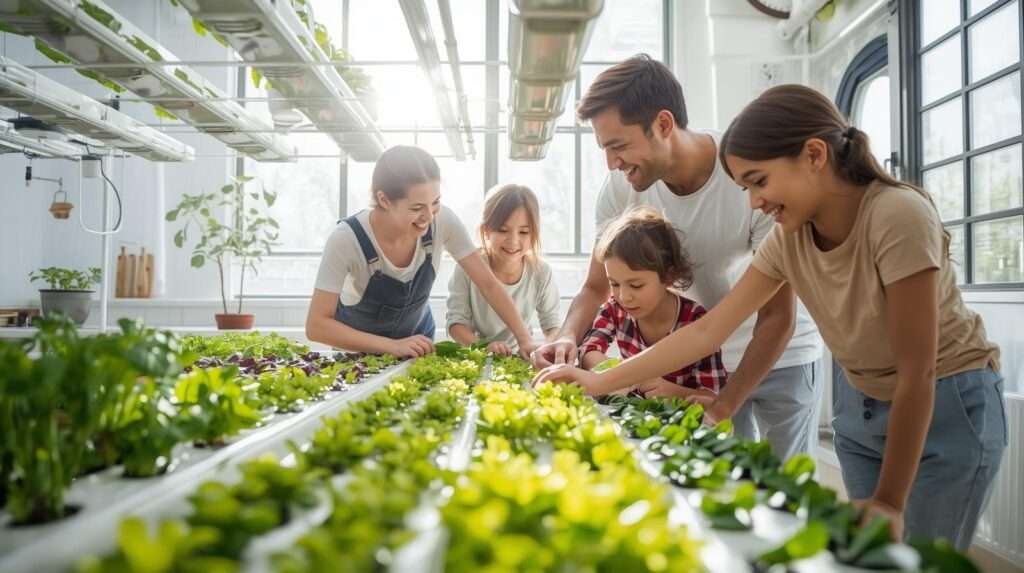
Picture this: your children rush to the kitchen window each morning, not to check their tablets, but to see if yesterday’s tiny seeds have pushed through the growing medium into bright green sprouts. They measure, record, predict, and—best of all—eventually harvest crisp lettuce or fragrant basil they grew themselves, without ever touching soil. In an era of increasing screen time and disconnection from nature, family-friendly hydroponic projects offer one of the most rewarding ways to bring science, sustainability, and teamwork into everyday family life.
These hands-on activities teach real biology (plant life cycles, photosynthesis, nutrient uptake), basic chemistry (pH and nutrient solutions), engineering (building simple systems), and environmental awareness (using up to 90% less water than traditional gardening)—all while producing edible results that make kids proud and parents happy. They work beautifully in apartments, balconies, or rainy Barishal seasons when outdoor soil gardening becomes challenging.
As someone who has led hydroponics workshops for families and schools across Bangladesh for over a decade, I’ve seen firsthand how these projects spark curiosity, improve patience, strengthen family bonds, and even inspire career interest in STEM fields. This comprehensive guide goes far beyond single-project tutorials: it provides four complete, progressively challenging DIY builds, detailed safety protocols, age adaptations, educational tie-ins, troubleshooting, budget tips, and extensions so your family can start small today and grow into a mini home farm over time.
Whether your kids are 5 or 15, you’ll find safe, affordable, engaging ways to grow food together indoors or out.
Why Hydroponics Makes a Perfect Family Activity
Hydroponics—growing plants in nutrient-rich water instead of soil—has unique advantages for family learning:
- Mess-Free & Indoor-Friendly — No dirt tracked through the house; ideal during monsoons or for urban apartments with limited outdoor space.
- Fast Results — Many crops sprout in 3–7 days and are harvest-ready in 4–8 weeks, keeping young attention spans engaged.
- Visible Science — Children can literally watch roots grow, bubbles oxygenate water, and nutrients travel—making abstract concepts concrete.
- Sustainability Lessons — Uses far less water, eliminates pesticides, and teaches resource conservation in a tangible way.
- Edible Motivation — Kids are far more likely to try (and enjoy) vegetables they grew themselves.
- Quality Time — Shared daily checks, weekend builds, and harvest meals create natural bonding opportunities.
These projects align beautifully with school curricula (plant biology, ecosystems, nutrition, scientific method) while being flexible enough for weekend fun or rainy-day science.
Safety First: Essential Guidelines for Kid-Friendly Hydroponics
Safety is non-negotiable when children are involved.
General Rules
- Adult supervision required for any cutting, drilling, electricity, or concentrated nutrient mixing.
- Use only food-grade, non-toxic containers and growing media (no treated wood, no unknown plastics).
- Keep electrical pumps and cords away from water spill zones and out of reach of toddlers.
- Never use toxic plants (e.g., avoid anything in the nightshade family beyond safe edibles like tomatoes if fruit is not consumed green).
Age-Specific Guidelines
- Ages 5–7: Focus on passive systems (no electricity); kids handle planting seeds, watering with squeeze bottles, observing.
- Ages 8–11: Can help assemble simple aerated systems, measure pH with strips, keep journals.
- Ages 12+: Can manage pumps, mix nutrients, conduct experiments, troubleshoot.
Essential Safety Checklist
- Work in well-ventilated areas when mixing nutrients.
- Store nutrients and pH adjusters locked away from children.
- Use battery-operated or low-voltage (12V) air pumps when possible.
- Light-proof reservoirs to prevent algae (use black spray paint, aluminum foil, or opaque containers).
- Have paper towels, a small mop, and a “spill station” ready.
Following these practices ensures fun without accidents.
Project 1: Super-Simple 2-Liter Bottle Wick System
Best for: Ages 5–10 | Passive (no electricity) | Cost: ~৳100–200
This is the perfect first project—recycled materials, zero power, fast results.
Materials Needed
- Clean 2-liter plastic soda bottle
- Cotton string, yarn, or old T-shirt strip (wick)
- Scissors (adult use)
- Seeds: lettuce, basil, coriander, or radish
- Growing medium: cotton balls, coco coir, or rockwool cubes
- Nutrient solution: diluted all-purpose liquid fertilizer (1/4 strength) or hydroponic nutrient (e.g., General Hydroponics FloraMicro + FloraGro mix at 300–400 PPM)
- Water (dechlorinated tap or rainwater)
Step-by-Step Build (Kids Can Help With Most Steps)
- Adult cuts bottle in half; bottom becomes reservoir, top becomes planting chamber (invert top into bottom).
- Poke small hole in bottle cap; thread wick through so 5–7 cm hangs into bottom reservoir.
- Fill bottom half with nutrient solution (about 1/3 full).
- Place growing medium in top half; plant 3–5 seeds per bottle at proper depth.
- Position near bright window (indirect sun) or under low-cost LED grow light.
- Kids top off reservoir weekly with diluted nutrient water.
What Kids Learn
- Capillary action (how water “climbs” the wick)
- Germination and seedling care
- Basic nutrient needs
Expected Timeline
- Days 3–7: First sprouts
- Weeks 3–5: Harvest baby leaves
- Week 6+: Continuous harvest by cutting outer leaves
Fun Variation: Set up three bottles—one with plain water, one with half-strength nutrients, one with full strength—and compare growth weekly.
Project 2: Easy Aerated Deep Water Culture (DWC) Jar Garden
Best for: Ages 8–14 | Introduces gentle bubbling | Cost: ~৳300–600
This project adds the magic of visible oxygen bubbles—kids love watching roots dance in the water—and teaches why roots need air just like fish do.
Materials Needed
- Wide-mouth mason jar or clear 1–2 liter plastic jar (food-grade)
- Small net cup or repurposed yogurt cup with holes drilled in bottom
- Small aquarium air pump + air stone/tubing (low-cost 3–5W models work perfectly)
- Expanded clay pebbles (hydroton/LECA) or gravel
- Lettuce, spinach, or basil seedlings (start from seeds or buy small nursery plants)
- Hydroponic nutrients (start at ¼–½ strength)
- pH test strips or basic digital pH meter (highly recommended for learning)
- Black electrical tape or paint (to light-proof jar sides)
Step-by-Step Build
- Cover outside of jar with black tape/paint (prevents algae).
- Drill or cut holes in net cup bottom so roots can dangle through.
- Fill net cup with clay pebbles; plant 1–2 seedlings or sow seeds directly.
- Fill jar with nutrient solution (pH 5.8–6.2) so solution touches pebble base.
- Place air stone in jar bottom; connect to pump (run 24/7 or on timer).
- Position in bright indirect light or under affordable LED grow light (12–16 hours/day).
- Kids can help name each jar, draw daily observation sketches, and check bubbles.
What Kids Learn
- Importance of dissolved oxygen for root health
- Basic pH concept (why we test and adjust)
- Daily responsibility and observation skills
Maintenance & Timeline
- Top off jar every 3–5 days with pH’d nutrient water.
- Full nutrient refresh every 10–14 days.
- Sprouts/seeds: 4–10 days; baby greens harvest: 3–5 weeks; full heads: 6–8 weeks.
Pro Tip for Families: Run two identical jars—one with air pump, one without—and compare growth after two weeks. The difference is dramatic and creates an excellent mini-experiment.
Project 3: Vertical Straw or PVC Tower for Small Spaces
Best for: Ages 10+ | Engineering & space-saving focus | Cost: ~৳800–1,500
This project introduces gravity-fed or pumped circulation and vertical growing—perfect for balconies or small rooms.
Materials Needed
- 4–6 food-grade PVC pipes (2–3 inch diameter, 60–90 cm long) or thick drinking straws bundled
- 5-gallon bucket or large plastic tub (reservoir)
- Small submersible pump (5–10W)
- Net pots or drilled holes for plants
- Tubing, fittings, clay pebbles
- Herbs (basil, mint, coriander) or strawberries
Step-by-Step Build
- Cut holes in PVC pipes at regular intervals for net pots.
- Connect pipes vertically (or in zigzag) using elbows/fittings.
- Place top of tower above reservoir bucket.
- Run tubing from pump in bucket to top of tower; water flows down through plants and back to bucket.
- Fill system with nutrient solution; plant herbs/strawberries.
- Turn on pump (continuous or timed 15 min on/45 min off).
What Kids Learn
- Fluid dynamics and gravity
- Efficient use of space (urban farming concept)
- Nutrient recycling in closed-loop systems
Variations
- Passive version: Use gravity wick from reservoir (no pump).
- Themed: Build a “pizza tower” with oregano, basil, cherry tomatoes.
Timeline: Herbs ready in 4–7 weeks; strawberries fruit in 8–12 weeks.
Project 4: Science Experiment – Hydro vs. Soil Comparison
Best for: Ages 7+ (great for school science fairs) | Cost: ~৳200–400
This side-by-side challenge turns hydroponics into a true scientific investigation.
Setup
- Grow identical plants (e.g., lettuce or basil) in:
- Control: Small soil pot with regular watering
- Hydro: 2-liter wick bottle or DWC jar (from earlier projects)
- Same seeds, same starting light, same location.
Procedure Kids Lead
- Plant seeds simultaneously.
- Measure and record height weekly (use ruler/app).
- Take photos every 7 days.
- Note leaf color, root appearance (hydro roots visible!).
- After 4–6 weeks: Harvest, weigh, taste-test side by side.
Extensions
- Test variables: different nutrient strengths, light hours, pH levels.
- Create bar graphs or line charts (use free tools like Google Sheets).
- Write a simple “lab report” with hypothesis, results, conclusion.
Learning Outcomes
- Scientific method in action
- Direct comparison of growing methods
- Data collection, graphing, critical thinking
Additional Fun Variations and Upgrades
Once your family has mastered the core projects, try these extensions to keep the excitement going and deepen learning.
- Kratky Method in Recycled Containers Use old plastic takeaway boxes, ice cream tubs, or milk cartons (cleaned thoroughly). Drill holes in lids for net cups or directly plant seeds in clay pebbles. Completely passive—no pump needed. Great for growing microgreens or small herbs on kitchen counters.
- Window Herb Garden with Affordable LED Grow Lights Mount a simple plug-in LED grow light strip (available for ৳500–1,200 online or in local shops) above a shelf of DWC jars or wick bottles. Kids can experiment with light distance and duration (start with 12–14 hours/day). Perfect for low-sunlight apartments in Barishal during cloudy monsoon months.
- Mini Aquaponics Introduction (with Caution) Add a small goldfish or guppy to a larger DWC jar (after the hydro system is stable for 4–6 weeks). Fish waste provides natural nutrients; plants filter the water. Start with one fish per 10–15 liters. Teaches nutrient cycling and ecosystems—but requires adult oversight for water quality and fish care.
- Themed Family Gardens
- “Pizza Garden”: Grow basil, oregano, cherry tomatoes, and peppers.
- “Rainbow Greens”: Red lettuce, green spinach, purple kale, yellow mustard greens.
- “Taste Test Challenge”: Grow the same variety in different nutrient strengths and compare flavors.
These upgrades turn a simple project into an ongoing family hobby.
Troubleshooting Common Kid Hydro Issues
Even the best setups encounter hiccups—here’s how to fix them quickly and safely with kids involved.
- Algae Growth (Green Slime on Roots or Reservoir) Cause: Light reaching nutrient solution. Fix: Wrap jars/bottles completely in black tape or foil. Add a tiny drop of food-grade hydrogen peroxide (3%) weekly if needed. Kids can help decorate the covers with stickers for fun.
- Wilting or Droopy Leaves Cause: Low oxygen, too-strong nutrients, or dry growing medium (wick systems). Fix: Check bubbles (for aerated systems), dilute nutrients 20–30%, top off wick reservoir. Mist leaves lightly if indoors is dry.
- Yellowing Leaves Cause: Nutrient imbalance or pH drift (common after 10–14 days). Fix: Test pH with strips (aim 5.8–6.2); adjust with tiny drops of vinegar (down) or baking soda solution (up). Add a bit more nitrogen-rich nutrient if older leaves yellow.
- No Growth or Slow Sprouting Cause: Old seeds, insufficient light, cold temperature. Fix: Use fresh seeds, move closer to light source, keep room 20–28°C. Kids can make “growth charts” to track progress visually.
- Pump Stops Working Cause: Clogged air stone or power issue. Fix: Clean air stone in vinegar soak; have a backup battery-powered aerator for emergencies.
Quick Troubleshooting Table
| Issue | Most Likely Cause | Kid-Safe Fix Action |
|---|---|---|
| Green algae | Light exposure | Cover reservoir fully; clean gently |
| Wilting | Low oxygen / dry wick | Check bubbles; refill reservoir |
| Yellow lower leaves | Nitrogen shortage | Add more grow nutrient (diluted) |
| Yellow new leaves | pH too high | Lower pH with vinegar drops (adult help) |
| No sprouts after 10 days | Bad seeds / wrong depth | Replant fresh seeds; check light & warmth |
Tips for Maximum Learning and Fun
- Keep a Family Hydro Journal Dedicate a notebook or phone album: daily drawings/photos, height measurements, “today I noticed…” notes. Review weekly to celebrate progress.
- Turn Harvest into Celebration Plan a “farm-to-table” night: kids wash and chop greens, parents prepare simple salad, pesto, or herb butter. Taste differences between homegrown and store-bought.
- Make It Competitive (Friendly!) “Whose plant grows tallest this week?” or “Best-tasting basil contest” with small prizes (stickers, extra screen time).
- Budget & Resource Hacks
- Collect rainwater for top-offs (Barishal has plenty!).
- Buy seeds/nutrients in bulk from local nurseries or online.
- Reuse old aquariums, buckets, and bottles.
- Scale Up Gradually Once confident, combine projects into a “family farm wall” using shelves and multiple jars/towers.
Real Family Success Stories and Examples
- The Rahman Family (Barishal) Started with one 2-liter bottle during monsoon lockdown. Kids (ages 7 & 10) now maintain six DWC jars growing basil, mint, and lettuce year-round. “They fight over who gets to check pH strips each morning,” their mother shared.
- Classroom-to-Home Project (Local School Group) A science teacher introduced wick bottles; three families continued at home. One child used the hydro vs. soil experiment for a science fair—won first place and inspired cousins to start their own setups.
- Key Lesson from Hundreds of Families The biggest wins come not from perfect systems, but from consistent observation, celebrating small successes, and turning mistakes into learning moments.
Frequently Asked Questions (FAQs)
What’s the best age to start family hydroponic projects? Ages 5+ for simple wick systems; 8+ for aerated jars. Younger kids can help plant seeds and observe.
How much does a basic family hydro setup cost? First project (2-liter bottle): ৳100–300. Adding a pump and nutrients: ৳500–1,000 total to start multiple jars.
Do we need sunlight or can we use grow lights? A bright window (4–6 hours direct/indirect) works; affordable LED grow lights make it reliable indoors.
Are hydroponic nutrients safe around children? Yes, when diluted and stored securely. Use food-grade, pH-balanced formulas; avoid concentrated storage near kids.
How long until we can eat what we grow? Baby greens: 3–5 weeks; full herbs/lettuce: 6–8 weeks. Fastest are radish microgreens (10–14 days).
What if we forget to check the water? Most passive systems last 7–14 days between top-offs. Set phone reminders or a family chore chart.
Can we grow vegetables for dinner every day? Start small—supplement meals. A family of four can easily grow enough herbs and greens for regular use.
Is hydroponics okay during power cuts? Passive wick/Kratky systems are fine. For aerated jars, keep a backup manual aerator or battery pump.
What’s the easiest first crop for kids? Lettuce (fast, forgiving), basil (fragrant, tasty), or radish microgreens (super quick).
How do we stop algae without chemicals? Light-proof everything; clean jars monthly; use opaque containers from the start.
Conclusion
Family-friendly hydroponic projects transform ordinary weekends and rainy afternoons into exciting science adventures that grow both plants and young minds. Starting with one simple bottle, your family can quickly experience the joy of watching life emerge from water, tasting homegrown food, and learning real lessons about nature and responsibility.
Pick one project from this guide—perhaps the 2-liter wick bottle—and gather your kids tonight. The first sprouts will arrive faster than you expect, and the memories will last much longer.
We’d love to see your family’s hydro journey! Share photos, questions, or your favorite harvest recipe in the comments below. Subscribe for more kid-approved gardening ideas, seasonal tips, and easy upgrades tailored for Bangladeshi homes.
Happy growing, and enjoy every moment with your little scientists!