Imagine this: You’ve just set up your first greenhouse in your backyard in Barishal, the humid air thick with possibility. The structure gleams under the tropical sun, promising fresh greens through the monsoon and extended harvests beyond the usual season. But then reality hits—where do you start? What vents to install? How to heat without skyrocketing costs? Which plants won’t succumb to humidity or pests? Overwhelm sets in fast for most new owners.
If you’re a first-time greenhouse owner, you’re not alone in feeling excited yet daunted. The first time greenhouse owner checklist becomes essential—not just a list of tools and tasks, but a roadmap to building a resilient, low-maintenance growing space. By applying permaculture principles, you transform your greenhouse from a conventional high-input box into a thriving, regenerative ecosystem. This approach mimics nature: observing patterns, capturing energy, producing yields with minimal waste, and integrating elements for mutual benefit.
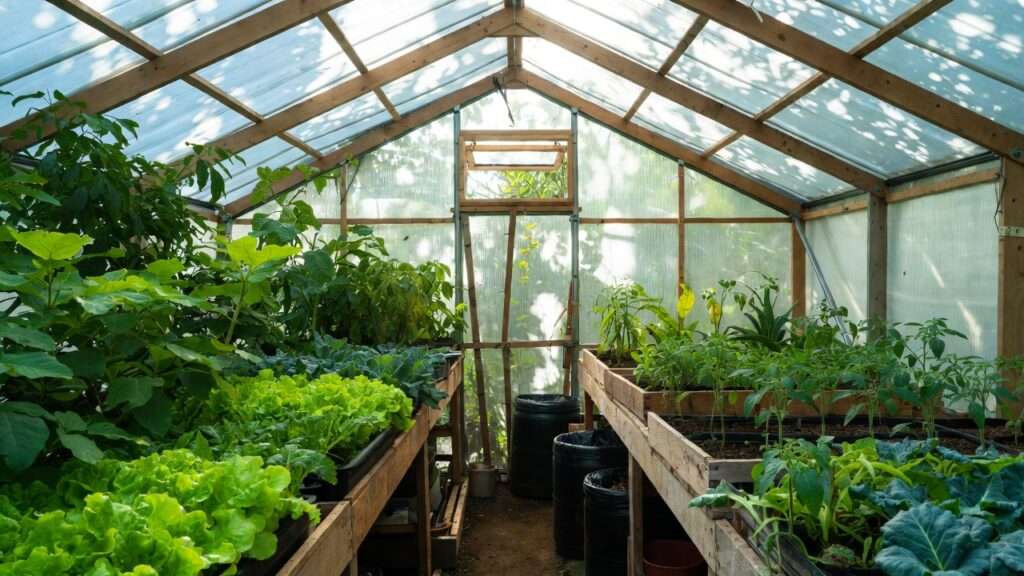
In this comprehensive guide, I’ll walk you through every step with a permaculture lens. Drawing from David Holmgren’s 12 principles and real-world applications in humid subtropical climates like Bangladesh’s Barisal Division—where heavy rains, high humidity, and warm temperatures dominate—we’ll cover site observation, sustainable setup, starter plants, maintenance, and scaling up. You’ll avoid common pitfalls like poor ventilation leading to fungal issues or over-reliance on chemical inputs. By the end, you’ll have a practical, actionable checklist to launch your sustainable greenhouse journey confidently.
Whether you’re aiming for family food security, experimenting with organic produce, or embracing regenerative agriculture, this guide delivers genuine value: lower long-term costs, healthier plants, and a system that works with your local environment rather than against it.
Why Choose Permaculture for Your First Greenhouse?
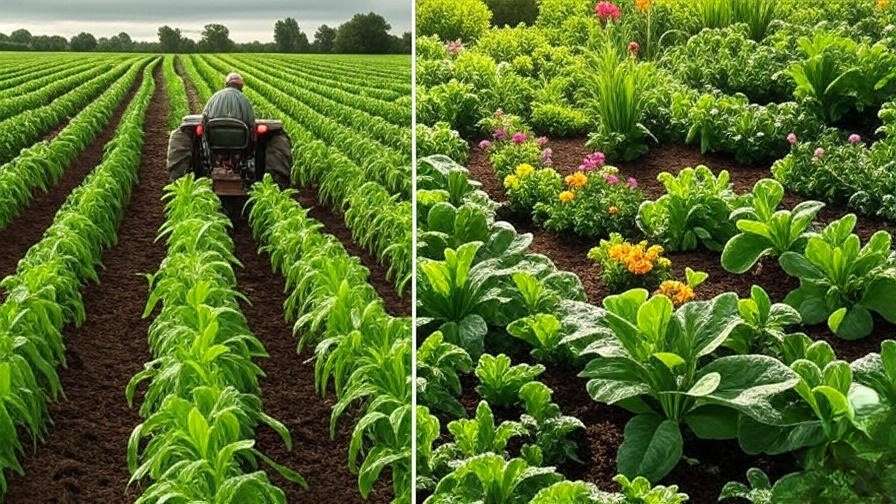
Permaculture isn’t just gardening—it’s a design philosophy for sustainable living. Coined by Bill Mollison and David Holmgren, it means “permanent agriculture” or “permanent culture.” In a greenhouse context, permaculture shifts focus from synthetic fertilizers and monocultures to closed-loop systems that build soil health, conserve resources, and increase biodiversity.
Key advantages over conventional greenhouse methods:
- Resource efficiency: Catch and store solar energy passively, reducing electricity or fuel needs—crucial in areas with variable power supply.
- Resilience: Diverse plantings and natural pest controls buffer against pests like aphids or fungal diseases common in humid tropics.
- Yield without waste: Compost everything on-site, cycle nutrients, and integrate water harvesting.
- Lower maintenance: Once established, systems self-regulate, requiring less intervention.
Relevant permaculture principles for greenhouses include:
- Observe and Interact — Study your site before acting.
- Catch and Store Energy — Maximize sunlight and thermal mass.
- Obtain a Yield — Prioritize productive, easy crops.
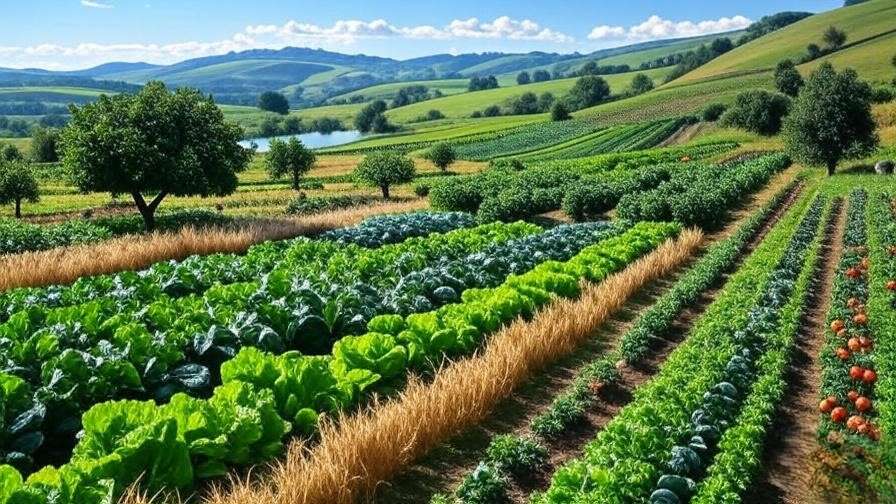
- Integrate Rather Than Segregate — Use companion planting and polycultures.
- Use and Value Renewable Resources — Rely on sun, rain, and compost.
- Produce No Waste — Turn scraps into soil amendments.
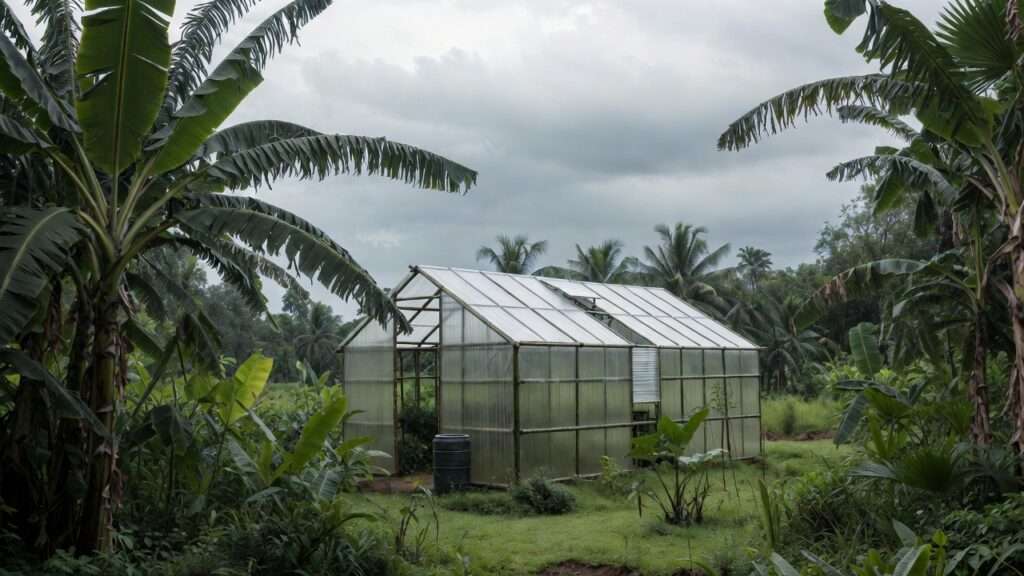
Greenhouses fit perfectly as intensive “Zone 1” elements in permaculture design—close to the home for daily observation and interaction. In Barishal’s climate (average highs 30–35°C, humidity 80%+, monsoon flooding risks), passive solar designs and good airflow prevent overheating and mold while extending dry-season growing.
Pre-Setup Observation & Planning (Observe & Interact Principle)
Rushing into construction is the top mistake new owners make. Start with observation—spend weeks watching your site.
Site Assessment Checklist:
- Track sun path: Use a sun calculator app or mark shadows hourly. In Barishal, aim for east-west orientation to capture morning and afternoon light while minimizing midday intensity.
- Note wind patterns: Prevailing winds from the south/southwest? Position vents accordingly to avoid structural stress.
- Evaluate microclimates: Low spots collect water (risk of flooding); elevated areas drain better but may need windbreaks.
- Soil and drainage: Test around the perimeter—avoid heavy clay without amendment.
- Proximity: Place near home compost, water source, and kitchen for easy nutrient cycling.
Define goals clearly: Year-round salads? Seed starting for outdoor beds? Income from surplus? Start small—6×8 ft or 8×10 ft polytunnel/hoop house is ideal for beginners. Polycarbonate panels offer better insulation than plastic film in humid areas; glass is durable but expensive.
Permaculture Tip: Integrate with your broader garden. Position the greenhouse to shade summer veggies or catch roof runoff for irrigation.
Common error: Ignoring local climate. In Barishal, prioritize ventilation over heavy insulation—focus on passive cooling and humidity management.
Essential Greenhouse Setup Checklist (Catch & Store Energy + Use Renewables)
This is the core of your first time greenhouse owner checklist—practical, sustainable choices.
Foundation & Structure:
- Level ground or concrete piers for stability against winds/monsoons.
- Orient east-west for optimal solar gain; north wall insulated (earth berm or reflective foil) to retain heat.
Venting & Climate Control (Vital in humid Barishal):
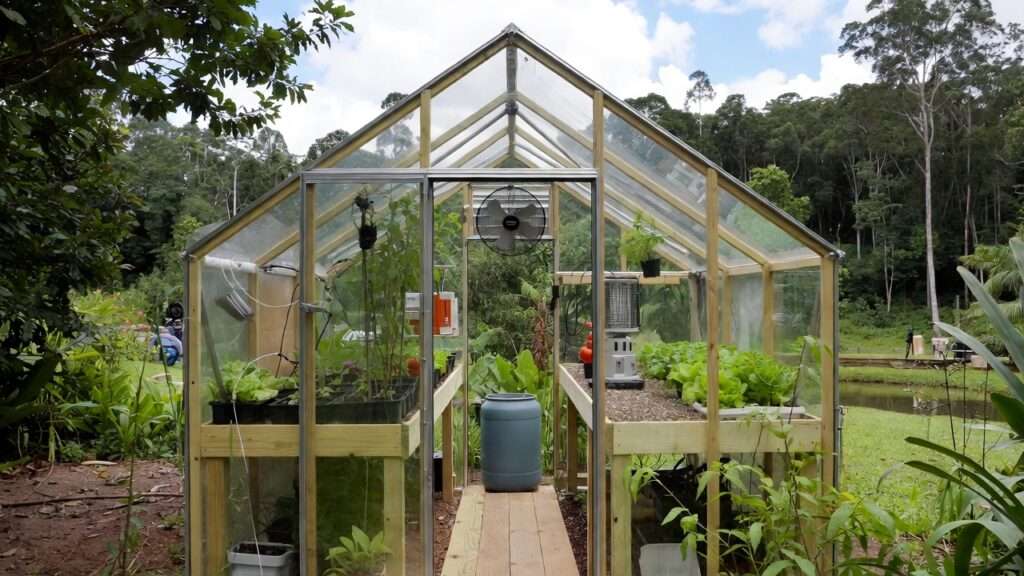
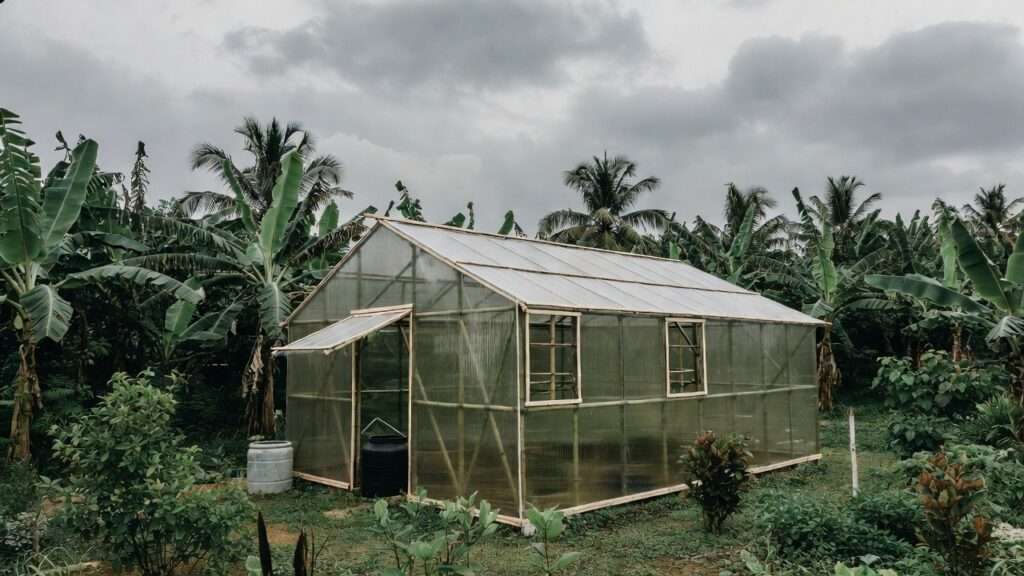
- Install automatic or manual roof vents + side louvers for cross-flow.
- Add shade cloth (50–70%) for peak summer to prevent scorching.
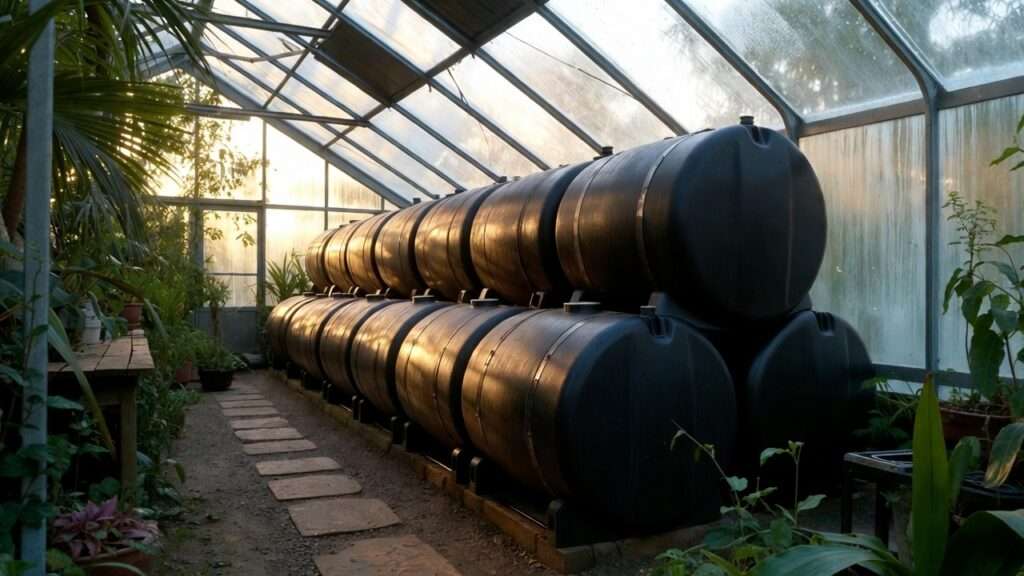
- Permaculture hack: Use water barrels along the north wall as thermal mass—absorb daytime heat, release at night. In hot/humid areas, prioritize passive ventilation over fans.
Heating Options (For cooler winter nights ~15–20°C):
- Passive solar primary: Black-painted barrels or stone paths store heat.
- Low-energy backup: Small electric heater with thermostat only if needed—avoid constant use.
- Compost heat: Place a small hot compost pile inside for mild warmth.
Benches, Shelving & Layout:
- Multi-tier benches maximize vertical space—lower for shade-tolerant greens, upper for light-hungry tomatoes.
- Wide pathways (60–80 cm) for airflow and access.
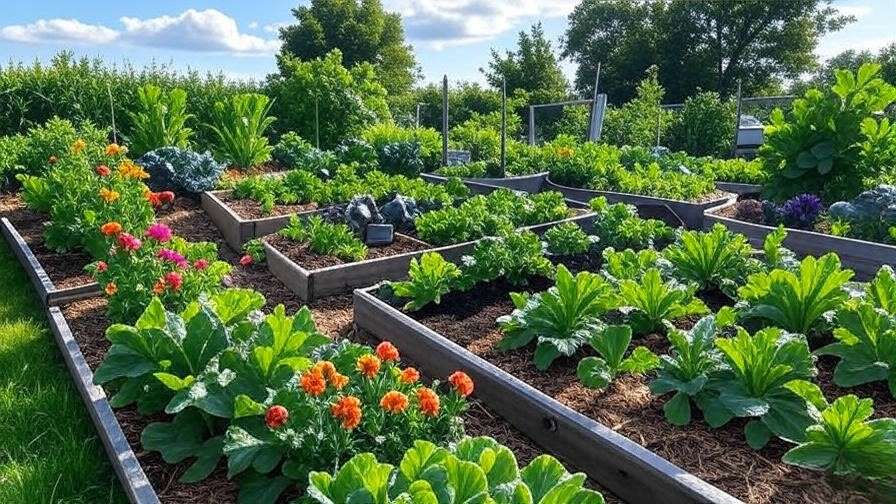
- In-ground or raised beds for soil biology—avoid sterile pots long-term.
Water & Irrigation:
- Rainwater harvesting from roof gutters—essential during dry spells.
- Drip irrigation or ollas (clay pots) for efficient, root-zone watering—reduces fungal risk in high humidity.
Soil & Growing Medium:
- Build living soil: Layer compost, worm castings, biochar, and cover crops.
- Inoculate with mycorrhizae for nutrient uptake.
- Avoid chemical fertilizers—focus on biology for sustainable fertility.
This setup emphasizes renewables and energy cycling, cutting costs while building resilience.
What to Plant First — Permaculture-Inspired Starter Plants (Obtain a Yield + Integrate Rather Than Segregate)
Now that your greenhouse infrastructure is in place, the most rewarding (and sometimes intimidating) part begins: choosing what to grow. The permaculture principle of “Obtain a Yield” reminds us to prioritize plants that deliver quick, reliable returns while building system health. The principle “Integrate Rather Than Segregate” guides us toward polycultures and companions rather than single-crop rows.
For first-time greenhouse owners in humid subtropical climates like Barishal (high humidity, warm days year-round, occasional cooler nights in December–January), focus on forgiving, fast-growing, humidity-tolerant crops that thrive in controlled conditions and provide early wins.
Recommended Starter Plants Checklist (Grouped by Speed & Purpose)
Quick-Win Greens (Harvest in 25–50 days) These cool-season crops love the slightly buffered environment of a greenhouse and give you confidence fast.
- Lettuce varieties: Loose-leaf types (e.g., ‘Salad Bowl’, ‘Red Sails’) and romaine. Succession plant every 10–14 days.
- Spinach: Heat-tolerant cultivars like ‘Bloomsdale Long Standing’ or ‘Tyee’.
- Arugula (rocket): Fast, peppery, thrives even in partial shade.
- Kale: ‘Lacinato’ (dinosaur kale) or curly types—very forgiving and productive.
- Mustard greens & mizuna: Spicy Asian greens that handle humidity well.
Fruiting Crops for Extended Season (50–90 days to first harvest) These justify the greenhouse investment by producing well beyond outdoor seasons.
- Tomatoes: Choose indeterminate, disease-resistant hybrids or heirlooms suited to humidity (e.g., ‘Solar Fire’, ‘Phoenix’, or local heat-set varieties). Start with 3–5 plants.
- Peppers (sweet & hot): Bell peppers (‘California Wonder’) and chilies (local Bangladeshi varieties do exceptionally well indoors).
- Cucumbers: Beit Alpha or Lebanese types—train vertically to save space.
- Eggplant: Long Asian types or small round varieties.
Herbs & Perennials (Ongoing Harvests + Ecosystem Support) These integrate pest control, pollination, and flavor into your system.
- Basil (especially Thai & Genovese): Excellent companion for tomatoes; repels flies and mosquitoes.
- Cilantro / Coriander: Grows quickly; let some bolt for beneficial insects.
- Mint, oregano, chives: Hardy perennials that spread slowly in pots.
- Strawberries: Day-neutral varieties (e.g., ‘Seascape’) for year-round fruit in containers.
Permaculture Planting Strategies for Beginners
- Companion Planting Examples
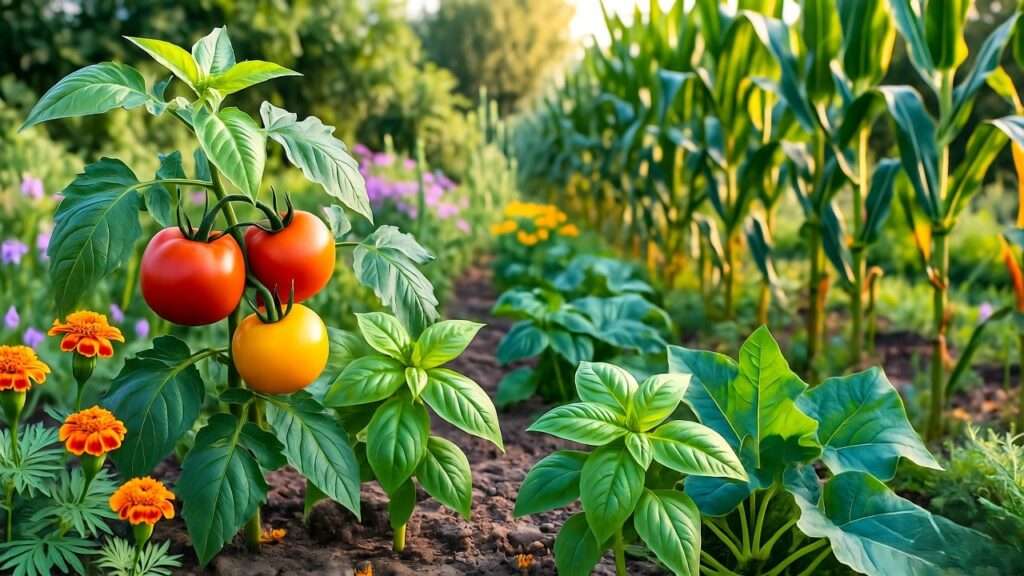
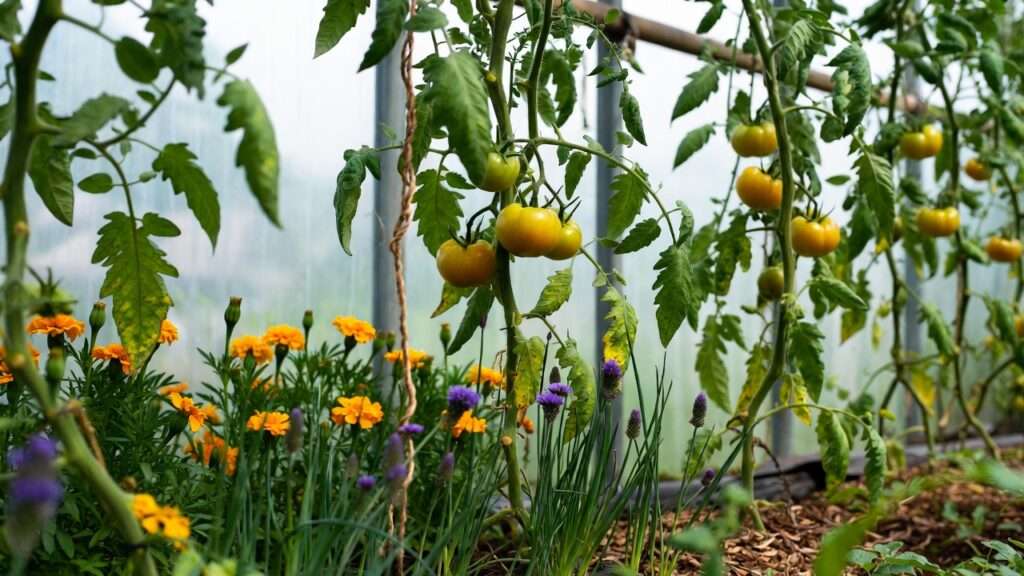
- Tomatoes + basil + marigolds (repel nematodes and whiteflies)
- Peppers + onions/chives (deter aphids)
- Cucumbers + nasturtiums (trap aphids away from main crop)
- Greens + radishes (radishes act as living mulch and break up soil)
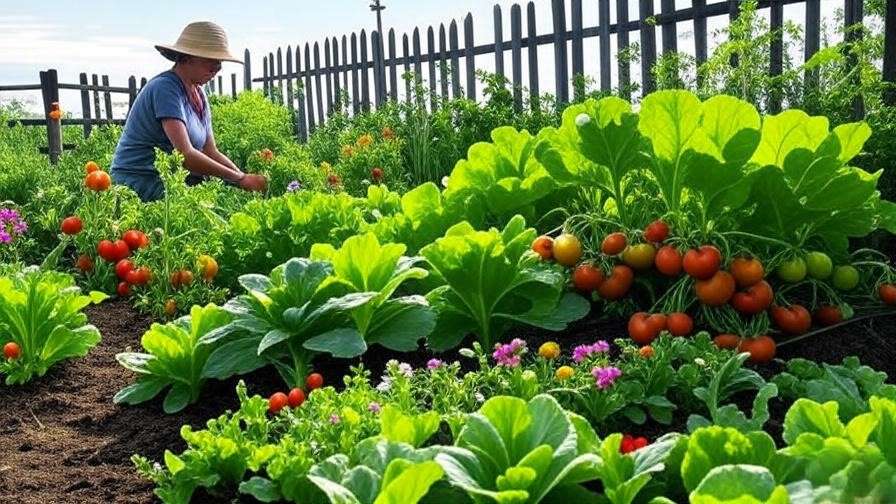
- Polyculture Beds Instead of monoculture rows, mix 3–5 compatible species per bed. Example:
- Center: 2 tomato plants trellised
- Edges: lettuce, arugula, basil, marigolds
- Understory: low-growing chives or strawberries
- Succession & Staggered Planting Sow new lettuce/arugula every 10–14 days. Start warm-season crops in trays while cool-season greens occupy space.
- Seed Starting in the Greenhouse Use the structure as a propagation nursery: trays of seedlings benefit from controlled humidity and warmth before transplanting outdoors or into permanent greenhouse beds.
Regional Adaptation Notes for Barishal
- Prioritize excellent airflow and morning watering to reduce fungal pressure (powdery mildew, downy mildew).
- Choose varieties labeled “heat-set,” “humidity tolerant,” or local landraces whenever possible.
- In peak monsoon (June–September), focus more on leafy greens and shade-tolerant herbs; fruiting crops shine in the drier winter/spring.
By starting with this shortlist, most beginners see their first harvests within 4–8 weeks—providing both food and motivation to continue refining the system.
Maintenance & Management Checklist for Long-Term Success (Apply Self-Regulation & Accept Feedback)
A greenhouse is a living system. Regular observation (the first permaculture principle) allows you to respond rather than react.
Daily / Weekly Tasks
- Check temperature & humidity: Ideal range 21–29°C day / 16–21°C night; 60–75% humidity. Use a digital thermo-hygrometer.
- Ventilate proactively: Open vents early in the morning; close before sunset to trap heat.
- Water mindfully: Feel soil moisture 5 cm down—water only when dry. Morning watering reduces disease risk.
- Inspect plants: Look under leaves for pests, yellowing, or spots. Act early with neem oil, insecticidal soap, or physical removal.
Monthly / Seasonal Tasks
- Prune & trellis: Keep air moving around fruiting plants.
- Feed the soil: Top-dress with compost or worm castings every 6–8 weeks.
- Rotate & succession plant: Avoid growing the same family in the same spot consecutively.
- Pest & disease prevention: Release ladybugs, lacewings, or predatory mites if needed. Maintain plant diversity.
- Clean-up: Remove dead leaves promptly; sanitize tools between uses.
Common Pitfalls & Permaculture Fixes
- Overwatering → Use ollas or moisture meters; mulch surface.
- Poor pollination → Hand-pollinate tomatoes/peppers with a small brush on dry, sunny days.
- Overheating → Add more shade cloth or evaporative cooling (wet burlap over vents).
- Nutrient lockout → Test pH (aim 6.0–6.8); avoid over-fertilizing.
The principle “Accept Feedback” means every challenge is data. A pest outbreak? Increase diversity next season. Plants bolting early? Adjust planting dates.
Scaling Up & Advanced Permaculture Integration
Once your first greenhouse is producing reliably and you’ve gained confidence through observation and small adjustments, it’s time to think bigger. Permaculture encourages thoughtful expansion rather than rushed scaling—always ask: “Does this addition increase yields, resilience, and harmony without creating unnecessary work?”
Practical Ways to Scale Sustainably
- Increase Growing Area Intelligently
- Add modular extensions (another hoop house section or attached cold frame).
- Maximize vertical space: Install sturdy trellises, hanging baskets, or wall-mounted gutters for strawberries, herbs, and trailing cucumbers.
- Convert unused floor space into deeper raised beds or in-ground growing zones with living mulch (e.g., clover or sweet potato vines).
- Incorporate Perennial Food Plants
- Dwarf fruit trees or large shrubs (e.g., dwarf citrus, mulberry, or curry leaf) in large pots or dedicated beds.
- Berry bushes (blueberries in acidic soil pockets, raspberries trained vertically).
- Perennial vegetables like walking onions, Egyptian walking onions, or asparagus ferns for long-term yields with minimal replanting.
- Add Closed-Loop Systems
- On-site composting & vermicomposting: Dedicate a corner to bins or a worm farm. Use worm castings as top dressing and compost tea for foliar feeds.
- Greywater or nutrient cycling: If legal and safe in your area, route household greywater (from kitchen/laundry) through a mulch basin or reed bed before greenhouse use.
- Beneficial insect habitat: Plant perennial flowers (marigolds, alyssum, cosmos) around the perimeter or in pots to attract pollinators and predators year-round.
- Experimental Additions for Humid Climates
- Aquaponics hybrid: Small fish tank (tilapia or catfish—common in Bangladesh) with media beds or floating rafts for lettuce and herbs. Fish waste feeds plants; plants filter water. Start very small to learn balance.
- Mushroom logs or beds: Oyster or shiitake on hardwood logs in shaded corners—high-value, low-light crop.
- Microgreens & sprouts station: Trays on lower shelves for ultra-fast, nutrient-dense production (radish, pea shoots, sunflower).
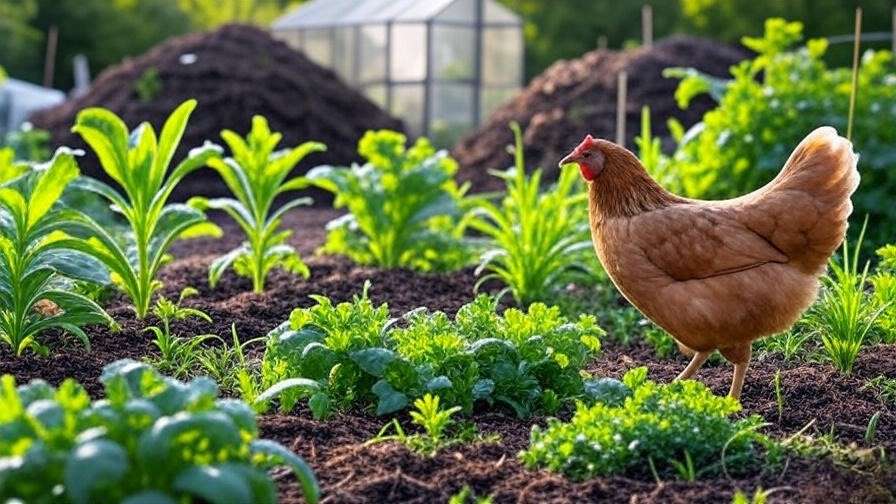
Design Principle Reminder Use “Integrate Rather Than Segregate” and “Use Edges & Value the Marginal” when expanding. New elements should support existing ones (e.g., chickens in a nearby run provide manure and pest control; their coop roof catches rainwater for the greenhouse).
Track progress: Keep a simple journal or spreadsheet of planting dates, harvests, inputs used, and observations. Over 1–2 years, you’ll see inputs drop while yields rise—a hallmark of maturing permaculture systems.
Frequently Asked Questions (FAQs)
Here are answers to the questions most first-time greenhouse owners in similar climates ask:
1. How much does a beginner greenhouse setup cost using permaculture principles? A modest 6×8 ft or 8×10 ft hoop house with basic polycarbonate/UV-treated film, passive vents, thermal mass barrels, benches, drip irrigation, and starter soil/compost can range from BDT 50,000–150,000 (depending on materials and whether you DIY). Focus on second-hand or local sourcing (bamboo frames, recycled barrels) to keep costs low.
2. Can I run a productive greenhouse without electricity in Barishal? Yes—rely on passive solar design, thermal mass, natural ventilation, rainwater harvesting, and manual watering/monitoring. Many small-scale farmers in Bangladesh do exactly this successfully.
3. How do I prevent overheating and fungal diseases in high humidity? Prioritize maximum ventilation (roof + side vents open most of the day), morning watering, excellent airflow around plants, and 50–70% shade cloth during peak heat. Choose resistant varieties and avoid overcrowding.https://agricarehub.com/easy-house-plants/
4. What are the best low-maintenance plants for complete beginners? Lettuce mixes, arugula, kale, radishes, herbs (basil, mint, chives), and bush beans. They forgive mistakes, grow quickly, and need minimal support structures.
5. How often should I water in a greenhouse? Check soil moisture daily at first—water when the top 5 cm feels dry. Use drip or ollas to deliver water slowly at the root zone. In humid Barishal, you may water less frequently than you expect.
6. Can I grow rice or other field crops in a greenhouse? Not practically—greenhouses excel at high-value, intensive crops (greens, herbs, tomatoes, peppers, cucumbers, strawberries). Use them to start seedlings for outdoor paddy fields if desired.
7. How do I deal with pests without chemicals? Encourage biodiversity (companions + flowers), introduce beneficial insects when possible, use physical barriers (fine mesh), hand-pick, and apply neem oil or garlic/chili sprays as needed.
8. Is a greenhouse worth it during the monsoon season? Absolutely—protected greens and herbs stay clean and productive even when outdoor gardens flood. Focus on flood-resistant site choice and excellent drainage.
Conclusion
Building your first greenhouse isn’t just about installing structure and planting seeds—it’s about starting a relationship with a living system. By applying permaculture principles from day one, you create more than a growing space: you establish a small, regenerative ecosystem that produces food, builds soil, conserves resources, and adapts to your local conditions in Barishal.
Start small, observe diligently, accept feedback from every season, and iterate. Your first harvests—whether a bowl of fresh salad greens in the middle of monsoon or ripe tomatoes in February—will be proof that this approach works.