In humid, flood-prone climate, where backyard poultry keepers often face soaring feed prices—currently hovering around Tk 60-75 per kg for poultry feed—many struggle to keep their small flocks healthy and productive without breaking the bank. Feed can easily account for 60-80% of total rearing costs, leaving little room for other expenses like housing or veterinary care. But what if your own garden could become a low-cost, renewable feed source? By implementing smart crop rotation strategies, you can grow nutrient-rich forages, grains, and greens that supplement or even significantly reduce reliance on expensive commercial feeds—potentially cutting your bill by 30-70% while improving soil health, egg quality, and flock vitality.
This comprehensive guide draws from regenerative agriculture principles, extension service recommendations, and real-world backyard applications tailored to tropical regions like Bangladesh’s southern divisions. Whether you have a small 100-200 sq ft plot or more space, these proven methods help achieve greater self-sufficiency, healthier hens, and richer, more flavorful eggs—all naturally and affordably.
Why Feed Costs Are Rising — And Why Crop Rotation Is the Smartest Fix
Poultry feed prices in Bangladesh remain stubbornly high despite fluctuations in global commodity markets. Recent reports indicate consistent demand from the booming poultry sector—producing millions of tons of feed annually—keeps retail prices elevated at Tk 60-75/kg, driven by imported ingredients like corn and soybean meal. For small-scale keepers, where many rear 10-50 deshi or hybrid birds for eggs and occasional meat, this translates to hundreds of taka spent monthly just on feed.
Traditional reliance on commercial pellets or crumbles leaves little buffer against price spikes, weather disruptions, or supply issues. Enter crop rotation: a time-tested farming practice that integrates chickens directly into your growing cycle.
Benefits include:
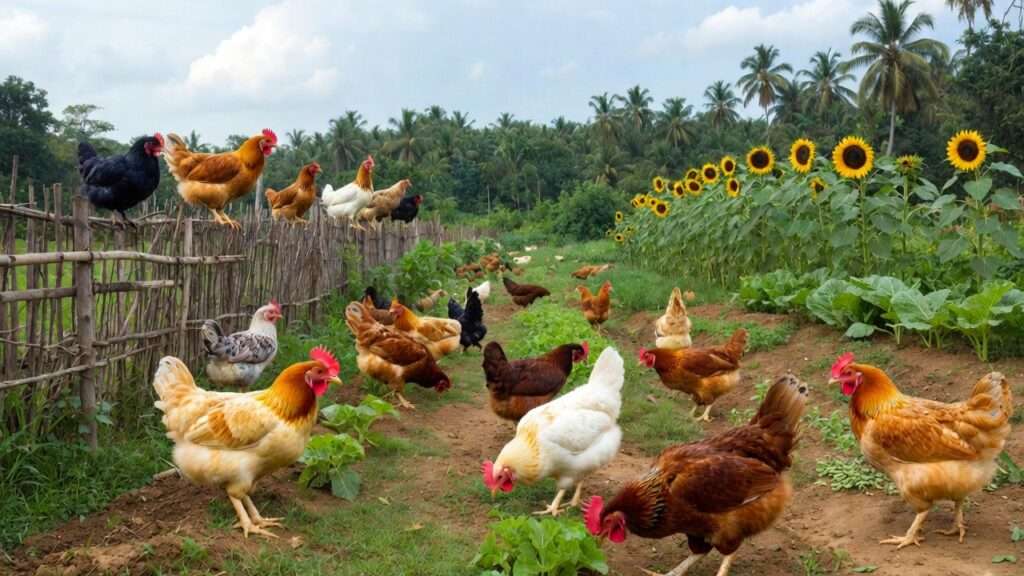
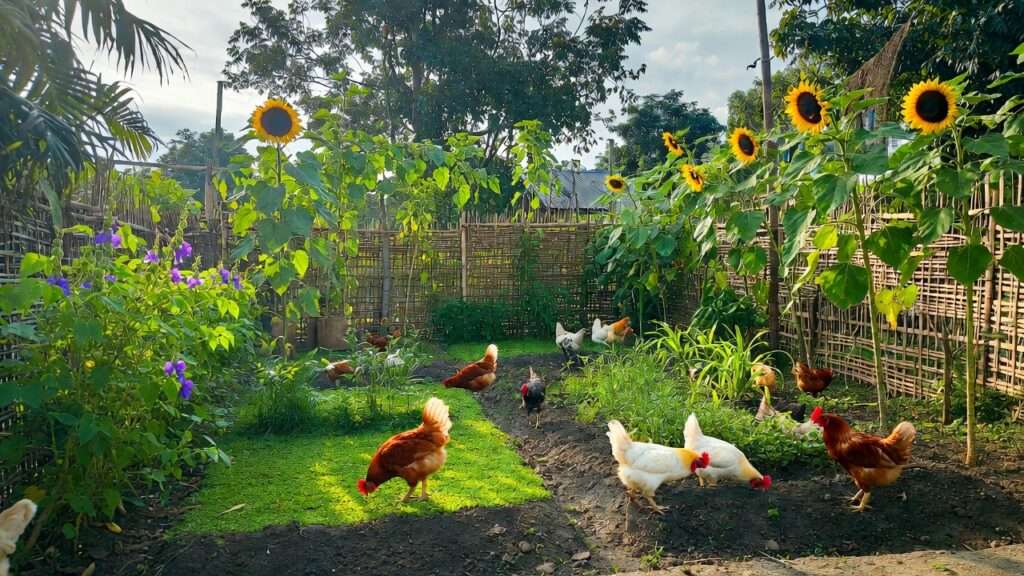
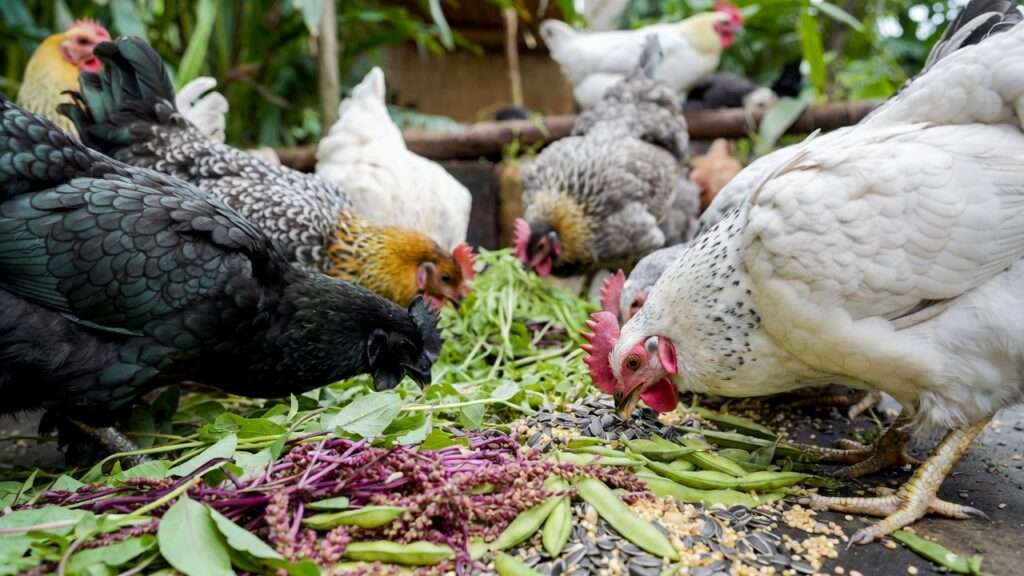
- Natural foraging — Chickens scratch for insects, seeds, greens, and roots, providing up to 20-50% of their diet in well-managed systems (some pastured setups report even higher reductions).
- Free soil fertility — Chicken manure is high in nitrogen, phosphorus, and potassium; when birds rotate through plots, they fertilize future crops without synthetic inputs.
- Pest and weed control — Chickens naturally suppress insects and weeds, reducing the need for costly pesticides.
- Diverse nutrition — Home-grown feeds offer vitamins, minerals, and proteins that boost egg yolk color, omega-3 content, and overall bird health.
Compared to quick fixes like kitchen scraps (limited volume) or indoor fodder trays (space- and labor-intensive), crop rotation scales better for year-round production in tropical climates, with wet-season cover crops and dry-season perennials maintaining supply.
Understanding Chicken Nutritional Needs on a Budget
Laying hens require a balanced diet to sustain egg production without health issues. Standard requirements for layers include:
- Crude protein: 15-19% (higher for young layers or high producers; sources like legumes provide this affordably).
- Energy (carbohydrates/fats): From grains and seeds to fuel daily activity and egg-laying.
- Calcium: 3.5-4.2% for strong shells (greens, crushed shells, or foraged plants help).
- Phosphorus: 0.3-0.4% available, with a proper Ca:P ratio (around 10:1 for layers).
- Vitamins & minerals: A, D, E, B-complex from greens; trace elements from diverse forages.
Commercial layer feeds meet these precisely, but home-grown supplements can fill gaps cost-effectively. For example:
- Legumes (clover, peas) supply protein and nitrogen-fix the soil.
- Grains (sunflowers, millet) deliver energy and fats.
- Leafy greens (kale, amaranth) add vitamins and hydration.
Imbalances risk poor shells, reduced laying, or feather pecking—rotation ensures dietary variety to prevent this.
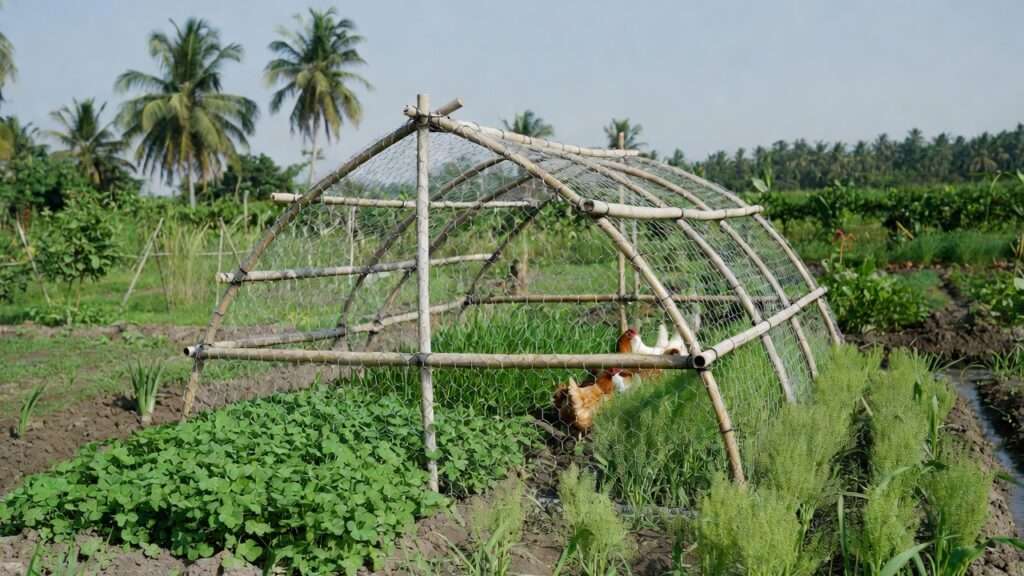
Table: Nutritional Contributions from Key Budget Crops
| Crop | Key Nutrients Provided | Approx. % Contribution to Diet (when foraged) | Ease of Growth in Tropical Climates |
|---|---|---|---|
| Sunflower seeds | High fat, protein (20-30%), vitamin E | Energy boost, 10-20% supplement | High (heat-tolerant) |
| Clover/Alfalfa | Protein (15-25%), calcium, vitamins | Forage base, 20-40% in rotation | Excellent (perennial, flood-resilient) |
| Amaranth | Protein, iron, vitamins A/C | Greens + seeds, versatile | Very high (fast-growing) |
| Field peas/Cowpeas | Protein (20-25%), energy | Legume staple | High (nitrogen-fixing) |
| Millet/Sorghum | Carbs, some protein | Grain energy | High (drought-tolerant varieties) |
| Comfrey | High potassium, minerals | Perennial greens | Moderate (deep roots) |
Best Crops to Grow for Cheap, Nutritious Chicken Feed
Focus on resilient, high-yield options suited to Barishal’s hot, humid, monsoon-heavy conditions.
High-Protein Legumes & Forages Legumes fix nitrogen, improving soil for subsequent crops.
- Clover or alfalfa: Perennials; chickens graze leaves/stems.
- Field peas or cowpeas: Fast-growing; seeds and pods edible.
- Vetch: Cold-tolerant but adaptable; excellent cover crop.
Energy-Rich Grains & Seeds
- Sunflowers (black oil variety): High oil content; heads harvested for seeds.
- Millet or sorghum: Drought-resistant; whole plants foraged.
- Barley or oats: Quick cycles; sproutable if needed.
Leafy Greens & Perennials
- Amaranth: Thrives in heat; leaves and seeds.
- Kale, mustard greens, or squash leaves: Calcium-rich.
- Comfrey: Perennial powerhouse for minerals (limit to 10-15% due to alkaloids).
- Chickweed or local weeds: Free bonus forage.
Quick-Grow Backup: Fodder Sprout wheat/barley in trays during heavy rains—indoor option for rotation gaps.
Choose local seeds from agricultural offices or markets for best adaptation and low cost.
Step-by-Step Guide to Crop Rotation for Backyard Chickens
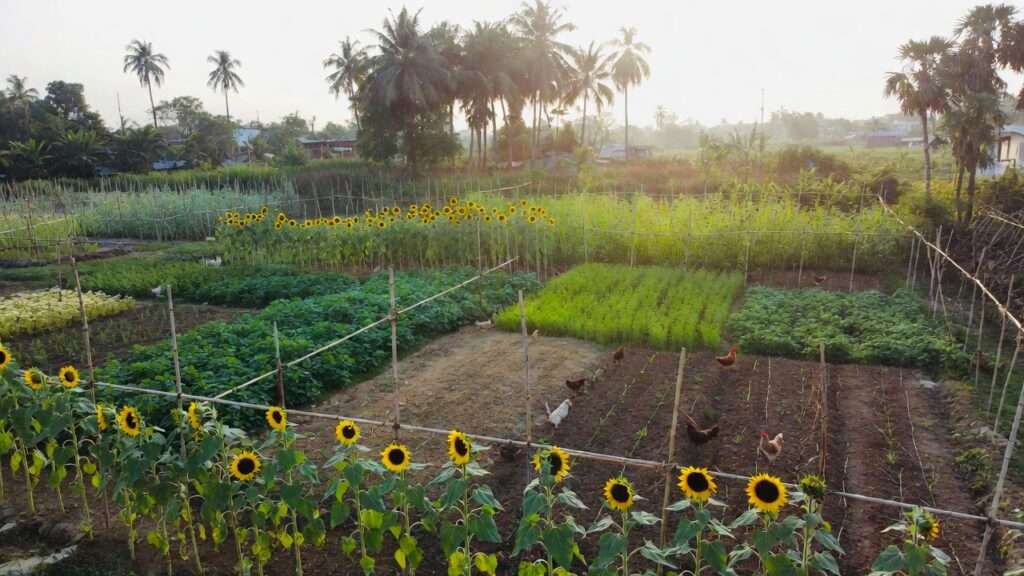
Implementing crop rotation with chickens doesn’t require large land holdings or expensive equipment. Even on a typical 1/8 to 1/4 acre homestead plot in Barishal, you can create an effective system. The key is dividing your available growing/foraging space into manageable zones (called paddocks or plots) and moving the chickens through them in a logical sequence.
Assess Your Space & Set Up Zones Start by mapping your yard:
- Identify sunny, well-drained areas for grain and seed crops (sunflowers, millet).
- Use slightly shadier or damper spots for leafy greens and legumes (clover, amaranth).
- Reserve a small “chicken yard” or run as a home base with shelter, water, and nesting boxes.
Divide the growing area into 4–8 plots depending on space. A good starter size is 100–300 sq ft per plot for 10–30 birds. Use inexpensive portable fencing:
- Bamboo poles + nylon netting or fishing net
- Chicken wire panels
- Repurposed tarpaulin or old bedsheets for temporary windbreaks
Portable “chicken tractors” (movable coops with attached runs) are ideal — many keepers in Bangladesh build simple A-frame versions from local bamboo and wire for under Tk 2,000–5,000.
Design a Simple 4–6 Plot Rotation Cycle A basic 4-plot system works well in tropical climates with two main seasons (monsoon June–October, dry November–May). Example cycle (adjust timing to your local rainfall):
- Plot 1 – Legume / Cover Crop Phase (2–3 months) Plant cowpeas, field peas, or vetch/clover. These fix nitrogen and grow quickly. → After harvest/growth, move chickens in to forage pods, leaves, insects, and scratch the soil.
- Plot 2 – Chicken Foraging & Manure Incorporation (7–21 days) Birds scratch, eat greens/seeds, deposit manure. This naturally tills and fertilizes the plot.
- Plot 3 – Grain / Energy Crop Phase (2–4 months) Plant sunflowers, millet, sorghum, or corn in small blocks. Let mature.
- Plot 4 – Chicken Harvest & Cleanup (7–14 days) Move flock in to eat fallen seeds, remaining heads, insects. They clean up debris and add final manure.
Then rotate back: Plot 1 (now enriched) → new legume/cover crop, and so on. Add a 5th or 6th plot for perennials (comfrey, pigeon pea borders) or rest/cover crops during peak monsoon to prevent waterlogging.
Integrating Chickens — Timing & Management
- Move birds when forage is 6–12 inches tall (enough to eat but not destroyed).
- Stay duration: 3–7 days in lush growth, 10–21 days in sparse or seed-maturing plots.
- Avoid overgrazing — leave 20–30% plant cover to regrow quickly.
- Provide supplemental layer feed (reduce gradually as birds forage more).
- Always ensure clean water and shade — especially critical in Barishal’s heat.
Year-Round Rotation Calendar (Barishal / Southern Bangladesh Adaptation)
- November–February (Dry, cooler): Focus on sunflowers, millet, barley, kale, mustard greens.
- March–May (Hot, pre-monsoon): Cowpeas, amaranth, sorghum, quick greens.
- June–October (Monsoon): Flood-tolerant legumes (sesbania, clover), pigeon pea borders, indoor/outdoor fodder trays during heavy rain. Use raised beds or mounds to reduce waterlogging.
Tools & Low-Cost Setup
- Seed saving: Let 10–20% of plants go to seed each cycle — free next-year supply.
- Watering: Drip bottles from recycled plastic or simple bucket systems.
- Soil testing: Observe crop vigor and chicken droppings; add wood ash (potash) or crushed eggshells (calcium) as needed.
Real-World Examples & Cost Savings Calculator
Example 1: Small 20-hen backyard in Barishal city outskirts A local keeper divided 600 sq ft into 4 plots. Planted cowpeas → chickens foraged → sunflowers → chickens cleaned → repeat. After 8 months:
- Purchased feed dropped from Tk 4,500/month → Tk 1,800–2,200/month (55–60% savings).
- Eggs per hen/week rose from 4.2 → 5.1 (better nutrition).
- Soil noticeably darker and more crumbly.
Example 2: Medium homestead (50 birds, 1,500 sq ft growing area) Integrated rotation with vegetable garden: Chickens followed okra → cowpeas → millet. Feed bill reduced ~65%; excess greens sold at local market added income.
Quick Savings Estimator Use this rough formula (adjust to your flock size): Monthly commercial feed cost × % replaced by home-grown forage Example: 20 hens × 120 g feed/day × Tk 65/kg = ~Tk 4,680/month If rotation supplies 40% of diet → savings ≈ Tk 1,872/month (Tk 22,464/year)
Track your own numbers for 3–6 months to see real impact.
Additional Budget-Boosting Tips to Pair with Rotation
- Ferment feed — Soak grains/seeds 24–48 hours to increase digestibility and reduce mold risk.
- Sprout grains — Wheat, barley, or mung beans in trays for high-nutrient winter boost.
- Maximize free scraps — Vegetable peels, fruit rinds, cooked rice (limit bread/moldy items).
- Allow supervised free-range time — Even 2–4 hours daily adds insects and greens.
- Seed saving & propagation — Build your own seed bank over time.
Common Mistakes to Avoid
- Planting toxic crops (tomato/potato leaves, rhubarb, avocado).
- Overstocking plots → bare soil and erosion.
- Ignoring calcium — always offer crushed oyster shell or limestone grit.
Potential Challenges & Solutions
- Limited space → Use vertical borders (pigeon pea, moringa) or container fodder.
- Heavy monsoon flooding → Raised beds, quick-draining legumes, temporary indoor sprouting.
- Predators → Secure night housing; move tractors daily to disrupt patterns.
- Initial labor → Start with just 2 plots and expand gradually.
- Seasonal feed gaps → Stockpile dried sunflower heads, sprouted fodder, or buy in bulk during low-price periods.
FAQs
How much land do I realistically need? For 10–20 hens, 400–800 sq ft of rotating plots is sufficient to replace 30–60% of feed. More space = higher percentage.
Will this completely replace commercial feed? Rarely 100% for consistent laying, but many keepers reach 50–80% replacement with good management and still provide a small daily ration of layer pellets.
What are the best starter crops for beginners in Barishal? Cowpeas or field peas (fast, forgiving), amaranth (grows anywhere), and sunflowers (high reward).
Is home-grown feed safe for egg quality and human consumption? Yes — diverse forages often produce richer, more nutritious eggs (darker yolks, higher omega-3s). Avoid over-reliance on any single plant and maintain hygiene.
How do I handle heavy rains and waterlogging? Plant flood-tolerant species (sesbania, clover), use raised beds or mounds, and shift birds to higher ground or covered runs during peak flooding.
Conclusion
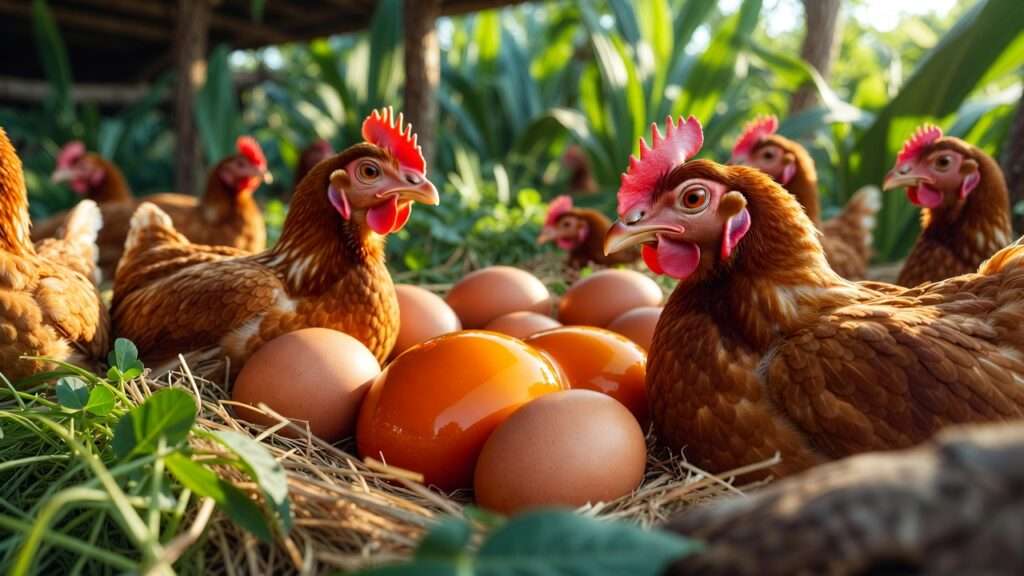
Feeding backyard chickens on a budget no longer means constant compromise. By harnessing smart crop rotation strategies — growing legumes to fix nitrogen, grains for energy, greens for vitamins, and letting your flock naturally till and fertilize — you turn your small plot into a productive, low-cost feed factory.
Start small: Pick one or two plots this season, plant easy crops like cowpeas and amaranth, move your birds through, and track both your feed expenses and egg basket. Within months, you’ll likely see lower bills, healthier hens, richer soil, and more satisfying homegrown eggs.
Sustainable backyard poultry isn’t just about saving money — it’s about building resilience, improving nutrition, and reclaiming a piece of food independence right in your own yard. Your flock — and your wallet — will thank you.