Imagine harvesting vibrant, flavorful tomatoes, crisp greens, and abundant herbs from your garden season after season — all while your soil becomes healthier, more resilient, and alive with beneficial microbes. No chemical fertilizers, no endless amendments, just thriving plants supported by the natural power of organic soil mixes and inputs. In regions like Barishal, where heavy monsoon rains can compact soil and leach nutrients, building rich, living organic soil is the key to consistent yields and sustainable gardening.
Organic soil mixes refer to thoughtfully blended combinations of natural base materials, while inputs are the amendments — from compost and worm castings to mineral dusts and biological inoculants — that feed the soil ecosystem. Together, they create nutrient-rich, well-structured soil that retains moisture during dry spells, drains excess water in wet seasons, suppresses diseases, and sequesters carbon for a healthier planet.
The benefits are backed by research and real-world results: Studies from long-term trials show organic systems can match or exceed conventional yields in normal conditions and outperform them during extreme weather, such as droughts, with corn yields up to 31% higher in dry years. Healthy organic soil increases water-holding capacity, improves nutrient cycling, and boosts microbial activity — leading to 20-50% higher productivity over time in many cases, reduced input costs, and more resilient gardens.
Whether you’re starting a new raised bed, revitalizing tired in-ground soil, or mixing potting soil for containers, this comprehensive guide covers everything: essential inputs, testing methods, proven recipes (including adaptations for humid tropical climates like ours in Bangladesh), regenerative techniques, troubleshooting, and more. By the end, you’ll have the tools to build living soil that supports bumper crops year after year.
Understanding Organic Soil: The Foundation of a Thriving Garden
What Makes Soil “Organic” and “Living”?
Organic soil isn’t just free of synthetic chemicals — it’s a dynamic, living ecosystem teeming with bacteria, fungi, earthworms, and other organisms. These microbes break down organic matter into plant-available nutrients, improve soil structure through aggregation, and create pathways for air and water.
In contrast, “dead” or conventional soil often lacks this biology due to tillage, chemical use, and low organic inputs, leading to compaction, erosion, and nutrient lockup. Living soil focuses on feeding the microbes, which in turn feed your plants through natural nutrient cycling.
Key Components of Healthy Organic Soil
Healthy soil contains roughly:
- 45% minerals (sand, silt, clay)
- 25% air
- 25% water
- 5% organic matter (the target for most gardens; higher is even better)
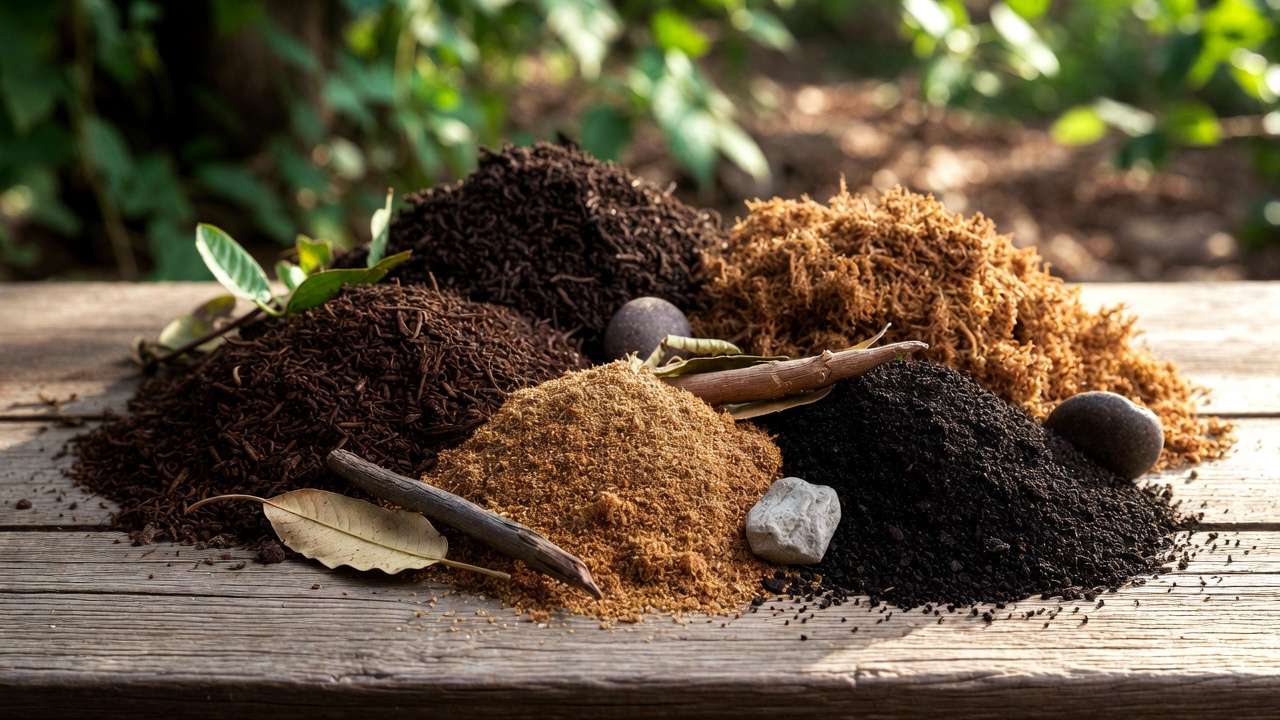
Organic matter is the engine: it holds water (up to 20 times its weight), provides slow-release nutrients, and supports billions of microbes per teaspoon.
Why Synthetic Inputs Fall Short Long-Term
While quick-acting, synthetic fertilizers bypass soil biology, reduce microbial diversity, increase dependency, and contribute to runoff pollution. Over time, they deplete organic matter and harm earthworms and fungi. Organic approaches build resilience instead of short-term fixes.
Essential Organic Soil Inputs and Amendments
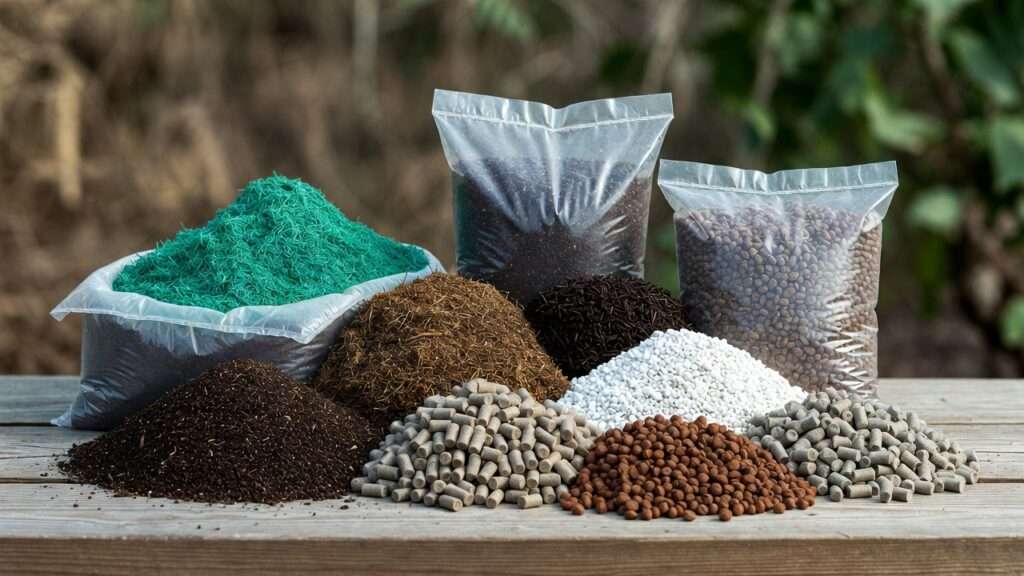
Here are the most effective, widely available organic inputs, categorized by function, with benefits, typical NPK contributions (approximate), application rates, and best uses. Always source high-quality, well-composted materials to avoid pathogens or weeds.
Organic Matter Sources (Base Builders)
- Compost (homemade or purchased): Decomposed plant/animal matter; boosts microbes, improves structure, adds balanced nutrients. NPK ~1-1-1. Rate: 2-4 inches incorporated or as mulch. Best for all gardens.
- Worm Castings/Vermicompost: Rich in microbes, enzymes, and humic acids; excellent for seedlings. NPK ~1-0.5-0.5+. Rate: 10-20% of mix or 1-2 cups per plant.
- Aged Manure (cow, poultry, horse — well-composted): High in nitrogen; improves tilth. Poultry ~3-2-2. Rate: 1-2 inches max to avoid burn.
- Leaf Mold: Slow-decomposing leaves; great for water retention and fungal networks. Low NPK. Rate: Up to 30% in mixes.
- Mushroom Compost: Spent substrate; alkaline, good drainage. Rate: 20-30%.
Mineral Amendments (Nutrient & Structure Boosters)
- Rock Phosphate: Slow-release phosphorus for roots/flowers. 0-3-0. Rate: 1-2 lbs/100 sq ft.
- Greensand: Potassium and trace minerals; improves moisture retention. Rate: 1-2 lbs/100 sq ft.
- Azomite/Glacial Rock Dust: 70+ trace minerals. Rate: 5-10 lbs/100 sq ft.
- Gypsum: Calcium without raising pH; improves clay soils. Rate: 1-2 lbs/100 sq ft.
- Dolomite Limestone: Calcium + magnesium; raises pH in acidic soils. Rate: Based on soil test (aim pH 6.0-7.0).
Biological Inputs (Microbe Enhancers)
- Mycorrhizal Fungi: Forms symbiotic root networks; boosts nutrient/water uptake. Apply at planting.
- Compost Teas/Aerated Microbial Solutions: Liquid microbial boosters. Use weekly during growth.
- Biochar: Charred biomass; houses microbes, retains nutrients/water. Inoculate first. Rate: 5-10% in mixes.
- Effective Microorganisms (EM): Microbial inoculant blend.
Plant-Based & Specialty Inputs
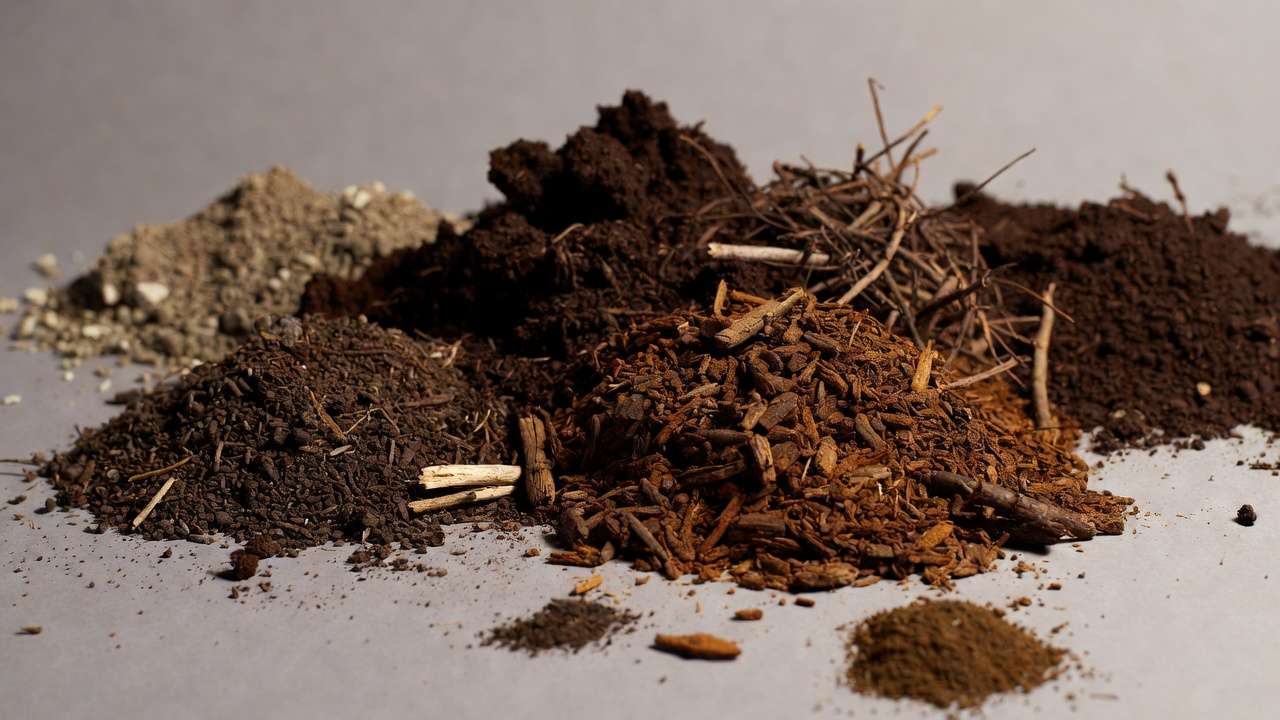
- Kelp/Seaweed Meal: Trace minerals, growth hormones. NPK ~1-0.1-2. Rate: 1-2 lbs/100 sq ft.
- Alfalfa Meal: Nitrogen, triacontanol stimulant. ~2-1-2. Rate: 5-10 lbs/100 sq ft.
- Fish Emulsion/Hydrolysate: Quick nitrogen. Use diluted.
- Molasses: Feeds microbes. Rate: 1-2 tbsp/gallon in teas.
Aeration & Drainage Materials
- Perlite/Vermiculite/Pumice: Improve drainage/aeration (perlite neutral, vermiculite holds water).
- Coco Coir: Sustainable peat alternative; excellent water retention. Use buffered.
- Coarse Sand/Rice Hulls: For heavy soils.
Quick Reference Table: Common Amendments
| Amendment | Primary Benefit | Approx. NPK | Application Rate (per 100 sq ft) | Best For |
|---|---|---|---|---|
| Compost | Microbial food, structure | 1-1-1 | 2-4 inches | All gardens |
| Worm Castings | Microbes, enzymes | 1-0.5-0.5 | 10-20% of mix | Seedlings, transplants |
| Kelp Meal | Trace minerals, hormones | 1-0.1-2 | 1-2 lbs | Overall health |
| Rock Phosphate | Phosphorus | 0-3-0 | 1-2 lbs | Flowering/fruiting crops |
| Biochar | Long-term carbon, microbe habitat | Neutral | 5-10% | Regenerative mixes |
| Gypsum | Calcium, structure | Neutral | 1-2 lbs | Clay soils |
How to Test and Prepare Your Soil Before Mixing
Simple At-Home Soil Tests
- Texture: Jar test — shake soil + water, let settle; observe layers (sand/silt/clay).
- pH: Use inexpensive strips or kits (target 6.0-7.0 for most veggies).
- Drainage: Dig hole, fill with water; should drain in 1-4 hours.
Professional Soil Testing
Send samples to a local lab (e.g., through agricultural universities or extension services in Bangladesh). Look for organic matter %, macro/micro nutrients, pH, and cation exchange capacity (CEC).
Adjusting Base Soil
For native clay-heavy soils common in Barishal, add 30-50% organic matter + aeration. In raised beds/containers, start fresh with custom mixes.
Step-by-Step Guide to Creating Custom Organic Soil Mixes
Creating your own organic soil mixes gives you complete control over quality, cost, and performance. The goal is balance: enough organic matter for biology and nutrients, sufficient minerals for long-term fertility, good structure for roots and drainage, and living organisms to keep everything cycling naturally.
Basic Principles for Mixing Success
- Work by volume, not weight — easier and more consistent for home gardeners.
- Mix thoroughly but gently — use a tarp, wheelbarrow, or large tub. Avoid compacting.
- Moisten slightly during mixing (damp like a wrung-out sponge) to activate microbes and settle dust.
- Allow maturation — most mixes benefit from 2–8 weeks of “cooking” in a covered pile or bin. Turn occasionally and keep moist. This lets microbes colonize and break down materials.
- Sterilize if needed for seed-starting mixes (bake at 180°F/82°C for 30 minutes or solarize in black plastic under sun for 4–6 weeks) to kill weed seeds and pathogens.
- Always inoculate heavy amendments like biochar with compost tea or worm castings before use.
Top DIY Organic Soil Mix Recipes
Below are proven, widely adaptable recipes. Proportions are by volume (e.g., 1 part = 1 bucket). Adjust slightly based on local materials and climate. For Barishal’s humid, monsoon-heavy conditions, prioritize excellent drainage and avoid waterlogged mixes.
- All-Purpose Vegetable Garden Mix (ideal for in-ground or raised beds)
- 40% high-quality topsoil or garden loam
- 30% well-finished compost
- 20% aged leaf mold or coconut coir
- 10% aeration (perlite, pumice, or coarse sand)
- Amendments per cubic yard: 5–10 lbs kelp meal, 5 lbs rock phosphate, 5 lbs greensand, 1–2 cups mycorrhizal inoculant Best for: tomatoes, peppers, eggplant, beans, leafy greens. Excellent all-rounder for Bangladesh’s warm season.
- Classic Raised Bed “Mel’s Mix” Adaptation (popular, reliable, widely tested)
- 1/3 blended compost (variety of sources for microbial diversity)
- 1/3 peat-free coco coir or well-aged leaf mold
- 1/3 coarse vermiculite or perlite/pumice blend
- Amendments: 10–20% worm castings, 1–2 cups alfalfa meal, kelp meal, and rock dust per cubic foot Best for: intensive raised-bed gardening, consistent moisture without sogginess.
- No-Dig / Living Soil Starter Mix (regenerative, minimal disturbance)
- Base layer (on existing soil): 4–6 inches compost + aged manure
- Top dressing: 2–3 inches worm castings + biochar (inoculated)
- Amendments: sprinkle kelp, alfalfa, rock dust; plant cover crop (e.g., buckwheat, cowpea, sunn hemp) immediately Best for: converting lawn or poor soil over 1–3 seasons. Ideal for long-term sustainability in tropical climates.
- Container & Potting Mix for Vegetables/Herbs
- 40% coco coir (buffered/pre-soaked)
- 30% high-quality compost or vermicompost
- 20% perlite or pumice
- 10% worm castings
- Amendments per 5 gallons: 1 cup kelp meal, ½ cup rock phosphate, ¼ cup gypsum (if water is hard), pinch of mycorrhizae Best for: pots, grow bags, balcony gardens. Lightweight, drains fast during monsoons.
- Seed Starting / Seedling Mix (light, sterile, excellent drainage)
- 50% coco coir
- 30% perlite or fine vermiculite
- 20% sifted compost or worm castings (very well-finished)
- No heavy nutrients — add diluted compost tea after true leaves appear Best for: starting tomatoes, peppers, brinjal, herbs indoors or under shade net.
- Heavy-Feeder Fruiting Crop Mix (tomatoes, cucumbers, squash, gourds)
- 35% compost
- 25% topsoil/loam
- 20% coco coir or leaf mold
- 10% perlite/pumice
- 10% worm castings
- Amendments: 2–3 lbs bone meal or rock phosphate, 1 lb kelp, 1 lb alfalfa meal, ½ lb gypsum per cubic foot Best for: high-yield summer crops that demand phosphorus and calcium.
- Acid-Loving Plants Mix (blueberries, azaleas, if experimenting)
- 50% coco coir or peat (if available)
- 30% pine bark fines or leaf mold from oak/pine
- 20% perlite
- Amendments: elemental sulfur (small amounts to lower pH), cottonseed meal Note: Most vegetables prefer neutral pH, so this is niche.
- Regenerative Biochar Living Soil Mix (long-term carbon farming approach)
- 40% compost
- 20% biochar (crushed, inoculated for 2 weeks in compost tea + worm castings)
- 20% coco coir or leaf mold
- 10% aeration material
- 10% mineral dust blend (azomite, greensand, rock phosphate) Best for: permanent beds, orchards, or climate-conscious gardeners aiming to sequester carbon.
For each recipe, mix dry ingredients first, then moisten gradually. Let sit 2–4 weeks before planting for best microbial establishment.
Advanced Techniques: Building Regenerative, No-Till Organic Soil
Regenerative agriculture goes beyond inputs — it rebuilds soil ecology through minimal disturbance and constant living cover.
Principles of Regenerative Soil Building
- Minimize tillage (disrupts fungal networks and carbon storage)
- Keep soil covered (mulch or living plants)
- Maintain living roots year-round
- Maximize plant diversity
- Integrate animals when possible (e.g., chickens for scratching and manure)
No-Till Methods for Gardens
- Sheet mulching / Lasagna gardening: Layer cardboard → compost → manure → straw → leaves. Plant directly into top layers.
- Broadforking: Aerate without flipping soil.
- Chop-and-drop mulching: Cut cover crops and leave on surface.
Cover Crops and Green Manures Integration
Popular tropical-adapted options for Barishal: cowpea, sunn hemp, mung bean, dhaincha, buckwheat (fast), marigold (nematode suppression). Sow after harvest, chop at flowering, leave residue.
Compost Teas and Biological Inoculants Application
Aerated compost tea recipe: 1:10 compost-to-water ratio, aerate 24–36 hours with molasses (0.5–1%). Apply as foliar or soil drench every 1–2 weeks during active growth.
Long-Term Maintenance
- Mulch heavily (4–6 inches) with straw, rice hulls, dried water hyacinth, or chopped leaves.
- Rotate crops and plant families.
- Observe: yellowing, stunting, or poor growth signals adjustment needed.
Common Problems and Troubleshooting Organic Soil Mixes
Even the best organic mixes can run into issues, especially in variable climates like Barishal’s — where high humidity, heavy monsoon downpours, and occasional dry spells create unique challenges. Here are the most common problems gardeners face and practical, organic solutions.
Nutrient Deficiencies (Symptoms + Fixes)
- Nitrogen (N) deficiency — Pale/yellow older leaves, stunted growth. Fix: Top-dress with compost, worm castings, alfalfa meal, or diluted fish emulsion. Add legume cover crops next season.
- Phosphorus (P) deficiency — Purple/reddish leaves, poor fruit/flower set. Fix: Incorporate rock phosphate or bone meal (slow-release). Ensure good mycorrhizal associations.
- Potassium (K) deficiency — Scorched leaf edges, weak stems. Fix: Greensand, kelp meal, or wood ash (sparingly, as it raises pH).
- Calcium/Magnesium issues — Blossom-end rot (tomatoes/peppers), interveinal chlorosis. Fix: Gypsum (calcium without pH change) or dolomite lime (if pH is low). Foliar kelp sprays help short-term.
Observe plants closely — deficiencies often show up 4–6 weeks after planting if the mix was under-amended.
Poor Drainage/Compaction
Monsoon flooding is a top complaint in low-lying areas. Symptoms: Water pooling, root rot, yellowing from oxygen starvation. Fixes:
- Increase aeration materials (perlite, pumice, rice hulls) to 15–25% in mixes.
- Use raised beds or mounds.
- Broadfork annually instead of tilling.
- Apply gypsum to flocculate clay particles.
- Mulch heavily to prevent surface crusting.
pH Imbalances
Most vegetables thrive at 6.0–7.0. Too acidic (common with heavy leaf mold or pine-based mixes) → nutrient lockup. Too alkaline (from overuse of wood ash) → iron/manganese deficiency. Fixes:
- Acidic soil: Add agricultural lime or dolomite (small amounts, retest after 2–3 months).
- Alkaline soil: Elemental sulfur, pine needles, or peat/coir (monitor closely). Always base adjustments on a soil test, not guesswork.
Pests/Diseases Linked to Soil
- Fungal issues (damping-off, root rot): Often from overwatering + poor drainage + low biology. Prevention: Use well-matured compost, mycorrhizae, beneficial bacteria (via compost tea), and avoid over-fertilizing with nitrogen.
- Nematodes: Common in warm, sandy soils. Prevention: Marigold cover crops (Tagetes spp.), sunn hemp, neem cake amendments, crop rotation.
- Insect pressure: Healthy, microbially active soil grows stronger plants with better natural resistance.
Over-Amending Risks
Too much fresh manure/compost → nitrogen burn, salt buildup, excessive vegetative growth at expense of fruit. Fix: Flush with plain water (if in containers), add carbon-rich mulch (straw, leaves) to balance C:N ratio, wait before replanting.
Cost-Effective Sourcing and Sustainability Tips
Building great organic soil doesn’t have to be expensive, especially in a region rich in agricultural byproducts.
- Local bulk sources: Many farmers in Barishal sell aged cow manure, rice hulls, water hyacinth compost, sugarcane bagasse, or coconut coir husk at low cost. Ask at local haats or agricultural co-ops.
- Homemade compost/vermicompost: Start a bin with kitchen scraps, yard waste, and cow dung. Red wigglers thrive in warm, humid conditions.
- Peat alternatives: Coco coir is widely available and sustainable (byproduct of coconut industry).
- Bulk mineral amendments: Azomite, rock phosphate, and greensand can be ordered in 25–50 kg bags online or through agricultural suppliers — far cheaper than small retail packs.
- Reduce waste: Use rice straw/hulls as mulch, chop cover crops in place, reuse potting mix (refresh 20–30% compost annually).
Aim to source 70–80% of materials locally to cut costs and carbon footprint.
Real-World Examples and Case Studies
- Small homestead: A gardener switched from chemical fertilizers to no-dig beds using layered compost, rice hulls, and inoculated biochar. After two seasons, tomato yields doubled, blossom-end rot disappeared, and soil stayed workable even after heavy rain.
- Raised-bed community garden: Adopted Mel’s Mix-style blend with local compost + coir + vermiculite. Members reported 30–40% less watering needed and healthier root systems.
- Regenerative transition: A farmer phased out tillage, planted sunn hemp/cover crops, and top-dressed with worm castings annually. Soil organic matter rose from ~1.5% to over 5% in three years, with noticeably better drought and flood resilience.
These results align with global regenerative trials showing improved yields and soil health over time.
Frequently Asked Questions (FAQs)
What’s the difference between potting mix and garden soil? Potting mixes are lighter, better-draining, and often sterile for containers. Garden soil mixes are heavier, richer in minerals, and suited for in-ground or raised beds.
Can I reuse organic soil mixes? Yes — refresh by adding 20–30% new compost/worm castings, check pH/nutrients, and solarize if disease was present.
How often should I add inputs? Top-dress with compost/mulch annually. Liquid feeds (compost tea) every 2–4 weeks during growth. Mineral amendments every 1–3 years based on soil tests.
Best organic inputs for beginners? Start with compost, worm castings, kelp meal, and perlite/coco coir. Simple, forgiving, and widely effective.
Is biochar worth it? Yes, especially long-term. It dramatically improves water/nutrient retention and microbial habitat, but always inoculate it first.
How do I make soil more drought-resistant in dry months? Increase organic matter to 8–10%, mulch thickly, add biochar/coir, and use mycorrhizal fungi at planting.
Can I use fresh cow dung? No — it burns plants and may carry pathogens. Always age/compost for 4–6 months minimum.
What if my soil stays too wet after monsoon? Add more coarse drainage (rice hulls, perlite, sand), raise beds, and plant on mounds.
Do organic mixes work for all crops? Yes, with adjustments. Heavy feeders need more compost/phosphorus; leafy greens thrive on balanced mixes; root crops like loose, sandy blends.
Conclusion
Building nutrient-rich, living organic soil is one of the most rewarding investments you can make in your garden. Start simple: test your soil, choose one or two recipes from this guide, focus on biology (compost, worm castings, teas), and observe how your plants respond. Over time, you’ll need fewer inputs, face fewer problems, and enjoy healthier, more abundant harvests — even through Barishal’s challenging wet-dry cycles.
The beauty of organic soil building is that it gets better every year. Your soil becomes a partner, not just a medium. Experiment this season, track what works, and share your results with fellow gardeners. Together, we’re not just growing food — we’re regenerating the land for the next generation.