Imagine opening your refrigerator to fresh, homegrown tomatoes in summer, crisp greens through fall, and jars of preserved beans sustaining your family through winter—all while watching your grocery receipt shrink dramatically. With food prices continuing to climb—USDA forecasts predict a 3.1% increase in overall food costs for 2026, with food-at-home (grocery) prices rising about 2.5%—many American families are feeling the pinch. The good news? You don’t need a sprawling farm to fight back. By adopting proven agricultural practices, a self-sufficient family can realistically grow a substantial portion of their produce, potentially slashing grocery bills by 50% or more over time through high-yield gardening, smart preservation, and family teamwork.
As an agricultural specialist with years of experience guiding USA families toward greater food independence—drawing from USDA extension resources, biointensive methods pioneered by Ecology Action, and real-world homesteading successes—this guide delivers actionable, evidence-based strategies. Whether you’re on a suburban lot, rural acreage, or starting with containers, these 10 tips focus on practical agriculture to build resilience, improve nutrition, and create lasting family bonds. Let’s dive in and turn your backyard (or balcony) into a productive food source.
Why Becoming a Self-Sufficient Family Matters in Today’s World
In an era of supply chain vulnerabilities, rising costs, and health concerns, pursuing self-sufficiency in food production offers tangible benefits beyond savings. Financially, consistent home gardening can yield impressive returns: many families report reducing vegetable and fruit expenses by $500–$2,000+ annually, with dedicated homesteaders achieving 50–70% overall grocery reductions through produce, eggs, and more. Nutritionally, homegrown food is often superior—fresher, pesticide-free (when organic methods are used), and richer in vitamins from nutrient-dense soil.
Environmentally, it lowers your carbon footprint by cutting transport and packaging. For families, it fosters education: kids learn biology, responsibility, and where food comes from, turning chores into meaningful activities. The key is realism—no overnight off-grid utopia. Start small, scale gradually, and focus on high-impact crops. Even modest efforts compound: a well-managed 1/4-acre plot can supply most vegetables for a family of four, while intensive techniques boost yields dramatically.
Getting Started: Essential Planning for Your Self-Sufficient Family
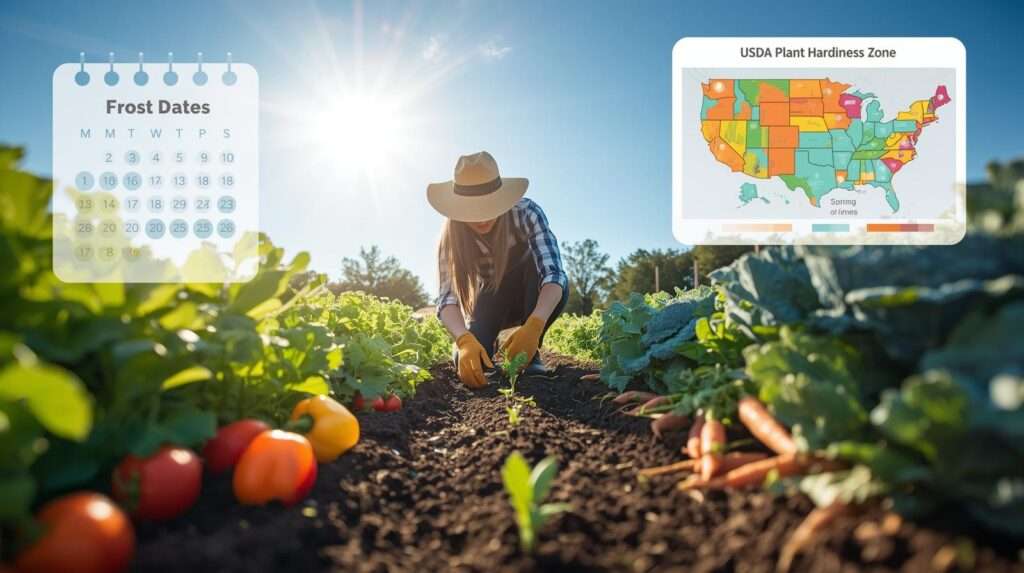
Success begins with smart assessment and goal-setting. First, determine your USDA Plant Hardiness Zone using the latest 2023 map (available at planthardiness.ars.usda.gov)—enter your ZIP code to find your zone, which dictates planting dates, frost risks, and perennial choices. Zones have shifted warmer in many areas due to climate trends, expanding options for heat-loving crops.
Evaluate your site: Measure sunlight (most veggies need 6–8 hours daily), test soil pH and nutrients (cheap kits or free county extension services), and note water access. Calculate family needs: A family of four requires roughly 200–400 pounds of vegetables annually, plus fruits and staples—use USDA charts or simple spreadsheets to estimate.
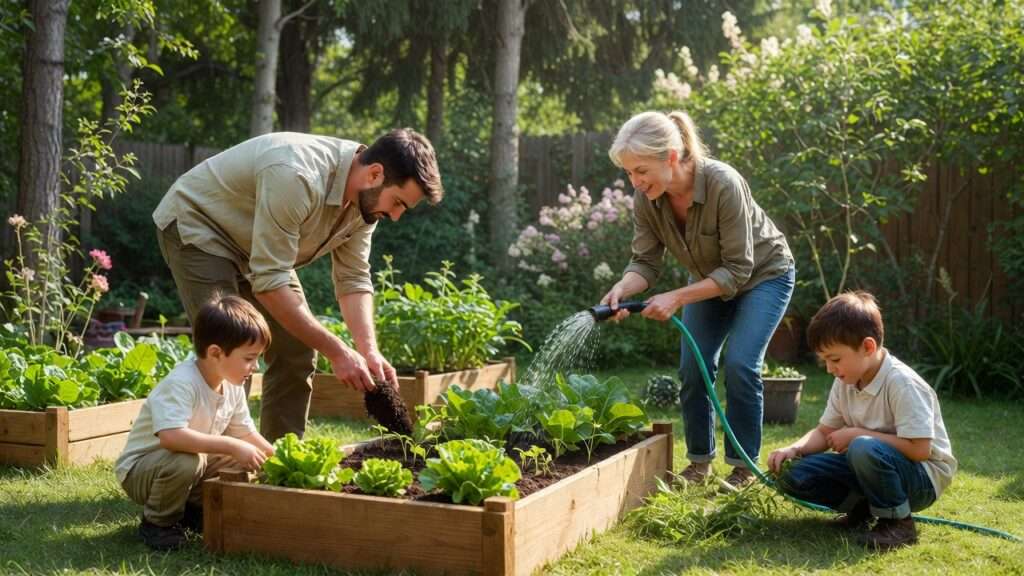
Involve the family early: Assign age-appropriate roles—young kids plant seeds and water, older ones harvest or track growth. Budget realistically: Startup costs can be low ($100–500 for seeds, tools, beds) with high ROI. Prioritize heirloom/open-pollinated seeds from reliable sources like Seed Savers Exchange. Free resources abound: Cooperative Extension offices, USDA guides, and apps like Garden Planner.
Set phased goals: Year 1—focus on easy, high-yield veggies for summer savings. Year 2—add succession and preservation. Track progress to stay motivated.
The 10 Proven Agricultural Tips
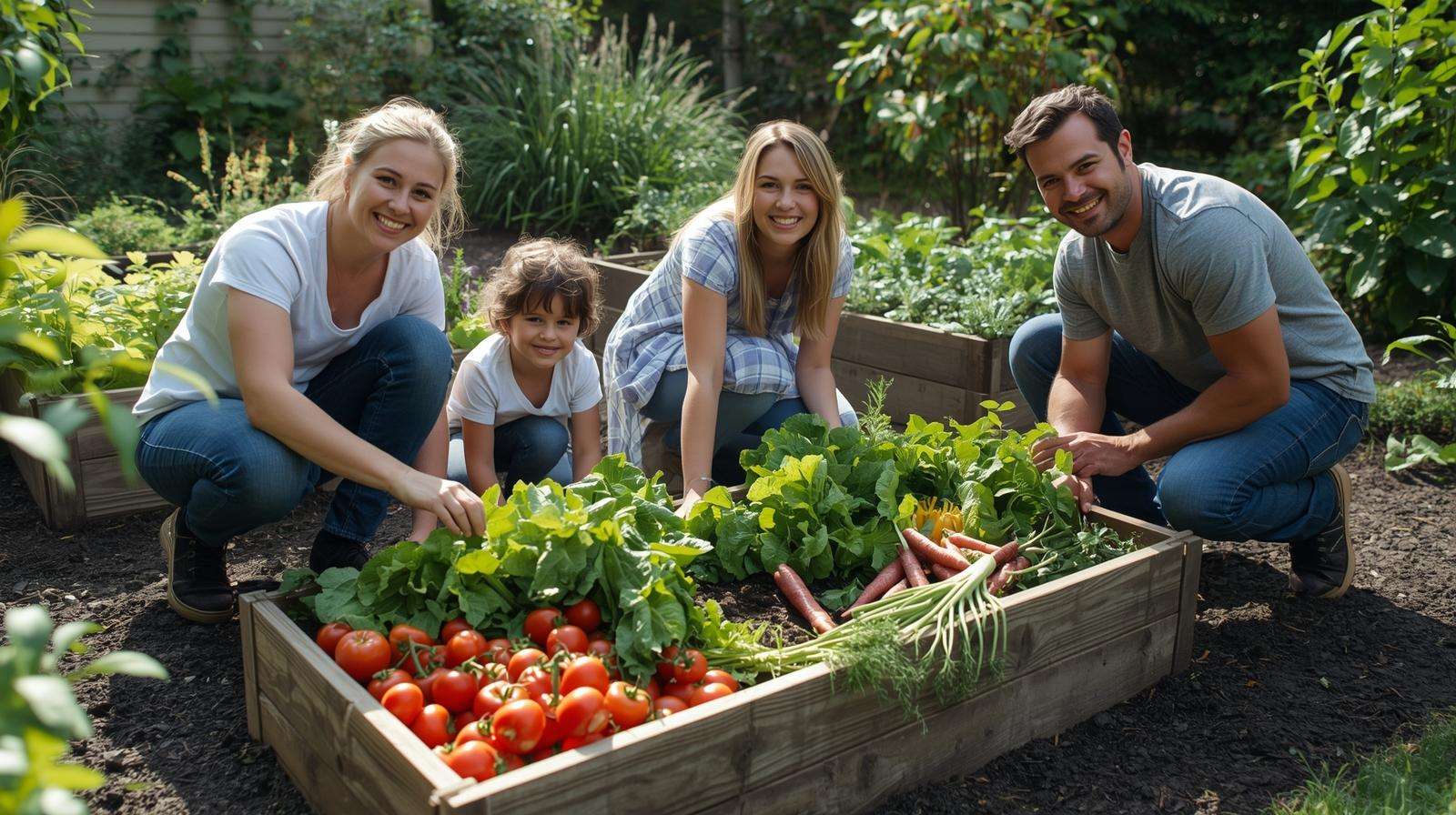
1. Choose High-Yield, Family-Favorite Crops for Maximum Output
Prioritize crops your family eats most to avoid waste and maximize savings. Focus on calorie-dense staples like potatoes (up to 100+ lbs per 100 sq ft), dry beans, sweet corn, winter squash, and easy producers: tomatoes, zucchini, lettuce, carrots, and greens.
Use the Three Sisters method (corn, beans, squash) for space efficiency and nitrogen fixation. Survey your household—track a month’s grocery list to identify top items. High-yield varieties (e.g., determinate tomatoes for compact space) boost production. Expect 20–50% grocery reduction on produce alone in the first season.
2. Build Healthy Soil Naturally – The Foundation of Self-Sufficiency
Healthy soil equals higher yields and lower inputs. Adopt no-till or minimal-till: Add 2–4 inches of compost annually, use cover crops (clover, rye) in off-seasons, and incorporate worm bins for vermicompost.
Step-by-step composting: Layer greens/browns, turn monthly, harvest in 3–6 months. Benefits include 2–4x yield increases over poor soil and eliminated fertilizer costs. Family tip: Make composting a weekly ritual—kids add scraps and monitor temperature.
3. Use Intensive Planting and Vertical Gardening to Maximize Small Spaces
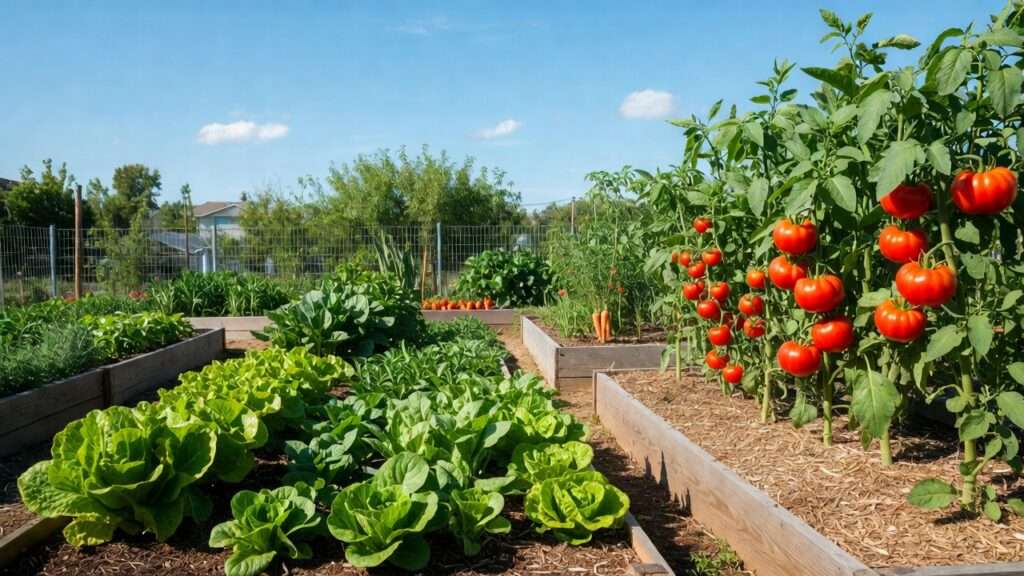
Double or triple production without more land via biointensive spacing (e.g., 9 carrots per sq ft, 16 onions). Build raised beds (4×8 ft) for better drainage/control.
Go vertical: Trellis cucumbers, pole beans, indeterminate tomatoes; use A-frames for peas. Urban families thrive with containers or hanging baskets. Ecology Action’s methods show small plots yielding 4–6x conventional gardens—ideal for suburban self-sufficient families.
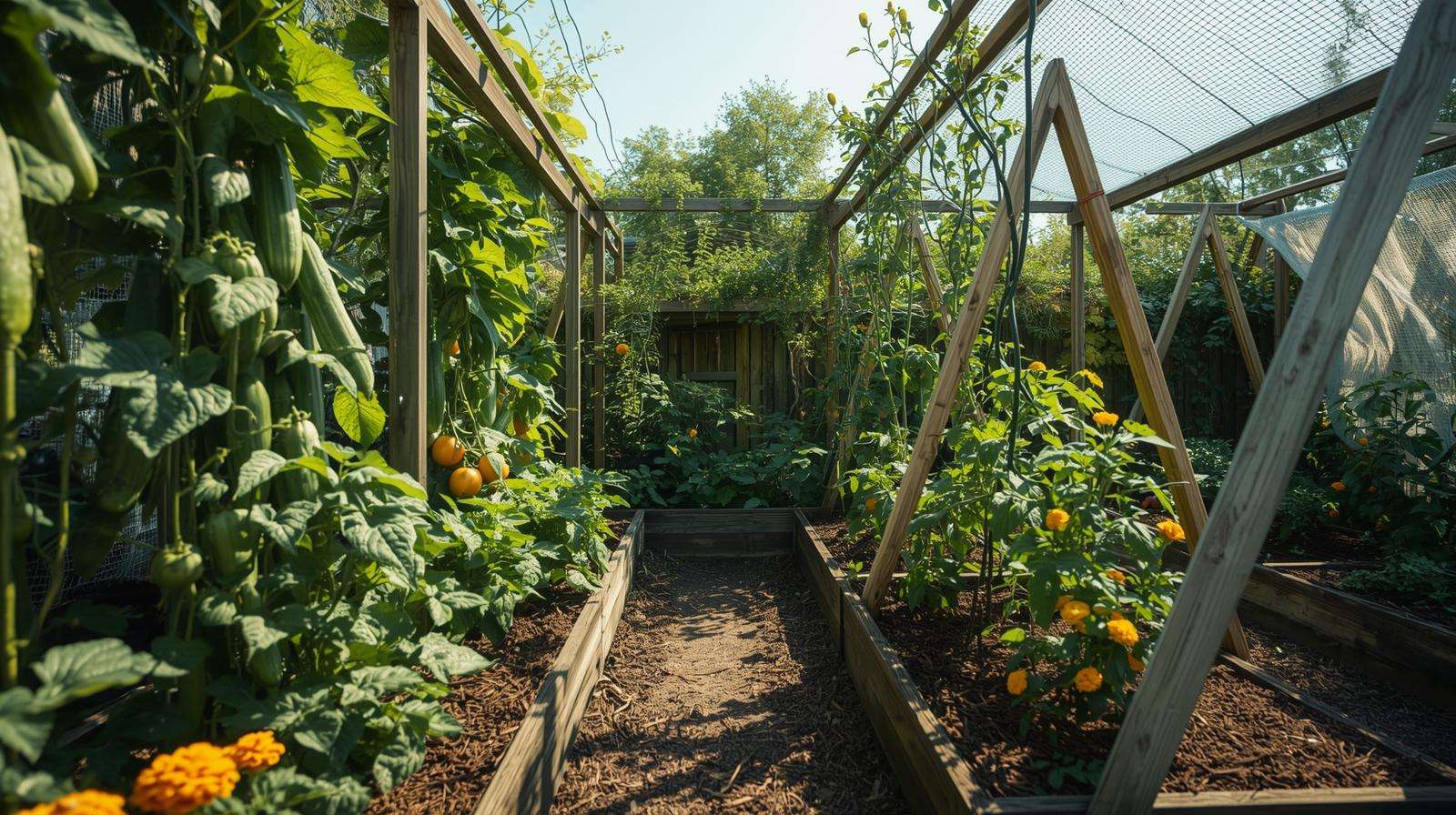
4. Master Succession Planting and Crop Rotation for Year-Round Harvests
Plant in waves: Sow lettuce every 2 weeks for continuous salad. Rotate families (nightshades → legumes → brassicas) to prevent disease/soil depletion.
Create a zone-specific calendar (e.g., Zone 6: tomatoes after last frost ~May). Integrate family: Use shared Google Calendar for planting reminders. Extend seasons with row covers or cold frames for 8–10 months of harvests.
5. Start from Seeds and Save Your Own for Long-Term Savings
Seeds cost pennies vs. $3–5 transplants. Start indoors 6–8 weeks pre-frost using grow lights or sunny windowsills.
Save seeds from open-pollinated varieties: Dry, store cool/dark—cut future costs 80–100%. Teach kids genetics through pollination observation.
6. Incorporate Perennials and Fruit Trees for Low-Maintenance Abundance
Plant once, harvest yearly: Asparagus (20+ years), rhubarb, strawberries, berry bushes (blueberries, raspberries), dwarf fruit trees (apples, peaches suited to your zone).
ROI is huge—berries yield pounds in year 2–3. Family fun: Harvest parties build excitement.
7. Implement Water-Wise Techniques and Rainwater Collection
Mulch heavily (straw, leaves) to retain moisture/reduce weeds. Install drip irrigation or soaker hoses. Collect rainwater in barrels (check local regs)—saves on bills, builds drought resilience.
8. Add Easy Livestock or Poultry for Protein and Soil Fertility
Start small: 4–6 backyard chickens for 20–30 eggs/week + manure. Manure compost boosts soil. Family chores: Feeding, collecting eggs teach responsibility.
9. Practice Integrated Pest Management Organically
Prevent issues: Companion planting (marigolds deter nematodes), attract beneficials (ladybugs via dill). Use neem or hand-picking for problems—safe for kids/pets, avoids costly chemicals.
10. Harvest, Preserve, and Store Efficiently to Minimize Waste
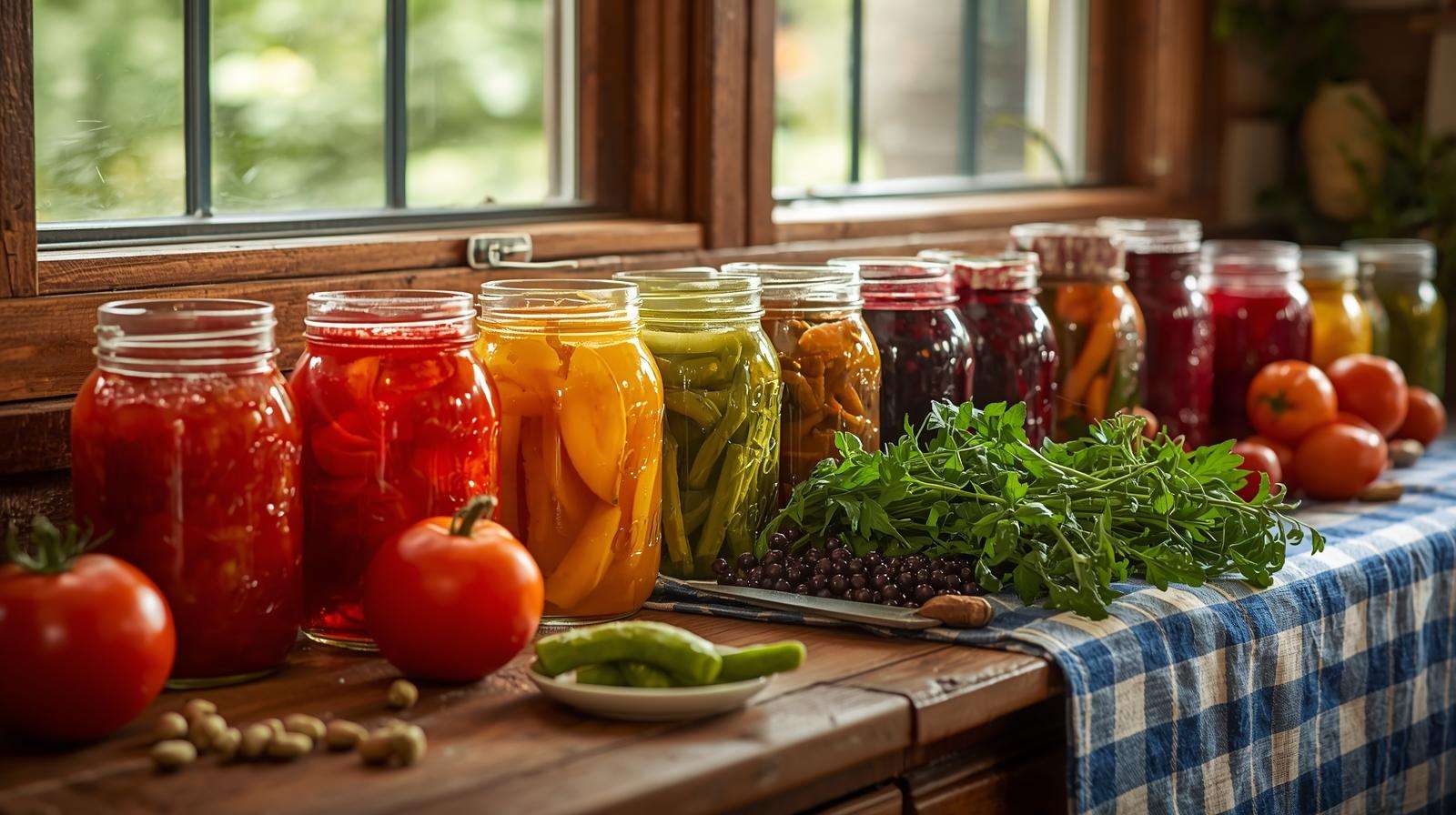
Harvest at peak: Can tomatoes, freeze beans, root cellar potatoes, dehydrate herbs. Basics: Water-bath canning for high-acid, pressure for low-acid (USDA guidelines essential for safety).
Plan meals around seasons—stretch harvests year-round.
Common Challenges and How to Overcome Them
Every family pursuing self-sufficiency encounters hurdles—knowing them in advance prevents discouragement and keeps momentum strong.
Time constraints and busy schedules Modern family life is packed with school, work, sports, and errands. Gardening can feel like another chore. Solution: Start tiny—commit to just 30 minutes a day or one focused weekend session per week. Use time-saving techniques: drip irrigation reduces watering time to minutes, mulch cuts weeding dramatically, and succession planting spreads labor evenly. Involve everyone: turn planting into a 15-minute family ritual after dinner. Many families find that once routines form, the garden becomes a relaxing, bonding activity rather than a burden.
Early failures (poor germination, pest damage, low yields) Beginners often lose entire beds to cutworms, damping-off, or nutrient deficiencies. Solution: Treat failures as tuition. Keep a simple garden journal (photos + notes) to track what works. Use proven starter methods: sterile seed-starting mix indoors, row covers for insects, and soil tests every spring. Join your local Cooperative Extension Master Gardener program or online homesteading communities (e.g., Reddit’s r/homestead or Facebook groups) for region-specific advice. Most families see dramatic improvement by year two once they dial in their microclimate and routines.
Motivation dips and “why bother” moments When a storm flattens seedlings or harvest is underwhelming, enthusiasm wanes. Solution: Celebrate small wins—first radish pulled, first jar of salsa canned, first $50 saved on groceries. Create visible trackers: a jar for saved receipts or a growth chart on the fridge. Reframe the garden as family legacy-building: kids remember picking strawberries with parents far more than store-bought ones. Set seasonal mini-goals (e.g., “grow enough lettuce for all summer salads”) rather than “be 100% self-sufficient overnight.”
Space limitations (urban/suburban lots) Many assume self-sufficiency requires acres. Solution: Intensive methods shine here. A 4×8 raised bed using biointensive spacing can produce 200–400 pounds of vegetables annually. Vertical gardening, container potatoes, hanging strawberries, and windowsill herbs multiply output. Apartment dwellers start with balcony micro-farms or community garden plots.
Preservation overwhelm Harvesting 20 pounds of tomatoes at once feels daunting. Solution: Learn one method at a time. Start with freezing (easiest), then water-bath canning high-acid foods (tomatoes, jams), and progress to pressure canning low-acid items. Use batch processing: dedicate one Saturday to processing the week’s surplus. Free resources like the National Center for Home Food Preservation (nchfp.uga.edu) provide USDA-tested, safe recipes.
Measuring Success: Tracking Your Grocery Savings and Progress
Numbers keep motivation high and prove the effort pays off. Create a simple before-and-after system:
- Baseline: For one month, log every produce, egg, and herb purchase. Calculate the total spent on items you plan to grow.
- During the season: Record harvests (weight or servings) and preservation yields.
- Savings calculator: Multiply homegrown pounds by average retail price per pound (use USDA or local grocery averages). Subtract any garden expenses (seeds, water, tools—most drop sharply after year one).
Example milestones many families hit:
- Month 3–6: 10–25% reduction in produce spending
- Year 1 end: 30–50% reduction on vegetables and fruits
- Year 2–3: 50–80% overall grocery savings when adding eggs, berries, and staples
Tools that help: Garden journal apps (e.g., GrowIt, Planter), Google Sheets templates for tracking, or a simple notebook. Seeing $600–$1,500 saved annually is incredibly motivating and validates every minute invested.
Expert Insights and Final Thoughts
After guiding dozens of families across USDA Zones 4 through 10, one truth stands out: perfection is the enemy of progress. The most successful self-sufficient families treat gardening as an evolving experiment, not a test to pass. They focus on incremental wins—replacing one store-bought item at a time—rather than aiming for total independence from day one.
Mindset matters most: View setbacks as data, not defeat. Involve children early; the lessons in patience, science, and stewardship last a lifetime. Prioritize joy: harvest picnics, seed-starting parties, and sharing surplus with neighbors build community and resilience.
You already have the most important resource—desire. Start with one tip from this list (I recommend beginning with soil building and high-yield crop selection), stay consistent, and watch the transformation unfold. In a few seasons, you’ll likely look back and wonder why you didn’t start sooner.
Resources for deeper learning:
- USDA Cooperative Extension (extension.org – find your local office)
- National Center for Home Food Preservation
- Ecology Action’s GROW BIOINTENSIVE® method books
- “The Self-Sufficient Life and How to Live It” by John Seymour (timeless classic)
- Seed Savers Exchange and Johnny’s Selected Seeds catalogs
Here’s to your family’s journey toward greater independence, better health, and a lighter grocery burden. Happy gardening!
FAQs
How much land do I need to become a self-sufficient family? You can see meaningful results (30–60% produce self-sufficiency) on as little as 400–1,000 square feet using intensive methods. A family of four can grow substantial vegetables on a 1/8-acre suburban lot; adding small livestock expands protein and fertility options.
What’s the fastest way to start cutting grocery bills? Focus on high-value, quick-turnaround crops: lettuce, radishes, zucchini, bush beans, and cherry tomatoes. Plant them now (if in season) or start seeds indoors. Use containers if space is limited. You can harvest and save money within 30–60 days.
Can kids really help with agricultural tasks? Absolutely—and they should. Ages 3–6 love planting seeds, watering, and harvesting. Ages 7–12 can handle weeding, succession planting, and simple preservation. Teens manage compost turning, record-keeping, or chicken care. These tasks build responsibility, science knowledge, and family memories.
How long until I see real savings? Most families notice 10–30% produce savings in the first growing season. By year two, with succession planting, perennials, and preservation, 40–60% reductions become common. Adding eggs or berries accelerates the timeline.
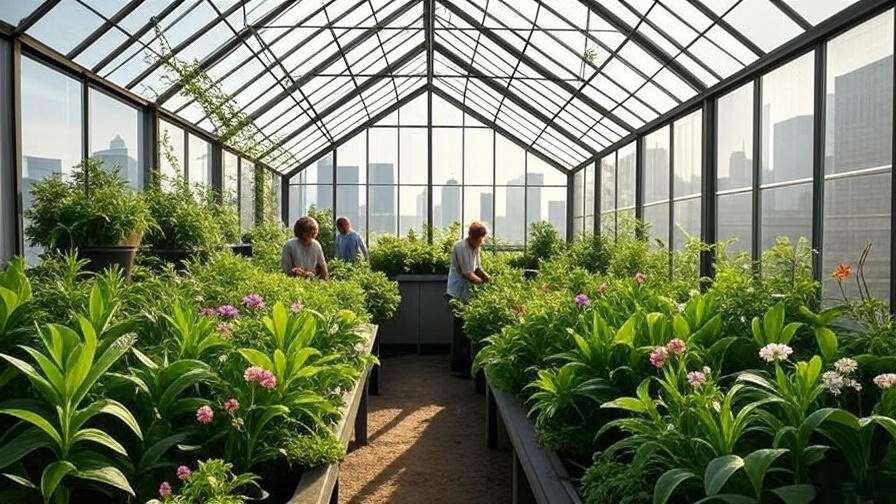
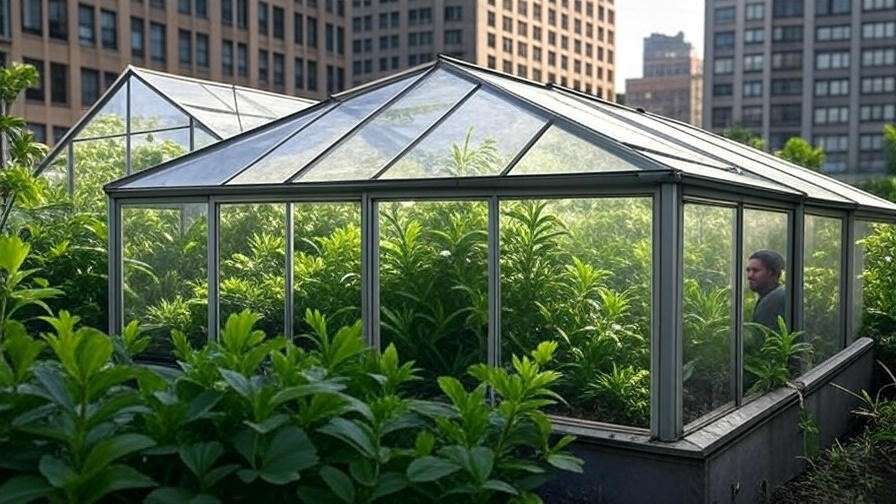
Is it worth it in urban areas? Yes—intensive, vertical, and container gardening make urban self-sufficiency very achievable. Many city families grow impressive amounts on balconies, rooftops, or community plots, saving hundreds annually while enjoying fresher food and teaching children valuable skills.