You’ve spent months tending your tomato and pepper plants—watering, staking, fertilizing—only to spot dark, sunken patches ruining what should be perfect fruit. Is it Blossom End Rot Look-Alikes (BER), the notorious calcium-related disorder that strikes fear into gardeners? Or could it be something else mimicking the same frustrating symptoms? Misidentifying these issues is incredibly common and leads to wasted time applying the wrong fixes, like unnecessary fungicides for a physiological problem or ignoring exposure damage that could be prevented with simple shading.
Blossom end rot look-alikes plague home gardeners and small-scale growers every season, especially in hot, fluctuating weather conditions like those often seen in regions with variable rainfall. BER itself is a non-infectious physiological disorder caused by disrupted calcium transport to developing fruit, not low soil calcium in most cases. But disorders such as sunscald, anthracnose, catfacing, buckeye rot, growth cracks, and internal black mold create strikingly similar dark spots, leathery textures, or sunken areas—leading to confusion and crop loss.
In this comprehensive guide, backed by university extension research from sources like NC State, University of Minnesota, Ohio State, and others, you’ll get expert-level tools to differentiate these problems accurately. We’ll cover detailed symptoms, side-by-side comparisons, diagnostic checklists, causes, prevention strategies, and real-world insights to help you protect your harvest. By the end, you’ll diagnose issues quickly, apply targeted solutions, and prevent future damage—saving more of your hard-earned Blossom End Rot Look-Alikes tomatoes and peppers.
What Is Blossom End Rot? A Quick Refresher
Blossom end rot is one of the most widespread tomato and pepper disorders worldwide. It primarily affects the blossom end (the bottom opposite the stem) of developing fruit, though in peppers it frequently appears on the sides or shoulders.
Key symptoms of true BER:
- Starts as a small, water-soaked, light tan or brownish spot on green or maturing fruit.
- Progresses to a larger, dark brown to black, leathery, sunken lesion that feels dry and papery rather than mushy.
- Often affects the first fruits of the season or during stress periods; can cover up to 50% of the fruit surface.
- Internal tissue may show blackening or necrosis, but the exterior lesion is the hallmark.
- No spore masses, rings, or fuzzy mold initially (though secondary fungi or bacteria can invade later).
Common hosts include tomatoes (especially large-fruited, plum, and paste varieties), bell peppers, chili peppers, eggplant, squash, and watermelon. In tomatoes, it’s almost always at the blossom end on shaded or lower fruit. In peppers, lesions are tan and can occur anywhere, making confusion with other issues more likely.
True cause: BER results from localized calcium deficiency in the fruit tissue during rapid growth. Calcium moves through the plant via water flow (transpiration stream). When watering is inconsistent—drought followed by heavy rain or overwatering—roots struggle to uptake and transport calcium effectively. Other contributors include:
- Excessive nitrogen fertilizer promoting lush foliage over fruit development.
- Root damage from over-cultivation or compacted soil.
- Low soil pH (<6.0) limiting calcium availability.
- High salinity or imbalanced nutrients (e.g., excess potassium or magnesium competing with calcium).
Contrary to popular myths, adding crushed eggshells or antacids rarely helps quickly—prevention focuses on steady moisture and soil health.
Why Look-Alikes Are So Common and Confusing
Many tomato and pepper fruit problems share overlapping triggers: heat stress, irregular watering, sun exposure after leaf loss, or wet conditions favoring pathogens. Visually, dark sunken spots, leathery textures, or browning create diagnostic headaches.
Misdiagnosis risks:
- Treating BER (physiological) with fungicides wastes money and harms beneficial microbes.
- Ignoring sunscald allows repeated exposure damage.
- Mistaking fungal issues like anthracnose for BER delays rotation or removal, spreading spores.
Accurate identification prevents unnecessary interventions and targets root causes for healthier plants.
Common Blossom End Rot Look-Alikes: Detailed Comparison
Here are the most frequent confusers, drawn from extension diagnostics (e.g., NC State, UMN, MSU, OSU). Use location, color progression, fruit ripeness, and environmental clues to differentiate.
Sunscald
Symptoms: Pale white, yellow, or tan blisters on sun-exposed sides or shoulders of fruit (rarely blossom end). Progresses to wrinkled, papery, sunken patches; may turn tan or brown and invite secondary rot.
Key differences from BER:
- Location: Sun-facing surfaces, often after defoliation from disease, pruning, or hail.
- Color/texture: Starts white/bleached, stays dry/papery; no deep black leathery rot.
- Timing: Mid-to-late season on ripening fruit.
- Peppers: Frequently confused—BER tan on blossom/side; sunscald white-to-tan on exposed areas.
Causes: Sudden intense sunlight on previously shaded fruit.
Anthracnose
Symptoms: Small, circular, sunken spots on ripe or overripe fruit; develop concentric “bull’s-eye” rings; pink/orange spore masses in humid conditions; deep internal rot.
Key differences:
- Affects ripe/red fruit primarily; fungal (Colletotrichum spp.).
- Wet weather favors spread; spots on sides/shoulders, not just blossom end.
- Spores visible in wet conditions vs. BER’s dry lesion.
Causes: Fungal pathogen overwintering in debris; splash-dispersed.
Catfacing
Symptoms: Misshapen, scarred, puckered blossom end with leathery bands, crevices, or “cat face” puckering; fruit often deformed or hollow; no active rot/decay.
Key differences:
- Structural deformity from cold temperatures during flowering/fruit set.
- Firm texture, no progression to black sunken rot.
- Common in large beefsteak tomatoes.
Causes: Low temperatures (<55°F/13°C) at pollination.
Buckeye Rot
Symptoms: Brown, water-soaked spots with characteristic zonate (buckeye-like) concentric rings; soft, mushy rot; often on fruit touching soil.
Key differences:
- Fungal (Phytophthora); wet/soft vs. BER’s dry/leathery.
- Rings and soil contact key clues.
Causes: Wet soil conditions favoring oomycete pathogen.
Growth Cracks / Radial Cracks
Symptoms: Splitting or cracking at blossom end or shoulders; cracks may ooze, then invite black mold or secondary rot.
Key differences:
- Cracks appear first from rapid water uptake after drought.
- Rot secondary, not primary lesion.
Causes: Fluctuating moisture during fruit expansion.
Internal Black Mold / Black Mold Rot
Symptoms: Minimal external signs; internal black fungal growth; sometimes from entry via cracks or other wounds.
Key differences:
- Hidden interior vs. BER’s obvious external spot.
- Often secondary to cracks or anthracnose.
Causes: Opportunistic fungi (e.g., Alternaria, Aspergillus) entering damaged tissue.
Other Minor Look-Alikes
- Stink bug damage: Cloudy yellow spots turning necrotic.
- Fruitworm/insect holes: Entry points with frass and localized rot.
- Uneven ripening/yellow shoulder: Pale shoulders from heat/K deficiency, no rot.
- Ground contact soft rot: Mushy bottom from soil-borne bacteria.
Side-by-Side Visual Comparison Guide
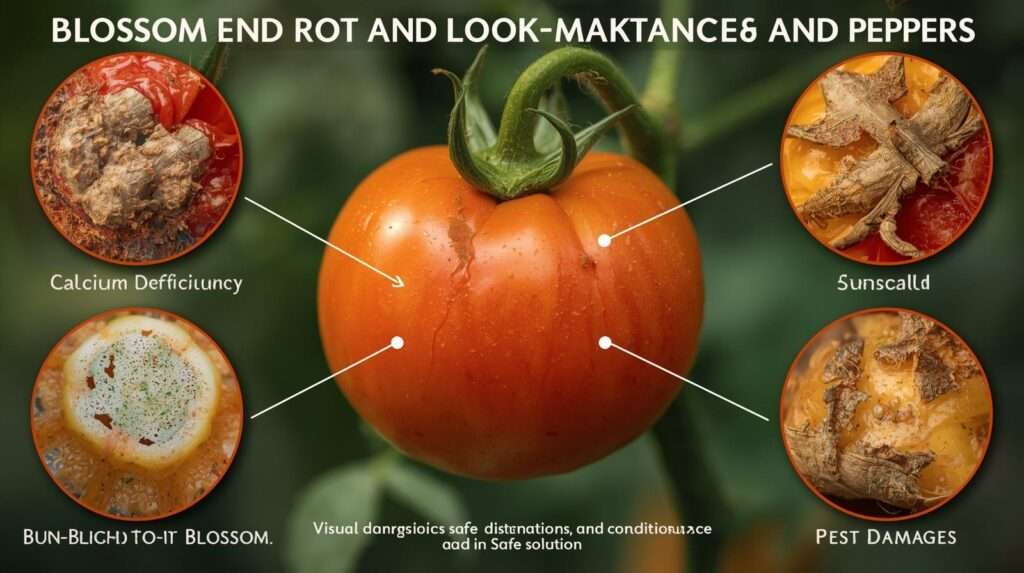
To make identification easier, here’s a practical visual breakdown based on reliable extension and gardening sources. (Note: The images below show real examples of each condition for direct comparison. Always inspect your own plants in natural light and consider cutting fruit open if needed.)
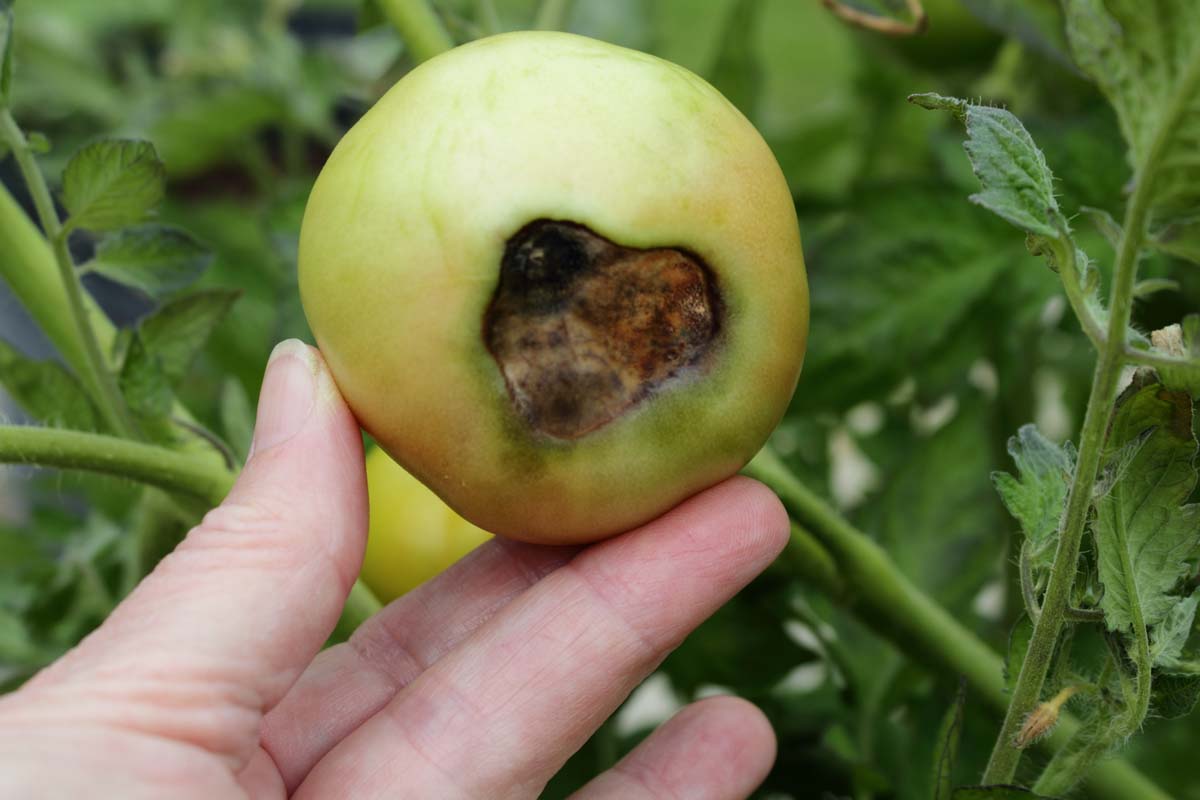
Sunscald examples: Pale, bleached, or white-to-tan patches on the sun-exposed side or shoulder. Often wrinkled or papery, rarely at the very bottom unless the fruit hangs low.
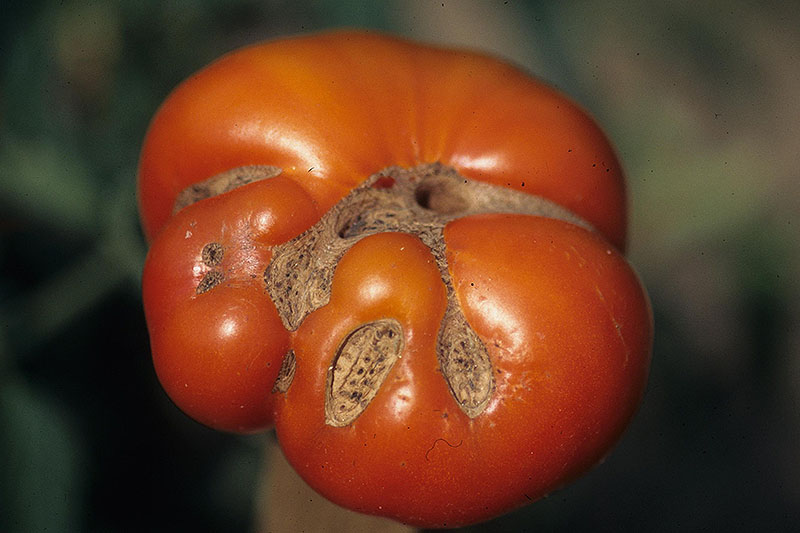
Growth Cracks examples: Radial or concentric splits/cracks, often at shoulders or blossom end; may turn brown or invite secondary rot if untreated.
Use these visuals alongside your observations: Check fruit position on the plant, exposure to sun, ripeness stage, recent weather (drought, heavy rain, heat), and whether multiple fruits show the same pattern.
How to Diagnose in Your Garden: Step-by-Step Checklist
Follow this field-tested sequence (adapted from university extension protocols) to narrow it down quickly:
- Note fruit location and exposure
- Blossom end only, shaded/lower fruit? → Likely BER.
- Sun-exposed side/shoulder? → Sunscald probable.
- Touching soil? → Consider buckeye rot or soft rot.
- Examine lesion details
- Dark, leathery, sunken, dry at blossom end? → BER.
- Pale/white, papery, wrinkled? → Sunscald.
- Concentric rings, soft, spores in wet? → Anthracnose or buckeye.
- Cracks/splits first? → Growth cracks.
- Puckered/scarring, deformed but firm? → Catfacing.
- Check fruit ripeness and timing
- Green/immature fruit? → BER, catfacing, early sunscald.
- Ripe/red fruit? → Anthracnose, secondary rots more likely.
- Cut fruit open (safely)
- Internal blackening near blossom end only? → BER.
- Deep internal rot/spores? → Fungal like anthracnose.
- No external sign but black inside? → Internal black mold.
- Review plant/environment history
- Inconsistent watering, drought stress? → BER or growth cracks.
- Recent heavy pruning/leaf loss? → Sunscald.
- Cool nights during flowering? → Catfacing.
- Wet, humid conditions? → Fungal issues.
- Soil test if BER suspected repeatedly
- pH below 6.0 or calcium imbalance? Amend accordingly.
This checklist usually resolves 90% of cases in minutes.
Prevention and Management for Each Condition
Focus on cultural practices first—these address most look-alikes simultaneously.
General prevention (applies to all):
- Maintain consistent soil moisture: Water deeply (1–2 inches/week), early morning; use drip irrigation or soaker hoses.
- Mulch 2–3 inches (straw, compost) to retain moisture and moderate temperature.
- Avoid excess nitrogen; use balanced fertilizer (e.g., 5-10-10) or compost.
- Space plants properly for airflow; stake/cage to keep fruit off ground.
- Rotate crops annually to reduce fungal buildup.
BER-specific:
- Ensure even watering—avoid wet/dry cycles.
- If soil pH low, apply lime in fall (not mid-season quick fix).
- Calcium foliar sprays (e.g., calcium nitrate) can help in some cases, though uptake is limited once symptoms appear.
- Choose resistant varieties (e.g., ‘Celebrity’, ‘Mountain Merit’ tomatoes; certain bell peppers).
Sunscald:
- Provide afternoon shade with cloth or taller companions during peak heat.
- Avoid heavy pruning in hot weather; remove diseased leaves gradually.
- Maintain dense foliage cover.
Anthracnose/Buckeye rot (fungal):
- Remove and destroy infected fruit/debris immediately.
- Apply copper-based fungicides preventively in wet seasons (follow labels).
- Improve drainage; avoid overhead watering.
- Use resistant varieties where available.
Catfacing:
- Plant after last frost; use row covers for early-season cold protection.
- Choose smaller-fruited varieties less prone to deformity.
Growth cracks:
- Steady watering prevents rapid swelling after drought.
- Harvest slightly early if cracks start appearing.
Internal black mold:
- Prevent entry wounds (cracks, insect damage).
- Control primary issues like BER or cracks.
Implementing these consistently reduces incidence dramatically—many gardeners report near-zero problems after optimizing watering and mulch.
Expert Insights and Real-World Examples
University extensions (e.g., NC State, University of Minnesota, Cornell) emphasize that BER and sunscald confusion peaks in peppers because lesions appear anywhere on the fruit, not just the blossom end. In tomatoes, first-set fruit suffers most from BER due to high demand during vegetative growth.
Real-world case: In humid subtropical areas (similar to parts of Bangladesh or U.S. Southeast), irregular monsoon rains trigger BER and growth cracks simultaneously. Gardeners using raised beds with mulch see far fewer issues than in-ground plots. In dry climates, sunscald dominates after early blight defoliates plants.
Another insight: Epsom salt (magnesium sulfate) is a common myth for BER—it addresses magnesium deficiency but can worsen calcium uptake imbalance. Focus on balanced nutrition instead.
FAQs
Is blossom end rot contagious? No—it’s physiological, not a disease. It won’t spread to healthy fruit or plants.
Can I eat fruit with blossom end rot? Yes, cut away the affected area generously (at least 1 inch beyond visible lesion). If secondary rot or mold is present, discard.
Why do my peppers get spots on the sides, not just the bottom? Peppers are prone to BER-like lesions anywhere due to fruit shape and exposure. Differentiate by texture: dry/leathery = BER; bleached/papery = sunscald.
How fast does BER develop? Symptoms appear within days of stress; once started, affected fruit won’t recover, but new fruit can be protected with better care.
Does Epsom salt fix blossom end rot? No—it’s ineffective for calcium issues and may cause imbalances. Soil tests guide true amendments.
Distinguishing blossom end rot look-alikes boils down to careful observation: location, texture, timing, and environment tell the story. Most “rot” problems stem from cultural stresses rather than pathogens, so consistent watering, mulch, balanced fertility, and protective practices solve the majority.
Monitor your plants weekly, act early, and prioritize prevention over cure. Your tomatoes and peppers will reward you with healthier, abundant harvests. If you’re still unsure about a specific fruit, feel free to describe it (or share a photo in comments)—happy gardening!