Tired of spending every weekend rinsing clogged filter media, battling ammonia spikes, or watching your once-crystal-clear tank turn cloudy despite regular water changes? Many aquarium hobbyists face this frustration: bio-media that promises massive surface area but quickly becomes a maintenance nightmare, forcing frequent cleanings that disrupt beneficial bacteria and stress your fish.
The solution lies in choosing low-maintenance bio-media designed for long-term stability. These options maximize usable surface area for nitrifying (and sometimes denitrifying) bacteria while resisting clogging, maintaining excellent water flow, and requiring rinsing only a few times a year—or even less in well-pre-filtered systems.
This comprehensive 2026 guide helps you make an informed buying decision. Drawing from current Amazon best-seller data, high-volume customer reviews, independent aquarium science tests (including real-world ammonia processing benchmarks), and expert community feedback, we’ve ranked the top 10 bio-media specifically for low-maintenance performance in common US setups like canister filters (Fluval, Eheim, Oase), sumps, and hang-on-back (HOB) systems.
Whether you’re a beginner with a lightly stocked 20-gallon tank or an advanced aquarist running a heavily loaded 200-gallon reef or planted system, you’ll find options here that deliver reliable biological filtration with minimal intervention—so you can spend more time enjoying your aquarium and less time maintaining it.
Why Low-Maintenance Bio-Media Matters
In a healthy aquarium, beneficial bacteria convert toxic ammonia → nitrite → nitrate. High-quality bio-media provides the massive, protected surface area these bacteria need without compacting or clogging. Low-maintenance media typically features:
- High usable porosity (not just claimed m²/L—real tests matter).
- Designs that promote water flow and self-cleaning (e.g., tumbling or open structures).
- Durability that lasts years without crumbling.
- Support for both aerobic and anaerobic zones where possible, helping control nitrates.
Independent tests (such as those from AquariumScience.org) show that media like coarse foam (20-30 PPI) and static K1-style often outperform traditional ceramic rings in practical ammonia handling per volume, especially in canisters.
Proper pre-filtration (mechanical sponges or filter floss first) is key to true low-maintenance success—preventing detritus from reaching your bio-media.
Understanding Bio-Media for Low-Maintenance Biofilters
Biological filtration is the cornerstone of a stable aquarium. Bio-media houses colonies of beneficial bacteria that keep water parameters safe.
Key Factors for Low-Maintenance Performance:
- Surface Area & Porosity: More protected internal pores = more bacteria, but only if water can still flow through without clogging.
- Flow Characteristics: Open designs or moving media reduce buildup.
- Durability & Lifespan: Media that doesn’t break down or require frequent replacement.
- Ease of Cleaning: Rinse gently in tank water only when needed; avoid killing bacteria.
- Compatibility: Works in submerged (canister/sump) or trickle (wet/dry) setups; freshwater or marine.
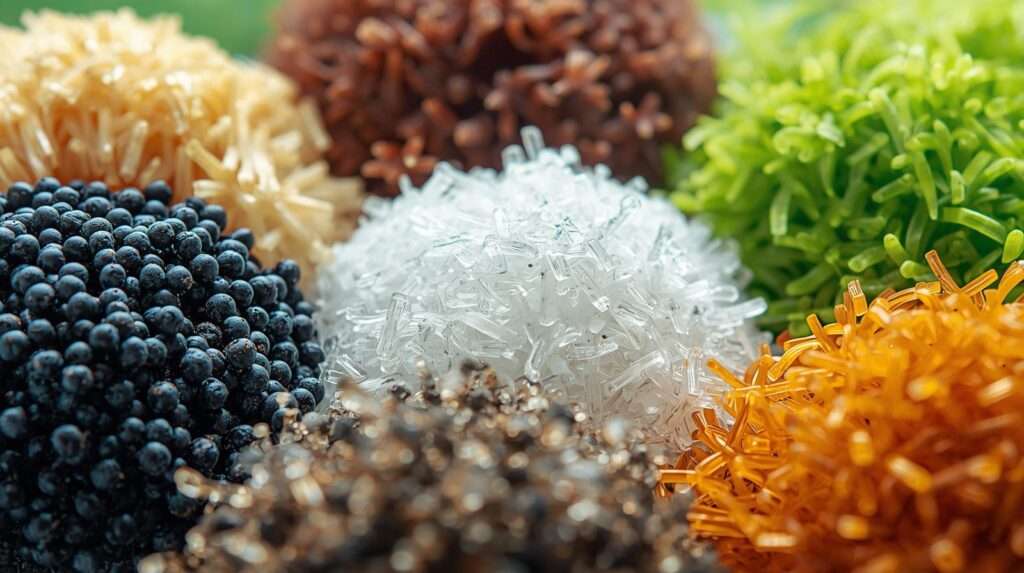
Common Types Explained:
- Ceramic Rings/Nodules: Affordable, good internal surface; can clog if not pre-filtered.
- Sintered Glass: Highly porous with some denitrification potential; very durable.
- Bio-Balls: Excellent flow, low clogging; best in high-flow or wet/dry sections.
- Moving Bed (K1/K3-style): Self-cleaning via tumbling; top performer in many tests.
- Coarse Foam/Sponge (20-30 PPI): Often the real-world winner for usable surface and ease—cut-to-fit, rinses easily, supports massive bioload.
- Specialty Ceramics (e.g., blocks/spheres): Extreme surface area for heavy bioloads, including anaerobic zones.
Quick Comparison of Media Types (Maintenance Level & Performance):
- High clog risk / frequent rinse: Standard ceramic rings.
- Lowest maintenance: Moving K1 or coarse foam in well-pre-filtered systems.
- Best all-rounder for most: Hybrid approaches (foam + ceramic/sintered).
How Much Do You Need? General rule: Aim for enough media to handle your tank’s bioload (stocking, feeding, plant load). For a 50-gallon moderately stocked tank, 1-2 liters of high-quality media in the bio section is often sufficient when paired with good mechanical filtration. Over-filtration is rarely a problem.
How We Selected and Ranked the Top 10
We evaluated based on:
- Current Amazon popularity, sales rank, and review volume (2026 data).
- Ratings (targeting 4.5+ stars with hundreds/thousands of reviews).
- Real-world performance from independent tests and long-term user reports.
- Low-maintenance traits: clog resistance, longevity, flow, and bacteria efficiency.
- Value: Price per effective volume and durability.
- Versatility across US filter types and tank setups.
Prices are approximate as of early 2026 and fluctuate—check current Amazon listings via the links for the latest deals. All recommendations prioritize helping you achieve stable parameters with minimal weekly effort.
Detailed Product Comparison and Reviews
Here’s a simple, mobile-friendly comparison table (limited to three columns for easy scrolling on any device):
| Rank & Product | Approx. Price (Typical Pack) | Key Advantage for Low-Maintenance |
|---|---|---|
| 1. Fluval BioMax Bio Rings | $12–18 (500g–1L) | Versatile, affordable, proven in canisters |
| 2. Seachem Matrix | $15–25 (1L) | Porous with denitrification support |
| 3. Biohome Ultimate | $40–80 (1–2 lb) | High-surface sintered glass, long-lasting |
| 4. Eheim Substrat Pro | $20–30 (2L) | Excellent colonization, durable |
| 5. MarinePure GEMs/Spheres | $25–60 (varies by size) | Massive surface + anaerobic zones |
| 6. K1/K3 Moving Bed Media | $20–40 (5–10L) | Self-cleaning tumbling action |
| 7. Marineland Bio-Filter Balls | $10–20 (pack) | Great flow, budget-friendly |
| 8. Coarse 30 PPI Aquarium Foam | $15–30 (sheet/block) | Top real-world performer, easy rinse |
| 9. Generic Ceramic Rings/Noodles | $8–15 (5–6 lb) | Budget volume option |
| 10. Mountain Tree or Similar Specialty Rings | $20–35 (pack) | Innovative porosity designs |
Note: Rankings balance popularity, test data, and low-maintenance fit. Independent tests often favor foam and K1 for practical bioload handling over traditional ceramics.
1. Fluval BioMax Bio Rings – Best Overall for Most Users
Compelling Product Description: Fluval BioMax Bio Rings are engineered ceramic rings with an internal tunnel structure that maximizes surface area for beneficial bacteria while promoting water flow. Designed specifically for Fluval canisters but compatible with virtually any filter, these rings provide reliable biological filtration without the rapid clogging seen in cheaper alternatives. Hobbyists praise them for delivering stable parameters in both freshwater and marine setups with minimal intervention when paired with mechanical pre-filtration.
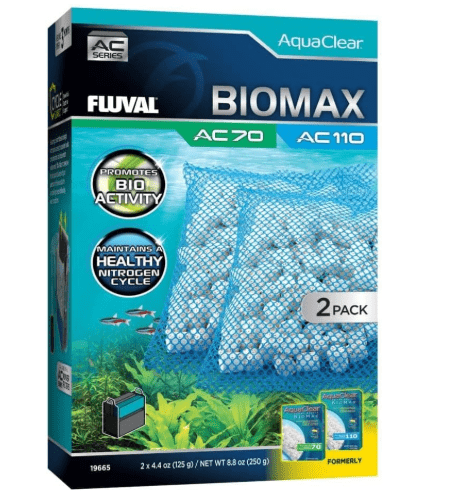
Current Price: Approximately $12–18 for a 500g–1L pack on Amazon (check for bulk deals or multi-packs).
Key Features and Benefits:
- High internal surface area via complex ring design.
- Durable ceramic construction that resists breaking down.
- Compatible with canister, HOB, sump, and internal filters.
- Supports strong nitrifying bacteria colonies quickly.
- Helps maintain clear water and stable ammonia/nitrite levels.
Pros and Cons:
- Pros: Affordable, widely available, excellent reviews for longevity in canisters, easy to rinse.
- Cons: Can eventually clog without strong pre-filtration; some users note it performs best when not over-packed.
Amazon Customer Ratings and Reviews: Typically 4.6–4.8 stars with thousands of reviews. Verified buyers frequently mention “set it and forget it” performance after initial cycling, with many reporting 1–2 years between deep cleanings. Common praise: “Keeps my 75-gallon stable with almost no maintenance.” Complaints are minor, usually related to initial dust or needing better mechanical media upstream.
Why It’s a Good Choice for Low-Maintenance Biofilters: It balances cost, performance, and ease, making it ideal for beginners and intermediates who want reliable results without premium pricing or complex setups.
Ideal Use Case or Who Should Buy It: Best for users with Fluval or similar canister filters in 30–150 gallon tanks (light to moderate stocking). Perfect for planted tanks or community freshwater aquariums where you want simple, effective biofiltration without frequent tinkering.
(Amazon affiliate link placeholder: Search “Fluval BioMax” on Amazon for current pricing and to support this guide.)
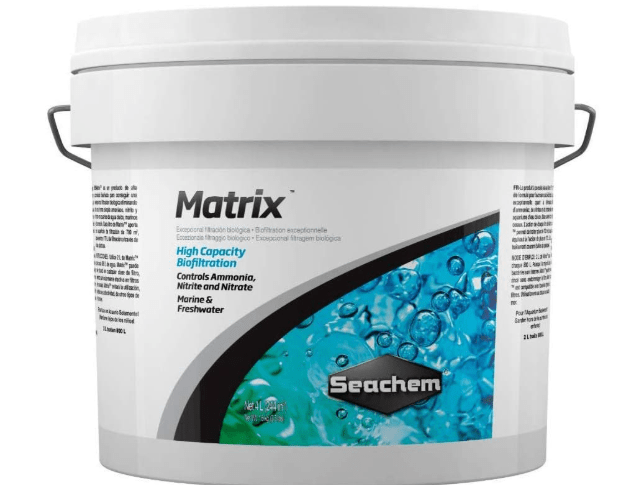
2. Seachem Matrix – Premium Porous Choice with Denitrification Benefits
Compelling Product Description: Seachem Matrix is a high-porosity pumice-like bio-media with extensive internal tunnels that support both aerobic nitrifying bacteria and anaerobic denitrifying bacteria deep within its structure. This dual-action capability helps reduce nitrates naturally, making it a standout for long-term stability in heavier bioload systems. Its irregular shape ensures excellent water flow and resistance to channeling.
Current Price: Around $15–25 for 1 liter (larger 4L containers available for bigger systems).
Key Features and Benefits:
- Extremely high usable surface area.
- Promotes nitrate reduction in addition to ammonia/nitrite processing.
- Inert and long-lasting (years with proper care).
- Works in all filter types, including sumps.
- No need for frequent replacement.
Pros and Cons:
- Pros: Superior for nitrate control, highly effective per volume, trusted brand with consistent quality.
- Cons: Higher price per liter than basic ceramics; can be dusty when new.
Amazon Customer Ratings and Reviews: Consistently 4.7+ stars with strong review volume. Users highlight “noticeable nitrate drop” and “rock-solid parameters” after months of use. Many long-term aquarists say it outperforms standard rings in planted or reef tanks.
Why It’s a Good Choice for Low-Maintenance Biofilters: The added denitrification reduces the need for aggressive water changes or chemical media, directly addressing the “stable but low-effort” goal.
Ideal Use Case or Who Should Buy It: Heavily stocked tanks, planted aquariums, or reef systems (50+ gallons) where nitrate management is important. Great for advanced hobbyists or anyone tired of chasing nitrate levels.
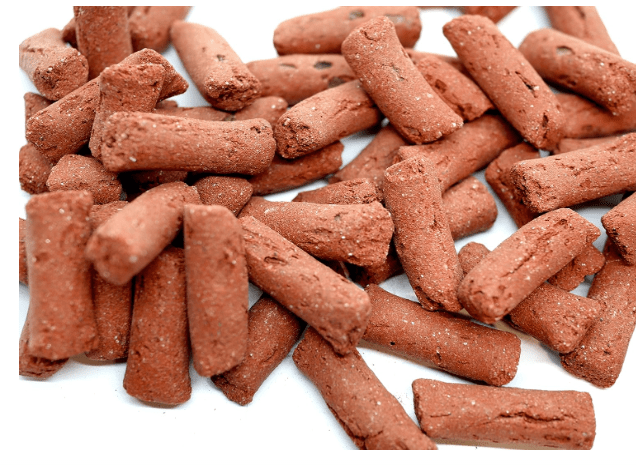
3. Biohome Ultimate Filter Media – Premium Sintered Glass for Long-Term Stability
Compelling Product Description: Biohome Ultimate is a high-porosity sintered glass bio-media engineered for maximum bacterial colonization, including both aerobic nitrifying and anaerobic denitrifying bacteria. Its irregular, highly porous structure creates an enormous usable surface area while maintaining excellent water flow, making it exceptionally resistant to clogging even in high-bioload systems. Many long-term users report crystal-clear water and stable parameters for years with only occasional gentle rinsing, positioning it as a true “set it and forget it” option for serious aquarists.
Current Price: Approximately $40–80 for 1–2 lb packs (pricing varies by size; larger bulk options available on Amazon).
Key Features and Benefits:
- Over 50% porosity for superior internal surface area.
- Supports dual aerobic/anaerobic bacterial zones for natural nitrate reduction.
- Extremely durable industrial-grade material that lasts many years.
- Compatible with canisters, sumps, and trickle filters.
- Low dust and quick cycling compared to some ceramics.
Pros and Cons:
- Pros: Outstanding long-term performance, excellent nitrate control, minimal maintenance once established, high value for advanced setups.
- Cons: Higher upfront cost; best results require adequate pre-filtration to prevent premature buildup.
Amazon Customer Ratings and Reviews: Typically 4.7–4.8 stars with dedicated long-term reviews. Users frequently note “zero maintenance for 12+ months” in well-pre-filtered canisters or sumps, with comments like “My nitrates dropped significantly after switching” and “Still performing perfectly after 2 years.” Minor complaints involve initial cost or the need for proper flow.
Why It’s a Good Choice for Low-Maintenance Biofilters: Its ability to host anaerobic bacteria reduces nitrate accumulation, directly lowering the frequency of water changes and chemical interventions while resisting clogging better than standard rings.
Ideal Use Case or Who Should Buy It: Advanced hobbyists with heavily stocked tanks (75+ gallons), planted aquariums, or reef systems seeking maximum stability and minimal intervention. Ideal for sumps or large canisters where you want media that works hard without frequent attention.
(Amazon affiliate link: Search “Biohome Ultimate Filter Media” on Amazon.)
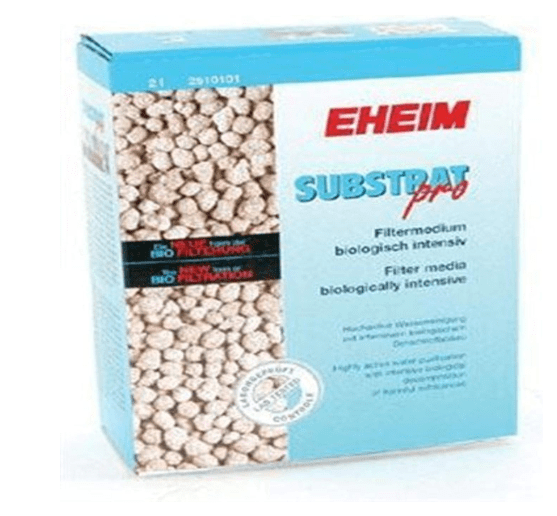
4. Eheim Substrat Pro – High-Quality Sintered Glass for Heavy Bioloads
Compelling Product Description: Eheim Substrat Pro consists of pearl-shaped sintered glass beads with an extremely high internal surface area designed for intensive bacteria colonization. Manufactured in Germany to strict standards, this media excels in both nitrification and some denitrification while maintaining strong water flow. Its smooth, durable shape prevents channeling and makes it easy to rinse without damaging the structure, supporting reliable performance in demanding setups.
Current Price: Around $20–30 for 1–2L containers (check for current Amazon deals).
Key Features and Benefits:
- Very high surface area per volume.
- Inert sintered glass construction for longevity.
- Excellent flow characteristics reduce clogging risk.
- Quick establishment of bacterial colonies.
- Suitable for freshwater and marine applications.
Pros and Cons:
- Pros: Premium quality, durable, effective in high-flow filters, trusted European brand.
- Cons: More expensive than basic ceramics; some users prefer larger-volume packs.
Amazon Customer Ratings and Reviews: 4.6+ stars with consistent praise for performance in Eheim and other canisters. Reviewers mention stable parameters in heavily stocked tanks and easy long-term use, with quotes such as “Best bio media I’ve used—lasts forever with minimal cleaning.”
Why It’s a Good Choice for Low-Maintenance Biofilters: The combination of high surface area and good flow means less frequent rinsing while handling significant bioload without parameter swings.
Ideal Use Case or Who Should Buy It: Users with Eheim or similar high-quality canister filters in moderately to heavily stocked aquariums (50–200 gallons). Great for those who value European engineering and want reliable biofiltration without constant upkeep.
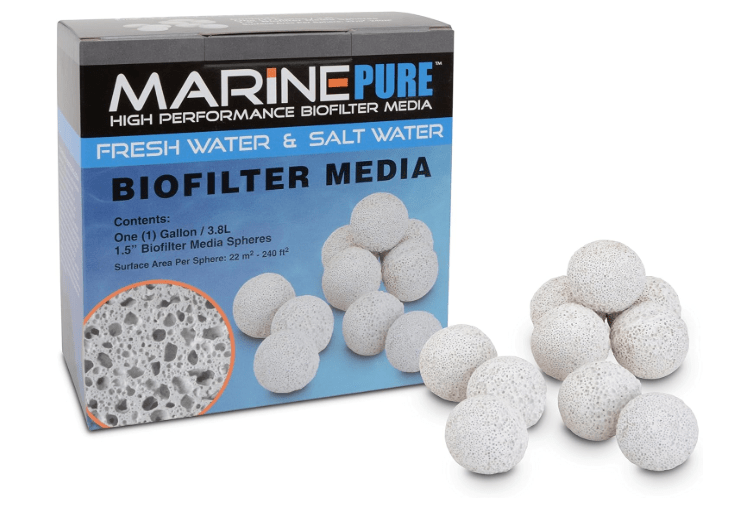
5. MarinePure GEMs or 1.5″ Spheres – Massive Surface Area Specialist
Compelling Product Description: MarinePure ceramic bio-media (available as GEMs or larger spheres/blocks) offers one of the highest claimed surface areas on the market thanks to its open-pore ceramic structure. Designed to support both nitrifying and denitrifying bacteria, it excels at reducing nitrates while providing robust ammonia and nitrite processing. The spherical or gem shapes promote excellent flow and are particularly effective in sumps or large bio chambers.
Current Price: $25–60 depending on size/pack (e.g., small GEMs packs or 2-quart spheres).
Key Features and Benefits:
- Extremely high surface area (up to thousands of square feet per unit in larger formats).
- Open porosity for anaerobic zones and nitrate reduction.
- Durable ceramic that handles high bioload.
- Versatile for marine, reef, and freshwater.
- Low maintenance in properly pre-filtered systems.
Pros and Cons:
- Pros: Superior nitrate control, massive capacity, proven in reef systems.
- Cons: Can become brittle over very long periods in some conditions; higher cost for equivalent volume.
Amazon Customer Ratings and Reviews: 4.6–4.7 stars. Reef and marine keepers rave about stability and low nitrates; freshwater users note excellent clarity. Some mention careful handling to avoid crumbling after extended use.
Why It’s a Good Choice for Low-Maintenance Biofilters: Its dual-action capability minimizes nitrate buildup, reducing overall maintenance needs in high-bioload or reef environments.
Ideal Use Case or Who Should Buy It: Reef aquarists, heavily stocked marine tanks, or large freshwater systems (100+ gallons) using sumps. Perfect for anyone prioritizing nitrate reduction with minimal effort.
6. K1 or K3 Moving Bed Bio Media (MBBR) – Self-Cleaning Champion
Compelling Product Description: K1 and K3 media are floating plastic biofilm carriers used in moving bed biofilm reactor (MBBR) setups. The media tumbles with water or air flow, constantly self-cleaning by shedding excess biofilm while maintaining a thin, highly efficient bacterial layer. This dynamic action provides exceptional ammonia processing with virtually zero clogging, making it one of the lowest-maintenance options available.
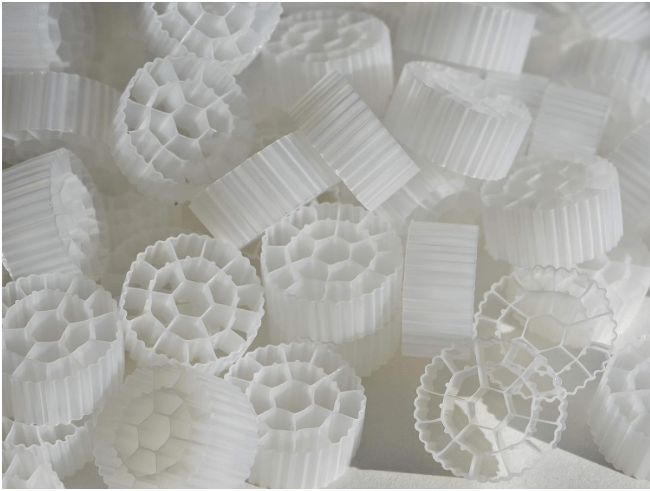
Current Price: $20–40 for 5–10L ba.gs (bulk pricing common).
Key Features and Benefits:
- Self-cleaning tumbling design prevents buildup.
- High effective surface area per volume.
- Supports massive bioload in compact space.
- Works in dedicated moving bed filters or modified canisters/sumps.
- Extremely durable plastic construction.
Pros and Cons:
- Pros: Truly minimal maintenance, excellent performance in tests, scalable for any tank size.
- Cons: Requires a dedicated moving bed section or air stones for tumbling; not ideal for static canister trays.
Amazon Customer Ratings and Reviews: 4.7+ stars with users highlighting “zero maintenance filter” results. Pond and aquarium keepers note sustained water quality even under heavy feeding.
Why It’s a Good Choice for Low-Maintenance Biofilters: The constant motion eliminates manual rinsing needs, delivering consistent biological filtration with the least intervention.
Ideal Use Case or Who Should Buy It: Aquarists willing to set up or modify a moving bed section (sump or custom filter) for 50+ gallon tanks with moderate to high stocking. Ideal for hands-off enthusiasts or aquaponics/pond applications.
7. Marineland Bio-Filter Balls – Budget-Friendly Flow King
Compelling Product Description: Marineland Bio-Filter Balls are lightweight, open-structure plastic bio-balls that promote excellent water flow while providing ample surface for bacterial growth. Their design minimizes clogging in high-flow areas like wet/dry trickle filters or canister bio trays, offering reliable performance at an accessible price point.
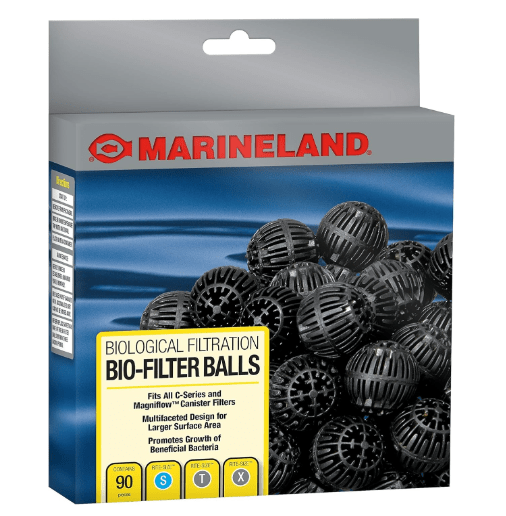
Current Price: $10–20 per pack.
Key Features and Benefits:
- Superior flow-through design.
- Lightweight and easy to handle.
- Good surface area for nitrification.
- Affordable way to add bio capacity.
Pros and Cons:
- Pros: Cheap, great flow, low clog risk, easy to rinse.
- Cons: Lower surface area per volume than porous ceramics or foam; best as part of a mix.
Amazon Customer Ratings and Reviews: 4.5+ stars. Users appreciate value and flow in sumps or power filters, with comments on easy long-term use.
Why It’s a Good Choice for Low-Maintenance Biofilters: Excellent flow reduces maintenance frequency while providing solid biological support on a budget.
Ideal Use Case or Who Should Buy It: Beginners or budget-conscious hobbyists with trickle or high-flow filters in 20–100 gallon tanks. Good as a supplementary media.
8. Coarse 20-30 PPI Aquarium Foam/Sponge – Real-World Performance Leader
Compelling Product Description: Coarse open-cell aquarium foam (20–30 PPI Poret-style or similar) has repeatedly outperformed many ceramic and sintered media in independent ammonia oxidation tests. Its large pores provide massive usable surface area for bacteria while allowing excellent flow and easy rinsing. Cut-to-fit sheets or blocks make it incredibly versatile for any filter.
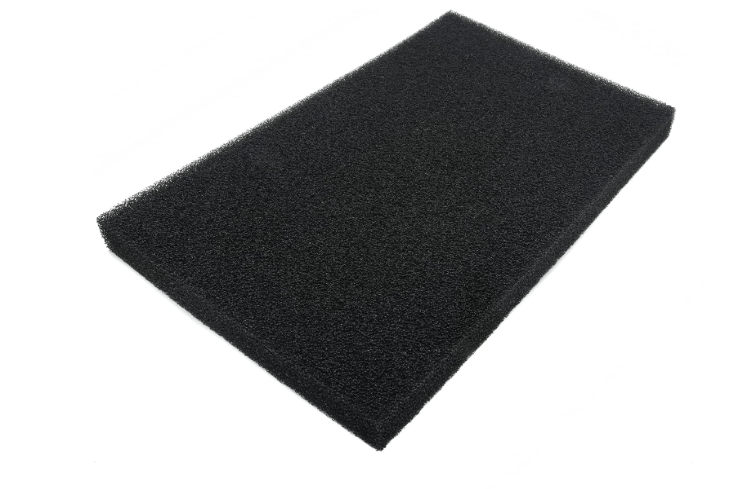
Current Price: $15–30 for large sheets/blocks.
Key Features and Benefits:
- Superior real-world bio efficiency per volume.
- Easy to cut and layer; rinses cleanly.
- Supports high bioload with low clogging when coarse.
- Inexpensive and long-lasting.
Pros and Cons:
- Pros: Often the top performer in practical tests, very low maintenance with pre-filtration, highly customizable.
- Cons: Requires cutting; can compress if over-packed or too fine porosity.
Amazon Customer Ratings and Reviews: 4.6+ stars on compatible sponge products. Aquarists frequently say “30 PPI foam changed my filtration” with minimal cleaning needed.
Why It’s a Good Choice for Low-Maintenance Biofilters: Independent tests confirm it handles bioload better than many expensive options while being simple to maintain.
Ideal Use Case or Who Should Buy It: Anyone with canister, sump, or HOB filters who wants maximum efficiency on a budget. Excellent primary or sole bio media in well-designed systems.
9. Generic Ceramic Rings or Noodles – High-Volume Budget Option
Compelling Product Description: Standard porous ceramic rings or noodles offer decent surface area at very low cost. When used with strong mechanical pre-filtration, they provide reliable biological filtration for lightly to moderately stocked tanks without breaking the bank.
Current Price: $8–15 for 5–6 lb bags.
Key Features and Benefits:
- Affordable large volumes.
- Basic but effective porosity.
- Easy to use in most filters.
Pros and Cons:
- Pros: Great value, widely available.
- Cons: Prone to clogging faster than premium options; lower usable surface in practice.
Amazon Customer Ratings and Reviews: 4.4–4.6 stars. Good for entry-level use when pre-filtered well.
Why It’s a Good Choice: Solid starter media for low-bioload setups.
Ideal Use Case: Beginners with small to medium tanks on tight budgets.
10. Mountain Tree or Similar Specialty Rings (e.g., Nitro/Lotus Root Designs) – Innovative Porosity Options
Compelling Product Description: Specialty ceramic rings like Mountain Tree Nitro or Lotus Root styles feature advanced internal structures for enhanced surface area and flow. These designs aim to combine the benefits of traditional rings with better bacteria efficiency and reduced clogging.
Current Price: $20–35 per pack.
Key Features and Benefits:
- Innovative pore designs.
- Improved flow and colonization.
- Good balance of performance and cost.
Pros and Cons:
- Pros: Modern improvements over basic rings.
- Cons: Newer options with less long-term data.
Amazon Customer Ratings and Reviews: Positive feedback on clarity and stability.
Why It’s a Good Choice: Fresh alternative for those wanting upgraded standard media.
Ideal Use Case: Users seeking next-level ceramic performance without premium sintered glass prices.
Head-to-Head Comparison and Buying Guide
Fluval BioMax vs. Seachem Matrix: BioMax wins for most users on price and versatility; Matrix edges out for nitrate control.
Ceramics vs. Foam/K1: Independent tests often show 20-30 PPI foam and K1 outperforming rings in real ammonia handling and maintenance ease.
Decision Tree:
- Canister filter, beginner/moderate stocking → Fluval BioMax or coarse foam.
- Heavy bioload, nitrate issues → Seachem Matrix, Biohome, or MarinePure.
- Willing to modify for moving bed → K1/K3 for near-zero maintenance.
- Budget priority → Foam or generic rings with excellent pre-filtration.
Key Buying Factors:
- Tank size & stocking level.
- Filter type and flow rate.
- Freshwater vs. marine (most are compatible; MarinePure shines in reefs).
- Pre-filtration is non-negotiable for true low-maintenance.
Maintenance Tips: Always rinse in old tank water only. Layer mechanical media first. Monitor parameters during initial cycling. Replace only when media physically degrades (rare for quality options).
Common Mistakes to Avoid: Overpacking media (reduces flow), skipping pre-filtration, or disturbing all media at once during cleaning.
Frequently Asked Questions (FAQ)
What makes bio-media truly low-maintenance? High usable surface area + good flow + resistance to clogging, combined with strong upstream mechanical filtration.
Ceramic rings vs. bio balls vs. K1—which is best? Depends on setup: K1 for self-cleaning, foam for efficiency/value, premium ceramics for high surface in static trays.
How much bio-media do I need? Start with 1–2 liters per 50–100 gallons for moderate stocking; test parameters and add more if needed. Over-filtration is safer than under.
Will these work in HOB filters? Yes—many (especially foam or small rings) fit HOB bio trays; check dimensions.
Do I still need water changes? Yes, but high-quality low-maintenance bio-media (especially with denitrification) can reduce frequency.
Are expensive brands worth it? For high bioload or specific needs (nitrates), yes. For average setups, foam or Fluval often suffice.
Freshwater vs. saltwater differences? Most media work in both; MarinePure and Biohome Ultimate excel in marine/reef for dual-action.
The best overall pick for most aquarists in 2026 is Fluval BioMax Bio Rings for its balance of performance, price, and ease in common canister filters. For maximum low-maintenance and efficiency, consider coarse 20-30 PPI foam or K1 moving bed media based on your setup.
Investing in the right bio-media transforms aquarium keeping from a chore into a joy. Pair any of these with solid mechanical pre-filtration, and you’ll enjoy stable, clear water with far less effort.