Imagine watching your cucumber vines heavy with fruit suddenly sag, twist, or collapse under their own weight just weeks before peak harvest. The vines tangle on the ground, fruits develop odd shapes or rot from soil contact, and diseases spread rapidly in the humid mess below. This frustrating scenario plays out in gardens every season when weak or poorly anchored trellises fail.Stronger Vertical Trellises for Cucumbers
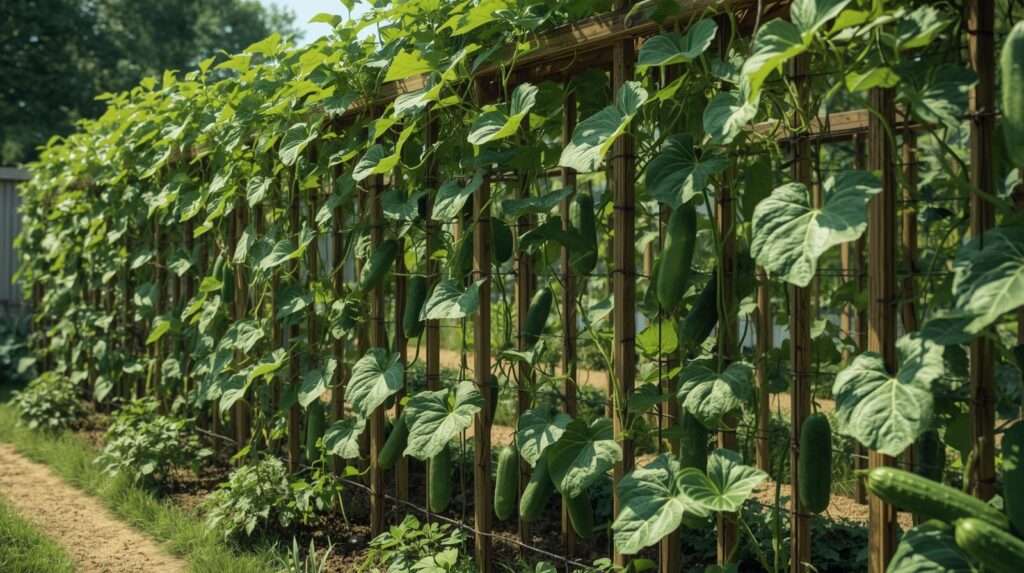
Stronger vertical trellises for cucumbers solve this problem head-on. They provide the robust support vining cucumbers need to climb high, stay healthy, and deliver significantly higher yields of straight, clean fruit. Whether you garden in raised beds, small urban plots, or larger backyard spaces, investing in durable vertical supports transforms your cucumber crop.
In over a decade of testing various systems across different climates and soil types, I’ve seen firsthand how the right trellis design prevents collapse, improves airflow to reduce powdery mildew and other fungal issues, maximizes sunlight exposure, and makes harvesting a pleasure instead of a back-breaking chore. University extension research backs this up: studies show trellised cucumbers can produce up to 100% more marketable fruit than ground-grown plants, with better quality and fewer defects.
This comprehensive guide delivers everything you need to build or choose stronger vertical trellises for cucumbers that last multiple seasons. You’ll discover the best materials, proven designs, step-by-step DIY instructions, training techniques, troubleshooting tips, and yield-boosting strategies. By the end, you’ll have the knowledge to create supports capable of handling vigorous vines and heavy fruit loads—even in windy or rainy conditions—while saving space and promoting healthier plants.
Why Strong Vertical Trellises Matter for Cucumber Success
Cucumbers (Cucumis sativus) come in two main growth habits: compact bush types and vigorous vining varieties. Most productive slicing and pickling cucumbers are vining types that use tendrils to climb. Without adequate support, these plants sprawl across the ground, wasting valuable garden space and creating ideal conditions for problems.
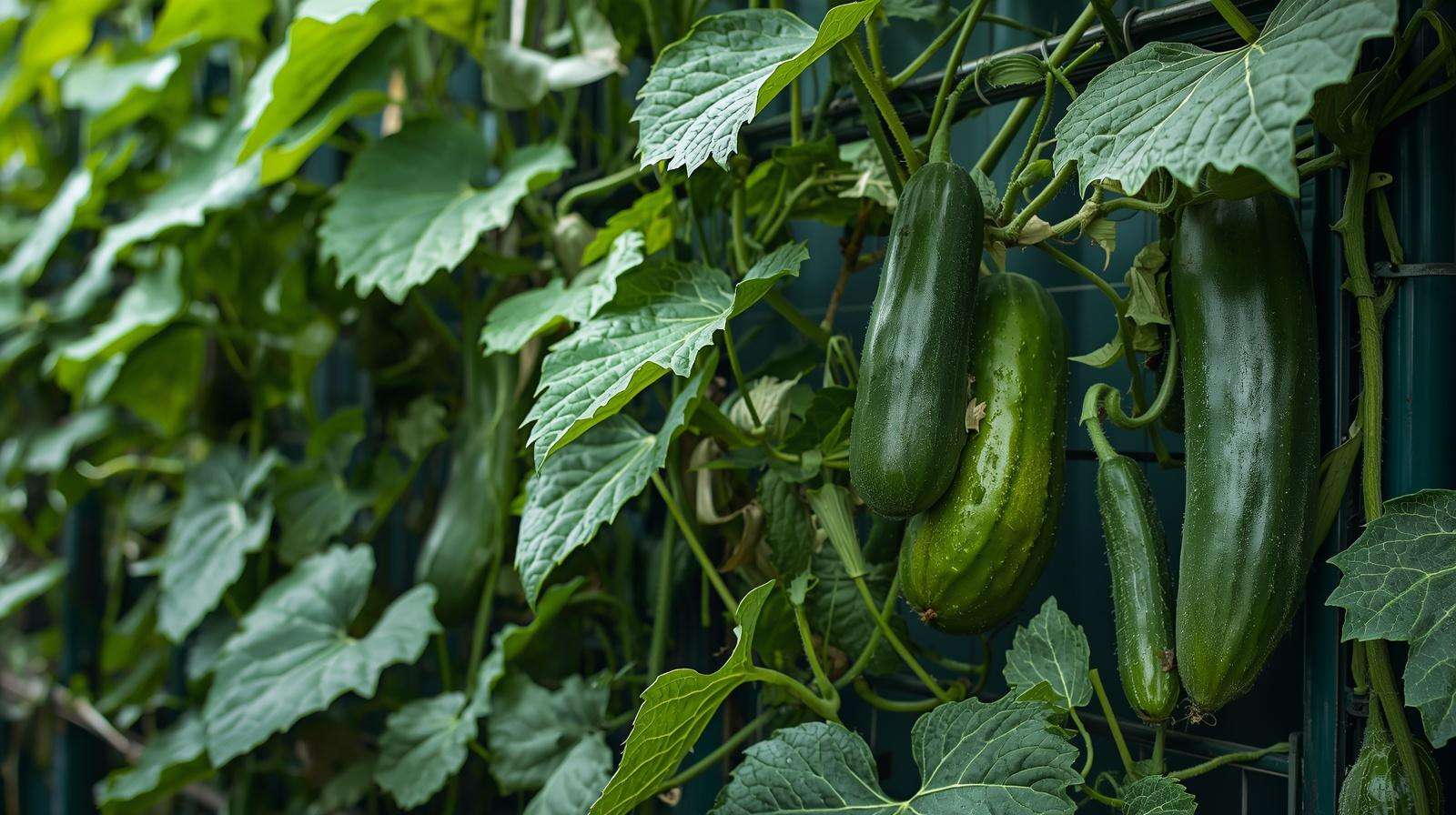
Weak trellises—made from flimsy string, thin bamboo, or poorly anchored posts—often bend, snap, or topple when vines reach 5–7 feet and heavy fruits develop. This leads to:
- Damaged stems and reduced photosynthesis
- Fruit touching soil, causing rot, misshapen growth, or soil-borne disease
- Poor air circulation, increasing susceptibility to powdery mildew, downy mildew, and bacterial wilt
- Difficult harvesting and higher labor
- Lower overall yields due to stress on the plant
Strong vertical trellises address these issues directly. Benefits include:
- Space efficiency: Grow 3–5 times more plants per square foot by going vertical.
- Improved plant health: Better airflow and sunlight reduce foliar diseases; fruits stay clean and straight.
- Higher yields and quality: Research from North Carolina State University demonstrated an average 100% increase in marketable yield with trellising, plus higher percentages of fancy-grade fruit and fewer culls from distortion or soil contact.
- Easier management: Harvest without bending; monitor for pests more effectively.
- Season extension: Vertical growth works exceptionally well in high tunnels or greenhouses.
For best results, aim for trellises at least 5–7 feet tall (above ground) with strong anchoring—at least 12–24 inches deep depending on soil and wind exposure. The structure must handle not just vine weight but also wind load and rain.
Best Materials for Building Stronger Vertical Trellises for Cucumbers
Choosing the right materials is the foundation of a long-lasting, collapse-resistant trellis. Prioritize rot-resistant, rust-resistant, or weatherproof options that can support mature vines loaded with fruit.
Here’s a practical comparison table of common materials:
| Material | Pros | Cons | Durability | Cost | Best For |
|---|---|---|---|---|---|
| Cedar or Redwood lumber | Natural rot resistance, attractive look, easy to work with | Can eventually weather, higher initial cost | High (5–10+ years) | Medium-High | Raised beds, aesthetic gardens |
| Galvanized steel T-posts or rebar | Extremely strong, reusable, wind-resistant | Industrial appearance, can rust over many years if not galvanized well | Very High | Low-Medium | Heavy-duty rows or arches |
| Cattle panels / Concrete reinforcing mesh (remesh) | Rigid, large openings for easy harvesting, supports heavy loads | Heavy to handle, sharp edges possible | Very High (10+ years) | Low-Medium | Arches, A-frames, long rows |
| Heavy-duty trellis netting (e.g., Hortonova-style polypropylene) | Lightweight, flexible, excellent grip for tendrils, UV-resistant | Needs strong frame support | Medium-High (3–7 years) | Low | Vertical walls, raised beds |
| Galvanized pipe or conduit | Strong and straight, good for permanent setups | Requires fittings, less flexible | High | Medium | Custom frames |
| Bamboo or untreated wood | Cheap, natural | Rot-prone, weaker under heavy loads | Low-Medium | Very Low | Temporary or light-duty |
| PVC pipe | Lightweight, inexpensive, easy to cut | Brittle in sun/heat, not as strong | Medium | Low | Small or temporary setups |
Expert Recommendation: For most home and small-farm gardeners seeking stronger vertical trellises, combine galvanized T-posts or cattle panels with heavy-duty netting or mesh. Avoid thin garden twine as a standalone support for mature cucumbers—it stretches and breaks. In humid or coastal areas, choose cedar/redwood or fully galvanized metal to fight rot and rust. Recycled materials like old fences or ladders can work if reinforced properly.
Always use UV-resistant zip ties, screws, or bolts for connections. For windy regions, add cross-bracing or guy wires.
Top Strong Vertical Trellis Designs for Cucumbers (With Pros, Cons & Suitability)
Several proven designs stand out for strength and performance. Each suits different garden sizes and needs.
A-Frame Trellises
A-frames are popular because they create a self-supporting structure with space underneath for shade-loving crops like lettuce early in the season. Build them with cattle panels bent into an A-shape or wooden frames covered in mesh/netting.
Pros: Stable, dual-sided planting, easy to disassemble. Cons: Limited height compared to vertical walls. Suitability: Small to medium gardens, raised beds. Ideal height: 4–6 feet.
Cattle Panel or Wire Mesh Trellises & Tunnels/Arches
Cattle panels (typically 16 ft x 50 in) are a favorite among serious gardeners for their unmatched strength. Bend one into an arch over a path or raised bed, or stand two vertically for a tunnel. Secure to T-posts with zip ties.
Pros: Extremely durable, handles heavy loads and wind well, large grid allows easy fruit access. Cons: Heavy to transport and install (best with two people). Suitability: Rows, pathways, or larger plots. Excellent for long-term use. Many gardeners report these lasting 10+ seasons.
Wooden Lattice or Obelisk Trellises
Construct from cedar or redwood 2x2s or 2x4s with lattice panels or attached mesh. Obelisks add ornamental appeal.
Pros: Attractive, customizable for raised beds. Cons: Requires more woodworking skill; wood can rot if not treated properly. Suitability: Decorative home gardens or containers.
Reinforced String or Twine Trellises
Use strong posts (T-posts or 4×4 cedar) with horizontal top and bottom wires, then run vertical or zigzag UV-resistant twine.
Pros: Budget-friendly, adjustable. Cons: Needs frequent tightening; less rigid than mesh. Suitability: When reinforced with sturdy anchors, great for vertical walls.
Archway & Tunnel Designs
Similar to cattle panel arches but can use multiple panels for longer tunnels.
Pros: Creates beautiful garden features, supports multiple crops. Cons: Higher material use. Suitability: Pathways or high-tunnel integration.
Teepee/Tipi or Lean-To Styles
Simple pole setups tied at the top.
Pros: Quick and cheap for small spaces. Cons: Less stable for very vigorous vines. Suitability: Beginners or temporary use.
Raised Bed-Specific Designs
Bolt-on or leg-mounted frames that fit directly on or beside beds for easy removal at season’s end.
Choose based on your space, budget, and climate. Cattle panel arches or reinforced mesh on T-posts often provide the best balance of strength and ease for most growers seeking durable results.
Step-by-Step DIY Guides to Build Stronger Vertical Trellises
Building your own stronger vertical trellises for cucumbers gives you full control over strength, size, and cost while ensuring the structure matches your exact garden layout. Below are three practical, battle-tested designs ranging from beginner-friendly to heavy-duty. All measurements assume standard 4×8 or 4×10 raised beds or row spacing.
Simple Reinforced String Trellis for Beginners (Budget Option – Under $30)
Materials (for one 8-ft wide trellis):
- Two 8-ft galvanized T-posts or 4×4 cedar posts
- One 8-ft length of heavy-gauge top wire or EMT conduit
- UV-resistant heavy-duty trellis twine or polypropylene string
- Zip ties, screw eyes or eye bolts, concrete anchors or ground stakes
- Hammer or post driver, level, measuring tape
Tools: Post driver, pliers, wire cutters
Step-by-Step Instructions:
- Drive the two end posts 24 inches into the ground (deeper in loose or windy soil) and 8 feet apart. Use a level to ensure they are plumb.
- Attach the top horizontal support (wire or conduit) securely between the posts at 6–7 feet height using eye bolts or zip ties.
- Install a bottom horizontal wire or board at ground level for stability.
- Run vertical strings every 6–8 inches from top to bottom, tying them tightly. For extra strength, create a zigzag pattern between top and bottom wires.
- Add diagonal guy wires or cross braces near the top if your area experiences strong winds.
- Test the structure by gently pulling on the strings — it should feel rigid.
This design works well for moderate vine loads and can be reinforced later with additional horizontal strings as plants grow. Expected lifespan: 3–5 seasons with proper storage.
Heavy-Duty Cattle Panel A-Frame or Arch Trellis (Most Recommended for Strength)
Cattle panels are one of the strongest and most popular choices for stronger vertical trellises for cucumbers because of their rigid 4×4-inch grid that easily supports heavy fruit without sagging.
Materials (for one 8–10 ft A-frame or arch):
- One or two 16-ft x 50-inch cattle panels (or concrete reinforcing mesh)
- Four 6–8 ft galvanized T-posts
- Heavy-duty zip ties or wire clips (at least 50)
- Optional: Landscape fabric or mulch for under the arch
Instructions:
- For an A-frame: Stand two T-posts 4–5 feet apart. Bend the cattle panel into an A-shape and secure the top peak with zip ties.
- Drive T-posts at each base corner, 24–30 inches deep. Attach the panel edges to the posts every 12 inches using zip ties.
- For an arch/tunnel: Bend one panel into a smooth arch over your raised bed or pathway. Secure both ends deeply into the ground with T-posts.
- Add a second panel overlapping if you need longer coverage.
- Reinforce high-wind areas with additional diagonal braces or guy lines anchored to ground stakes.
This design rarely fails under full cucumber load and creates usable space underneath for low-growing companions. Many gardeners report using the same panels for 8–12 years.
Wooden Frame with Mesh/Netting for Raised Beds (Aesthetic & Durable)
Materials:
- Four 8-ft cedar 2x4s (or pressure-treated if budget is tight)
- One sheet of heavy-duty trellis netting or 4×8 concrete remesh
- Galvanized screws/bolts, corner brackets, post anchors
- Optional: 2×2 cross pieces for extra rigidity
Instructions:
- Build a rectangular frame: Cut two vertical legs at 7–8 ft and two horizontal pieces at bed width.
- Assemble the frame using corner brackets and screws for strong joints.
- Attach the frame to raised bed sides with heavy bolts or use post anchors driven into soil beside the bed.
- Stretch and staple or zip-tie the netting/mesh tightly across the frame. For extra strength, add horizontal support wires every 2 feet.
- Seal cut ends of wood with outdoor sealant for longer life.
This design looks attractive in ornamental vegetable gardens and can be disassembled for winter storage.
Pro Tip for All Builds: In tropical or high-rainfall areas like many parts of Bangladesh, elevate the base slightly and use fully galvanized or cedar materials to resist rapid rot and rust. Always test the completed trellis by shaking it firmly before planting.
Planting, Training & Maintaining Cucumbers on Vertical Trellises
Success with stronger vertical trellises depends as much on plant management as on the structure itself.
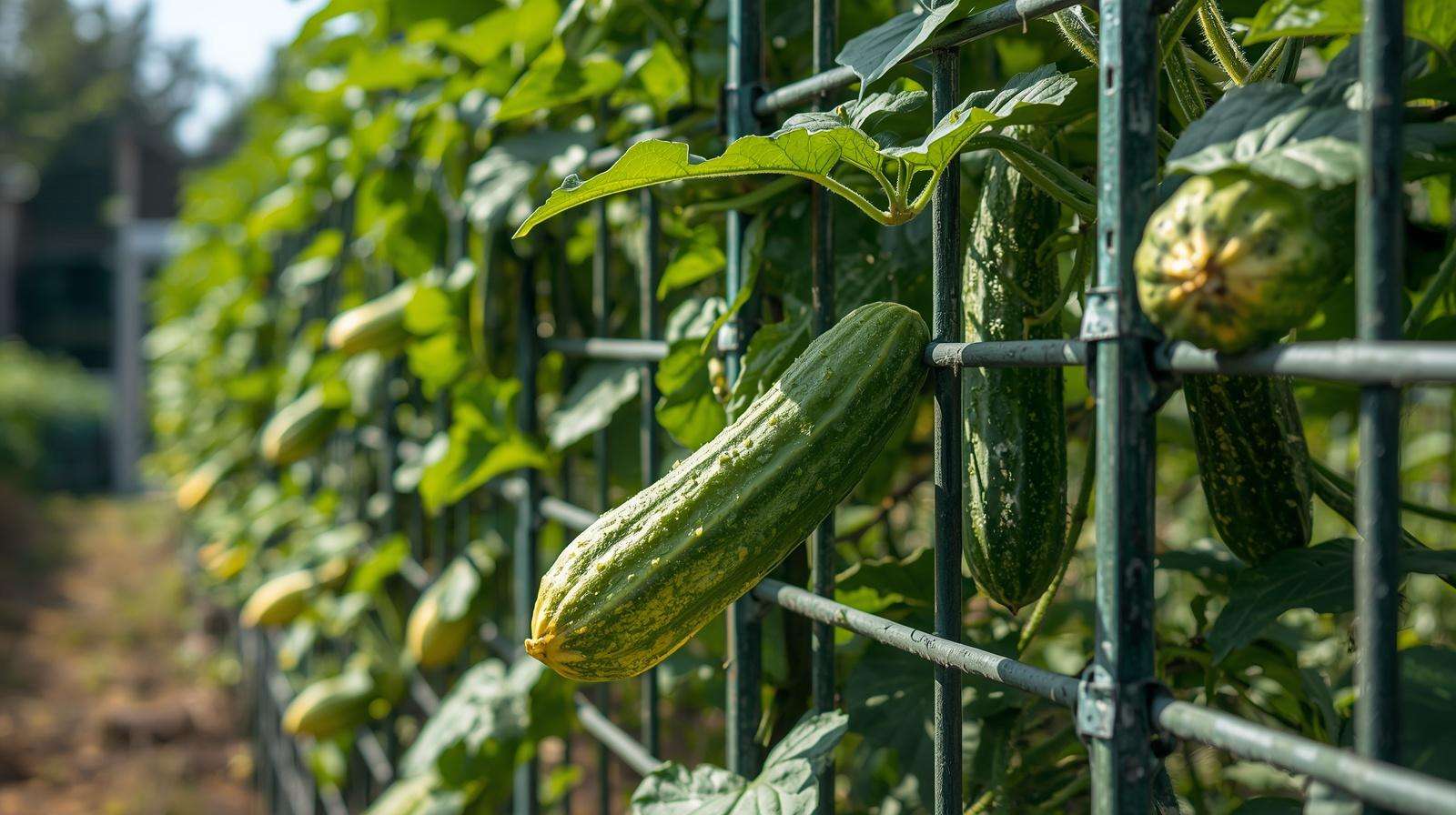
Choosing Varieties: Select vigorous vining types such as ‘Marketmore 76’, ‘Straight Eight’, ‘Ashley’, or disease-resistant hybrids like ‘Diva’ or ‘Suyo Long’. Avoid bush varieties for trellising as they don’t climb well.
Spacing and Planting:
- Plant seedlings or direct-sow seeds 12–18 inches apart along the base of the trellis (much closer than ground growing).
- Plant on the south side in cooler climates for maximum sun or adjust according to your sunlight pattern.
- Amend soil with compost and ensure excellent drainage — vertical systems dry out faster.
Training Techniques:
- Begin training when vines reach 12–18 inches. Gently guide tendrils toward the trellis strings or mesh.
- For single-stem training (maximum height and yield per plant): Remove side shoots (suckers) until the vine reaches the top, then allow branching.
- Umbrella training: Let the main vine climb to the top, then allow 2–4 lateral branches to cascade down for higher fruit production.
- Prune selectively to maintain airflow — remove lower leaves that touch the ground or show early disease signs.
- Check and re-tie vines weekly during rapid growth periods.
Ongoing Maintenance:
- Water deeply at the base (avoid wetting foliage) to reduce fungal pressure.
- Mulch heavily to retain soil moisture and suppress weeds.
- Fertilize with balanced organic fertilizer every 3–4 weeks or use compost tea.
- Monitor for cucumber beetles, squash bugs, and aphids — the open structure makes scouting easier.
- Harvest every 1–2 days once fruits start sizing. Frequent picking encourages continuous production.
Proper training on a strong trellis keeps plants upright, reduces disease, and can extend the harvest window by weeks.
Common Problems with Cucumber Trellises & How to Fix Them
Even strong setups can face issues. Here’s how to troubleshoot the most common ones:
Problem: Trellis leaning or collapsing in wind/rain Solution: Drive posts deeper (24–36 inches), add diagonal braces, or install guy wires anchored with ground screws. In very windy spots, use concrete footings for permanent installations.
Problem: Vines outgrowing the trellis Solution: Choose taller designs (7+ ft) or extend height with additional panels. Prune aggressively or train in an umbrella pattern to keep growth contained.
Problem: Fruit stuck in small-mesh netting Solution: Use cattle panels or netting with at least 4–6 inch openings. Hand-harvest carefully or switch to larger-grid remesh.
Problem: Wood rotting or metal rusting Solution: Select naturally rot-resistant cedar/redwood or high-quality galvanized materials. Apply sealant annually and store disassembled frames indoors during off-season.
Problem: Poor airflow leading to powdery mildew Solution: Space plants properly, prune lower leaves, and ensure the trellis allows good light penetration. Choose resistant varieties and apply organic fungicides early if needed.
Quick Troubleshooting Table:
- Symptom: Sagging strings → Add more horizontal supports or tighten/replace
- Symptom: Fruit on ground → Train vines higher and prune lower growth
- Symptom: Bent posts → Upgrade to thicker T-posts or add cross-bracing
Addressing these early keeps your stronger vertical trellises performing season after season.
Tips to Maximize Yields with Stronger Vertical Trellises
Vertical growing unlocks higher productivity when combined with smart practices:
- Intercropping: Plant quick-growing crops like lettuce, radish, or spinach under the trellis while cucumbers are young.
- Nutrition: Maintain consistent potassium and calcium levels to prevent blossom end rot and support heavy fruit set.
- Pollination: Vertical flowers are more visible to bees; hand-pollinate if insect activity is low.
- Succession Planting: Start new seedlings every 3–4 weeks to extend harvest.
- Light Management: Orient trellises north-south for even sun exposure on both sides.
- Yield Potential: With strong supports, good varieties, and proper care, expect 2–5 times more fruit per square foot compared to sprawling plants. Many gardeners report 50–100+ cucumbers per healthy vine on well-built trellises.
Real-world testing in various conditions shows that combining cattle panel arches with diligent training consistently delivers the highest quality and quantity.
Buying vs. Building: When to Purchase Pre-Made Trellises
Building your own usually offers better strength and customization at lower long-term cost. However, pre-made options save time:
Look for commercial trellises with:
- Heavy-gauge steel or treated wood frames
- At least 5–6 ft height
- Weight capacity ratings (if listed)
- UV-stabilized netting or welded wire
Popular options include A-frame kits, wall-mounted cucumber trellises, and arch systems. Compare total cost over 5 years — a well-built DIY cattle panel trellis often outperforms store-bought versions in durability.
Seasonal Maintenance & Storage for Long-Lasting Trellises
At season’s end:
- Remove all vines and debris to prevent disease carryover.
- Clean mesh/netting with a mild bleach solution or pressure washer.
- Inspect for damage and repair or replace parts.
- Disassemble removable frames and store in a dry shed or garage.
- Oil metal parts lightly to prevent rust.
Movable trellises also allow easy crop rotation, improving soil health over time.
Final defination
Stronger vertical trellises for cucumbers are one of the smartest investments you can make in your vegetable garden. By choosing durable materials, building or selecting the right design, and following proper planting and training techniques, you’ll enjoy healthier plants, cleaner straighter fruit, easier harvesting, and dramatically higher yields.
The designs and tips shared here — refined through years of real-world growing and informed by university extension recommendations — will help you create supports that stand strong season after season, even under heavy loads and challenging weather.
Start with a simple reinforced design if you’re new to trellising, or go straight to cattle panel arches for maximum strength and longevity. Either way, you’ll never go back to letting cucumbers sprawl on the ground.
Try one of these stronger vertical trellises this season and watch your cucumber harvest transform. Share your results or favorite design modifications in the comments below — I’d love to hear how they perform in your garden.
Happy growing!
Frequently Asked Questions (FAQs)
What is the best height for a cucumber trellis? Aim for 5–7 feet above ground. Taller structures (up to 8 feet) work well with vigorous varieties and umbrella training.
Can cattle panels be used for cucumbers? Yes — they are among the strongest and most recommended options. The 4×4-inch grid provides excellent support and easy access for harvesting.
How do I prevent my trellis from falling over? Drive posts at least 24 inches deep, add cross-bracing or guy wires, and choose heavy materials like galvanized T-posts or cattle panels.
What materials last the longest? Galvanized steel (T-posts and cattle panels) and naturally rot-resistant cedar or redwood combined with UV-stabilized netting offer the best longevity.
Do bush cucumbers need trellising? Bush types generally do not require trellising, though light support can keep fruit cleaner in rainy conditions.
How much yield increase can I expect from vertical growing? Most gardeners and extension trials report 50–100% or more increase in marketable fruit, with better quality and less waste.