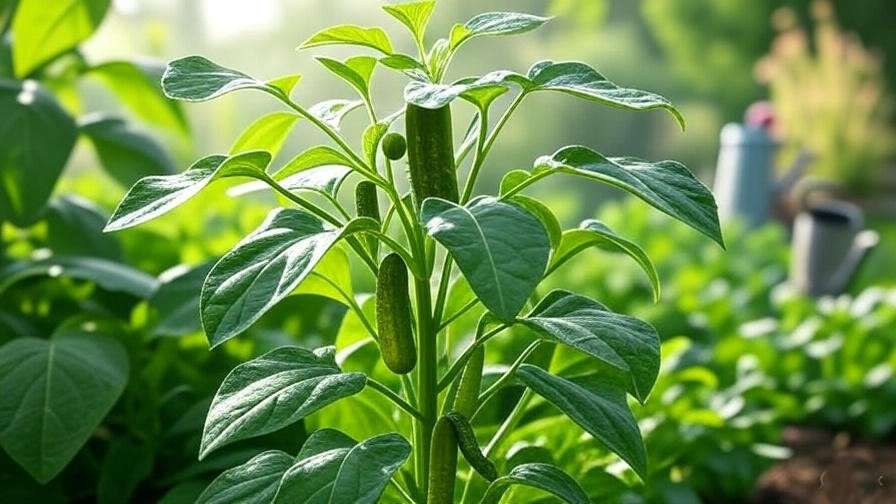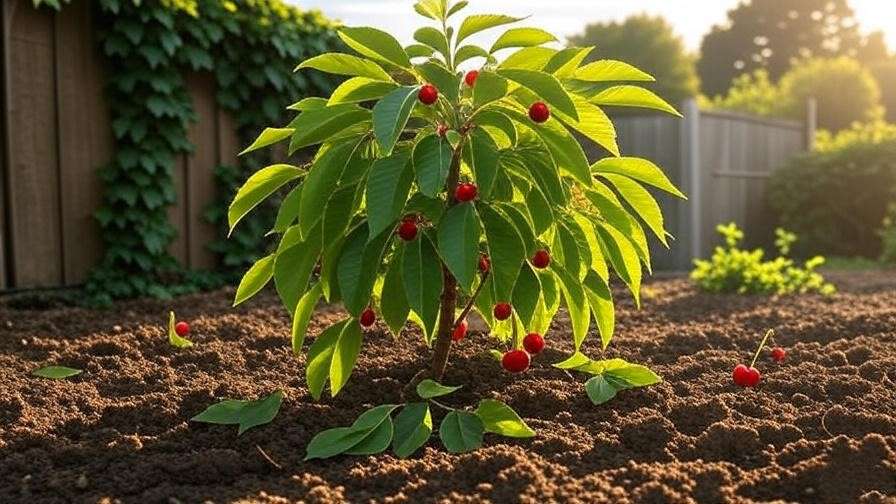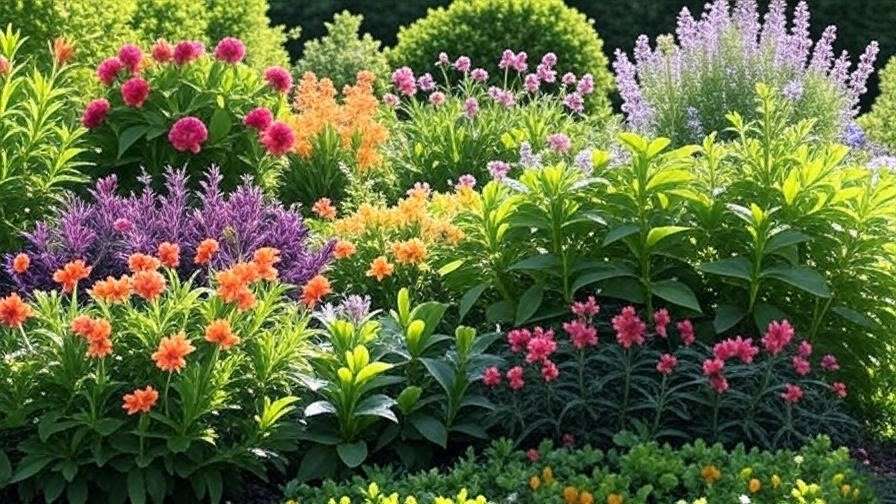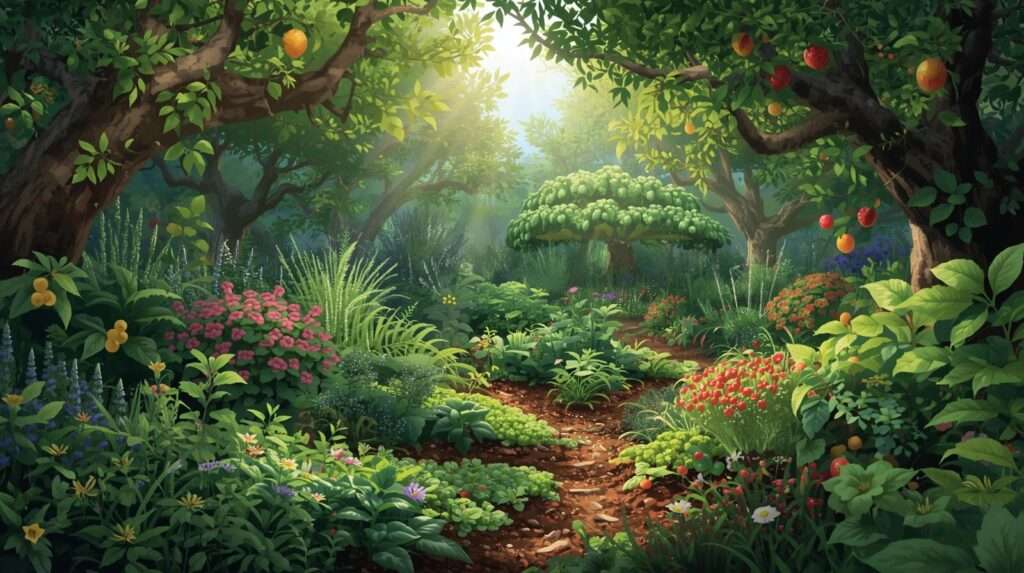
Imagine working in your garden for just a few hours per month instead of several hours every week, yet still harvesting fresh fruits, nuts, berries, herbs, and vegetables year after year — for decades. For most gardeners trapped in the cycle of annual planting, constant weeding, watering, and soil rebuilding, this sounds like a dream. The good news is that it’s entirely achievable through the creation of a Perennial Food Forest.
A perennial food forest is a carefully designed, multi-layered edible ecosystem that mimics a natural forest while providing abundant, diverse, and nutritious food with significantly less ongoing maintenance than a traditional vegetable garden. By focusing primarily on perennial plants — those that live and produce for many years — you can build a sustainable, self-regulating garden that improves over time rather than wearing you out.
In this comprehensive guide, I’ll walk you through everything you need to know to successfully design and establish your own perennial food forest. Drawing from years of practical experience in permaculture design and edible landscape systems, this article goes far beyond basic introductions. You’ll learn the seven-layer system, smart plant selection strategies, step-by-step implementation, long-term management techniques, and real-world examples that actually work.
Whether you have a small backyard, a suburban lot, or a larger piece of land, this guide will help you create a low-maintenance edible garden that delivers reliable harvests while regenerating soil, supporting biodiversity, and increasing your food security for generations.
What Is a Perennial Food Forest?
A perennial food forest is an intentional edible landscape designed to function like a young woodland or forest ecosystem, but with the primary goal of producing food for humans while supporting wildlife and improving the environment.
Unlike a traditional annual vegetable garden that requires yearly replanting, or even a standard orchard that focuses mainly on fruit trees, a food forest incorporates perennial polyculture — growing many different edible plants together in mutually beneficial relationships. Most plants in a food forest are perennials, meaning they return year after year without needing to be replanted.
The concept draws inspiration from ancient indigenous food systems and was modernized through permaculture principles pioneered by Bill Mollison and David Holmgren. In a well-designed perennial food forest, trees, shrubs, herbs, vines, and ground covers work together to create a resilient, productive, and beautiful system.
Key characteristics include:
- Dominance of perennial plants (fruit and nut trees, berries, herbs, edible perennials)
- Multiple vertical layers of vegetation
- High biodiversity
- Closed-loop nutrient cycling
- Minimal soil disturbance once established
- Natural pest and disease regulation through companion planting and guilds
Perennial Food Forest vs. Annual Gardening
Traditional annual gardening is labor-intensive. You till the soil, plant seeds or seedlings each spring, fight weeds all season, water frequently, and start over the next year. Yields are often high in the short term but come at a high cost in time and resources.
In contrast, a perennial food forest requires more planning and effort in the first 2–3 years, but dramatically reduces labor after establishment. Once mature, you primarily harvest, lightly prune, mulch occasionally, and observe — letting the system do most of the work. Many food forests continue producing abundantly for 30, 50, or even 100+ years.
Core Principles of Food Forest Design
Successful food forests are built on ecological principles:
- Observe and Interact: Spend time understanding your land before planting.
- Stack Functions: Every plant should serve multiple purposes (food, medicine, nitrogen fixation, pollinator attraction, soil improvement, etc.).
- Maximize Diversity: Diversity creates resilience against pests, diseases, and climate extremes.
- Build Guilds: Group plants that support each other in beneficial “guilds.”
Why Grow a Perennial Food Forest? Key Benefits
The decision to create a perennial food forest solves several major problems faced by modern gardeners and homeowners:
1. Dramatically Lower Maintenance Once established, food forests require 70–90% less labor than annual gardens. No yearly tilling or replanting. Natural mulching from leaf drop reduces weeding.
2. Long-Term Productivity While annual gardens produce for a few months, a well-designed food forest can yield food for decades. Many fruit and nut trees start producing within 3–7 years and continue for 30–80 years or more.
3. Superior Soil Health Perennial root systems build soil structure, prevent erosion, and foster beneficial microbial life. Over time, the forest floor becomes rich, dark, and highly fertile without synthetic fertilizers.
4. Climate Resilience Diverse, multi-layered systems are better at handling drought, heavy rain, heat waves, and cold snaps compared to monoculture gardens.
5. Increased Biodiversity and Ecosystem Services Food forests provide habitat for birds, beneficial insects, and pollinators, which in turn help control pests naturally.
6. Enhanced Food Security and Nutrition You gain access to a wide variety of nutrient-dense foods (fruits, nuts, berries, leafy greens, herbs) that are fresher and often more nutritious than store-bought produce.
7. Economic and Environmental Wins Lower long-term costs for food and garden inputs. Significant carbon sequestration and positive environmental impact.
The 7 Layers of a Perennial Food Forest
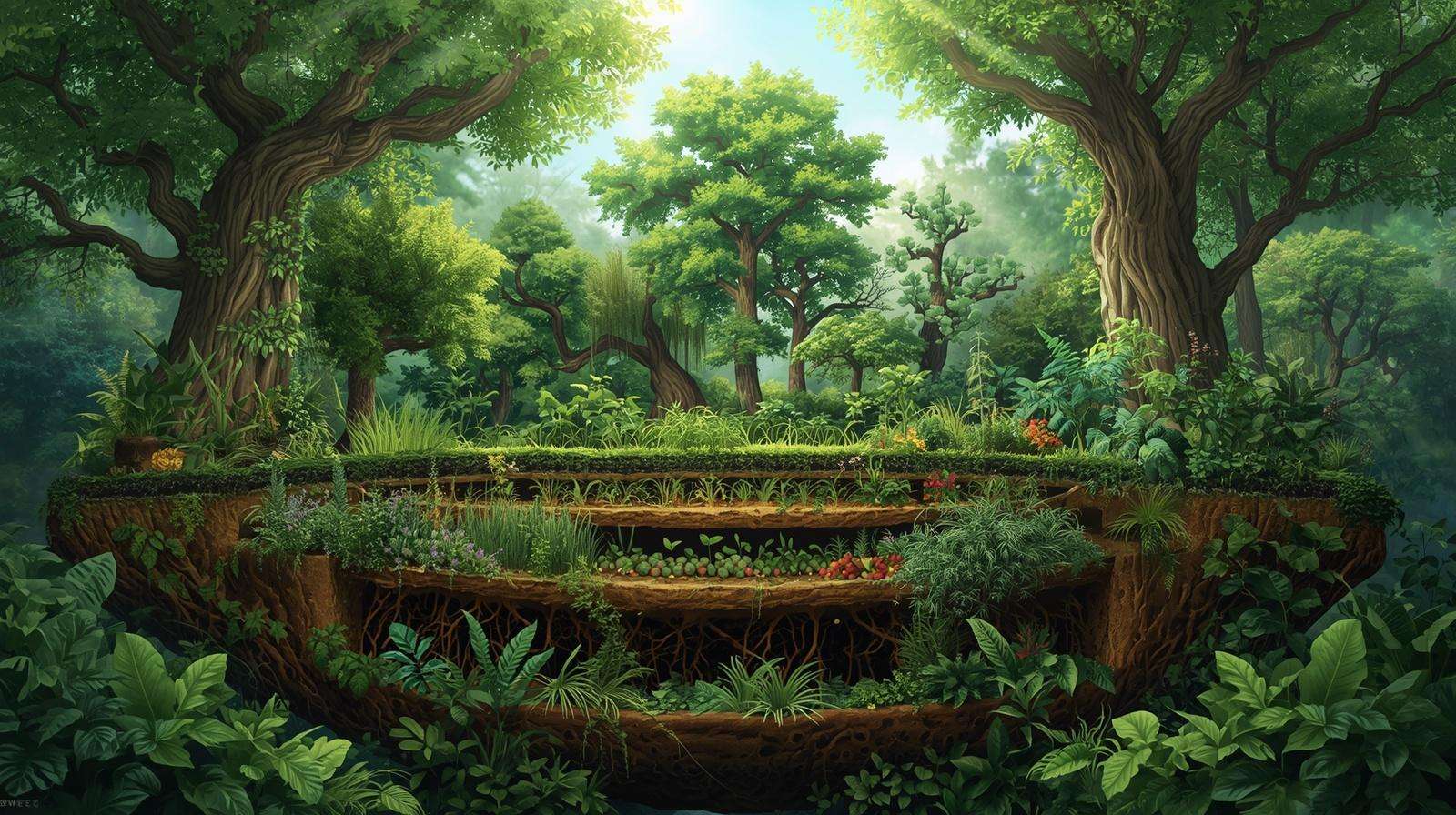
The most effective way to design a productive perennial food forest is by using the classic 7-layer system. This vertical stacking maximizes sunlight, space, and resources while creating beneficial relationships between plants. Understanding these layers is essential for building a thriving, low-maintenance edible ecosystem.
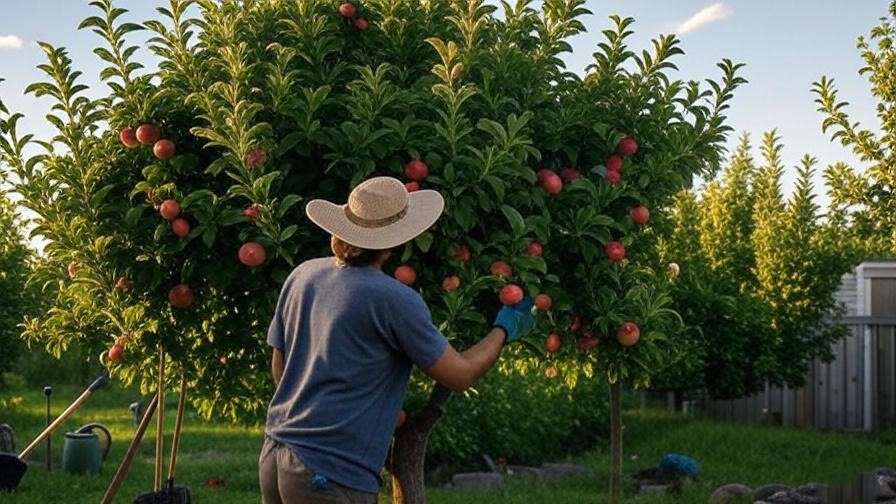
1. Canopy Layer (Tall Trees) This is the highest layer, consisting of large, long-lived fruit and nut trees that form the backbone of the food forest. Examples include apple, pear, walnut, chestnut, oak (for acorns), and mulberry. These trees provide shade, wind protection, and substantial yields once mature. Choose hardy, disease-resistant varieties suited to your USDA zone.
2. Sub-Canopy / Understory Layer (Smaller Trees) Smaller trees that thrive in partial shade cast by the canopy. Common choices include plum, cherry, apricot, peach, serviceberry, and dwarf fruit trees. This layer fills the space between tall trees and provides earlier harvests while the canopy trees are still growing.
3. Shrub Layer Berry bushes and other productive shrubs form this layer. Excellent options include blueberries, raspberries, blackberries, currants, gooseberries, elderberry, and hazelnut. Shrubs are highly productive in a relatively small space and provide food during different seasons.
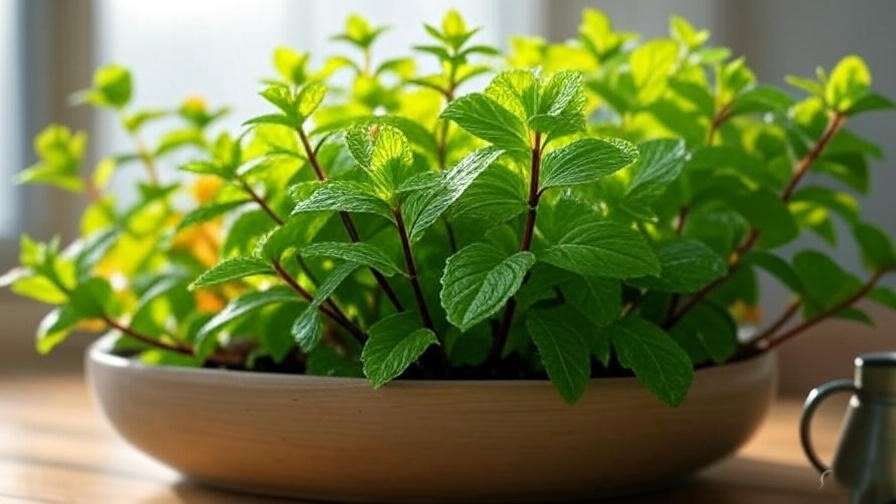
4. Herbaceous Layer This layer includes perennial vegetables, herbs, and flowering plants that die back in winter but regrow each spring. Popular choices are asparagus, rhubarb, artichoke, comfrey, mint family herbs (oregano, thyme, lemon balm), and edible flowers like nasturtium and calendula. Many also serve as dynamic accumulators or pest repellents.
5. Ground Cover Layer Low-growing plants that protect the soil, suppress weeds, and retain moisture. Good options include strawberries, clover, creeping thyme, oregano, sweet potato (in warmer zones), and native ground covers. This layer is crucial for soil health and preventing erosion.
6. Root / Underground Layer Edible roots, bulbs, and tubers that grow underground. Examples include Jerusalem artichoke (sunchoke), garlic, onions, potatoes (perennial varieties), daffodils (for beauty and pest control), and medicinal roots like burdock or horseradish. These plants help break up soil and bring nutrients up from deeper layers.
7. Vine / Vertical Layer Climbing plants that use trees and shrubs as natural trellises. Productive vines include hardy kiwi, passionfruit (in warmer climates), grapes, climbing berries (such as tayberry), and beans (perennial varieties where suitable). This layer efficiently uses vertical space.
How the Layers Work Together Plants in a food forest are often grouped into “guilds” — communities of species that support one another. A typical guild might include a central fruit tree surrounded by nitrogen-fixing plants, pollinator attractors, pest repellents, and ground covers. This creates a self-sustaining mini-ecosystem.
Planning and Designing Your Perennial Food Forest
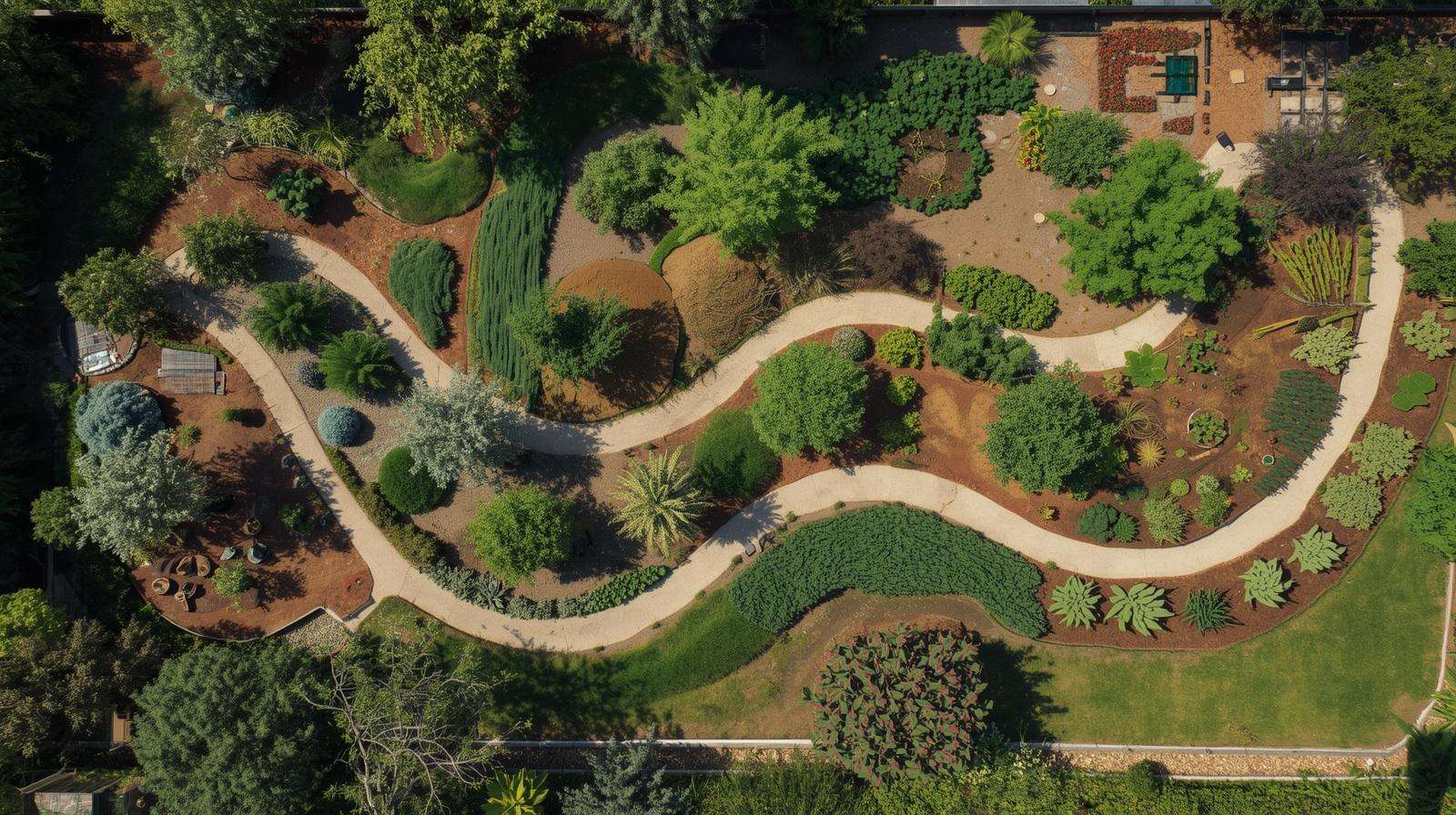
Successful food forests begin with thoughtful planning rather than impulsive planting.
Step-by-Step Design Process:
- Site Assessment Evaluate your land thoroughly: USDA zone, climate patterns, sunlight hours, soil type and pH, water availability and drainage, slope and wind patterns, and existing vegetation. This step prevents costly mistakes later.
- Determine Size and Scale Start small if you’re a beginner — even 1/10th of an acre can create a productive food forest. Larger properties allow for more extensive canopy layers.
- Zone Mapping (Permaculture Zones) Design using permaculture zones:
- Zone 1: High-maintenance areas closest to the house (herbs, salad greens)
- Zone 2: Main food forest area (trees, shrubs, berries)
- Zone 3–5: Lower maintenance or wilder areas
- Create a Layout Use paper, grid sheets, or software like SketchUp, QGIS, or free permaculture design tools to map tree placement, pathways, and water flow. Consider sun angles and mature tree size to avoid overcrowding.
Budgeting and Phased Implementation Food forests can be established all at once or in phases. Phased planting (starting with canopy and ground cover, then filling in shrubs and herbs) is often more manageable and cost-effective for most homeowners.
Best Plants for Your Perennial Food Forest
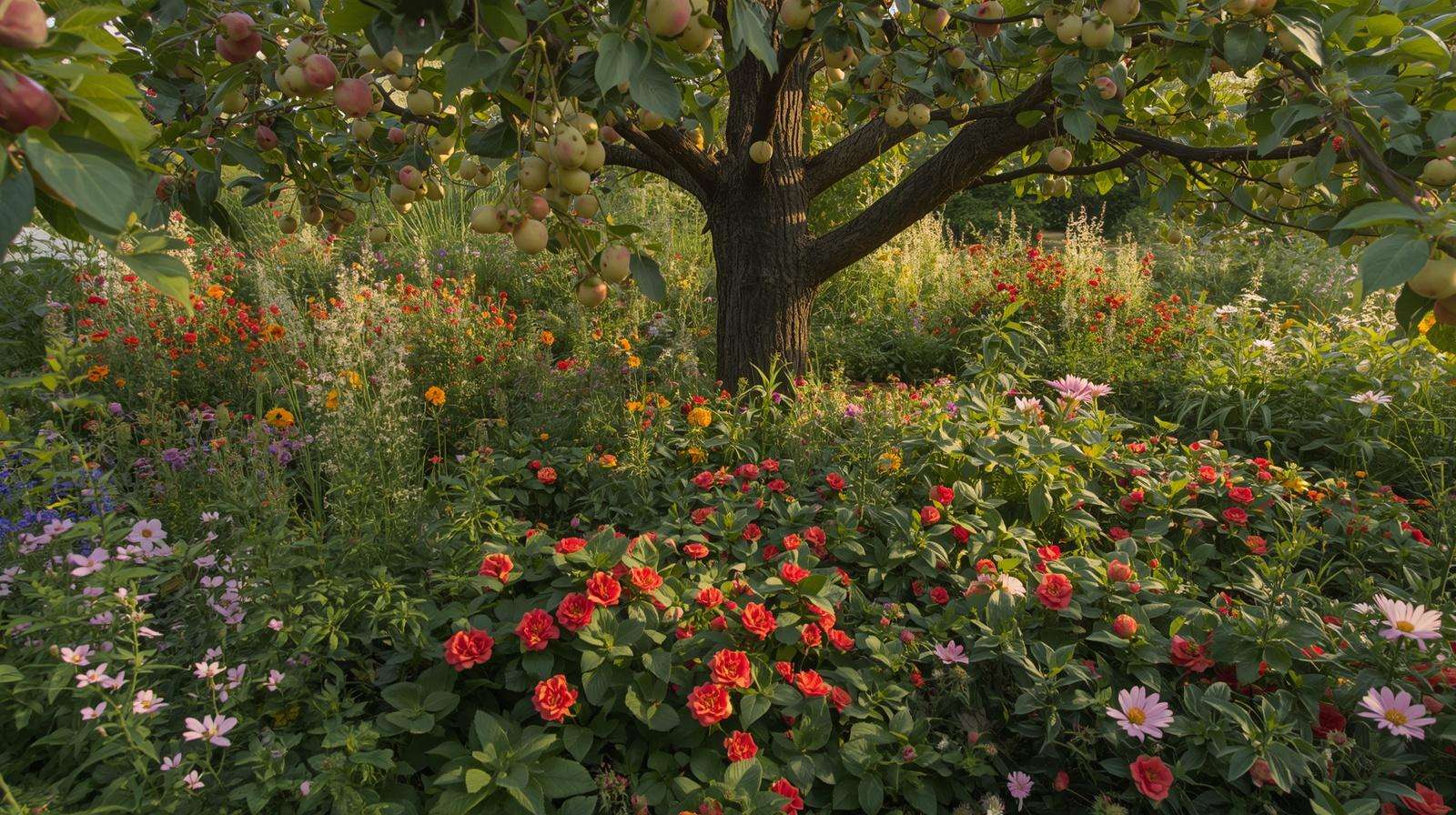
Plant selection is critical for long-term success. Always prioritize species and varieties adapted to your local climate and USDA zone.
Recommended Plants by Layer:
- Canopy: Apple, Pear, Plum, Walnut, Chestnut, Mulberry, Persimmon (warmer zones)
- Sub-Canopy: Dwarf fruit trees, Serviceberry, Pawpaw, Fig
- Shrub: Blueberry, Raspberry, Currant, Gooseberry, Elderberry, Hazelnut
- Herbaceous: Asparagus, Rhubarb, Comfrey, Egyptian Walking Onion, Perennial Kale
- Ground Cover: Strawberries, White Clover, Creeping Thyme, Oregano
- Root Layer: Jerusalem Artichoke, Garlic, Perennial Onions
- Vines: Hardy Kiwi, Grapes, Passionfruit (suitable climates)
Nitrogen Fixers and Support Plants Include plants like alder, sea buckthorn, lupine, and clover to naturally fertilize the soil. Pollinator-friendly plants (borage, echinacea, bee balm) attract beneficial insects that help control pests.
Plant Guild Examples A classic apple tree guild might include: Apple tree (center), comfrey (nutrient accumulator), daffodils (pest deterrent), strawberries (ground cover), and chives (pest repellent and edible).
Step-by-Step Guide to Establishing Your Food Forest
Creating a successful perennial food forest requires a structured approach. Here’s a practical, proven step-by-step guide based on real-world experience:
1. Site Preparation (The Foundation) Start with soil improvement rather than planting immediately. Use the sheet mulching technique (also called lasagna gardening):
- Mow or cut down existing vegetation.
- Lay down cardboard or newspaper to smother weeds.
- Add a thick layer of compost, aged manure, and wood chips.
- Top with straw or leaf mulch.
This builds rich soil biology without heavy digging and suppresses weeds effectively.
2. Planting the Canopy and Structural Elements First Plant your largest trees (canopy layer) first while they are still small. This gives them time to establish before competition increases. Space trees according to their mature size — typically 15–30 feet apart depending on variety.
3. Establish Guilds Around Each Tree Around each main tree, plant a guild of supporting species:
- Nitrogen fixers nearby
- Dynamic accumulators (like comfrey) for nutrient cycling
- Ground covers to protect soil
- Pollinator plants and pest repellents
4. Planting Timing In most climates, plant trees and shrubs in early spring or fall when temperatures are mild and rainfall is more reliable. Herbaceous perennials and ground covers can be added in the first or second year.
5. Initial Irrigation and Mulching Young plants need consistent moisture for the first 2–3 years. Install drip irrigation or soaker hoses during establishment. Maintain a deep mulch layer (4–6 inches) to retain moisture and suppress weeds. Keep mulch away from direct contact with tree trunks to prevent rot.
Year-by-Year Timeline
- Year 1: Focus on soil building, planting canopy trees, shrubs, and ground covers. Expect minimal harvest.
- Year 2: Add more shrubs, herbaceous plants, and vines. First light harvests begin.
- Year 3–5: System starts becoming productive. Fill gaps and adjust as plants grow.
- Year 5+: Full productivity with significantly reduced maintenance.
Maintenance and Long-Term Management
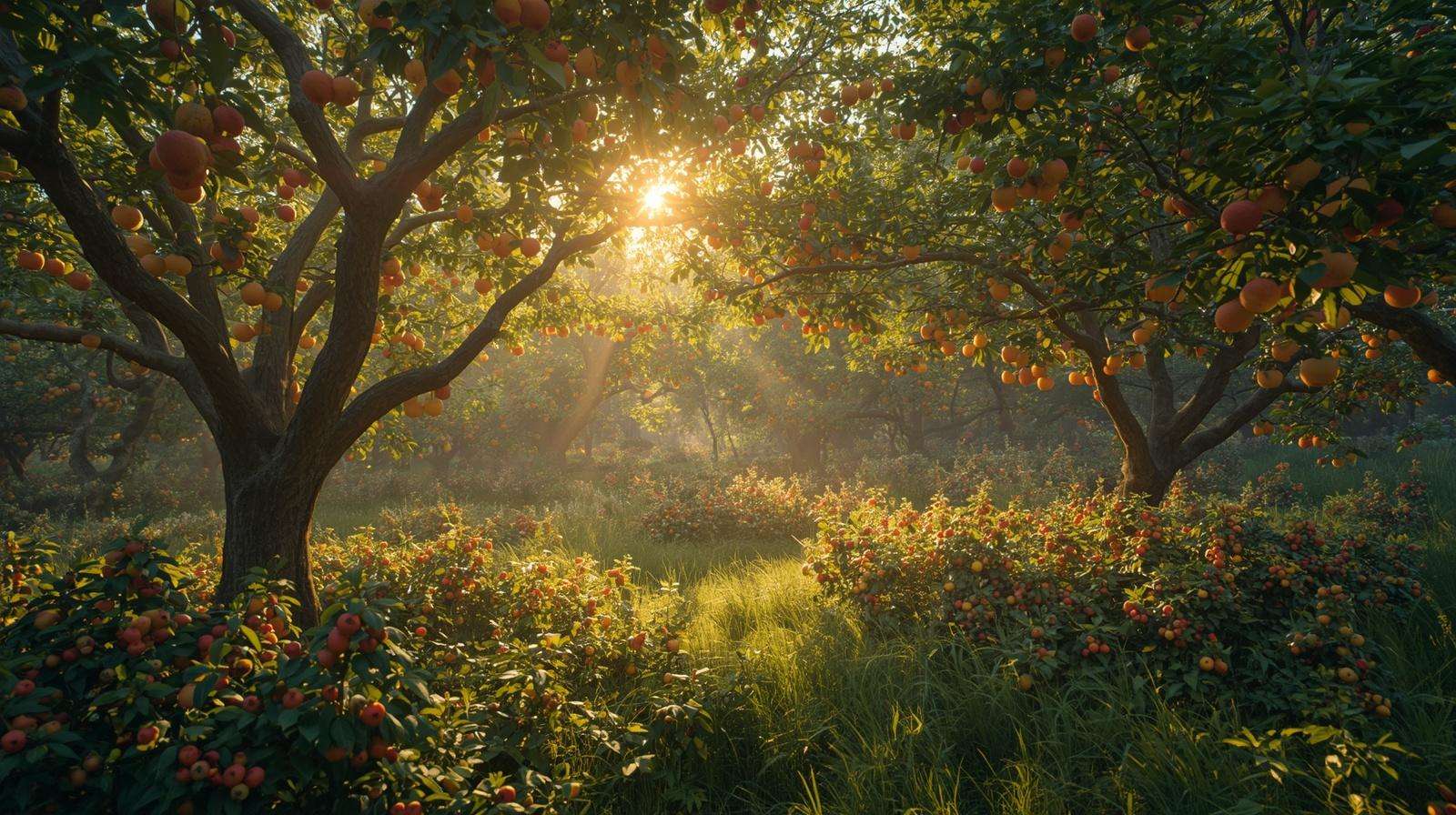
One of the biggest advantages of a perennial food forest is its low-maintenance nature once established. However, smart management in the early years determines long-term success.
Key Maintenance Practices:
- Mulching: Reapply organic mulch annually to feed soil life and retain moisture.
- Pruning: Light, strategic pruning to maintain shape, improve airflow, and encourage fruit production. Avoid heavy pruning that stresses trees.
- Harvesting: Regular harvesting encourages more production and prevents pest issues.
- Observation: Spend time weekly observing plant health, pest activity, and growth patterns.
Natural Pest and Disease Management Use companion planting, biodiversity, and beneficial insects rather than chemicals. Introduce birdhouses, bat houses, and insect hotels to encourage natural predators. Healthy, diverse systems are naturally more resistant to outbreaks.
Soil Fertility Maintenance Avoid synthetic fertilizers. Rely on:
- Chop-and-drop mulching (cutting comfrey and other plants and leaving them as mulch)
- Nitrogen-fixing plants
- Compost tea or worm castings occasionally
- Leaf litter from the canopy
Succession Planning As the food forest matures, some plants may become overcrowded. Thin or transplant weaker specimens and introduce new species that thrive in shadier conditions as the canopy closes.
Common Mistakes to Avoid:
- Planting everything too close together in the beginning
- Choosing high-maintenance plants that don’t suit your climate
- Neglecting mulch and watering during the critical establishment phase
- Expecting heavy yields too quickly (patience is essential)
Real-World Examples and Case Studies
Example 1: Small Backyard Food Forest (1/10 Acre) A family in USDA Zone 7 transformed their suburban backyard by planting 6 fruit trees, 12 berry bushes, and filling lower layers with strawberries, asparagus, herbs, and ground covers. After 4 years, they harvest apples, pears, blueberries, raspberries, and fresh herbs with only 2–3 hours of maintenance per month.
Example 2: Medium-Scale Suburban Project (0.5 Acre) In Zone 6, a homeowner established a food forest using mostly native and hardy perennials. By including nitrogen fixers and diverse guilds, the system became highly resilient during drought years. They now produce enough fruit and berries to share with neighbors and preserve for winter.
Example 3: Community Food Forest Several successful community-led food forests (such as those in Seattle and Baltimore) demonstrate how these systems can provide food for many families while creating valuable public green spaces and educational opportunities.
These examples show that perennial food forests are adaptable to different scales and climates when designed thoughtfully.
Frequently Asked Questions (FAQs)
How long does it take for a perennial food forest to produce food? Most systems begin light production in Year 2–3, with meaningful yields starting around Year 4–5. Full productivity often arrives between Years 7–10 as trees mature.
Can I create a food forest in a small backyard? Yes. Even a 20×30 foot space can support a mini food forest using dwarf trees, shrubs, and intensive layering. Many successful small-scale examples exist.
What is the best USDA zone for a perennial food forest? Food forests can be created in almost any zone from 3 to 10. Zones 5–9 tend to offer the widest range of productive perennial options, but hardy species work well in colder zones too.
How much maintenance does a food forest really require? After establishment (3–5 years), most well-designed food forests need only 4–10 hours per month for a typical backyard system — far less than a traditional vegetable garden.
Is a perennial food forest suitable for beginners? Yes, but start small. Beginners should focus on learning basic permaculture principles and begin with 5–10 plants before expanding.
Do food forests work in dry or arid climates? They can, but require careful plant selection (drought-tolerant species), heavy mulching, and efficient water management such as swales or keyhole beds.
Conclusion
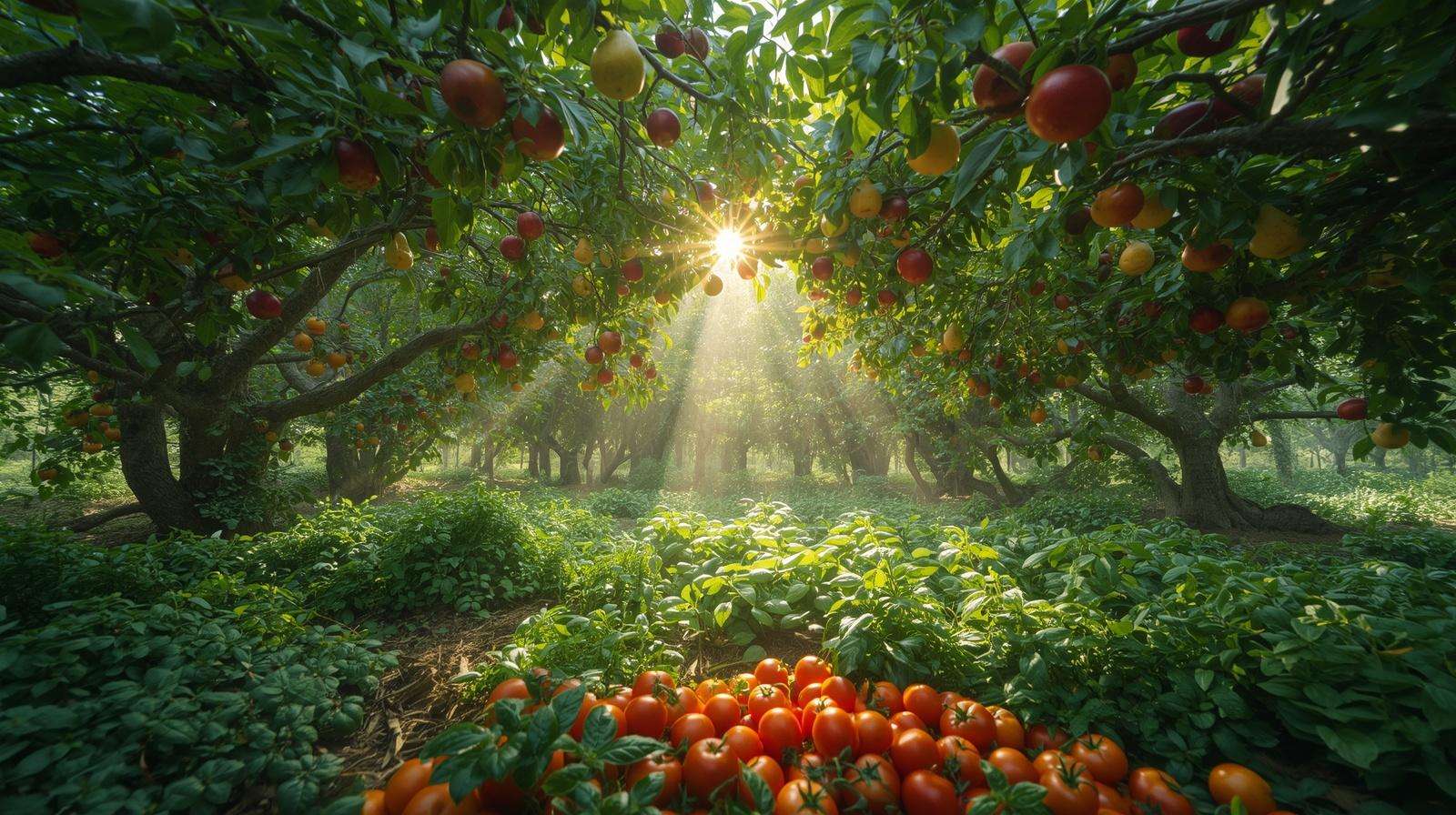
A perennial food forest offers one of the most elegant solutions to the challenges of modern gardening — delivering abundant, nutritious food while requiring far less time, effort, and resources than traditional methods. By thoughtfully designing with the 7 layers, selecting appropriate plants for your climate, and allowing nature to do much of the work, you can create an edible garden that feeds your family for decades.
The journey requires patience and planning in the beginning, but the rewards — healthy soil, biodiversity, food security, and a beautiful, resilient landscape — are well worth the investment.
Start today by assessing your site and dreaming about what you want your food forest to become. Even beginning with a single guild around one fruit tree can set you on the path to a thriving perennial food forest.
If you’re ready to begin, share your USDA zone, garden size, or specific challenges in the comments below. I’d be happy to offer more tailored suggestions for your location.
For more practical guidance, explore our related articles on soil building techniques, guild design, and best perennial plants for your region.
Here’s to building gardens that feed us for a lifetime — naturally, sustainably, and with joy.