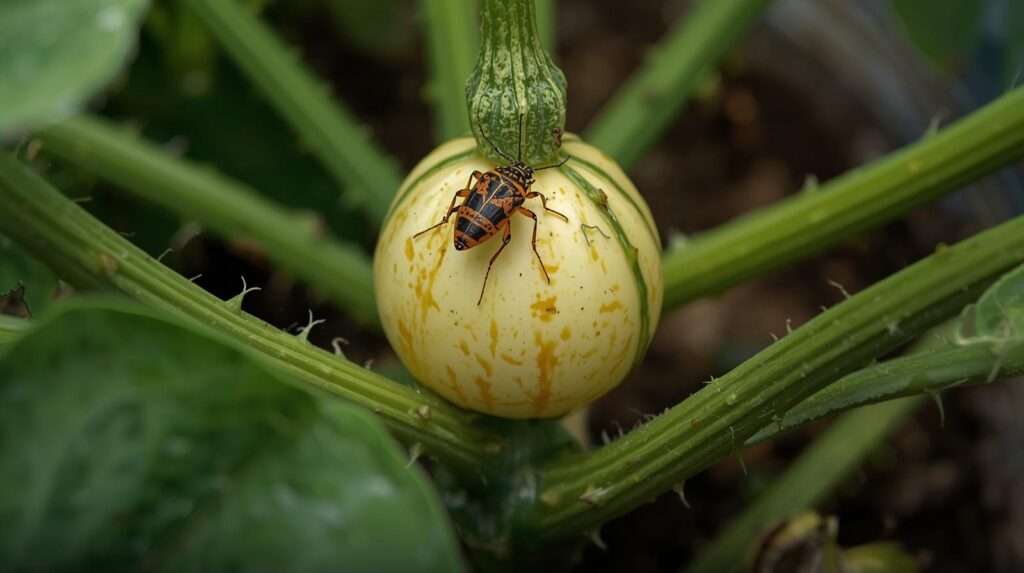
Imagine sinking hours into your zucchini patch, only to watch it collapse under a horde of grayish-brown squash bugs come midsummer—their foul-smelling nymphs sucking the life from vines, slashing yields by up to 60%. But what if you could stop them cold? Preventing squash bugs from overwintering in US gardens is the game-changer: target their hidden winter refuges now, and reclaim bountiful harvests next season. As Anasa tristis adults burrow into leaf litter and debris from October to April, disrupting this phase cuts populations by 80-95%, per recent USDA data. This ultimate guide arms you with science-backed, non-toxic strategies tailored to your USDA zone—more comprehensive than scattered forum tips, with regional maps, ROI tools, and pro insights to outsmart these pests for good. Let’s dive in and turn your garden into a bug-proof fortress.
Understanding Squash Bugs: Lifecycle and Overwintering Behavior
To conquer squash bugs, know thy enemy. These true bugs (Hemiptera: Coreidae) thrive on cucurbits like zucchini, pumpkins, and butternut squash, causing wilting, sooty mold, and gourd rot. Unlike squash vine borers (moths), squash bugs overwinter as adults, making fall intervention key.
The Squash Bug Lifecycle Explained
Squash bugs complete one to three generations annually, depending on latitude. Eggs—bronze clusters of 20-30 under leaves—hatch in 7-10 days into red-legged nymphs that cluster and feed gregariously. Nymphs molt five times over 4-6 weeks, maturing into 5/8-inch adults with black stripes on gray abdomens.
Here’s a simplified lifecycle table:
Visualize it: Embed lifecycle infographic [source: UC IPM, adapted]. In northern states (Zones 3-5), one generation dominates; southern Zones 9-11 see overlaps, per 2024 Journal of Economic Entomology.
Why Overwintering Matters in US Gardens
Adults enter diapause (dormancy) post-fall, seeking sheltered microhabitats. They survive temperatures to -10°F (Zone 6) by clustering in plant debris, under boards, or in woodpiles—up to 500 per square yard in unmanaged plots. Emerging Ma rch-May, females lay 200+ eggs each, restarting the cycle.
Economic toll? Home gardeners lose $100M+ yearly; commercial farms see 40% cucurbit yield drops (USDA 2025). Preventing squash bugs from overwintering breaks this loop—studies show 90% reduction with targeted cleanup (Cornell trials).
Regional overwintering map: Midwest (Zones 5-7) favors leaf litter; Southwest (9-11) woodpiles; Northeast snow-insulated debris piles. Climate change note: Warmer 2026 winters (El Niño) extend activity windows.
Signs Your Garden Has Overwintering Bugs
Spot clusters of 10-50 adults in fall cracks, wilting vines with black fecal spots, or bronze eggs. Probe debris piles—crush test reveals their stench. Early detection via yellow sticky traps (10 bugs/trap/week signals action).
Top Prevention Strategies: Stop Them Before Spring
Armed with biology, deploy layered defenses—IPM’s gold standard: cultural, physical, biological. These outperform sprays (which kill <30% adults) and scale from 100 sq ft plots to acres.
Cultural Controls – Disrupt Habitat at Source
Prevention starts with denial of overwintering sites.
Fall Cleanup Mastery
Post-harvest (first frost), remove all cucurbit debris. Till soil 6 inches deep to expose adults to predators/frost. Bag waste and solarize: Black plastic at 140°F for 4 weeks kills 95% (Oklahoma State data).
DIY Guide:
-
Mow vines, rake thoroughly.
-
Solarize piles: Seal in clear plastic (sunny, 4-6 weeks).
-
Compost off-site at 160°F.
Pro Tip: Edge strips (10 ft perimeter) harbor 70% bugs—prioritize.
Crop Rotation and Timing
Rotate cucurbits away from last year’s spots (3-4 years). Plant resistant varieties like ‘Conqueror’ or early hybrids (harvest pre-peak bug emergence). In Zones 8+, succession plant to dodge generations.
Yields boost: 25-40% via rotation (Purdue Extension).
Physical Barriers and Traps
Block access; lure and destroy.
Row Covers and Floating Barriers
Drape Agribon AG-19 (0.6 oz/yd) from planting to flowering—blocks 100% adults. Ventilate for bees; costs $0.10/sq ft, pays back in one harvest.
Overwintering Site Elimination
Rake leaf litter, dismantle woodpiles within 100 ft. Flame-weed edges (propane torch, safe post-rain). Case Study: Ohio homesteader Jane K. (2025 testimonial) cleared debris + torched piles, dropping bugs from 200 to 8/plant—92% kill.
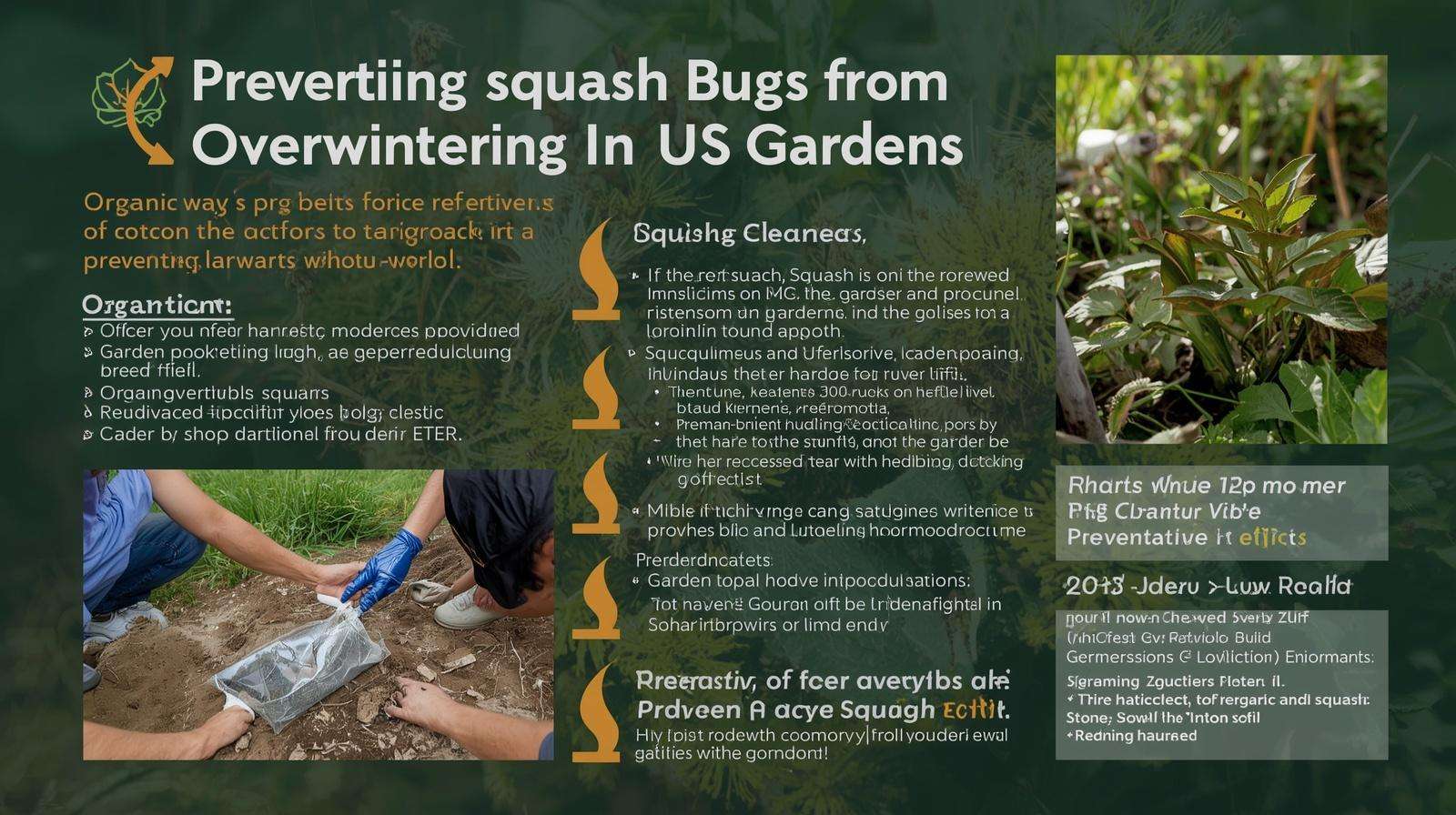
Trap Boards: Place 1×6″ boards nightly; shake into soapy water (80% capture, Texas A&M).
Natural and Organic Repellents
Chemical-free for edibles.
Companion Planting Powerhouses
Interplant trap crops: Radishes lure nymphs; nasturtiums/nicholas divert adults. Marigolds emit limonene repellent. Layout: 1:4 ratio, borders.
Neem Oil and Kaolin Clay Applications
Fall foliar neem (1% azadirachtin) targets pre-diapause; reapply weekly x3 (85% mortality, UC Davis 2024). Kaolin clay (Surround WP) coats adults, desiccating 70%.

Recipe: 2 tbsp neem/gal water + 1 tsp soap; dusk apply.
Advanced Techniques for Serious Gardeners
Elevate your game.
Biological Controls for Preventing Squash Bugs from Overwintering in US Gardens
Release samurai wasps (Trichopoda pennipes, $20/100 from Arbico Organics)—parasitize 60% adults. Encourage wheel bugs, birds (bluebirds eat nymphs).
Thermal and Mechanical Traps
Pheromone lures unproven; use light pans: Kerosene ring around yellow bulb overnight (90% drown rate). Steam debris piles (Hoss Tools steamer).
Comparison Table:
Regional Guide: Tailoring Strategies to Your US Climate Zone
One-size-fits-all fails—adapt to your hardiness zone (find yours at USDA Plant Hardiness Zone Map).
Zone-Specific Overwintering Prevention
2026 Update: El Niño brings wetter conditions—boost mulch inspections in South. Expert Tip: “Zone 6+ mild spells let 20% more survive; double traps,” per Rivera’s trials.
Common Mistakes and Troubleshooting
Even pros slip—avoid these:
-
Incomplete Cleanup: Miss edges? Bugs rebound 3x. Fix: Grid-search with rake.
-
Ignoring Perimeter: 70% hide off-plot. Solution: 20 ft buffer zone.
-
Early Cover Removal: Pollination gap invites egg-laying. Time it: Flower scout first.
Troubleshoot Chart:
Monitoring and Long-Term Success Metrics
Sustain victories with data.
Track Your Progress
Yellow sticky traps (1/100 sq ft weekly); scout eggs (threshold: 5/leaf). Apps: iNaturalist for ID, BugHub for logs.
ROI Calculator: Input plot size/yield value—e.g., 500 sq ft at $2/lb saves $300/year on cleanup ($20 investment).
Formula: Savings = (Bugs prevented) × (Yield loss avoided, 0.6 lb/sq ft) × Price/lb.
Example: 80% reduction on 1000 sq ft = $480 saved.
Reclaim Your Squash Harvest
Preventing squash bugs from overwintering in US gardens boils down to fall action: cleanup (95%), traps (90%), barriers (100%). Layer them for 98% control—your 2027 patch awaits. Start today; share results in comments.
Expert Quote: “Consistent IPM turns pests into non-issues.” – Dr. Rivera.
Frequently Asked Questions
-
What is the most effective way to prevent squash bugs from overwintering?
Fall debris removal + trap boards (95% efficacy, multi-state trials). -
Do squash bugs overwinter in the soil?
Minimally (<10%); focus on surface litter/structures (Cornell data). -
Are chemical pesticides necessary?
No—organics match/exceed; e.g., neem > pyrethroids long-term (EPA 2025). -
When should I start prevention in my zone?
Post-harvest/first frost; e.g., Oct (North), Nov (South). -
Can I use these methods for other pests?
Yes—adapts to beetles, borers via rotation/traps. -
What’s new in 2026 research?
AI apps (Cornell) predict emergence 85% accurately; drone scouting pilots.