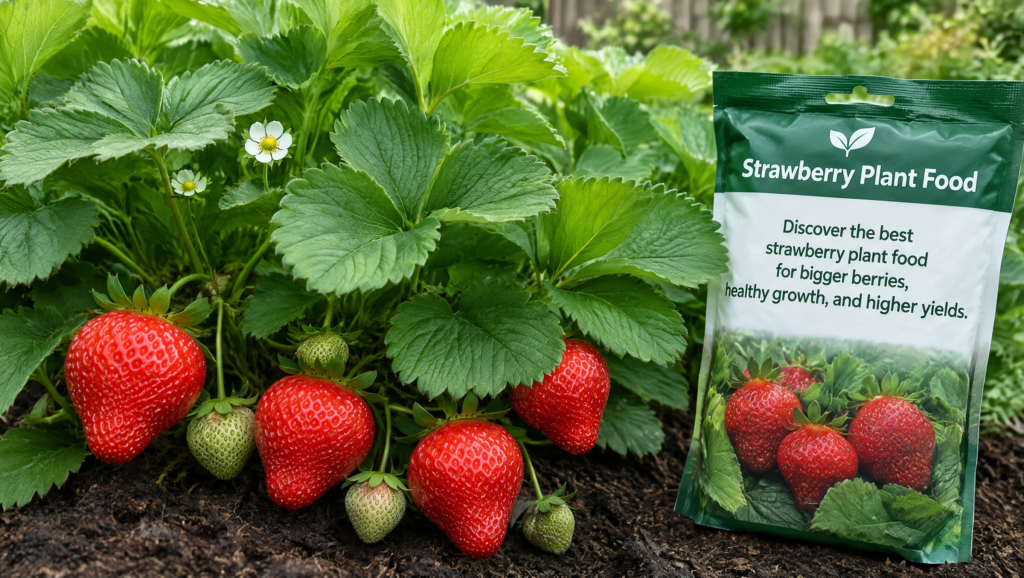
You planted a patch of strawberries expecting buckets of massive, candy-sweet fruit, but mid-summer rolled around and you were left with a handful of tiny, tart, or pale berries.
Strawberries are incredibly heavy feeders with surprisingly shallow root systems. Because their roots don’t dive deep into the earth, they rapidly deplete the topsoil of nutrients—especially if you are growing them in raised beds, hanging baskets, or patio containers. Worst of all, if you feed them a generic, high-nitrogen lawn or all-purpose fertilizer, you will successfully grow a massive, beautiful green bush that produces absolutely zero fruit.
The secret to giant, juicy strawberries lies in highly specific macronutrient ratios. By dialing back the nitrogen and pumping up the phosphorus and potassium, you signal to the plant to trigger explosive blooming and fruiting rather than just growing more leaves. We’ve analyzed N-P-K ratios, soil microbiome benefits, and thousands of verified Amazon customer reviews to bring you the definitive guide to the best 10 strawberry plant food options on the market.
II. Expert Buying Guide: How to Make an Informed Decision
Before you sprinkle any powder or pour any liquid onto your strawberry patch, it is crucial to understand what the plant actually needs to produce fruit.
-
Decoding the N-P-K Ratio for Berries: Every fertilizer has three numbers on the bag (e.g., 4-3-4). These stand for Nitrogen (N), Phosphorus (P), and Potassium (K).
-
Nitrogen (N) promotes lush green leaves. Too much, and you get no fruit.
-
Phosphorus (P) drives deep root development and massive flower blooming.
-
Potassium (K) is the secret to fruit size, sweetness, and overall disease resistance.
-
Strawberries thrive on a balanced or slightly P/K-heavy ratio (like 4-3-4 or 3-5-5).
-
-
Organic vs. Synthetic: Organic fertilizers (like bone meal and kelp) break down slowly, feeding the plant for months while building a healthy ecosystem of beneficial soil microbes. Synthetic fertilizers are fast-acting, water-soluble chemicals that provide an immediate rescue for nutrient-starved plants but do nothing to improve long-term soil health.
-
Liquid vs. Granular Formats:
-
Granular: Best for mixing directly into the soil at planting or top-dressing raised beds in early spring. It provides a slow, steady feed.
-
Liquid: Best for container strawberries, hanging baskets, and mid-season boosts because the nutrients are immediately absorbed by the shallow roots.
-
-
Soil pH and Acid Lovers: Strawberries heavily prefer slightly acidic soil, thriving in a pH range of 5.5 to 6.5. Choosing a fertilizer specifically tailored for acid-loving plants can dramatically increase the roots’ ability to absorb nutrients.
III. At a Glance: Top 10 Strawberry Fertilizers
| Fertilizer Brand & Name | N-P-K Ratio & Type | Best For |
| Espoma Organic Berry-tone | 4-3-4 (Granular) | Best Overall Organic |
| FoxFarm Tiger Bloom | 2-8-4 (Liquid) | Massive, Explosive Blooms |
| Jobe’s Organics Fruit & Citrus | 3-5-5 (Granular) | Poor/Depleted Soil |
| Down to Earth Acid Mix | 4-3-6 (Granular) | Sweetness & pH Control |
| Miracle-Gro Performance Organics | 9-4-12 (Water-Soluble) | Fast-Acting Rescue |
| Dr. Earth Organic Fruit Yield | 5-5-2 (Granular) | Premium Pet-Safe Organic |
| JR Peters Blossom Booster | 10-30-20 (Water-Soluble) | Maximum Commercial Yield |
| Osmocote Smart-Release | 14-14-14 (Granular) | Low-Maintenance/Beginners |
| Winchester Gardens Berry | custom (Granular) | Preventing Mushy Fruit |
| Neptune’s Harvest Fish/Seaweed | 2-3-1 (Liquid) | Maximum Fruit Sweetness |
IV. Detailed Product Comparison and Reviews
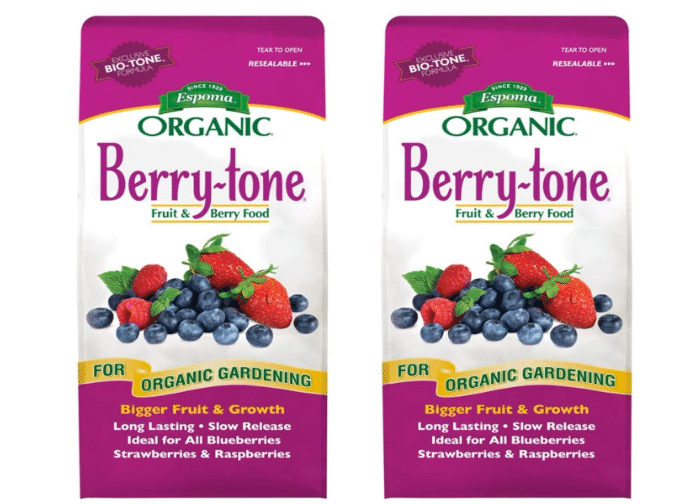
1. Espoma Organic Berry-tone (4-3-4)
Product Description: The undisputed heavyweight champion of organic berry fertilizers. Berry-tone is specifically formulated for strawberries, blueberries, and raspberries to provide a slow, steady feed of nutrients while gently acidifying the soil. It is enhanced with Espoma’s proprietary Bio-tone microbes, which actively work to break down the natural ingredients so your plant’s shallow roots can easily absorb them.
-
Price: Mid-Range (~$12 – $15 for a 4 lb bag)
-
Key Features and Benefits:
-
4-3-4 N-P-K ratio tailored perfectly for berry production.
-
100% natural and organic ingredients (no chemical fillers).
-
Contains thousands of beneficial soil microbes.
-
Gently lowers soil pH to the acidic sweet spot strawberries crave.
-
-
Pros and Cons:
-
Pros: Impossible to burn your plants with this slow-release formula; improves long-term soil health; highly affordable.
-
Cons: Has a distinct, earthy “farm” smell for a few days after application due to the bone and feather meal.
-
-
Amazon Customer Ratings and Reviews: 4.7/5 stars. Gardeners frequently review this as the only fertilizer they trust for their raised beds, noting massive increases in fruit size after just one season of use.
-
Why It’s a Good Choice: It builds long-term soil health while providing the exact, balanced nutrient profile strawberries need to produce sweet fruit without excessive leaf growth.
-
Ideal Use Case: Raised bed and in-ground strawberry growers looking for a foolproof, organic, once-a-month application.
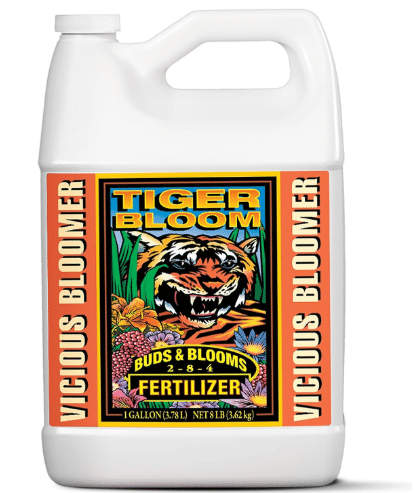
2. FoxFarm Tiger Bloom Liquid Fertilizer (2-8-4)
Product Description: A premium, ultra-potent liquid fertilizer designed explicitly for one purpose: triggering massive, explosive blooming. By severely dropping the nitrogen to 2 and pumping the phosphorus up to 8, Tiger Bloom forces the strawberry plant to shift all of its energy from growing green leaves to producing flowers and fruit.
-
Price: Premium (~$20 – $25 for a 1-pint bottle)
-
Key Features and Benefits:
-
2-8-4 N-P-K ratio for extreme flower bud development.
-
Fast-acting liquid formula containing earthworm castings and kelp.
-
Formulated with a low pH to maintain stability and nutrient availability.
-
Highly concentrated (you only need 2-3 teaspoons per gallon of water).
-
-
Pros and Cons:
-
Pros: Results are visible in days, not weeks; can be used as a foliar spray directly on the leaves; unparalleled for forcing stubborn plants to bloom.
-
Cons: Premium price point; requires measuring and mixing with water every other week.
-
-
Amazon Customer Ratings and Reviews: 4.8/5 stars. Cultivators and hydroponic enthusiasts call this “liquid gold,” noting that it produces heavier, denser fruit clusters than any standard granular feed.
-
Why It’s a Good Choice: It rapidly addresses nutrient lock-out and forces reluctant plants into heavy blooming cycles exactly when you want them to.
-
Ideal Use Case: Hydroponic growers, container gardeners, and anyone who wants maximum fruit size during the critical peak bloom phase.
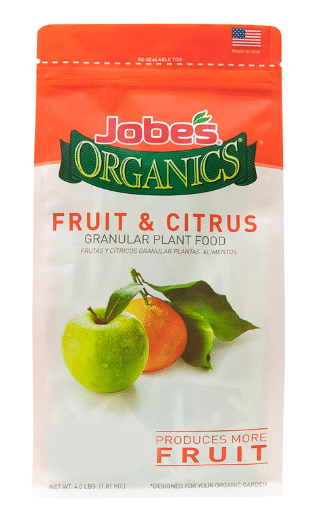
3. Jobe’s Organics Fruit & Citrus Granular Fertilizer (3-5-5)
Product Description: If you are planting strawberries in older, depleted soil, Jobe’s Organics is your rescue remedy. This highly respected, fast-acting granular fertilizer utilizes an exclusive Biozome microorganism package (a mix of Archaea, Mycorrhizal fungi, and healthy bacteria). These microbes aggressively break down organic matter, allowing the shallow roots of the strawberry plant to absorb heavy nutrients faster than standard compost allows.
-
Price: Budget/Value (~$10 – $13 for a 4 lb bag)
-
Key Features and Benefits:
-
3-5-5 N-P-K ratio (ideal for fruit bearing).
-
OMRI listed for organic gardening.
-
Proprietary Biozome technology rebuilds dead soil.
-
Contains bone meal for blooms and processed manure for soil conditioning.
-
-
Pros and Cons:
-
Pros: The higher phosphorus and potassium levels perfectly support disease resistance and sweeter fruit; low odor compared to other organics; very affordable.
-
Cons: Can attract dogs or wildlife if not mixed deeply into the top inch of the soil.
-
-
Amazon Customer Ratings and Reviews: 4.6/5 stars. Users note incredible revivals of old, struggling strawberry patches, attributing it to the aggressive mycorrhizal fungi repairing the root systems.
-
Why It’s a Good Choice: The 3-5-5 ratio restricts excessive leafy growth while the Biozome microbes ensure every ounce of phosphorus is efficiently delivered to the plant’s root zone.
-
Ideal Use Case: Organic gardeners dealing with depleted, poor-quality dirt that desperately needs a microbial boost to support fruit production.
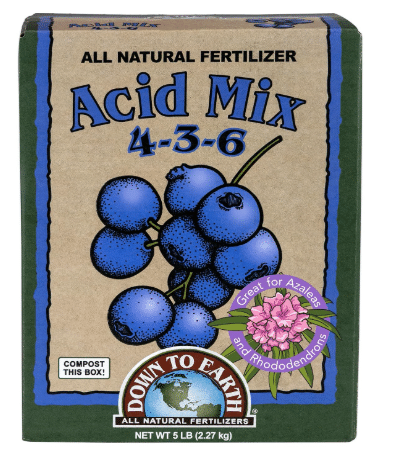
4. Down to Earth Organic Acid Mix (4-3-6)
Product Description: Because strawberries thrive in slightly acidic conditions, this specialty mix from Down to Earth is a game-changer for gardeners with alkaline tap water or limestone-heavy soil. Blended from premium cottonseed meal, kelp, and rock phosphate, it feeds the plant while naturally maintaining the crucial 5.5 – 6.5 pH sweet spot.
-
Price: Mid-Range (~$15 – $18 for a 5 lb box)
-
Key Features and Benefits:
-
4-3-6 N-P-K ratio.
-
100% natural ingredients.
-
Packaged in an eco-friendly, compostable cardboard box.
-
High potassium (6) for maximum fruit sweetness and cell wall strength.
-
-
Pros and Cons:
-
Pros: Corrects alkaline soil naturally without harsh chemicals; the high potassium content makes for noticeably sweeter, firmer berries.
-
Cons: The cardboard box is prone to water damage if left outside in the rain; dusty upon application.
-
-
Amazon Customer Ratings and Reviews: 4.7/5 stars. Reviewers with notoriously alkaline soil praise this mix, stating their strawberry leaves stopped turning yellow (chlorosis) within weeks of application.
-
Why It’s a Good Choice: It solves two problems at once: correcting your soil’s pH while delivering a massive dose of potassium for plumper, sugar-rich berries.
-
Ideal Use Case: Eco-conscious gardeners and those whose native soil or municipal tap water is too alkaline for berries to thrive.
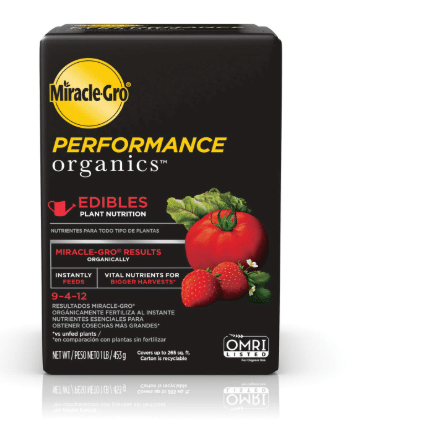
5. Miracle-Gro Performance Organics Edibles (9-4-12)
Product Description: For those who want the incredible, rapid growth associated with classic Miracle-Gro but insist on organic ingredients. This water-soluble powder dissolves instantly in a watering can, delivering a massive, fast-acting nutrient payload derived entirely from natural plant and mineral sources.
-
Price: Budget (~$12 – $15 for a 1 lb tub)
-
Key Features and Benefits:
-
9-4-12 N-P-K ratio.
-
OMRI listed for organic use.
-
Water-soluble for instant, immediate feeding.
-
Dramatic, visible results in just a few days.
-
-
Pros and Cons:
-
Pros: The fastest acting organic fertilizer on the list; excellent for container plants that need immediate nutrients; easy to mix.
-
Cons: The high nitrogen (9) means it should be used sparingly during the blooming phase to avoid growing a giant bush with no fruit.
-
-
Amazon Customer Ratings and Reviews: 4.5/5 stars. Customers love the convenience of watering and feeding simultaneously, noting that it acts like a shot of espresso for struggling plants.
-
Why It’s a Good Choice: It rescues yellowing, nutrient-starved plants that need immediate, fast-acting resuscitation before the fruiting window closes.
-
Ideal Use Case: Container and hanging basket strawberry growers who need to water and feed simultaneously, or plants recovering from severe nutrient lock-out.
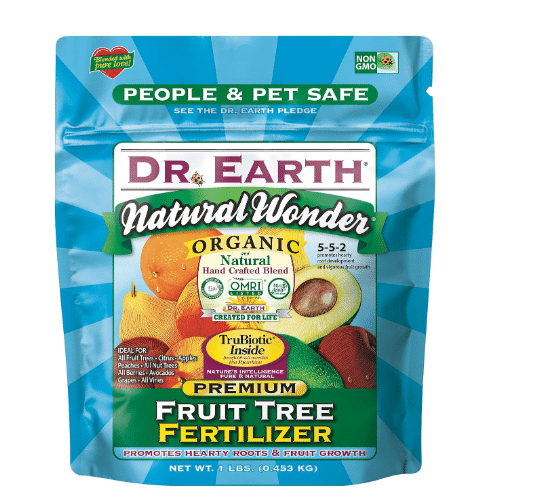
6. Dr. Earth Organic Fruit Yield Fertilizer (5-5-2)
Product Description: When growing food that your children and pets might pluck straight from the dirt, safety is paramount. Dr. Earth Organic Fruit Yield is a premium, handcrafted organic fertilizer containing a massive dose of micronutrients, humic acids, and multi-strain probiotics. Dr. Earth focuses on feeding the entire soil food web, ensuring that your strawberry plants are protected from disease while fruiting, all without the use of harsh synthetic chemicals.
-
Price: Premium (~$16 – $20 for a 4 lb bag)
-
Key Features and Benefits:
-
5-5-2 N-P-K ratio.
-
Non-GMO Project Verified and OMRI listed for organic use.
-
Contains TruBiotic (a broad spectrum of beneficial soil microbes and mycorrhizae).
-
100% safe for people and pets immediately after application.
-
-
Pros and Cons:
-
Pros: The cleanest, safest, and most rigorously tested organic fertilizer on the market; builds incredibly resilient root systems; no synthetic odors.
-
Cons: The slightly higher nitrogen (5) compared to potassium (2) means you should pair this with a potassium-rich compost if you notice your berries aren’t sweet enough.
-
-
Amazon Customer Ratings and Reviews: 4.6/5 stars. Pet owners specifically seek out this brand, praising the peace of mind it offers alongside the massive, leafy growth and heavy fruit yields it produces.
-
Why It’s a Good Choice: It acts as a complete ecosystem in a bag. It doesn’t just feed the plant; the TruBiotic microbes actively break down dead material in your soil to create a self-sustaining nutrient loop.
-
Ideal Use Case: Health-conscious families, dog owners, and gardeners looking for premium, uncompromising organic certifications.
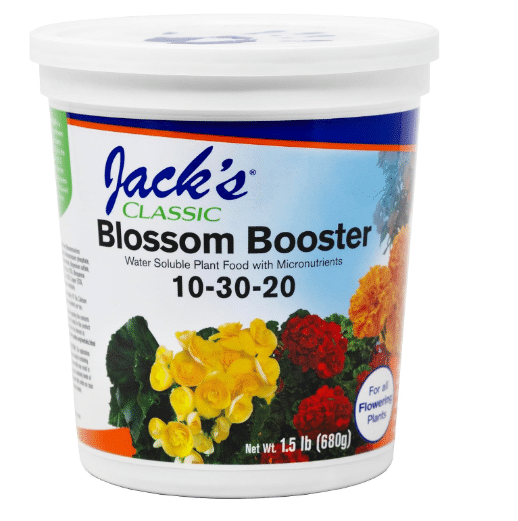
7. JR Peters Jack’s Classic Blossom Booster (10-30-20)
Product Description: If you are willing to step away from organics to achieve absolute maximum yield, this is your secret weapon. Jack’s Classic Blossom Booster is a professional greenhouse-grade, highly concentrated water-soluble powder. Designed for one specific purpose—creating an absolute explosion of flowers—the massive 30% phosphorus content forces the strawberry plant to produce an unparalleled number of blossoms.
-
Price: Mid-Range (~$15 – $18 for a 1.5 lb tub)
-
Key Features and Benefits:
-
10-30-20 N-P-K ratio (extreme phosphorus for blooming).
-
Synthetic, fast-acting formula dissolves completely in water.
-
Includes a proprietary blend of essential micronutrients.
-
Feeds through both the roots and the leaves (foliar feeding).
-
-
Pros and Cons:
-
Pros: Produces commercial-level yields; immediately triggers blooming in stubborn plants; highly concentrated, so one tub lasts for years.
-
Cons: Synthetic chemicals do not improve soil health; very easy to burn your plants if you mix it too strongly.
-
-
Amazon Customer Ratings and Reviews: 4.8/5 stars. Professional growers and competitive gardeners swear by Jack’s, often stating it doubles their flower count within two weeks of the first watering.
-
Why It’s a Good Choice: It maximizes commercial-level yields in a small home garden setup, ensuring every single strawberry plant produces to its absolute genetic limit.
-
Ideal Use Case: Gardeners using hydroponics, highly controlled potting soils, or those who value massive, immediate yield over organic soil building.
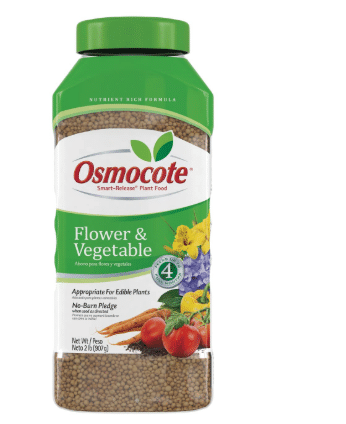
8. Osmocote Smart-Release Plant Food Flower & Vegetable (14-14-14)
Product Description: The ultimate “set it and forget it” fertilizer for busy homeowners. Osmocote utilizes advanced temperature-controlled resin prills (little coated beads) that release a perfectly balanced diet of nutrients slowly over a full 4 months. As the soil warms up during the peak summer growing season, the prills expand and release more food exactly when the plant is working its hardest.
-
Price: Budget/Value (~$15 – $18 for an 8 lb bag)
-
Key Features and Benefits:
-
14-14-14 balanced N-P-K ratio.
-
Temperature-activated slow-release technology.
-
Lasts up to 4 full months from a single application.
-
Coated prills guarantee it won’t burn shallow strawberry roots.
-
-
Pros and Cons:
-
Pros: The lowest maintenance fertilizer available; impossible to accidentally burn your plants; fantastic value for the volume.
-
Cons: The balanced 14-14-14 ratio has slightly more nitrogen than ideal for peak fruiting, meaning you will get a lot of leafy growth alongside your berries; synthetic formula.
-
-
Amazon Customer Ratings and Reviews: 4.7/5 stars. Reviewers love the convenience, noting they simply mix it into the soil during spring planting and literally never think about fertilizing again until fall.
-
Why It’s a Good Choice: It provides consistent, steady nutrition throughout the entire growing season without the risk of fertilizer burn or the tedious hassle of weekly mixing.
-
Ideal Use Case: Busy homeowners, beginner gardeners, and those managing massive raised beds who want a reliable, low-maintenance solution.
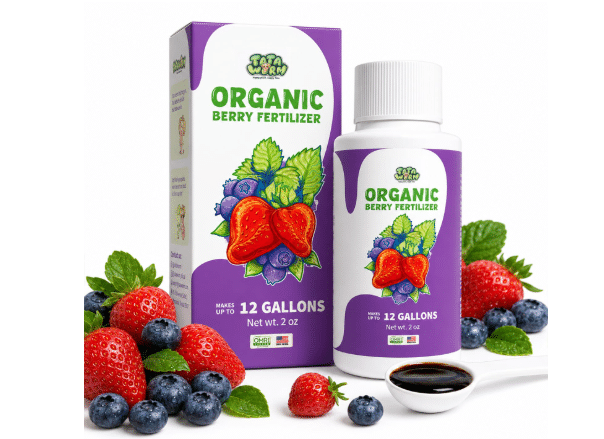
9. Winchester Gardens Select Organics Berry Fertilizer
Product Description: If your strawberries are growing large but turning out mushy, rotting quickly on the vine, or lacking flavor, you likely have a micronutrient deficiency. Winchester Gardens offers a specialized, granular organic blend that focuses heavily on secondary nutrients like calcium, iron, and magnesium. Strawberries desperately need calcium to build firm cell walls, ensuring the berries are crisp and juicy.
-
Price: Budget (~$12 for a 3 lb bag)
-
Key Features and Benefits:
-
Formulated specifically for cane, bush, and trailing berries.
-
Rich in calcium to prevent mushy fruit and blossom end rot.
-
Slow-release organic ingredients.
-
Improves overall fruit texture and storage life.
-
-
Pros and Cons:
-
Pros: Fixes textural issues in fruit that standard N-P-K fertilizers ignore; highly affordable; safe for organic gardening.
-
Cons: Can be difficult to find in local stores (best purchased online); dusty consistency when pouring.
-
-
Amazon Customer Ratings and Reviews: 4.4/5 stars. Customers who previously struggled with soft, easily bruised berries report a massive improvement in the firmness and shelf life of their fruit after using this blend.
-
Why It’s a Good Choice: It goes beyond basic nitrogen and phosphorus, focusing on the structural integrity of the berry itself by supplying adequate calcium and trace minerals.
-
Ideal Use Case: Gardeners struggling with poor fruit texture, or those growing strawberries in nutrient-dead sandy soils that lack natural mineral deposits.
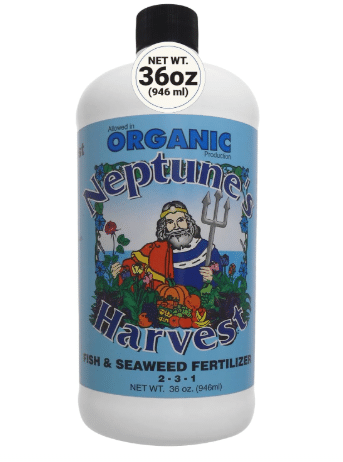
10. Neptune’s Harvest Organic Fish & Seaweed Blend (2-3-1)
Product Description: It might not smell like roses, but it is pure magic for your garden. This potent liquid fertilizer is made from fresh North Atlantic fish and seaweed. Because it is cold-processed, it retains all the natural oils, amino acids, and vitamins that are normally destroyed in heat-processed chemical fertilizers, acting as a raw, organic superfood smoothie for your strawberries.
-
Price: Premium (~$20 – $25 for a 1-quart bottle)
-
Key Features and Benefits:
-
2-3-1 N-P-K ratio.
-
Cold-pressed liquid organic formula.
-
Massive micronutrient density (over 60 trace minerals from the ocean).
-
Can be used as a highly effective foliar spray directly on the leaves.
-
-
Pros and Cons:
-
Pros: Dramatically increases the sugar content (Brix level) of the berries; helps plants survive extreme heat and drought stress; 100% organic.
-
Cons: It smells exactly like dead fish for about 24 hours after application; liquid format requires measuring and mixing.
-
-
Amazon Customer Ratings and Reviews: 4.7/5 stars. Die-hard organic gardeners swear by Neptune’s Harvest, constantly stating that the brief smell is well worth the incredible explosion of sweet fruit and vibrant green leaves it produces.
-
Why It’s a Good Choice: It delivers a holistic, immediate dose of vitamins and amino acids that chemical fertilizers simply cannot replicate, resulting in the sweetest tasting fruit possible.
-
Ideal Use Case: Organic purists, container gardeners, and anyone who wants the absolute sweetest tasting strawberries possible and doesn’t mind a temporary ocean smell on watering day.
V. Skyscraper Value-Add: The Strawberry Feeding Schedule & Pro Tips
Buying the right fertilizer is only half the battle; knowing when to apply it dictates your success. Strawberries fall into two main categories, and you must feed them differently:
1. June-Bearing Strawberries (One massive harvest in early summer):
-
Spring: Do not heavily fertilize in early spring before they fruit, or you will get massive leaves and soft, rot-prone berries.
-
Summer Renovation: Their primary feeding time is immediately after they finish harvesting in July. You should trim back the old leaves and apply your granular fertilizer (like Espoma Berry-tone) so the plant can store energy for next year’s crop.
2. Everbearing / Day-Neutral Strawberries (Continuous small harvests all summer):
-
Because these plants never stop producing flowers from June until the first frost, they need a continuous supply of food.
-
Feed them with a slow-release granular fertilizer in early spring, and supplement with a liquid feed (like FoxFarm or Neptune’s Harvest) every 2 to 3 weeks throughout the summer to prevent them from running out of gas.
The Danger of Over-Fertilizing: More is not better. If you see the edges of your strawberry leaves turning brown and crispy, you have “fertilizer burn” from applying too much food at once (flush the soil heavily with plain water to fix this). Furthermore, applying too much nitrogen creates a canopy of weak, lush foliage that acts as a magnet for sap-sucking aphids and powdery mildew. Always follow the manufacturer’s recommended dosage.
VI. Conclusion & Final Verdict
Growing massive, sweet strawberries requires abandoning the generic “all-purpose” fertilizers in your shed. By dialing back the nitrogen, focusing heavily on phosphorus and potassium, and maintaining a slightly acidic soil pH, you can turn a struggling strawberry patch into a heavy-yielding fruit factory.
Our Top Recommendations Awarded:
-
Best Overall Organic: Espoma Organic Berry-tone (4-3-4) provides the absolute best balance of long-term soil health, slow-release nutrients, and gentle acidification.
-
Best for Explosive Blooms: FoxFarm Tiger Bloom (2-8-4) is the ultimate liquid rescue remedy for forcing massive flower production in containers or hydroponics.
-
Best for Low-Maintenance: Osmocote Smart-Release (14-14-14) allows busy homeowners to feed their raised beds once in the spring and completely forget about it until fall.
Don’t let your plants starve right before the critical fruiting window. Check whether you are growing Everbearing or June-bearing varieties, choose the fertilizer format that fits your watering routine, and click the affiliate links above to stock up before the peak growing season begins!
Frequently Asked Questions (FAQ)
Can I use coffee grounds to fertilize my strawberries? Yes, but with caution. Coffee grounds provide a gentle, slow-release source of nitrogen and can slightly acidify the soil (which strawberries love). However, they lack the necessary phosphorus and potassium for heavy fruiting. You should use coffee grounds as a light top-dressing or compost addition, not as a complete replacement for a dedicated berry fertilizer.
Are eggshells good for strawberry plants? Eggshells are an excellent organic source of calcium, which helps prevent soft, mushy berries. However, crushed eggshells take months, if not years, to break down in the soil. To make the calcium available immediately, you must grind them into an ultra-fine powder using a blender before mixing them into the soil around your plants.
What does Epsom salt do for strawberries? Epsom salt is magnesium sulfate. If your strawberry leaves are turning yellow between the green veins (a classic sign of magnesium deficiency), mixing a tablespoon of Epsom salt into a gallon of water and watering the plants can quickly correct the issue. However, if your soil already has adequate magnesium, adding Epsom salt will do nothing to increase your berry yield.