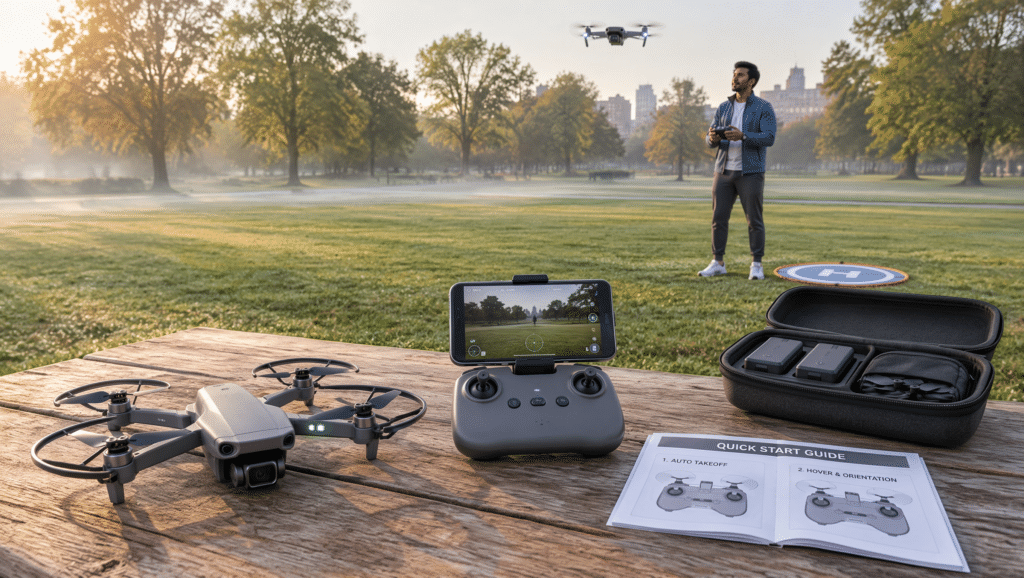
You’ve seen the breathtaking, cinematic aerial shots on Instagram and YouTube, and you’re finally ready to take to the skies yourself. But typing “camera drone” into Amazon yields thousands of confusing results. You’ll find everything from $30 plastic toys that blow away in a gentle breeze to $2,000 professional cinematic rigs that require an official pilot’s license to fly.
For a beginner, buying the wrong drone is an expensive and frustrating mistake. Cheap toy drones lack GPS stabilization, making them nearly impossible to control in the wind, which leads to immediate, catastrophic crashes. On the other hand, buying a heavy, professional-grade drone means you have to deal with complex FAA registrations, remote ID broadcasting, and the terrifying anxiety of crashing a massively expensive piece of equipment on your first flight.
The sweet spot for new pilots is a sub-249-gram drone equipped with a mechanical gimbal, GPS hover capabilities, and automated flight modes. We’ve analyzed flight times, camera sensors, obstacle avoidance technology, and thousands of verified Amazon customer reviews to bring you the definitive guide to the best 10 drone for beginners with camera on the market today.
II. Expert Buying Guide: How to Make an Informed Decision
Before you add a drone to your cart, you must understand the technology that keeps it safely in the air and produces usable video.
-
The Magic Number (249 Grams): Buying a drone that weighs 249g or less is critical for beginners. In many regions (including the US and EU), keeping the takeoff weight strictly under 250 grams bypasses the requirement for FAA recreational registration and remote ID broadcasting. It is the legal “hassle-free” zone.
-
3-Axis Gimbal vs. Electronic Image Stabilization (EIS): A mechanical 3-axis gimbal is the absolute bare minimum requirement for capturing smooth, cinematic video. The gimbal physically moves to counter the drone’s tilting. Drones that rely entirely on EIS (software stabilization) produce jittery, warped, “seasick” footage that is unusable for social media.
-
GPS Hold and Return-to-Home (RTH): GPS is what prevents “flyaways.” When a drone has GPS, letting go of the controller simply causes the drone to brake and hover perfectly in place. If you panic, lose connection, or the battery gets low, the drone will automatically trigger RTH and fly back to the exact spot it took off from.
-
Sensors & Obstacle Avoidance: Pay attention to sensor placement. Downward vision sensors are standard and help the drone land softly. Omnidirectional sensors (found on premium models) actively scan the environment and physically prevent you from flying into a tree or a wall.
-
Flight Time Realities: Always look for the “Fly More Combo” (a bundle with extra batteries). A manufacturer’s stated “30-minute battery life” is tested in a windless laboratory. In the real world, 30 minutes translates to about 22 minutes of actual flight time before the drone initiates an emergency landing.
III. At a Glance: Top 10 Beginner Camera Drones
| Drone Brand & Model | Camera Resolution & Weight | Best For |
| DJI Mini 4K | 4K / Sub-249g | Best Overall Value |
| DJI Neo | 4K / 135g | Best for Zero-Skill Selfies |
| Potensic Atom 2 | 4K / Sub-249g | Best Budget DJI Alternative |
| DJI Flip (Cinewhoop) | 4K60 / Sub-249g | Maximum Physical Safety / Indoor |
| DJI Mini 5 Pro | 4K100 (1-inch sensor) / Sub-249g | Best Premium “Buy Once” |
| HOVERAir X1 | 2.7K / 125g | Pocket-Sized Auto Tracking |
| BetaFPV Cetus X | 1080p / Micro | Best for Learning FPV / VR |
| DJI Mini 3 | 4K HDR / Sub-249g | True Vertical Social Media Video |
| Holy Stone HS720G | 4K / >250g | Heavier Wind Resistance on a Budget |
| Ryze Tech Tello | 720p / 80g | STEM Education & Kids |
IV. Detailed Product Comparison and Reviews
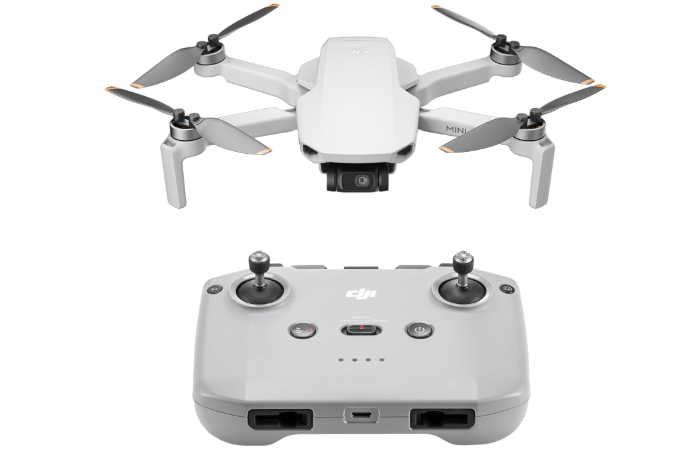
1. DJI Mini 4K
Product Description: The undisputed king of the entry-level market. The DJI Mini 4K takes the legendary reliability of the DJI ecosystem and strips away the premium price tag. It offers a true 3-axis mechanical gimbal, crisp 4K video, and robust Level-5 wind resistance in a sleek package that folds down to fit in the palm of your hand.
-
Price: Budget/Mid-Range (~$229 for base, $339 for Fly More Combo)
-
Key Features and Benefits:
-
True 4K Video at 30fps: Ensures high-resolution, crop-friendly footage.
-
3-Axis Motorized Gimbal: Guarantees buttery-smooth video regardless of wind or aggressive flying.
-
10km Video Transmission: Reliable, lag-free OcuSync 2.0 connection.
-
QuickShots: One-tap automated cinematic flight paths (like Dronie, Helix, and Circle).
-
-
Pros and Cons:
-
Pros: Professional-grade video stability at a toy-grade price; incredibly reliable GPS hold; no FAA registration required (sub-249g).
-
Cons: Does not feature active obstacle avoidance (it won’t stop you if you fly backward into a tree).
-
-
Amazon Customer Ratings and Reviews: 4.7/5 stars. Customers rave about the wind resistance, noting it easily holds its position in stiff coastal breezes where cheaper drones would be blown out to sea.
-
Why It’s a Good Choice: It offers the exact same flight stability as DJI’s $1,000 models at a fraction of the cost, making it the most cost-effective way to get truly usable, cinematic footage.
-
Ideal Use Case: The absolute best all-around choice for first-time pilots, travelers, and content creators who want real cinematic footage without spending over $300.
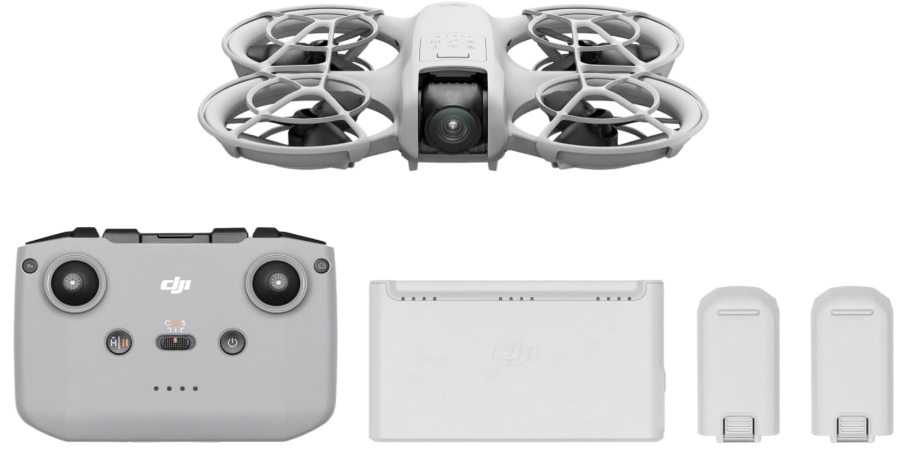
2. DJI Neo
Product Description: A genuinely revolutionary approach to beginner drones. The tiny, 135-gram DJI Neo doesn’t even require a controller to operate. It is designed to take off directly from the palm of your hand, use advanced AI to automatically follow and film you, and land right back in your hand when it’s done.
-
Price: Budget (~$139 for base, $199 with RC)
-
Key Features and Benefits:
-
Palm Takeoff and Landing: Operates safely without needing a flat launch pad.
-
Fully Enclosed Propeller Guards: Extreme physical safety for flying near people or indoors.
-
AI Subject Tracking: Automatically frames and follows you as you move.
-
Multi-Control System: Can be flown via voice commands, a smartphone app, or an optional remote controller.
-
-
Pros and Cons:
-
Pros: Zero piloting skill required; incredibly safe for flying indoors or around children; highly portable.
-
Cons: Lacks a 3-axis mechanical gimbal (relies on RockSteady electronic stabilization); shorter battery life (~18 minutes).
-
-
Amazon Customer Ratings and Reviews: 4.6/5 stars. Solo vloggers and hikers love it, calling it a “personal flying cameraman” that captures dynamic following shots without making them stare down at a controller.
-
Why It’s a Good Choice: It solves the intimidation factor of flying. You literally do not need to know how to use joysticks to get perfectly framed, tracking shots of yourself walking or cycling.
-
Ideal Use Case: Vloggers, solo travelers, and absolute beginners who want a flying personal photographer rather than a complex piloting hobby.
3. Potensic Atom 2
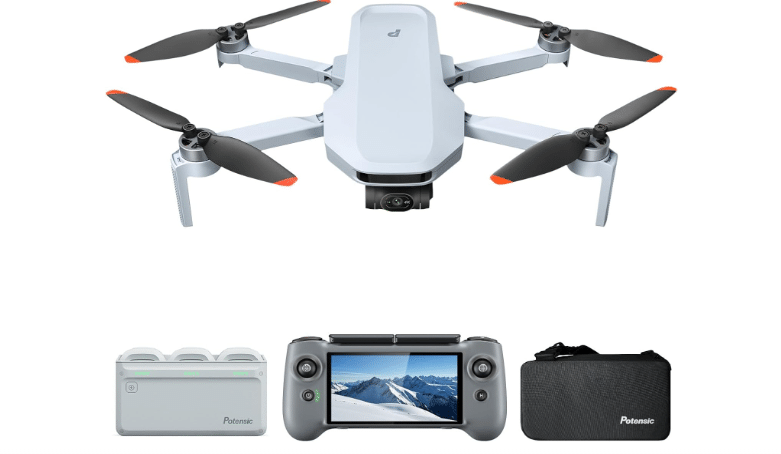
Product Description: The ultimate DJI alternative. The Potensic Atom 2 delivers incredible value by packing a true 3-axis gimbal, 4K30 recording, and precise GPS auto-return into a sleek, sub-250g airframe that heavily rivals the industry leaders at a fraction of the cost.
-
Price: Budget/Mid-Range (~$250 – $299 for Fly More Combo)
-
Key Features and Benefits:
-
4K/30fps Video & 12MP/48MP Photos: High-resolution Sony sensor for excellent clarity.
-
32-Minute Battery Life: Offers plenty of time to compose your shots.
-
Visual Tracking Features: Allows the drone to lock onto and follow a subject.
-
Integrated Remote ID: Fully compliant with upcoming regulatory standards.
-
-
Pros and Cons:
-
Pros: The Fly More Combo (which includes three batteries and a charging hub) costs the same as a bare-bones DJI; excellent 3-axis stabilization; highly responsive customer service.
-
Cons: The camera’s dynamic range struggles slightly in very high-contrast lighting compared to DJI sensors.
-
-
Amazon Customer Ratings and Reviews: 4.5/5 stars. Buyers are incredibly impressed with the build quality, noting it feels premium and flies just as predictably as models twice its price.
-
Why It’s a Good Choice: It gives budget-conscious buyers the full “Fly More Combo” experience without sacrificing the absolute necessity of a mechanical 3-axis gimbal.
-
Ideal Use Case: Budget-conscious beginners who want a fully capable, mechanically stabilized camera drone without paying the “DJI tax.”
4. DJI Flip (Cinewhoop Hybrid)
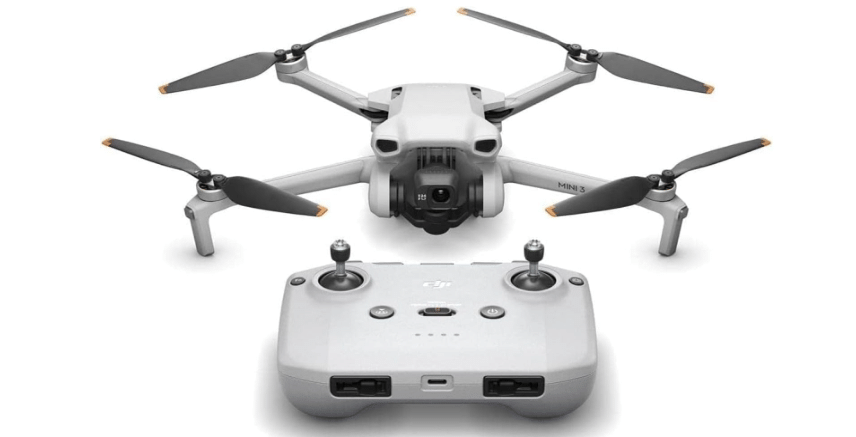
Product Description: A brilliant hybrid design combining the high-end 4K60 HDR camera capabilities of a premium cinematic drone with the rugged, enclosed-propeller safety of an indoor “cinewhoop.” The DJI Flip is structurally designed to bump into obstacles and bounce off rather than shatter and fall, making it incredibly forgiving for nervous newbies.
-
Price: Mid-Range/Premium (~$439)
-
Key Features and Benefits:
-
Permanently Guarded Props: The frame entirely shields the spinning blades.
-
4K60 HDR Video: High frame rate recording for buttery slow-motion edits.
-
10-Bit D-Log M Color Profile: Provides massive flexibility for color grading in post-production.
-
Advanced Obstacle Sensing: Forward and downward sensors brake the drone automatically.
-
-
Pros and Cons:
-
Pros: Extreme peace of mind while flying; can safely be flown through tight indoor spaces; professional-grade video codecs.
-
Cons: The duct-style prop guards make it slightly more susceptible to being pushed around by heavy crosswinds outdoors.
-
-
Amazon Customer Ratings and Reviews: 4.7/5 stars. Real estate photographers and parents praise the enclosed design, noting they can confidently fly it through hallways and living rooms without fear of damaging walls or injuring bystanders.
-
Why It’s a Good Choice: It provides maximum physical safety without compromising on video quality. The built-in guards mean you can fly it near trees, people, and indoor spaces without the fear of shattering a propeller.
-
Ideal Use Case: Parents flying around children, indoor real estate videographers, and beginners who want top-tier video quality combined with maximum physical crash safety.
5. DJI Mini 5 Pro
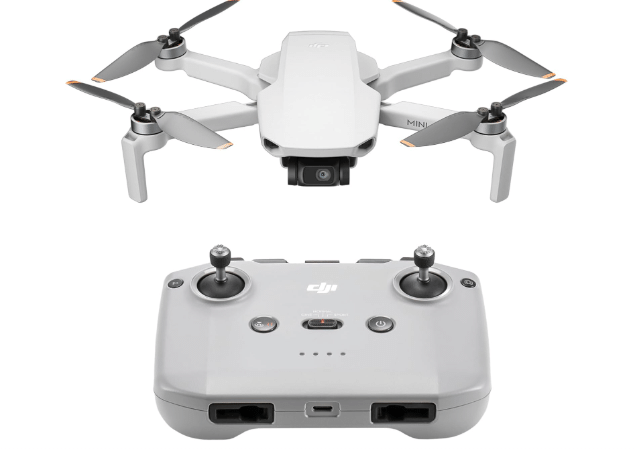
Product Description: The absolute pinnacle of sub-250g drones. If you have a larger budget and want a drone you will never outgrow, the DJI Mini 5 Pro is a technological marvel. It features a massive 1-inch camera sensor for stunning low-light video and omnidirectional obstacle avoidance that physically stops you from crashing in any direction, making it the most advanced sub-micro drone ever built.
-
Price: Premium (~$759 for base model)
-
Key Features and Benefits:
-
1-Inch CMOS Sensor: Delivers stunning 4K/100fps video with incredible dynamic range and low-light clarity.
-
Omnidirectional Obstacle Avoidance: Uses LiDAR and vision sensors to detect and avoid objects from all angles.
-
ActiveTrack 360: Select yourself on the screen, and the drone will autonomously film you while flying around trees and dodging obstacles.
-
20km Transmission Range: Next-generation OcuSync 4.0 ensures a crystal-clear video feed to your controller.
-
-
Pros and Cons:
-
Pros: It is virtually crash-proof for beginners; the camera quality rivals massive $2,000 professional drones; true vertical shooting mode included.
-
Cons: Very high price tag for a first-time pilot; the advanced software features can feel overwhelming to navigate initially.
-
-
Amazon Customer Ratings and Reviews: 4.8/5 stars. “Buy once, cry once” buyers rave about the peace of mind the 360-degree obstacle avoidance provides, noting it actively saved their drone from crashing into tree branches on their very first flight.
-
Why It’s a Good Choice: It provides a completely frictionless flying experience. The drone actively protects itself from your piloting mistakes while capturing Hollywood-grade footage.
-
Ideal Use Case: Aspiring professional photographers, serious content creators, and buyers who want the absolute best safety tech available in a beginner-friendly, registration-free footprint.
6. HOVERAir X1
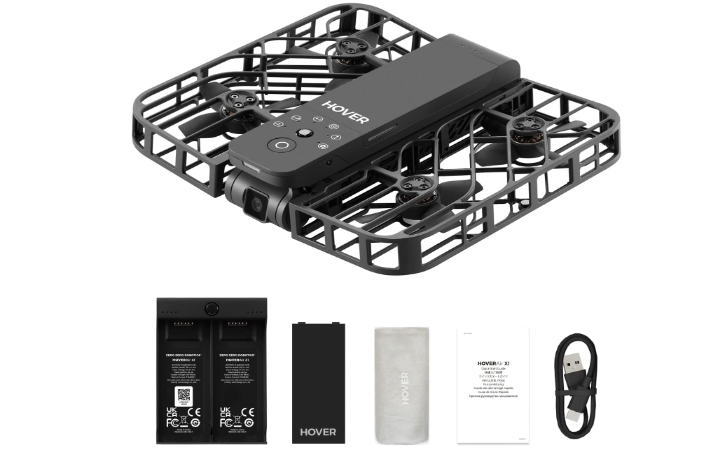
Product Description: A pocket-sized, self-flying camera that literally folds up to the size of a smartphone. The HOVERAir X1 is built for absolute spontaneity. It requires zero controller setup—you simply unfold the drone, select a flight path (like “Orbit,” “Follow,” or “Hover”) using a physical button on the device, and let it take off straight from your hand.
-
Price: Mid-Range (~$349 – $399)
-
Key Features and Benefits:
-
Fully Caged Propellers: Impossible to cut your fingers; perfectly safe for flying indoors or in dense crowds.
-
Pocket-Sized Foldable Design: Weighs only 125g and slides into a jacket pocket.
-
VIO Positioning System: Flies perfectly indoors without needing a GPS signal.
-
Audio Recording: Syncs with your smartphone’s microphone to record your voice while the drone films you.
-
-
Pros and Cons:
-
Pros: Ultimate portability; requires zero piloting skills; records synchronized audio (unlike DJI models); deployment takes less than 3 seconds.
-
Cons: Max resolution is 2.7K (not 4K); battery life is very short (around 10-12 minutes per battery).
-
-
Amazon Customer Ratings and Reviews: 4.6/5 stars. Users love pulling it out at family barbecues or on hikes, praising it as the ultimate “group selfie” camera that replaces the need for a selfie stick.
-
Why It’s a Good Choice: It solves the friction of traditional drones. You don’t have to carry a bulky controller or spend 5 minutes calibrating a compass—just unfold it and let it film.
-
Ideal Use Case: Social media users, hikers, and families who want quick, autonomous aerial selfies without the hassle of learning how to pilot a quadcopter.
7. BetaFPV Cetus X FPV Kit
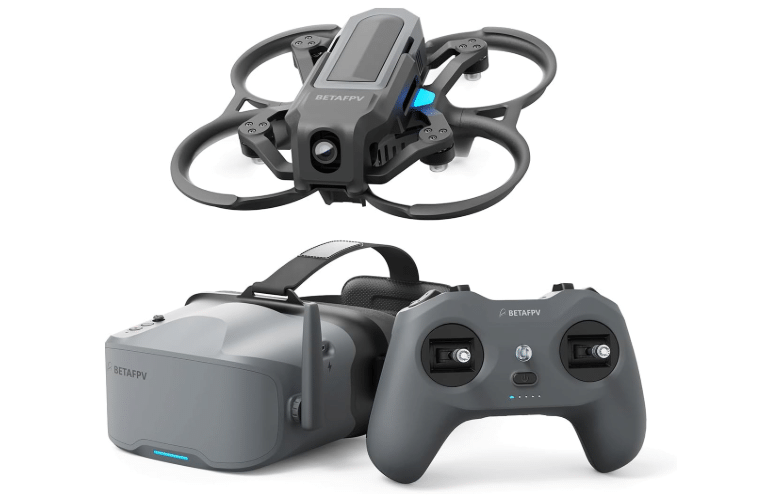
Product Description: Traditional camera drones fly like slow, floating tripods; FPV (First Person View) drones fly like acrobatic fighter jets. The BetaFPV Cetus X is an all-in-one starter kit that includes the micro-drone, a radio controller, and VR-style video goggles. It offers beginners a safe, highly crash-resistant entry into the exhilarating world of FPV flying.
-
Price: Budget/Mid-Range (~$250 – $300)
-
Key Features and Benefits:
-
Complete RTF (Ready-to-Fly) Kit: Includes the drone, VR goggles, controller, and batteries in one box.
-
Multiple Flight Modes: Switch from Beginner (self-leveling) to Acro (full manual flips and rolls).
-
Durable PA12 Frame: The whoop-style frame is designed to withstand hundreds of full-speed crashes.
-
Optical Flow Hovering: Assists beginners in keeping the drone steady when learning the controls.
-
-
Pros and Cons:
-
Pros: The most affordable and safest way to learn FPV; survives brutal crashes against walls and concrete; immersive VR flying experience.
-
Cons: Video quality is low-resolution analog (designed for zero-latency flying, not cinematic photography); very short flight times (~5 minutes).
-
-
Amazon Customer Ratings and Reviews: 4.4/5 stars. New pilots love the tiered learning modes, noting that the drone grows with their skill level, allowing them to start slowly before unlocking full manual acrobatics.
-
Why It’s a Good Choice: Attempting to learn FPV on a custom-built 5-inch racing drone usually ends in a costly, dangerous crash on day one. The Cetus X allows you to safely learn the muscle memory required for FPV indoors.
-
Ideal Use Case: Adrenaline junkies, gamers, and future drone racers who want the immersive “birds-eye” VR flying experience rather than slow, stabilized landscape photography.
8. DJI Mini 3
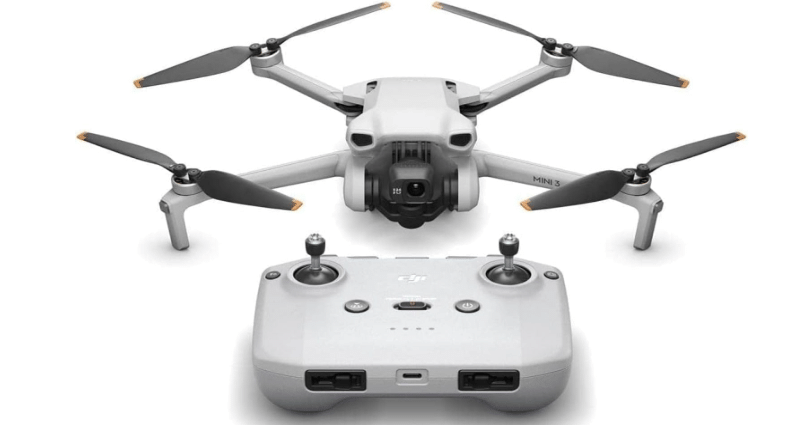
Product Description: Still holding its ground as an incredible value buy, the DJI Mini 3’s superpower is its rotating camera gimbal. With the simple tap of a button on the remote, the camera physically rotates 90 degrees to shoot true, uncropped vertical 4K video, making it the ultimate aerial tool for TikTok, YouTube Shorts, and Instagram Reels.
-
Price: Mid-Range (~$419)
-
Key Features and Benefits:
-
True Vertical Shooting: Shoots native 9:16 video tailored for smartphone screens without degrading quality.
-
4K HDR Video: Captures stunning details in highlights and shadows.
-
Incredible Battery Life: Achieves a massive 38 minutes on standard batteries (upgradable to 51 minutes with the Plus battery).
-
Sub-249g Weight: Bypasses standard FAA recreational registration requirements.
-
-
Pros and Cons:
-
Pros: Vertical shooting saves hours of editing time; best-in-class battery life; handles wind surprisingly well for its size.
-
Cons: No active obstacle avoidance sensors (only downward sensors for landing).
-
-
Amazon Customer Ratings and Reviews: 4.8/5 stars. Content creators constantly highlight the True Vertical feature, explaining that cropping traditional horizontal drone footage for TikTok completely ruins the resolution, a problem the Mini 3 entirely solves.
-
Why It’s a Good Choice: It saves you from having to crop and degrade your beautiful 4K landscape footage just to make it fit correctly on a smartphone screen, all while delivering massive flight times.
-
Ideal Use Case: Social media influencers, TikTok creators, and travelers who need extra-long battery life for extended backcountry hikes.
9. Holy Stone HS720G
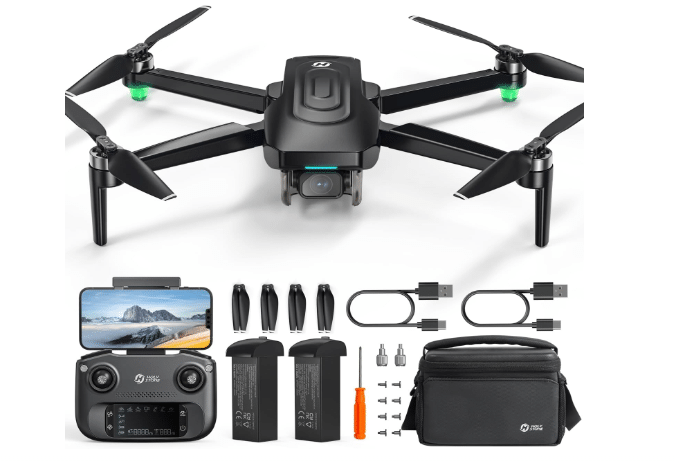
Product Description: Holy Stone dominates the Amazon budget space, and the HS720G is their flagship beginner offering. It steps away from the sub-250g micro category to offer a heavier, more substantial aircraft. It features a 2-axis motorized gimbal supplemented by Electronic Image Stabilization (EIS) and a 4K camera, offering a massive step up from cheap, fixed-camera toy drones.
-
Price: Budget (~$250)
-
Key Features and Benefits:
-
4K Camera with 2-Axis Gimbal + EIS: Reduces jitter and “jello” effect in flight footage.
-
GPS Auto-Return Home: Automatically returns if the battery dies or signal is lost.
-
Follow Me & Waypoint Mode: Allows for automated, hands-free flight paths.
-
Brushless Motors: Provides quiet operation and strong wind resistance.
-
-
Pros and Cons:
-
Pros: The heavier weight (>250g) makes it slightly more stable in coastal winds; comes with a robust carrying case; excellent customer support.
-
Cons: Because it weighs over 250 grams, you are legally required to register it with the FAA in the US before flying; the 2-axis gimbal is good, but not as buttery smooth as DJI’s 3-axis system.
-
-
Amazon Customer Ratings and Reviews: 4.3/5 stars. Reviewers appreciate its substantial feel in the air, noting it does not get bullied by the wind as easily as ultra-light micro drones.
-
Why It’s a Good Choice: It provides a straightforward, affordable alternative for beginners who want a larger, heavier drone that feels like a serious piece of equipment rather than a delicate toy.
-
Ideal Use Case: Casual hobbyists who want an affordable Amazon alternative to DJI for flying around the local park or beach on windy days.
10. Ryze Tech Tello (Powered by DJI)
Product Description: A micro-drone built in partnership with DJI, designed specifically for education, coding, and safe indoor flight. While its 720p camera won’t win any cinematography awards, the Tello is incredibly stable, remarkably safe, and can be programmed to perform autonomous flips and flights using simple Scratch coding blocks on a tablet.
-
Price: Ultra-Budget (~$99)
-
Key Features and Benefits:
-
DJI Flight Stabilization: Utilizes DJI tech for a remarkably steady indoor hover.
-
Scratch Coding Integration: Allows kids to program custom flight paths via drag-and-drop block coding.
-
720p HD Video & 5MP Photos: Streams directly to your smartphone.
-
80-Gram Weight: Incredibly light and safe for indoor use.
-
-
Pros and Cons:
-
Pros: The absolute best sub-$100 drone for hovering stability; teaches basic STEM programming logic; survives endless indoor crashes.
-
Cons: No GPS (relies entirely on downward vision sensors); very poor performance outdoors if there is any wind; relies on Wi-Fi connection which limits range to about 100 feet.
-
-
Amazon Customer Ratings and Reviews: 4.5/5 stars. Parents and educators praise the Tello as the ultimate educational toy, noting it holds its position perfectly in the air, unlike cheap department store drones that drift into walls.
-
Why It’s a Good Choice: It is the only sub-$100 drone that actually hovers in place reliably. Cheap knock-offs drift and crash immediately; the Tello stays exactly where you leave it.
-
Ideal Use Case: Kids, STEM educators, and adults who want a safe, durable drone strictly for flying around the living room or teaching basic coding logic.
V. Skyscraper Value-Add: Drone Regulations & Pre-Flight Checklist
Buying the drone is only the first step. To ensure you don’t face steep fines or lose your new aircraft on day one, you must understand the rules of the sky.
1. The TRUST Certificate (US Pilots) Even if you buy a sub-249g drone (like the DJI Mini 4K) and fly purely for fun in your own backyard, the FAA requires you to pass the TRUST (The Recreational UAS Safety Test). It is a completely free, 15-minute online test covering basic safety rules. Once passed, print the certificate and keep it in your drone bag.
2. Understanding Airspace (B4UFLY) You cannot fly a drone everywhere. Flying near airports, over military bases, inside National Parks, or above major sporting events is strictly illegal. Download the free B4UFLY or AutoPylot app to your phone. Check it before every flight to ensure your current location is not in restricted airspace.
3. The Ultimate Beginner Pre-Flight Checklist Do not rush your takeoff. Follow these steps every time:
-
Check the Props: Run your fingers over the propeller blades. If there are any chips or cracks, replace them immediately to prevent mid-air shattering.
-
Wait for Satellites: When you turn the drone on, do not take off until your screen indicates a strong GPS lock (usually 10 to 12+ satellites). If you take off without GPS, the drone will drift with the wind.
-
Set Your RTH Altitude: Check the tallest tree or building in your immediate area. Set your Return-to-Home (RTH) altitude higher than that object. If the drone loses connection and flies back to you, it will climb to this height first, ensuring it doesn’t fly blindly into a building.
VI. Final Verdict
The era of impossible-to-fly, fragile RC helicopters is completely over. Today’s camera drones utilize advanced GPS, downward vision sensors, and artificial intelligence to make cinematic aerial photography accessible to anyone, right out of the box.
By prioritizing models with mechanical 3-axis gimbals and keeping the weight under 249 grams, you save yourself from regulatory headaches while guaranteeing professional-looking footage.