Centipede grass is widely celebrated as the “lazy man’s grass” due to its low-maintenance nature, but when it starts turning yellow or thinning out, many homeowners panic and make a fatal mistake: over-fertilizing. Unlike Bermuda or St. Augustine, this turf is highly sensitive to excess nitrogen and phosphorus. Applying a standard, off-the-shelf lawn food can actually burn its shallow roots, encourage massive weed takeover, and trigger a lethal condition known as “centipede decline.”
To solve this, we’ve analyzed agronomist recommendations, optimal NPK ratios, and thousands of real customer reviews to rank the 10 best fertilizer for centipede grass available this year. Whether you need a rapid liquid nutrient boost to correct sudden yellowing or a gentle, slow-release granular feed for long-term seasonal health, this comprehensive guide will help you confidently choose the right product. By matching your lawn’s specific needs with these top-rated formulas, you can achieve a thick, vibrant, and barefoot-friendly yard without ever risking chemical burn.
Quick Comparison: Our Top Picks at a Glance
| Top Recommended Fertilizer | Primary Benefit | Best For |
| Simple Lawn Solutions 15-0-15 | Instant Green-Up & Zero Phosphorus | Best Overall Liquid Feed |
| The Andersons Premium 15-0-15 | Long-Term, Slow-Release Nitrogen | Best Overall Granular Feed |
| Sunniland 15-0-15 Centipede | Budget-Friendly Traditional Mix | Best Traditional Southern Pick |
| Milorganite Slow-Release | Non-Burning, Ultra-Slow Release | Best Foolproof Organic Pick |
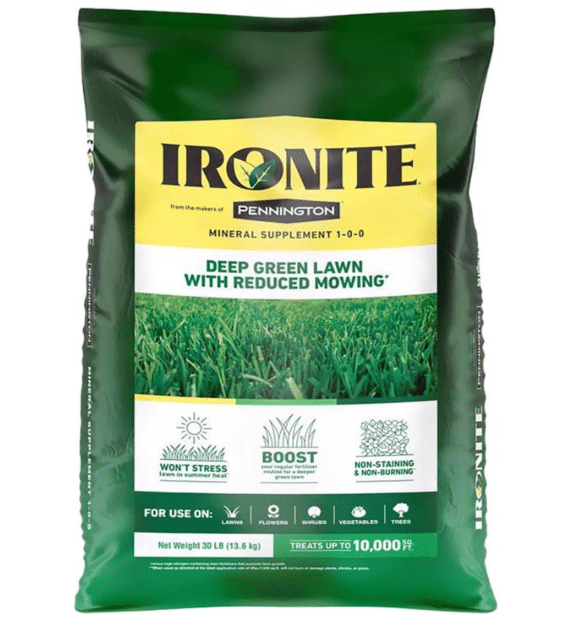
| Ironite Mineral Supplement | Deep Greening Without Growth | Best for Color Correction |
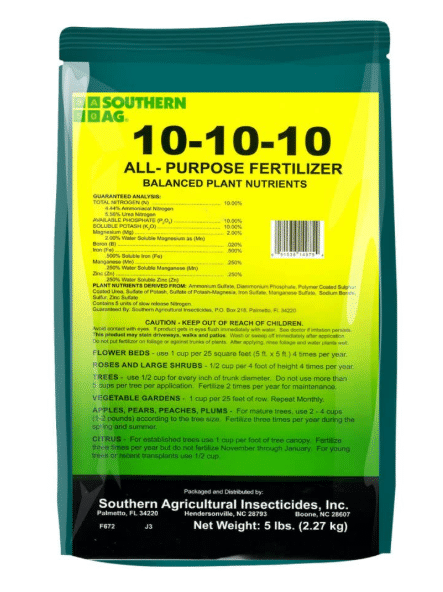
| Southern Ag 10-0-10 | Gentle, Balanced Nutrition | Best for Large Lawns on a Budget |
| Pennington Ultragreen Southern | Controls Weeds While Feeding | Best for Weed Problems |
| Scotts Turf Builder Southern | Improves Drought Resistance | Best for Extreme Southern Heat |
| Super Juice Soluble (14-2-4) | Fully Customizable Dilution | Best for Precision Feeding |
| Espoma Organic Lawn Food | Feeds Beneficial Soil Microbes | Best for Improving Soil Health |
Detailed Product Reviews: The 10 Best Fertilizer for Centipede Grass
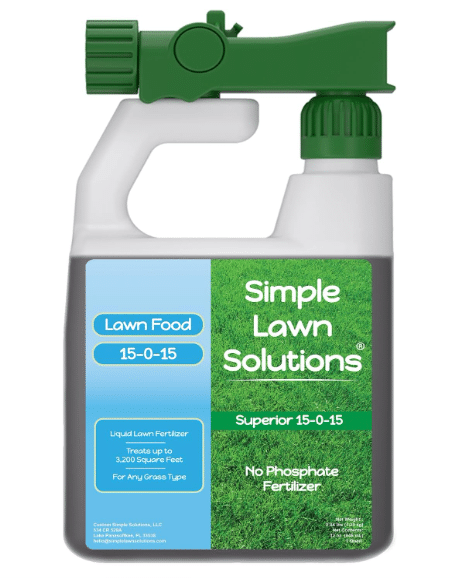
1. Simple Lawn Solutions 15-0-15 Liquid Fertilizer (Best Overall)
The Ultimate Fast-Acting, Zero-Phosphorus Liquid Nutrient Boost
When centipede grass starts looking pale and you need immediate results, granular fertilizers are simply too slow. Simple Lawn Solutions 15-0-15 is a commercial-grade, liquid lawn food specifically formulated to align perfectly with centipedegrass needs. It contains exactly 15% nitrogen for vibrant top growth, zero phosphorus to completely avoid centipede decline, and 15% potassium to build robust root systems. What elevates this formula to our number one spot is the inclusion of humic and fulvic acids, which actively condition sandy soils and enhance nutrient uptake.
-
Price: $24.77
-
Key Features & Benefits:
-
Comes with an attached hose-end sprayer for foolproof, ready-to-use application.
-
Phosphate-free, protecting the turf from fatal thatch buildup.
-
Enhances weather tolerance and boosts the lawn’s immune system against pests.
-
-
Pros and Cons:
-
Pros: Rapid absorption delivers visible greening within days; humic acid improves poor soils; exceptionally easy to apply; safe for all grass types.
-
Cons: Liquid fertilizers do not last as long in the soil as granular slow-release options, meaning you may need a second application later in the summer.
-
-
Amazon Customer Ratings and Reviews: ~4.5/5 stars. Reviewers consistently praise how quickly it greens up yellowing centipede grass and appreciate the convenience of the spray bottle.
-
Why it’s a good choice: It provides the exact 15-0-15 nutritional profile recommended by turf experts in a highly bioavailable liquid format.
-
Ideal Use Case / Who should buy it: Homeowners looking for a fast-acting, highly controlled nutrient boost without the risk of granular chemical burn, or those needing to quickly correct nutrient deficiencies in stressed, yellowing lawns.
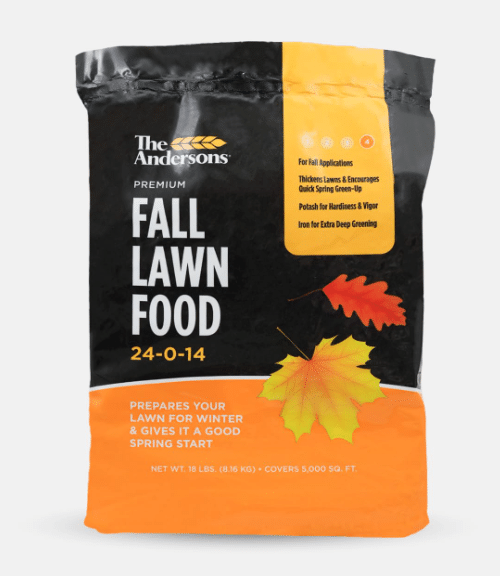
2. The Andersons Premium 15-0-15 Fertilizer
The Premier Granular Option for Steady, Long-Term Growth
While liquid fertilizers are great for a quick fix, maintaining a healthy lawn throughout the brutal summer requires a steady drip of nutrients. The Andersons Premium 15-0-15 utilizes professional-grade, ultra-fine particles that provide incredibly even distribution across your yard. Unlike cheap fertilizers that dump all their nitrogen at once, causing a dangerous growth spike, this formula utilizes slow-release nitrogen to feed the turf gently over 8 weeks.
-
Price: $45.88
-
Key Features & Benefits:
-
Patented ultra-fine DG (Dispersible Granule) technology melts directly into the soil upon watering.
-
Provides a sustained, slow-release 15-0-15 nutritional profile.
-
-
Pros and Cons:
-
Pros: Feeds grass evenly for up to two months; fine particles prevent mower pickup and wash-away; zero phosphorus protects against decline.
-
Cons: More expensive per square foot than basic big-box store granular fertilizers.
-
-
Amazon Customer Ratings and Reviews: ~4.7/5 stars. Lawn care enthusiasts swear by the even greening and the lack of “burn spots” typical of cheaper granular products.
-
Why it’s a good choice: The slow-release mechanism perfectly matches the naturally slow growth rate of centipede grass, ensuring the turf is never overwhelmed by excessive nitrogen.
-
Ideal Use Case / Who should buy it: Homeowners who want to fertilize just once in the late spring and enjoy a consistently green, low-maintenance lawn all summer long.
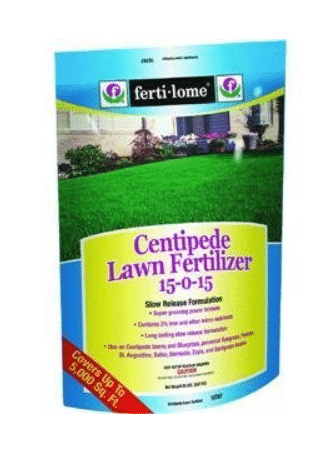
3. Sunniland 15-0-15 Centipede Fertilizer
The Budget-Friendly, Traditional Southern Staple
Sunniland is a brand synonymous with Southern lawn care, and their 15-0-15 blend is formulated specifically for the unique demands of centipede turf. This is a traditional, no-nonsense granular fertilizer that includes a small but critical dose of iron to push a deep, dark green color without forcing the grass to grow unnecessarily tall.
-
Price: $38.39
-
Key Features & Benefits:
-
Tailored 15-0-15 NPK ratio designed explicitly for centipede lawns.
-
Fortified with iron for enhanced color correction.
-
-
Pros and Cons:
-
Pros: Highly affordable for large properties; added iron works wonders on pale yards; widely available in Southern states.
-
Cons: Granules are larger and take slightly longer to break down into the soil than premium micro-particle brands.
-
-
Amazon Customer Ratings and Reviews: ~4.6/5 stars. Buyers love the classic reliability and the excellent value for the price.
-
Why it’s a good choice: It delivers exactly what centipede grass needs (nitrogen and potassium) and leaves out exactly what it hates (phosphorus), all while remaining budget-friendly.
-
Ideal Use Case / Who should buy it: Budget-conscious homeowners living in the deep South who need an affordable, reliable, and specialized granular feed for their yard.
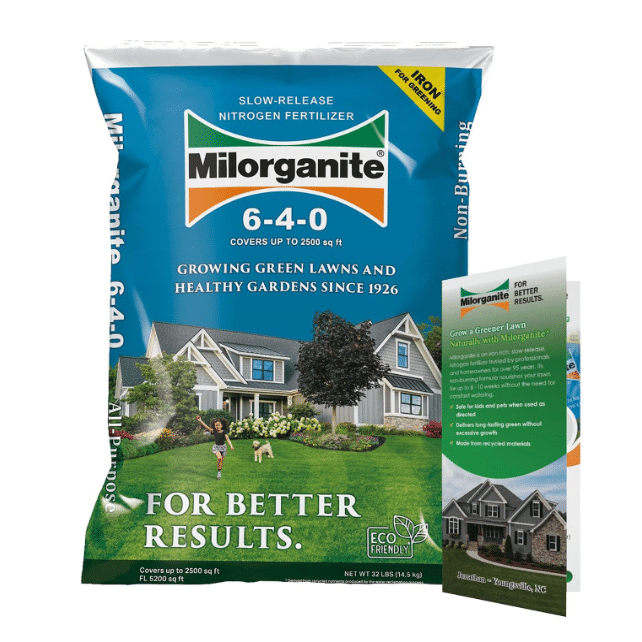
4. Milorganite Slow-Release Nitrogen Fertilizer (6-4-0)
The Foolproof, Non-Burning Organic Option
Many homeowners are terrified of accidentally burning their sensitive centipede grass with synthetic chemicals. Milorganite is the ultimate safety net. While it does contain a small amount of phosphorus (which is usually avoided for centipede), its organic, ultra-slow release nature means it processes so gently that the risk of thatch buildup or chemical burn is practically zero. Furthermore, it boasts an incredible 2.5% iron content, providing massive color enhancement.
-
Price: $35.01
-
Key Features & Benefits:
-
Gentle 6-4-0 NPK ratio.
-
High iron content (2.5%) for long-lasting, deep green color without excessive growth.
-
Non-burning formula; you do not have to water it in immediately.
-
-
Pros and Cons:
-
Pros: Impossible to burn the lawn, even if you spill a pile of it; adds valuable organic matter back into the soil; highly affordable.
-
Cons: Contains 4% phosphorus, so it should not be the only fertilizer used year after year to prevent long-term soil phosphorus buildup. Has a distinct, earthy odor for a few days after application.
-
-
Amazon Customer Ratings and Reviews: ~4.8/5 stars. It has a cult following among lawn care enthusiasts for its foolproof application and rich green results.
-
Why it’s a good choice: It feeds the soil microbiology as much as it feeds the grass, creating a healthier long-term environment for the shallow roots.
-
Ideal Use Case / Who should buy it: Beginners who are afraid of making a mistake, or homeowners looking for an organic, highly forgiving slow-release option that prioritizes deep green color over rapid growth.
5. Ironite Mineral Supplement 1-0-1
The Secret to Dark Green Grass Without Unwanted Mowing
Centipede grass thrives on neglect, and ideally, it only needs about 1 to 2 pounds of nitrogen per 1,000 square feet annually. If you have already applied your yearly nitrogen but your lawn is still looking yellow, you do not want to add more fertilizer—you want iron. Ironite is a mineral supplement, not a traditional fertilizer, delivering a massive dose of soluble iron to turn the grass dark green without triggering a rapid growth spurt that will force you to mow twice a week.
-
Price: $57.38
-
Key Features & Benefits:
-
Extremely low 1-0-1 NPK ratio.
-
Contains 20% iron, plus essential micronutrients.
-
AST (Advanced Soil Technology) helps improve soil structure.
-
-
Pros and Cons:
-
Pros: Provides rapid, intense greening; does not cause a surge in top-growth; safe to apply in the heat of the summer when standard nitrogen fertilizers would cause severe damage.
-
Cons: It does not provide the primary macronutrients (nitrogen/potassium) needed for overall health, so it must be used as a supplement, not a replacement for fertilizer.
-
-
Amazon Customer Ratings and Reviews: ~4.5/5 stars. Users consistently report seeing their lawn transform from pale yellow to dark emerald within 48 to 72 hours.
-
Why it’s a good choice: It allows you to correct the color of your lawn in mid-summer without violating the strict “low nitrogen” rules of centipede grass management.
-
Ideal Use Case / Who should buy it: Homeowners whose centipede grass is pale or yellowing but who have already hit their annual nitrogen limit, or those who want a greener lawn without the chore of extra mowing.
6. Southern Ag 10-0-10 Formula
Gentle, Balanced Nutrition for Large Properties on a Budget
Southern Ag is a highly respected, no-nonsense agricultural brand, and their 10-0-10 formulation is perfectly suited for the low-nitrogen requirements of centipede grass. By providing a gentle 1:1 ratio of nitrogen and potassium with absolutely zero phosphorus, it feeds the turf without risking the dangerous overgrowth that leads to thatch buildup and disease.
-
Price: $17.42
-
Key Features & Benefits:
-
Provides a highly economical, balanced 10-0-10 NPK profile.
-
Large 50 lb. bags are perfect for extensive acreage.
-
Zero phosphorus to safeguard against centipede decline.
-
-
Pros and Cons:
-
Pros: Extremely cost-effective for large lawns; gentle formulation minimizes the risk of chemical burn; widely trusted by professional landscapers.
-
Cons: Lacks the advanced micronutrient packages or slow-release coating found in premium residential brands.
-
-
Amazon Customer Ratings and Reviews: ~4.6/5 stars. Homeowners with large properties consistently praise its affordability and reliable, steady results.
-
Why it’s a good choice: It delivers exactly the macronutrients centipede grass needs in a highly economical format, making large-scale lawn maintenance affordable.
-
Ideal Use Case / Who should buy it: Homeowners, homesteaders, or property managers who need to feed half an acre or more of centipede turf without breaking the bank.
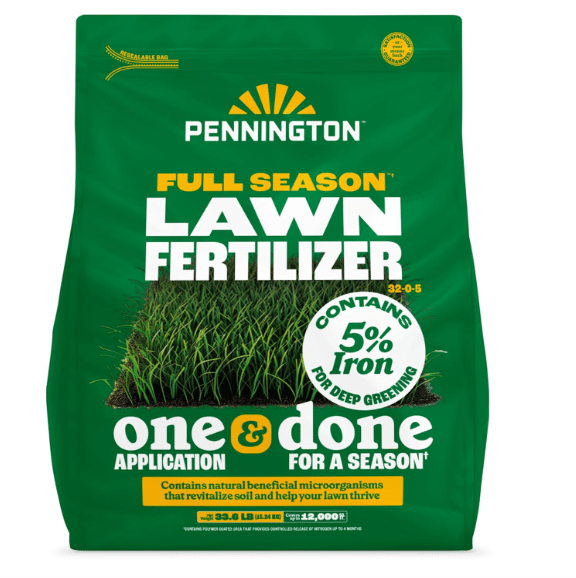
7. Pennington Ultragreen Southern Weed & Feed (30-0-4)
Powerful Weed Control (Caution: Apply at Half-Rate for Centipede)
Sometimes, feeding the grass isn’t enough—you also have to kill an active weed invasion. Pennington Ultragreen Southern Weed & Feed is highly effective at destroying broadleaf weeds like dollarweed and clover while feeding the lawn. However, there is a critical caveat: at 30% nitrogen, applying this at the bag’s full recommended rate will severely damage centipede grass. To use this safely, you must apply it at exactly half the recommended dial setting on your spreader.
-
Price:
-
Key Features & Benefits:
-
Kills over 250 broadleaf weeds, including stubborn southern varieties.
-
Features a slow-release nitrogen component that feeds for up to 3 months.
-
-
Pros and Cons:
-
Pros: Kills weeds and greens up the lawn simultaneously; fast-acting weed control.
-
Cons: Very high nitrogen content requires careful calibration; high risk of turf burn if over-applied.
-
-
Amazon Customer Ratings and Reviews: ~4.4/5 stars. Users love its weed-killing power, but experienced centipede owners frequently note the necessity of a light application.
-
Why it’s a good choice: It allows you to tackle severe weed infestations and fertilize in a single afternoon, provided you calibrate your spreader correctly.
-
Ideal Use Case / Who should buy it: Homeowners dealing with a lawn that has been overrun by broadleaf weeds who are willing to meticulously manage their spreader settings to protect their centipede turf.
8. Scotts Turf Builder Southern Gold
Built-in Moisture Control for Extreme Southern Heat
Southern summers can be absolutely brutal, combining intense heat with extended droughts. Scotts Turf Builder Southern Gold is engineered specifically to help southern grasses survive these extremes. Its unique formulation helps the turf build deeper, stronger roots, maximizing water absorption and retention so the grass stays greener longer between rainfalls.
-
Price: $24.72
-
Key Features & Benefits:
-
Features Scotts’ exclusive “All-In-One Particles” for even nutrient distribution.
-
Enhances water efficiency to protect against heat and drought stress.
-
-
Pros and Cons:
-
Pros: Excellent drought protection; widely available; very easy to apply uniformly.
-
Cons: Nitrogen levels are slightly higher than ideal for centipede, so a lighter application rate is highly recommended.
-
-
Amazon Customer Ratings and Reviews: ~4.6/5 stars. Buyers in Florida, Georgia, and Texas frequently highlight its ability to keep the lawn alive during July and August heatwaves.
-
Why it’s a good choice: It acts as an insurance policy against the brutal Southern summer, actively helping the root system maximize every drop of water.
-
Ideal Use Case / Who should buy it: Homeowners in extreme heat zones (like the deep South and Gulf Coast) who struggle to keep their centipede grass alive during peak summer droughts.
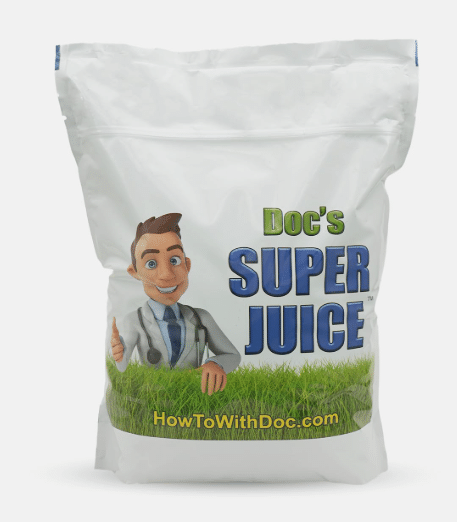
9. Super Juice Soluble Lawn Fertilizer (14-2-4)
Fully Customizable Dilution for Precision Feeding
Super Juice is a highly concentrated, dry, water-soluble fertilizer that you mix with water and apply via a hose-end sprayer. While its full-strength NPK is 14-2-4, its major advantage is that it is fully customizable. Centipede owners can simply mix it at half-strength (creating a gentle 7-1-2 ratio) to deliver a highly precise, easily digestible nutrient boost without risking centipede decline.
-
Price: $109.88
-
Key Features & Benefits:
-
Dry formula mixes easily with water; contains sea kelp and humic acid.
-
One bag can treat an entire acre at the full rate, or two acres at the half-rate.
-
-
Pros and Cons:
-
Pros: Incredible value per square foot; fully customizable strength; added humic acid improves soil structure.
-
Cons: Requires manual mixing in a bucket before application; high upfront cost.
-
-
Amazon Customer Ratings and Reviews: ~4.5/5 stars. Lawn care perfectionists love the control it gives them over their nutrient applications.
-
Why it’s a good choice: It allows you to spoon-feed your lawn. You can apply very light, highly diluted doses of fertilizer exactly when the grass needs a boost, entirely eliminating the risk of nitrogen burn.
-
Ideal Use Case / Who should buy it: Detail-oriented homeowners who want total control over their lawn’s nutrient intake and are willing to take the time to mix their own liquid applications.
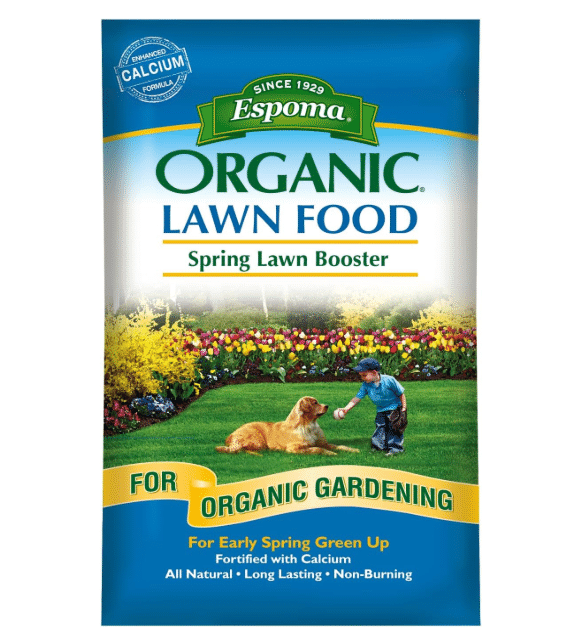
10. Espoma Organic Lawn Food (Spring/Summer)
Feeds the Soil Microbes for Long-Term Turf Health
Centipede grass relies heavily on the overall health and acidity of the soil it lives in. Espoma Organic Lawn Food doesn’t just feed the grass; it features a proprietary blend of “Bio-tone” microbes that actively improve the living soil ecosystem. This 100% natural, non-burning formula breaks down slowly, ensuring the shallow roots of your centipede turf are never overwhelmed.
-
Price: $51.53
-
Key Features & Benefits:
-
100% organic, non-burning formulation.
-
Enhanced with Bio-tone microbes to improve soil structure and nutrient uptake.
-
-
Pros and Cons:
-
Pros: Completely safe around children and pets; improves the soil biologically; zero risk of chemical burn.
-
Cons: Takes longer to show visual greening than synthetic fertilizers; has a distinct organic odor upon application.
-
-
Amazon Customer Ratings and Reviews: ~4.7/5 stars. Eco-conscious buyers praise its safety profile and its ability to slowly rehabilitate poor soils.
-
Why it’s a good choice: It works in harmony with nature, naturally improving the soil conditions that centipede grass needs to thrive long-term.
-
Ideal Use Case / Who should buy it: Eco-conscious families, pet owners, and those dealing with poor, compacted soil who want a safe, organic path to a healthier lawn.
Buying Guide: How to Choose the Right Fertilizer for Centipede Grass
Selecting the best fertilizer for centipede grass is entirely different than shopping for Bermuda or Fescue. Here is what you must understand before making a purchase:
1. Understanding “Centipede Decline”
Centipede decline is a fatal condition caused by over-pampering the grass. If you apply too much nitrogen, the grass grows too fast, creating a thick layer of thatch that chokes out oxygen and water. If you apply too much phosphorus, you severely damage the turf’s ability to absorb iron, causing rapid yellowing and death. The rule for centipede grass is simple: Less is More.
2. The Magic of the 15-0-15 Ratio
Agronomists almost universally recommend a 15-0-15 (or similar zero-phosphorus) NPK ratio for centipede grass.
-
Nitrogen (15): Provides just enough fuel for steady, controlled green growth.
-
Phosphorus (0): Excluded entirely to prevent soil toxicity and decline.
-
Potassium (15): Strengthens the cellular walls and root system to resist heat, drought, and disease.
3. Liquid vs. Granular Formulations
-
Liquid Fertilizer: Absorbed through the leaves immediately. Best for correcting sudden yellowing, quick summer green-ups, and precise, light feedings.
-
Granular Fertilizer: Breaks down slowly into the soil over weeks. Best for your primary, long-term feeding at the beginning of the summer.
4. The Critical Role of Soil pH
Centipede grass thrives in highly acidic soil. If your soil pH creeps above 6.0, the grass physically loses its ability to absorb iron and nitrogen, and it will turn yellow no matter how much fertilizer you apply. Before buying heavy fertilizers, test your soil. You want a pH strictly between 5.0 and 6.0.
5. When to Fertilize
Never fertilize centipede grass too early in the spring. Wait until the lawn has completely awakened from winter dormancy and is 100% green (usually late May or early June). A second, lighter application can be done in mid-summer, but never fertilize past late August, as the grass needs to harden off for winter.
Pro Tips for Centipede Lawn Maintenance
-
Mowing Height: Keep your mower deck set between 1.5 and 2.0 inches. Mowing it too high encourages thatch buildup; mowing it too low damages the shallow surface runners (stolons) that the grass uses to spread.
-
Watering Rules: Water deeply but infrequently. Give the lawn 1 inch of water per week in a single session rather than light daily waterings. This forces the roots to dive deeper into the soil searching for moisture, creating a more drought-resilient lawn.
-
Iron Over Nitrogen: If your lawn is yellow but you’ve already fertilized this year, do not add more nitrogen. Apply a liquid iron supplement or a product like Ironite. Iron provides the deep green color you want without triggering the dangerous top-growth that harms the grass.
Conclusion & Final Verdict
Maintaining a beautiful centipede lawn is incredibly easy once you understand its unique biology. Stop trying to force it to grow like Bermuda grass, and stop applying heavy, big-box store lawn foods that will eventually trigger centipede decline. Stick to balanced, low-nitrogen, zero-phosphorus options.
-
The Final Recommendation: For the most foolproof, rapid green-up without the risk of chemical burn, Simple Lawn Solutions 15-0-15 Liquid Fertilizer is our top overall pick.
-
The Best Granular Feed: If you prefer a traditional granular application that feeds your yard slowly for up to two months, The Andersons Premium 15-0-15 provides unmatched, professional-grade quality.
Evaluate your yard’s specific needs, check current prices on Amazon using the links above, and start feeding your “lazy man’s grass” exactly what it craves to achieve a thick, vibrant, and resilient lawn this season.