If you’ve ever kept ducks, you already know this truth: water management is the single biggest challenge in backyard duck care. Ducks love water—but they’re also incredibly good at turning it dirty, muddy, and unsanitary in record time. Choosing the wrong water setup doesn’t just mean more cleaning for you; it can directly impact duck health, feather condition, parasite risk, and long-term welfare.
That’s why the debate around Backyard Duck Ponds vs Kiddie Pools matters more than most new (and even experienced) duck keepers realize. Both options are popular. Both can work. But they are not equal in every situation—and choosing based on convenience alone often leads to frustration, unhealthy ducks, or unnecessary work.
This expert-backed, in-depth guide will help you make the right water choice for your ducks, your land, and your lifestyle, using practical agricultural best practices—not guesswork or trends.
Understanding Ducks’ Natural Water Needs (An Expert Foundation)
Why Ducks Need More Than Just Drinking Water
From an agricultural and animal-welfare perspective, ducks are semi-aquatic livestock, not dry-land poultry. Unlike chickens, their bodies are biologically designed to interact with water multiple times a day.
Proper water access allows ducks to:
-
Clean their eyes and nostrils, preventing infections
-
Maintain feather waterproofing by distributing oils from the preen gland
-
Regulate body temperature, especially in warm climates
-
Express natural behaviors like dabbling, bathing, and preening
-
Reduce external parasites such as mites and lice
Any water system—whether a backyard duck pond or a kiddie pool—must allow ducks to fully submerge their heads at a minimum. Systems that fail here often lead to chronic health problems.
Health Issues Linked to Poor Water Access
In my experience working with small-scale poultry keepers and agricultural extension guidelines, inadequate water setups commonly contribute to:
-
Eye infections and foamy eye discharge
-
Dirty or brittle feathers that lose waterproofing
-
Increased parasite loads
-
Foot and joint stress from muddy conditions
-
Behavioral stress and aggression
This is why the quality and design of your duck water system matters as much as its size.
Backyard Duck Ponds Explained
What Qualifies as a Backyard Duck Pond?
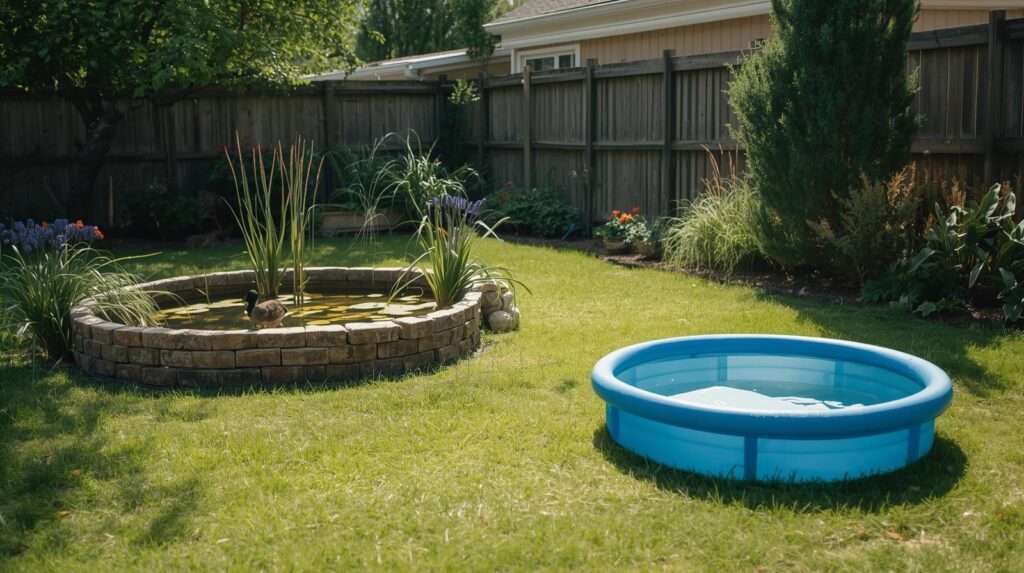
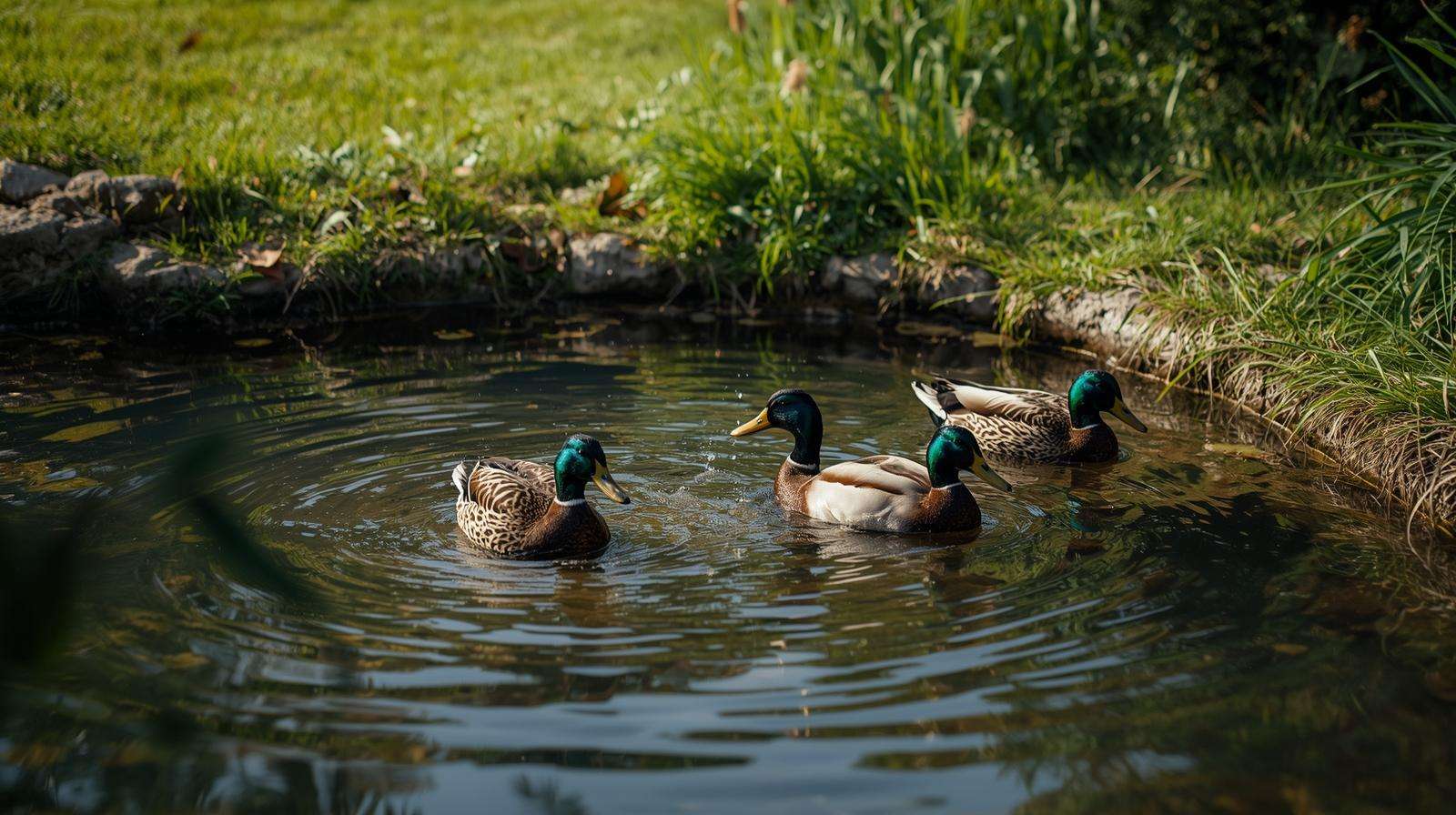
A backyard duck pond is a semi-permanent or permanent water feature designed to allow ducks to swim, bathe, and forage naturally. These can include:
-
Natural ponds
-
Lined artificial ponds
-
Converted livestock water features
-
Integrated permaculture ponds
Typical characteristics include:
-
Depth ranging from 12 inches to several feet
-
Sloped or ramped entry for safety
-
Continuous or semi-continuous water presence
-
Larger surface area than portable containers
Ponds are most suitable for medium to large properties, especially in rural or semi-rural settings.
Benefits of Backyard Duck Ponds
1. Superior Duck Health and Welfare
Ponds most closely mimic a duck’s natural environment. Ducks with pond access often show:
-
Better feather condition
-
Fewer eye and respiratory issues
-
More natural, relaxed behaviors
2. Reduced Daily Labor (Long-Term)
While ponds require planning, they usually demand less daily cleaning than kiddie pools. Ducks spread waste over a larger water volume, slowing contamination.
3. Environmental Integration
Well-designed ponds can:
-
Support beneficial insects
-
Help manage pests
-
Contribute to farm biodiversity
-
Be integrated into regenerative agriculture systems
4. Enrichment and Stress Reduction
Ducks with access to ponds are generally calmer and less destructive to surrounding areas.
Challenges and Limitations of Duck Ponds
Despite their benefits, ponds are not a universal solution.
Water Quality Management
Without proper circulation or filtration, ponds can become stagnant, algae-filled, or foul-smelling.
Mosquito Concerns
Still water can attract mosquitoes unless managed with:
-
Moving water
-
Fish (where appropriate)
-
Regular turnover
Land and Legal Constraints
Urban zoning laws, drainage regulations, and HOA rules may restrict pond installation.
Seasonal Maintenance
In cold climates, winter freezing presents challenges that require planning.
Kiddie Pools for Ducks: A Practical Overview
Why Kiddie Pools Are So Popular
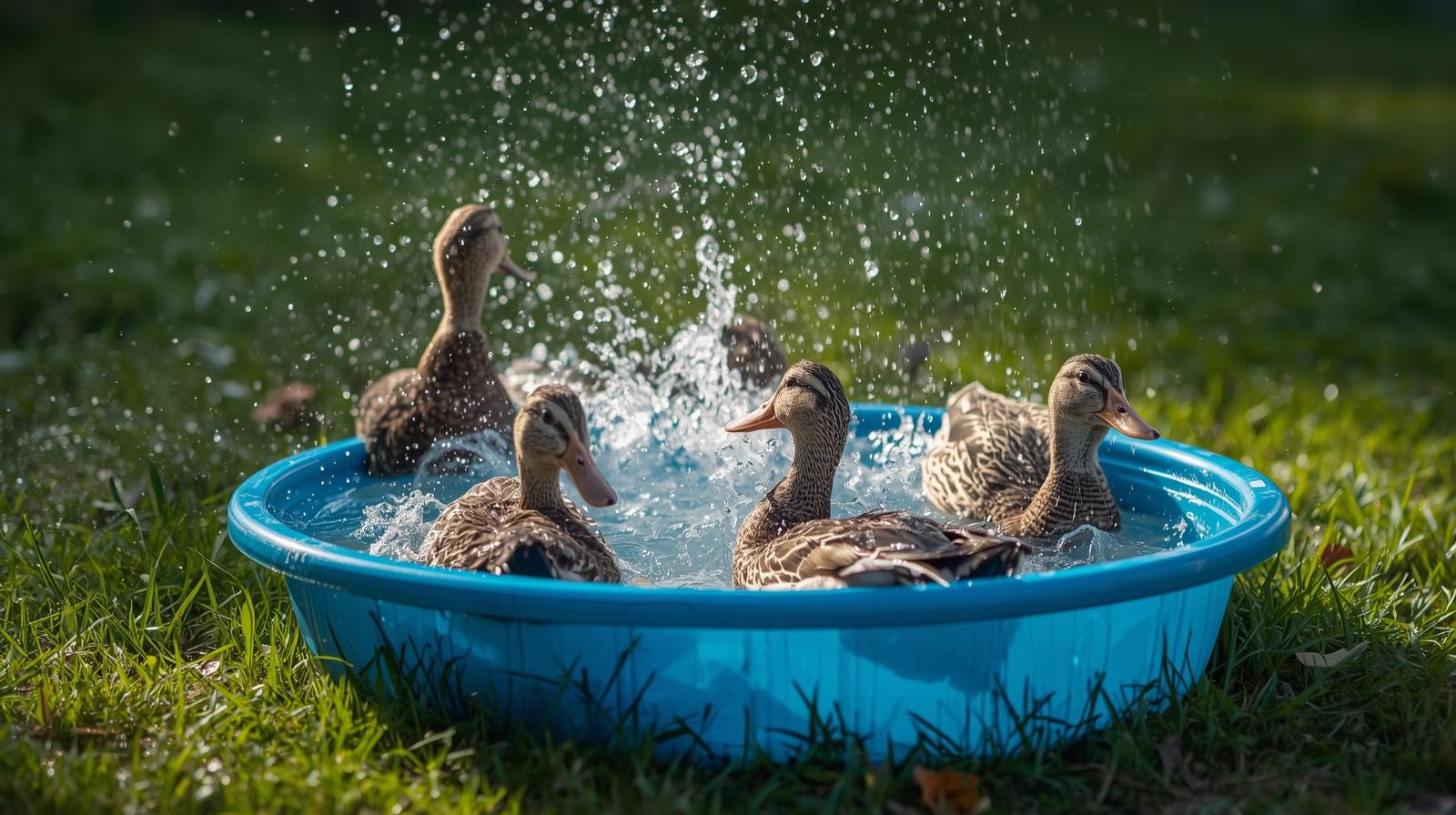
Kiddie pools are one of the most common water solutions for backyard ducks—and for good reason. They are:
-
Inexpensive
-
Widely available
-
Easy to set up
-
Beginner-friendly
For new duck keepers, kiddie pools often serve as a low-risk entry point into proper duck water management.
Advantages of Using Kiddie Pools
1. Maximum Control Over Cleanliness
Kiddie pools allow you to:
-
Drain dirty water daily
-
Reduce disease transmission
-
Monitor water quality closely
This is especially valuable for ducklings, quarantine pens, or small flocks.
2. Ideal for Small Spaces
Urban and suburban duck keepers often lack space for ponds. Kiddie pools fit easily into:
-
Small backyards
-
Portable runs
-
Temporary setups
3. Biosecurity-Friendly
Because water is frequently replaced, kiddie pools reduce the buildup of harmful bacteria and parasites.
4. Low Startup Cost
Compared to ponds, kiddie pools require almost no upfront investment.
Drawbacks of Kiddie Pools
High Maintenance Frequency
Ducks dirty kiddie pools fast—often within hours. This means:
-
Daily dumping and refilling
-
Increased water use
-
More labor over time
Limited Enrichment
Small pools don’t allow extended swimming or natural foraging behaviors.
Durability Issues
Thin plastic pools crack easily, especially in sun or freezing temperatures.
Environmental Impact
Frequent water dumping can create muddy, unsanitary yard conditions if drainage isn’t managed.
Backyard Duck Ponds vs Kiddie Pools: A Side-by-Side Expert Comparison
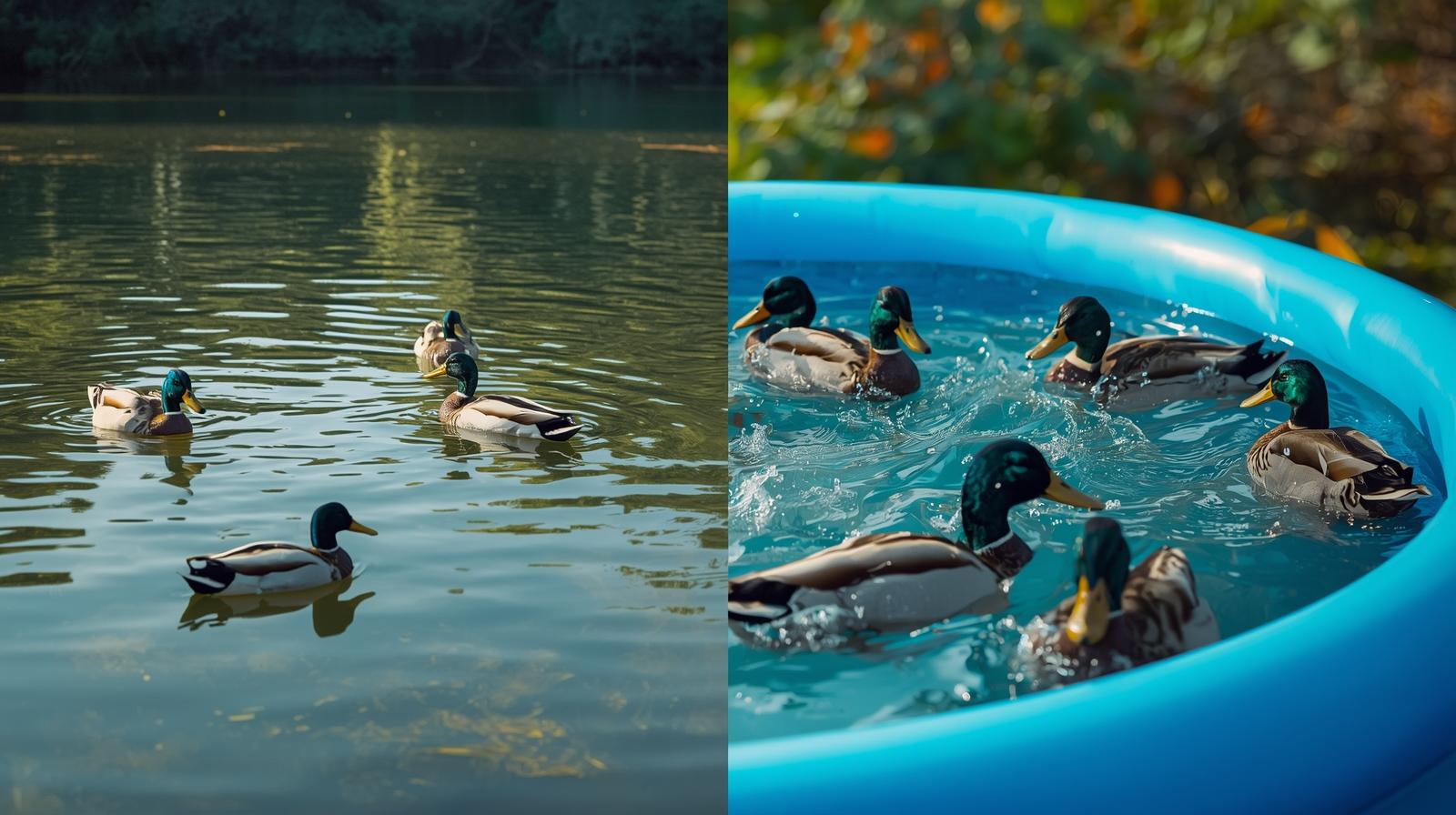
Duck Health and Welfare
-
Ponds: Best for long-term physical and mental health
-
Kiddie Pools: Adequate when well-maintained, but less enriching
Cleanliness and Hygiene
-
Ponds: Cleaner longer but require system-level management
-
Kiddie Pools: Cleaner per refill, dirtier faster
Maintenance and Time Investment
-
Ponds: Higher upfront effort, lower daily labor
-
Kiddie Pools: Low setup, high ongoing labor
Cost and Long-Term Value
-
Ponds: Higher initial cost, better long-term value
-
Kiddie Pools: Cheap upfront, ongoing replacement costs
Environmental Impact
-
Ponds: Can be sustainable if designed well
-
Kiddie Pools: Water-intensive and often messy
Which Option Is Best for Different Duck Keepers?
Best Choice for Beginners
Kiddie pools are usually the safest starting point. They:
-
Teach water management habits
-
Allow observation of duck behavior
-
Require minimal infrastructure
Many experienced keepers start with pools and graduate to ponds once confident.
Best Option for Small Urban or Suburban Backyards
Kiddie pools win here due to:
-
Space efficiency
-
Legal simplicity
-
Easy relocation
However, drainage planning is essential to avoid mud problems.
Best Setup for Rural or Larger Properties
Backyard duck ponds shine in rural settings where:
-
Space is available
-
Natural drainage exists
-
Ducks can integrate into farm ecosystems
Climate Considerations
-
Cold climates: Kiddie pools are easier to manage in winter
-
Hot climates: Ponds provide superior cooling and heat stress relief
Expert Tips to Improve Any Duck Water Setup (From the Field)
Whether you choose a backyard duck pond, a kiddie pool, or a hybrid system, how you manage the water matters as much as what container you use. The following expert-backed strategies come from agricultural best practices, long-term duck keepers, and poultry health guidelines.
How to Keep Duck Water Cleaner for Longer
1. Strategic Placement Is Everything
Place water sources:
-
Away from feeders (to reduce feed contamination)
-
On slightly sloped or well-drained ground
-
Over gravel, sand, or pavers instead of bare soil
Poor placement is the leading cause of muddy, unsanitary duck yards—especially with kiddie pools.
2. Use Ramps and Shallow Entries
Easy entry and exit:
-
Reduce splashing
-
Lower injury risk
-
Prevent panic in younger or heavier ducks
This applies equally to ponds and pools.
3. Increase Water Volume, Not Just Frequency
Larger water bodies dilute waste more effectively. Even upgrading from a small kiddie pool to a deeper, heavier-duty stock tank can dramatically reduce how fast water fouls.
Low-Maintenance Hacks for Busy Duck Owners
Gravity-Assisted Drainage
Install pools or pond outlets where dirty water can drain:
-
Into garden beds (non-edible plants only)
-
Onto pasture areas
-
Away from high-traffic zones
Rotational Water Stations
Using two pools and alternating daily allows one area to dry out, reducing mud and bacteria buildup.
Partial Shade Is Critical
Shaded water stays cooler, cleaner, and algae-free longer—especially in summer.
Biosecurity Best Practices for Duck Water Systems
From an agricultural disease-prevention standpoint:
-
Never share water between new and established birds
-
Disinfect kiddie pools periodically (vinegar or poultry-safe cleaners)
-
Remove standing water immediately during disease outbreaks
-
Keep wild waterfowl away from duck ponds whenever possible
Water is the #1 disease transmission pathway in ducks—proper management reduces risk dramatically.
Common Mistakes Duck Owners Make With Water Systems
Even experienced duck keepers fall into these traps:
1. Assuming Ducks “Don’t Need That Much Water”
Ducks need access to water multiple times per day, not just occasionally.
2. Prioritizing Convenience Over Duck Health
Tiny tubs may be easy—but they don’t meet ducks’ physiological needs.
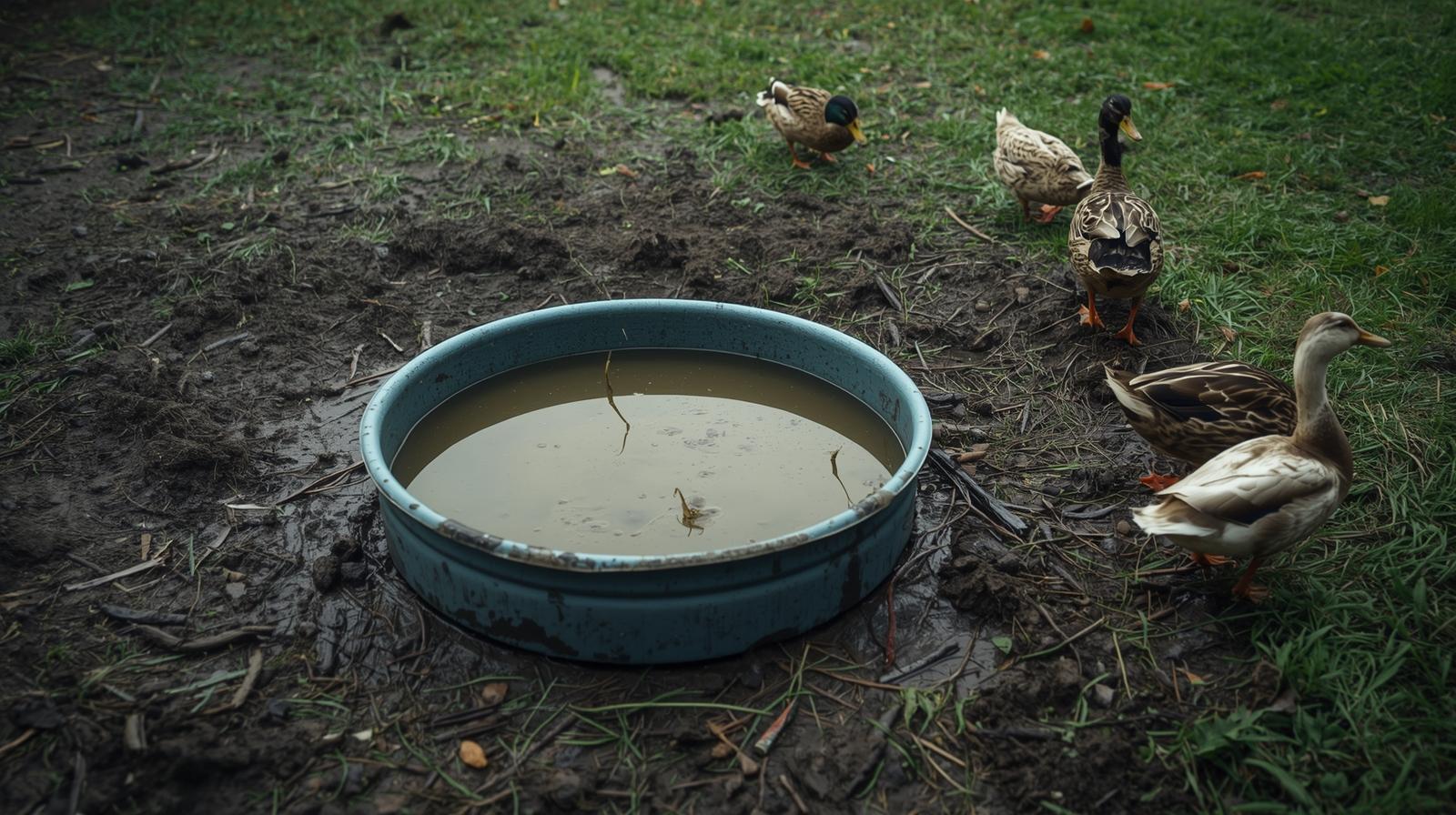
3. Ignoring Drainage
Standing muddy water causes:
-
Bumblefoot
-
Joint strain
4. Choosing the Wrong Option for Their Property
The best system depends on space, time, climate, and flock size, not trends.
Frequently Asked Questions (Expert Answers)
Is a kiddie pool enough water for ducks?
Yes—if it’s deep enough for head submersion and cleaned frequently. For small flocks or beginners, kiddie pools are acceptable. For long-term welfare, larger systems are better.
Do ducks need to swim every day?
While ducks don’t need full swimming daily, they must have water deep enough to clean their eyes and bills every day.
How deep should a duck pond or pool be?
Minimum depth should allow full head submersion—typically 6–8 inches. Deeper water provides better enrichment.
How often should duck water be changed?
-
Kiddie pools: daily (sometimes twice daily)
-
Ponds: partial changes as needed, full maintenance seasonally
Can backyard duck ponds attract mosquitoes?
Yes—unless managed properly. Moving water, fish, and natural predators help control mosquito populations.
What’s safest for ducklings?
Shallow containers with ramps or marbles (for very young ducklings) are safest until they are fully waterproofed.
Final Verdict: Backyard Duck Ponds vs Kiddie Pools
There is no one-size-fits-all answer—but there is a best choice for your situation.
Choose a Backyard Duck Pond If:
-
You have space and proper drainage
-
You want lower daily labor long-term
-
You’re focused on natural behavior and enrichment
-
You keep ducks long-term
Choose Kiddie Pools If:
-
You’re a beginner
-
You have limited space
-
You need strict hygiene control
-
You want flexibility and low startup cost
Many experienced duck keepers ultimately use both—pools for cleaning control and ponds for enrichment.
Actionable Takeaway for Duck Owners
Before choosing your water system, ask yourself:
-
How much space do I have?
-
How much time can I commit daily?
-
What’s my climate like?
-
How many ducks do I plan to keep long-term?
Start with what’s manageable—but design with duck health as the priority. Better water systems mean healthier ducks, cleaner yards, and less frustration over time.
Final Expert Note
From an agricultural best-practices perspective, water is not an accessory in duck keeping—it’s infrastructure. Whether you choose a backyard duck pond or a kiddie pool, thoughtful design and consistent management will always outperform convenience-driven setups.