Imagine walking into your backyard and hearing a vibrant chorus of buzzing—from tiny sweat bees darting between flowers to large bumblebees rumbling on blooms, all part of a thriving ecosystem you’ve helped create. Many gardeners rush to install honeybee hives thinking that’s the ultimate way to “save the bees,” but the most effective path to supporting pollinators often lies elsewhere. Creating bee-friendly yards without honeybees can actually deliver greater benefits for local biodiversity and ecosystem health.
North America boasts over 4,000 species of native wild bees—solitary miners, mason bees, bumblebees, and more—that co-evolved with our native plants and perform the bulk of pollination for wildflowers and many crops. In contrast, the European honeybee (Apis mellifera) is a managed livestock species introduced centuries ago. While honeybees are valuable in commercial agriculture, backyard hives can sometimes compete with or harm declining native pollinators.
This in-depth guide, drawing from decades of research by the Xerces Society for Invertebrate Conservation, USDA, university extensions, and peer-reviewed studies, shows you how to build a truly impactful pollinator habitat using native plants and sustainable practices—no hives needed.
You’ll learn why focusing on wild bees is often superior, how to identify and attract your local species, region-specific plant recommendations, design tips, and long-term maintenance strategies. By the end, you’ll have everything needed to transform your yard into a haven for native pollinators.
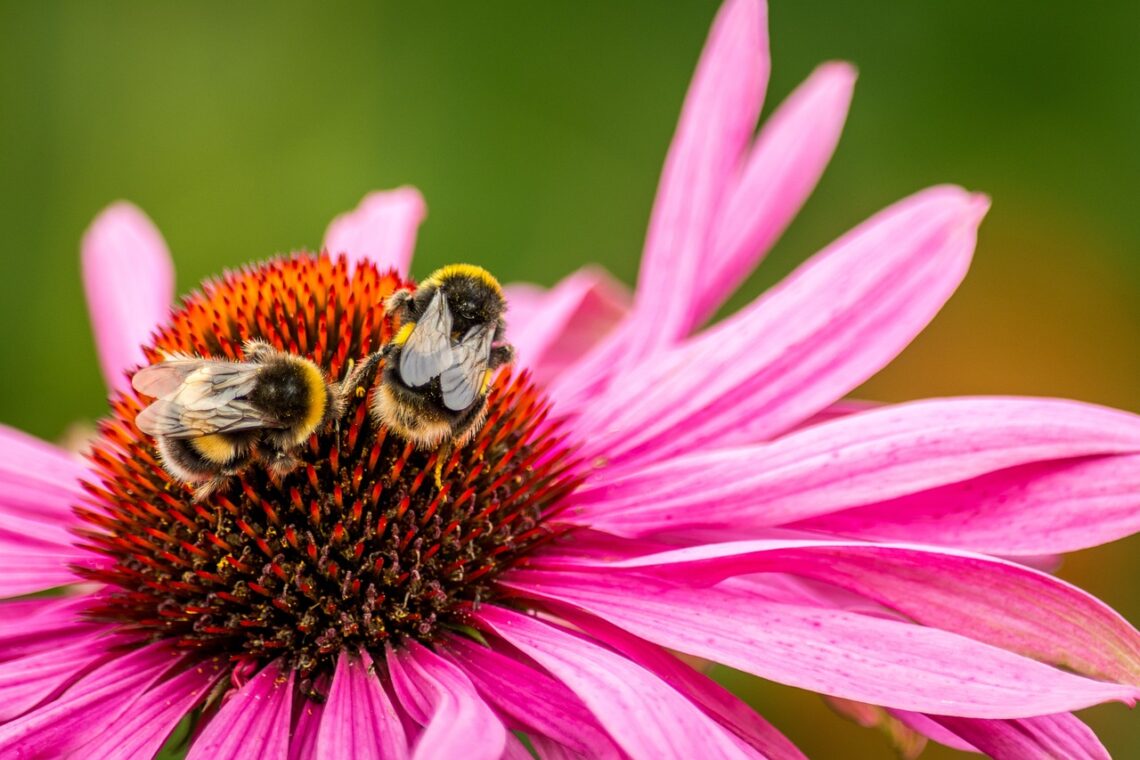
Honeybees dominate public attention due to their honey production and role in large-scale crop pollination. However, for residential gardens aiming to boost local biodiversity, prioritizing native wild bees often yields better results.
The Difference Between Honeybees and Native Wild Bees
Honeybees form massive perennial colonies (up to 60,000 individuals) that store honey and require human management. Most native bees are solitary: a single female builds nests, provisions them with pollen/nectar, and dies after laying eggs.
Native bees exhibit diverse behaviors—like buzz pollination, where bumblebees vibrate flowers to release pollen—making them superior for certain plants (e.g., tomatoes, blueberries).
Potential Downsides of Backyard Honeybee Hives
Scientific evidence highlights risks:
- Competition for Resources: A single hive forages across miles, harvesting nectar and pollen that native bees need. Studies show this reduces native bee reproduction in urban areas.
- Pathogen Spillover: Managed colonies can transmit viruses (e.g., deformed wing virus) and parasites to wild bees lacking immunity.
- Mismatch with Native Flora: Honeybees generalize but may inefficiently pollinate specialized native plants.
A 2020 review in Science and Xerces Society reports conclude that adding managed hives in diverse landscapes can negatively impact wild pollinators.
Evidence from Research
Field experiments (e.g., Proceedings of the Royal Society B, 2019) demonstrate honeybee presence decreases native bee visitation and seed set in wildflowers. The USDA notes native bees provide “free” pollination services worth billions annually.
When Honeybees Can Still Play a Role
In resource-scarce agricultural settings, managed hives fill gaps. Responsible urban beekeeping with abundant forage can coexist—but for pure conservation impact, native-focused gardens excel.
Understanding Your Local Native Pollinators
Tailoring your yard starts with knowing who’s there—or could be.
Common Types of Native Bees in North America
- Bumblebees (Bombus spp.) — Fuzzy, social; ~50 species; key buzz pollinators. Some, like the rusty-patched, are endangered.
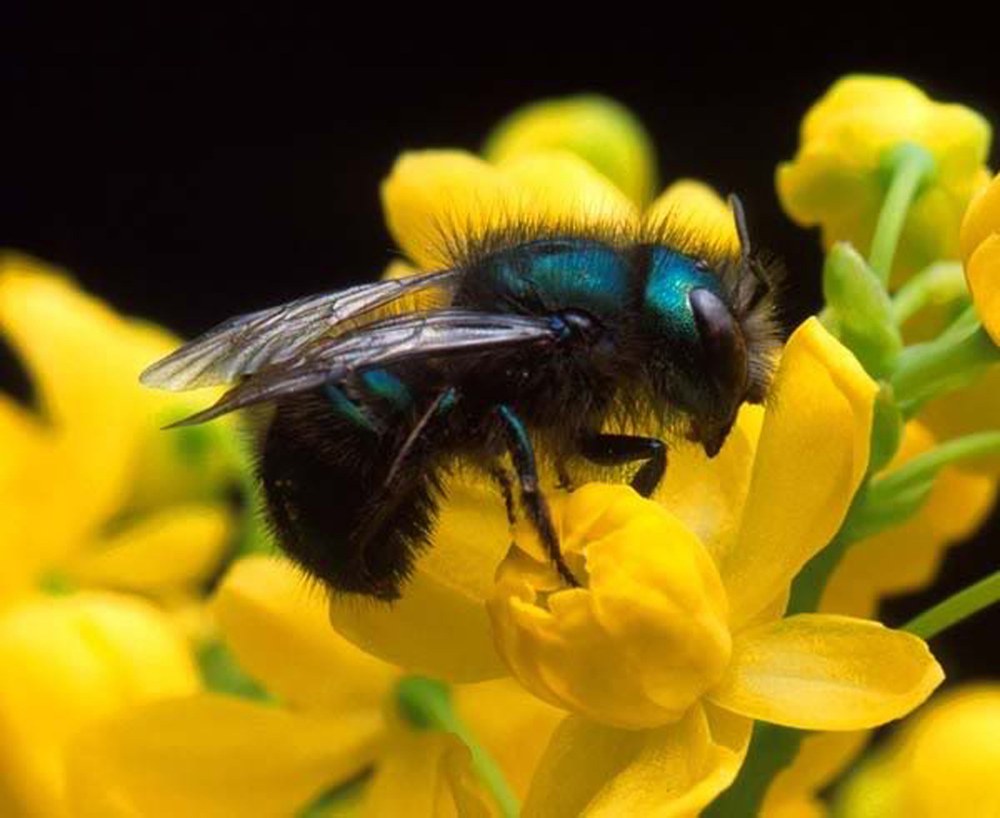
- Mason Bees (Osmia spp.) — Metallic, solitary; emerge early, excellent orchard pollinators.
- Mining Bees (Andrena spp.) — Ground-nesters; diverse and abundant spring visitors.
- Sweat Bees (Halictidae) — Small, often metallic; attracted to salt.
- Carpenter Bees (Xylocopa spp.) — Large, wood-tunneling; shiny abdomens.

Other Important Pollinators
Butterflies (monarchs on milkweed), moths, hoverflies (pest controllers), beetles, and hummingbirds all benefit from native habitats.
How to Identify Pollinators in Your Yard
Conduct a 10-minute observation session. Use free apps like iNaturalist or Seek. Resources: Xerces Society guides, Bumble Bee Watch.
Core Principles for a Bee-Friendly Yard Without Honeybees
The foundation of any successful pollinator garden rests on proven, science-backed principles. Organizations like the Xerces Society, Pollinator Partnership, and numerous university extension programs have distilled decades of research into these core habits that maximize support for native wild bees and other pollinators while minimizing effort and cost.
Plant Native Species First
Native plants are the cornerstone. They provide the precise nectar, pollen, and structural features that local pollinators evolved to use. Research from the Lady Bird Johnson Wildflower Center and USDA shows native plantings support 10–50 times more pollinator species and abundance than non-native landscapes.
Prioritize straight-species natives over cultivars—many bred varieties (especially double-flowered) produce little or no pollen/nectar.
Provide Season-Long Bloom
Native bees have varied flight seasons. Early-emerging mason bees need spring willows and redbuds, while late-flying bumblebee queens rely on fall asters and goldenrods. Aim for overlapping blooms from early spring through late fall—at minimum, three species blooming in each season.
Create Diverse Nesting Habitat
Approximately 70% of native bees are ground-nesters, requiring patches of bare, undisturbed soil. The other 30% are cavity-nesters using hollow stems, dead wood, or beetle tunnels.
Leave areas of exposed soil (especially south-facing), retain snags and brush piles, and allow perennial stems to stand over winter.

Eliminate or Severely Limit Pesticides
All pesticides—including neonicotinoids, pyrethroids, and even some organic options—can harm non-target pollinators and their larvae. Systemic insecticides persist in pollen and nectar. Adopt integrated pest management: tolerate minor damage, encourage beneficial insects, and hand-remove problems.
Reduce Lawn and Conserve Resources
Expansive turf lawns provide almost no pollinator value while consuming water and fertilizer. Converting even small sections to native plantings dramatically increases habitat while cutting maintenance.
| Do’s for Native Pollinator Support | Don’ts for Native Pollinator Support |
|---|---|
| Plant regionally appropriate native species | Install backyard honeybee hives in resource-limited areas |
| Provide continuous bloom across seasons | Use any pesticides, especially systemics or neonicotinoids |
| Leave bare ground, dead wood, and standing stems | Cover every inch with thick mulch or landscape fabric |
| Delay spring cleanup until consistent 50°F+ temperatures | Plant heavily bred cultivars with reduced pollen/nectar |
| Observe and adapt based on visiting pollinators | Over-tidy by removing all leaves, stems, and debris in fall |
Best Native Plants for Pollinators by Region
Selecting plants matched to your ecoregion ensures establishment success and maximum pollinator benefit. The following recommendations draw from the Xerces Society’s regional planting guides, Pollinator Partnership ecoregional guides, and state native plant societies. Focus on locally sourced, straight-species plants whenever possible.
Northeast & Midwest
- Common milkweed (Asclepias syriaca) – Essential monarch host; summer bloom
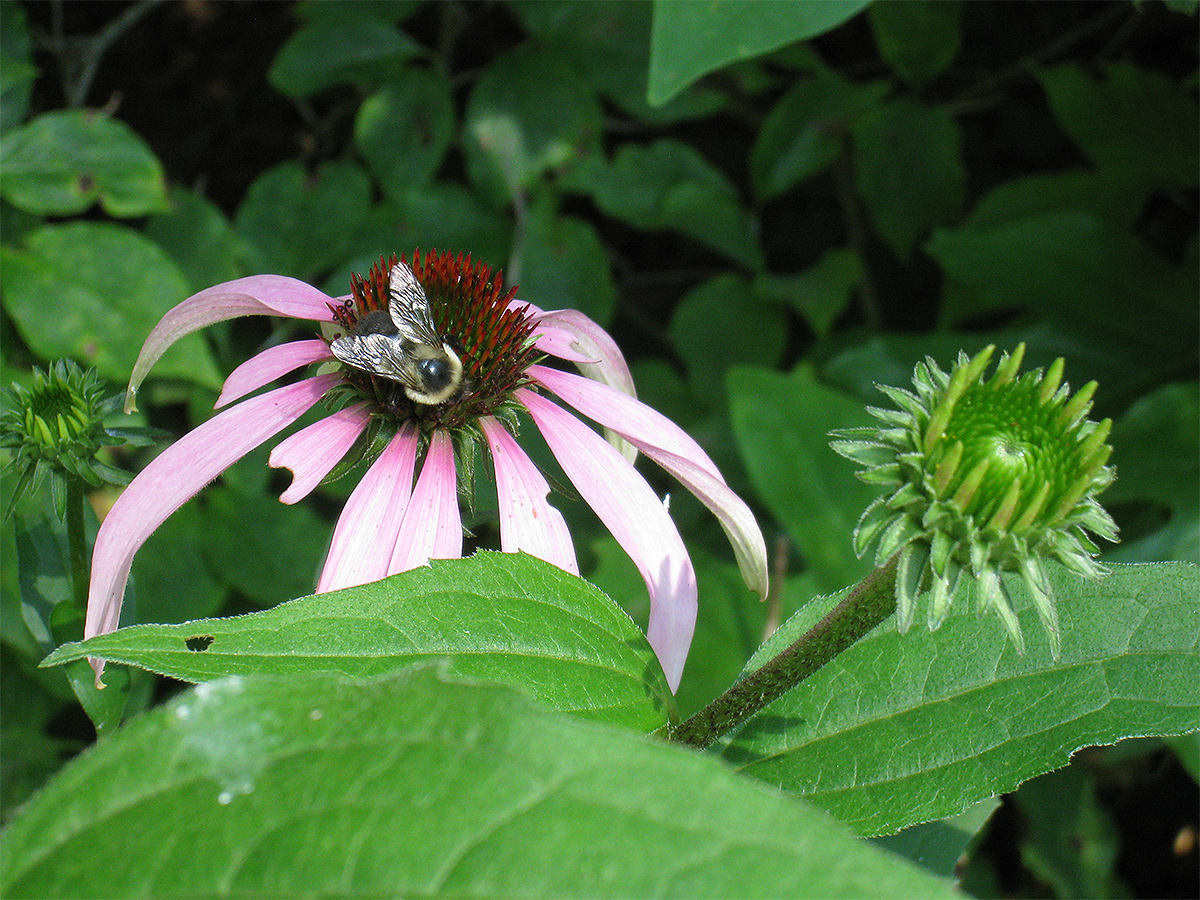
- Purple coneflower (Echinacea purpurea) – Long-blooming; attracts diverse bees
- Wild bergamot/bee balm (Monarda fistulosa) – Fragrant bumblebee magnet
- New England aster (Symphyotrichum novae-angliae) – Critical late-season resource
- Joe-Pye weed (Eutrochium spp.) – Tall, butterfly and bee favorite
- Goldenrod (Solidago spp.) – Fall powerhouse (not an allergy cause)
- Mountain mint (Pycnanthemum spp.) – Exceptionally high nectar production
- Smooth penstemon (Penstemon digitalis) – Early bloom for emerging queens
Southeast
- Swamp milkweed (Asclepias incarnata) – Wet-tolerant monarch host
- Blazing star/gayfeather (Liatris spp.) – Spike blooms loved by butterflies
- Stokes’ aster (Stokesia laevis) – Extended bloom period
- Coral honeysuckle (Lonicera sempervirens) – Long-tubed flowers for long-tongued bees
- Ironweed (Vernonia spp.) – Late-summer height and nectar
- Perennial sunflower (Helianthus angustifolius) – Fall abundance
- Passionflower (Passiflora incarnata) – Host for Gulf fritillary butterflies
Southwest & Desert Regions
- Desert willow (Chilopsis linearis) – Tree/shrub with prolonged bloom
- Palmer’s penstemon (Penstemon palmeri) – Hummingbird and large bee favorite
- Globe mallow (Sphaeralcea ambigua) – Tough, bright orange blooms
- Brittlebush (Encelia farinosa) – Early desert nectar source
- Fairy duster (Calliandra eriophylla) – Attracts carpenter bees
- Creosote bush (Larrea tridentata) – Reliable in extreme aridity
Pacific Northwest
- Red-flowering currant (Ribes sanguineum) – Early spring for mason bees
- Showy milkweed (Asclepias speciosa) – Monarch host
- Oregon grape (Mahonia aquifolium) – Evergreen early bloomer
- Camas (Camassia quamash) – Spring bulb spectacle
- Douglas aster (Symphyotrichum subspicatum) – Late-season native aster
- Salal (Gaultheria shallon) – Shade-tolerant groundcover
Great Plains & Rocky Mountains
- Blanket flower (Gaillardia aristata) – Drought-tolerant long bloomer
- Prairie coneflower (Ratibida columnifera) – Distinctive drooping petals
- Bee balm (Monarda fistulosa) – Hummingbird and bee attractor
- Pasqueflower (Pulsatilla patens) – Earliest spring bloom
- Serviceberry (Amelanchier alnifolia) – Shrub with edible fruit bonus
- Yarrow (Achillea millefolium native strains) – Versatile medicinal

Designing and Building Your Pollinator Habitat
Armed with the right principles and plants, the next step is thoughtful implementation. Effective pollinator gardens blend ecology with aesthetics, creating spaces that are both functional for wildlife and enjoyable for people. These strategies are proven through long-term studies and thousands of successful projects across North America.
Planning Your Yard Layout
Pollinators navigate by sight and scent, so design with their perspective in mind:
- Plant in drifts or patches of at least 3–5 (ideally more) of the same species. Large blocks are more visible from the air than scattered singles.
- Layer heights: tall backdrop plants (Joe-Pye weed, ironweed), mid-height perennials (coneflowers, blazing star), and low groundcovers (mountain mint, pussytoes).
- Maximize sun exposure—most native pollinator plants need 6+ hours of direct sunlight.
- Use edges and pathways thoughtfully: define beds with natural stone or logs to keep the look tidy while allowing wilder growth inside.
Incorporate structural elements: native shrubs and small trees (serviceberry, redbud) provide early nectar and windbreaks.
Creating Nesting Sites
Nesting resources are just as critical as flowers—many gardens fail because they overlook this.
- Ground-nesting bees (70% of species): Maintain patches of bare, well-drained soil in sunny locations. Avoid mulch, fabric, or dense groundcovers here. South-facing banks are prime real estate.
- Cavity-nesting bees (30%): Leave dead standing trees (snags), fallen logs, and bundles of pithy or hollow stems (raspberry, elderberry, cup plant). Overwintering larvae live inside these.
DIY bee hotels can supplement for gentle species like mason and leafcutter bees, but only if maintained properly (clean or replace tubes annually to prevent parasites). Natural habitat is always preferable—hotels should be a small accent, not the focus.
Year-Round Maintenance Tips
Native pollinator gardens become lower-maintenance than lawns after establishment (usually 2–3 years).
- Spring: Wait to clean up until 7–10 consecutive days above 50°F (often mid-April to early May in temperate zones). This protects overwintering bees, butterflies, and beneficial insects in stems and leaf litter.
- Summer: Water deeply but infrequently during the first year. Mature natives are drought-adapted.
- Fall/Winter: Leave seedheads for birds and stems standing for nesting. “Leave the leaves” in beds as natural mulch and insect habitat.
- Weed control: Hand-pull invasives; sheet-mulch new beds with cardboard and compost.
Step-by-Step Guide: Converting Lawn to Pollinator Habitat
- Map your site: note sun/shade, soil drainage, existing plants.
- Choose a section to convert (start small—100–500 sq ft).
- Smother grass: cover with cardboard or newspaper, top with 4–6 inches compost/leaf mulch.
- Plant in fall or early spring for best root growth.
- Mulch lightly with leaves or fine wood chips (keep 2–3 inches away from stems).
- Observe and adjust: add more of top-performing plants in year two.
Common Mistakes to Avoid and How to Fix Them
Even experienced gardeners make these errors—recognizing them early saves time and improves results.
- Planting non-native or heavily bred cultivars: Many “pollinator mixes” include annuals or sterile doubles. Fix: Source from reputable native nurseries or seed companies.
- Excessive tidiness: Cutting everything down in fall destroys nesting and overwintering sites. Fix: Adopt a “messy is best” zone in less visible areas.
- Using any pesticides: Even “organic” sprays can drift and harm larvae. Fix: Build resilience through diversity; tolerate minor damage.
- Forgetting larval host plants: Adult butterflies need nectar, but caterpillars need specific hosts (e.g., milkweed for monarchs, dill/parsley for swallowtails). Fix: Include key hosts.
- Planting too sparsely: Single plants get overlooked. Fix: Mass for impact.
- Installing bee hotels without maintenance: Parasites build up quickly. Fix: Use paper tubes and replace yearly, or skip hotels entirely.
Measuring Success and Long-Term Impact
True success shows in increased pollinator activity and diversity over time.
- Year 1: Generalist bees and butterflies arrive quickly.
- Years 2–5: Specialist species appear as habitat matures and nesting sites develop.
Track progress:
- Keep a simple journal or photo log of visitors.
- Submit observations to citizen-science platforms: iNaturalist, Bumble Bee Watch, Monarch Watch, or Journey North.
Your yard becomes part of a larger network. Connected habitats help pollinators survive climate shifts, habitat fragmentation, and disease—ultimately supporting food security (native bees pollinate ~80% of flowering plants, including many crops).
Frequently Asked Questions (FAQ)
What if I already have a honeybee hive? Should I remove it? Not automatically. If managed responsibly with plenty of forage, it can coexist. Shift new planting efforts toward natives and monitor wild bee populations.
Can I include some non-native plants? Yes—herbs like basil, lavender, or catmint offer supplemental nectar. Just ensure natives comprise at least 70–80% for optimal benefit.
How small a space can still help? Even a balcony or 50 sq ft patch matters. Container gardens with native perennials or annuals create stepping stones.
What about apartments or balconies? Use pots with good drainage. Choose compact natives: narrow-leaf milkweed, aromatic aster, or regional penstemons. Add a small, properly maintained bee hotel.
Are pollinator gardens high-maintenance? No—once established, they require far less water, fertilizer, and mowing than turf. Initial effort pays off quickly.
How do I deal with neighbors or HOA restrictions? Present neat designs with defined edges and signage (“Certified Pollinator Habitat”). Share Xerces Society or extension resources; many communities now encourage or require native landscaping.
Building bee-friendly yards without honeybees is one of the most direct, rewarding actions you can take for conservation. By focusing on native plants, nesting resources, and chemical-free habits, you create resilient habitat that genuinely supports the thousands of wild pollinators keeping our ecosystems—and food supply—functioning.
Start where you are: replace one small lawn patch, add a pot of milkweed, or simply leave the leaves this fall. Every square foot counts. Over time, your yard will hum with life, proving that real change begins at home.
Together, we can rebuild the networks native pollinators desperately need—one thoughtful garden at a time.