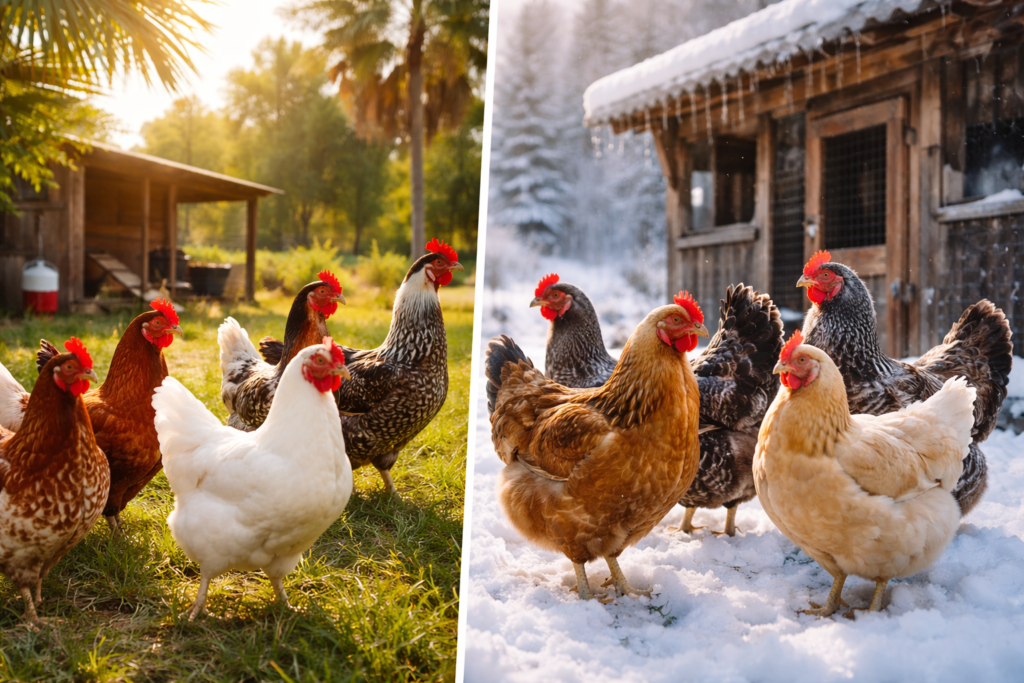
Choosing the wrong chicken breed for your climate is one of the fastest ways to lose birds, reduce egg production, and get discouraged from poultry keeping altogether. Across the United States, temperatures can swing from scorching desert heat to brutal sub-zero winters—and chickens are far more sensitive to climate than most beginners realize.
That’s why understanding the Best Chicken Breeds for Hot US Climates vs Cold Winters is not just helpful—it’s essential. The right breed can thrive with minimal stress, while the wrong one may struggle no matter how much care you provide.
In this expert-backed, in-depth guide, you’ll learn how climate affects chickens, which breeds are genetically suited for heat or cold, and how to choose birds that will stay healthy, productive, and profitable year-round—whether you’re a backyard hobbyist or a serious poultry farmer.
Why Climate Is the #1 Factor in Choosing Chicken Breeds
Many new chicken keepers focus on appearance, egg color, or popularity. Experienced poultry farmers know better. Climate compatibility is the foundation of long-term flock success.
When chickens are exposed to temperatures outside their tolerance range:
-
Egg production drops sharply
-
Feed efficiency declines
-
Disease risk increases
-
Mortality rates rise
No amount of fans, heaters, or supplements can fully compensate for poor genetic adaptation. Choosing climate-appropriate chicken breeds reduces costs, improves welfare, and ensures consistent performance.
Understanding the Real Search Intent Behind This Topic
When people search for chicken breeds for hot or cold climates, they are usually asking:
-
Which breeds survive extreme heat or freezing winters best?
-
Which chickens lay eggs reliably in my region?
-
Can one breed handle both hot summers and cold winters?
-
How do physical traits affect climate tolerance?
This article answers those questions with practical, real-world guidance, not vague generalities.
How Climate Affects Chicken Health, Productivity, and Survival
Heat Stress in Chickens (Hot US Climates)
Heat stress is one of the leading causes of poultry losses in warm regions like the Southern US, Southwest, and parts of California.
Common signs of heat stress include:
-
Panting with open beaks
-
Wings held away from the body
-
Reduced feed intake
-
Sudden drop in egg production
-
Increased mortality during heat waves
Chickens cannot sweat. They rely on airflow, evaporation, and body structure to regulate temperature. Some breeds are genetically better equipped for this than others.
Cold Stress in Chickens (Cold US Winters)
Cold weather brings different challenges, especially in the Midwest, Northeast, and Northern Plains.
Cold-related problems include:
-
Frostbite on combs and wattles
-
Reduced egg laying
-
Increased feed consumption
-
Respiratory issues from poor ventilation
Contrary to popular belief, chickens can tolerate cold better than heat—if the breed is suited for it.
Key Traits That Make Chicken Breeds Climate-Resilient
Understanding physical traits helps you choose wisely.
Traits That Improve Heat Tolerance
Heat-tolerant chicken breeds typically have:
-
Large combs and wattles (help release excess heat)
-
Light-colored feathers (reflect sunlight)
-
Loose feathering
-
Lean body structure
-
High activity levels
These traits allow better airflow and heat dissipation.
Traits That Improve Cold Hardiness
Cold-hardy chicken breeds usually have:
-
Small combs and wattles (reduce frostbite risk)
-
Dense feathering
-
Heavier body mass
-
Calm temperament
-
Tight feather structure
These characteristics help conserve body heat during winter.
Best Chicken Breeds for Hot US Climates (Southern & Warm Regions)
If you live in states like Texas, Florida, Arizona, Louisiana, or Southern California, heat tolerance should be your top priority.
Leghorn (White & Brown)
-
Exceptional heat tolerance
-
Excellent egg production
-
Very feed-efficient
-
Lightweight body
Leghorns are among the best egg-laying chickens for hot climates, widely used in commercial egg production in warm regions.
Fayoumi
-
Originated in hot desert regions
-
Extremely heat- and disease-resistant
-
Active and alert
-
Moderate egg production
Fayoumis thrive where many breeds struggle, making them ideal for extreme heat.
Andalusian
-
Mediterranean origin
-
Handles heat well
-
Attractive slate-blue plumage
-
Good layer in warm climates
Hamburg
-
Small, active birds
-
Heat-tolerant and hardy
-
Excellent foragers
-
Moderate egg production
Ancona
-
Mediterranean heritage
-
Thrives in hot, dry climates
-
Good egg layer
Dual-Purpose Breeds That Handle Heat Well
Some dual-purpose breeds perform acceptably in warm climates:
-
Rhode Island Red (heat-adapted lines)
-
Plymouth Rock (select strains)
These are good options if you want both eggs and meat without extreme heat stress.
Best Chicken Breeds for Cold US Winters (Northern & Mountain Regions)
Cold regions demand breeds with strong cold hardiness.
Plymouth Rock
-
Excellent cold tolerance
-
Reliable winter egg production
-
Calm temperament
-
Dual-purpose utility
A top choice for beginners in cold climates.
Wyandotte
-
Small rose comb reduces frostbite
-
Heavy body mass
-
Consistent winter laying
-
Attractive appearance
Orpington
-
Dense feathering
-
Friendly temperament
-
Cold-hardy and productive
-
Great for backyard flocks
Sussex
-
Adaptable and hardy
-
Strong winter egg production
-
Dual-purpose breed
Dominique
-
One of America’s oldest breeds
-
Excellent cold tolerance
-
Rose comb prevents frostbite
-
Good egg production
Winter Egg Production: Why Breed Choice Matters
Many chicken keepers are disappointed when egg production drops in winter. Genetics play a major role.
Cold-hardy winter layers often include:
-
Plymouth Rocks
-
Wyandottes
-
Australorps
-
Sussex
While lighting and nutrition help, breed selection is the biggest factor.
Side-by-Side Comparison: Hot Climate vs Cold Climate Breeds
While a full table would appear in the published article, key differences include:
-
Heat breeds prioritize airflow and heat release
-
Cold breeds prioritize insulation and heat retention
-
Egg production patterns vary by climate stress
Choosing the wrong side of this spectrum leads to poor results.
Chicken Breeds That Adapt Well to Both Hot and Cold Climates
Some regions experience hot summers and cold winters. These climate-flexible breeds perform reasonably well year-round.
Best All-Climate Chicken Breeds
-
Australorp
-
Rhode Island Red
-
Plymouth Rock
-
Sussex
These breeds are not extreme specialists but offer balance for mixed climates.
Regional Recommendations Across the United States
Southern US (Hot & Humid)
-
Leghorn
-
Fayoumi
-
Andalusian
-
Ancona
Northern US (Cold Winters)
-
Plymouth Rock
-
Wyandotte
-
Orpington
-
Dominique
Mixed or Variable Climates
-
Rhode Island Red
-
Australorp
-
Sussex
Management Tips to Support Any Breed in Extreme Temperatures
Heat Management Tips
-
Provide shade and ventilation
-
Ensure constant clean water
-
Feed during cooler hours
-
Use electrolytes during heat waves
Cold Management Tips
-
Insulate coops (without sealing ventilation)
-
Prevent drafts
-
Use deep litter systems
-
Protect combs from frostbite
Genetics reduce risk—but management still matters.
Common Mistakes When Choosing Chicken Breeds for Climate
-
Choosing based on looks instead of climate
-
Assuming all chickens are “hardy”
-
Over-relying on fans or heaters
-
Mixing incompatible breeds
Avoiding these mistakes dramatically improves success.
Expert Insights: What Experienced Poultry Farmers Know About Climate and Breeds
After years of advising poultry keepers across different US regions, one lesson consistently stands out: genetics outperform gadgets. While fans, heaters, misters, and insulation help, they can never fully compensate for poor breed selection.
Experienced poultry farmers understand that:
-
Heat stress causes more losses than cold stress in most regions
-
Chickens bred for Mediterranean or desert climates outperform others in the South
-
Cold-hardy breeds with small combs save money on winter care
-
Stable, stress-free birds produce more eggs over time
Many professionals intentionally choose breeds that are slightly over-adapted to their climate rather than just adequate.
Frequently Asked Questions (FAQ)
Can Chickens Survive Extreme Heat or Extreme Cold?
Yes—but survival and productivity depend heavily on breed selection. Heat-adapted breeds tolerate temperatures above 90°F far better, while cold-hardy breeds remain productive below freezing.
Are Dual-Purpose Chicken Breeds Good for All Climates?
Some are. Breeds like Rhode Island Red, Australorp, and Plymouth Rock perform reasonably well in mixed climates, but they are not ideal for extreme heat or extreme cold.
Do I Need Heaters or Fans If I Choose the Right Breed?
Often, no. Climate-appropriate breeds reduce reliance on equipment. Basic ventilation and shade (for heat) or wind protection (for cold) are usually sufficient.
Which Chicken Breeds Lay Eggs Best in Cold Winters?
Top winter layers include:
-
Plymouth Rock
-
Australorp
-
Sussex
These breeds maintain egg production when others slow down.
Can I Keep Heat-Tolerant and Cold-Hardy Breeds Together?
Yes, but management becomes more complex. Heat-tolerant birds may struggle in winter, and cold-hardy birds may suffer in summer. Mixed flocks require extra care.
Final Verdict: Choosing the Best Chicken Breeds for Your Climate
When it comes to selecting chickens, climate should always come first.
Key Takeaways:
-
Hot US climates: Choose heat-tolerant, light-bodied breeds with large combs
-
Cold US winters: Choose dense-feathered, heavy breeds with small combs
-
Mixed climates: Choose adaptable, balanced breeds
By matching chicken genetics to your environment, you:
-
Reduce losses
-
Improve egg and meat production
-
Lower costs
-
Increase long-term satisfaction
The best chicken breeds for hot US climates vs cold winters are not just different—they are purpose-built for survival and productivity.