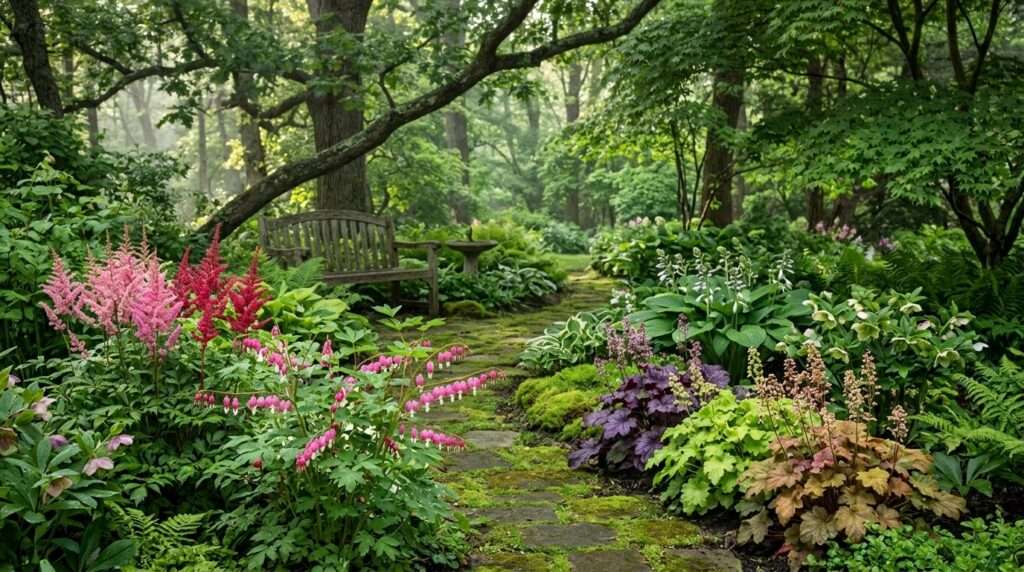
Walking out to your yard shouldn’t feel like staring at a dull, barren patch of dirt or moss simply because your space lacks direct sunlight. Most home gardeners assume that achieving a vibrant, colorful garden requires baking under eight hours of harsh direct sun, leading them to leave north-facing garden beds, covered patios, and tree canopies completely neglected. However, nature offers a rich variety of resilient plants engineered by evolution to flourish under low-light conditions. If you want to transform those dark, underutilized spots into breathtaking floral sanctuaries, investing in the best flowering shade perennials is the single most effective way to bring lasting color, texture, and life back to your landscape.
You don’t need full sun to enjoy a dynamic, year-round garden display. By selecting the right combination of early spring, mid-summer, and late-fall bloomers, you can create a continuous sequence of bloom that keeps your yard lively through every season. To help you cut through the marketing noise and choose plants that will actually survive, we conducted a rigorous, data-driven evaluation of the top options available online today.
2. Quick-Shopping Decision Matrix
To help you find the ideal match for your garden’s exact lighting and layout, we compiled our top recommendations into this simple decision matrix.
| Product Name | Best For | USDA Zones |
| Astilbe Collection | High-Impact Floral Plumes | 3–9 |
| Helleborus (Lenten Rose) | Late-Winter & Early Bloom | 4–9 |
| Dicentra (Bleeding Heart) | Classic Romantic Cottage Style | 3–9 |
| Heuchera (Coral Bells) | Year-Round Foliage + Flowers | 4–9 |
| Brunnera (‘Jack Frost’) | Brightening Dark Deep Shade | 3–8 |
| Aquilegia (Columbine) | Pollinators & Naturalizing | 3–9 |
| Fragrant Hosta Varieties | Low-Maintenance Anchor | 3–9 |
3. Comprehensive Buying Guide: How to Choose the Right Shade Perennials
Choosing the best flowering shade perennials requires looking beyond standard plant tags. Before purchasing live plants or bare roots online, evaluate these three core growing variables to ensure long-term success.
Understanding Your Garden’s Light Levels
Shade is not uniform, and matching your plant’s tolerances to your actual light profile is essential:
-
Dappled / Partial Shade: Receives 3 to 6 hours of indirect or filtered light per day (e.g., under a open tree canopy or under slatted pergolas). Plants like Aquilegia and Heuchera thrive here.
-
Full / Deep Shade: Receives less than 3 hours of direct light, or ambient reflected light only (e.g., north-facing building walls, beneath dense evergreen trees). Plants like Brunnera and Helleborus perform exceptionally well in low light.
Soil Dynamics & Moisture Retention
Low-light areas beneath large deciduous trees often suffer from severe root competition for moisture and organic nutrients.
-
Organic Matter: Mix 2 to 3 inches of compost or leaf mold into the planting hole to replicate a rich woodland forest floor.
-
Moisture Balance: While plants like Astilbe demand consistently damp soil, others like Heuchera can develop root rot if kept in standing water. Always ensure your shade beds drain thoroughly.
Bare Root vs. Potted Live Plants (Amazon Buying Strategy)
When buying live flora on Amazon, sellers usually offer two delivery options:
-
Bare Root Bundles: Shipped dormant without soil. They offer significant savings when planting large groups or borders. They require initial patience, taking 2 to 4 weeks to break dormancy after planting.
-
Potted Live Plants: Shipped rooted in nursery soil. They cost slightly more per unit but offer immediate visual structure and lower risk for novice gardeners.
4. Deep-Dive Product Reviews
Product 1: Astilbe Collection (Feathery Plumes Multi-Pack)
1. Product Description
Astilbe is widely considered the crown jewel of the shade border. Famous for its soft, cloud-like floral plumes that rise above lace-like, ferny foliage, this clump-forming perennial adds dynamic vertical height and brilliant saturated color to low-light gardens.

2. Price Range
~$18.00 – $28.00 (Typically sold as a 3 to 5 bare-root multi-pack).
3. Key Features & Benefits
-
Vibrant Vertical Spikes: Produces dense, feathery plumes reaching 18 to 36 inches in height.
-
Exceptional Pest Resistance: Naturally unpalatable to deer and rabbits, allowing stems to mature unmolested.
-
Textural Contrast: Elegant fern-like foliage remains attractive even when the plant is out of bloom.
4. Pros & Cons
-
Pros:
-
Delivers high-impact color in areas where most sun-loving spikes fail.
-
Excellent for cut-flower floral arrangements.
-
Returns larger and fuller every spring once established.
-
-
Cons:
-
Zero drought tolerance; leaves will crisp if soil dries out completely.
-
Requires regular watering during summer heatwaves.
-
5. Amazon Customer Ratings & Feedback
4.6 / 5 Stars
Verified buyers report that dormant bare-root packages sprout within 10 to 14 days of planting when kept moist, with many praising the intense pink and magenta tones during mid-summer.
6. Why It’s a Good Choice
It solves the most common shade garden complaint: a lack of dramatic, eye-level floral height and color.
7. Ideal Use Case
Best for gardeners with moist woodland beds, rain gardens, or shaded border edges near hose connections where regular moisture can be maintained.
Product 2: Helleborus (Lenten Rose – Live Plants)
1. Product Description
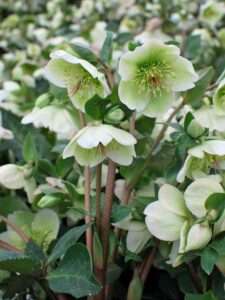
Helleborus (Lenten Rose) is an ultra-hardy evergreen perennial celebrated for blooming when the rest of the garden is completely dormant. Producing thick, thick-petaled, cup-shaped blossoms in rich shades of plum, rose, cream, and green, this plant frequently pushes through late-winter snow cover.
2. Price Range
(1 to 2 Live Potted Starter Plants).
3. Key Features & Benefits
-
Four-Season Architecture: Leathery, deep-green foliage remains intact through freezing winters.
-
Late-Winter Bloom Window: Flowers appear from February through April, providing early nectar for emerging pollinators.
-
Maximum Toxicity to Pests: Contains natural alkaloids that make it completely immune to deer, rabbit, and slug damage.
4. Pros & Cons
-
Pros:
-
Exceptionally long-lived and virtually indestructible once rooted.
-
Evergreen leaves provide ground structure through cold months.
-
Tolerates dry shade far better than most low-light species.
-
-
Cons:
-
Higher initial cost per plant.
-
Slow growth rate during the first year after transplanting.
-
5. Amazon Customer Ratings & Feedback
4.7 / 5 Stars
Reviewers frequently praise the robust root systems of live potted shipments, noting that plants survive harsh winter transplants and reliably produce blooms during cold, early-spring conditions.
6. Why It’s a Good Choice
It bridges the bare seasonal gap between winter and spring, ensuring your yard exhibits life year-round.
7. Ideal Use Case
Ideal for home entryways, front-porch borders, and dry shade beneath large mature shade trees where dependable, low-maintenance cover is needed.
Product 3: Dicentra Spectabilis (Classic Bleeding Heart)
1. Product Description
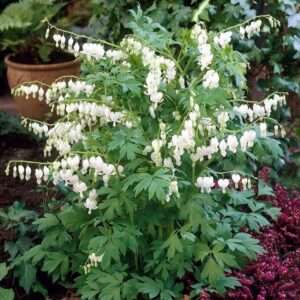
A timeless cottage garden favorite, Dicentra spectabilis features graceful, arching stems lined with heart-shaped pink blossoms, each ending in a delicate white drop. Its romantic silhouette creates an instant focal point in shaded spaces.
2. Price Range
$29.98 (3 Bare-Root Pack).
3. Key Features & Benefits
-
Unique Floral Geometry: Distinctive dangling heart blossoms that stay open for several weeks in mid-to-late spring.
-
Pollinator Attraction: Highly appealing to hummingbirds and queen bumblebees seeking early spring nectar.
-
Rapid Spring Growth: Emerges quickly as soil warms, filling out garden beds in early spring.
4. Pros & Cons
-
Pros:
-
High visual impact with minimal care requirements.
-
Easily divided after a few seasons to populate other garden areas.
-
Highly dependable return rate year after year.
-
-
Cons:
-
Enters summer dormancy; leaves naturally yellow and die back by July in warm climates.
-
Brittle stems require protection from heavy wind or pet traffic.
-
5. Amazon Customer Ratings & Feedback
4.5 / 5 Stars
Customers praise how fast the bare roots awaken in spring, with many noting that stems quickly grow to two feet wide in their first growing season.
6. Why It’s a Good Choice
Delivers classic, nostalgic charm and unique bloom shapes unmatched by modern hybrids.
7. Ideal Use Case
Perfect for planting behind mid-summer plants like Hostas or Ferns, which naturally expand to cover Bleeding Heart’s dormant summer footprint.
Product 4: Heuchera (Coral Bells – Foliage & Bloom Mix)
1. Product Description
Heuchera, commonly known as Coral Bells, is prized as much for its breathtaking year-round foliage as its delicate, fairy-like floral sprays. Available in shades ranging from deep plum and rich caramel to bright chartreuse, these compact mound-forming plants bring constant color to shaded areas even when not in bloom.

2. Price Range
$34.99 (4-Pack Live Nursery Plants).
3. Key Features & Benefits
-
Multi-Season Visual Appeal: Vibrant leaf coloration remains eye-catching from early spring through frost.
-
Delicate Bloom Wand Spikes: Slender stems rise above foliage in early summer carrying tiny bell-shaped flowers.
-
Salt and Drought Tolerance: Performs far better in occasional dry spells or near paved, salted walkways than lush woodland species.
4. Pros & Cons
-
Pros:
-
Exceptional foliage color selection.
-
Compact, neat growth habit that prevents untidy sprawling.
-
Very adaptable to decorative patio containers and garden borders.
-
-
Cons:
-
Shallow root systems can lift out of soil during severe winter freeze-thaw cycles if unmulched.
-
Requires well-draining soil; hates waterlogged clay during winter.
-
5. Amazon Customer Ratings & Feedback
4.6 / 5 Stars
Buyers highlight the excellent packaging of live multi-packs, emphasizing how the vibrant foliage instantly enlivens dark border walkways and decorative pots.
6. Why It’s a Good Choice
It delivers 365-day visual interest, ensuring your shade garden retains structural color even between blooming phases.
7. Ideal Use Case
Best for edging shaded garden paths, low front borders, and mixed patio container displays.
Product 5: Brunnera Macrophylla (‘Jack Frost’ Heartleaf Brunnera)
1. Product Description
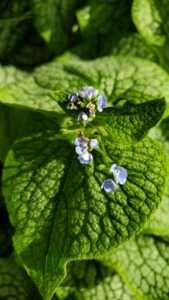
Brunnera ‘Jack Frost’ is an award-winning woodland perennial celebrated for its silver-frosted, heart-shaped leaves detailed with dark green veins. In spring, it produces clouds of tiny, electric-blue blossoms that closely resemble Forget-Me-Nots, illuminating the darkest corners of the garden.
2. Price Range
(1 to 2 Live Potted Plants).
3. Key Features & Benefits
-
Light-Reflecting Foliage: Intensely silver leaves reflect ambient light, making deep shade spots look bright.
-
True-Blue Spring Flowers: Delivers clear blue floral tones, a rare hue among low-light plants.
-
Rough, Deer-Resistant Texture: Hairy leaf texture naturally deters deer, rabbits, and garden slugs.
4. Pros & Cons
-
Pros:
-
Unmatched light-reflecting quality in deep shade environments.
-
Low-maintenance once established; forms neat, tidy mounds.
-
High resistance to common garden pests.
-
-
Cons:
-
Leaves can scorch if exposed to direct afternoon sunlight.
-
Requires consistent moisture during severe summer heat.
-
5. Amazon Customer Ratings & Feedback
4.4 / 5 Stars
Customers consistently remark that the leaves “literally glow” at dusk, noting that plants arrive with healthy root crowns ready to plant out.
6. Why It’s a Good Choice
It solves the challenge of deep, dark garden corners where typical flowering plants struggle to show up clearly.
7. Ideal Use Case
Ideal for deep shade under mature trees, woodland pathways, and dark north-facing building walls.
Product 6: Aquilegia (Columbine Mixed Hybrids)
1. Product Description
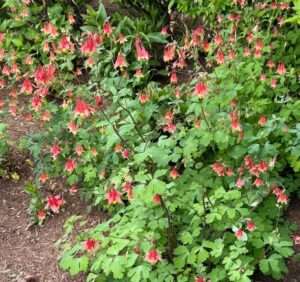
Aquilegia (Columbine) is a charming woodland native offering unique, spurred, two-tone blossoms suspended over delicate, clover-like foliage. It blooms freely from spring into early summer, adding a naturalized wildflower look to any shade garden.
2. Price Range
$59.99~$14.00 – $22.00 (5-Pack Bare Root or Starter Collection).
3. Key Features & Benefits
-
Vibrant Bi-Color Blooms: Displays striking color combinations like purple/white, red/yellow, and rose/cream.
-
Naturalizing Ability: Self-seeds gently year after year, slowly creating naturalized flower drifts.
-
High Pollinator Attraction: Rich nectar spurs are tailored for early-season hummingbirds and bumblebees.
4. Pros & Cons
-
Pros:
-
Highly cost-effective choice for covering large areas.
-
Grows easily across a wide variety of soil types.
-
Naturalizes without becoming invasive.
-
-
Cons:
-
Individual plants are short-lived (3–4 years), relying on self-seeded offspring to maintain the colony.
-
Can show minor leaf miner damage (harmless cosmetic lines on leaves) by late summer.
-
5. Amazon Customer Ratings & Feedback
4.5 / 5 Stars
Reviewers love how easily these take off from bare roots, frequently mentioning how hummingbirds visit the blossoms every morning.
6. Why It’s a Good Choice
An affordable choice for establishing a natural, informal cottage-style shade garden that self-sustains over time.
7. Ideal Use Case
Woodland borders, cottage gardens, slope naturalizing, and pollinator-focused shade beds.
Product 7: Fragrant Flowering Hosta Varieties (e.g., ‘Royal Standard’)
1. Product Description
While Hostas are primarily famous for their lush leaves, sweet-scented varieties like ‘Royal Standard’ or Hosta plantaginea serve as dynamic flowering specimen plants. In late summer, they push up tall flower stalks topped with large, fragrant, lily-like white and lavender trumpets.

2. Price Range
$15.99 (3 Bare-Root Clumps).
3. Key Features & Benefits
-
Fragrant Late-Summer Bloom: Fills evening garden air with a sweet honeysuckle-like aroma during August.
-
Robust Garden Anchor: Broad leaves suppress weeds effectively while providing strong architectural structure.
-
Extreme Hardiness: Capable of surviving sub-zero winters with zero damage to root crowns.
4. Pros & Cons
-
Pros:
-
Virtually indestructible once established in soil.
-
Excellent weed suppressor; covers large ground areas cleanly.
-
Delivers scented flowers when most spring bloomers have finished.
-
-
Cons:
-
Highly attractive to deer and slugs if left untreated.
-
Dies back completely to the ground after heavy autumn frost.
-
5. Amazon Customer Ratings & Feedback
4.8 / 5 Stars
Consistently holds some of the highest satisfaction ratings on Amazon, with buyers praising the large root systems and quick leaf development.
6. Why It’s a Good Choice
It combines tough, dependable foliage with fragrant late-season flowers, making it a foundational garden anchor.
7. Ideal Use Case
Mass groundcover plantings, foundation beds under eaves, and anchor spots along shady fences.
5. Care, Planting & Maintenance Guide
To ensure your new plants transition smoothly from Amazon packaging to your garden, follow this planting and maintenance routine.
Step-by-Step Planting Guide
-
Unboxing & Hydration: Remove plants from packaging immediately upon arrival. For bare roots, soak in bucket water for 30–60 minutes before planting. For live pots, water thoroughly.
-
Soil Preparation: Dig a hole twice as wide as the root mass. Mix equal parts existing garden soil with organic compost or leaf mold.
-
Planting Depth: Position bare root crowns right at soil level (planting too deep can rot crowns). Align potted plants level with their nursery container soil.
-
Initial Mulching: Water deeply right after planting. Apply a 2-inch layer of shredded bark mulch around the base, keeping mulch 1 inch away from main plant stems to maintain airflow.
Managing Pests and Disease in Low-Light Areas
-
Slug Management: Shady, damp garden beds attract slugs. Spread organic iron-phosphate bait or diatomaceous earth around smooth-leaved plants like Hostas in early spring.
-
Deer Deterrence: Plant resistant species (Helleborus, Astilbe, Brunnera) along outer garden perimeters, or apply a rosemary/mint repellent spray during early growth spurts.
-
Air Circulation: Avoid overcrowding plants to reduce humidity buildup, which helps prevent powdery mildew or fungal leaf spots.
6. Frequently Asked Questions (FAQ)
What flowering perennial blooms the longest in full shade?
Species like Corydalis and select Bleeding Heart varieties offer extended bloom periods from spring into early summer. Combining early bloomers (Helleborus) with summer bloomers (Astilbe) and late-summer options (Fragrant Hostas) ensures continuous sequential color.
Can these flowering shade perennials grow under black walnut trees?
Yes! Plants like Helleborus, Astilbes, Coral Bells, and Hostas show high resistance to juglone, the natural chemical released into the soil by black walnut roots.
How do I get more blooms on my shade perennials?
While these plants thrive without direct sun, most need bright indirect light or morning dappled sunlight to produce maximum flower counts. Feeding them a balanced, slow-release organic fertilizer high in phosphorus during early spring also encourages strong bloom production.
7. Final Verdict & Recommendations
Selecting the right plants depends on your primary garden goals:
-
For Maximum Visual Impact: Choose the Astilbe Collection for its brilliant vertical floral plumes and striking colors.
-
For Four-Season Durability: Invest in Helleborus (Lenten Rose) for its indestructible foliage and winter-blooming capabilities.
-
For Budget-Friendly Coverage: Pick Aquilegia (Columbine) to quickly cover large, naturalized woodland areas for a low cost.