If you’ve ever stared at a barren patch of dirt under a mature tree canopy or along a north-facing wall, you know the frustration of a sunless yard. These dark corners often feel like dead zones where time, effort, and money spent on gardening simply go to waste. But a lack of direct sunlight isn’t a curse—it’s an opportunity. With the right selections, that dim, wasted space can be transformed into a lush, low-maintenance, woodland-style sanctuary. To help you stop guessing and start growing, we have curated the 10 best full shade plants available to order right now. We analyzed dozens of live plants sold on Amazon, rigorously evaluating them for shipping vitality, robust root health, customer satisfaction, and authentic low-light performance. Whether you need resilient groundcovers, vibrant foliage, or delicate shade-blooming flowers, these top-rated picks will help you confidently breathe life into your garden’s darkest spaces.
Quick Comparison Guide
| Plant | Best For | Standout Trait |
| Hosta ‘Patriot’ | Best Overall | Broad leaves with bold white margins |
| Astilbe | Best for Flowers | Feathery, vibrant plumes |
| Heuchera (Coral Bells) | Best Foliage Color | Ruffled, multi-hued leaves |
| Helleborus (Lenten Rose) | Best Winter Blooms | Early-season, frost-hardy flowers |
| Dicentra (Bleeding Heart) | Best Classic Cottage Look | Nodding heart-shaped blooms |
| Japanese Painted Fern | Best Groundcover | Silver fronds with burgundy stems |
| Tricyrtis (Toad Lily) | Best Late-Season Flowers | Orchid-like speckled autumn blooms |
| Brunnera (Siberian Bugloss) | Best Silver Foliage | Frost-like leaves that reflect light |
| Caladium | Best Tropical Accents | Large, vivid bi-color foliage |
| Epimedium (Barrenwort) | Best Dry Shade | Tough root-zone survivor |
How to Choose the Right Shade Plant
Before ordering plants, it is essential to diagnose the exact environmental factors of your site. Not all shade is created equal, and mismatching a plant to its microclimate is the primary reason shade gardens fail.
1. Identify Your Shade Intensity
-
Deep/Full Shade: Receives no direct sunlight throughout the day, or less than 2 hours of weak, filtered light. This is typical along north-facing walls, covered courtyards, or under dense evergreen canopies.
-
Dappled Shade: Sunlight filters through high, deciduous branches, creating shifting patches of light and shadow across the forest floor.
-
Partial Shade: Areas receiving 3 to 6 hours of morning sun, followed by shelter from harsh afternoon heat.
2. Assess Soil Moisture: Dry Shade vs. Moist Shade
-
Dry Shade: The most difficult growing condition, typically found beneath established trees whose shallow, fibrous root networks consume water before smaller plants can absorb it. Plants in these areas need deep-rooting capabilities and thick foliage to resist drought.
-
Moist Shade: Low-lying garden borders or locations near downspouts that retain continuous moisture without turning stagnant. Plants here must tolerate damp soils without developing root rot.
3. Verify USDA Hardiness Zones
Because live plants on Amazon ship nationwide, always check your local hardiness zone before purchasing. Perennials rated for Zone 4 can endure sub-zero winters, whereas tropical selections like Caladium must be overwintered indoors if grown outside warmer climates.
In-Depth Reviews: The 10 Best Full Shade Plants
1. Hosta ‘Patriot’ (Plantain Lily) – Best Overall
Product Description
Hosta ‘Patriot’ is a perennial workhorse that stands out as the gold standard for low-light gardening. Characterized by broad, heart-shaped, deep-green leaves bordered by wide, crisp-white margins, this variety brightens dark areas better than almost any other leafy perennial. Available on Amazon primarily as potted starter plants or dormant bare roots, it establishes rapidly in spring. In mid-to-late summer, it produces tall, slender scapes bearing delicate, tubular lavender flowers that attract hummingbirds.

-
Price: $22.26
-
Key Features & Benefits:
-
Exceptional shade tolerance; thrives in full, dense shade.
-
Cold hardy across USDA Zones 3 through 9.
-
Reaches a mature spread of 24–30 inches, providing excellent weed suppression.
-
Highly adaptable to varied soil types, provided moisture is present.
-
-
Pros and Cons:
-
Pros: Virtually foolproof to grow; vigorous foliage; divisions can be made every few seasons to multiply your collection.
-
Cons: Highly attractive to deer and garden slugs; requires slug management in humid regions.
-
-
Amazon Ratings & Customer Feedback: Rated 4.4 out of 5 stars. Verified buyers consistently report strong transit survival, with bare-root varieties breaking dormancy within 10 to 14 days of potting.
-
Why It’s a Good Choice: It combines structural volume, contrasting colors, and sheer durability, making it the most forgiving starting point for any shade garden.
-
Ideal Use Case: Planting along dark foundation lines, bordering north-facing paths, or filling understory space beneath tall deciduous trees.
2. Astilbe (False Spirea) – Best for Flowers
Product Description
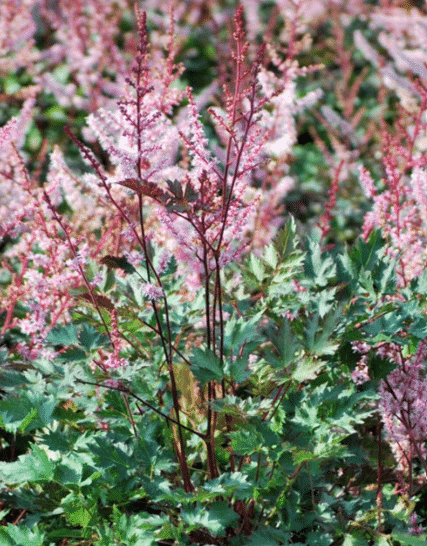
While many low-light plants are grown strictly for foliage, Astilbe delivers upright flower plumes in an environment where blooms are notoriously scarce. Its airy panicles range from soft baby pink and lilac to fiery red and crisp white, held gracefully above finely divided, bronze-tinted, fern-like leaves. When shipped via Amazon nurseries, these plants arrive as active starter quarts or dormant root clusters ready for spring planting.
-
Price:
-
Key Features & Benefits:
-
Thrives in dappled to deep shade with zero direct afternoon sun.
-
Produces persistent summer blooms that dry attractively for winter interest.
-
Natural deer and rabbit resistance due to its bitter foliage compounds.
-
Performs reliably across USDA Zones 4 through 9.
-
-
Pros and Cons:
-
Pros: Adds vertical floral architecture; deer rarely touch it; foliage remains attractive post-bloom.
-
Cons: Requires consistent soil moisture; foliage quickly crisps and scorches if allowed to dry out.
-
-
Amazon Ratings & Customer Feedback: Rated 4.3 out of 5 stars. Reviewers frequently highlight the vibrant colors during its first blooming season, while noting that consistent deep watering is required during early summer heat waves.
-
Why It’s a Good Choice: It provides genuine, colorful flowers in areas where traditional flowering perennials languish.
-
Ideal Use Case: Shady rain gardens, pond edges, or damp woodland settings alongside water features.
3. Heuchera (Coral Bells) – Best for Year-Round Foliage Color
Product Description
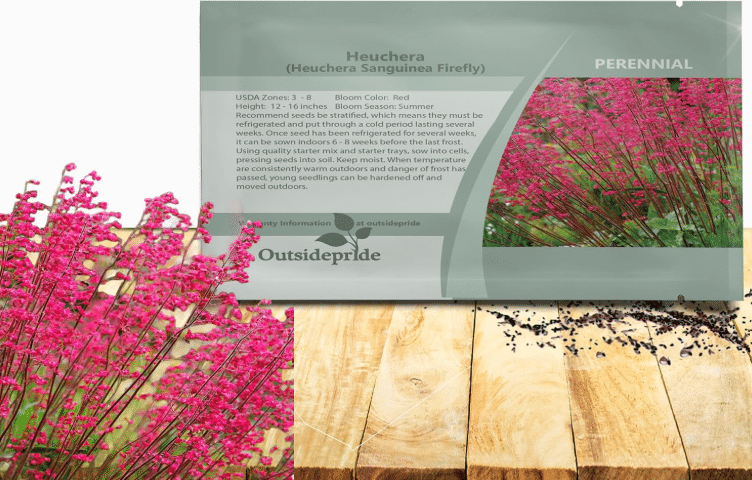
Heuchera, commonly known as Coral Bells, is an evergreen or semi-evergreen perennial celebrated for its intense kaleidoscope of foliage colors. Modern cultivars available on Amazon feature ruffled, scalloped leaves in deep plum, burnt caramel, lime chartreuse, and frosted pewter with contrasting dark veins. In late spring, wiry stems rise high above the mounded mound of leaves, displaying tiny, bell-shaped flowers that sway in the breeze.
-
Price:
-
Key Features & Benefits:
-
Maintains vibrant color across all four seasons in mild-to-moderate climates (Zones 4–9).
-
Highly drought-tolerant once roots anchor beyond the topsoil layer.
-
Compact growth habit (10–16 inches high and wide), making it ideal for tight spaces.
-
-
Pros and Cons:
-
Pros: Endless cultivar color choices; compact size; low water requirements once established.
-
Cons: Shallow root systems are prone to frost-heaving during freezing-thawing cycles; requires mulching in cold regions.
-
-
Amazon Ratings & Customer Feedback: Rated 4.5 out of 5 stars. Customers praise the packaging care from specialized nursery storefronts and express surprise at the intense leaf pigment right out of the box.
-
Why It’s a Good Choice: It injects rich, saturation-heavy color into dull borders without depending on fleeting seasonal flower cycles.
-
Ideal Use Case: Front-of-border edging along shady walkways, rockeries, or mixed seasonal patio planters located beneath deep porch overhangs.
4. Helleborus (Lenten Rose) – Best for Winter & Early Spring Blooms
Product Description
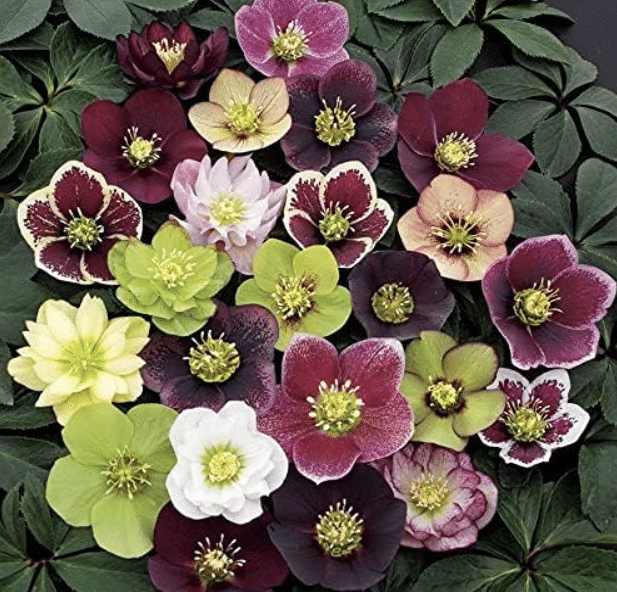
Hellebores are tough, aristocratic woodland perennials that flower when the rest of the garden is completely dormant. Pushing upward through late-winter cold and frost, these plants produce nodding, cup-shaped flowers in shades of ivory, speckled slate, mauve, and deep midnight purple. Their thick, leathery, dark-green leaves remain evergreen year-round, forming a handsome, weed-smothering mound that anchors dark garden beds through every season.
-
Price: $37.95
-
Key Features & Benefits:
-
Extended bloom window lasting from late winter through mid-spring (8–10+ weeks).
-
Fully deer-, rabbit-, and rodent-proof due to naturally toxic alkaloids in the leaves.
-
High tolerance for dry shade once root systems are established (Zones 4–9).
-
-
Pros and Cons:
-
Pros: Blooms during the coldest months; evergreen structure; long lifespan exceeding a decade.
-
Cons: Higher initial cost; slow growth rate during its first year in the ground.
-
-
Amazon Ratings & Customer Feedback: Rated 4.6 out of 5 stars. Shoppers frequently cite this plant as a standout investment, pointing to its survivability in neglected, dry, shady soils.
-
Why It’s a Good Choice: It delivers reliable winter blooms and durable, pest-proof evergreen foliage year-round.
-
Ideal Use Case: Planted on sloping banks, beneath mature deciduous trees, or along walkways where early winter flowers can be appreciated up close.
5. Dicentra spectabilis (Bleeding Heart) – Best Classic Cottage Perennial
Product Description
Dicentra spectabilis is a classic shade garden plant known for its heart-shaped blossoms. In mid-to-late spring, gracefully arching, horizontal stems produce rows of pendulous, puffy rose-pink hearts with dangling white drops. The foliage is soft, deeply divided, and bright green, evoking a lush, fern-like quality. Most Amazon nursery sellers ship Bleeding Heart as dormant bare roots or young potted crowns in early spring.

-
Price: $23.99
-
Key Features & Benefits:
-
Reliable spring bloomer suited for full to partial shade (Zones 3–9).
-
Unique flower silhouette that remains a favorite for classic cottage and woodland gardens.
-
Completely unpalatable to browsing deer and rabbits.
-
-
Pros and Cons:
-
Pros: Striking, distinctive blooms; fast spring growth; very cold hardy.
-
Cons: Foliage naturally dies back and goes dormant in midsummer heat, leaving empty gaps if not interplanted.
-
-
Amazon Ratings & Customer Feedback: Rated 4.2 out of 5 stars. Reviews frequently note that the bare-root stocks emerge quickly once warm weather arrives, though buyers caution that companion plants are needed for late-summer coverage.
-
Why It’s a Good Choice: It provides an eye-catching spring display that pairs well with later-emerging shade perennials.
-
Ideal Use Case: Interplanted between Hostas, ferns, or Brunnera, which expand during midsummer just as the Bleeding Heart slips into seasonal dormancy.
6. Athyrium niponicum (Japanese Painted Fern) – Best Shade Groundcover
Product Description
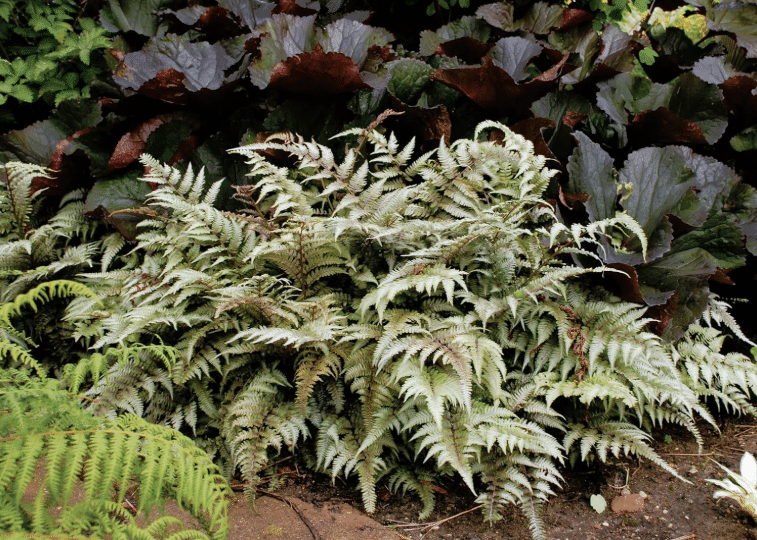
Unlike standard green ferns, the Japanese Painted Fern offers a striking, metallic aesthetic that instantly illuminates shadowed garden corners. Its low, arching fronds are layered in frosty silver, beautifully accented by striking burgundy and deep purple stems (stipes) that run down the center. Because ferns reproduce via spores rather than root divisions, ordering a well-established live plant from Amazon ensures you skip the tedious early growth phases and get immediate visual impact.
-
Price: $38.95
-
Key Features & Benefits:
-
Deciduous fern that grows to a compact 12–18 inches tall and 24 inches wide.
-
Thrives in heavy, full shade and rich woodland soils (Zones 3–8).
-
Highly resistant to deer, rabbits, and most garden pests.
-
-
Pros and Cons:
-
Pros: Incredible metallic sheen; low-profile spreading habit; excellent texture contrast.
-
Cons: Fronds are fragile and easily damaged by heavy foot traffic or strong winds; requires consistent moisture.
-
-
Amazon Ratings & Customer Feedback: Rated 4.4 out of 5 stars. Customers praise the unique silver-purple coloring upon arrival and appreciate the sturdy packaging used by Amazon’s top live-plant vendors.
-
Why It’s a Good Choice: It offers a soft, elegant texture that contrasts beautifully with broad-leafed plants, drawing the eye down into the shaded landscape.
-
Ideal Use Case: Ideal for mass planting as a low-lying groundcover under dense tree canopies or along shady, damp creek beds.
7. Tricyrtis hirta (Toad Lily) – Best for Late-Season Flowers
Product Description
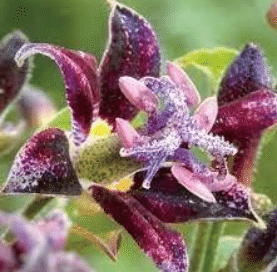
Just as summer fades and most shade plants begin to look exhausted, the Toad Lily bursts into bloom. This exotic-looking perennial produces intricate, orchid-like, heavily speckled flowers in shades of pale pink, purple, and white along arching, hairy stems. While its name is less than glamorous, its floral display is nothing short of spectacular, bringing a tropical, highly detailed aesthetic to the late-season woodland garden.
-
Price:
-
Key Features & Benefits:
-
Blooms late in the season (August through October) when shade color is scarce.
-
Thrives in dappled to full shade (Zones 4–8) in consistently moist, slightly acidic soil.
-
Erect, upright growth habit reaching up to 3 feet tall.
-
-
Pros and Cons:
-
Pros: Extends the blooming season into autumn; highly unique, detailed flowers.
-
Cons: Flowers are small (about 1 inch across) and best appreciated close up; requires wind protection to prevent stems from snapping.
-
-
Amazon Ratings & Customer Feedback: Rated 4.3 out of 5 stars. Buyers are consistently thrilled by the exotic look of the flowers but emphasize the need for regular watering to keep the foliage looking fresh until bloom time.
-
Why It’s a Good Choice: It breathes fresh life into the shade garden precisely when everything else is going dormant for the year.
-
Ideal Use Case: Planting directly along shady pathways, near shaded patios, or beside seating areas where the intricate blooms can be viewed up close.
8. Brunnera macrophylla (Siberian Bugloss) – Best Silver Foliage
Product Description
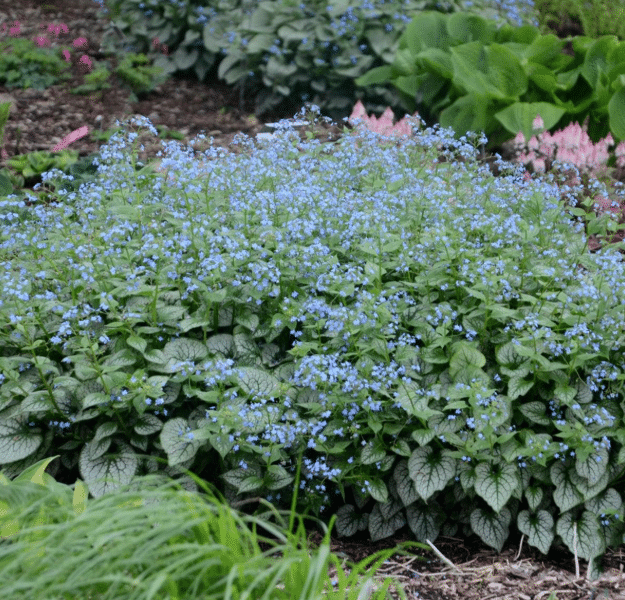
Brunnera is a tough, reliable shade perennial famous for its massive, heart-shaped leaves that look as if they have been frosted with liquid silver, leaving only the thin green veins exposed. In mid-to-late spring, it shoots up delicate sprays of tiny, bright sky-blue flowers that closely resemble forget-me-nots. Popular cultivars like ‘Jack Frost’ are frequently available on Amazon as bare roots or starter pots.
-
Price:
-
Key Features & Benefits:
-
Incredible silver foliage acts like a reflector, bouncing ambient light into dark corners.
-
Exceptional shade tolerance and moderate drought resistance once established (Zones 3–8).
-
Thick, rough leaf texture naturally deters deer and rabbits.
-
-
Pros and Cons:
-
Pros: Dramatic, light-reflecting foliage; gorgeous blue spring flowers; highly pest-resistant.
-
Cons: Leaves will scorch, brown, and crisp if exposed to hot afternoon sun.
-
-
Amazon Ratings & Customer Feedback: Rated 4.5 out of 5 stars. Users praise it as the ultimate deer-proof alternative to Hostas, noting that the silver coloring remains vibrant from spring until the first hard frost.
-
Why It’s a Good Choice: The intense silver foliage illuminates dark garden beds far more effectively than standard green foliage, creating a glow-in-the-dark effect at twilight.
-
Ideal Use Case: Gardeners struggling with deep, dark, lifeless corners or those battling heavy deer pressure.
9. Caladium – Best for Tropical Summer Color
Product Description
Grown from dormant tubers rather than traditional root systems, Caladiums produce massive, paper-thin, heart- or lance-shaped leaves in explosive, bi-color combinations of hot red, bubblegum pink, pure white, and emerald green. These heat-loving plants thrive in the sultry, humid conditions of summer and actually require full shade to prevent their delicate, colorful leaves from burning.

-
Price: $16.99
-
Key Features & Benefits:
-
Provides the most vibrant, intense color possible in heavy shade.
-
Loves summer heat and humidity.
-
Grows rapidly once soil temperatures reach 70°F.
-
-
Pros and Cons:
-
Pros: Unmatched, blindingly bright foliage color; perfect for pots and containers.
-
Cons: Treated as an annual in most of the US (hardy only in Zones 9–11); tubers must be dug up and stored indoors before winter in cold climates.
-
-
Amazon Ratings & Customer Feedback: Rated 4.2 out of 5 stars. Reviewers love the massive, colorful leaves but note that patience is required—tubers will not sprout until the soil is thoroughly warm.
-
Why It’s a Good Choice: If you want a tropical, vacation-like aesthetic in a place where the sun doesn’t shine, absolutely nothing beats a mass planting of Caladiums.
-
Ideal Use Case: Summer container gardens, front porch pots, southern gardens, and shaded patio decorations.
10. Epimedium (Barrenwort) – Best for Dry Shade Under Trees
Product Description
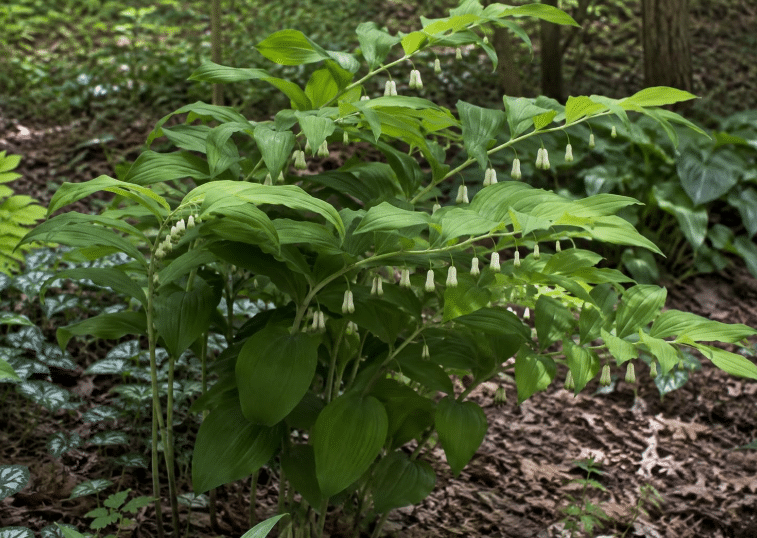
Epimedium is the unsung hero of the shade gardening world. This rugged, slow-spreading groundcover features wiry stems and heart-shaped leaves that often emerge with striking bronze or reddish tints before fading to green. In early spring, it produces delicate, hovering flowers that resemble tiny jester hats. Its true superpower, however, lies below ground: its dense, fibrous rhizomes can muscle their way through thick tree roots to establish a permanent colony where no other plant survives.
-
Price: $19.99
-
Key Features & Benefits:
-
One of the few ornamental plants that truly thrives in “dry shade.”
-
Semi-evergreen in milder climates (Zones 4–8).
-
Highly resistant to deer, rabbits, and drought.
-
-
Pros and Cons:
-
Pros: Masters the toughest garden environment (dry shade beneath mature maples and oaks); extremely long-lived.
-
Cons: Slow to establish and spread; flowers are delicate and subtle compared to showier perennials.
-
-
Amazon Ratings & Customer Feedback: Rated 4.4 out of 5 stars. Experienced gardeners highly rate its survival rate in notoriously difficult planting zones under large canopy trees.
-
Why It’s a Good Choice: It solves the ultimate gardener’s headache—finding a beautiful, reliable plant that will grow in the dusty, root-choked soil under large, established shade trees.
-
Ideal Use Case: Anyone who has repeatedly failed to grow plants under a large shade tree, or those looking for a tough, low-maintenance edging plant.
How to Care for Shade Plants Ordered on Amazon
Buying live plants online is incredibly convenient, but they require a brief period of TLC to transition from a dark cardboard box to your garden bed.
-
Unboxing and Acclimation: Unbox your plants immediately upon arrival. Remove any plastic wrapping around the foliage, water the soil thoroughly until it drains, and place the pots in a protected, fully shaded spot outdoors for 24 to 48 hours. This helps them recover from “shipping shock” before they endure the stress of being planted in the ground.
-
Planting Tips: Dig a hole twice as wide as the nursery pot, but no deeper. Shade soils are often compacted, so amend the native dirt with a healthy dose of organic compost to improve aeration and give the roots an easy path to spread.
-
Watering Regimen: A common misconception is that all shade is wet. While shade plants lose less moisture to evaporation, they still require deep, consistent watering during their first year in the ground to establish a robust root system. Check the soil moisture twice a week, aiming to keep it damp like a wrung-out sponge, but never waterlogged.
If you are dealing with a dark, uninspired yard, you no longer have to settle for bare dirt or invasive weeds. By choosing the right species tailored to your specific light and moisture conditions, you can build a vibrant, layered woodland retreat. If you want foolproof reliability to kickstart your project, grab the Hosta ‘Patriot’. For non-stop, season-long color without relying on flowers, invest in a few Heuchera. Check the current prices, stock, and shipping times on Amazon through the links provided, and start transforming your shady yard into your favorite outdoor space today.