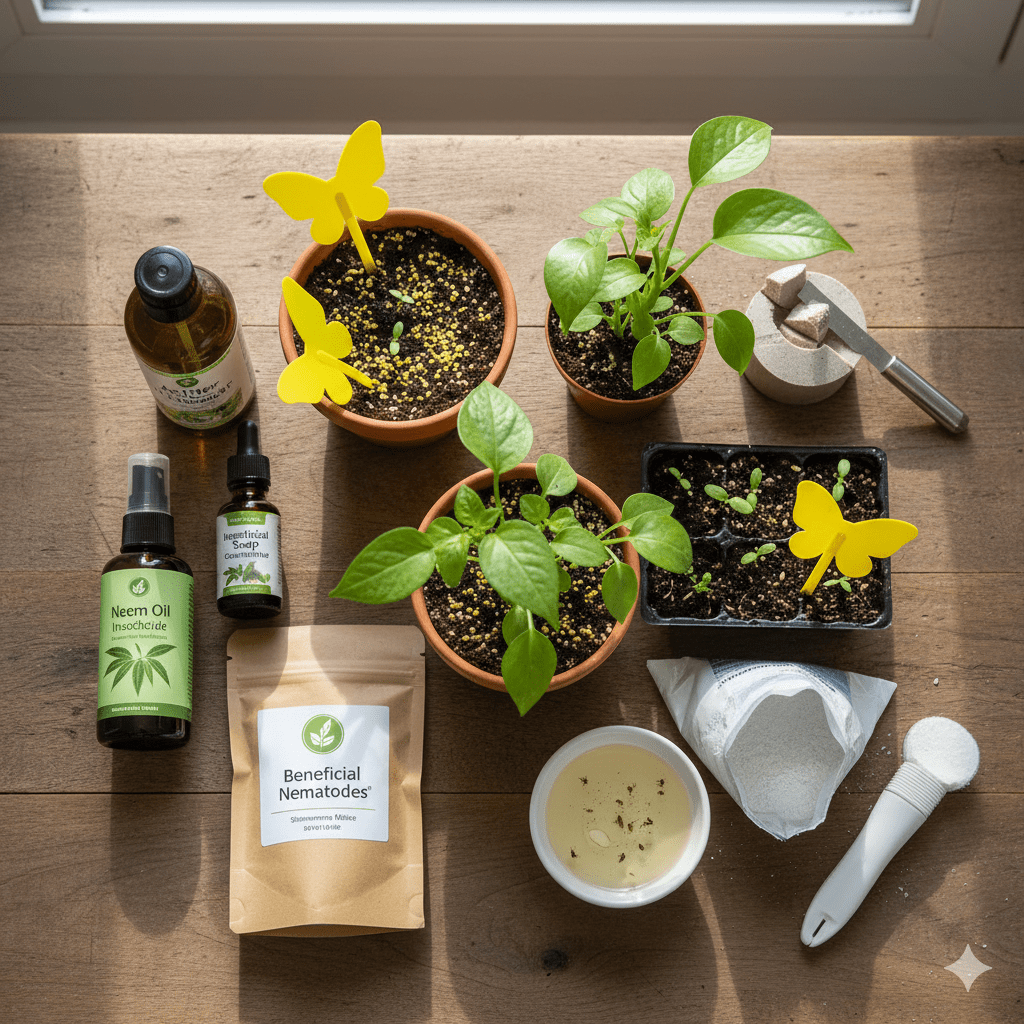
You carefully water your favorite monstera, check on your fresh seedling tray, and suddenly a small cloud of tiny black flies rises up. Fungus gnats. Those annoying little pests seem to appear out of nowhere, hovering around your plants and making every visit to your plant corner frustrating. Best fungus gnat treatments for houseplants and seed trays
While adult fungus gnats are mostly a nuisance (they don’t bite humans), their real damage happens below the surface. The larvae live in moist soil, feeding on organic matter and — more importantly — on delicate plant roots and especially on young seedlings. In seed trays and propagation setups, even moderate infestations can cause damping-off, stunted growth, or total loss of starts.
The good news? Fungus gnats are one of the most solvable houseplant pests when you target both the flying adults and the soil-dwelling larvae.
In this in-depth guide, we review the best 10 fungus gnat treatments for houseplants and seed trays based on current Amazon popularity, customer ratings (2025–2026 data), real-world effectiveness, safety for indoor use, pet/child friendliness, ease of application, and value. Whether you have a few potted plants or dozens of propagation trays, you’ll find solutions that fit your situation — and combinations that deliver fast, lasting results.
Understanding Fungus Gnats: Quick Overview
Fungus gnats (Bradysia spp.) thrive in persistently moist, organic-rich soil — exactly the conditions many houseplants and almost all seed-starting mixes provide.
Life cycle (key to control):
- Adults lay eggs in moist topsoil (100–300 eggs per female).
- Eggs hatch into larvae in ~3 days.
- Larvae feed for 1–2 weeks → cause most plant damage.
- Pupae form in soil → new adults emerge in ~10–14 days.
Because the cycle repeats quickly in warm indoor conditions, you must break it at the larvae stage for long-term success. Killing only adults (e.g., with traps alone) rarely ends the problem.
Houseplants vs. seed trays
- In established houseplants: tolerate some larval feeding, but heavy infestations weaken roots and stress plants.
- In seed trays / propagation: even low larval numbers can kill seedlings or cause rot. Prevention and gentle methods matter more here.
Prevention basics
- Let the top 1–2 inches of soil dry between waterings.
- Use well-draining potting mix; avoid over-composted or peat-heavy soils when possible.
- Bottom-water when practical; avoid standing water in saucers.
- Quarantine new plants for 2–4 weeks.
- Use inorganic top-dress (sand, perlite, gravel) on seedlings.
Act when you see 5–10 adults consistently around a plant or tray — waiting longer allows the population to explode.
How We Chose the Best Fungus Gnat Treatments
We evaluated products using these priorities (current Amazon data + gardener feedback):
- High average rating (4.4+ stars)
- Large number of recent reviews (thousands preferred)
- Proven effectiveness against larvae, adults, or both
- Indoor & seed-tray safety (low odor, non-phytotoxic when used correctly)
- Pet & child safety
- Ease of use
- Price-to-coverage value
- Multi-stage control potential
We favored biological options (Bti, nematodes), physical traps, and gentle natural sprays over harsh chemicals for most indoor scenarios.
Top 10 Fungus Gnat Treatments Compared
| Rank | Product | Type | Key Strength | Approx. Price | Rating | Best For |
|---|---|---|---|---|---|---|
| 1 | Summit Mosquito Bits | Bti granules/drench | Larvae killer (gold standard) | $15–$22 | 4.6 (25k+) | Heavy infestations |
| 2 | Garsum / Dwcom Yellow Sticky Traps | Sticky traps | Adult catcher (highest volume) | $8–$14 | 4.4–4.5 (30k–50k+) | All situations |
| 3 | Beneficial Nematodes (SF strain) | Live nematodes | Long-term biological control | $18–$35 | 4.5 (thousands) | Persistent problems |
| 4 | Kate’s Garden / Mighty Mint Peppermint Spray | Oil-based spray | Natural contact + repellent | $12–$18 | 4.5 (thousands) | Quick knockdown + safety |
| 5 | Microbe-Life Hydroponics FGX | Bti liquid drench | Easy liquid larvae treatment | $15–$22 | 4.5+ | Hydro & sensitive plants |
| 6 | Food-Grade Diatomaceous Earth | Powder top-dress | Physical barrier + desiccant | $10–$16 | 4.6 | Preventative + mild cases |
| 7 | Bonide Systemic Houseplant Granules | Imidacloprid granules | Long-lasting preventative | $10–$15 | 4.4 | Severe, non-organic |
| 8 | 3% Hydrogen Peroxide (DIY) | Soil drench | Budget larvae killer | $3–$8 | N/A (widely praised) | Emergency + cheap |
| 9 | Neem Oil Spray (concentrate) | Oil spray | Multi-pest organic option | $12–$20 | 4.4 | Broad pest control |
| 10 | Cinnamon Powder or Play Sand Top Layer | Natural barrier | Seedling-safe prevention | $4–$10 | N/A (very popular) | Seed trays & propagation |
Detailed Reviews: The Best Fungus Gnat Treatments
1. Summit Mosquito Bits (Bti granules / drench)
Description Summit Mosquito Bits remain the single most recommended and trusted product for fungus gnats among serious houseplant and propagation growers in 2026. The active ingredient is Bacillus thuringiensis israelensis (Bti) — a naturally occurring soil bacterium that produces a protein toxic only to certain fly larvae (including fungus gnats) when they ingest it. Adults and other insects are unaffected.
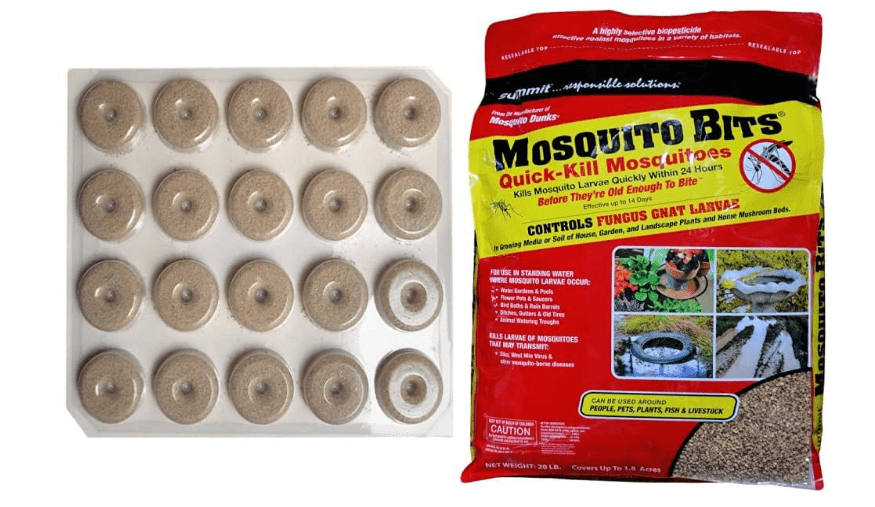
Current approximate price $15–$22 for 30 oz (covers dozens to hundreds of pots depending on method)
Key features and benefits
- Targets larvae specifically — breaks the life cycle
- Safe for plants, pets, fish, beneficial insects, earthworms
- Can be used as top-dress granules or made into a drench
- Lasts 2–4 weeks in soil per application
- No odor, no residue on leaves
Pros
- Extremely effective when used consistently
- Very high success rate in reviews
- Economical for large collections
- Organic & OMRI-listed
Cons
- Granules take 2–5 days to start killing larvae
- Must reapply every 2–4 weeks during active infestation
- Less immediate impact on flying adults
Amazon customer ratings and insights 4.6 stars from 25,000+ reviews. Most common praise: “Completely eliminated gnats in 2–3 weeks,” “Best thing I’ve ever used for houseplants.” Complaints are rare but include needing repeat applications and occasional clumping when making drench.
Why it’s a good choice It directly attacks the root of the problem (larvae) in a safe, targeted way. It’s the backbone of most successful multi-method plans.
Ideal use case / who should buy it Anyone with moderate to heavy infestations, large plant collections, or recurring issues. Essential for anyone who wants long-term control without harsh chemicals.
2. Garsum / Dwcom Yellow Sticky Traps (or similar high-rated 36–96 pack brands)
Description Yellow sticky traps are the most popular first-line defense against fungus gnats — and for good reason. The bright yellow color attracts flying adults (they mistake it for flowers or fresh growth), and once they land, they become permanently stuck on the non-drying adhesive surface. These traps don’t kill larvae directly, but by capturing large numbers of egg-laying adults, they dramatically reduce future generations.
Modern packs (Garsum, Dwcom, KATCHY-compatible styles, etc.) typically include 36–100 traps on sturdy, double-sided yellow cards with wire stakes for easy insertion into soil or hanging above plants.
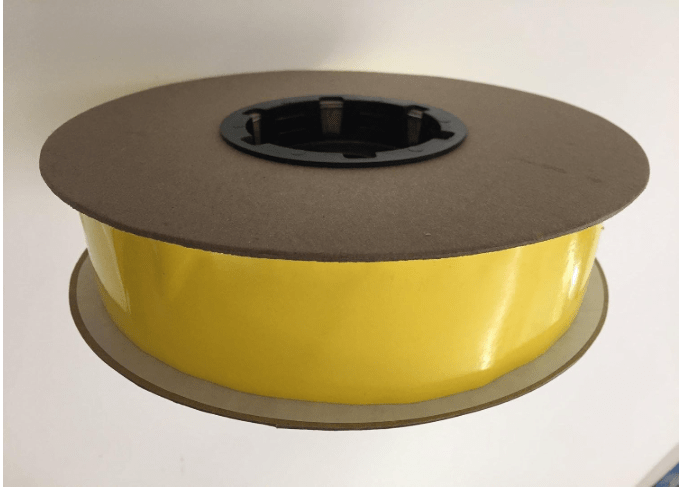
Current approximate price $44.99 for 36–96 traps (often sold in bulk packs)
Key features and benefits
- Extremely simple — no mixing, no spraying
- Immediate visual reduction in flying gnats (often within 1–2 days)
- Dual-sided adhesive maximizes captures
- Long-lasting (4–8 weeks per trap depending on infestation level)
- Safe around pets, children, plants, and beneficial insects
- Works indoors and in greenhouses / propagation setups
Pros
- Very high capture rate for adult fungus gnats
- Affordable and widely available
- Provides instant feedback on infestation severity (more gnats on traps = worse problem)
- No chemicals or odors
Cons
- Does not target larvae → population will rebound if used alone
- Traps can become unsightly when covered in insects
- Less effective in very low-light areas
- Can catch some harmless or beneficial flying insects
Amazon customer ratings and insights 4.4–4.5 stars across 30,000–50,000+ reviews (depending on exact brand/pack size). Top comments: “Caught hundreds in days — finally breathing again,” “Best money I’ve spent on plant pests,” “Way more effective than the cheap dollar-store ones.” Common minor complaints involve traps curling in high humidity or adhesive losing stickiness after many weeks.
Why it’s a good choice Sticky traps are almost universally recommended as part of any fungus gnat control plan because they provide fast adult knockdown and excellent monitoring. They pair perfectly with any larvae-targeting method.
Ideal use case / who should buy it Everyone dealing with fungus gnats should have these. They’re especially valuable for mild-to-moderate infestations, for people who want zero chemical exposure, for seed starting areas, and as a companion product to Bti or nematodes.
3. Beneficial Nematodes (Steinernema feltiae strain – 5–10 million packs)
Description Beneficial nematodes are microscopic predatory worms that actively seek out and parasitize fungus gnat larvae (and some other soil pests) inside the soil. The Steinernema feltiae species is particularly effective against fungus gnats and works well in the cooler-to-moderate soil temperatures typical of indoor houseplants (50–80°F / 10–27°C).
They arrive in a dormant state on a sponge, powder, or gel medium and are mixed with water to create a drench that is watered into the soil.
Current approximate price $71.47 for 5–10 million nematodes (covers 200–1,000 sq ft or 50–300 average pots)
Key features and benefits
- Biological control — reproduces in the soil for weeks to months
- Targets larvae directly and quickly (often within 24–72 hours)
- Safe for plants, pets, humans, earthworms, pollinators
- Leaves no residue
- Can reduce other soil pests (thrips, root aphids, etc.)
Pros
- Very long-lasting once established
- Highly effective in persistent or recurring infestations
- Organic and environmentally friendly
- Works in moist propagation trays
Cons
- Requires refrigeration upon arrival and prompt use
- More expensive than traps or Bti
- Effectiveness drops in very dry or very hot soil
- Takes a few days to see results (not instant)
Amazon customer ratings and insights 4.5 stars from thousands of reviews (many from houseplant and greenhouse growers). Frequent praise: “Completely solved my chronic gnat problem,” “Noticeable drop in gnats within a week and no rebound.” Some users note the need to keep soil moist for a few days after application and occasional confusion about mixing instructions.
Why it’s a good choice Nematodes offer one of the most thorough, long-term biological solutions available — especially valuable when you’ve had repeated infestations or want to avoid repeated chemical or Bti applications.
Ideal use case / who should buy it Serious houseplant collectors, people with large collections, greenhouse/indoors propagation setups, or anyone who has tried Bti + traps and still sees gnats returning after a few months.
4. Kate’s Garden Mighty Mint Peppermint Spray (or similar peppermint oil-based sprays)
Description Peppermint oil sprays have become one of the most popular natural, non-toxic options for fungus gnat control in recent years. Products like Kate’s Garden Mighty Mint, Plant Therapy, or similar high-rated peppermint oil blends work through a combination of contact kill (disrupting the adult gnats’ nervous system on direct contact) and strong repellent action that discourages adults from landing and laying eggs. These sprays typically contain a high concentration of peppermint oil plus other plant oils (rosemary, spearmint, clove, etc.) and are formulated to be safe for indoor use around plants.
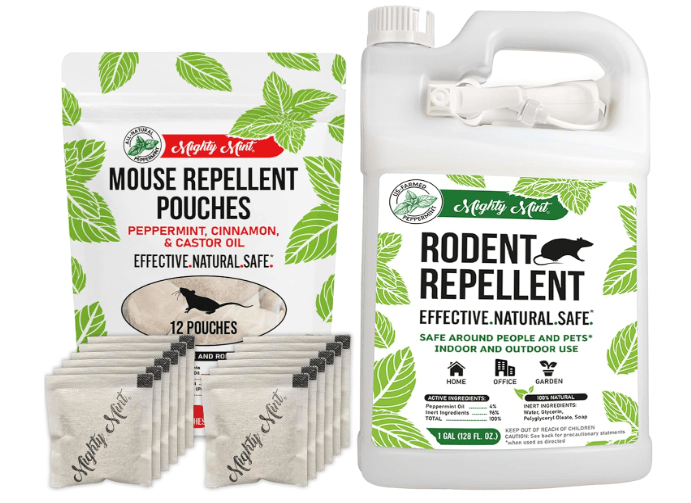
They are usually sold in ready-to-use 8–16 oz spray bottles with a fine mist nozzle.
Current approximate price $12–$18 for 8–16 oz bottle
Key features and benefits
- Fast knockdown of adult gnats on contact
- Strong natural repellent effect (reduces egg-laying)
- Pleasant mint scent (most people find it refreshing indoors)
- Safe for pets and children when used as directed
- Can be used on leaves, soil surface, and around pot rims
- No systemic action — safe for propagation and edible plants
Pros
- Immediate visible reduction in flying adults
- Zero waiting period — can be used daily if needed
- Very low risk to plants when diluted properly
- Doubles as a general household insect repellent
- Organic and chemical-free
Cons
- Does not kill larvae in the soil → must be paired with a soil treatment
- Scent can be strong for sensitive individuals
- Requires frequent reapplication (every 2–7 days during active infestation)
- May leave slight oily residue if over-sprayed
Amazon customer ratings and insights 4.5 stars from thousands of reviews. Most frequent praise: “Sprayed once and saw way fewer gnats the next day,” “Love the natural smell — actually works better than I expected,” “Safe around my cats and seedlings.” Some users mention the need to reapply often and occasional reports of minor leaf spotting on very sensitive plants (usually resolved by testing on one leaf first).
Why it’s a good choice It provides one of the fastest, most user-friendly ways to reduce the visible flying population while remaining extremely safe for indoor environments, pets, and propagation areas.
Ideal use case / who should buy it People who want an immediate, chemical-free way to knock down adult gnats, pet owners, families with children, organic gardeners, and anyone starting seeds or propagating cuttings who needs a gentle foliar/soil-surface option.
(Check current price and reviews on Amazon)
5. Microbe-Life Hydroponics FGX (or similar Bti liquid drench products)
Description Microbe-Life Hydroponics FGX (Fungus Gnat Xterminator) is a liquid formulation of Bacillus thuringiensis israelensis (Bti) specifically designed for easy drenching of houseplant and hydroponic media. Unlike granules, the liquid form mixes instantly with water, penetrates soil quickly, and is particularly convenient for people who dislike handling powders or who have many small pots / seed trays to treat.
It is widely used by both hobby growers and commercial propagators.
Current approximate price $15–$22 for 16–32 oz concentrate (makes many gallons of drench)
Key features and benefits
- Same proven Bti larvae-killing action as Mosquito Bits
- Liquid form = faster soil penetration and more uniform coverage
- No grit or residue left on soil surface
- Very low odor
- Safe for hydroponics, soil, coco coir, propagation trays
- Long shelf life once opened
Pros
- Extremely easy to apply (just mix and water)
- Excellent coverage in dense root systems and seed trays
- Highly effective against larvae
- Pet-safe and organic
- Economical for frequent or large-scale use
Cons
- Slightly more expensive per ounce than granules
- Still takes 3–7 days to significantly reduce larvae
- Does not affect adults (pair with traps)
- Requires measuring and mixing
Amazon customer ratings and insights Consistently 4.5+ stars with strong reviews from houseplant enthusiasts and hydro growers. Comments frequently highlight: “Easier than granules — just pour and done,” “Cleared my propagation station in under three weeks,” “No more gnats in my pothos collection.” A small number of reviews mention needing a second application for very heavy infestations.
Why it’s a good choice It delivers the same gold-standard Bti performance in the most convenient format for people who prefer liquid applications or who manage many small pots and trays.
Ideal use case / who should buy it Hydroponic growers, people with large numbers of small pots or propagation trays, anyone who finds granules inconvenient, and growers who want fast, uniform soil treatment without surface residue.
6. Food-Grade Diatomaceous Earth (Harris, Safer Brand, or similar top-rated brands)
Description Food-grade diatomaceous earth (DE) is a fine, talc-like powder made from fossilized diatoms (microscopic algae). When sprinkled as a ¼–½ inch layer on top of the soil, it works in two powerful ways: (1) it physically scratches and dehydrates soft-bodied larvae and any adults that crawl through it, and (2) it dramatically reduces soil surface moisture, making the environment unattractive for egg-laying. It’s 100% mechanical — no chemicals — and is one of the safest, most effective preventative barriers for seed trays and houseplants alike.
Current approximate price $70.41 for a 2–5 lb bag (lasts years for most indoor gardeners)
Key features and benefits
- Completely non-toxic (safe for pets, kids, and even edible plants)
- Kills larvae and emerging adults on contact
- Acts as a long-term top barrier (stays effective until watered heavily from above)
- Improves soil aeration slightly
- Also controls ants, fungus gnat adults, and other crawling pests
Pros
- Extremely inexpensive per use
- Zero odor or residue
- Works immediately upon application
- Doubles as a preventative for future infestations
- Safe to use on seedlings and propagation domes
Cons
- Can be messy/dusty during application (wear a mask)
- Loses effectiveness if repeatedly top-watered (better with bottom watering)
- Does not kill larvae already deep in the soil
- Light color can look odd on dark soil (though it disappears as it settles)
Amazon customer ratings and insights 4.6–4.7 stars from tens of thousands of reviews. Houseplant owners rave: “Top dressed all my pots — gnats gone in days and never came back,” “Best $12 I ever spent on plants,” “Finally saved my seedling trays.” Minor complaints are about dust clouds when pouring and occasional clumping in very humid conditions.
Why it’s a good choice It’s one of the cheapest, safest, and most foolproof ways to stop the cycle at the soil surface — especially powerful when combined with Bti or nematodes below.
Ideal use case / who should buy it Seed starters, anyone using bottom watering, people who hate chemicals, large collections on a budget, or anyone wanting a set-it-and-forget-it barrier.
(Check current price and reviews on Amazon)
7. Bonide Systemic Houseplant Insect Control Granules (Imidacloprid)
Description Bonide Systemic Granules contain imidacloprid, a neonicotinoid that is absorbed by plant roots and translocated throughout the plant for up to 8–12 weeks of protection. It kills fungus gnat larvae feeding on roots and prevents adults from successfully laying viable eggs. This is the strongest, longest-lasting chemical option specifically labeled for houseplants.
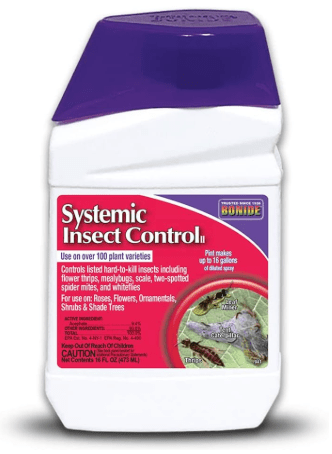
Current approximate price $10–$15 for an 8 oz bottle (treats ~40–50 medium pots)
Key features and benefits
- One application protects for 2–3 months
- Kills larvae systemically
- Also controls aphids, mealybugs, scale, whiteflies
- Very easy — just sprinkle and water in
Pros
- Extremely effective against stubborn infestations
- Set-and-forget convenience
- Low dose required for houseplants
Cons
- Contains a neonicotinoid (harmful to bees/pollinators if used outdoors)
- Not organic
- Takes 5–10 days to fully work
- Overuse can lead to resistance
Amazon customer ratings and insights 4.4 stars from 20,000+ reviews. Users say: “Nuclear option — but it works when nothing else does,” “Saved my 200+ plant collection.” Some reviewers avoid it due to environmental concerns or because they have pets that chew plants.
Why it’s a good choice When you’ve tried everything else and still have gnats months later, this ends the problem decisively.
Ideal use case / who should buy it Growers facing severe, chronic infestations who do not plan to take cuttings or consume the plants and who accept the use of systemic insecticides.
8. 3% Hydrogen Peroxide (Food-Grade or Standard 3% from pharmacy)
Description Hydrogen peroxide (3% solution, the kind commonly sold in brown bottles at pharmacies or grocery stores) is one of the most budget-friendly and widely used DIY remedies for fungus gnats. When diluted to approximately 1 part peroxide to 3–4 parts water, it creates a soil drench that kills larvae on contact by fizzing and releasing oxygen, which disrupts their breathing and damages soft tissues. It also helps break down organic matter that larvae feed on and temporarily aerates compacted soil.
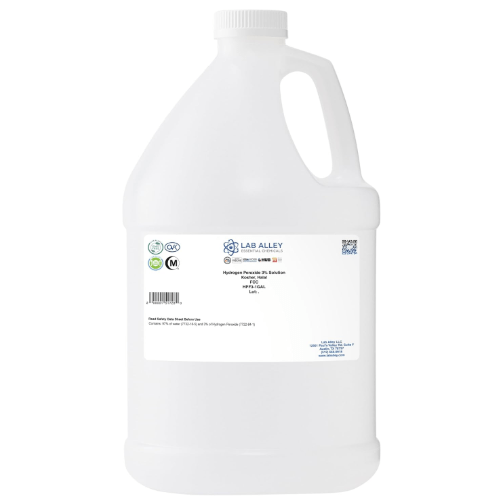
Current approximate price $3–$8 for a 32 oz bottle (makes dozens of treatments)
Key features and benefits
- Extremely low cost
- Readily available (no need to order online)
- Fast-acting on surface and shallow larvae
- Breaks down into water and oxygen — no harmful residue
- Mildly antiseptic properties can help prevent secondary fungal issues in overwatered soil
Pros
- Immediate fizzing action gives visible proof it’s working
- Very safe when diluted properly
- Works well in seed trays and propagation setups
- No odor after application
- Can be repeated every 3–7 days without buildup
Cons
- Does not provide long-term residual control
- Can temporarily stress plants if overused or used too strong
- Only affects larvae in the top few inches of soil
- Requires careful dilution (stronger concentrations can harm roots)
Amazon / user feedback insights While not sold specifically as a “fungus gnat killer,” 3% hydrogen peroxide consistently receives strong praise in gardening forums, Reddit threads (r/houseplants, r/succulents), and Amazon reviews of peroxide bottles when searched with “fungus gnats.” Common comments: “1:4 peroxide drench — gnats gone in one week,” “Saved my overwatered seedlings,” “Cheapest and fastest fix I’ve found.”
Why it’s a good choice It’s the ultimate emergency, low-risk, low-cost first step — especially when you need quick relief and don’t yet have Bti or nematodes on hand.
Ideal use case / who should buy it Beginners, people on a tight budget, anyone with a sudden small infestation, seed starters needing a gentle one-time treatment, or anyone who already has peroxide at home.
(Check current price and reviews on Amazon – search “3% hydrogen peroxide”)
9. Neem Oil Spray (concentrate or ready-to-use – Bonide, Natria, Garden Safe, etc.)
Description Neem oil (derived from the neem tree) is a classic organic multi-pest control option. It works against fungus gnats in two ways: (1) the azadirachtin compound disrupts larval feeding and development when it reaches the soil, and (2) the oil coats and suffocates some adults and repels others from laying eggs. Most indoor growers use ready-to-use sprays or dilute concentrates (1–2 tsp per quart of water + a drop of dish soap as an emulsifier).
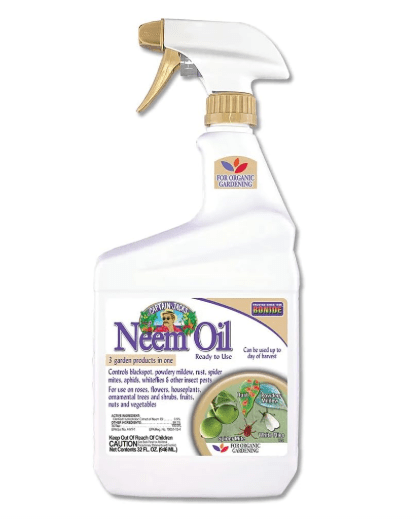
Current approximate price $12–$20 for 8–16 oz concentrate or 24 oz ready-to-use
Key features and benefits
- Broad-spectrum organic control (also effective against aphids, spider mites, thrips, etc.)
- Repellent and anti-feedant properties reduce egg-laying
- Biodegradable and breaks down relatively quickly
- Can be used as both foliar spray and light soil drench
Pros
- One product handles multiple houseplant pests
- Pleasant nutty/earthy smell to most people
- Widely trusted by organic gardeners
- Safe for most plants when used correctly
Cons
- Strong odor during application (dissipates quickly)
- Requires thorough coverage and repeat applications
- Can leave oily film on leaves if over-applied
- Less targeted against fungus gnats than Bti
Amazon customer ratings and insights 4.4 stars average across thousands of reviews for popular brands. Frequent comments: “Cleared gnats and spider mites at the same time,” “Good preventative after initial Bti treatment,” “Works but you have to be consistent.” Some users report minor leaf burn on very sensitive plants (ficus, ferns) when sprayed in direct sun.
Why it’s a good choice It’s a versatile, all-in-one organic option for growers already dealing with (or wanting to prevent) multiple pests.
Ideal use case / who should buy it People with mixed pest problems, organic-only gardeners, those who prefer plant-based solutions, or anyone who wants one bottle for gnats + other common houseplant insects.
(Check current price and reviews on Amazon)
10. Cinnamon Powder or Play Sand / Coarse Sand Top Layer
Description Two extremely simple, natural barrier methods are frequently recommended for seed trays and propagation:
- Ground cinnamon — sprinkled lightly on soil surface (antifungal + mild repellent properties; discourages egg-laying and larval activity).
- Dry play sand, horticultural sand, or decorative sand — applied in a ¼–½ inch even layer (dries the surface quickly, physically blocks adults from reaching moist soil to lay eggs).
Both are zero-risk for seedlings and propagation domes.
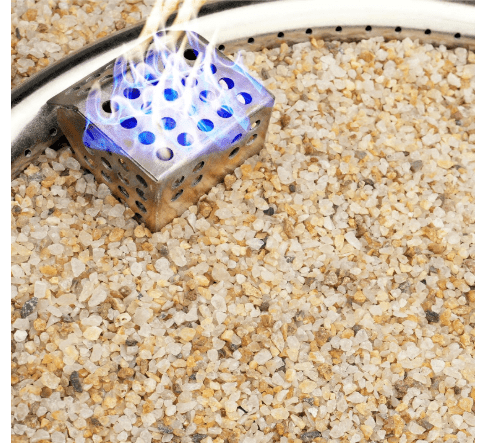
Current approximate price $39.99 (cinnamon from grocery store; sand from hardware/garden store or Amazon)
Key features and benefits
- Practically free or very cheap
- 100% safe for seedlings, cuttings, pets, humans
- No mixing, no waiting period
- Cinnamon has natural antifungal benefits
- Sand improves drainage appearance and prevents soil splash
Pros
- Immediate physical barrier
- Zero risk of plant damage
- Lasts until disturbed or heavily watered from top
- Perfect for delicate seedlings
Cons
- Does not kill existing deep larvae
- Sand can look unnatural on some pots
- Cinnamon scent fades quickly
- Requires reapplication after top watering
Amazon / user feedback insights Both methods appear constantly in high-upvoted Reddit threads, YouTube tutorials, and comment sections under sticky trap and Bti products. Comments: “Cinnamon on my seed trays — zero gnats this season,” “Sand layer stopped gnats in propagation forever,” “Simplest and safest fix.”
Why it’s a good choice It’s the gentlest, most prevention-focused option — ideal when you want to avoid any liquid treatments on young plants.
Ideal use case / who should buy it Seed starters, people doing frequent propagation, anyone who prioritizes maximum safety for tiny seedlings, or those who want a passive, no-fuss preventative layer.
How to Choose the Right Fungus Gnat Treatment for You
With so many effective options available, the best choice depends on your specific situation: infestation severity, plant types, safety priorities, budget, and whether you’re dealing mainly with houseplants or delicate seed trays.
Use this quick decision guide:
Severe infestation (dozens of adults flying + visible larvae in soil / many affected plants) → Primary combo: Summit Mosquito Bits (or Microbe-Life Bti liquid) + Yellow Sticky Traps → Add Beneficial Nematodes if the problem keeps returning after 4–6 weeks
Moderate infestation (5–20 adults per plant, occasional sightings) → Start with Yellow Sticky Traps (immediate adult reduction) → Add one larvae treatment: • Bti (Mosquito Bits or liquid) – most reliable • Food-grade Diatomaceous Earth top layer – easiest & cheapest • Peppermint oil spray – fastest visible knockdown
Mild infestation / early prevention (just noticed a few gnats) → Yellow Sticky Traps + one barrier method: • Diatomaceous Earth • Sand / Cinnamon top layer (especially seed trays) • 3% Hydrogen Peroxide drench (1–2 applications)
Seed trays & propagation only (maximum gentleness required) → Priority order:
- Sand or Cinnamon top layer
- Yellow sticky traps (placed horizontally or low)
- Diluted Hydrogen Peroxide drench (very gentle)
- Peppermint oil spray (avoid heavy leaf coverage on tiny seedlings)
- Low-dose Bti liquid (Microbe-Life style)
Pet-safe / child-safe / organic-only households → Safe & effective ranking:
- Bti products (Mosquito Bits or liquid)
- Beneficial Nematodes
- Peppermint oil spray
- Diatomaceous Earth
- Sand / Cinnamon
- Hydrogen Peroxide → Avoid: Bonide Systemic Granules (imidacloprid)
Budget under $15 → Yellow Sticky Traps + Hydrogen Peroxide drench + Sand/Cinnamon top layer → Add Diatomaceous Earth if you can stretch to $20 total
Large collection or recurring problem → Invest in Bti + Sticky Traps as core strategy → Add Nematodes for longer biological control → Use DE or sand as a maintenance barrier on vulnerable pots
Most powerful all-around combo (recommended for 80% of readers) Yellow Sticky Traps (adults) + Summit Mosquito Bits or Microbe-Life Bti (larvae) + DE or sand top-dress (prevention) This trio consistently delivers the fastest, most complete, and longest-lasting results reported by thousands of houseplant growers.
Step-by-Step: How to Eliminate Fungus Gnats for Good
Follow this integrated protocol for reliable, permanent control:
Week 1 – Attack phase
- Place 2–4 yellow sticky traps per medium/large pot or per propagation tray. Replace when ~70–80% covered (usually 1–3 weeks).
- Apply a larvae-killing treatment to all potentially affected pots/trays:
- Bti (Mosquito Bits granules or liquid drench) → preferred
- OR Beneficial Nematodes (follow package mixing & keep soil moist 3–5 days)
- OR 3% Hydrogen Peroxide drench (1:4 ratio with water) – 1–2 applications 3–5 days apart
- Top-dress vulnerable pots and all seed trays with:
- ¼–½ inch food-grade Diatomaceous Earth, OR
- Dry play sand / coarse sand, OR
- Light sprinkle of ground cinnamon
- Mist soil surface and pot rims lightly with peppermint oil spray every 2–4 days (optional but accelerates adult reduction).
Week 2–3 – Monitor & reinforce
- Continue replacing sticky traps as needed.
- Re-apply Bti drench/granules at 10–14 days if adults are still present.
- Keep top 1–2 inches of soil dry between waterings (critical!).
- Bottom-water whenever possible.
Week 4+ – Prevention & maintenance
- Maintain sticky traps indefinitely (cheap insurance).
- Re-apply DE/sand layer every 2–3 months or after heavy top watering.
- Re-apply Bti every 4–6 weeks during warm months if you see even a few gnats.
- Quarantine all new plants for 3–4 weeks and treat preventatively.
- Switch to well-draining, less organic potting mixes for future repotting.
Most people see a dramatic drop within 7–14 days and near-total elimination within 3–5 weeks when following both adult + larvae control.
Frequently Asked Questions (FAQ)
Are fungus gnats harmful to plants? Adults are mostly annoying. Larvae can damage roots in heavy infestations and are especially dangerous to seedlings (damping-off, stunted growth).
Do fungus gnats bite humans or pets? No. They do not bite and pose no direct health risk to people or animals.
How long does it take to get rid of fungus gnats? With a combined approach (larvae + adults), most people see major improvement in 1–2 weeks and full control in 3–6 weeks. Using only traps usually takes much longer.
Are these treatments safe for seedlings and propagation? Yes — the safest options are: sand/cinnamon top layer, diluted hydrogen peroxide, peppermint oil (light mist), low-dose Bti liquid, and yellow sticky traps placed low or horizontally.
Can I use multiple methods together? Absolutely — and you should. The most successful strategy attacks both adults (traps, sprays) and larvae (Bti, nematodes, DE, peroxide) while adding prevention (dry soil, top barrier).
Will fungus gnats ever come back? They can if you overwater again or bring in new infested soil/plants. Good cultural habits + occasional monitoring traps prevent most re-infestations.
Fungus gnats are one of the most common — and frustrating — houseplant pests, but they are also one of the easiest to eliminate when you target the right life stages.
For the vast majority of situations in 2026, the winning formula is simple: Yellow sticky traps to catch flying adults + Bti-based treatment (Summit Mosquito Bits or Microbe-Life liquid) to kill larvae + a dry top barrier (DE or sand) to prevent re-infestation.
Start with those three tools, be consistent with watering habits, and you’ll likely never deal with serious fungus gnat clouds again.
Pick the combination that fits your collection size, budget, and safety preferences from the list above — then take action today. Your plants (and your sanity) will thank you.
Happy growing — and goodbye to those tiny flying pests!