You’ve spent hundreds of dollars on fertilizer and sacrificed your weekends to yard work, only to end up staring at a stubbornly patchy, brown lawn. It is incredibly frustrating, but the problem likely isn’t your maintenance routine—it’s the seed.
Most homeowners fail because they buy generic bags from the hardware store without considering their specific climate, sun exposure, or heavy foot traffic. To save you time, money, and future headaches, we’ve evaluated the top-performing Amazon products to bring you the 10 best grass seed mix options available this year.
Whether you are battling dense shade under mature trees, scorching southern heat, or active dogs tearing up the turf, choosing the correct variety changes everything. In this comprehensive guide, we will help you pinpoint the exact seed you need to finally grow a lush, green, barefoot-worthy lawn.
How We Evaluated & Tested
To create an authoritative, skyscraper-level resource, we didn’t just look at the labels. We analyzed real-world performance metrics, aggregated verified customer feedback from Amazon, and cross-referenced expert turfgrass testing data.
Our evaluation methodology prioritized five key criteria:
-
Germination Speed: How quickly the seeds sprout and establish roots.
-
Drought & Heat Tolerance: The lawn’s ability to survive extreme summer temperatures without requiring constant irrigation.
-
Weed-Seed Percentage: We prioritized premium bags with 99.9% pure seed and weed-free guarantees.
-
Customer Satisfaction: Long-term results reported by homeowners over multiple seasons.
-
Value for Money: The balance of coverage area per pound versus the retail price.
Quick Comparison Table
| Product Name | Best For / Award | Current Pricing |
| Scotts Turf Builder Thick’R Lawn | Best Overall All-Purpose Mix | $63.67 |
| Jonathan Green Black Beauty Ultra | Best for Cool-Season Climates | |
| Pennington Smart Seed Dense Shade | Best for Shady Yards & Under Trees | $28.49 |
| Scotts Turf Builder High-Traffic Mix | Best for Dogs & Active Families | $55.49 |
| Scotts Turf Builder Bermudagrass | Best Warm-Season Grass Seed | |
| GreenView Fairway Formula Sun/Shade | Best Professional-Grade Blend | $31.98 |
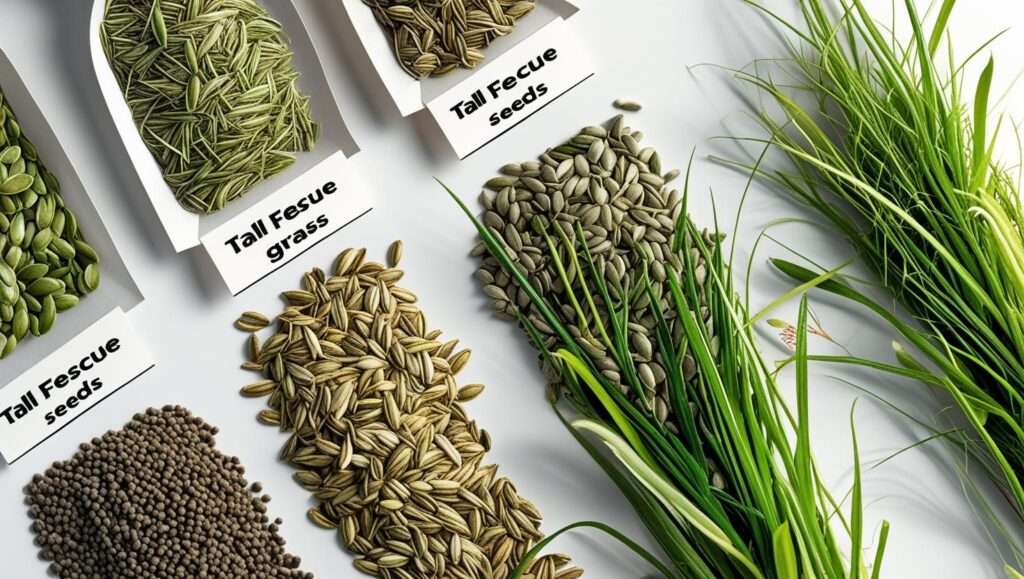
| Scotts Turf Builder Tall Fescue Mix | Best for Hot & Dry Summers | |
| Earth Science Wildflower & Grass | Best Eco-Friendly / Pollinator Lawn | |
| Everwilde Farms Buffalo Grass | Best Low-Maintenance Native Grass | $139.99 |
| Pronto Seed Speedy Seed | Best for Rapid Germination |
Detailed Product Reviews
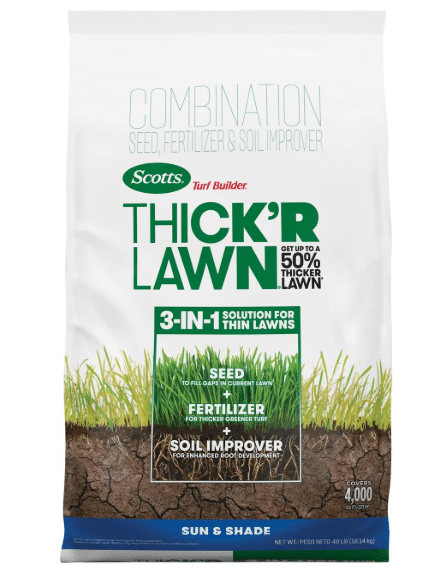
1. Scotts Turf Builder Thick’R Lawn Sun/Shade
Product Description: If your lawn is looking thin, worn out, or peppered with bare dirt patches, Scotts Turf Builder Thick’R Lawn is the ultimate rescue remedy. This isn’t just grass seed; it’s an innovative 3-in-1 solution containing high-quality seed, slow-release fertilizer, and a specialized soil improver. Formulated to thicken existing turf by up to 50% with a single application, this mix takes the guesswork out of overseeding by giving new sprouts the exact nutrients they need to thrive.
Price: $63.67
Key Features & Benefits:
-
3-in-1 Formula: Combines seed, fertilizer, and soil amendment in one bag.
-
Versatility: Designed to grow robustly in both full sun and partial shade.
-
Thickening Power: Specifically engineered to fill in gaps, crowding out crabgrass and weeds naturally.
Pros and Cons:
-
Pros: Incredibly easy for beginners to use; delivers visible thickening fast; feeds the lawn while new grass grows.
-
Cons: Designed for overseeding an existing lawn, not for starting a brand-new lawn from bare dirt.
Amazon Customer Ratings & Reviews:Rated 4.1 out of 5 stars with over 1,200 reviews. Homeowners consistently praise how effectively it fills in stubborn bald spots, with many noting that it successfully revived lawns they thought were completely dead.
Why It’s a Good Choice for Quick Fixes: The built-in fertilizer eliminates the risk of burning new sprouts with separate chemical applications. It provides the exact micro-environment the seeds need to germinate quickly and establish deep roots.
Ideal Use Case / Who Should Buy It: Homeowners with an existing but thinning cool-season lawn who want an easy, all-in-one weekend project to restore their yard’s density.
2. Jonathan Green Black Beauty Ultra
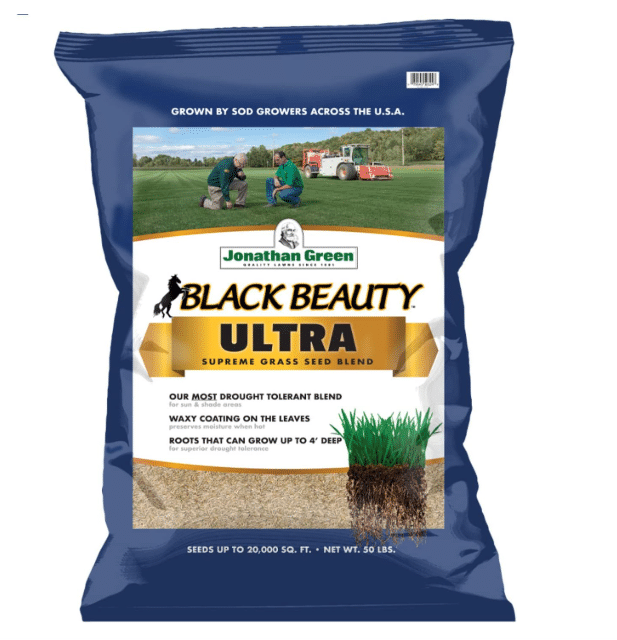
Product Description: For lawn perfectionists who want a golf-course-quality yard, Jonathan Green Black Beauty Ultra is the gold standard. This premium blend features genetically superior tall fescues, Kentucky bluegrass, and perennial ryegrass. What sets it apart is its invisible waxy leaf coating—similar to the coating on an apple—which preserves moisture in the plant and shields it from severe drought and disease.
Price:
Key Features & Benefits:
-
Deep Root System: Roots can grow up to 4 feet deep for ultimate drought survival.
-
Waxy Coating: Naturally preserves moisture and repels insects.
-
Color: Produces an incredibly rich, dark green turf that stands out in any neighborhood.
Pros and Cons:
-
Pros: Unbeatable drought resistance; gorgeous dark color; germinates reliably in both sun and shade.
-
Cons: Premium price point; requires consistent watering during the initial 14-day germination phase.
Amazon Customer Ratings & Reviews:Boasting an impressive 4.7 out of 5 stars, this seed is highly revered by lawn enthusiasts. Reviews frequently highlight its professional-grade results and its ability to stay green during heat waves when neighbor’s lawns turn brown.
Why It’s a Good Choice for Drought Resistance: Because the roots penetrate up to 4 feet into the soil, this grass can access subterranean moisture during dry spells, drastically reducing your summer water bill.
Ideal Use Case / Who Should Buy It: Northern and transition-zone homeowners who demand a pristine, dark green lawn and are willing to invest in premium, professional-grade seed.
3. Pennington Smart Seed Dense Shade
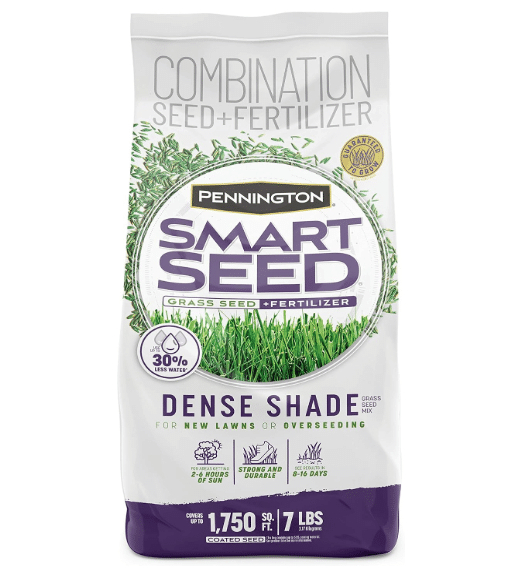
Product Description: Growing grass under large oak or maple trees can feel impossible. Pennington Smart Seed Dense Shade is specifically engineered to solve this exact problem. Formulated with premium shade-tolerant fescue varieties, this mix thrives on as little as 2 to 6 hours of daily sunlight. Coated with Pennington’s proprietary Penkoted technology, the seeds are protected against deadly fungus and retain moisture better during germination.
Price: $28.49
Key Features & Benefits:
-
Low Light Requirement: Survives on just 2 to 6 hours of dappled sunlight.
-
Water Efficiency: Requires up to 30% less water year over year compared to ordinary grass seed.
-
Disease Resistance: Highly resistant to the fungal diseases that commonly breed in damp, shaded soil.
Pros and Cons:
-
Pros: Actually flourishes under mature trees; highly water-efficient; soft barefoot texture.
-
Cons: Will struggle and burn if accidentally planted in full, scorching afternoon sun.
Amazon Customer Ratings & Reviews:Rated 4.1 out of 5 stars. Customers rave about its ability to finally conquer long-standing bare dirt spots along the north side of their homes and under heavy tree canopies.
Why It’s a Good Choice for Low Light: Standard grasses slowly starve in the shade because they cannot photosynthesize. This mix utilizes specifically bred fescues that are highly efficient at generating energy from minimal ambient light.
Ideal Use Case / Who Should Buy It: Homeowners with heavily wooded lots, mature shade trees, or north-facing yards that struggle with moss and bare dirt.
4. Scotts Turf Builder High-Traffic Mix
Product Description: If your backyard is a chaotic playground for kids, dogs, and weekend barbecues, delicate grasses will be trampled into dust. Scotts Turf Builder High-Traffic Mix is the heavy-duty armor your lawn needs. This rugged blend is heavily weighted with durable perennial ryegrass and tall fescue, varieties known for their rapid recovery rates and structural toughness, allowing them to bounce back from heavy wear and tear.
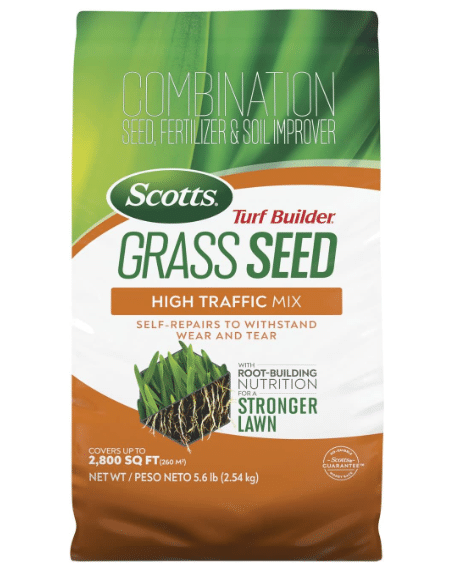
Price: $55.49
Key Features & Benefits:
-
Wear & Tear Resistance: Bred specifically to withstand heavy foot traffic and pet activity.
-
Self-Repairing: Kentucky bluegrass in the mix spreads via rhizomes to naturally heal divots and scratches.
-
WaterSmart PLUS Coating: Absorbs 2x more water than uncoated seed to ensure successful germination.
Pros and Cons:
-
Pros: Incredibly durable; recovers quickly from dog urine burns and digging; establishes fast.
-
Cons: Grows vigorously, which means it may require more frequent mowing during peak spring.
Amazon Customer Ratings & Reviews: Consistently highly rated by parents and pet owners. Reviews often mention that it is the only seed that has survived the “zoomies” of large dog breeds like Labs and German Shepherds.
Why It’s a Good Choice for Durability: The combination of rapid-growing ryegrass and self-repairing bluegrass creates a dense, intertwined root mat that acts like a natural shock absorber against running feet.
Ideal Use Case / Who Should Buy It: Active families, pet owners, and anyone who uses their backyard as an outdoor living room or sports field.
5. Scotts Turf Builder Bermudagrass
Product Description: For southern homeowners battling relentless heat, Scotts Turf Builder Bermudagrass is the ultimate survivor. Warm-season grasses behave very differently from northern grasses, and Bermuda is the king of the South. This seed is designed to thrive in blazing sunshine and high humidity, spreading aggressively to form a thick, drought-proof carpet that naturally chokes out summer weeds.
Price:
Key Features & Benefits:
-
Extreme Heat Tolerance: Flawlessly handles 90°F+ temperatures without wilting.
-
Aggressive Spreading: Creeps via stolons and rhizomes to fill bare spots naturally.
-
Drought Survival: Goes dormant during extreme drought rather than dying, greening up rapidly when rain returns.
Pros and Cons:
-
Pros: Virtually indestructible in the heat; forms a beautiful, tight turf; excellent for southern high traffic.
-
Cons: Must be planted in late spring/early summer; goes brown (dormant) during the winter; highly invasive to garden beds.
Amazon Customer Ratings & Reviews: Rated 4.0 out of 5 stars with hundreds of reviews. Southern homeowners praise its ability to establish a resilient lawn in poor, sandy clay soils where other seeds have failed.
Why It’s a Good Choice for Southern Heat: Bermudagrass thrives in conditions that would instantly kill a cool-season fescue. Its deep root system and heat-activated growth cycle make it the most sustainable choice for the southern United States.
Ideal Use Case / Who Should Buy It: Homeowners living in the Southern tier of the US (Zones 7-10) who have yards with full, direct, all-day sun.
6. GreenView Fairway Formula Sun & Shade (Best Professional-Grade Blend)
Product Description: When absolute purity is your priority, GreenView Fairway Formula delivers a golf-course-grade solution. Unlike budget brands that allow a small percentage of crop or weed seeds in the bag, GreenView guarantees a 99.9% weed-free blend. This premium cool-season mix contains elite varieties of Kentucky bluegrass, perennial ryegrass, and fescues that are hand-selected for superior disease resistance and vibrant color.
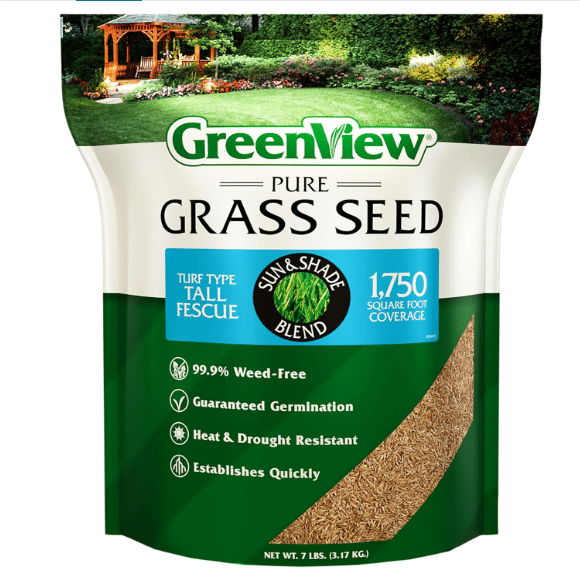
Price: $31.98
Key Features & Benefits:
-
Weed-Free Guarantee: 99.9% pure seed with absolutely zero weed seeds.
-
Elite Cultivars: Uses top-rated turfgrass varieties typically reserved for professional landscapers.
-
Uncoated Seed: You get more actual seed per pound compared to heavily coated alternatives.
Pros and Cons:
-
Pros: Unmatched purity prevents introducing new weeds into your yard; exceptional dark green color; high germination rate.
-
Cons: Higher upfront cost; uncoated seeds require more diligent watering during the first week.
Amazon Customer Ratings & Reviews: Rated 4.5 out of 5 stars. Reviewers consistently note that while it costs more initially, they save money on weed killers later because the turf grows in incredibly thick and clean.
Why It’s a Good Choice for Purity: Cheaper seeds often contain up to 2% weed seeds, which can introduce thousands of weeds into your yard. GreenView’s zero-weed guarantee ensures you are only growing exactly what you paid for.
Ideal Use Case / Who Should Buy It: Budget-flexible homeowners who want a flawless, professional-grade lawn and refuse to compromise on seed purity.
7. Scotts Turf Builder Tall Fescue Mix (Best for Hot & Dry Summers)
Product Description: For those living in the challenging “Transition Zone” (where summers are too hot for traditional northern grasses but winters are too cold for southern grasses), Scotts Turf Builder Tall Fescue Mix is the ultimate problem solver. This deep-rooted, cool-season grass is specifically bred to withstand scorching July heat waves and prolonged dry spells while maintaining a rich green hue.
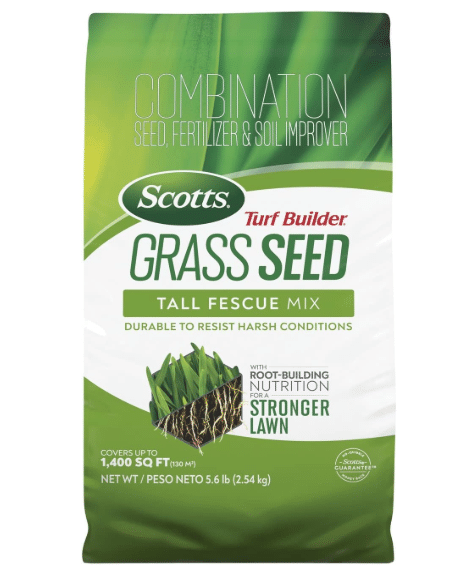
Price:
Key Features & Benefits:
-
Heat Tolerance: Thrives in southern transition zones where other cool-season grasses burn up.
-
Deep Root System: Roots plunge deep into the soil to access hidden moisture reserves.
-
Disease Resistance: Formulated to resist brown patch and other summer fungal diseases.
Pros and Cons:
-
Pros: Survives brutal summer heat; stays green longer into the winter; highly durable against foot traffic.
-
Cons: Blades are slightly wider and coarser than fine fescue or bluegrass.
Amazon Customer Ratings & Reviews: Rated 4.3 out of 5 stars. Buyers in states like Virginia, North Carolina, and Tennessee frequently praise its ability to survive summer droughts without turning into crispy brown straw.
Why It’s a Good Choice for Heat Tolerance: Tall fescue naturally develops a deeper, more robust root system than shallow-rooted bluegrass, allowing it to bypass the dry topsoil and pull water from deeper underground.
Ideal Use Case / Who Should Buy It: Homeowners in the Transition Zone or those with lawns exposed to relentless, baked-in afternoon sun who want to reduce their watering schedule.
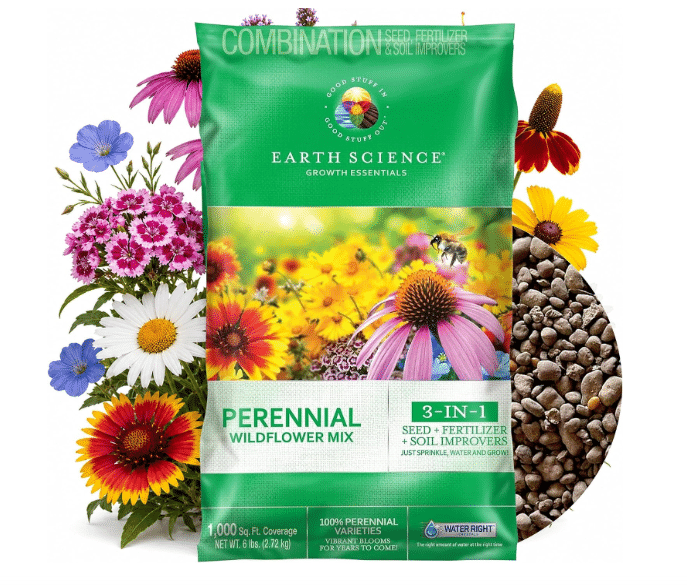
8. Earth Science Wildflower & Grass Seed Mix (Best Eco-Friendly / Pollinator Lawn)
Product Description: Traditional turf isn’t for everyone. If you want to step away from endless mowing and chemical fertilizers, the Earth Science Wildflower & Grass Seed Mix offers a beautiful, sustainable alternative. This blend combines low-maintenance fescues with vibrant, pollinator-friendly wildflowers, creating a meadow-like landscape that supports local ecology while requiring a fraction of the upkeep.
Price:
Key Features & Benefits:
-
Pollinator Friendly: Attracts bees, butterflies, and beneficial insects to your yard.
-
Water Conservations: Formulated with drought-tolerant species that thrive on natural rainfall.
-
Nutrient Rich: Includes natural soil-conditioning nutrients to boost germination in poor soil.
Pros and Cons:
-
Pros: Drastically reduces mowing frequency; beautiful seasonal blooms; excellent for permaculture and organic gardening setups.
-
Cons: Not meant for heavy foot traffic or sports; HOA restrictions may apply to meadow-style lawns.
Amazon Customer Ratings & Reviews: Rated 4.2 out of 5 stars. Eco-conscious gardeners love the explosion of color in the spring and the significant drop in their water bills.
Why It’s a Good Choice for the Environment: By replacing a section of your monoculture lawn with this mix, you instantly increase local biodiversity and create a self-sustaining micro-ecosystem that naturally improves soil health over time.
Ideal Use Case / Who Should Buy It: Organic gardeners, eco-conscious homeowners, and those looking to convert underutilized lawn spaces into low-maintenance pollinator habitats.
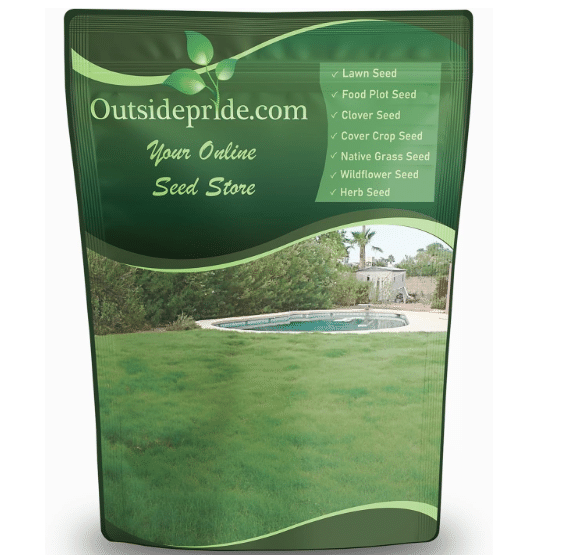
9. Everwilde Farms Buffalo Grass Native Seeds (Best Low-Maintenance Native Grass)
Product Description: Buffalo grass is the ultimate “plant it and forget it” solution. As a turfgrass native to the North American plains, Everwilde Farms Buffalo Grass is biologically wired to survive in poor soils, extreme heat, and severe drought. Once established, this warm-season grass requires almost zero fertilization, extremely rare watering, and only needs to be mowed a few times a year.
Price: $139.99
Key Features & Benefits:
-
Native Resilience: Naturally adapted to harsh prairie conditions and poor soil quality.
-
Ultra-Low Maintenance: Maximum growth height is short, drastically reducing the need to mow.
-
Extreme Drought Tolerance: Survives on a fraction of the water needed by traditional turf.
Pros and Cons:
-
Pros: The most environmentally sustainable turf option; cuts yard work by 80%; soft, fine texture.
-
Cons: Very slow to germinate and establish; goes dormant (brown) early in the fall.
Amazon Customer Ratings & Reviews: Rated 4.0 out of 5 stars. Reviewers looking for an authentic, native landscape highly recommend it for its ruggedness and incredibly low maintenance requirements.
Why It’s a Good Choice for Poor Soils: Because it is a native species, Buffalo grass does not require the heavy topsoil amendments, peat moss, or synthetic fertilizers that engineered grasses demand.
Ideal Use Case / Who Should Buy It: The “lazy” lawn owner, rural properties, or anyone living in arid regions looking to establish a sustainable, native landscape that takes care of itself.
10. Pronto Seed Speedy Seed (Best for Rapid Germination)
Product Description: When you need green grass immediately—whether for an upcoming backyard party or to stop rapid soil erosion on a slope—Pronto Seed Speedy Seed is the fastest solution on the market. Heavily reliant on annual and perennial ryegrasses, this mix is engineered to sprout in record time, locking down soil and providing a lush carpet of green while slower grasses catch up.
Price:
Key Features & Benefits:
-
Rapid Sprouting: Visible germination in as little as 5 to 7 days under ideal conditions.
-
Erosion Control: Fast-growing roots immediately stabilize loose topsoil.
-
Versatile: Grows well in both sun and partial shade.
Pros and Cons:
-
Pros: Incredibly fast results; great for emergency patch jobs; highly affordable.
-
Cons: Contains annual ryegrass which dies off after one season, requiring reseeding the following year.
Amazon Customer Ratings & Reviews: Rated 4.3 out of 5 stars. Buyers are consistently shocked by how quickly it sprouts, with many posting photos of green shoots appearing in less than a week.
Why It’s a Good Choice for Emergency Patching: The high concentration of ryegrass acts as a fast-acting “nurse grass,” providing immediate cover and shade to protect the soil while more permanent grasses slowly establish underneath.
Ideal Use Case / Who Should Buy It: Homeowners needing a quick cosmetic fix before an event, or those dealing with active soil erosion on a hillside that needs immediate root stabilization.
The Ultimate Buying Guide: How to Choose the Right Grass Seed
Finding the 10 best grass seed mix options is only half the battle; you must select the one that aligns perfectly with your yard’s unique ecosystem. Here is how to make an informed buying decision:
1. Identify Your Climate Zone
-
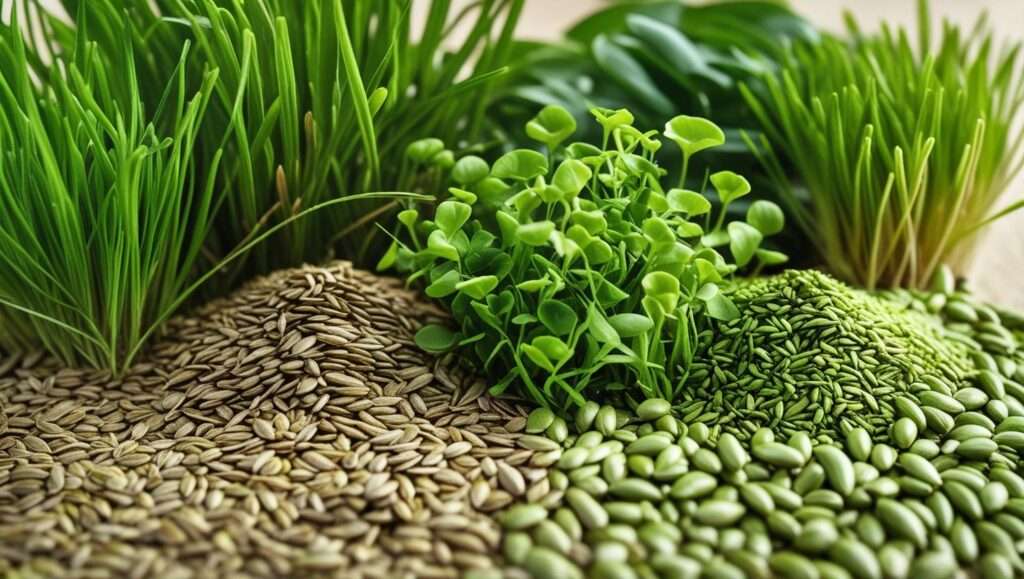
Cool-Season Grasses (North): Kentucky bluegrass, perennial ryegrass, and fescues thrive where summers are mild and winters are freezing. They grow most vigorously in the cool temperatures of spring and fall.
-
Warm-Season Grasses (South): Bermudagrass, Zoysia, Centipede, and Bahia thrive in extreme heat and humidity. They peak in mid-summer and go dormant (brown) during the winter.
2. Evaluate Sun vs. Shade Exposure Do not guess your sunlight—time it.
-
Full Sun (6-8+ hours): Bermudagrass and Kentucky bluegrass will thrive.
-
Partial Shade (4-6 hours): Tall fescues and perennial ryegrasses perform best.
-
Dense Shade (2-4 hours): Fine fescues are mandatory. Planting a sun-loving Bermuda in a shaded area is a guaranteed failure.
3. Assess Your Traffic Levels If you have large dogs or kids who play backyard sports, avoid delicate fine fescues. Instead, look for a mix heavy in perennial ryegrass (for rapid recovery) and tall fescue (for sheer structural durability).
4. Pure Seed vs. Coated Seed Many modern seeds feature a clay-based colored coating. This coating retains moisture and contains fungicides to boost germination success. However, a 10 lb bag of coated seed may only contain 5 lbs of actual grass seed. If you have an established irrigation system and can water diligently, buying uncoated, pure seed often provides a better value and wider coverage.
Pro Tips for Planting Your Grass Seed Mix
Even the most expensive seed will fail if simply tossed onto hard dirt. Follow these core agricultural guidelines for a successful lawn renovation:
-
Soil Prep is Non-Negotiable: Seed must make direct contact with the soil to germinate. Rake out dead thatch, remove debris, and core aerate the lawn to relieve soil compaction. For dense shade areas or raised beds, ensure the soil drains well to prevent fungal rot.
-
The “Light and Frequent” Watering Rule: New seeds cannot dry out, even for a single afternoon. Water lightly 2 to 3 times a day for the first 14 to 21 days to keep the top inch of soil consistently moist, like a wrung-out sponge.
-
The First Mow: Wait until the new grass reaches 3 to 4 inches in height before mowing. Ensure your mower blades are freshly sharpened; dull blades will rip delicate new seedlings entirely out of the soil.
Conclusion & Final Verdict
Transforming a barren, frustrating yard into a lush oasis comes down to working with your environment rather than against it. By matching your soil type, sunlight, and lifestyle to the right product, success becomes inevitable.
If you want a reliable, foolproof lawn without overthinking it, you cannot go wrong with the Scotts Turf Builder Thick’R Lawn for general overseeding. If you are battling large trees and dark corners, the Pennington Smart Seed Dense Shade is your best bet. And for those in the sweltering south, Scotts Turf Builder Bermudagrass remains the undisputed champion of heat survival. Choose the blend that fits your yard’s unique profile, prep your soil thoroughly, and enjoy your new barefoot-worthy lawn.
Frequently Asked Questions
When is the best time of year to plant grass seed? For cool-season grasses (fescue, bluegrass), early autumn is the optimal time. The soil is still warm for fast germination, but the cooler air prevents heat stress, and there is less competition from summer weeds. For warm-season grasses (Bermuda), plant in late spring or early summer when soil temperatures consistently stay above 65°F.
Can I just throw grass seed on top of my existing lawn? Yes, this is a highly effective process called “overseeding.” However, you cannot just throw it and forget it. You must mow the existing grass very short, rake aggressively to expose the soil underneath, apply the seed, and water consistently so the new seed can take root alongside the old grass.
How long does it take for grass seed to germinate? It depends entirely on the grass type. Perennial ryegrass is incredibly fast, sprouting in 5 to 10 days. Fescues typically take 10 to 14 days. Kentucky bluegrass and native buffalo grass are the slowest, often taking 14 to 30 days to fully germinate.