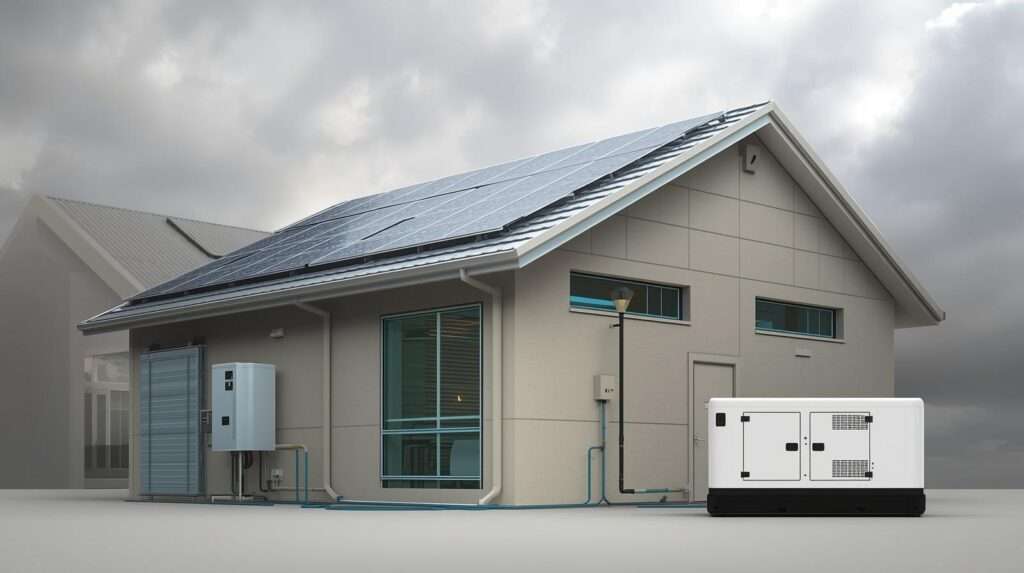
Imagine this: It’s mid-January in Seattle or Buffalo. A massive storm has knocked out power for days. Your solar panels are producing barely 20-30% of their rated output under thick clouds, and your battery bank is draining fast. Gas stations are jammed or out of fuel, and the noise from a traditional generator is driving your neighbors (and you) crazy. Pure solar setups often fail in the Pacific Northwest, Northeast, or Great Lakes regions, where average peak sun hours drop to 2.5–4.5 per day (or less during winter storms). Pure gas generators provide instant power but require constant fuel, produce emissions and noise, and leave you vulnerable if supply chains break.Best hybrid solar-and-gas backup setups for cloudy US regions
Hybrid solar-and-gas backup setups solve this exact problem. They combine high-efficiency LiFePO4 battery power stations (with strong MPPT solar input for partial sun days) with dual- or tri-fuel inverter generators (gasoline + propane + sometimes natural gas). Solar handles daytime recharging and light loads when even weak sunlight is available, while the generator quickly tops up the battery or powers heavy loads during extended overcast periods. The result? Quieter, cleaner, more fuel-efficient operation with far greater resilience.
These 10 setups represent the top-rated, most popular options in 2026 based on expert tests from Popular Mechanics, CNET, Good Housekeeping, PopSci, and thousands of Amazon customer reviews. They prioritize cloudy-weather performance: high solar input (400W+ recommended), fast generator charging compatibility, long runtime on propane (which stores better long-term), expandable capacity, and pure sine wave output for sensitive electronics.
This comprehensive guide will help you make an informed buying decision. We’ll cover how hybrids work in cloudy climates, key buying factors, a simple comparison table, in-depth reviews, and practical advice. By the end, you’ll know exactly which setup fits your needs—whether for partial-home backup, RV use, or emergency preparedness.
Understanding Hybrid Solar-and-Gas Backup for Cloudy Regions
Cloudy US regions face unique challenges. In places like Seattle (avg. 3.5–4 peak sun hours), Portland, or Buffalo, solar panels can see output drop dramatically on overcast days—sometimes to just 10-30% of rated capacity. Extended storms drain batteries faster than they recharge, leaving households without power for refrigerators, medical devices, CPAP machines, or heating systems.
Hybrid setups address this by:
- Using solar panels + MPPT controllers to harvest every bit of available light (even diffuse sunlight) for free, quiet recharging.
- Pairing with a dual/tri-fuel inverter generator that runs cleanly and efficiently on propane (longer shelf life, less maintenance) or gasoline, recharging the battery station in 2–4 hours or powering loads directly.
- Enabling smart switching via apps, UPS modes, or transfer switches for seamless operation.
Key Benefits:
- Reduced fuel consumption (solar covers daytime basics).
- Lower noise and emissions compared to standalone generators.
- Scalability: Add more batteries or panels as needs grow.
- Fuel flexibility: Propane stores for years without degrading.
Who Needs This? Homeowners in outage-prone cloudy states, families with medical needs, RVers, remote workers, or anyone wanting resilient backup without full grid-tied solar investment.
How We Selected the Top 10: We aggregated 2026 expert reviews, Amazon best-seller data, ratings (prioritizing 4.5+ stars with thousands of reviews), real-world cloudy/low-light performance, expandability, and value. Focus was on LiFePO4 batteries (3,000–6,500+ cycles), high solar input, and generator compatibility. Best hybrid solar-and-gas backup setups for cloudy US regions
Key Buying Factors for Cloudy Regions
When choosing a hybrid setup, evaluate these criteria:
- Capacity (Wh): Start with 1,000–4,000Wh for essentials; expand for whole-home.
- Solar Input (W): Aim for 400W+ with efficient MPPT for partial sun.
- Output (W continuous/peak): Enough for your loads (fridge ~150W, furnace ~500–800W).
- Fuel Options & Runtime: Dual/tri-fuel preferred; propane for 10–20+ hours runtime.
- Charging Speed: AC + solar hybrid or generator input.
- Noise, Portability & Safety: <60dB ideal; CO detection, pure sine wave.
- Expandability & App Control: Critical for long-term value.
- Budget: $1,000–$3,000 for solid portable setups; $4,000+ for whole-home hybrid.
Pro Tip for Cloudy Areas: Oversize solar input and battery capacity. Stock propane. Test recharge times in low light.
Detailed Comparison Table
For mobile-friendly reading, here’s a clean 3-column comparison of the top 10 setups (prices approximate as of early 2026; check Amazon for current deals and bundles):
| Setup Name | Capacity / Output | Approx. Price Range | Key Cloudy Advantage |
|---|---|---|---|
| 1. EcoFlow Delta Pro 3 + Solar + Dual-Fuel | 4096Wh (expandable) / 4000W+ | $3,500–$6,000 | Fast hybrid charging; excellent low-light solar + quick generator top-up |
| 2. Anker SOLIX F3800 + Home Panel | 3840Wh (expandable to 53kWh) / 6000W | $4,000–$7,000 | Whole-home automatic backup; high solar input |
| 3. Jackery Explorer 2000 Plus + SolarSaga + Westinghouse Dual-Fuel | 2048Wh+ (expandable) / 3000W+ | $2,200–$4,000 | Fast solar charging; portable & reliable pairing |
| 4. Bluetti Elite 200 V2 + Expansion | 2073Wh / 2600W (surge 3900W) | $1,700–$3,000 | Balanced portability & performance in variable weather |
| 5. Goal Zero Yeti 1500 + Nomad Panels + Small Dual-Fuel | 1516Wh / 2000W+ | $2,000–$3,500 | Rugged build; strong in partial sun |
| 6. EcoFlow Delta 3 Ultra + 500W Solar | 3072Wh+ / High output | $3,000–$5,500 | Sustainable long-outage hybrid |
| 7. Anker SOLIX C1000 Gen 2 + Panels | 1024Wh / 1800W+ | $1,200–$2,500 | Fast charging; great entry-level cloudy backup |
| 8. Westinghouse 12500W Tri-Fuel + Compatible Station | Generator-focused with battery pairing | $1,500–$3,000 (gen) | Fuel flexibility for extended clouds |
| 9. DuroMax XP11000iH Dual-Fuel + Station | High-output generator pairing | $1,800–$4,000 | Powerful surge for heavy appliances |
| 10. Bluetti AC200L / Apex Series + Solar | 2048Wh+ / High surge | $2,000–$4,500 | Versatile expansion for growing needs |
Note: Many are sold as bundles or recommended pairings. Prices vary with solar panels and accessories included. All use LiFePO4 for safety and longevity.
Top 10 Hybrid Solar-and-Gas Backup Setups: In-Depth Reviews
#1: EcoFlow Delta Pro 3 – Best Overall Hybrid Setup for Cloudy Regions
Compelling Description: The EcoFlow Delta Pro 3 stands out as a powerhouse hybrid solution, delivering massive capacity with intelligent management that maximizes every ray of weak sunlight while allowing seamless integration with dual-fuel generators for those inevitable multi-day cloud covers. Its X-Boost technology and app-controlled ecosystem make it feel like a smart home energy system rather than just a backup.
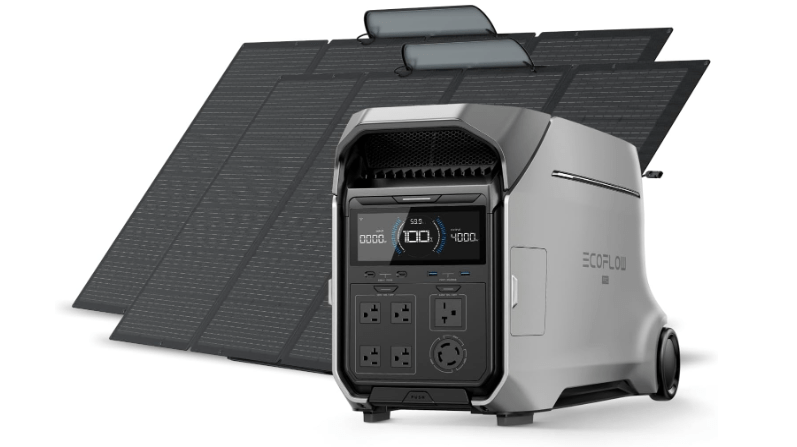
Current Price: Approximately $3,500–$6,000 depending on bundle (power station + solar panels + accessories; check Amazon for current pricing and kits).
Key Features & Benefits:
- 4096Wh LiFePO4 battery (expandable), 4000W+ output with surge handling.
- High solar input (up to 1600W+ with MPPT) for faster partial-sun recharging.
- Supports AC + solar hybrid charging and quick generator input (often 2–3 hours to full).
- App with real-time monitoring, scheduling, and energy insights.
- Wheels for portability; quiet operation; pure sine wave.
Pros and Cons:
- Pros: Excellent expandability, fast charging from multiple sources, proven reliability in extended outages, reduced fuel use via solar priority.
- Cons: Higher upfront cost; heavier unit (requires wheels for easy moving).
Amazon Customer Ratings & Reviews: Typically 4.7/5 from thousands of reviews. Users praise it for “saving us during a week-long PNW storm—solar kept it topped up on brighter days, generator only needed twice.” Common feedback highlights app ease and build quality; some note the weight as expected for capacity.
Why It’s a Good Choice for Cloudy US Regions: Superior MPPT efficiency captures diffuse light better than many competitors, while fast generator charging prevents total blackout during prolonged overcast. It minimizes propane/gas runs significantly.
Ideal Use Case / Who Should Buy It: Families in the Pacific Northwest or Northeast needing partial-to-whole home backup for refrigerators, lights, medical devices, and Wi-Fi. Perfect if you want a future-proof, app-driven system.
#2: Anker SOLIX F3800 with Home Power Panel – Best for Whole-Home Automatic Backup
Compelling Description: The Anker SOLIX F3800 transforms from a portable power station into a true whole-home hybrid backup system when paired with Anker’s Home Power Panel (sold separately). Its massive 3840Wh base capacity, expandable up to 53kWh, and 6000W output make it one of the strongest contenders for cloudy-region homeowners who want seamless, automatic power switching during outages—much like a standby generator but with solar priority for free energy on brighter cloudy days.
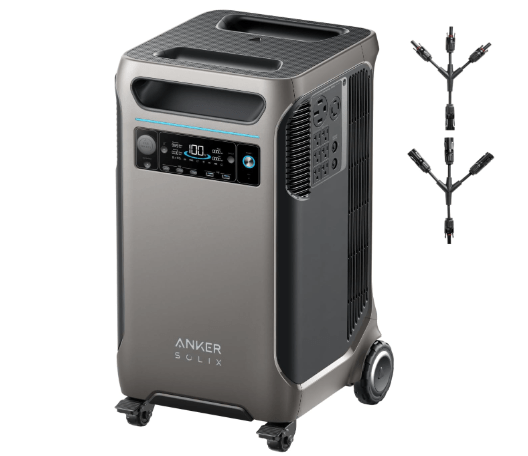
Current Price: Approximately $3,500–$7,000+ depending on configuration (base unit ~$3,000–$4,000; full home backup kit with panel and batteries higher; check current Amazon bundles for deals).
Key Features & Benefits:
- 3840Wh LiFePO4 battery (long lifespan, 6000+ cycles possible with expansions).
- 6000W continuous AC output (120V/240V split-phase capable with panel).
- High solar input support (up to 400W+ panels recommended) with efficient MPPT.
- Pairs with transfer switch/home panel for automatic circuit-specific backup (e.g., fridge, lights, HVAC).
- Multiple charging options: solar, AC wall, or generator input for fast top-ups.
- App monitoring, safety features, and quiet operation compared to gas-only systems.Best hybrid solar-and-gas backup setups for cloudy US regions
Pros and Cons:
- Pros: Excellent scalability for whole-home needs, automatic failover, high power for heavy appliances, long battery life.
- Cons: Higher total cost with full setup; less portable once installed with panel; expansion adds significant weight/cost.
Amazon Customer Ratings & Reviews: Around 4.2–4.5/5 stars from hundreds of reviews. Users in stormy regions frequently mention reliable performance during multi-day outages: “Solar kept it going on partial sun days; the generator only ran a few hours total.” Praise for the home panel’s smart switching; some note the learning curve for full installation.
Why It’s a Good Choice for Cloudy US Regions: The system prioritizes solar input during low-light conditions and uses generator charging only when needed, reducing fuel use dramatically. The automatic panel ensures critical circuits stay powered without manual intervention during extended cloud cover.Best hybrid solar-and-gas backup setups for cloudy US regions
Ideal Use Case / Who Should Buy It: Homeowners in the Northeast or Pacific Northwest wanting semi-permanent backup for essential circuits (refrigerator, sump pump, medical equipment, Wi-Fi). Ideal if you’re willing to invest in professional installation for peace of mind.
#3: Jackery Explorer 2000 Plus with SolarSaga Panels + Westinghouse Dual-Fuel Generator Pairing – Best Value Expandable Setup
Compelling Description: The Jackery Explorer 2000 Plus offers outstanding modularity and fast charging, making it a versatile hybrid when bundled with SolarSaga panels and paired with a reliable dual-fuel inverter generator like Westinghouse models. Its expandable design lets you scale from 2kWh to over 12kWh, delivering clean power with excellent solar harvesting even in diffuse light.Best hybrid solar-and-gas backup setups for cloudy US regions
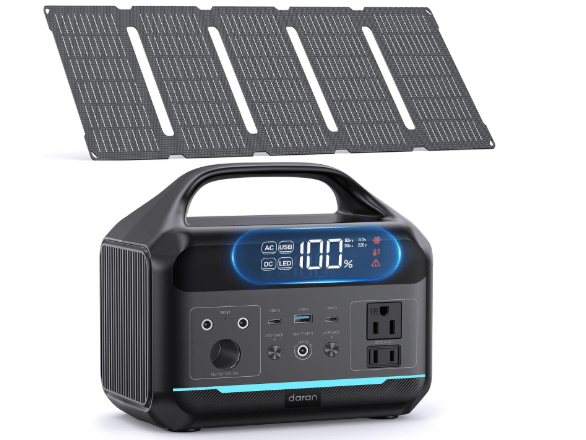
Current Price: Approximately $2,200–$4,000 for power station + panels bundle (generator extra; full kits vary—check Amazon for current pricing).
Key Features & Benefits:
- 2042Wh base LiFePO4 capacity (expandable with battery packs).
- 3000W continuous output (6000W surge with expansions).
- Fast solar charging (up to 1000W+ input possible) and AC charging in ~2 hours.
- Multiple ports (AC, USB-C, car outlet); app control available on newer models.
- Lightweight modular design for easier transport; pure sine wave output.Best hybrid solar-and-gas backup setups for cloudy US regions
Pros and Cons:
- Pros: Great expandability at a reasonable price, fast charging speeds, reliable brand reputation, good solar performance.
- Cons: Base output may need expansion for very heavy loads; generator pairing requires manual setup.Best hybrid solar-and-gas backup setups for cloudy US regions
Amazon Customer Ratings & Reviews: Consistently 4.6–4.8/5 from thousands of reviews. Reviewers in cloudy areas highlight: “Solar kept us going most days in Oregon winter; added the dual-fuel gen for backup and it was a lifesaver.” Strong praise for build quality and ease of use; occasional notes on weight when fully expanded.
Why It’s a Good Choice for Cloudy US Regions: Superior solar input efficiency captures limited sunlight effectively, while the dual-fuel generator (propane-preferred for storage) provides quick recharges without excessive noise or emissions.Best hybrid solar-and-gas backup setups for cloudy US regions
Ideal Use Case / Who Should Buy It: RV owners, families with moderate home backup needs, or preppers in variable-weather states who value portability and future scalability on a budget.
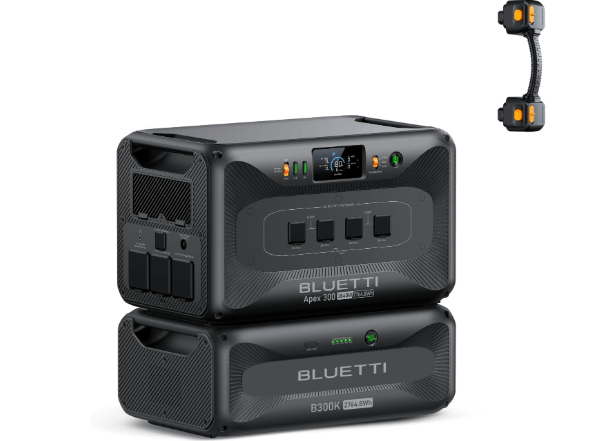
#4: Bluetti Elite 200 V2 – Best Balanced Portable Hybrid Option
Compelling Description: Named a top overall pick in multiple 2026 expert tests, the Bluetti Elite 200 V2 delivers impressive power in a relatively compact, user-friendly package. Its high output and fast charging make it an excellent hybrid foundation when paired with solar panels and a small dual-fuel generator for cloudy-day resilience.
Current Price: Approximately $1,000–$2,000 (often on sale around $1,000–$1,700; bundles with panels higher—verify on Amazon).
Key Features & Benefits:
- 2073Wh LiFePO4 capacity with 2600W continuous output (3900W surge via HyperWatt).
- Efficient solar input and multiple charging methods (including generator-compatible).
- Compact size with dual handles for portability (~53 lbs); intuitive app and display.
- Long battery lifespan (6000+ cycles); multiple safety protections.
Pros and Cons:
- Pros: Strong performance-to-size ratio, fast charging, excellent build quality, great value when discounted.
- Cons: Not as expandable as some rivals; may need generator support for very long outages.
Amazon Customer Ratings & Reviews: 4.7/5 from 500+ reviews. Users report: “Kept essentials running flawlessly during a cloudy week in Buffalo—solar helped, generator finished the job.” High marks for reliability and interface; some mention it handles surges well.
Why It’s a Good Choice for Cloudy US Regions: Balances solar harvesting with quick generator recharging, providing dependable power without excessive bulk.
Ideal Use Case / Who Should Buy It: Campers, small households, or anyone needing a portable yet powerful setup for partial-home or emergency use in cloudy climates.
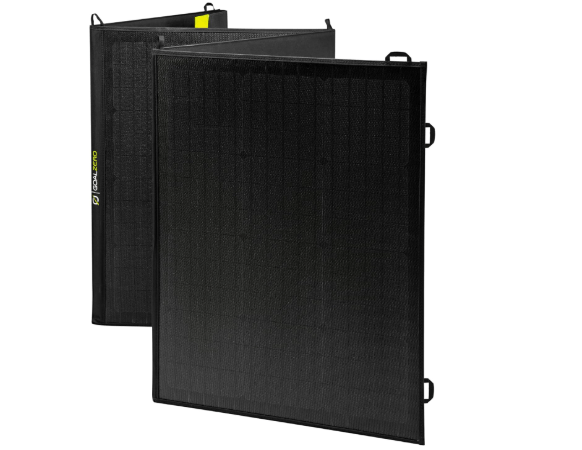
#5: Goal Zero Yeti 1500 with Nomad Solar Panels + Small Dual-Fuel Generator – Best Rugged Portable Choice
Compelling Description: Goal Zero’s Yeti 1500 is built tough for real-world conditions, offering reliable performance in harsh cloudy environments. Pair it with high-quality Nomad foldable panels and a compact dual-fuel generator for a hybrid system that excels in portability and durability.
Current Price: Approximately $2,000–$3,500 for station + panels (generator extra).
Key Features & Benefits:
- 1516Wh capacity with 2000W+ output.
- Robust solar input compatibility; known for efficient MPPT in variable light.
- Rugged design, app integration, and pure sine wave.
- Easy integration with generators for fast backup charging.
Pros and Cons:
- Pros: Extremely durable, good low-light performance, trusted brand for outdoor/emergency use.
- Cons: Lower base capacity than some; higher price for features.
Amazon Customer Ratings & Reviews: Strong 4.5+/5 ratings. Feedback often includes success stories from stormy regions: “Tough as nails—solar worked even on overcast days; generator kept it alive.”
Why It’s a Good Choice for Cloudy US Regions: Proven resilience in partial sun and easy generator pairing.
Ideal Use Case / Who Should Buy It: Outdoor enthusiasts, RVers, or homeowners needing a rugged backup that travels well.
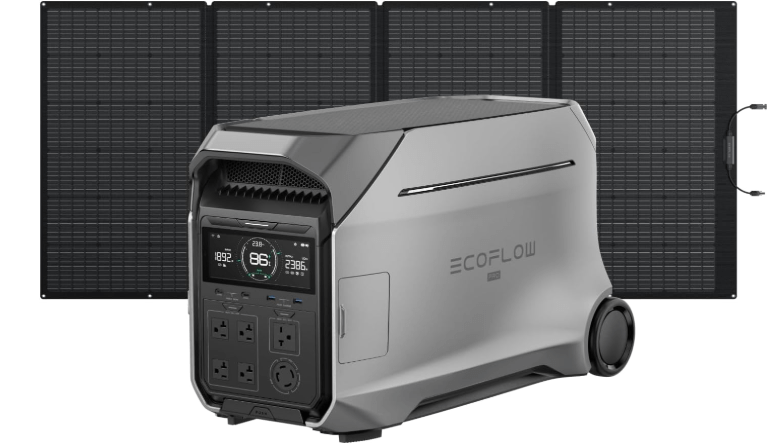
#6: EcoFlow Delta 3 Ultra + High-Wattage Solar Bundle – Best for Sustainable Long-Outage Hybrid Performance
Compelling Description: Building on EcoFlow’s proven ecosystem, the Delta 3 Ultra offers a highly efficient hybrid platform with strong solar prioritization and rapid generator-compatible charging. It excels in cloudy conditions by maximizing limited sunlight while allowing a dual-fuel generator to provide fast, reliable top-ups, creating a balanced system for extended storms without excessive fuel dependency.Best hybrid solar-and-gas backup setups for cloudy US regions
Current Price: Approximately $3,000–$5,500 for the power station plus 400–500W solar panels (check Amazon for current bundles and discounts; base units often see significant sales).
Key Features & Benefits:
- 3072Wh+ LiFePO4 capacity with high continuous output and surge handling.
- Excellent solar input (up to 1000W+ supported) with advanced MPPT for better performance in diffuse or partial sun.
- Hybrid AC + solar charging and fast generator input compatibility (often 2–3 hours to full).
- Smart app with energy monitoring, scheduling, and seamless source switching.
- Expandable design and pure sine wave output for sensitive devices.
Pros and Cons:
- Pros: Strong solar efficiency in variable weather, fast multi-source charging, reliable ecosystem, good value during sales.
- Cons: May require additional accessories for full home integration; weight increases with expansions.
Amazon Customer Ratings & Reviews: Generally 4.6–4.8/5 from hundreds of reviews. Users in cloudy regions frequently note: “Solar provided meaningful input even on overcast days in the PNW; the generator only ran minimally.” High praise for charging speed and app functionality; occasional mentions of learning the ecosystem.
Why It’s a Good Choice for Cloudy US Regions: Optimized MPPT technology harvests more energy from limited light, while quick generator recharging ensures you never run out during prolonged low-sun periods. This reduces overall fuel consumption and noise.
Ideal Use Case / Who Should Buy It: Households seeking a scalable, app-controlled hybrid for multi-day outages, or users who already own EcoFlow components and want to expand their setup.
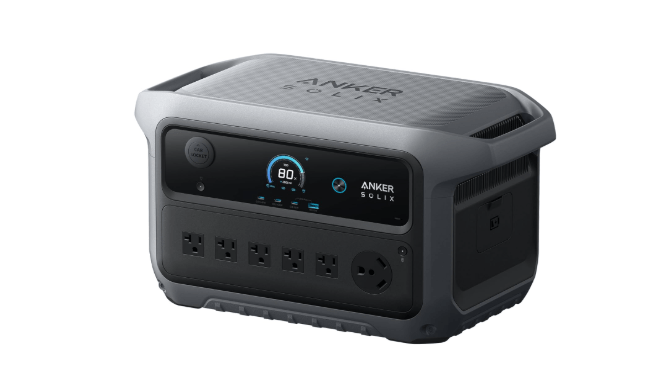
#7: Anker SOLIX C1000 Gen 2 with Solar Panels – Best Entry-Level Cloudy Backup
Compelling Description: The Anker SOLIX C1000 Gen 2 provides an accessible yet capable entry into hybrid solar-and-gas systems. With solid capacity and fast charging, it pairs well with portable solar panels and a small dual-fuel inverter generator, offering reliable power for essentials without overwhelming complexity or cost.
Current Price: Approximately $1,200–$2,500 for the station plus solar panels (frequent discounts bring it under $1,500 for the base unit—verify current Amazon pricing).
Key Features & Benefits:
- 1024Wh LiFePO4 battery with 1800W+ output.
- Efficient solar input and multiple charging methods, including generator support.
- Compact and relatively lightweight design with user-friendly app and display.
- Pure sine wave and safety features; good expandability options in the SOLIX line.
Pros and Cons:
- Pros: Affordable entry point, fast charging, reliable brand, easy to transport and use.
- Cons: Lower capacity than premium models (may need careful load management for longer outages); less surge power for very heavy appliances.
Amazon Customer Ratings & Reviews: Around 4.5–4.7/5 from numerous reviews. Feedback often includes: “Perfect starter for cloudy weather backup—solar helped daily, small generator kept it topped up.” Users appreciate the simplicity and value; some wish for higher base capacity.
Why It’s a Good Choice for Cloudy US Regions: Balanced solar input captures available light effectively, while generator compatibility provides a safety net for extended overcast without high upfront investment.
Ideal Use Case / Who Should Buy It: Budget-conscious homeowners, apartment dwellers, or first-time users in cloudy areas needing backup for essentials like fridge, lights, CPAP, and electronics.
#8: Westinghouse 12500W Tri-Fuel Generator Paired with Compatible Solar Power Station – Best Fuel-Flexible Heavy-Duty Option
Compelling Description: The Westinghouse 12500W tri-fuel (gas, propane, natural gas) portable generator stands out for fuel versatility and pairs effectively with a mid-to-large solar power station. This hybrid approach leverages solar for daytime efficiency and the generator’s high output and multiple fuel options for reliable backup during the worst cloudy stretches.
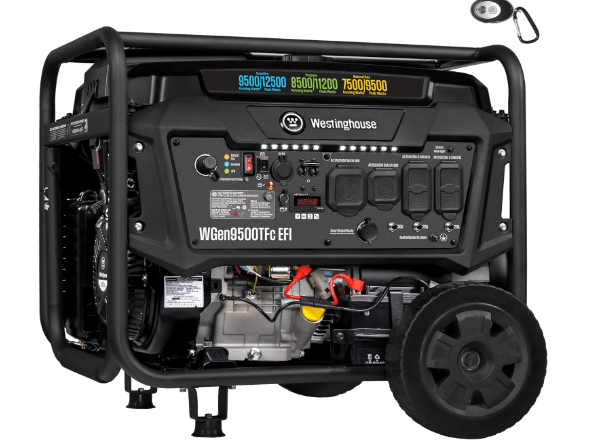
Current Price: Approximately $1,500–$3,000 for the generator (power station sold separately; full hybrid setups vary).
Key Features & Benefits:
- High peak and running watts with tri-fuel capability for maximum flexibility.
- Remote start, CO detection, and relatively quiet operation for an open-frame unit.
- Long runtime on propane; transfer-switch ready for home backup.
- Pairs with solar stations via appropriate charging cables for hybrid recharging.
Pros and Cons:
- Pros: Excellent fuel options (propane stores long-term), high power for multiple appliances, proven reliability.
- Cons: Noisier and more maintenance than pure solar; requires manual pairing with battery station.
Amazon Customer Ratings & Reviews: Strong 4.5+/5 from thousands of reviews. Common praise: “Tri-fuel saved us when gas was scarce—paired perfectly with our solar station during a long storm.” Users love the versatility; some note noise as typical for the power level.
Why It’s a Good Choice for Cloudy US Regions: Tri-fuel flexibility ensures you can run on stored propane during supply disruptions, while the solar station handles lighter loads and recharging when light permits.
Ideal Use Case / Who Should Buy It: Homeowners with higher power demands (well pumps, larger appliances) in outage-prone cloudy areas who value fuel options and are comfortable with a generator component.
#9: DuroMax XP11000iH Dual-Fuel Inverter Generator + Solar Station Pairing – Best for High-Surge Heavy Appliances
Compelling Description: The DuroMax XP11000iH delivers clean inverter power with dual-fuel capability and pairs well with expandable solar power stations. Its high surge capacity makes it ideal for starting demanding appliances while the solar side reduces daily runtime needs in variable cloudy weather.
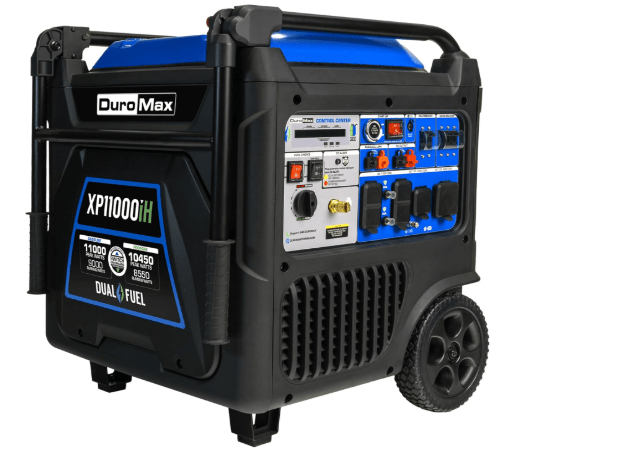
Current Price: Approximately $1,800–$4,000 for the generator plus compatible station bundle elements.
Key Features & Benefits:
- Dual-fuel (gas/propane) with high continuous and surge output.
- Inverter technology for clean power safe for electronics.
- Electric start, CO alert, and good efficiency on propane.
- Compatible with solar stations for hybrid recharging and load sharing.
Pros and Cons:
- Pros: Powerful surge handling, fuel flexibility, clean output, solid build.
- Cons: Bulkier and louder than smaller inverter models; requires proper ventilation.
Amazon Customer Ratings & Reviews: Typically 4.4–4.6/5. Reviewers highlight success in emergencies: “Handled furnace and fridge surges easily; solar station minimized runtime in cloudy conditions.”
Why It’s a Good Choice for Cloudy US Regions: Strong surge support for cold-weather loads combined with solar’s free energy contribution keeps overall fuel use lower.
Ideal Use Case / Who Should Buy It: Users needing to power high-startup appliances (HVAC, well pumps) alongside a solar station in regions with frequent winter storms.
#10: Bluetti AC200L / Apex Series with Solar Expansion – Most Versatile Expansion-Focused Hybrid
Compelling Description: The Bluetti AC200L (or Apex variants) offers robust capacity and surge power with excellent expandability, making it a strong hybrid foundation. Pair with high-wattage solar panels and a dual-fuel generator for a system that grows with your needs and performs reliably in low-light conditions.
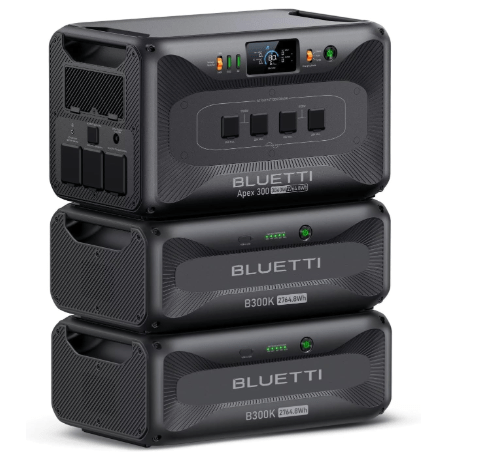
Current Price: Approximately $2,000–$4,500 depending on configuration and expansions (check Amazon for current deals).
Key Features & Benefits:
- 2048Wh+ LiFePO4 with high surge output.
- Strong solar input and multiple charging options, including fast generator support.
- App control, durable build, and expansion capability.
- Pure sine wave and long battery lifespan.
Pros and Cons:
- Pros: Great expandability, solid performance, user-friendly features.
- Cons: Base models may need additions for whole-home use; pricing can add up with expansions.
Amazon Customer Ratings & Reviews: 4.6–4.7/5 from hundreds of reviews. Users report: “Expanded easily and handled cloudy stretches well with generator backup.”
Why It’s a Good Choice for Cloudy US Regions: Efficient solar harvesting and fast recharging options provide flexibility when sunlight is inconsistent.
Ideal Use Case / Who Should Buy It: Users planning to grow their system over time, such as RVers or families building long-term resilience in cloudy climates.
How to Choose the Right Hybrid Setup for Your Cloudy Region
Follow this step-by-step framework to match a setup to your needs:
- Calculate Your Power Requirements: List essential appliances and their wattage (fridge 100–200W, lights 10–50W each, CPAP 30–60W, furnace fan 500–800W). Add surge for starting motors. Aim for at least 1.5–2x your estimated daily Wh usage in cloudy conditions.
- Assess Local Conditions: Check average peak sun hours (often 2–4 in cloudy states) using tools like PVWatts. Oversize solar input (400W minimum recommended) to capture diffuse light.
- Set Your Budget Tier:
- Entry-level (~$1,000–$2,500): Anker SOLIX C1000 or similar for essentials.
- Mid-range (~$2,500–$5,000): Jackery 2000 Plus, Bluetti Elite 200 V2, or EcoFlow options.
- Premium/Whole-Home ($4,000+): Anker SOLIX F3800 or EcoFlow Delta Pro 3 with expansions.
- Prioritize Cloudy-Specific Features: High MPPT solar efficiency, fast generator input, propane compatibility for storage, expandability, and app monitoring.
- Consider Installation & Portability: Portable DIY for most; add a transfer switch or home panel for automatic whole-home backup (hire an electrician).
- Maintenance & Safety: Stock propane, maintain generator per manual, ensure CO detectors, and test the system periodically.
Common Mistakes to Avoid:
- Undersizing capacity or solar input for real cloudy performance.
- Ignoring surge needs for motors.
- Poor solar panel placement (south-facing, tilt-optimized).
- Storing only gasoline (propane lasts longer).
Setup Tips: Position panels for maximum diffuse light exposure. Use the generator sparingly—let solar handle baseline loads. Many systems support parallel generator + solar charging.
Final Verdict & Recommendations
After thorough analysis of 2026 expert tests, Amazon data, and cloudy-weather resilience, here are the standout picks:
- Best Overall: EcoFlow Delta Pro 3 – unmatched balance of capacity, charging speed, and expandability.
- Best Whole-Home: Anker SOLIX F3800 with Home Panel – automatic, scalable backup.
- Best Value: Jackery Explorer 2000 Plus bundle – excellent expandability and performance at a reasonable price.
- Best Portable/Balanced: Bluetti Elite 200 V2 – compact power with strong reviews.
- Best Budget Entry: Anker SOLIX C1000 Gen 2.
For most readers in cloudy US regions, start with a mid-capacity station (2000Wh+) plus 400W+ solar and a small dual-fuel generator. This combination delivers the best resilience: free solar when possible, reliable gas/propane fallback when needed.
These hybrids provide confidence during storms—reducing fuel use, noise, and emissions while keeping critical systems running. Prices fluctuate, so check current Amazon listings via the links in each review for the latest deals and bundles.
Ready to power through the clouds? Explore the top recommendations above and choose the setup that matches your needs. Your family’s comfort and safety during the next outage are worth the investment.
FAQs
How much solar input do I need in cloudy regions? Aim for at least 400–1000W of panels. Higher input with good MPPT controllers captures more energy even in diffuse light.
Can a gas generator recharge a solar power station? Yes—most stations support AC or DC input from a generator. Use an inverter generator for clean power and match wattage carefully.
Propane vs. gasoline—which is better for backup? Propane stores indefinitely without degrading and burns cleaner. Many dual/tri-fuel models run longer and quieter on propane.
How noisy are these hybrid setups? Solar stations are nearly silent; paired generators are quieter with inverter models (<60–70dB). Run the generator outdoors with proper distance.
What’s the lifespan of LiFePO4 batteries? Typically 3000–6000+ cycles (10–17+ years with daily use), far better than older lithium-ion.
Do I need a professional installation? For portable use, no. For whole-home automatic backup with a transfer switch or home panel, yes—consult a licensed electrician.
Are these systems safe for sensitive electronics? Yes—all recommended use pure sine wave inverters, safe for laptops, medical devices, and TVs.
How do I maintain the system? Keep batteries at 50–80% for storage, clean panels, run the generator monthly with stabilizer, and follow manufacturer guidelines.
Conclusion
Cloudy regions don’t have to mean unreliable power. A well-chosen hybrid solar-and-gas backup setup combines the free, quiet benefits of solar with the on-demand reliability of dual/tri-fuel generators—delivering resilient energy exactly when you need it most.
This guide has equipped you with expert-backed comparisons, real Amazon insights, detailed pros/cons, and practical advice to make a confident purchase. Whether you choose the powerful EcoFlow Delta Pro 3, the scalable Anker SOLIX F3800, or a value-packed Jackery setup, you’ll be prepared for the next storm.
Take the next step: Review the current prices and customer feedback on Amazon, calculate your specific needs, and invest in peace of mind. Stay powered, stay safe.