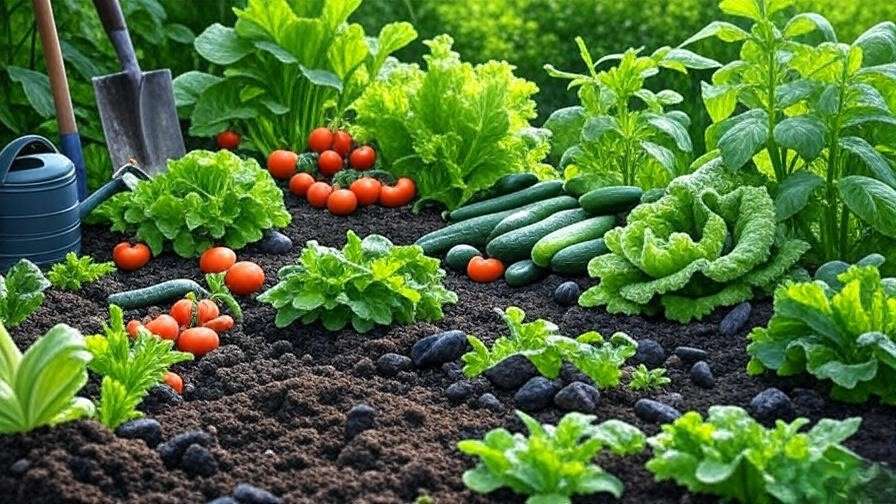
Spending your entire weekend pulling stubborn, deep-rooted weeds from your flower beds, gravel paths, and mulch borders, only to watch them pop right back up a week later, is one of the most exhausting and frustrating chores in home gardening.
Chemical weed killers are toxic to household pets, harmful to local pollinators, and require endless, costly reapplication. Meanwhile, cheap, plastic store-brand landscape fabrics tear easily under minimal tension, degrade into messy shreds under sunlight within a single season, or—worst of all—prevent vital rainwater and air from reaching your plant roots, effectively suffocating your expensive landscaping.
Investing in commercial-grade, permeable weed barrier fabric creates a long-term, professional shield that stops weed seeds from germinating while keeping your underlying soil healthy, hydrated, and breathable. We’ve analyzed tear strength, UV stabilization, permeability rates, and thousands of verified Amazon reviews to bring you the definitive guide to the best 10 landscaping fabric for weed control.
II. Expert Buying Guide: How to Make an Informed Decision
Before you purchase a roll of landscape fabric, it is essential to understand the technical specifications that separate professional-grade solutions from cheap plastic liners.
-
Woven vs. Non-Woven vs. Spunbond Fabrics:
-
Non-woven needle-punched fabrics feature a felt-like, porous structure that offers superior permeability and tear resistance, making them ideal for garden beds, flower borders, and slopes.
-
Woven polypropylene fabrics feature a crisscross plastic tape weave that excels in tensile strength, making them the top choice for heavy rock gardens, commercial landscaping, and gravel driveways.
-
-
Permeability (Air & Water Flow): Avoid solid plastic sheeting or cheap tarps, which trap water, suffocate beneficial soil microbes, and cause root rot. Look for porous geotextile fabrics that allow rainwater and nutrients to percolate freely into the earth while blocking the sunlight weeds need to sprout.
-
GSM (Grams per Square Meter) & Thickness: Material weight dictates durability. Lightweight rolls (2 to 3 oz) work well for temporary flower beds, while heavy-duty rolls (5 to 6+ oz) are mandatory to block aggressive perennial roots like thistle, nutgrass, and quackgrass.
-
UV Stabilization Treatment: Un-treated plastic fabrics disintegrate into powdery plastic shreds when exposed to intense summer sunlight. Always verify that your chosen fabric features a robust UV-inhibitor coating to guarantee multi-year durability.
-
Installation Essentials: Measure your garden beds accurately, factor in a 6- to 12-inch overlap margin between strips, secure the fabric tightly with heavy-duty steel landscape staples every 3 feet, and always cover the fabric with a 2- to 3-inch layer of mulch, gravel, or decorative stone to protect it from UV breakdown.
III. At a Glance: Top 10 Landscaping Fabrics for Weed Control
| Brand & Product Name | Material Type & Thickness / GSM | Best For |
| ECOgardener Professional Weed Barrier | Non-Woven Needle-Punched / 5.8 oz | Best Overall Heavy-Duty Garden Fabric |
| VEVOR Heavy Duty Woven Fabric | High-Tensile Woven Polypropylene | Best for Large Acreage & Driveways |
| AMAGABELI GARDEN HOME Weed Barrier | High-Density Woven Weave / 5 oz | Best Light-Blocking Perennial Defense |
| Papillon Pro Garden Weed Barrier | Spunbond Non-Woven / 3 oz | Best Lightweight DIY Flower Bed Cover |
| Yigou Heavy Duty Geotextile Fabric | Needle-Punched Non-Woven Geotextile | Best for Slopes & Soil Stabilization |
| Layor Care Heavy Duty Garden Barrier | Dual-Layer Reinforced Polypropylene | Best for High-Moisture & Damp Climates |
| Mutual Industries Monofilament | Professional Contractor-Grade Weave | Best Industrial-Strength Driveway Paving |
| DeWitt 12Pro 12-Year Pro Shield | Needle-Punched Porous Non-Woven | Best Long-Term Set-It-and-Forget-It Pick |
| Agfabric Commercial Grade Weed Cloth | Flexible Commercial Polyethylene | Best for Curved Beds & Irregular Layouts |
| HBlife Garden Weed Barrier Fabric | Permeable Multi-Layer Polypropylene | Best Budget Pick for Backyard Raised Beds |
IV. Detailed Product Comparison and Reviews
1. ECOgardener Heavy-Duty Professional Weed Barrier Fabric
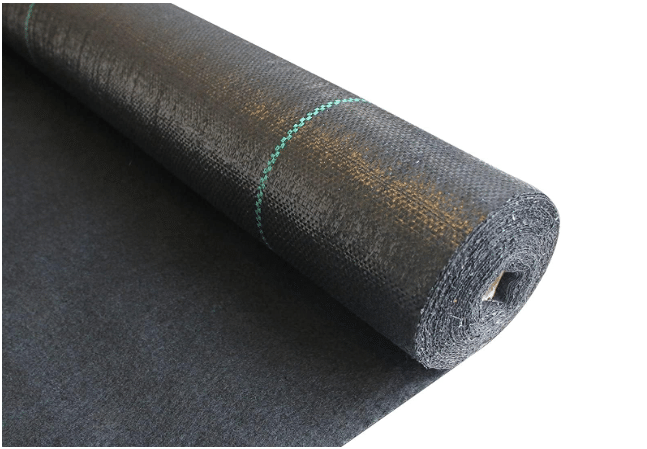
Product Description: The ECOgardener Professional Weed Barrier is a premium, dual-layer needle-punched non-woven geotextile fabric engineered specifically for severe weed suppression. Designed for homeowners who want professional-grade performance without complicated installation, it stops stubborn weeds dead in their tracks while maintaining exceptional water and air permeability to keep your soil alive.
-
Price: Mid-Range (~$35 – $50 depending on roll size)
-
Key Features & Benefits:
-
Heavy-duty 5.8 oz density provides robust physical puncture defense.
-
Dual-layer non-woven structure offers high tear resistance against sharp stones.
-
UV-stabilized anti-corrosion material prevents sun degradation.
-
Printed green alignment stripes make straight cutting and plant spacing effortless.
-
-
Pros & Cons:
-
Pros: Excellent durability against sharp gravel and aggressive perennial roots; superior water drainage prevents standing puddles; won’t fray easily when cut.
-
Cons: Slightly stiffer to cut with standard scissors than lightweight consumer rolls.
-
-
Amazon Customer Ratings & Reviews: 4.6 out of 5 stars. Frequently praised by verified buyers for lasting multiple seasons under decorative rock and heavy wood mulch without tearing or letting weeds punch through.
-
Why It’s a Good Choice: It strikes the ideal balance between professional-grade thickness and DIY installation ease, making it a reliable workhorse for residential yards.
-
Ideal Use Case / Who Should Buy It: Homeowners building permanent rock gardens, vegetable rows, and flower beds plagued by aggressive weeds.
2. VEVOR Heavy Duty Weed Barrier Landscape Fabric
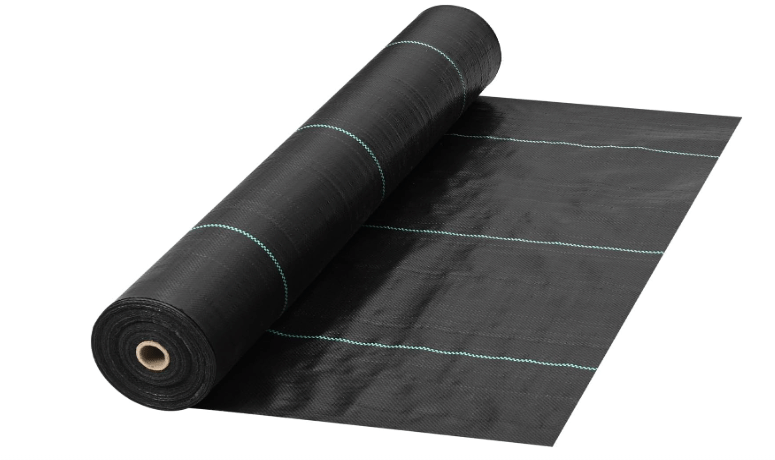
Product Description: Built for industrial-strength durability, the VEVOR Heavy Duty Woven Fabric uses high-tensile polypropylene tapes woven tightly together to withstand heavy foot traffic, gravel driveways, and commercial landscaping applications. It acts as an impenetrable physical shield that blocks sunlight completely while handling massive weight loads.
-
Price: Budget/Mid-Range (~$30 – $60 for large rolls, e.g., 3ft x 300ft)
-
Key Features & Benefits:
-
High tensile strength woven polypropylene resists tearing under heavy stones.
-
High GSM rating designed for industrial and agricultural workloads.
-
Printed grid lines allow for straight layout cuts and precise measuring.
-
Exceptional burst strength prevents gravel from sinking into soft mud.
-
-
Pros & Cons:
-
Pros: Exceptional value for massive acreage rolls; virtually untearable under heavy crushed granite; highly durable over long linear runs.
-
Cons: Woven texture can let very fine silt pass through initially before top mulch settles.
-
-
Amazon Customer Ratings & Reviews: 4.5 out of 5 stars. Loved by rural property owners and contractors for covering extensive driveways, barn perimeters, and gravel walking paths.
-
Why It’s a Good Choice: Delivers massive linear footage coverage at an unbeatable price point for large properties and commercial sites.
-
Ideal Use Case / Who Should Buy It: Property owners tackling large acreage, gravel driveways, foundation drainage strips, and commercial landscaping.
3. AMAGABELI GARDEN HOME Heavy Duty Weed Barrier
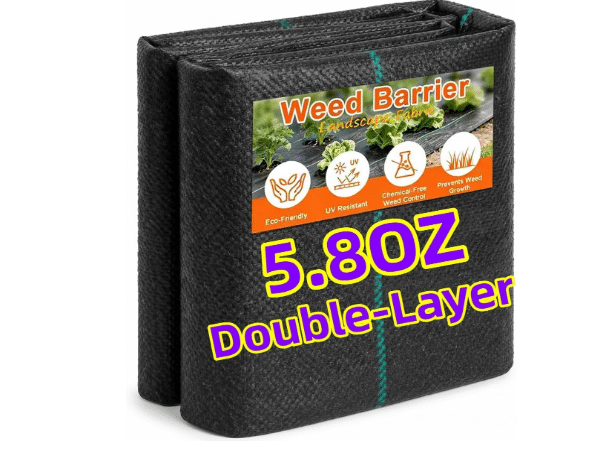
Product Description: The AMAGABELI GARDEN HOME Heavy Duty Weed Barrier is a tightly woven gardening cloth designed to starve weed seeds of sunlight instantly. Featuring a high-density black weave, it offers strong resistance to soil rot, moisture damage, and sharp root penetration while keeping your landscape clean and neat.
-
Price: Mid-Range (~$25 – $45)
-
Key Features & Benefits:
-
5 oz high-density weave creates an opaque light-blocking barrier.
-
Eco-friendly, chemical-free weed prevention.
-
High moisture permeability lets rain soak directly into plant root zones.
-
Fray-resistant edge construction.
-
-
Pros & Cons:
-
Pros: Thick, opaque black weave stops stubborn Bermuda grass and dandelions instantly; great value per square foot.
-
Cons: Requires sharp utility scissors or a hot knife to cut clean edges without loose threads.
-
-
Amazon Customer Ratings & Reviews: 4.6 out of 5 stars. Noted by home gardeners for stopping invasive creeping grasses and stubborn weed outbreaks dead in their tracks.
-
Why It’s a Good Choice: Provides heavy-duty, light-blocking performance that significantly outlasts cheap big-box store plastic sheeting.
-
Ideal Use Case / Who Should Buy It: Gardeners dealing with stubborn creeping grasses and perennial weeds in residential landscape beds.
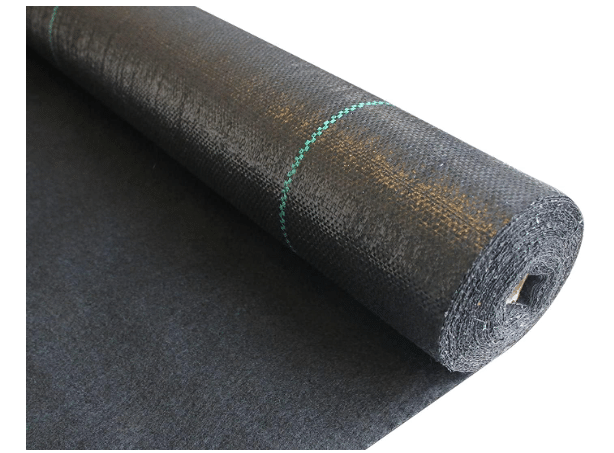
4. Papillon 3oz Pro Garden Weed Barrier Landscape Fabric
Product Description: If you are working on delicate residential flower beds, raised garden boxes, or under-deck weed prevention, the Papillon Pro Garden Fabric offers a lightweight, highly permeable spunbond non-woven solution that is remarkably easy to roll out and pin down.
-
Price: Budget (~$20 – $35)
-
Key Features & Benefits:
-
3 oz breathable polypropylene construction.
-
High water filtration rate prevents pooling around shallow-rooted plants.
-
Lightweight roll handling makes DIY installation fast.
-
UV-resistant treatment protects against sun exposure.
-
-
Pros & Cons:
-
Pros: Very easy to roll out, cut with household scissors, and secure; excellent for delicate garden beds and shrubs.
-
Cons: Lighter weight means it shouldn’t be used directly under sharp, heavy crushed granite without a thick protective mulch layer.
-
-
Amazon Customer Ratings & Reviews: 4.4 out of 5 stars. Praised by amateur gardeners for ease of installation around delicate shrub roots and tight garden corners.
-
Why It’s a Good Choice: Offers a budget-friendly, highly breathable weed shield for standard residential garden beds where heavy industrial fabric is unnecessary.
-
Ideal Use Case / Who Should Buy It: DIY gardeners working on flower borders, vegetable patches, and mulch paths.
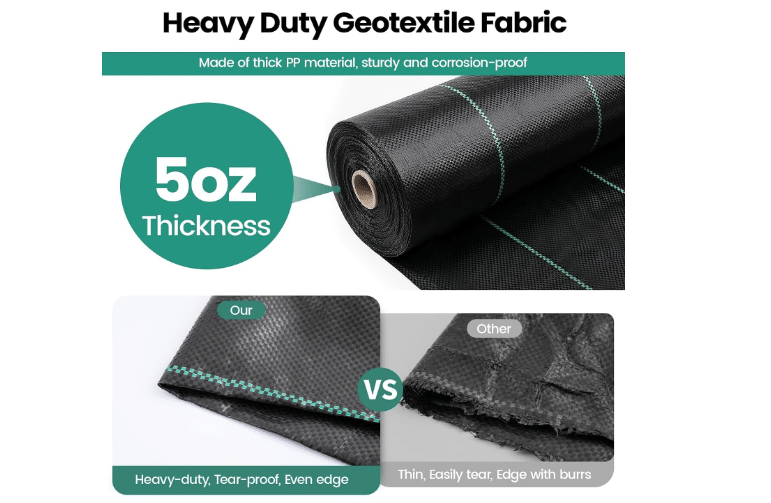
5. Yigou Heavy Duty Weed Barrier Landscape Fabric
Product Description: The Yigou Heavy Duty Geotextile Fabric is an industrial-grade non-woven fabric featuring high permeability and exceptional puncture resistance. It is specifically engineered to act as a robust stabilization separation layer between sub-base soils and heavy decorative rock or pavers.
-
Price: Mid-Range (~$35 – $55)
-
Key Features & Benefits:
-
High-density needle-punched non-woven structure provides superior puncture defense.
-
Excellent soil stabilization prevents rock sinking and soil washout.
-
High tensile strength resists tearing during stone placement.
-
UV-protected composition for long outdoor life.
-
-
Pros & Cons:
-
Pros: Stops soil washout on sloped hillsides while blocking weeds completely; allows water to percolate freely into the water table.
-
Cons: Bulkier roll weight requires two people to maneuver very wide roll widths.
-
-
Amazon Customer Ratings & Reviews: 4.6 out of 5 stars. Frequently chosen by homeowners for sloped hillside landscaping, retaining wall backfills, and French drain setups.
-
Why It’s a Good Choice: Combines superior soil stabilization with robust weed prevention on challenging slopes and heavy stone projects.
-
Ideal Use Case / Who Should Buy It: Homeowners with sloped yards, erosion-prone garden beds, or heavy gravel patio and walkway projects.
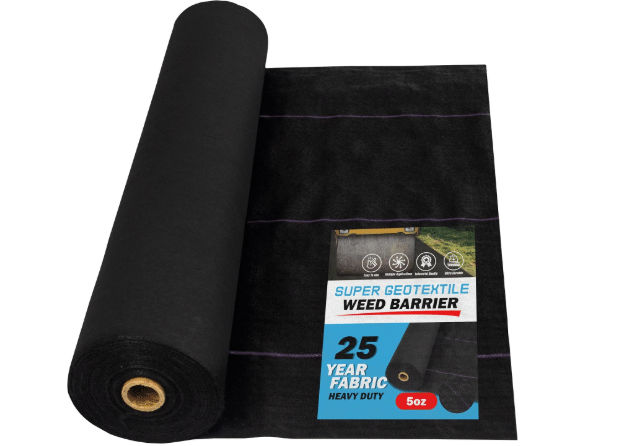
6. Layor Care Heavy Duty Garden Weed Barrier Fabric
Product Description: A high-performance gardening geotextile built to withstand extreme weather conditions, heavy foot traffic, and stubborn weed root penetration. Layor Care uses dual-layer reinforced polypropylene to deliver dependable, rot-resistant weed suppression in damp, high-rainfall environments.
-
Price: Mid-Range (~$28 – $48)
-
Key Features & Benefits:
-
Heavy GSM dual-layer construction blocks light completely.
-
High breathability allows soil microbes and earthworms to thrive.
-
Corrosion-resistant fibers withstand constant dampness.
-
Pre-printed alignment guides assist with accurate plant spacing.
-
-
Pros & Cons:
-
Pros: Does not break down when exposed to damp garden soil; strong puncture defense against twigs and stones.
-
Cons: Edges can unravel slightly if not secured properly with staples immediately after cutting.
-
-
Amazon Customer Ratings & Reviews: 4.5 out of 5 stars. Reviewed as a reliable, thick barrier that successfully blocks aggressive weeds for multiple consecutive seasons.
-
Why It’s a Good Choice: Offers dependable multi-year weed suppression in damp or high-rainfall climates where inferior fabrics rot prematurely.
-
Ideal Use Case / Who Should Buy It: Gardeners in high-moisture regions needing rot-resistant soil separation and reliable weed protection.
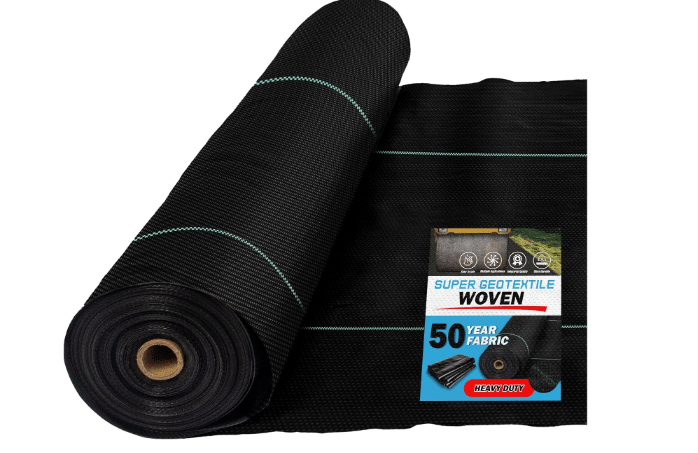
7. Mutual Industries Woven Monofilament Geotextile Fabric
Product Description: The Mutual Industries Monofilament is a professional contractor-grade woven fabric designed for heavy civil engineering and high-stress residential applications. It offers extreme burst strength, exceptional hydraulic flow rates, and high UV stability for demanding construction sites.
-
Price: Premium (~$60 – $90)
-
Key Features & Benefits:
-
Contractor-grade monofilament woven polypropylene construction.
-
Extreme Mullen burst strength handles heavy weight loads effortlessly.
-
Superior hydraulic flow rate prevents standing water pooling.
-
High UV stability withstands unshaded outdoor exposure.
-
-
Pros & Cons:
-
Pros: Commercial-grade toughness; handles heavy vehicular weight and sharp stone without puncturing.
-
Cons: Overkill for basic flower pots or light residential mulch beds; higher price point.
-
-
Amazon Customer Ratings & Reviews: 4.7 out of 5 stars. Praised by professional landscapers for commercial-grade durability under heavy stone pavers and driveways.
-
Why It’s a Good Choice: Unmatched structural strength and filtration for extreme weight loads and permanent driveway paving.
-
Ideal Use Case / Who Should Buy It: Contractors, rural driveway builders, and homeowners installing heavy pavers, parking pads, or retaining structures.
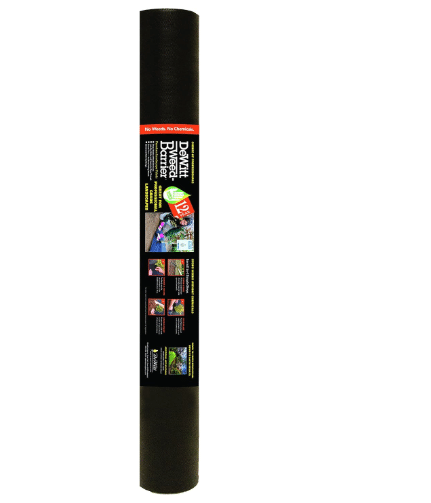
8. DeWitt 12Pro 12-Year Pro Shield Weed Barrier Fabric
Product Description: The DeWitt 12Pro is a needle-punched, non-woven professional-grade fabric backed by an impressive 12-year manufacturer durability rating. Engineered to let maximum air and water through while blocking sunlight permanently, it represents the gold standard for long-term residential landscaping.
-
Price: Mid-Range/Premium (~$45 – $75)
-
Key Features & Benefits:
-
12-year commercial durability rating backed by the manufacturer.
-
Needle-punched porous design allows high water and air permeability.
-
Resists pinhole tears from sharp crushed stones and gravel.
-
USA-made quality control standards.
-
-
Pros & Cons:
-
Pros: Exceptional longevity; trusted contractor brand; prevents standing water puddles and root suffocation.
-
Cons: Premium pricing compared to generic imported rolls.
-
-
Amazon Customer Ratings & Reviews: 4.7 out of 5 stars. Hailed as the ultimate “set-it-and-forget-it” weed barrier for long-term residential landscaping projects.
-
Why It’s a Good Choice: Backed by proven multi-year performance and superior non-woven water permeability that outlasts generic alternatives.
-
Ideal Use Case / Who Should Buy It: Homeowners wanting a permanent weed barrier under expensive rock or mulch installations that will not need replacing for over a decade.
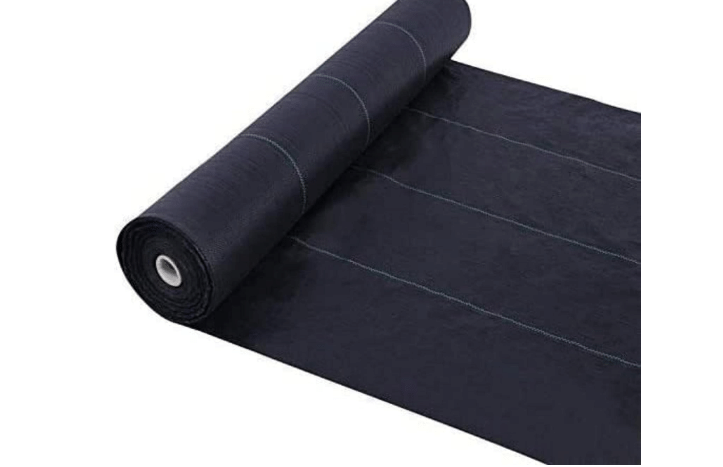
9. Agfabric Commercial Grade Weed Barrier Landscape Fabric
Product Description: The Agfabric Commercial Grade Weed Cloth offers a tight weave that blocks weed germination while remaining flexible enough to contour around irregular garden shapes, tree rings, and curved shrub borders.
-
Price: Budget/Mid-Range (~$25 – $45)
-
Key Features & Benefits:
-
Commercial-grade tensile strength resists tearing.
-
UV-treated polyethylene composition.
-
High flexibility makes wrapping around garden obstacles easy.
-
Printed grid lines for neat cutting.
-
-
Pros & Cons:
-
Pros: Easy to wrap around trees, bushes, and curved garden borders; lightweight yet durable.
-
Cons: Must be anchored securely with staples on windy installation days due to its lighter flexibility.
-
-
Amazon Customer Ratings & Reviews: 4.5 out of 5 stars. Praised for flexibility around complex garden layouts and flower beds where stiff fabrics are hard to fit.
-
Why It’s a Good Choice: Combines commercial strength with high flexibility for intricate, curved garden layouts.
-
Ideal Use Case / Who Should Buy It: DIY landscapers working on curved flower beds, island trees, and complex shrub borders.
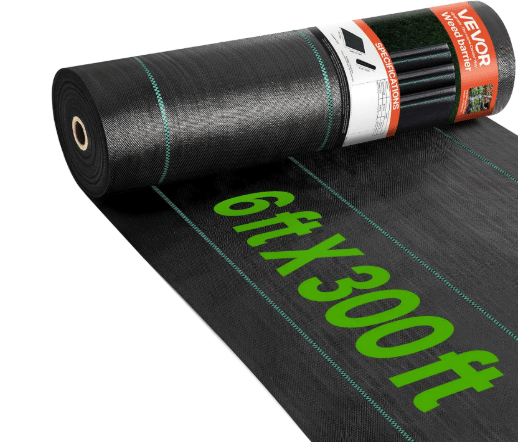
10. HBlife Garden Weed Barrier Landscape Fabric
Product Description: An economical, highly efficient permeable weed barrier roll designed for backyard vegetable gardens, greenhouses, and landscape pathways. HBlife provides essential light-blocking performance to keep garden rows clean and weed-free.
-
Price: Budget (~$20 – $35)
-
Key Features & Benefits:
-
Permeable multi-layer fabric lets moisture reach plant roots.
-
Effective light-blocking black weave stops weed seeds.
-
Easy DIY roll sizing with household scissors.
-
Weather-resistant composition.
-
-
Pros & Cons:
-
Pros: Great budget choice for smaller backyard projects; simple to cut and pin down.
-
Cons: Not designed for heavy vehicular driveways or industrial rock yards.
-
-
Amazon Customer Ratings & Reviews: 4.4 out of 5 stars. Favored by home gardeners for backyard raised beds, vegetable rows, and greenhouse flooring.
-
Why It’s a Good Choice: Delivers essential weed-blocking performance at an accessible price for everyday home gardeners.
-
Ideal Use Case / Who Should Buy It: Backyard gardeners, greenhouse owners, and homeowners on a budget looking for straightforward weed control.
V. Skyscraper Value-Add: Professional Installation & Maintenance Tips
Laying landscape fabric incorrectly is the #1 reason weeds eventually break through. Follow these golden rules for a permanent, professional installation:
1. Thorough Site Prep
Never lay landscape fabric over existing weeds or loose grass. You must clear all existing perennial weed roots, rocks, and sharp debris down to bare soil. If you leave aggressive roots underneath, they will push straight through the fabric from below. Rake the soil smooth and tamp it down.
2. Overlap and Staking Rules
-
Overlap Margins: Always overlap adjacent strips of fabric by at least 6 to 12 inches. Weeds love to sprout through unsealed seams where sunlight slips in.
-
Staple Spacing: Drive heavy-duty steel landscape staples (at least 6 inches long) into the ground every 3 feet, placing extra staples along every seam and edge to prevent wind lift and weed sneaking.
3. The Mulch/Rock Protection Shield
Never leave landscape fabric bare and exposed to direct sunlight. Uncovered plastic or woven fabric will degrade rapidly under UV rays, turning into brittle shreds within months. Always cover your installed fabric with a 2- to 3-inch layer of organic mulch, wood chips, or crushed stone. This protective shield blocks 100% of UV light, hides the fabric from view, and guarantees 10+ years of weed-free beauty.
VI. Final Verdict
Stopping weeds permanently in your garden doesn’t require toxic chemicals or endless weekend labor. By choosing a high-GSM, permeable geotextile fabric that blocks sunlight while letting water and air breathe, you protect your soil health and reclaim your weekends.
Our Top Recommendations:
-
Best Overall Heavy-Duty: The ECOgardener Professional Weed Barrier delivers an unmatched balance of non-woven thickness, tear resistance, and water drainage.
-
Best for Large Acreage & Driveways: The VEVOR Heavy Duty Woven Fabric offers industrial tensile strength at bulk value pricing.
-
Best Long-Term Professional Pick: The DeWitt 12Pro Pro Shield provides decade-long durability trusted by professional contractors.
Measure your garden beds, select your ideal roll size, and order your professional-grade weed barrier via Amazon to reclaim your weekends today!
VII. Frequently Asked Questions (FAQ)
Does landscape fabric stop all weeds permanently? It stops almost all weeds from germinating underneath it by blocking the sunlight they need to sprout. However, over several years, wind-blown seeds can land on top of your top mulch layer and take root in the decomposing mulch itself. These surface weeds have shallow roots and are extremely easy to pull out by hand, but the fabric underneath will still prevent deep perennial weeds from returning.
Will landscape fabric suffocate my plants and flowers? If you buy solid plastic sheeting or cheap non-porous tarps, yes—it will suffocate plant roots and rot your soil. That is why you must use permeable geotextile or woven fabrics (like the ones reviewed in this guide), which allow air and water to pass freely through to the root zone while blocking light.
How do I cut holes for my existing shrubs and flowers? Once your fabric is laid out and staked securely, use a sharp utility knife or a pair of heavy-duty scissors to cut an “X” shape over the top of your plant. Fold the triangular flaps back, slip the fabric around the base of the plant, and tuck the flaps neatly under. For new plantings, cut the “X”, plant your flower through the opening, and secure the edges with staples.