Lead is an invisible, tasteless, and odorless threat. Even if your municipal water plant sends out perfectly clean water, millions of homes built before 1986 still rely on aging infrastructure, lead service lines, and lead-soldered plumbing. By the time that water reaches your kitchen faucet, it can become a silent health hazard.
Municipal water reports only tell you the water quality when it leaves the treatment plant—not what happens as it travels through miles of old pipes. Because no level of lead exposure is safe, especially for children whose developing brains are highly susceptible to its neurotoxic effects, you need a localized defense.
You don’t need to rely on expensive, environmentally damaging bottled water. Investing in a certified lead water filter is the single most effective way to secure your family’s health. Here is our definitive guide to the best 10 lead filter options available on Amazon today, ranging from budget-friendly pitchers to heavy-duty reverse osmosis systems.
II. Expert Buying Guide: How to Choose a Lead Water Filter
Before you buy, it is critical to understand that not all filters remove lead. A standard carbon filter designed to make your water taste better will let lead pass right through.
-
The Golden Rule of Certifications: You must look for NSF/ANSI 53 (the standard for health-related contaminant reduction in carbon/pitcher filters) or NSF/ANSI 58 (the standard for reverse osmosis systems). If a filter is only rated for NSF 42, it will not remove lead (it only improves taste, odor, and chlorine).
-
Types of Systems:
-
Pitchers ($25-$70): Best for renters, dorms, and tight budgets. They require zero installation but filter water slowly and need frequent cartridge replacements.
-
Under-Sink Carbon ($100-$200): A great balance of fast flow rate and reasonable cost. They don’t produce wastewater but aren’t as comprehensive as RO.
-
Reverse Osmosis (RO) ($200-$600): The gold standard. RO physically pushes water through a semi-permeable membrane, achieving 99–100% removal of lead, arsenic, and other heavy metals.
-
-
Ongoing Maintenance: Don’t just look at the upfront price. Factor in the annual cost of replacement filters and cartridge lifespan to calculate the true cost of ownership.
III. At a Glance: Top Lead Filters
Note: For optimal mobile reading, this comparison table is simplified to the three most critical data points.
IV. The Best 10 Lead Filter Options: Detailed Reviews
1. Waterdrop G3P800 Tankless Reverse Osmosis System
Product Description: The Waterdrop G3P800 represents the modern era of water filtration. It is a sleek, tankless under-sink reverse osmosis system that purifies water on demand. By ditching the traditional bulky storage tank, it saves massive under-counter space while eradicating heavy metals, including lead.

-
Price: Premium (~$439 – $499)
-
Key Features and Benefits:
-
Certified against NSF/ANSI standards 58 and 372 for lead-free materials and heavy metal reduction.
-
Massive 800 Gallons Per Day (GPD) flow rate (fills a cup in seconds).
-
Highly efficient 3-to-1 pure-to-wastewater ratio.
-
Includes a smart, brushed-nickel faucet with a built-in LED ring that displays real-time Total Dissolved Solids (TDS) levels.
-
-
Pros and Cons:
-
Pros: Tested to remove up to 100% of lead; no clunky storage tank to harbor bacteria; incredibly modern aesthetic.
-
Cons: Requires an electrical outlet under the sink; premium price point.
-
-
Amazon Customer Ratings and Reviews: 4.7/5 stars. Users consistently praise the incredibly fast flow rate compared to older tank systems and love the peace of mind the real-time water quality feedback on the faucet provides.
-
Why It’s a Good Choice: It offers maximum peace of mind with verifiable, real-time water purity metrics right at your sink, combined with an industry-leading flow rate.
-
Ideal Use Case: Homeowners with available under-sink space and an electrical outlet who want top-tier, fast-flowing purified water without sacrificing cabinet storage.
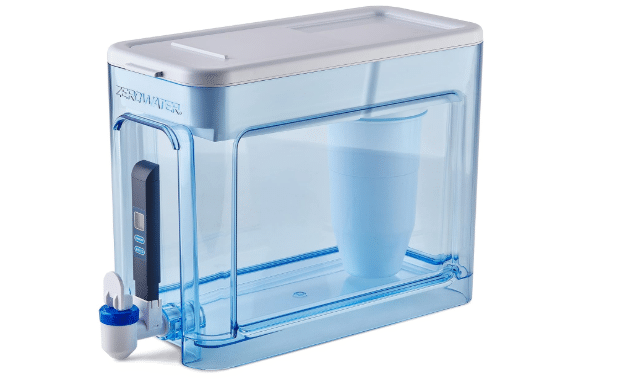
2. ZeroWater 10-Cup Ready-Pour Pitcher
Product Description: If you are renting or on a strict budget, the ZeroWater 10-Cup pitcher is your best defense against lead. This wildly popular pitcher utilizes a rigorous 5-stage filtration process known for dropping Total Dissolved Solids (TDS) down to absolute zero, outperforming standard 2-stage carbon pitchers.
-
Price: Budget (~$35 – $40)
-
Key Features and Benefits:
-
IAPMO certified to meet NSF/ANSI 53 standards specifically for lead and chromium reduction.
-
Includes a free digital TDS water quality meter.
-
Constructed from BPA-free plastic.
-
Ready-Pour technology allows you to pour water even while the reservoir is still filtering.
-
-
Pros and Cons:
-
Pros: Extremely affordable upfront; provides undeniable water purity; removes 99% of lead.
-
Cons: The advanced filters can clog quickly and make the water taste acidic if your tap water has exceptionally high starting TDS (over 300).
-
-
Amazon Customer Ratings and Reviews: 4.6/5 stars. Thousands of reviews highlight the dramatic improvement in water taste and the sheer satisfaction of seeing the digital meter read “000”.
-
Why It’s a Good Choice: It is one of the few pitcher filters on the market robust enough to achieve NSF 53 certification for lead, proving that you don’t need a complex plumbing setup to drink safely.
-
Ideal Use Case: Renters, college students, or individuals on a strict budget who need certified lead reduction immediately without making any permanent plumbing modifications.
3. AquaTru Under Sink RO System
Product Description: AquaTru made its name with highly successful countertop units, but their Under Sink RO System brings that same rigorous filtration directly to your tap. It is a premium, fully certified reverse osmosis system that utilizes a 4-stage filtration process to eradicate harmful contaminants.

-
Price: Premium (~$375 – $449)
-
Key Features and Benefits:
-
Extensively certified to NSF standards 42, 53, 58, and 401.
-
Eliminates up to 100% of lead, alongside PFAS, fluoride, and microplastics in independent testing.
-
Features quick-change, twist-and-seal filters that require no tools.
-
-
Pros and Cons:
-
Pros: Offers unbeatable, broad-spectrum contaminant removal; incredibly easy filter changes that take seconds.
-
Cons: Uses a traditional pressurized holding tank, which takes up significant under-sink real estate.
-
-
Amazon Customer Ratings and Reviews: 4.6/5 stars. Buyers love the true “bottled water taste” and appreciate how simple the manufacturer has made the maintenance process.
-
Why It’s a Good Choice: When you want absolute certainty. The sheer number of NSF certifications on the AquaTru system means it has been rigorously and independently tested against nearly every major waterborne threat, including lead.
-
Ideal Use Case: Health-conscious homeowners who want a heavily certified, foolproof RO system and have standard cabinet space to accommodate the holding tank.
4. Frizzlife MK99 Under-Sink Inline Carbon Filter
Product Description: The Frizzlife MK99 is a highly efficient, single-stage carbon block filter designed for people who want clean water without drilling holes in their granite countertops. It plumbs directly into your existing cold water line, routing all cold water in your kitchen through its high-capacity lead-reducing core.

-
Price: Budget/Mid-Range (~$59 – $70)
-
Key Features and Benefits:
-
NSF/ANSI 53 certified for lead reduction (removes up to 99.9%).
-
Maintains a fast 2.0 GPM flow rate, meaning your kitchen faucet won’t lose pressure.
-
Eco-friendly design: You only replace the inner filter core, not the plastic housing.
-
Takes under 10 minutes to install with basic wrenches.
-
-
Pros and Cons:
-
Pros: You get to use your existing kitchen faucet; it produces zero wastewater; highly affordable upfront and long-term.
-
Cons: Because it isn’t reverse osmosis, it does not remove minerals, fluoride, or total TDS.
-
-
Amazon Customer Ratings and Reviews: 4.7/5 stars. Users constantly rave about the ridiculously easy installation process and the money saved by only having to replace the inexpensive inner filter core.
-
Why It’s a Good Choice: It is the ultimate compromise for achieving certified lead removal without the hassle, space requirements, or water waste of an RO system, and without drilling a hole for a secondary dedicated faucet.
-
Ideal Use Case: DIY beginners, apartment dwellers (if permitted to change hoses), and homeowners who want hidden filtration without losing their main faucet’s water pressure.
5. Aquasana Claryum 3-Stage Under-Counter System
Product Description: The Aquasana Claryum 3-Stage system is a robust carbon and ion-exchange setup that targets heavy metals and emerging chemicals. Unlike RO systems that strip water of everything, the Claryum technology is designed to pull out the bad stuff (like lead) while leaving healthy minerals (like calcium and magnesium) intact for a superior taste.

-
Price: Mid-Range (~$200)
-
Key Features and Benefits:
-
WQA Gold Seal certified to meet strict NSF 42, 53 (lead), and 401 standards.
-
Tested to remove 99%+ of lead and 76 other contaminants.
-
Produces zero wastewater during the filtration process.
-
Includes a dedicated, stylish designer faucet (available in multiple finishes).
-
-
Pros and Cons:
-
Pros: Exceptional certification stack; preserves healthy minerals for a natural taste; highly eco-friendly with zero water waste.
-
Cons: Filter replacements are slightly more expensive than single-stage units, and it does require a secondary hole in the sink for the faucet.
-
-
Amazon Customer Ratings and Reviews: 4.4/5 stars. Customers appreciate the thorough certification and specifically highlight that it doesn’t strip the water of its “natural” profile.
-
Why It’s a Good Choice: It provides near-RO levels of chemical and lead reduction without the associated water waste or bulky tank installation of a reverse osmosis unit.
-
Ideal Use Case: Eco-conscious buyers who want thorough lead removal but absolutely refuse to waste water during the filtration process.
6. PUR PLUS 11-Cup Water Filter Pitcher
Product Description: The PUR PLUS 11-Cup Pitcher is a classic, slim, fridge-friendly option from a trusted legacy brand. It utilizes specialized lead-reducing filters to provide crisp, safe drinking water, proving that effective filtration doesn’t require a complex under-sink setup.

-
Price: Budget (~$42)
-
Key Features and Benefits:
-
WQA certified to NSF/ANSI 53 for lead, arsenic, and copper reduction.
-
LockFit design ensures a tight seal, preventing unfiltered water from leaking into the clean reservoir.
-
Filter change light takes the guesswork out of maintenance.
-
-
Pros and Cons:
-
Pros: Very inexpensive entry point; fits perfectly in standard fridge doors; replacement filters are widely available at local stores.
-
Cons: The gravity-fed filtration process is notoriously slow; filters must be replaced frequently (every 2 months or 40 gallons).
-
-
Amazon Customer Ratings and Reviews: 4.5/5 stars. Highly rated for its slim design that maximizes fridge space and its reliable, crisp taste improvement.
-
Why It’s a Good Choice: It’s a trusted, legacy brand name providing guaranteed lead safety in a compact footprint, perfect for chilling water.
-
Ideal Use Case: Small households, dorm rooms, or anyone who wants cold, lead-free water directly from the refrigerator without any installation.
7. Epic Smart Shield Under-Sink Filter
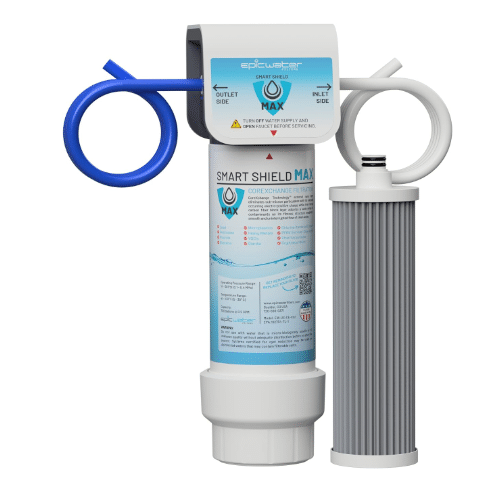
Product Description: The Epic Smart Shield is a compact, US-made solid carbon block filter designed to combat a massive list of municipal water contaminants, including heavy metals and emerging trace pharmaceuticals. It is an eco-conscious brand that delivers robust protection.
-
Price: Mid-Range (~$129)
-
Key Features and Benefits:
-
IAPMO certified to NSF/ANSI 53 (lead) and NSF/ANSI 401 (emerging contaminants/pharmaceuticals).
-
Inline installation directly into your existing cold water line.
-
100% recyclable filters through the company’s dedicated return program.
-
-
Pros and Cons:
-
Pros: Excellent eco-friendly return program for used filters; highly effective at removing trace pharmaceuticals alongside lead; no secondary faucet needed.
-
Cons: The flow rate can decrease noticeably as the filter nears the end of its lifespan, signaling it is time for a change.
-
-
Amazon Customer Ratings and Reviews: 4.6/5 stars. Reviewers highlight the company’s transparency, excellent customer service, and the crisp, clean taste of the filtered water.
-
Why It’s a Good Choice: It offers buyers the chance to support a sustainability-focused brand that provides robust, certified lead protection without contributing plastic to landfills.
-
Ideal Use Case: Environmentally conscious consumers who want inline filtration, zero water waste, and a hassle-free filter recycling program.
8. Brita Tahoe Pitcher (with Elite Filters)
Product Description: The Brita Tahoe is a modern, sleek pitcher that, when paired specifically with Brita’s upgraded “Elite” filters (formerly known as Longlast), becomes a formidable defense against heavy metals.

-
Price: Budget (~$35 – $45)
-
Key Features and Benefits:
-
Elite filters are certified to NSF/ANSI 53 for lead reduction (Note: Standard white Brita filters are NOT certified for lead).
-
Massive 120-gallon filter lifespan (lasts approximately 6 months).
-
SmartLight indicator tracks filter usage and reminds you when to swap.
-
-
Pros and Cons:
-
Pros: Elite filters last 3x longer than standard pitcher filters; familiar, trusted brand; indicator tells you exactly when to change the filter.
-
Cons: You must ensure you only buy the blue “Elite” replacement filters for lead protection, which cost more than standard filters.
-
-
Amazon Customer Ratings and Reviews: 4.7/5 stars. Users love the convenience, noting that they only have to change the filter twice a year compared to every two months with other brands.
-
Why It’s a Good Choice: It is the lowest maintenance pitcher option on the market thanks to the 120-gallon capacity of the Elite filter, saving you money and hassle in the long run.
-
Ideal Use Case: Brand-loyal buyers who want pitcher convenience and lead protection, but hate the chore of changing filters every 4-8 weeks.
9.Cloud RO Under-Sink System
Product Description: The Cloud RO system is a next-generation, app-connected reverse osmosis system designed for the modern smart home. It perfectly tracks your water usage and filter life while delivering pristine, remineralized water.

-
Price: Premium (~$500+)
-
Key Features and Benefits:
-
Reduced 100% of lead in independent testing.
-
Connects to a smartphone app for exact usage metrics, water quality data, and automated filter reordering.
-
Built-in remineralization stage adds healthy alkaline minerals back into the water.
-
Highly efficient internal pump minimizes wastewater.
-
-
Pros and Cons:
-
Pros: Takes all the guesswork out of filter changes; excellent taste profile due to remineralization; low waste.
-
Cons: High upfront cost; requires smartphone app setup and Wi-Fi to get full value.
-
-
Amazon Customer Ratings and Reviews: 4.5/5 stars. Tech-savvy homeowners love the precise data tracking and consistently praise the crisp, mineral-enhanced taste of the water compared to “flat” RO water.
-
Why It’s a Good Choice: It eliminates the “dead” taste often associated with standard RO water by adding healthy minerals back, while retaining 100% lead protection and providing unmatched data visibility.
-
Ideal Use Case: Smart-home enthusiasts who want precise data on their water quality and filter lifespans delivered directly to their phones.
10. Clearly Filtered Under-Sink System
Product Description: The Clearly Filtered Under-Sink System is a premium, heavy-duty 3-stage non-RO system. It is uniquely capable of tackling hundreds of contaminants—including notoriously difficult ones like fluoride—without stripping the water of its natural minerals or creating wastewater.

-
Price: Premium (~$500)
-
Key Features and Benefits:
-
Targets over 230 contaminants including lead, fluoride, PFAS, and microplastics.
-
Produces zero wastewater.
-
Inline installation directly into the cold water line (no secondary faucet required).
-
Maintains healthy minerals.
-
-
Pros and Cons:
-
Pros: One of the highest performing non-RO systems on the market; requires no secondary faucet or tank; uniquely removes fluoride without RO technology.
-
Cons: Very expensive upfront for a carbon/media-based system; replacement filters are also costly.
-
-
Amazon Customer Ratings and Reviews: 4.6/5 stars. Reviewers frequently justify the high price by noting the incredible water taste and the fact that it filters out fluoride and lead without wasting any water.
-
Why It’s a Good Choice: It is one of the only systems on the market that offers RO-level purification capabilities (including fluoride removal) in a compact, inline, zero-waste design.
-
Ideal Use Case: Renters or homeowners who have a high budget, want to avoid RO water waste, but still demand top-tier heavy metal and fluoride removal without installing a second faucet.
Final Verdict
Lead in drinking water is a serious issue, but it is one that you can solve definitively with the right equipment. Whether you are dealing with aging municipal infrastructure or old plumbing in your own home, you cannot rely on visual clarity or taste to determine if your water is safe. Rely on science, testing, and strict NSF certifications.
Frequently Asked Questions (FAQ)
How do I know if I have lead in my water? Lead is completely invisible, tasteless, and odorless in water. The only way to know for sure is to test it. You can purchase a DIY home water testing kit (make sure it specifically tests for lead), or send a sample to a state-certified laboratory for precise results. Additionally, you should contact your local water authority and request a copy of their annual Consumer Confidence Report (CCR), which details the water quality leaving the plant.
Does boiling water remove lead? No. This is a dangerous and common misconception. Boiling water kills biological pathogens (like bacteria and viruses), but it actually increases the concentration of heavy metals like lead because the water evaporates while the lead remains behind.
Do standard refrigerator filters remove lead? It depends entirely on the specific filter brand and model inside your fridge. Many standard refrigerator filters are only NSF 42 certified, meaning they only remove chlorine to improve taste and odor. You must check the manual or the filter cartridge itself to ensure it is explicitly certified to NSF/ANSI 53 standards for lead reduction. If it isn’t, your fridge water is not safe from lead.
Is it safe to shower or bathe in water that has lead? Yes. Human skin does not absorb lead from water. Bathing and showering in water that contains lead is considered safe for both adults and children, provided they do not ingest the water while bathing. The primary risk of lead exposure from water is through drinking it or using it to cook and prepare infant formula.
Why does my TDS meter still show a high number after using a carbon filter that removes lead? Total Dissolved Solids (TDS) meters measure the electrical conductivity of water, which is driven by dissolved minerals (like calcium, magnesium, and sodium). Carbon filters (like the Frizzlife or Aquasana) are designed to remove harmful contaminants like lead while leaving healthy minerals intact. Therefore, the TDS number won’t drop significantly. Only Reverse Osmosis (RO) systems and specialized ion-exchange pitchers (like ZeroWater) will drop the TDS reading near zero because they remove everything, both good and bad.
How often do I really need to change my lead water filter? You must follow the manufacturer’s exact gallon or timeframe rating (whichever comes first). Once a carbon block reaches its capacity, it can no longer trap heavy metals. Even worse, an exhausted filter can sometimes release trapped contaminants back into the water stream in a concentrated burst. If your filter is rated for 6 months, do not stretch it to 8 months just because the water still “tastes fine.”
Will a water softener remove lead? No. Water softeners are designed specifically to remove “hardness” minerals (calcium and magnesium) by exchanging them with sodium or potassium ions. They are not designed, nor certified, to remove heavy metals like lead. You still need a dedicated drinking water filter even if you have a whole-house water softener.