Standing in the formula aisle—or scrolling Amazon at 2 a.m.—can feel overwhelming. You want the safest, cleanest option for your baby, yet every can claims to be the best while worries about contaminants, digestion, and whether “organic” truly means better keep you up at night.
If you are searching for the 10 best organic formula for infants, this 2026 guide is written for you. Parents face real concerns: fear of heavy metals and other contaminants, confusion between European and U.S. organic standards, digestive issues such as gas, fussiness, or spit-up, high ongoing costs, availability challenges, and the desire for formulas that come closest to breast milk without unnecessary additives. This in-depth resource ranks the 10 best organic formula for infants using Consumer Reports contaminant testing results, current Amazon ratings and sales data, ingredient quality, organic certifications, and real parent feedback so you can choose with greater confidence.
You will find a transparent methodology, a clear comparison table, detailed product profiles with pros and cons, ideal use cases, and straightforward recommendations.
Important: Always consult your pediatrician before choosing or switching formula. Fed is best.
As an Amazon Associate, we may earn from qualifying purchases.
How We Chose the Best Organic Formula for Infants
To identify the 10 best organic formula for infants, we prioritized:
- USDA Organic or equivalent EU Organic certification
- Performance in independent contaminant testing (particularly Consumer Reports results for lead, arsenic, BPA, and related substances)
- Carbohydrate source (preference for lactose as the primary carb)
- Quality of fat blend and added nutrients (DHA, ARA, prebiotics)
- Parent reviews and real-world tolerance
- Price per ounce and reliable availability
- Transparency of ingredients and sourcing
Formulas that ranked well for lower contaminant risk in recent testing received extra weight. We also considered European-style recipes and whole-milk options that many parents prefer.
Quick Comparison Table
| Product | Best For | Rating & Approx. Price |
|---|---|---|
| Bobbie Organic Infant Formula | Overall clean-label organic | 4.7+ ★ (~$25–30/can) |
| Bobbie Organic Whole Milk | Whole-milk organic | 4.7+ ★ (~$25–30/can) |
| Earth’s Best Organic Dairy | Widely available value | 4.6 ★ (~$30–40) |
| Happy Baby Organics | Prebiotics & probiotics | 4.6+ ★ (~$30–36) |
| Kendamil Organic | European whole-milk style | 4.6+ ★ (~$35–45) |
| Bobbie Organic Gentle | Fussiness & gas | 4.6+ ★ (~$25–30) |
| Little Spoon Organic Whole Milk | Transparent grass-fed | 4.6+ ★ (~$30) |
| HiPP Dutch / Holle | EU organic import | 4.5+ ★ (~$30–40) |
| Bubs Organic Grass-Fed | Grass-fed alternative | 4.6 ★ (~$28–35) |
| Kabrita / Baby’s Only A2 | Alternative protein / gentle | 4.4–4.6 ★ (~$30–40) |
Detailed Product Reviews
1. Bobbie Organic Infant Formula – Best Overall / Best Clean-Label
Bobbie Organic is a USDA-certified organic, European-inspired formula made with organic lactose, organic nonfat milk, and organic whey. It has consistently ranked among the top performers in Consumer Reports contaminant testing for low or non-detectable levels of concerning substances. The recipe avoids corn syrup solids and focuses on a clean ingredient list that many parents prefer.
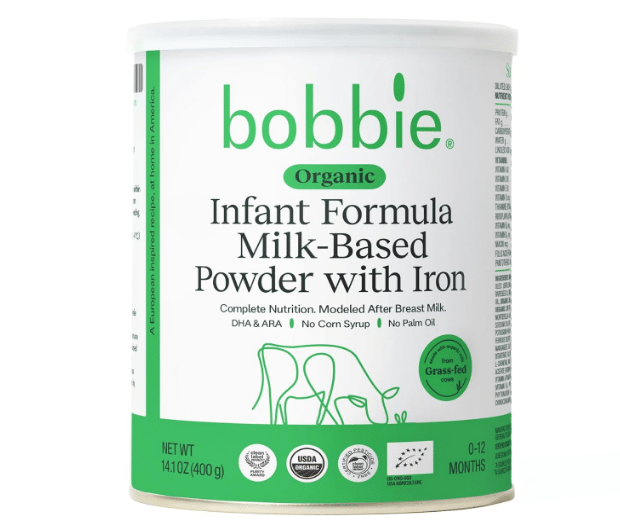
Approximate Price: $25–$30 per can (varies by size and subscription).
Key Features & Benefits:
- USDA Organic certification
- Primary carbohydrate is organic lactose
- European-style protein and fat profile
- Strong performance in independent contaminant testing
- Convenient subscription and retail availability
Pros: Excellent clean-label profile; high safety testing results; easy to digest for many babies; strong parent trust.
Cons: Premium price; availability can fluctuate; not a whole-milk formula in the standard version.
Amazon Customer Ratings & Reviews: High 4.7+ ratings. Parents frequently praise the clean ingredients, digestibility, and peace of mind from the brand’s transparency.
Why It’s a Good Choice: It combines rigorous organic standards with strong independent testing results, making it a top clean-label option.
Ideal Use Case / Who Should Buy It: Parents prioritizing a USDA Organic formula with a European-inspired recipe and strong contaminant-testing performance.
2. Bobbie Organic Whole Milk – Best Whole-Milk Organic
Bobbie’s Whole Milk version uses organic whole milk as a fat source while maintaining the brand’s clean-label approach. It also performed well in contaminant testing and appeals to parents who prefer formulas closer to the natural fat profile of whole milk.
Approximate Price: $25–$30 per can.
Key Features & Benefits:
- Organic whole milk fat source
- USDA Organic
- Lactose-based carbohydrate
- Clean ingredient philosophy
- Good testing results
Pros: Whole-milk richness many babies tolerate well; maintains Bobbie’s clean standards; strong parent feedback.
Cons: Still premium-priced; newer formulation relative to the original.
Amazon Customer Ratings & Reviews: Strong 4.7+ ratings from parents who specifically sought a whole-milk organic option.
Why It’s a Good Choice: It offers the benefits of whole milk within a trusted organic framework.
Ideal Use Case / Who Should Buy It: Families who want an organic formula made with whole milk rather than a skim-milk base.
3. Earth’s Best Organic Dairy Infant Formula – Best Widely Available / Strong Value
Earth’s Best is one of the most accessible USDA Organic formulas in mainstream retail and on Amazon. It uses organic lactose and organic nonfat milk, includes DHA and ARA, and has shown favorable results in contaminant testing relative to many options.
Approximate Price: $30–$40 depending on size.
Key Features & Benefits:
- USDA Organic
- Organic lactose as primary carb
- Added DHA, ARA, and lutein
- Widely available
- Competitive price among organic formulas
Pros: Easy to find; solid organic credentials; good value; reliable performance for many babies.
Cons: Contains palm oil in the fat blend (common in many formulas); not as “European-style” as some premium options.
Amazon Customer Ratings & Reviews: 4.6 stars from thousands of reviews. Parents appreciate the accessibility and consistent quality.
Why It’s a Good Choice: It delivers certified organic nutrition at a more approachable price and with broad availability.
Ideal Use Case / Who Should Buy It: Parents who want a trusted, widely stocked organic formula without hunting specialty retailers.
4. Happy Baby Organics Infant Formula – Best with Prebiotics & Probiotics
Happy Baby Organics is dual-certified (USDA and EU Organic in many versions) and includes prebiotics plus probiotics to support digestive health. It has performed well in contaminant testing and is popular among parents focused on gut support.
Approximate Price: $30–$36 per can.
Key Features & Benefits:
- Organic lactose and milk base
- Added prebiotics and probiotics
- Dual organic certification in many formulations
- Focus on digestive support
- Good testing profile
Pros: Digestive-friendly additions; strong organic credentials; positive parent reports on tolerance.
Cons: Premium pricing; some versions include palm oil.
Amazon Customer Ratings & Reviews: 4.6+ stars. Many parents note improved comfort and fewer digestive complaints.
Why It’s a Good Choice: The combination of organic certification and gut-supporting ingredients makes it stand out for sensitive tummies.
Ideal Use Case / Who Should Buy It: Babies who benefit from prebiotic and probiotic support within an organic formula.
5. Kendamil Organic Infant Formula – Best European Whole-Milk Style
Kendamil Organic is a European-style formula that uses organic whole milk and carries organic certification recognized in both the EU and the U.S. It features lactose as the primary carbohydrate, includes naturally occurring MFGM components, and avoids palm oil and soy oil in its fat blend—qualities many parents actively seek.
Approximate Price: $35–$45 per can.
Key Features & Benefits:
- Organic whole milk base
- Dual organic recognition (EU + USDA equivalent)
- Lactose as sole carbohydrate source
- No palm oil or soy oil in many formulations
- Contains MFGM and plant-based DHA
Pros: Whole-milk richness; clean fat blend; strong European heritage; good parent tolerance reports.
Cons: Higher price point; availability can vary; some babies need time to adjust to the richer profile.
Amazon Customer Ratings & Reviews: Typically 4.6+ stars. Parents frequently praise the creamier texture and cleaner ingredient list.
Why It’s a Good Choice: It delivers a true European whole-milk organic experience that closely aligns with what many parents want in a premium formula.
Ideal Use Case / Who Should Buy It: Families seeking a whole-milk, palm-oil-free organic formula with European roots.
6. Bobbie Organic Gentle – Best for Fussiness & Gas
Bobbie Organic Gentle uses partially hydrolyzed organic whey protein and remains lactose-based. It is designed for babies experiencing fussiness or gas while staying within the brand’s clean, organic framework and strong testing profile.
Approximate Price: $25–$30 per can.
Key Features & Benefits:
- Partially hydrolyzed organic whey
- Still lactose-based (not corn-syrup based)
- USDA Organic
- Aimed at digestive comfort
- Maintains Bobbie’s clean-label approach
Pros: Gentler protein structure for sensitive babies; keeps organic and lactose standards; trusted brand.
Cons: Not suitable for true milk-protein allergy (consult pediatrician); premium cost.
Amazon Customer Ratings & Reviews: High 4.6+ ratings from parents whose babies struggled with standard formulas.
Why It’s a Good Choice: It offers a gentle option without abandoning organic certification or a quality carbohydrate source.
Ideal Use Case / Who Should Buy It: Babies with mild fussiness or gas who still do well with lactose-based organic formulas.
7. Little Spoon Organic Whole Milk – Best Transparent Grass-Fed Option
Little Spoon’s organic whole-milk formula emphasizes grass-fed milk (often sourced from New Zealand), transparency, and a clean recipe. The brand focuses on clear sourcing and parent-friendly communication.
Approximate Price: Around $30 per can (subscriptions often lower the effective price).
Key Features & Benefits:
- Organic grass-fed whole milk
- Transparent sourcing
- Clean ingredient philosophy
- Convenient direct-to-consumer model
- Focus on quality fats and minimal additives
Pros: High transparency; grass-fed emphasis; good parent trust; easy subscription.
Cons: Newer to the market relative to legacy brands; availability primarily through the brand or select retailers.
Amazon Customer Ratings & Reviews: Strong positive feedback (4.6+ range) for quality and brand communication.
Why It’s a Good Choice: Parents who value knowing exactly where the milk comes from and how the formula is made appreciate the brand’s openness.
Ideal Use Case / Who Should Buy It: Families who prioritize grass-fed, transparent organic whole-milk formula.
8. HiPP Dutch or Holle – Best EU Organic Import Option
HiPP (especially Dutch Stage 1) and Holle are long-established European organic brands. They follow strict EU organic standards, use high-quality organic milk, and are popular among parents seeking traditional European formulations. Availability on Amazon can fluctuate, and import considerations apply.
Approximate Price: $30–$40 per can/box.
Key Features & Benefits:
- Strict EU Organic certification
- Traditional European recipes
- Emphasis on organic milk quality
- Options with prebiotics in some stages
- Long brand heritage
Pros: Excellent organic standards; trusted by many international parents; clean profiles.
Cons: Import availability and shipping can be inconsistent; stage systems differ from U.S. labeling; verify current FDA import status.
Amazon Customer Ratings & Reviews: Generally 4.5+ stars among parents who successfully source them.
Why It’s a Good Choice: They represent the classic European organic approach that many parents specifically request.
Ideal Use Case / Who Should Buy It: Parents who prefer established EU organic formulas and are comfortable with import sourcing.
9. Bubs Organic Grass-Fed – Best Grass-Fed Alternative
Bubs Organic emphasizes grass-fed milk and organic certification. It appeals to parents looking for a grass-fed organic option that is more widely discussed in recent parent communities.
Approximate Price: $28–$35 per can.
Key Features & Benefits:
- Grass-fed organic milk focus
- Organic certification
- Formulated for infant nutrition needs
- Growing parent following
- Clean positioning
Pros: Grass-fed emphasis; solid organic credentials; positive tolerance reports from many users.
Cons: Newer brand profile compared with long-established names; price is still premium.
Amazon Customer Ratings & Reviews: Around 4.6 stars. Parents appreciate the grass-fed story and overall quality.
Why It’s a Good Choice: It expands the grass-fed organic options available to U.S. parents.
Ideal Use Case / Who Should Buy It: Families specifically seeking a grass-fed organic infant formula.
10. Kabrita Goat Milk-Based or Baby’s Only A2 – Best Alternative Protein / Gentle Digestion
Kabrita (goat milk-based) and Baby’s Only A2 offer alternative protein profiles that some babies tolerate better. Goat-milk formulas and A2 cow-milk formulas are chosen when standard cow-milk protein causes mild digestive discomfort (always under pediatric guidance).
Approximate Price: $30–$40 depending on brand and size.
Key Features & Benefits:
- Goat milk or A2 beta-casein protein
- Designed for gentler digestion for some infants
- Organic or high-quality positioning
- Complete infant nutrition
- Growing evidence of tolerance benefits for certain babies
Pros: Alternative protein structure; helpful for some sensitive babies; good parent feedback on comfort.
Cons: Not appropriate for true cow-milk protein allergy without medical advice; higher cost; different taste/smell.
Amazon Customer Ratings & Reviews: 4.4–4.6 stars. Many parents report improved comfort after switching under guidance.
Why It’s a Good Choice: It provides options when standard cow-milk organic formulas are not well tolerated.
Ideal Use Case / Who Should Buy It: Babies who show mild sensitivity to standard cow-milk formula and whose pediatrician supports an alternative protein trial.
Buying Guide: How to Choose Organic Formula for Infants
Start with your pediatrician’s input. Look for USDA Organic or equivalent certification and prefer lactose as the primary carbohydrate. Review recent independent contaminant testing when available. Consider whether your baby needs a standard, gentle/partially hydrolyzed, whole-milk, or alternative-protein formula. Calculate true cost per ounce and explore subscriptions for savings. Always prepare formula exactly according to label instructions and never dilute or concentrate it.
Common Mistakes to Avoid
- Switching formulas too quickly or too often without guidance.
- Choosing based solely on the word “organic” without checking the full ingredient list or testing data.
- Ignoring pediatric advice on specialized needs (allergy, reflux, etc.).
- Improper mixing, storage, or use of expired product.
- Assuming European formulas are automatically superior without verifying current regulatory status.
Frequently Asked Questions
Is organic formula safer?
Organic certification restricts certain pesticides, GMOs, and hormones. Independent testing for heavy metals adds another layer of information. Organic does not automatically mean zero risk, but many top organic options have performed well in recent tests.
How do European formulas differ?
EU organic rules and typical recipes often emphasize whole milk, different fat blends, and specific stage systems. Availability and exact regulatory status in the U.S. should be confirmed.
What if my baby has gas or reflux?
A gentle or partially hydrolyzed organic formula may help with mild fussiness. True medical issues require pediatric evaluation.
How much does organic formula cost?
Expect to pay significantly more per ounce than conventional store-brand formulas. Subscriptions and larger sizes can reduce the effective price.
Can I switch brands?
Yes, but do so gradually when possible and under pediatric guidance, especially if your baby has shown sensitivity.
Final Recommendations & Verdict
For most parents seeking the 10 best organic formula for infants, Bobbie Organic (standard or Whole Milk) stands out for its clean label and strong testing results. Earth’s Best offers excellent accessibility and value, while Happy Baby Organics and Kendamil Organic provide strong alternatives with digestive or whole-milk benefits. Consider Bobbie Gentle or an alternative-protein option if tolerance is an issue, and explore grass-fed or EU options if those priorities matter most to your family.
The best formula is the one your baby tolerates well, that meets organic and safety standards you trust, and that you can obtain consistently. Work with your pediatrician, start with one of the highly rated options above, and adjust only as needed.
Check current Amazon pricing and availability, choose the formula that aligns with your priorities and your baby’s needs, and feed with confidence.