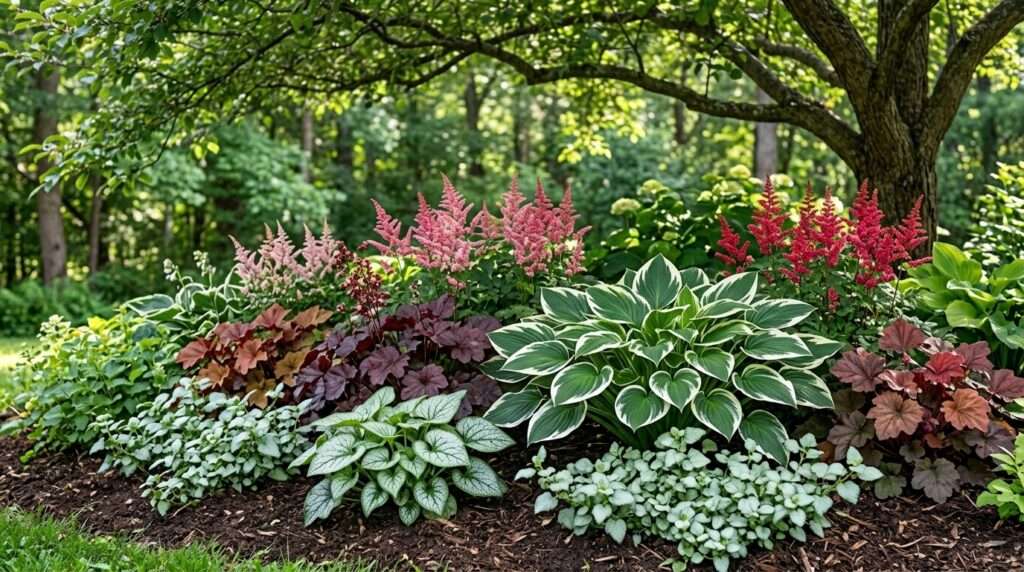
Transforming a dim, sun-deprived garden spot from a bare patch of dirt into a lush, vibrant retreat is one of the most rewarding projects a home gardener can undertake. If you have been searching for the best perennials shade settings require to thrive, you already know the frustration of watching sun-loving flowers wither under dense tree canopies, porch overhangs, or tall fencing. Many homeowners assume that low-light areas are condemned to remain drab and colorless, but that is a myth. Shadowed corners actually offer a unique opportunity to create a serene landscape rich in dramatic textures, year-round foliage, and surprising seasonal blooms.
Whether you are dealing with dappled afternoon sunlight or dark, damp soil beneath mature oaks, selecting the right plants is the key to effortless success. In this guide, we will break down how to accurately measure your yard’s light levels, choose low-maintenance varieties that return year after year, and safely order healthy live plants or dormant bare roots delivered straight to your door via Amazon.
II. The Ultimate Shade Perennial Buying Guide
Selecting shade perennials online requires a clear understanding of your yard’s microclimate and the planting formats available on Amazon. Before clicking “Add to Cart,” evaluate these four core decision factors to ensure long-term plant health and landscape success.
1. Understanding Your Shade Level
Not all shade is equal. Mismatching light exposure is the primary reason shade plants fail.
-
Partial / Dappled Shade: Receives 3 to 6 hours of indirect light or dappled sun filtered through tree branches. Ideal for blooming shade species like Astilbe, Bleeding Heart, and Coral Bells.
-
Full / Deep Shade: Receives less than 3 hours of direct light daily, often bounded by dense walls, overhangs, or evergreen tree canopies. Best suited for high-density foliage plants like Hostas, Brunnera, and Lamium.
2. Foliage vs. Bloom Cycle
Flower blossoms on most shade perennials last between 2 and 4 weeks. To maintain a visually dynamic garden from spring through fall, prioritize leaf texture and color variation.
-
Foliage-First Selection: Varieties like Hosta and Heuchera offer 7 to 8 months of color through silver-veined, gold, or burgundy leaf patterns.
-
Sequential Blooming: Pair early spring bloomers (Hellebores, Bleeding Heart) with mid-to-late summer bloomers (Astilbe) to guarantee continuous floral displays.
3. Hardiness Zones and Soil Needs
Check the USDA Hardiness Zone rating for each plant relative to your geographic region.
-
Soil Drainage: Shade areas under tree canopies often feature dense root competition and compacted clay soil. Ensure your planting bed is amended with organic compost to prevent stagnant water from rotting perennial root structures.
-
Moisture Requirements: Plants like Astilbe require moist soil conditions, whereas mature Hellebores and Hostas tolerate extended dry spells.
4. Ordering Live Plants vs. Bare Roots on Amazon
Amazon vendors ship perennials in two main formats:
-
Bare Root Multipacks: Dormant root systems packed in peat moss. They are cost-effective for large areas, easy to ship safely, and establish deep roots quickly when planted during early spring or fall.
-
Live Potted Starter Plants: Shipped actively growing in 1-quart or 1-gallon pots. They deliver immediate visual impact but require fast unboxing and thorough watering upon arrival.
III. Head-to-Head Comparison Table
This streamlined reference compares each recommended shade perennial across core selection criteria.
| Perennial Selection | Primary Benefit | Best Light & Zone |
| Hosta (‘Patriot’) | High-contrast variegated leaves | Part to Deep Shade (Zones 3–9) |
| Heuchera (Coral Bells) | Multi-color jewel foliage | Part to Dappled Shade (Zones 4–9) |
| Astilbe Chinensis | Feathery, vibrant bloom plumes | Part to Full Shade (Zones 4–8) |
| Helleborus (Lenten Rose) | Late-winter blooms & deer resistance | Part to Deep Shade (Zones 4–9) |
| Brunnera (‘Jack Frost’) | Silver metallic leaf texture | Part to Full Shade (Zones 3–8) |
| Bleeding Heart | Classic cottage garden flowers | Partial Shade (Zones 3–9) |
| Lamium (Dead Nettle) | Fast weed-suppressing groundcover | Part to Full Shade (Zones 3–8) |
IV. In-Depth Product Reviews & Selection Breakdown
1. Hosta ‘Patriot’ (Bare Roots / Live Container Plants)
Product Description:
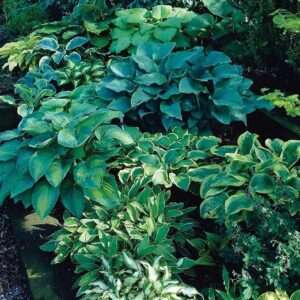
The ‘Patriot’ Hosta is an industry-standard variegated perennial engineered to illuminate dark, shadow-heavy garden beds. It forms a dense, symmetrical mound up to 20 inches tall and 30 inches wide, featuring heart-shaped, dark green leaves with wide, stark white margins. In mid-to-late summer, tall scapes emerge above the foliage displaying soft lavender, bell-shaped flowers that attract pollinators like hummingbirds and bees.
Price: $15.99 (Varies based on bare-root 3-packs versus established 1-gallon pots)
Key Features & Benefits:
-
High-Contrast Variegation: Bright white leaf borders reflect ambient light, making deep-shade corners pop visually.
-
Extreme Cold Hardiness: Rated for USDA Zones 3 through 9, returning reliably after severe winter freezes.
-
Low Maintenance: Thrives in almost any soil composition—from sandy loam to heavy clay—provided basic drainage is present.
Pros & Cons:
-
Pros:
-
Exceptionally long lifespan; mounds can be easily divided every 3–4 years to expand your garden for free.
-
Highly tolerant of urban pollution and deep tree root competition.
-
-
Cons:
-
Highly attractive to deer, rabbits, and garden slugs.
-
Leaf margins can scorch if exposed to direct afternoon sunlight.
-
Amazon Customer Ratings & Reviews:
Average Rating: 4.5 / 5 Stars based on 1,200+ customer entries.
Buyers frequently note that dormant bare roots sprout rapidly within 10 to 14 days of planting. Positive reviews highlight the strong contrast of the white borders. Critical reviews primarily stem from shipping damage caused by courier transit heat during mid-summer orders.
Why It’s a Good Choice:
It provides the highest visual impact per dollar spent for deep shade areas where colorful flowers fail to bloom reliably.
Ideal Use Case:
Homeowners needing a bulletproof foundation plant to frame walkways, outline dark home foundations, or fill under broad maple and oak canopy shade.
2. Heuchera / Coral Bells (‘Caramel’ & Jewel-Tone Varieties)
Product Description:
Heuchera, commonly known as Coral Bells, is prized for its lobed, ruffled leaves that come in shades of amber, rich copper, plum burgundy, and electric chartreuse. Growing in compact mounds 12 to 18 inches high, this perennial produces tall, slender stems topped with delicate, bell-shaped flowers in late spring. It retains its foliage color through heat and cool autumn temperatures, acting as an semi-evergreen in moderate winter zones.

Price: $39.95 (Typically sold as 2-pack live starter plants or premium 4.5-inch pots)
Key Features & Benefits:
-
365-Day Foliage Interest: Provides uninterrupted color long after seasonal flower petals fall.
-
Pest Resistance: Naturally unpalatable to deer and rabbits due to its leaf texture and chemical makeup.
-
Pollinator Magnet: Tiny spring blossoms act as a nectar source for native bees and hummingbirds.
Pros & Cons:
-
Pros:
-
Versatile usage across container planters, rock gardens, and border edging.
-
Salt and drought-tolerant once established.
-
-
Cons:
-
Prone to crown rot if planted in waterlogged, poorly draining soil.
-
Shallow root structures may require mulching to prevent frost-heaving during winter freezes.
-
Amazon Customer Ratings & Reviews:
Average Rating: 4.4 / 5 Stars across major plant vendors.
Verified reviewers praise the leaf color vibrancy. Positive feedback focuses on how well these plants hold up in shaded porch pots. Negative feedback mentions that young starter plugs require careful hand-watering during their first month.
Why It’s a Good Choice:
It breaks up plain green landscapes by introducing warm copper, red, and purple foliage tones without requiring direct sun.
Ideal Use Case:
Gardeners designing multi-tiered shade borders or decorative porch containers that demand all-season color.
3. Astilbe Chinensis (False Spirea)
Product Description:
Astilbe Chinensis brings height, feather-like texture, and soft color to moist, shaded garden zones. Rising above dark green, fern-like foliage, Astilbe produces tall, erect plumes composed of thousands of tiny flowers in shades of rose pink, crimson red, lavender, and soft white. Unlike standard Astilbe varieties, the Chinensis species displays higher tolerance to occasional dry spells and forms thick underground runners that gradually fill empty ground spaces.
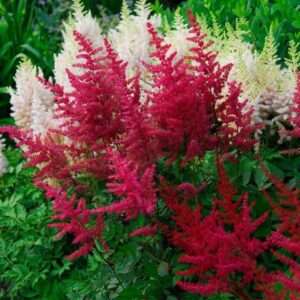
Price: $140.40 (Sold in 5 to 10-count bare-root packages or single gallon pots)
Key Features & Benefits:
-
Architectural Floral Plumes: Vertical flower plumes range from 18 to 30 inches tall, creating dynamic contrast against flat-leaf hostas.
-
Thrives in Wet Soil: Excels in damp low spots, bog edges, or clay soils where other roots suffocate.
-
Deer and Rabbit Resistant: Tough, woody flower stalks and bitter foliage deter grazing wildlife.
Pros & Cons:
-
Pros:
-
Exceptional performance as a fresh or dried cut flower.
-
Spreads into dense colonies over time, outcompeting weeds.
-
-
Cons:
-
Leaves will crisp, brown, and curl rapidly if the soil dries out completely during summer heat waves.
-
Slow to establish from bare roots during the first growing season.
-
Amazon Customer Ratings & Reviews:
Average Rating: 4.2 / 5 Stars.
Gardeners love the bloom displays during July and August. Multiple reviewers emphasize that keeping the soil consistently moist is crucial for long-term survival.
Why It’s a Good Choice:
It delivers bright vertical flower blooms in low-light environments that typically only support non-flowering greenery.
Ideal Use Case:
Shade gardens situated near downspouts, low-lying backyard drainage dips, or woodland water features.
4. Helleborus / Lenten Rose (Live Potted Plants)
Product Description:
Helleborus (Lenten Rose) is a durable perennial known for blooming when the rest of the garden is completely dormant. Starting in late winter or early spring—often pushing directly through snow cover—it produces cup-shaped nodding blooms in shades of deep plum, antique pink, cream, and speckled green. Surrounding the long-lasting blossoms are thick, leathery, dark evergreen leaves that remain intact throughout the entire year.
Price: $57.74 (Priced higher due to slow nursery growth rates; typically sold as 1-quart or 1-gallon potted stock)
Key Features & Benefits:
-
Winter/Early Spring Bloom Window: Provides floral color from February through April.
-
Complete Wildlife Immunity: The foliage contains plant alkaloids that render it distasteful to deer, rabbits, voles, and squirrels.
-
Deep Root Drought Hardiness: Once settled (1–2 years post-planting), its deep taproot system handles summer dry periods easily.
Pros & Cons:
-
Pros:
-
True evergreen foliage provides winter structure to bare garden beds.
-
Exceptionally long-lived; can thrive for decades in the same position without requiring division.
-
-
Cons:
-
Higher initial purchase price per plant compared to fast-growing perennials.
-
All plant parts are toxic if ingested by domestic pets or livestock.
-
Amazon Customer Ratings & Reviews:
Average Rating: 4.6 / 5 Stars.
Consistently holds one of the highest customer satisfaction ratings among live plants online. Buyers emphasize its survival rate in cold USDA Zone 4/5 winters and its total resistance to suburban deer herds.
Why It’s a Good Choice:
It solves the problem of dreary late-winter yards while offering unmatched protection against wildlife damage.
Ideal Use Case:
Homeowners battling persistent deer populations who want year-round plant structure and early spring blossoms.
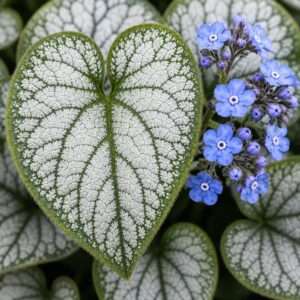
5. Brunnera Macrophylla ‘Jack Frost’ (Siberian Bugloss)
Product Description:
Brunnera Macrophylla ‘Jack Frost’ is a award-winning shade perennial prized for its large, heart-shaped leaves that feature a silver, metallic sheen accented by dark green veins and leaf margins. Growing in neat, rounded mounds about 12 to 15 inches tall, it acts as a ground reflector, capturing minimal ambient light to illuminate dark spaces beneath tree canopies. In early spring, sprays of tiny, baby-blue flowers (resembling Forget-Me-Nots) rise above the shimmering foliage.

Price: $27.99 (Typically sold as live potted starter plants)
Key Features & Benefits:
-
Metallic Reflective Foliage: High-shine silver leaf surface brightens dark garden beds.
-
Spring Flower Sprays: Delicate blue blooms add seasonal color contrast in April and May.
-
Rough Foliage Texture: Slightly coarse, hairy leaf texture naturally deters deer, rabbits, and slugs.
Pros & Cons:
-
Pros:
-
Very long-lived; holds its structural leaf color from spring through late fall frost.
-
Resists common leaf diseases like powdery mildew better than older varieties.
-
-
Cons:
-
Leaves can scorch if exposed to harsh, direct afternoon sun.
-
Requires consistent soil moisture during extreme summer heatwaves.
-
Amazon Customer Ratings & Reviews:
Average Rating: 4.3 / 5 Stars.
Buyers frequently praise the distinct silver leaf shine, noted as looking even better in person than in product photos. Negative reviews cite occasional plant wilting during transit if ordered in peak summer heat.
Why It’s a Good Choice:
It provides a high-end, silver-metallic texture contrast that instantly elevates the look of basic green shade borders.
Ideal Use Case:
Homeowners seeking an elegant, deer-resistant specimen plant to border shaded pathways or underplant large tree trunks.
6. Dicentra Spectabilis (Bleeding Heart)
Product Description:
A classic favorite, Dicentra Spectabilis (Bleeding Heart) produces gracefully arching stems loaded with hanging, heart-shaped flowers in soft pink and white tones. Reaching 2 to 3 feet in height, its soft, fern-like, light green foliage brings an airy texture to spring landscapes. It grows rapidly in cool spring weather, delivering a dramatic floral show from late April through June.
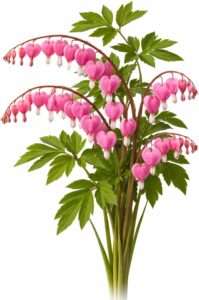
Price: $33.99 (Sold as bare root packages or potted nursery stock)
Key Features & Benefits:
-
Iconic Heart-Shaped Blooms: Unique, dangling pink and white floral structures along 20+ inch arching stems.
-
Hummingbird Attractor: Early spring nectar source for returning pollinators.
-
Fast Spring Growth: Emerges quickly from winter dormancy to deliver early visual coverage.
Pros & Cons:
-
Pros:
-
Highly resistant to deer and rabbits; traditional staple for cottage-style shade designs.
-
Easy to grow from dormant bare roots in rich organic soil.
-
-
Cons:
-
Enters summer dormancy: foliage dies back to the ground by late July/August during heat spikes.
-
Stems are soft and can snap if exposed to high wind or heavy foot traffic.
-
Amazon Customer Ratings & Reviews:
Average Rating: 4.1 / 5 Stars.
Gardeners praise the reliable spring blooms. Lower ratings are almost exclusively from buyers unaware that the plant naturally goes dormant and dies back above ground in mid-summer.
Why It’s a Good Choice:
Unmatched classic spring floral display that creates an instant focal point in partial shade beds.
Ideal Use Case:
Spring garden beds interplanted with hostas or ferns that will expand and cover the gap when the Bleeding Heart goes dormant in late summer.
7. Lamium Maculatum / Dead Nettle (‘Purple Dragon’ or ‘White Nancy’)
Product Description:
Lamium Maculatum (Dead Nettle) is a low-growing, fast-spreading perennial groundcover designed to solve the problem of bare, muddy soil under dense trees. Reaching only 6 to 8 inches in height, it creates a carpet of silver-variegated foliage topped with colorful flower clusters (purple, pink, or white depending on the variety) from late spring through mid-summer.
Price: $22.95 (Sold in multi-pack live plugs or 4-inch starter pots)
Key Features & Benefits:
-
Fast Ground Coverage: Spreads via rooting runners to quickly suppress weed growth on bare soil.
-
Tough Silver Foliage: Dense leaf canopy stays attractive even under low-water, dry-shade conditions once established.
-
Erosion Control: Shallow root network helps stabilize sloped beds and soil embankments under tree canopies.
Pros & Cons:
-
Pros:
-
Highly tolerant of dry shade, clay soil, and extreme neglect.
-
Deer and rabbit resistant; cold-hardy down to Zone 3.
-
-
Cons:
-
Spreads vigorously; requires light trimming at border edges to prevent invading grass turf.
-
Soft leaves can rot in poorly drained, waterlogged standing water.
-
Amazon Customer Ratings & Reviews:
Average Rating: 4.4 / 5 Stars.
Reviewers highlight its fast growth rate and ability to fill empty gaps where grass refuses to grow.
Why It’s a Good Choice:
The most cost-effective groundcover solution for blanketing large bare spots under dense trees.
Ideal Use Case:
Covering shaded slopes, filling under tree roots, or suppressing weeds beneath taller shade shrubs.
V. Planting & Care Guide: How to Maximize Your Amazon Plant Order
To guarantee high survival rates when ordering live plants or bare roots online, follow this four-step care protocol:
-
Unboxing Care Protocol:
-
Unpack live plants immediately upon arrival. Place them in a sheltered, shaded location outdoors.
-
Water potted plants thoroughly until excess moisture drains from the base.
-
For bare roots, submerge root systems in room-temperature water for 30 to 60 minutes before planting to break winter dormancy.
-
-
Soil Preparation Secrets for Shade Beds:
-
Tree root competition makes shade soil compact and low in nutrients.
-
Dig planting holes twice as wide as the root mass. Mix 50% native soil with 50% rich organic compost or leaf mold to improve drainage and root penetration.
-
-
Watering & Mulching Rules:
-
Deep Soak: Shade perennials require deep, infrequent waterings (1 to 2 times weekly) rather than light daily sprays.
-
Mulch Application: Apply a 2-inch layer of shredded bark mulch around plants to retain moisture and suppress weeds. Keep mulch 1 inch away from the plant stem/crown to prevent rot.
-
-
Companion Planting Designs:
-
Create depth by layering plant heights:
-
Back Layer: Tall flowering plumes (Astilbe) or arching stems (Bleeding Heart).
-
Middle Layer: Bold architectural leaf mounds (Hostas, Hellebores, Brunnera).
-
Front Layer / Edging: Compact foliage (Heuchera) or low-spreading cover (Lamium).
-
-
VI. Frequently Asked Questions (FAQ)
What is the single best perennial for full shade?
Hostas are widely considered the single best perennial for full shade due to their adaptability, cold hardiness, and wide range of leaf patterns. For full-shade flowering options, Hellebores and Astilbe are the top choices.
Which shade perennials do deer ignore?
Deer generally ignore Hellebores, Astilbe, Brunnera (‘Jack Frost’), Heuchera (Coral Bells), and Lamium. These plants feature leathery textures, tough fibers, or natural compounds that make them unpalatable to wildlife.
Can flowering perennials bloom without direct sunlight?
Yes. Flowering shade perennials like Astilbe, Bleeding Heart, and Hellebores bloom using indirect, ambient, or dappled light filtered through tree branches.
Is it safe to buy live perennial plants on Amazon?
Yes, ordering live plants or bare roots on Amazon is safe if you purchase from established nursery sellers, check customer feedback, and unbox and water the plants immediately upon arrival.
VII. Final Verdict & Buying Recommendations
Transforming dark, shadowed areas into a flourishing garden bed comes down to selecting plants engineered by nature to thrive in low-light environments.
-
For maximum coverage and bulletproof reliability: Choose Hosta ‘Patriot’. Its variegated leaf borders reflect light and bring immediate brightness to dark borders.
-
For 365-day color without relying on flowers: Go with Heuchera (Coral Bells) or Brunnera ‘Jack Frost’ for bright jewel tones and silver metallic textures.
-
For total deer resistance and early spring flowers: Invest in Helleborus (Lenten Rose).
-
For damp soil and vertical summer blooms: Plant Astilbe Chinensis.