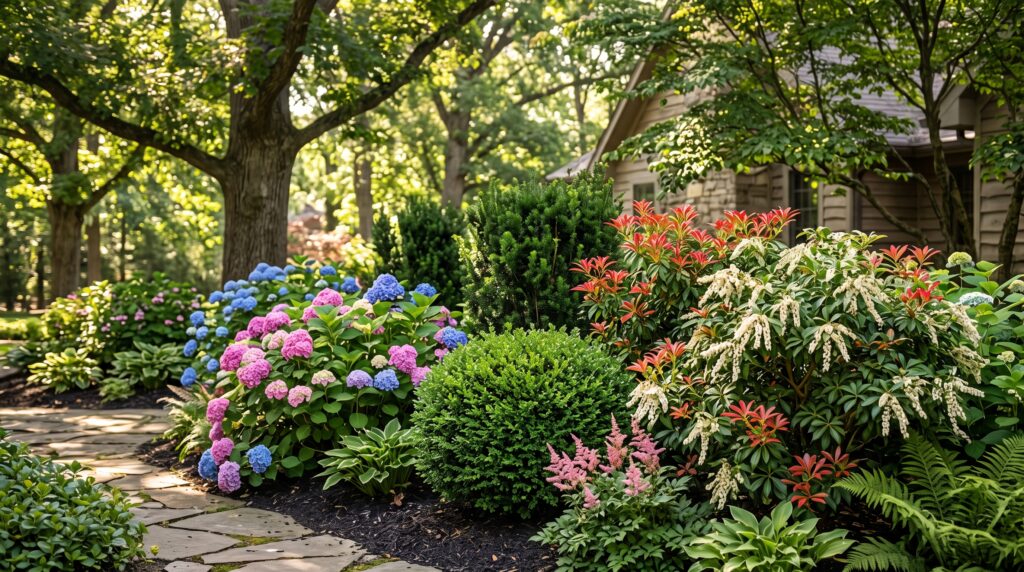
Do you have a dark, neglected corner of your yard where grass refuses to grow and sun-loving plants go to die? You certainly aren’t alone. Most homeowners struggle to landscape under mature shade trees, along north-facing walls, or in the narrow, shadowed gaps between close property lines. Far too often, these areas are left barren, muddy, and completely overlooked. If you are desperately searching for a way to breathe life into these gloomy spots, planting the 10 best shade bushes is the absolute best way to transform your yard’s dead zones into lush focal points.
The truth is, you don’t need direct sunlight to cultivate a vibrant, magazine-worthy landscape. While full-sun plants tend to get all the glory, the right shade-tolerant shrubs can bring year-round architectural structure, wonderfully fragrant flowers, and fiery fall foliage to the absolute darkest areas of your property. From robust evergreens that anchor your foundation to delicate, re-blooming hydrangeas, shade-loving plants are the secret weapon of professional landscapers.
However, buying live plants online can sometimes feel like a gamble. To save you the guesswork—and your money—we’ve rigorously analyzed hundreds of live plant listings, evaluated unboxing experiences, and scoured verified Amazon customer reviews to find the most resilient, beautiful shrubs that can be delivered safely and directly to your door. Whether you need a dense privacy hedge, a splash of summer color, or a tough plant for dry soil, we’ve done the heavy lifting for you. Read on to discover the 10 best shade bushes to buy right now and start planning your garden’s stunning revival.
How We Evaluated (And How to Choose the Right Shade Bush)
Before adding a plant to your cart, it is critical to understand the specific environment you are planting in. A shrub that thrives under a dense pine tree might drown near a damp north-facing foundation. Here is exactly what you need to consider to make an informed buying decision:
-
Understanding Your Shade Level:
-
Part Shade: 3 to 6 hours of direct sun, usually in the cooler morning hours. Hydrangeas and Azaleas excel here.
-
Dappled Shade: Sunlight filtered through the leaves of taller trees throughout the day.
-
Full/Deep Shade: Less than 3 hours of direct sun, or zero direct sun (like the north side of a multi-story home). Yews and certain Boxwoods are your best bet.
-
-
Soil and Moisture Constraints: “Dry shade” is notoriously difficult—it usually occurs under mature trees whose deep roots aggressively steal water. Plants like Diervilla are built for this. Conversely, “wet shade” happens near poor drainage areas or downspouts, requiring moisture-loving shrubs like Summersweet.
-
Evergreen vs. Deciduous: Do you want year-round green structure (evergreen), or are you willing to accept bare winter branches in exchange for spectacular spring flowers and fall color (deciduous)? A well-designed landscape uses a mix of both.
-
Buying Live Plants on Amazon: We prioritized trusted nursery storefronts (like Proven Winners Direct and Green Promise Farms) that offer robust packaging, healthy root systems, and generous guarantees. Pay attention to pot sizes: 1-Quart plants are younger and cheaper but take longer to fill out, while 1-Gallon to 3-Gallon plants offer immediate landscape impact.
Quick Comparison Table: Top Shade Bushes at a Glance
| Product Name | Best Feature / Use Case | Sun/Shade Needs |
| Proven Winners ‘Let’s Dance’ Hydrangea | Best Overall for Summer Blooms | Part Sun to Part Shade |
| Sprinter Boxwood | Best for Fast-Growing Evergreen Structure | Part Sun to Full Shade |
| Mountain Fire Pieris Japonica | Best for Bright Evergreen Color | Part Sun to Part Shade |
| Encore Azalea Autumn Debutante | Best for Spring & Fall Re-Blooming | Part Sun to Part Shade |
| Kodiak Orange Diervilla | Best for Tough, Dry Shade | Sun to Part Shade |
| Scentlandia Sweetspire | Best for Fragrance & Wet Soil | Part Sun to Part Shade |
| Hicks Yew | Best for Deep, Dense Shade Hedges | Part Sun to Full Shade |
| Just Chill Double Pink Camellia | Best for Winter/Early Spring Color | Part Sun to Part Shade |
| Glow Pop Japanese Holly | Best Boxwood Alternative | Part Sun to Part Shade |
| Sugartina Crystalina Summersweet | Best for Wet Shade & Pollinators | Part Sun to Full Shade |
The 10 Best Shade Bushes (Detailed Reviews)
1. Best Overall for Colorful Blooms: Proven Winners ‘Let’s Dance’ Bigleaf Hydrangea
Product Description:
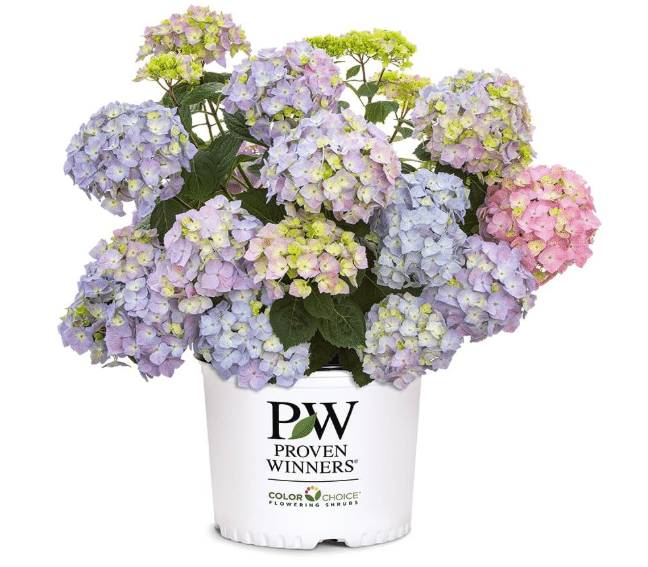
If you thought you couldn’t have massive, show-stopping flowers in a shady yard, think again. The ‘Let’s Dance’ series by Proven Winners is an absolute powerhouse. It is a bigleaf hydrangea (Hydrangea macrophylla) specifically bred to bloom on both old and new wood. This means that even if a harsh winter kills the above-ground stems, the plant will still push out fresh growth and bloom beautifully that same summer. It yields massive mophead floral clusters that transform your shadowy borders into a cottage-garden paradise.
Price on Amazon:
Key Features and Benefits:
-
Re-blooming technology: Flowers continuously from early summer through fall.
-
Sturdy stems: Unlike older hydrangea varieties, these stems won’t flop over into the mud after a heavy rain.
-
Compact growth: Reaches a highly manageable 2 to 3 feet tall and wide, requiring virtually no pruning.
Pros and Cons:
-
Pros: Incredible floral impact; survives late spring frosts; outstanding shipping quality from Proven Winners Direct.
-
Cons: Requires consistent soil moisture (cannot handle dry shade); flower color is heavily dependent on your soil’s pH (acidic soil yields blue flowers, alkaline yields pink).
Amazon Customer Ratings and Reviews (4.6/5 Stars):
Customers rave about the shipping quality. Many reviewers note the custom blister-packaging that keeps the soil perfectly intact and the plant hydrated during transit. Some users reported slight wilting upon arrival, but noted the plant perked up within hours of a good watering.
Why It’s a Good Choice for the 10 Best Shade Bushes:
It delivers the high-impact floral display usually reserved for full-sun plants, making it one of the most rewarding and visually stunning shade bushes you can buy.
Ideal Use Case / Who Should Buy It:
Homeowners wanting a classic, vibrant look along a shady foundation, framing a front porch, or lining a woodland edge where morning sun transitions into afternoon shade.
2. Best for Year-Round Structure: Sprinter Boxwood (Buxus microphylla)
Product Description:
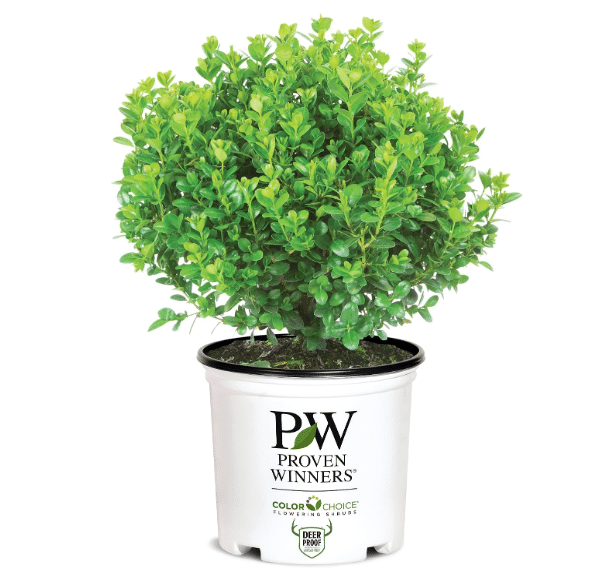
Boxwoods are the undisputed kings of landscaping structure, but older varieties are notoriously slow-growing. The Sprinter Boxwood changes the game. As the name implies, it boasts a significantly faster growth rate than traditional boxwoods, filling in bare shade patches in record time. Its glossy, vibrant green foliage holds its color beautifully through the dead of winter, providing permanent architectural shape to your yard when everything else has dropped its leaves.
Price on Amazon:
Key Features and Benefits:
-
Fast growth rate: Fills out hedges and borders much quicker than standard boxwoods.
-
Winter resilience: Excellent cold hardiness (Zones 5-9) and resists the dreaded winter-bronzing that plagues other varieties.
-
Deer resistant: The foliage is naturally unpalatable to deer.
Pros and Cons:
-
Pros: Requires very little maintenance; easily pruned into formal shapes; tolerates deep shade exceptionally well.
-
Cons: Can be susceptible to boxwood blight in highly humid, poorly ventilated areas; lacks showy flowers.
Amazon Customer Ratings and Reviews (4.5/5 Stars):
Buyers frequently highlight the deep, healthy green color of the foliage right out of the box. Reviews frequently mention buying one as a test, being thrilled by the health of the root system, and returning to buy five more to complete a hedge.
Why It’s a Good Choice for the 10 Best Shade Bushes:
Every garden needs a “bone structure”—evergreen plants that look good 365 days a year. The Sprinter Boxwood provides immediate, reliable greenery in areas where sun-loving evergreens would thin out and die.
Ideal Use Case / Who Should Buy It:
Perfect for those needing a fast-growing, evergreen low hedge, a formal border along a shady walkway, or foundation planting that maintains its shape year-round.
3. Best for Bright Evergreen Color: Mountain Fire Pieris Japonica (Andromeda)
Product Description:
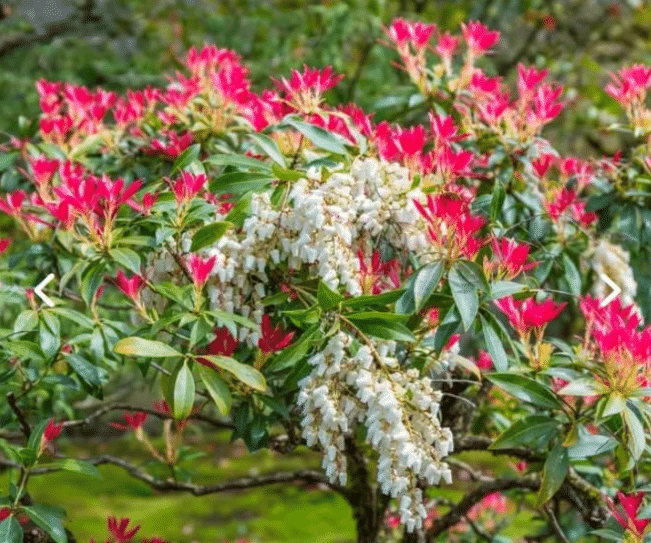
If you want the year-round coverage of an evergreen but refuse to settle for plain green, the Mountain Fire Pieris is a spectacular choice. This broadleaf evergreen is famous for its breathtaking new growth. In the spring, fresh foliage emerges as a blazing, fiery red that rivals the brightest autumn leaves. Shortly after, delicate, cascading clusters of white, bell-shaped flowers appear—resembling Lily of the Valley. As the season progresses, the fiery red leaves mature to a deep, glossy green.
Price on Amazon:
Key Features and Benefits:
-
Three-season interest: Fiery red spring foliage, beautiful white cascading spring blooms, and deep green winter foliage.
-
Deer resistant: Highly toxic to grazing animals, meaning deer will leave it completely alone.
-
Moderate size: Reaches 4 to 8 feet tall, making it a great background shrub.
Pros and Cons:
-
Pros: Unique, striking coloration in the shade; very low maintenance once established; practically immune to deer damage.
-
Cons: Toxic to pets and horses if ingested; requires acidic, well-draining soil; needs protection from harsh winter winds.
Amazon Customer Ratings and Reviews (4.4/5 Stars):
Reviewers are consistently impressed by the size and health of the plants upon delivery. Many customers living in wooded areas praise its deer resistance, noting it is one of the only shrubs in their yard that survives ungulate grazing.
Why It’s a Good Choice for the 10 Best Shade Bushes:
It solves the problem of “boring” shade gardens by injecting bright, fiery reds and cascading white blooms into areas that typically only feature flat greens.
Ideal Use Case / Who Should Buy It:
Homeowners with acidic soil under pine trees or oaks who want a dramatic, colorful focal point that deer won’t eat.
4. Best for Re-Blooming: Encore Azalea Autumn Debutante
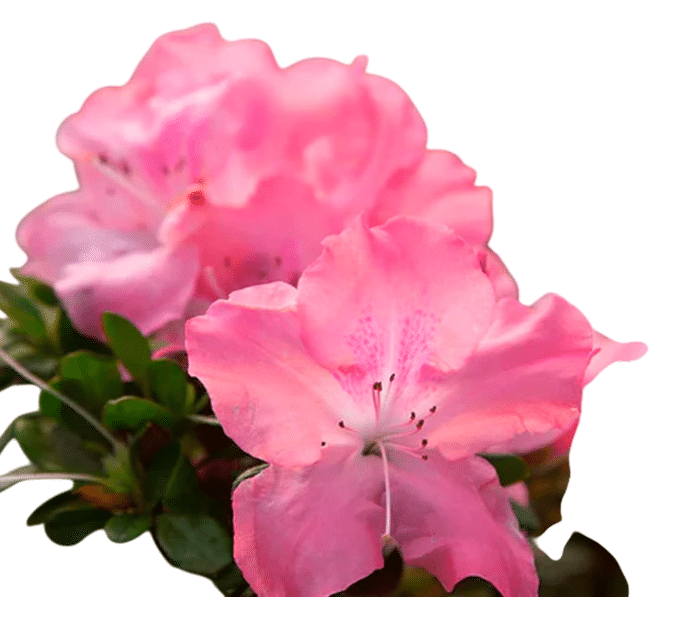
Product Description: If you love the classic, southern charm of azaleas but hate how briefly they bloom, the Encore series is your perfect solution. The Autumn Debutante is a magnificent re-blooming azalea that produces large, soft pink flowers not just once, but in massive flushes throughout the spring, summer, and fall. Its dense, evergreen foliage provides excellent year-round structure, ensuring your shady borders never look bare.
Price on Amazon:
Key Features and Benefits:
-
Three-season blooming: Produces flowers in spring, summer, and right up until the first frost.
-
Evergreen leaves: Maintains a rich green canopy through the winter months.
-
Moderate growth habit: Matures to a manageable 4 feet tall and wide.
Pros and Cons:
-
Pros: Unbeatable flower production; excellent cold hardiness for an azalea (Zones 6-9); versatile in the landscape.
-
Cons: Requires highly acidic soil to thrive; shallow roots require a thick layer of mulch to stay cool.
Amazon Customer Ratings and Reviews (4.5/5 Stars): Verified purchasers consistently praise the secure packaging and the fact that the plants frequently arrive with buds already forming. A few southern gardeners mention it requires extra watering during intense August heat waves, but otherwise performs flawlessly.
Why It’s a Good Choice for the 10 Best Shade Bushes: Standard azaleas give you three weeks of color and 49 weeks of green. The Encore Azalea gives you months of continuous blooms, making it an incredibly high-value investment for a shade garden.
Ideal Use Case / Who Should Buy It: Homeowners with dappled shade (like under high oak canopies) looking for continuous, romantic color to line a driveway or woodland path.
5. Best for Tough, Dry Shade: Kodiak Orange Diervilla
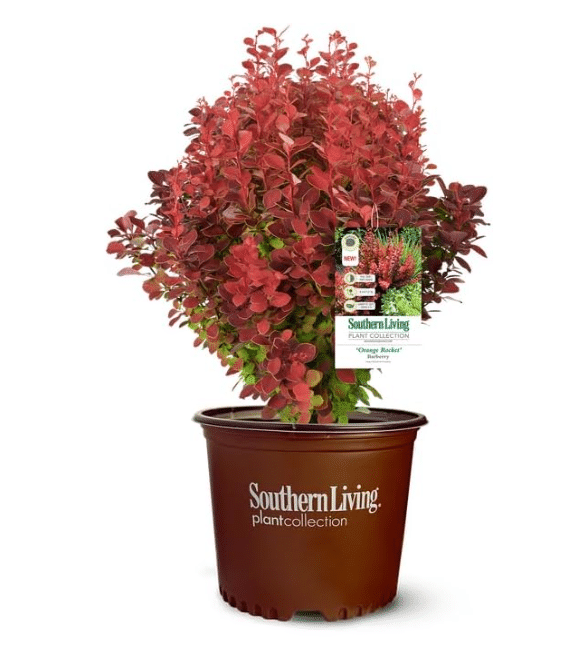
Product Description: Dry shade under mature trees is the absolute hardest landscaping problem to solve. Large tree roots suck up all the moisture, leaving a dusty, barren wasteland. Enter the Kodiak Orange Diervilla. This tough-as-nails, drought-tolerant native shrub thrives where other plants simply give up. It features glowing orange spring foliage, bright yellow summer flowers, and a blazing orange-red fall display. It is the perfect eco-friendly alternative to the invasive Burning Bush.
Price on Amazon: $39.99
Key Features and Benefits:
-
Extreme durability: Thrives in dry, poor soils and heavy shade.
-
Native pollinator magnet: The yellow tubular summer flowers are highly attractive to bees and butterflies.
-
Non-invasive: Provides spectacular fall color without taking over local woodlands.
Pros and Cons:
-
Pros: Practically indestructible; fantastic fall color; deer-resistant.
-
Cons: Deciduous (loses its leaves in winter); can have a slightly “wild” or loose growth habit.
Amazon Customer Ratings and Reviews (4.7/5 Stars): Reviewers love the zero-maintenance aspect of this plant. Many highlight how quickly it establishes itself under giant maple and oak trees where they previously couldn’t even get grass to grow.
Why It’s a Good Choice for the 10 Best Shade Bushes: It explicitly solves the dreaded “dry shade” problem while delivering three distinct seasons of vivid, glowing color.
Ideal Use Case / Who Should Buy It: Anyone trying to landscape underneath large, established trees, or homeowners looking to plant a low-maintenance, drought-resistant slope.
6. Best for Fragrance: Scentlandia Sweetspire (Itea)
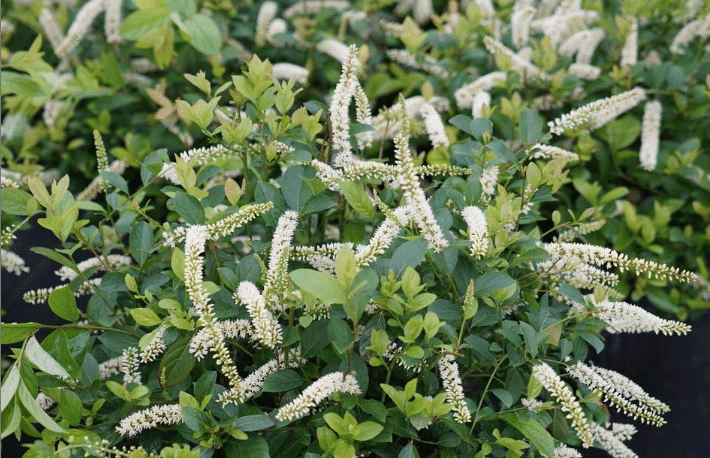
Product Description: Sweetspire is a wildly underutilized shade shrub, and the Scentlandia variety is the best of the bunch. Bred specifically for enhanced fragrance and superior cold hardiness, this native bush produces long, fuzzy, white bottlebrush flowers in early summer that smell absolutely heavenly. Once the fragrant blooms fade, you are treated to one of the longest-lasting, most vibrant purple and crimson fall foliage displays of any shade plant.
Price on Amazon:
Key Features and Benefits:
-
Intense fragrance: Perfumes the entire yard when in bloom.
-
Exceptional fall color: Leaves turn a brilliant mix of red and purple, lingering well into late autumn.
-
Wet soil tolerance: Actually thrives in poorly drained, boggy soils.
Pros and Cons:
-
Pros: Sweet scent; handles heavy, wet clay soil; excellent cold tolerance.
-
Cons: Deciduous; tends to spread via underground suckers (great for naturalizing, but requires occasional pruning to keep in bounds).
Amazon Customer Ratings and Reviews (4.4/5 Stars): Buyers love planting this near windows or patios where they can enjoy the scent. Several reviewers noted it arrived smaller than expected but grew incredibly fast during its first season in the ground.
Why It’s a Good Choice for the 10 Best Shade Bushes: It engages the senses. Adding fragrance to a shaded patio or damp woodland edge elevates your garden from looking good to feeling like a professional botanical retreat.
Ideal Use Case / Who Should Buy It: Homeowners with heavy clay soil, damp spots near downspouts, or anyone who wants a beautifully scented plant near a shaded seating area.
7. Best for Deep, Dense Shade: Hicks Yew (Taxus x media)
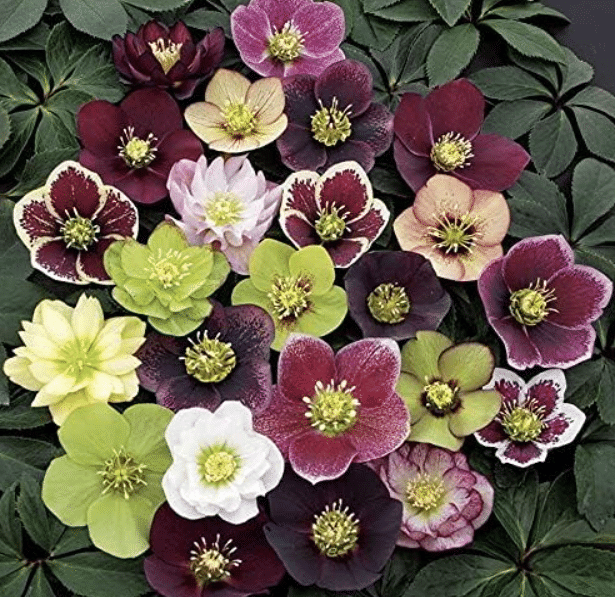
Product Description: When you are dealing with the dark, sunless chasm between two houses, the Hicks Yew is your ultimate problem solver. This dense, columnar evergreen is arguably the most shade-tolerant bush in existence. It features soft, dark green needles and produces bright red ornamental berries in the winter. Because it naturally grows tall and narrow, it is the premier choice for creating privacy screens in areas where sunlight rarely reaches.
Price on Amazon: $37.95
Key Features and Benefits:
-
Deep shade champion: Will survive and grow in almost total shade.
-
Columnar habit: Grows 10 to 15 feet tall but only 3 to 4 feet wide, making it perfect for tight spaces.
-
Highly shearable: Can be easily pruned into sharp, formal, rectangular hedges.
Pros and Cons:
-
Pros: Ultimate privacy screen for shade; lives for decades; very low maintenance.
-
Cons: Highly toxic to humans, dogs, and cats if ingested; slow growth rate; deer will eat it in the winter if hungry enough.
Amazon Customer Ratings and Reviews (4.6/5 Stars): Customers praise the dark, rich color and the healthy, robust root systems upon arrival. Many use them successfully to hide ugly AC units or trash cans on the sunless sides of their homes.
Why It’s a Good Choice for the 10 Best Shade Bushes: No list is complete without a true deep-shade survivor. The Hicks Yew provides indispensable architectural height and privacy in spaces where almost everything else perishes.
Ideal Use Case / Who Should Buy It: Homeowners looking to create a tall privacy hedge in a narrow, deeply shaded side yard.
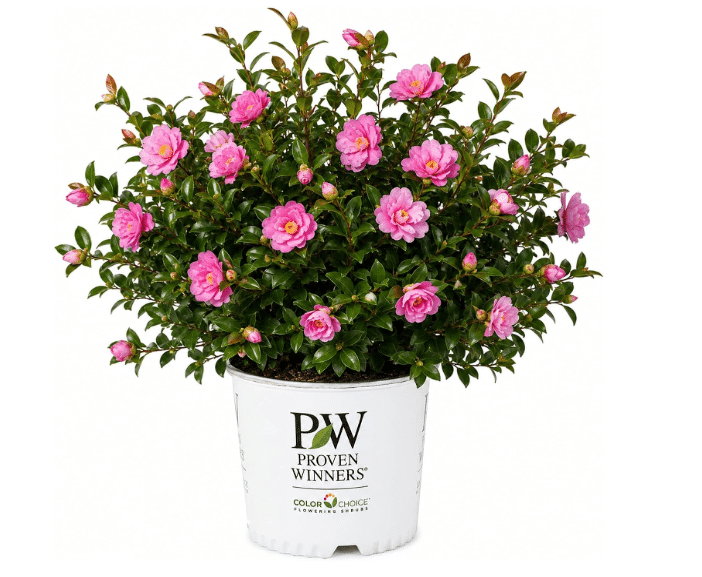
8. Best for Winter/Early Spring Color: Just Chill Double Pink Camellia
Product Description: Why wait for summer? The Just Chill Camellia offers a breathtaking display of elegant, rose-like, double pink flowers when the rest of your garden is dormant. This broadleaf evergreen is a staple of southern shade gardens, offering dark, glossy green foliage year-round and stunning floral displays in late winter and early spring.
Price on Amazon:
Key Features and Benefits:
-
Winter blooms: Pushes out massive, ruffled pink flowers from late winter into spring.
-
Elegant foliage: Glossy, leathery evergreen leaves provide a high-end look.
-
Upright growth: Reaches 5 to 8 feet tall, ideal for screening.
Pros and Cons:
-
Pros: Incredible off-season color; beautiful cut flowers; long-lived.
-
Cons: Only hardy in warmer climates (Zones 7-9); requires acidic, well-draining soil to prevent root rot.
Amazon Customer Ratings and Reviews (4.5/5 Stars): Reviewers in the southern US and Pacific Northwest adore the size of the blooms. Some customers noted shipping delays during peak winter weather, but commended the careful packaging that protected the buds.
Why It’s a Good Choice for the 10 Best Shade Bushes: It extends your garden’s visual interest into the grayest, dreariest months of the year, offering vibrant life when you need it most.
Ideal Use Case / Who Should Buy It: Gardeners in warmer hardiness zones (7 and above) looking for a luxurious, flowering evergreen for a woodland border or foundation planting.
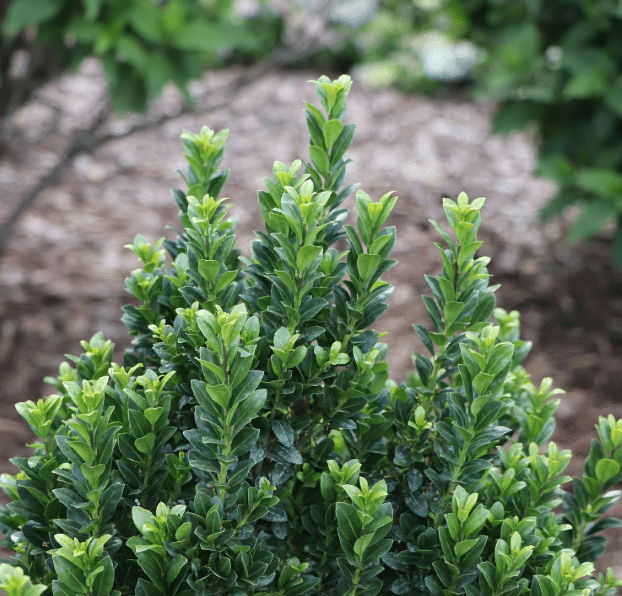
9. Best Boxwood Alternative: Glow Pop Japanese Holly (Ilex crenata)
Product Description: If you love the tightly clipped, spherical look of a boxwood but want a pop of vivid color (or want to avoid Boxwood Blight), the Glow Pop Japanese Holly is a brilliant alternative. This compact, easy-to-grow evergreen naturally forms a tight round sphere without pruning. Its foliage emerges as a brilliant, glowing golden-yellow before maturing to a light green, creating a stunning two-toned effect in dappled shade.
Price on Amazon:
Key Features and Benefits:
-
Boxwood Blight immunity: Completely immune to the devastating disease wiping out traditional boxwoods.
-
Golden foliage: Brightens up dark corners with its neon-yellow new growth.
-
Compact size: Stays a tidy 2 to 3 feet tall and wide.
Pros and Cons:
-
Pros: No pruning required to maintain its spherical shape; disease resistant; excellent color contrast.
-
Cons: Requires at least a few hours of dappled or morning sun to achieve the brightest golden color; deep shade will turn the leaves solid green.
Amazon Customer Ratings and Reviews (4.3/5 Stars): Buyers love the modern, colorful twist on the classic formal shrub. Some reviewers advise ensuring the soil drains well, as Japanese Hollies despise standing water.
Why It’s a Good Choice for the 10 Best Shade Bushes: It offers the formal structure of a boxwood but injects a burst of glowing, golden light into shady spaces that typically lack bright colors.
Ideal Use Case / Who Should Buy It: Homeowners looking for a low, colorful border along a walkway, or those needing a structural contrast against dark green background plants.
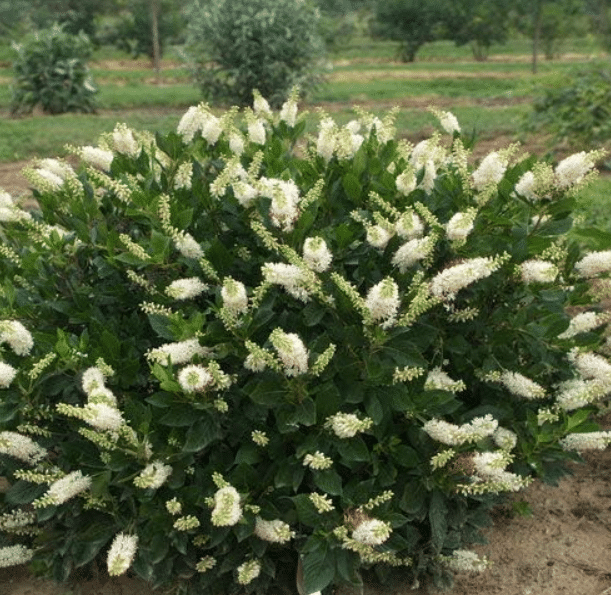
10. Best for Wet Shade & Pollinators: Sugartina Crystalina Summersweet (Clethra)
Product Description: Rounding out our list is a native powerhouse that thrives in the exact conditions most plants hate: soggy, poorly drained shade. The Sugartina Crystalina is a dwarf Summersweet that erupts in late summer with highly fragrant, pure white bottlebrush flowers. It is an absolute magnet for butterflies, native bees, and hummingbirds, turning a soggy, dark corner into a buzzing pollinator haven. In autumn, the dark green leaves turn a striking golden yellow.
Price on Amazon:
Key Features and Benefits:
-
Late summer blooms: Flowers in July and August when most other shrubs have finished.
-
Wet soil champion: Flourishes in low spots, clay soils, and near downspouts.
-
Dwarf habit: Maxes out at around 3 feet tall, making it easy to fit into any garden.
Pros and Cons:
-
Pros: Incredible sweet fragrance; highly attractive to wildlife; solves wet-shade problems.
-
Cons: It is notorious for being one of the very last plants to leaf out in the spring (don’t panic, it’s not dead, just sleeping!).
Amazon Customer Ratings and Reviews (4.6/5 Stars): Eco-conscious gardeners love this plant. Reviews frequently mention the sheer volume of bumblebees that visit the flowers. Many buyers appreciate its compact size compared to older, wildly overgrown Summersweet varieties.
Why It’s a Good Choice for the 10 Best Shade Bushes: It fills a vital niche: providing late-summer blooms, incredible fragrance, and pollinator support in wet, shady environments.
Ideal Use Case / Who Should Buy It: Perfect for rain gardens, low-lying shady areas that collect water, or anyone wanting to support local pollinators without needing full sun.
What to Do When Your Amazon Live Plant Arrives
Buying plants online is incredibly convenient, but they require a little TLC the moment they hit your porch to recover from their journey in a dark cardboard box.
-
Immediate Unboxing: Do not let the box sit in the sun. Open the package the day it arrives, carefully cut away any plastic wrap or blister packaging, and allow the plant to breathe.
-
Hydration Rescue: The soil will likely be dry. Place the nursery pot in a shallow bucket or saucer of water for 30–60 minutes to let it soak up moisture from the bottom (bottom-watering ensures the root ball is thoroughly saturated).
-
Acclimation (Hardening Off): Do not immediately plant it in the ground. Place the pot in a sheltered, fully shaded spot in your yard for 2 to 3 days. This allows the plant to acclimate to your local humidity and temperatures without suffering transplant shock.
Care & Maintenance Guide for Shade Shrubs
Keeping your newly planted 10 best shade bushes thriving requires a slightly different approach than full-sun gardening:
-
Watering: Areas in full shade evaporate water much slower than sunny spots, meaning you often need to water less frequently to avoid root rot. However, if your shade is caused by massive trees (like Maples or Oaks), those tree roots will aggressively steal water. Check the soil with your finger—water deeply only when the top two inches are dry.
-
Mulching: Apply a 2-inch layer of hardwood mulch around the base of your shrubs. This is critical for keeping the roots cool, retaining moisture, and suppressing weeds. Make sure the mulch does not touch the actual trunk of the bush to prevent rot.
-
Fertilizing: Shade bushes generally grow slower and require less fertilizer than sun plants. Apply a slow-release, granular shrub fertilizer once in early spring. Avoid fertilizing late in the summer, as this encourages tender new growth that will freeze and die in the winter.
Frequently Asked Questions (FAQs)
What is the fastest-growing bush for shade? If you need fast coverage, the Sprinter Boxwood is the best evergreen choice, while the Kodiak Orange Diervilla is the fastest-growing deciduous option for filling in wide spaces.
Can these bushes survive in 100% total darkness? No. No plant can survive in absolute zero-light environments (like a windowless basement). However, for “deep shade” environments—meaning outdoor areas that receive zero direct sunlight but still get ambient, reflected daylight (like the north wall of a house)—the Hicks Yew and Sprinter Boxwood will survive beautifully.
Are shade bushes deer-resistant? Deer browsing heavily depends on how harsh the winter is and local herd habits. However, the Mountain Fire Pieris, Sprinter Boxwood, and Kodiak Orange Diervilla are highly deer-resistant. Be warned: deer will absolutely eat Yews and Azaleas if left unprotected.
Final Verdict: Which Shade Bush Should You Buy?
Transforming a dark, neglected corner of your yard doesn’t require a landscaping degree—it just requires the right plant.
-
If you want maximum floral impact and a cottage-garden feel, buy the Proven Winners ‘Let’s Dance’ Hydrangea.
-
If you need instant, year-round architectural structure or a privacy hedge, invest in the Sprinter Boxwood or Hicks Yew.
-
If you are dealing with the nightmare scenario of dry shade under a giant mature tree, the Kodiak Orange Diervilla is your bulletproof solution.
Stop letting your yard’s shady spots go to waste. Click the links in our guide above to check current Amazon stock, secure your favorites, and get your plants in the ground before the peak planting season passes!