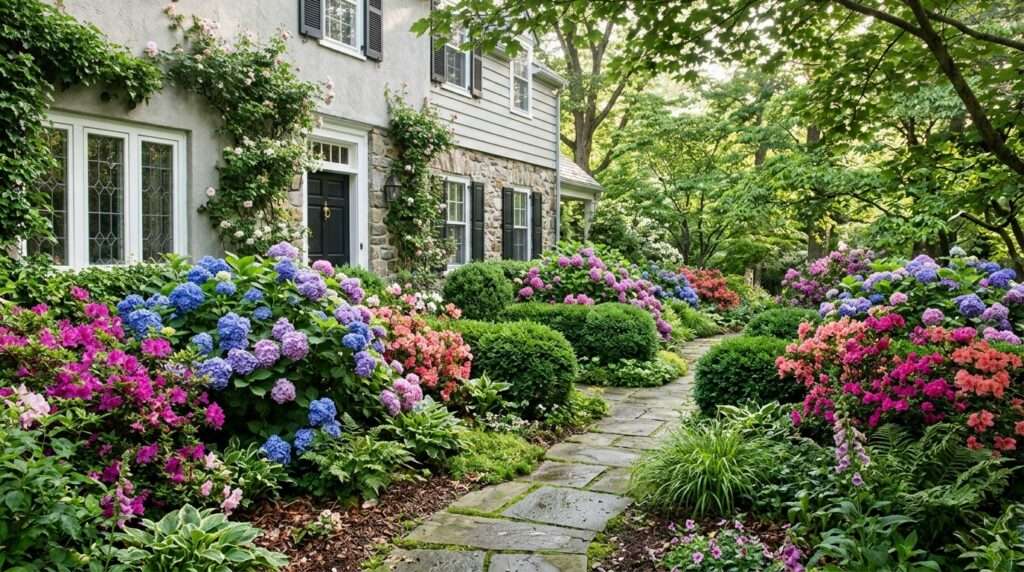
Shadowy, light-starved yards are one of the most frustrating challenges in home landscaping. Whether under the dense canopy of mature trees or along north-facing walls, light-starved patches often leave homeowners with patchy lawns, barren mud spots, and withered greenery. Most popular garden plants demand full sun, but forcing sun-loving species into dimly lit corners only leads to weak growth and yellowing leaves.
Fortunately, you do not have to settle for a dull, empty yard. Choosing the best shrubs for shade allows you to transform forgotten, gloomy spaces into lush, vibrant sanctuaries filled with rich foliage, colorful blooms, and year-round architectural privacy.
Finding the best shrubs for shade comes down to understanding your yard’s specific microclimate and selecting live plants built to thrive without direct sunlight. To help you make an informed buying decision, we evaluated live plant shipping standards, USDA hardiness zones, growth habits, deer resistance, and verified customer feedback on Amazon. The result is a definitive guide to top-rated live shade shrubs delivered directly to your door, making it easier than ever to upgrade your curb appeal.
Quick Buying Advice: What to Look For Before You Buy
Before ordering live plants online, keep these three essential factors in mind:
-
Shade Intensity: Determine whether your planting site gets dappled shade (filtered sunlight through tree leaves), partial shade (3 to 6 hours of cool morning sun), or full shade (less than 3 hours of direct sun, typical under dense building eaves or thick foliage).
-
Foliage Type (Evergreen vs. Deciduous): Evergreen shrubs retain their foliage year-round to maintain garden structure through winter, whereas deciduous shrubs drop their leaves in autumn but often compensate with dramatic seasonal flowers or autumn leaf colors.
-
Hardiness Zones & Soil Prep: Match the shrub’s USDA hardiness zone to your region, and ensure your soil retains adequate moisture without becoming waterlogged— shade speeds up moisture retention because evaporation is slower.
2. Fast-Track Buying Recommendations (At a Glance)
If you need a quick decision for your specific landscape situation, here is our top-tier selection:
-
Best Overall Shade Shrub: Proven Winners Incrediball Smooth Hydrangea – Massive flower heads that hold strong on sturdy stems even in partial shade.
-
Best Evergreen for Year-Round Structure: Proven Winners Soft Caress Mahonia – Soft, feather-like foliage with zero thorns, adding year-round architectural grace.
-
Best Flowering & Fragrance: Proven Winners Perfecto Mundo Reblooming Azalea – Continuous blooms from spring through late autumn with deep evergreen leaves.
-
Best Large Woodland Accent: Pieris Japonica (‘Mountain Fire’ Japanese Andromeda) – Fiery red spring growth that transitions to white bell flowers and dark evergreen foliage.
-
Best Classic Low-Maintenance: Winter Gem Boxwood (Buxus) – The ultimate hardy workhorse for formal hedges and structural greenery in deep shade.
3. Comparative Buying Matrix
This streamlined comparison matrix helps you compare key specifications at a glance:
| Shrub & Species | Light & Hardiness | Key Attribute |
| Proven Winners Incrediball Hydrangea |
Partial Shade Zones 3–9 |
12″ blooms on sturdy stems; massive visual impact |
| Soft Caress Mahonia |
Partial to Full Shade Zones 7–9 |
Spineless evergreen foliage with bright winter flowers |
| Perfecto Mundo Azalea |
Partial Shade Zones 6–9 |
Multi-season rebloomer; evergreen foundation plant |
| Pieris Japonica ‘Mountain Fire’ |
Partial to Full Shade Zones 5–8 |
Fiery red spring leaves; bell-shaped white flowers |
| Winter Gem Boxwood |
Partial to Full Shade Zones 5–9 |
Extremely cold-hardy; easily sheared formal hedge |
| PJM Elite Rhododendron |
Partial Shade Zones 4–7 |
Sub-zero cold-hardy; bright early spring blooms |
| Rhus aromatica ‘Gro-Low’ |
Partial to Full Shade Zones 3–9 |
Dry shade specialist; brilliant red autumn foliage |
4. Comprehensive Buying Guide: How to Choose the Best Shrubs for Shade
A. Light Levels Decoded
Not all shade is created equal. Understanding your yard’s light budget prevents buying plants doomed to fail:
-
Dappled / Filtered Shade: Sunlight shifting through high tree branches. Ideal for delicate broadleaf evergreens like Pieris and Azaleas.
-
Partial Shade (3 to 6 Hours): Sites receiving gentle morning sun but shaded during scorching afternoon heat. Perfect for Hydrangeas and Rhododendrons.
-
Full / Deep Shade (Under 3 Hours): Dark zones beneath dense building eaves or thick conifers. Requires shade-tolerant workhorses like Boxwood or Mahonia.
B. Live Plant Shipping via Amazon: What to Expect
Ordering live shrubs online is fast and convenient, but knowing what happens on delivery ensures success:
-
Unboxing: Unpack your plants immediately upon arrival. Remove plastic wrapping and watering bladders.
-
Hydration Check: Soil may dry slightly in transit. Give the container a thorough soak until water drains from the bottom.
-
Acclimation: Place the potted shrub in a sheltered, shaded outdoor spot for 48–72 hours before transplanting it into your soil.
C. Soil & Moisture Requirements
Shade reduces water evaporation, which can cause soil to remain wet longer. Ensure proper soil preparation:
-
Acidic Soil Lovers: Azaleas, Rhododendrons, and Pieris require acidic soil (pH 4.5–6.0). Add peat moss or pine needle mulch to maintain acidity.
-
Drainage Management: Amend heavy clay soils with organic compost to prevent root rot in low-evaporation shaded areas.
5. In-Depth Product Analysis & Reviews
1. Proven Winners Incrediball Smooth Hydrangea (Hydrangea arborescens)
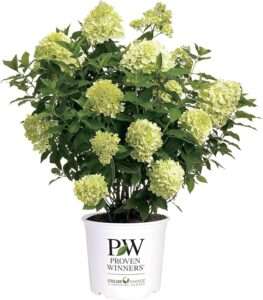
The Proven Winners Incrediball Smooth Hydrangea solves the biggest flaw of traditional hydrangeas: weak stems that flop over in rainy weather. Bred specifically for strong, sturdy branches, this shrub supports massive flower heads reaching up to 12 inches across. The blooms open in a crisp lime-green tint, shift to pure, brilliant white during mid-summer, and gradually age into light green and tan dried blooms that provide winter interest.
Because full afternoon sun can scorch hydrangea foliage, this variety thrives in partial shade where it gets morning light followed by afternoon protection. It is extremely cold-hardy down to USDA Zone 3, coming back reliably every year even after severe winters.
-
Price: $59.95(Depending on pot container size)
-
Key Features & Benefits:
-
Massive 12-inch blooms supported by reinforced, non-drooping stems.
-
Thrives in partial shade and morning-sun woodland borders.
-
Exceptional cold hardiness (USDA Zones 3–9).
-
-
Pros & Cons:
-
Pros: Reliable summer blooms, thick sturdy branches, cold hardy.
-
Cons: Deciduous (loses leaves in winter); demands consistent soil moisture.
-
-
Amazon Customer Ratings & Reviews: 4.4 out of 5 stars. Customers praise the secure packaging and note that plants arrive healthy with strong root systems that take off quickly once planted.
-
Why It’s a Good Choice: It delivers unmatched flower size and visual impact for partial-shade gardens without flopping under summer rainstorms.
-
Ideal Use Case / Who Should Buy: Homeowners with shaded front entryways or side yards who want large, impressive white flowers throughout summer.
2. Proven Winners Soft Caress Mahonia (Mahonia eurybracteata)
Traditional Mahonia plants are known for sharp, holly-like needles, but Soft Caress Mahonia completely revolutionizes the species. Featuring feather-light, bamboo-like foliage that is completely smooth to the touch, this compact evergreen shrub adds an Asian-inspired, tropical elegance to shadowy landscape beds.
It shines brightest when the rest of the garden goes dormant. In late autumn and early winter, bright yellow flower spikes emerge from the center of the blue-green foliage, followed by deep blue winter berries that attract songbirds. Growing 3 to 4 feet tall and wide, it is naturally compact and rarely requires pruning.
-
Price: ~$30.00 – $48.00 (1-Gallon / 2-Gallon Live Container)
-
Key Features & Benefits:
-
Spineless, palm-like evergreen leaves that are soft to the touch.
-
Fragrant yellow flower spikes in late fall and winter.
-
High resistance to deer and urban pollution.
-
-
Pros & Cons:
-
Pros: Year-round architectural foliage, winter bloom time, non-prickly.
-
Cons: Not cold-hardy in northern regions (best in USDA Zones 7–9).
-
-
Amazon Customer Ratings & Reviews: 4.5 out of 5 stars. Reviewers highlight its ability to add fine texture under shady trees where coarse plants look out of place.
-
Why It’s a Good Choice: It turns dark, forgotten shade beds into fine-textured, structural focal points without the maintenance hassle of spiky shrubs.
-
Ideal Use Case / Who Should Buy: Southern and moderate-climate gardeners seeking a deer-resistant, low-maintenance evergreen accent for shaded borders.
3. Proven Winners Perfecto Mundo Reblooming Azalea (Rhododendron)
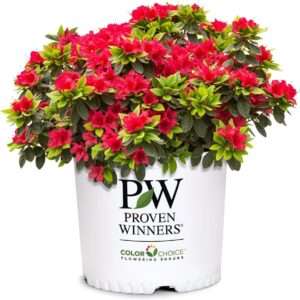
Standard azaleas put on a brief, spectacular show for two weeks in spring and then remain plain green for the rest of the year. The Perfecto Mundo Reblooming Azalea changes the game by delivering multiple blooming cycles from spring through frost.
After a flush of spring blooms, the plant grows new stems and sets fresh buds that open in mid-summer, continuing to flower non-stop into autumn. Its dense, mounded evergreen growth habit ensures that even when not in full bloom, the shrub provides clean green structure along shaded foundation walls.
-
Price: $33.86 (1-Gallon Container)
-
Key Features & Benefits:
-
Multi-season rebloomer with spring, summer, and autumn flower flushes.
-
Thrives in dappled light and partial morning sun.
-
Dense evergreen foliage retains structure year-round.
-
-
Pros & Cons:
-
Pros: Longest bloom season of any shade shrub, compact habit, dense green leaves.
-
Cons: Requires acidic, well-draining soil to perform best.
-
-
Amazon Customer Ratings & Reviews: 4.3 out of 5 stars. Buyers report rapid establishment and love having bright pink and purple flowers popping against dark house foundations deep into October.
-
Why It’s a Good Choice: It offers the single best return on investment for flower longevity in partial shade.
-
Ideal Use Case / Who Should Buy: Homeowners who want vibrant pink or purple flowers along shaded walkways and patio borders for months on end.
4. Pieris Japonica ‘Mountain Fire’ (Japanese Andromeda)
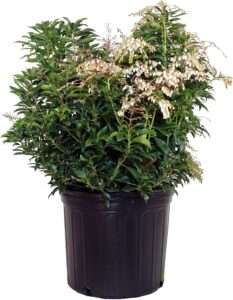
For gardeners looking for four-season color transformations, Pieris Japonica ‘Mountain Fire’ is a standout choice. In early spring, this broadleaf evergreen shrub produces drooping clusters of lily-of-the-valley-like white flowers. Shortly after, the real magic happens: new leaf growth emerges in a fiery, fiery-red color before maturing into deep emerald green.
Growing 4 to 8 feet tall over time, it makes an ideal anchor shrub for woodland gardens or north-facing house corners. It thrives under tree canopies where direct sunlight is limited.
-
Price: $76.99 (1 to 2-Gallon Live Plant)
-
Key Features & Benefits:
-
Dramatic fiery-red spring growth transitions to glossy evergreen leaves.
-
Bell-shaped white flowers in early spring.
-
High resistance to deer browsing.
-
-
Pros & Cons:
-
Pros: Multi-colored seasonal interest, deer resistant, excellent structure.
-
Cons: Slow grower; requires moist, acidic soil.
-
-
Amazon Customer Ratings & Reviews: 4.4 out of 5 stars. Customers call it a head-turner in early spring when the bright red leaves contrast against dark green foliage.
-
Why It’s a Good Choice: It combines unique leaf colors with spring flowers while staying evergreen all winter long.
-
Ideal Use Case / Who Should Buy: Gardeners in USDA Zones 5–8 looking for a deer-resistant woodland focal point.
5. Winter Gem Boxwood (Buxus microphylla japonica)
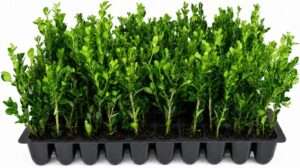
When you need reliable, year-round structure in dark spots, Winter Gem Boxwood is the ultimate landscaping staple. Unlike sensitive boxwood cultivars that turn bronze or brown during winter freezes, ‘Winter Gem’ holds its rich green hue better than almost any other variety.
It accepts everything from full sun to deep shade, making it a reliable solution for shadowy north-facing walls where other plants struggle. It takes pruning and shearing exceptionally well, allowing you to create formal hedges, crisp geometric shapes, or natural rounded mounds.
-
Price: $79.97 (Live Potted Shrub)
-
Key Features & Benefits:
-
Maintains deep green foliage even in cold, dark shade.
-
Takes shaping and shearing exceptionally well.
-
Resisted by deer, rabbits, and common pests.
-
-
Pros & Cons:
-
Pros: Highly adaptable, low maintenance, deer proof.
-
Cons: No showy flowers; grown strictly for foliage structure.
-
-
Amazon Customer Ratings & Reviews: 4.6 out of 5 stars. Frequently cited as a top-rated live plant shipment with high survival rates and sturdy roots.
-
Why It’s a Good Choice: It is the most reliable, foolproof evergreen hedge for low-light zones.
-
Ideal Use Case / Who Should Buy: Anyone seeking clean foundation hedges, privacy borders, or structural green framing in shaded areas.
6. Rhododendron ‘PJM Elite’ (Rhododendron ‘PJM Elite’)
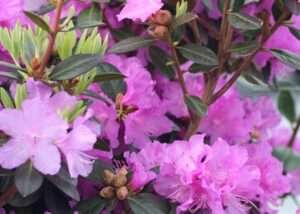
If you deal with bitter winter freezes and low light, Rhododendron ‘PJM Elite’ is one of the toughest broadleaf evergreens you can plant. While many flowering shrubs struggle in extreme cold, this hybrid handles temperatures down to -30°F (USDA Zone 4) without losing its leaves or flower buds.
In early spring, before most other garden plants wake up, ‘PJM Elite’ bursts into vibrant lavender-pink blossom clusters that attract early pollinators. As autumn arrives, its glossy green foliage transforms into a deep mahogany-purple color, giving your shaded garden rich winter visual interest.
-
Price: $96.99 (1-Gallon Live Plant)
-
Key Features & Benefits:
-
Exceptional cold hardiness down to USDA Zone 4 (-30°F).
-
Prolific early spring flower display in vivid electric lavender.
-
Winter foliage shifts to an attractive mahogany-bronze tone.
-
-
Pros & Cons:
-
Pros: Cold-proof evergreen, early pollinator magnet, compact growth habit.
-
Cons: Requires sharp drainage and acidic soil (pH 4.5–5.5).
-
-
Amazon Customer Ratings & Reviews: 4.5 out of 5 stars. Highly recommended by northern gardeners who praise its ability to survive heavy snow loads and produce abundant spring blooms.
-
Why It’s a Good Choice: It combines tough-as-nails cold hardiness with vibrant spring color in partial shade.
-
Ideal Use Case / Who Should Buy: Northern homeowners looking for a cold-hardy, flowering evergreen to anchor shaded garden borders.
7. Rhus aromatica ‘Gro-Low’ (Fragrant Sumac)
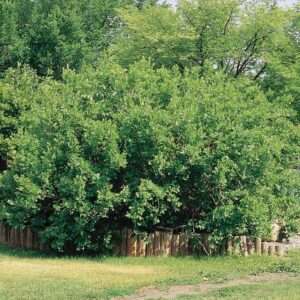
One of the most challenging landscaping scenarios is dry shade—areas beneath mature oak or maple trees where aggressive tree roots suck up water and nutrients. ‘Gro-Low’ Fragrant Sumac is built specifically to solve this issue. This low-growing, spreading shrub acts as a tough ground cover that binds soil on slopes and thrives where fragile plants wither.
Growing only 1 to 2 feet tall but spreading up to 8 feet wide, its thick foliage smothers weeds while enduring poor, rocky soil and low light. In autumn, its glossy green leaves shift into a brilliant show of fiery orange, scarlet, and purple.
-
Price: $48.00 (1-Gallon Container)
-
Key Features & Benefits:
-
Thrives in dry shade and poor, rocky soils.
-
Dense, fast-spreading growth habit ideal for erosion control and weed suppression.
-
Brilliant orange-red autumn leaf transformation.
-
-
Pros & Cons:
-
Pros: Excellent for dry shade, fast spreading, brilliant fall foliage.
-
Cons: Deciduous (drops leaves in winter); not suitable for tight spaces.
-
-
Amazon Customer Ratings & Reviews: 4.3 out of 5 stars. Reviewers note it easily fills difficult, sloped areas under large tree canopies where grass refuses to grow.
-
Why It’s a Good Choice: It solves the hardest shade challenge—dry, root-filled soil—while delivering stunning fall color.
-
Ideal Use Case / Who Should Buy: Homeowners tackling dry shade under mature trees, bank erosion, or difficult ground-cover zones.
6. Planting & Maintenance Playbook for Shade Shrubs
Getting your live Amazon plant shipment into the ground correctly gives it the best start. Follow this step-by-step planting routine:
-
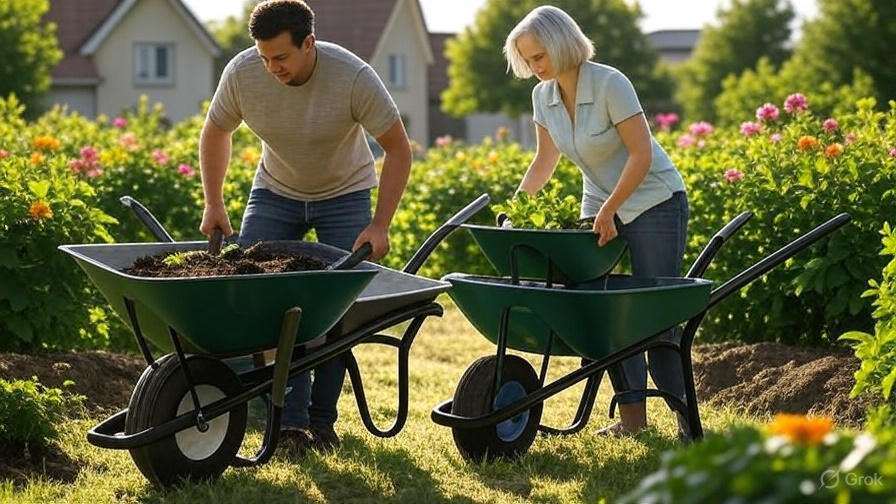
Soil Preparation: Amend heavy clay or dry soil with organic compost or peat moss. For acid-loving plants (Azaleas, Rhododendrons, Pieris), blend in pine bark mulch or an acidifying soil conditioner.
-
Proper Hole Sizing: Dig a hole twice as wide as the plant’s container, but keep the depth identical. Ensure the top of the root ball sits slightly elevated (about 1 inch above the soil line) to prevent root rot.
-
Watering Strategy: Shade environments reduce evaporation, meaning soil stays wet longer. Water deeply at the base right after planting, then maintain consistent moisture without oversaturating the soil.
-
Mulch Blanket: Apply a 2- to 3-inch layer of organic shredded bark mulch around the base, keeping it 2 inches away from the trunk. Mulch retains soil moisture and keeps roots cool.
-
Pruning Timing:
-
Spring Bloomers (Azaleas, Rhododendrons, Pieris): Prune immediately after flowering finishes so you don’t cut off next year’s buds.
-
Summer Bloomers (Hydrangeas): Prune in late winter or early spring before new growth emerges.
-
Evergreens (Boxwoods): Lightly trim in late spring to maintain shape.
-
7. Frequently Asked Questions (FAQ)
What is the fastest-growing shrub for deep shade?
Hydrangeas (such as the Incrediball Smooth Hydrangea) and certain Viburnum varieties are among the fastest-growing options for partial to deep shade, often adding 1 to 2 feet of new growth per season when supplied with rich, moist soil.
Can flowering shrubs bloom without direct sunlight?
Yes, but bloom intensity depends on the species. While few flowering shrubs bloom in pitch-black shade, shade-tolerant varieties like Azaleas, Hydrangeas, and Pieris bloom abundantly in dappled light or 3 to 4 hours of cool morning sun.
How do I care for live shrubs ordered off Amazon upon arrival?
Unpack your live plants immediately upon arrival. Water the root ball thoroughly until water drains from the bottom, then keep the container in a sheltered, shaded outdoor spot for 48 to 72 hours to let the plant acclimate before planting it into the ground.
What evergreen shrubs stay small in the shade?
Winter Gem Boxwood and Soft Caress Mahonia are compact evergreens that stay manageable (3 to 4 feet tall) with minimal pruning, making them excellent choices for small foundation beds or narrow walkways.
8. Final Verdict & Summary Recommendations
Transforming dark, light-starved yard spaces doesn’t require guessing games. Choosing the right shade-tolerant shrubs turns bare mud patches under tree canopies and along north-facing walls into rich, functional landscapes.
-
For Maximum Flower Size & Impact: Choose the Proven Winners Incrediball Hydrangea.
-
For Year-Round Evergreen Elegance: Pick the Soft Caress Mahonia or Winter Gem Boxwood.
-
For Months of Continuous Blooms: Go with the Perfecto Mundo Reblooming Azalea.
-
For Severe Cold Climates (Zone 4): Rely on the PJM Elite Rhododendron.
Check current plant sizing and availability on Amazon today to start building your shade garden before the planting season gets underway!