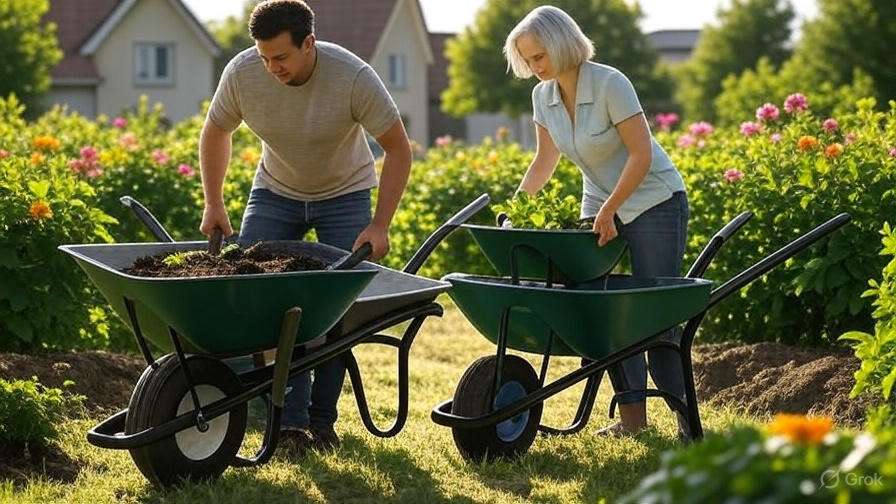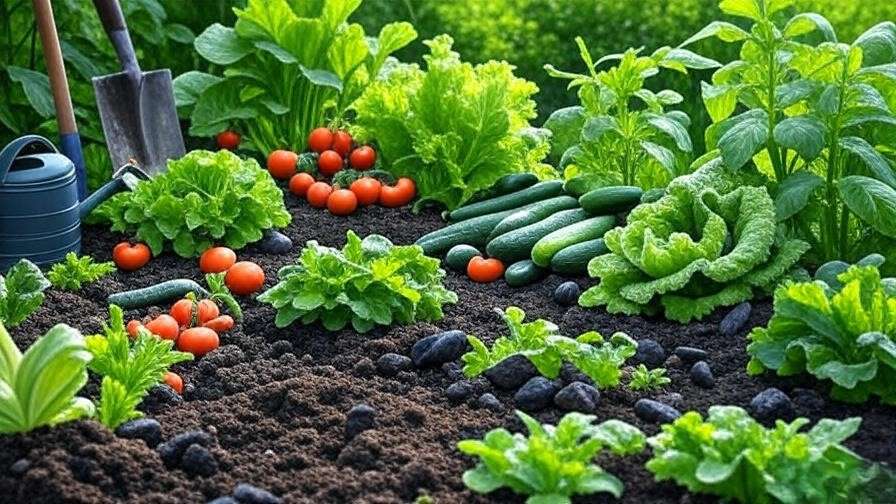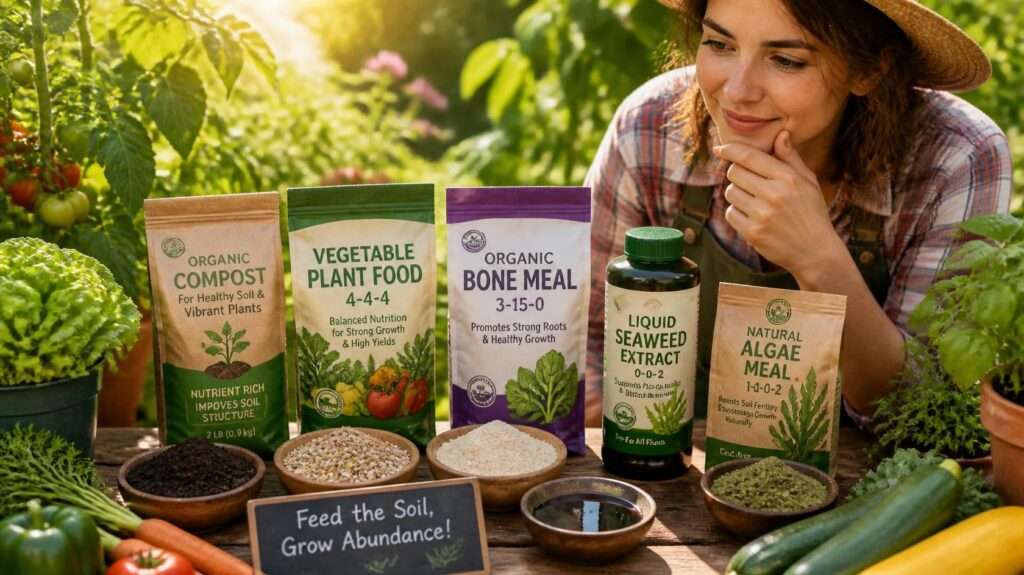
You water meticulously, you weed relentlessly, and you wait patiently—but instead of a harvest basket overflowing with juicy tomatoes and crisp peppers, you are left staring at yellowing leaves and a lackluster yield.
Vegetables are “heavy feeders.” Every time a plant produces a vegetable, it aggressively strips the surrounding soil of vital nutrients. Without replenishing those nutrients, even the most expensive heirloom seeds and perfect watering schedules will result in stunted growth, dropped blossoms, and poor yields.
The secret to a magazine-worthy garden is feeding your soil so it can feed your plants. Investing in a high-quality fertilizer restores the critical balance of Nitrogen, Phosphorus, and Potassium (NPK). Whether you are managing a massive backyard plot or a few patio containers, here is our definitive guide to the best 10 vegetable plant fertilizer options on the market, heavily vetted for yield results, ingredient quality, and ease of use.
II. Expert Buying Guide: How to Choose the Right Vegetable Fertilizer
Before you grab the first bag of fertilizer off the shelf, you need to understand what you are actually feeding your plants.
-
Understanding the NPK Ratio: Every fertilizer displays three numbers (e.g., 3-4-4). This is the N-P-K ratio.
-
Nitrogen (N): Drives lush, leafy green growth. Perfect for lettuce, spinach, and the early stages of all plants.
-
Phosphorus (P): Crucial for strong root development and, most importantly, flower and fruit production.
-
Potassium (K): Supports overall plant health, water movement, and disease resistance.
-
-
Organic vs. Synthetic:
-
Organic: Made from natural sources (bone meal, kelp, earthworm castings). They break down slowly, feeding the soil microbes over time and improving long-term soil structure. They are highly sustainable and won’t burn your plants.
-
Synthetic: Chemically manufactured salts that dissolve in water. They deliver an immediate, massive nutrient payload directly to the plant roots. They are best for emergency interventions or container gardening but do nothing to improve soil health.
-
-
Form Factor (Granular vs. Liquid vs. Slow-Release): Granular fertilizers are great for monthly side-dressing in raised beds. Liquids provide a fast, immediate boost (especially good for seedlings). Slow-release spikes or resin-coated pellets are ideal for “set it and forget it” low-maintenance feeding.
-
Soil Testing: Always test your soil’s pH before applying heavy fertilizers. Most vegetables prefer a slightly acidic to neutral pH (6.0-7.0). If your pH is way off, your plants physically cannot absorb the nutrients you are giving them.
III. At a Glance: Top Vegetable Fertilizers
Note: For optimal mobile reading, this comparison table highlights the three most critical purchasing factors.
| Fertilizer Brand & Name | NPK Ratio & Type | Best For |
| Espoma Organic Garden-Tone | 3-4-4 (Granular Organic) | Best Overall / Soil Building |
| Dr. Earth Organic 5 Tomato & Veg | 4-6-3 (Granular Organic) | Best for Tomatoes & Peppers |
| Miracle-Gro Water Soluble | 18-18-21 (Synthetic Powder) | Fast Emergency Growth |
| FoxFarm Grow Big Liquid | 6-4-4 (Liquid Concentrate) | Hydroponics & Leafy Greens |
| Jobe’s Organics Veggie Spikes | 2-7-4 (Organic Spikes) | Low Maintenance / Containers |
| Osmocote Smart-Release | 14-14-14 (Synthetic Pellets) | “Set it and Forget it” |
| Down to Earth Organic Veg | 4-4-4 (Granular Organic) | Zero-Waste & Permaculture |
| Jack’s Classic Tomato Feed | 12-15-30 (Synthetic Powder) | Prize-Winning Large Fruit |
| Burpee Organic Granular | 3-6-4 (Granular Organic) | Transplanting Seedlings |
| Alaska Fish Emulsion | 5-1-1 (Liquid Organic) | Early Season Nitrogen Boost |
IV. Detailed Product Comparison and Reviews
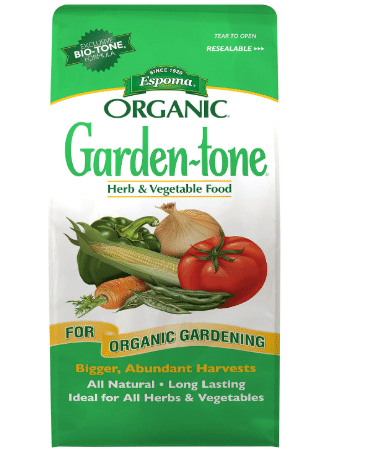
1. Espoma Organic Garden-Tone 3-4-4
Product Description:
Espoma’s Garden-Tone is a legendary, all-natural granular fertilizer that has been a staple in organic gardening for decades. What sets it apart is Espoma’s proprietary Bio-tone formulation—a rich blend of beneficial microbes that actively work to break down the natural ingredients (like feather meal and poultry manure), making the nutrients highly bio-available to your plants while simultaneously improving soil structure.
-
Price: Budget/Mid-Range (~$12 – $15 for a 4 lb. bag)
-
Key Features and Benefits:
-
3-4-4 NPK ratio provides a balanced, slow-release feed.
-
Contains 15 essential nutrients and trace minerals.
-
Enriched with active beneficial soil microbes (Bio-tone).
-
100% natural and OMRI listed for organic use.
-
-
Pros and Cons:
-
Pros: Exceptionally safe (zero risk of fertilizer burn); actively improves long-term soil health; highly environmentally friendly.
-
Cons: Has an earthy, manure-like odor that dogs may find attractive; it is slow-acting compared to water-soluble synthetics.
-
-
Amazon Customer Ratings and Reviews: 4.7/5 stars. Thousands of reviewers swear by this as their fail-proof, season-long garden staple, noting that their vegetable yields doubled after switching to it.
-
Why It’s a Good Choice: It isn’t just feeding your plants for a week; it is actively building a healthy, living soil microbiome that will support vigorous fruiting in tomatoes, peppers, and squash all season long.
-
Ideal Use Case: Organic gardeners, raised bed growers, and beginners who want a foolproof, slow-release granular feed that they can’t mess up.
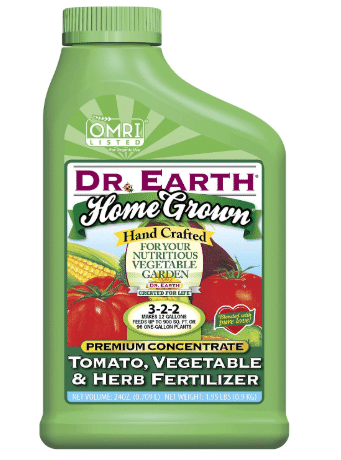
2. Dr. Earth Organic 5 Tomato, Vegetable & Herb Fertilizer
Product Description:
If you are struggling with blossom end rot or stunted fruiting plants, Dr. Earth Organic 5 is the premium solution. This handcrafted organic blend is packed with high-quality ingredients like fish bone meal, kelp, and alfalfa. More importantly, it delivers a massive dose of probiotics and seven champion strains of beneficial soil microbes, plus Ecto and Endo Mycorrhizae, to trigger explosive root growth and drought resistance.
-
Price: Mid-Range (~$15 – $18 for a 4 lb. bag)
-
Key Features and Benefits:
-
4-6-3 NPK ratio (higher phosphorus specifically for fruiting and flowering).
-
Free of GMOs, sewage sludge, and cheap chicken manure fillers.
-
Packed with TruBiotic microbes and Mycorrhizae for maximum nutrient uptake.
-
Provides essential calcium to prevent blossom end rot in tomatoes.
-
-
Pros and Cons:
-
Pros: Incredible for preventing transplant shock; highly concentrated nutrients; absolutely safe for people and pets immediately after application.
-
Cons: Noticeable ocean/fish smell upon initial application; the powdery texture can blow away if applied on very windy days.
-
-
Amazon Customer Ratings and Reviews: 4.6/5 stars. Users frequently praise how quickly yellowing, sad-looking plants bounce back, and tomato growers rave about the lack of blossom end rot.
-
Why It’s a Good Choice: It gives heavy-feeding fruiting plants (like tomatoes, eggplants, and peppers) the specific phosphorus and calcium boost they desperately need to set heavy fruit.
-
Ideal Use Case: Eco-conscious gardeners looking for a high-end, microbe-rich organic fertilizer for raised beds or large container gardens.
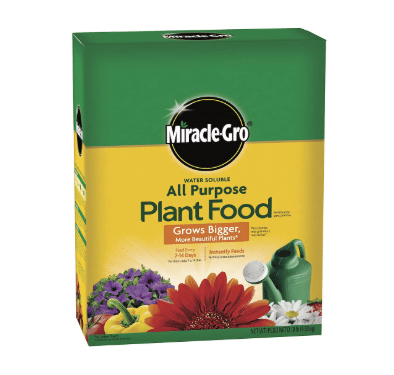
3. Miracle-Gro Water Soluble Tomato Plant Food
Product Description:
Sometimes your plants are in distress and you don’t have weeks to wait for organic matter to break down. Enter Miracle-Gro. This industry heavyweight provides rapid, undeniable results. As a synthetic, water-soluble powder, it dissolves instantly in your watering can to deliver a massive spike of nutrients straight to the roots and directly through the leaves (foliar feeding).
-
Price: Budget (~$9 – $12 for 1.5 lbs)
-
Key Features and Benefits:
-
Massive 18-18-21 NPK ratio for aggressive growth.
-
Feeds instantly through both leaves and roots.
-
Safe for all vegetables, not just tomatoes.
-
Includes essential trace minerals like magnesium and iron for deep green foliage.
-
-
Pros and Cons:
-
Pros: Immediate, visible results often within days; extremely cost-effective per gallon; very easy to mix and apply with a standard watering can.
-
Cons: Does absolutely nothing to improve long-term soil health or microbes; very easy to over-apply and cause severe “fertilizer burn” if instructions aren’t followed exactly.
-
-
Amazon Customer Ratings and Reviews: 4.7/5 stars. Reviewers love the massive, rapid growth bursts it triggers, especially in container vegetables that have exhausted their potting soil.
-
Why It’s a Good Choice: It acts like an IV drip for your plants. It is the best choice for emergency interventions when plants are stunted, yellowing, or failing to thrive mid-season.
-
Ideal Use Case: Container gardeners, patio growers, or anyone who wants massive, fast vegetable yields on a budget and isn’t strictly focused on organic methods.
4. FoxFarm Grow Big Liquid Bug & Soil Fertilizer
Product Description:
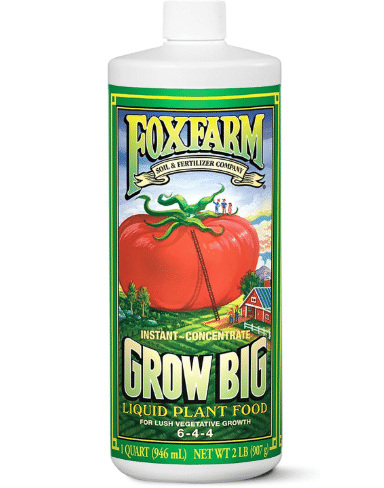
A cult-favorite among intensive growers and hydroponic enthusiasts, FoxFarm’s Grow Big provides a lush, explosive vegetative boost. This highly concentrated liquid fertilizer is brewed with a complex, premium blend of earthworm castings and Norwegian kelp, designed to promote robust structural growth before the plant shifts its energy into flowering.
-
Price: Premium (~$20 – $25 for 1 Pint)
-
Key Features and Benefits:
-
6-4-4 NPK ratio explicitly targets rapid, leafy green vegetative growth.
-
Contains highly bio-available earthworm castings and trace micronutrients.
-
Slightly lowers soil pH, which allows plants to maximize their nutrient uptake.
-
Fast-acting liquid concentrate can be used in soil, raised beds, or hydroponic systems.
-
-
Pros and Cons:
-
Pros: Exceptional for the early-stage vegetative growth of all plants; incredible for leafy greens; highly concentrated (a little goes a very long way).
-
Cons: Expensive per ounce; requires careful measuring and mixing; too much nitrogen for the late-season fruiting stage.
-
-
Amazon Customer Ratings and Reviews: 4.8/5 stars. Enthusiasts call it “liquid gold,” frequently posting photos of massively accelerated early-season growth and huge, dark-green fan leaves.
-
Why It’s a Good Choice: To get a massive yield of tomatoes or peppers, you first need a massive, structurally sound plant capable of supporting the weight. Grow Big builds that lush, green foundation.
-
Ideal Use Case: Hydroponic growers, intensive raised-bed gardeners, and those growing heavy-nitrogen leafy crops like kale, spinach, cabbage, and lettuce.
5. Jobe’s Organics Vegetable & Tomato Fertilizer Spikes
Product Description:
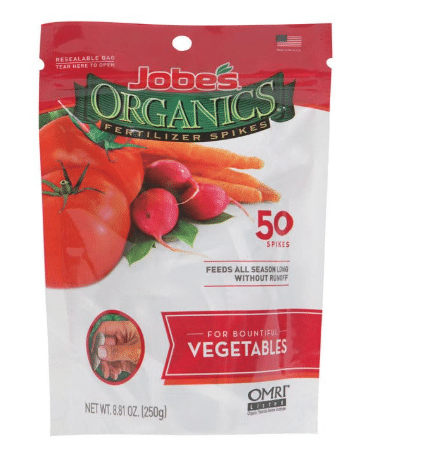
Jobe’s Organics Fertilizer Spikes are the ultimate “set it and forget it” organic feeding solution. Instead of dealing with messy powders or stinky liquids, these pre-measured spikes are driven directly into the soil near the root zone, delivering a slow, continuous release of organic nutrients exactly where the plant needs them most.
-
Price: Budget (~$8 – $10 for a 50-pack)
-
Key Features and Benefits:
-
2-7-4 NPK ratio heavily favors phosphorus for root development and massive blooming.
-
Features proprietary Biozome (a blend of Archaea, Mycorrhizal fungi, and healthy bacteria) to improve long-term soil quality.
-
Pre-measured and completely mess-free.
-
OMRI listed for organic gardening.
-
-
Pros and Cons:
-
Pros: Zero mess, measuring, or mixing required; delivers nutrients right to the root zone without surface runoff; no foul odors.
-
Cons: Can be difficult to push deep into hard, compacted clay soil without breaking the spike; not practical for dense row crops (like carrots or radishes).
-
-
Amazon Customer Ratings and Reviews: 4.5/5 stars. Users love the sheer convenience. Many reviewers note that placing two spikes next to a patio tomato plant is all the maintenance required for the entire summer.
-
Why It’s a Good Choice: It provides a steady, low-dose stream of phosphorus to encourage continuous blossoming and fruiting over 8 weeks, completely eliminating the risk of forgetting to fertilize.
-
Ideal Use Case: Busy homeowners, beginner gardeners, and those growing potted patio tomatoes or peppers who want a clean, hands-off approach.
6. Osmocote Smart-Release Plant Food Flower & Vegetable
Product Description:
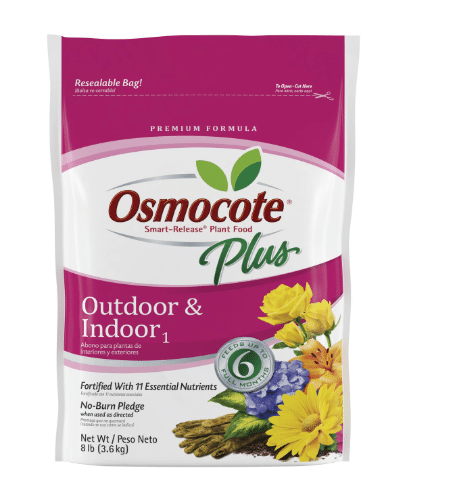
Osmocote Smart-Release is a highly engineered, temperature-sensitive smart fertilizer. Its unique resin-coated granules release nutrients slowly over a full 4 months. The release rate responds directly to the soil’s warmth—meaning it feeds your plants more during the hot, peak growing season when they need it most, and slows down during cool periods.
-
Price: Mid-Range (~$15 – $18 for 2 lbs)
-
Key Features and Benefits:
-
14-14-14 perfectly balanced NPK ratio for all-around health.
-
Feeds continuously for up to 4 full months.
-
Smart resin coating prevents nutrient run-off during heavy rain.
-
Won’t burn roots, even if slightly over-applied.
-
-
Pros and Cons:
-
Pros: Only needs to be applied once or twice a season; highly balanced for all plant types; zero risk of chemical burn; very clean to handle.
-
Cons: The synthetic formulation does not feed the soil microbiome; the empty resin shells remain visible in the soil long after the nutrients are depleted, which some gardeners dislike.
-
-
Amazon Customer Ratings and Reviews: 4.8/5 stars. Highly rated by Master Gardeners and nursery owners for its absolute reliability and low-maintenance schedule.
-
Why It’s a Good Choice: It provides a steady, mathematically perfect diet to vegetables without the risk of over-fertilizing or the chore of mixing liquids every two weeks.
-
Ideal Use Case: Busy gardeners who want a “one and done” spring application that lasts almost the entire summer, and those managing large container gardens.
7. Down to Earth Organic Vegetable Garden Fertilizer
Product Description:
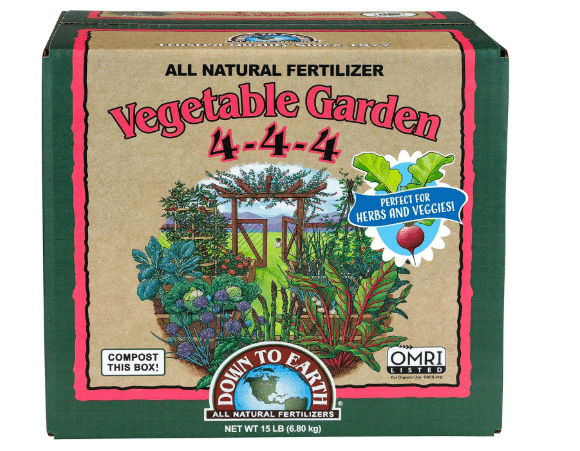
Down to Earth provides a completely raw, unadulterated organic blend housed in fully compostable cardboard packaging, prioritizing sustainability from the soil all the way to the box. It is a holistic, gentle feed that relies on high-quality natural ingredients to build up the soil web.
-
Price: Mid-Range (~$16 – $19 for a 5 lb. box)
-
Key Features and Benefits:
-
4-4-4 perfectly balanced NPK ratio.
-
Contains fish bone meal, alfalfa meal, feather meal, and kelp extract.
-
Housed in 100% compostable packaging.
-
OMRI listed for organic use.
-
-
Pros and Cons:
-
Pros: Zero plastic waste; highly natural and gentle formulation; excellent for preparing garden beds in early spring before planting.
-
Cons: Slower to break down and show visual results; requires scratching deeply into the topsoil for the best microbial activation.
-
-
Amazon Customer Ratings and Reviews: 4.7/5 stars. Gardeners praise its extremely clean ingredient list and note that it produces highly robust, disease-resistant plants over the long term.
-
Why It’s a Good Choice: It is a perfectly balanced, holistic approach to feeding. Because it is a 4-4-4, it is highly versatile, effectively feeding everything from root vegetables (like carrots and beets) to fruiting vines (like cucumbers and squash).
-
Ideal Use Case: Permaculture enthusiasts, zero-waste shoppers, and organic homesteaders who prioritize long-term soil ecology over fast, synthetic growth.
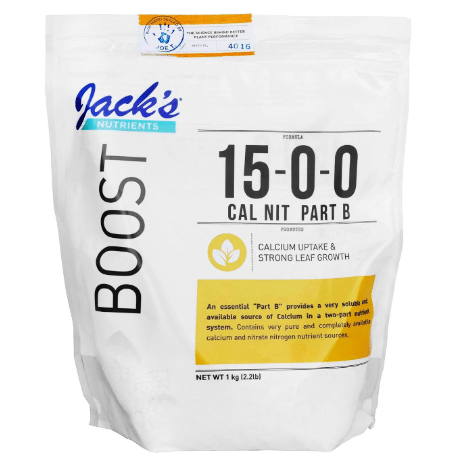
8. Jack’s Classic Tomato Feed (12-15-30)
Product Description:
If you are chasing massive, contest-winning yields, Jack’s Classic is the professional-grade secret weapon. This water-soluble powder is formulated with a massive dose of potassium (the “30” in the NPK) to ensure heavy fruit set, dense flesh, and juicy, vibrant tomatoes.
-
Price: Premium (~$18 – $22 for 1.5 lbs)
-
Key Features and Benefits:
-
12-15-30 NPK ratio; aggressively high potassium for fruit density and size.
-
Includes a boosted micronutrient package with calcium and magnesium to actively prevent blossom end rot.
-
Dissolves perfectly in water for use as a root drench or a foliar spray.
-
-
Pros and Cons:
-
Pros: Unmatched for producing massive, heavy tomatoes and peppers; highly concentrated (1.5 lbs makes dozens of gallons); corrects nutrient deficiencies rapidly.
-
Cons: Very high synthetic NPK ratio can easily burn plants if over-mixed; it is not organic.
-
-
Amazon Customer Ratings and Reviews: 4.8/5 stars. Reviewers consistently state this is the only fertilizer that successfully prevents their heavy heirloom tomatoes from splitting, rotting at the bottom, or dropping blossoms early.
-
Why It’s a Good Choice: It maximizes the actual vegetable harvest. While nitrogen grows the leaves, potassium is the key driver for fruit size, flavor, and skin health.
-
Ideal Use Case: Serious tomato and pepper growers, competitive gardeners, and anyone who struggles with blossom end rot on heavy-fruiting plants.
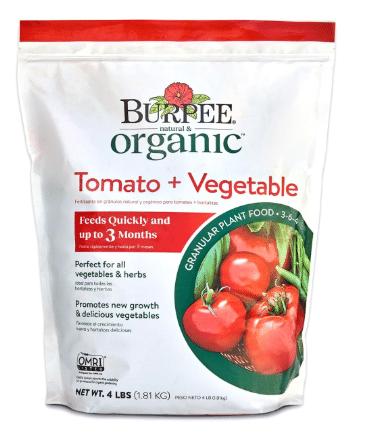
9. Burpee Organic Tomato and Vegetable Granular Plant Food
Product Description:
Developed by one of America’s oldest and most trusted seed companies, the Burpee Organic Granular Plant Food delivers both immediate and slow-release nutrients. It is designed to get young transplants established quickly while feeding the soil for up to 3 months.
-
Price: Budget/Mid-Range (~$11 – $14 for 4 lbs)
-
Key Features and Benefits:
-
3-6-4 NPK ratio heavily favors phosphorus for rapid root establishment.
-
Contains beneficial microbes to increase nutrient uptake.
-
Easy-to-spread granular consistency.
-
OMRI listed for organic gardening.
-
-
Pros and Cons:
-
Pros: Great value for the volume; excellent phosphorus levels for root and flower development; backed by a trusted brand heritage.
-
Cons: The odor can be quite pungent for the first 48 hours after application, especially in hot, humid weather.
-
-
Amazon Customer Ratings and Reviews: 4.6/5 stars. Users love the uniform, easy-to-pour granules that don’t turn into a dusty cloud during application, unlike some other organic meals.
-
Why It’s a Good Choice: It is a highly reliable, easily accessible organic option that takes the guesswork out of feeding. The higher phosphorus content makes it the perfect fertilizer to mix into the planting hole when moving seedlings into the garden.
-
Ideal Use Case: Homeowners establishing new raised beds or transplanting nursery starts in the spring.
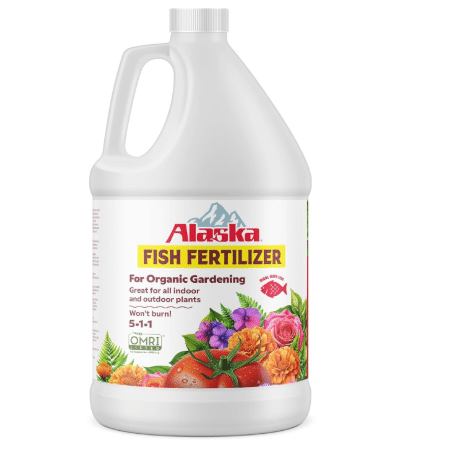
10. Alaska Fish Emulsion Fertilizer 5-1-1
Product Description:
Alaska Fish Emulsion is a traditional, time-tested liquid organic fertilizer made from natural fish byproducts. It is the ultimate gentle nitrogen boost for struggling gardens, providing highly bio-available nutrients that won’t burn delicate young plants.
-
Price: Budget (~$10 – $13 for 1 Quart)
-
Key Features and Benefits:
-
5-1-1 NPK ratio provides a targeted, organic nitrogen boost.
-
OMRI listed organic.
-
Will not burn delicate seedlings or young transplants.
-
Highly concentrated liquid format.
-
-
Pros and Cons:
-
Pros: Incredible for leafy greens; extremely safe for young seedlings; highly economical.
-
Cons: It smells exactly like dead fish for a day or two after application; the high nitrogen/low phosphorus ratio is not ideal for the late-season flowering/fruiting stage.
-
-
Amazon Customer Ratings and Reviews: 4.6/5 stars. Veteran gardeners swear by it for “waking up” sluggish spring gardens and rescuing pale, nitrogen-deficient seedlings.
-
Why It’s a Good Choice: It is the safest way to pump organic nitrogen into heavy-feeding leafy crops like lettuce, spinach, cabbage, and young corn without the risk of chemical burn.
-
Ideal Use Case: Organic gardeners needing an early-season growth booster, or anyone growing large amounts of leafy greens and herbs.
V. Conclusion & Final Verdict
A bountiful vegetable harvest is directly tied to the health of your soil. By matching your fertilizer to your garden’s specific needs—using high-nitrogen feeds for early growth and leafy greens, and switching to high-phosphorus/potassium feeds for flowering and fruiting—you can dramatically increase your yield and disease resistance.
Frequently Asked Questions (FAQ)
What happens if I apply too much fertilizer? Applying too much fertilizer—especially synthetic, high-nitrogen formulas—can cause “fertilizer burn.” This occurs when the high concentration of mineral salts draws moisture out of the plant roots, causing the leaves to turn yellow or brown, scorch at the edges, and eventually drop. Over-fertilizing with nitrogen can also cause plants to grow massive, lush leaves but refuse to produce any flowers or fruit.
How often should I fertilize my vegetable garden? It depends entirely on the type of fertilizer you are using:
-
Liquid Synthetics (like Miracle-Gro): Typically applied every 7 to 14 days.
-
Granular Organics (like Espoma or Dr. Earth): Usually applied once every 3 to 4 weeks, scratched into the top inch of soil.
-
Slow-Release Pellets (like Osmocote): Applied once every 3 to 4 months. Always read the package instructions, as feeding schedules vary significantly by brand and formulation.
Do container vegetables need more fertilizer than those in the ground? Yes. Vegetables grown in pots or raised containers are entirely dependent on you for their nutrients. Because they require frequent watering, the water constantly flushes and leaches the nutrients out the drainage holes. Container plants generally need a diluted liquid feed every 1 to 2 weeks to stay healthy.
Can I just use compost instead of buying fertilizer? Compost is incredible for improving soil structure, moisture retention, and promoting microbial life. However, compost is generally very low in actual NPK nutrient density (often around 1-1-1). While it is the foundation of a healthy organic garden, heavy-feeding vegetables like tomatoes, pumpkins, and peppers will almost always require supplemental fertilizer to reach their maximum yield.
What is “side-dressing”? Side-dressing is a method of applying fertilizer after the plant has already started growing. You sprinkle a ring or band of granular fertilizer onto the soil around the base of the plant (keeping it a few inches away from the main stem to prevent burning), and gently scratch it into the top inch of dirt. When you water the plant, the nutrients slowly leach down to the root zone.
Is it safe to eat vegetables the same day I applied fertilizer? Yes, provided you are washing your vegetables thoroughly. Fertilizers are taken up by the plant’s root system and incorporated into its cellular structure over time; the fertilizer itself does not sit on the fruit (unless you accidentally sprayed liquid fertilizer directly onto the tomatoes). Always wash your produce to remove any surface dust or splashing from the soil.