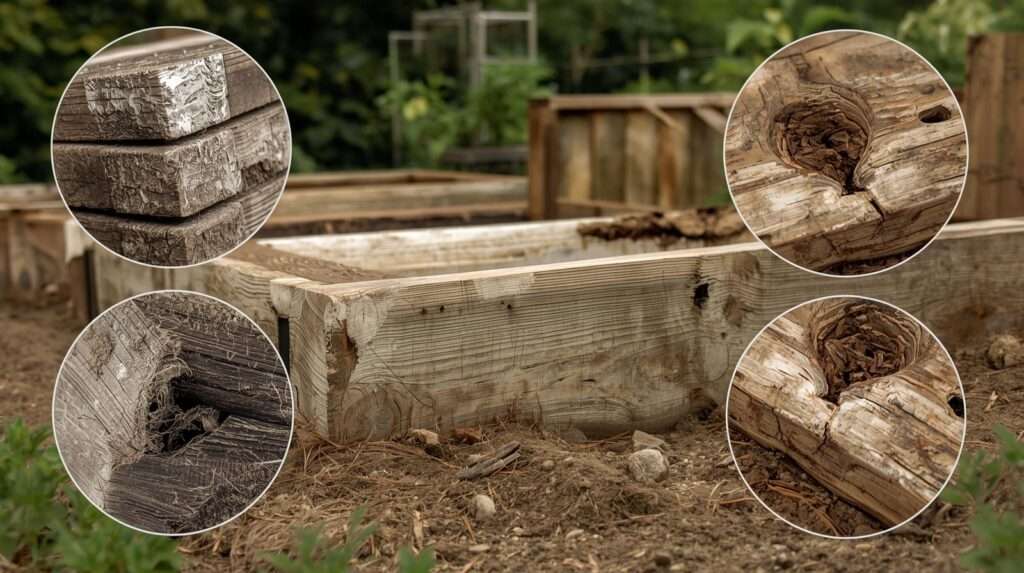
Imagine stepping out to your backyard garden in the humid air of Narayanganj, admiring your lush tomatoes, brinjal, and leafy greens thriving in neat raised beds—only to notice small holes peppering the wooden frames, piles of fine sawdust-like material at the base, or sections of board that feel suspiciously soft when you press them. Your heart sinks. Those bug-eaten boards in raised beds aren’t just cosmetic; they’re a sign of silent destruction that could collapse your entire setup, ruin your crops, and cost you hundreds in replacements during the next growing season.
As an agricultural expert with over a decade of hands-on experience advising home gardeners, small-scale farmers, and community plots across humid regions like Bangladesh’s Dhaka Division, I’ve encountered this exact problem countless times. Wood-destroying insects—particularly termites, carpenter ants, and borers—thrive in our warm, moist climate, where constant soil contact turns untreated raised bed frames into an open invitation. The good news? With early detection, smart repairs, and proven prevention, you can stop the damage, salvage your beds, and make them insect-resistant for 10–20+ years.
In this in-depth guide, we’ll cover everything you need: precise identification of the culprits behind bug-eaten boards in raised beds, step-by-step repair techniques that minimize disruption to your plants, eco-friendly and long-lasting prevention methods tailored to tropical conditions, and expert tips to avoid common pitfalls. By the end, you’ll have the tools to protect your investment and enjoy worry-free gardening.
Understanding Bug-Eaten Boards in Raised Beds: Common Causes
Raised garden beds are incredibly popular for growing vegetables in limited spaces, improving soil quality, and reducing back strain—but their design makes them prime targets for wood-eating pests. The constant moisture from irrigation and rainfall, combined with direct soil contact and organic matter, creates a perfect habitat for insects that feed on or nest in cellulose-rich wood.
The primary offenders include:
- Subterranean termites (most destructive in humid climates like Bangladesh): These soil-dwelling insects tunnel upward from the ground, consuming wood for nutrition. They build protective mud tubes along the boards to stay moist and hidden. Signs include hollow-sounding wood, mud tubes, discarded wings near swarmers (often in spring), and frass (termite droppings) that look like tiny uniform pellets.
- Carpenter ants (common in damp, decaying wood): Unlike termites, carpenter ants don’t eat wood—they excavate smooth, clean galleries to create nests. You’ll see piles of coarse frass (sawdust-like shavings with fibrous bits), larger black ants (1/4–1/2 inch), and irregular tunnels. They prefer already-soft or moisture-damaged wood, often accelerating rot.
- Powderpost beetles and other wood borers: These smaller insects leave fine, flour-like powder (true sawdust) and tiny round exit holes (1/16–1/8 inch). They target seasoned hardwoods but can infest softer frames in humid environments.
Other less common issues include carpenter bees (larger, round holes) or even fungal decay mimicking insect damage—but true bug-eaten boards show frass patterns, exit holes, or mud tubes rather than uniform softening.
In regions with high humidity and monsoon rains, subterranean termites are especially prevalent, as the moist soil allows easy access. Differentiating insect damage from rot is key: rot feels spongy and darkens evenly, while insect activity leaves distinct frass and structural voids.
Signs and Early Detection: Don’t Wait for Collapse
Catching bug-eaten boards in raised beds early saves your garden and wallet. Perform regular inspections—ideally twice a year, after monsoons and in spring.
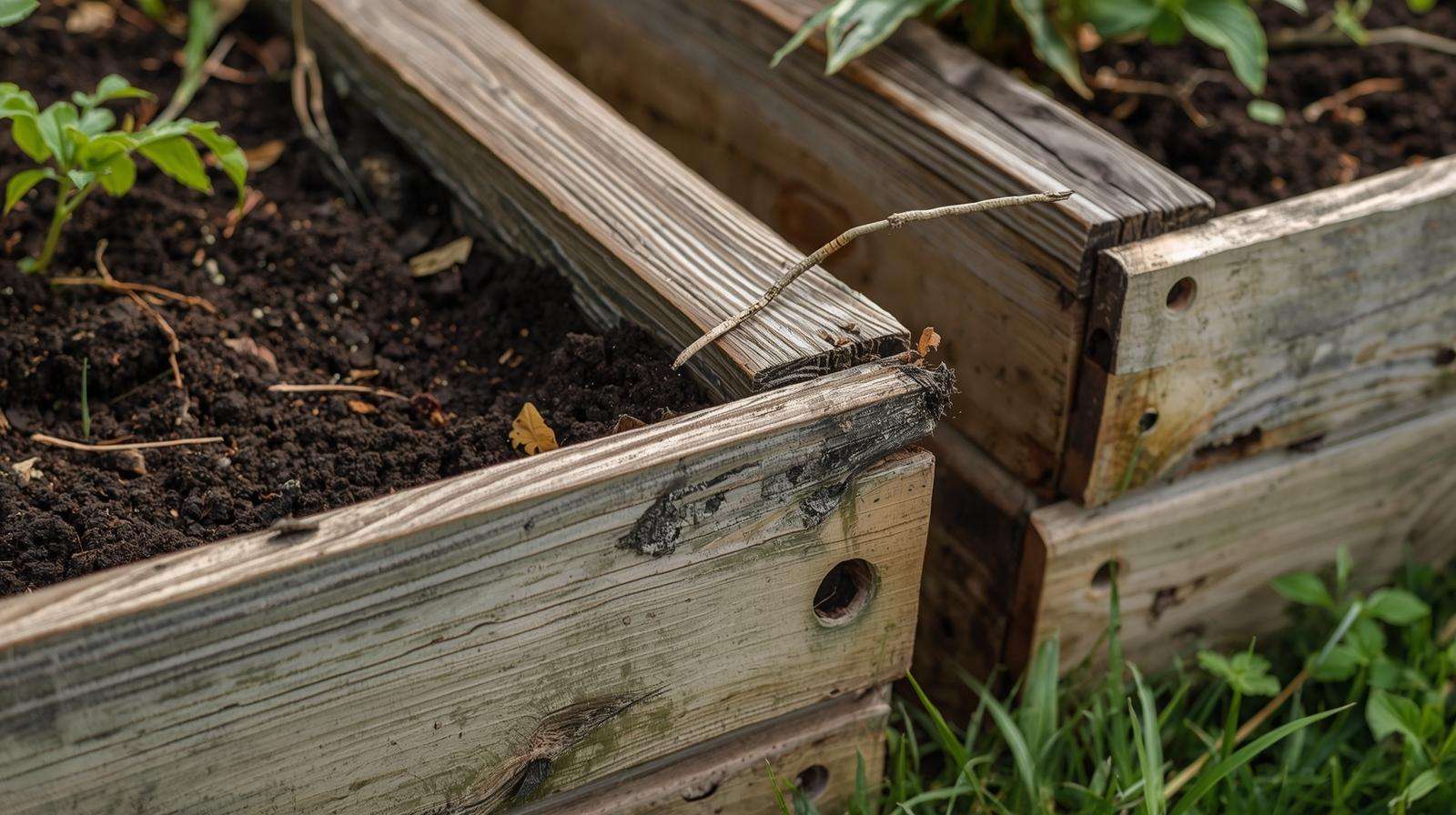
Key warning signs include:
- Small round or irregular holes on the wood surface.
- Piles of frass: fine powder (powderpost beetles), coarse shavings (carpenter ants), or pellet-like droppings (termites).
- Mud tubes running up from soil to boards (classic termite sign).
- Soft, crumbling, or hollow-feeling wood when probed with a screwdriver.
- Blistered, peeling, or discolored surfaces.
- Discarded wings or live insects near the beds.
Tools for accurate diagnosis:
- Flashlight and mirror to inspect undersides and crevices.
- Screwdriver for probing softness.
- Magnifying glass to examine frass texture.
- Tap test: hollow thud indicates internal galleries.
If damage is near your home’s foundation, treat it as urgent—termites can spread quickly. In humid areas, activity spikes after rain, so check post-monsoon.
Step-by-Step: How to Fix Bug-Eaten Boards in Raised Beds
Once identified, act fast but carefully—especially with edibles growing inside.
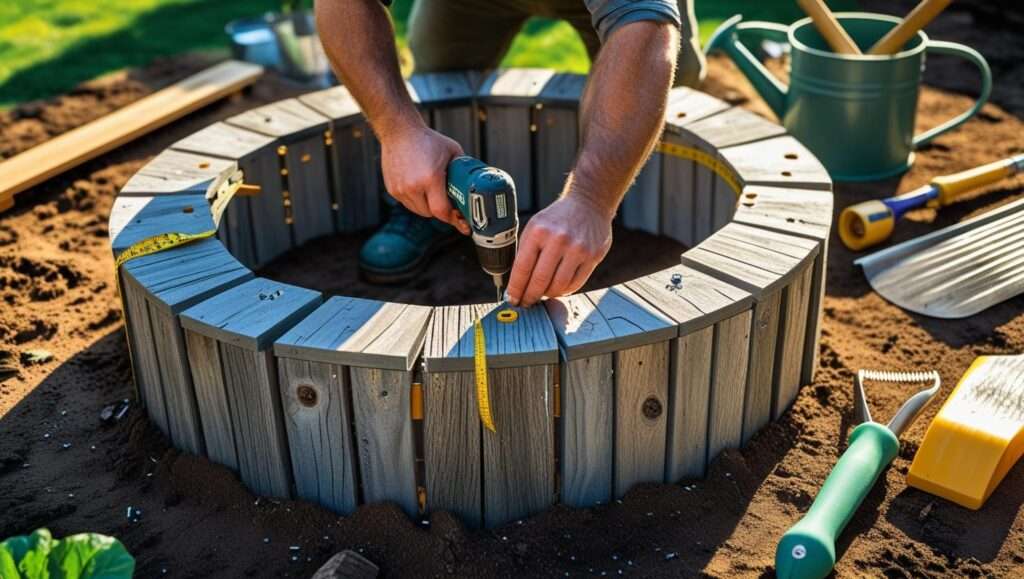
- Safety and assessment Wear gloves and a mask. Isolate the area if termites are suspected to avoid spreading. Determine damage extent: superficial (surface holes) vs. structural (boards >30–50% compromised—replace these).
- Minor damage repair
- Remove loose frass and debris with a brush or vacuum.
- Apply a borate-based wood preservative (like Bora-Care or Tim-bor—eco-friendly, low-toxicity borates that penetrate deep and deter insects/fungi). Mix per instructions, brush or spray liberally on affected and surrounding wood. Borates are food-safe when dry and ideal for gardens.
- Moderate damage
- Cut out compromised sections with a saw.
- “Sister” the board: attach a new resistant piece alongside with screws/brackets for reinforcement.
- Use metal straps or stakes for temporary bracing to support plants during work.
- Severe damage
- Disassemble the bed carefully (support soil/plants with tarps or temporary barriers).
- Replace entire boards with insect-resistant material (see below).
- Reassemble, adding gravel or concrete blocks at the base for elevation.
- Post-repair treatment Seal exterior with food-safe options like linseed oil or modern non-toxic preservatives. Avoid toxic chemicals near vegetables.
These methods minimize plant disturbance and restore strength quickly.
Prevention Strategies: Build and Maintain Insect-Resistant Raised Beds
The single most effective way to avoid recurring bug-eaten boards in raised beds is prevention from the start. In humid, tropical climates like Narayanganj and the broader Dhaka Division—where heavy monsoon rains keep soil consistently moist and temperatures favor termite activity—choosing the right materials and design can extend bed life dramatically.

Material selection — The foundation of prevention
Naturally rot- and insect-resistant woods are your best defense:
- Western red cedar — Widely regarded as the gold standard for raised beds. Its natural oils (thujaplicins and other compounds) repel termites, carpenter ants, borers, and decay fungi. In humid conditions, untreated cedar often lasts 10–20+ years with proper care, far outpacing pine.
- Redwood — Similar natural resistance to insects and rot; excellent durability in warm, wet environments.
- Black locust — Exceptionally hard and durable, with outstanding resistance to insects and decay. It’s sustainable, chemical-free, and can last decades even in contact with soil.
- Other strong options — Juniper, cypress, or white oak in some cases; these offer good longevity without treatments.
Avoid softwoods like untreated pine or fir unless you’re prepared for frequent replacements. Untreated pine typically lasts only 5–10 years (often closer to 5 in tropical humidity), while pressure-treated lumber (modern ACQ or micronized copper types) can last longer but raises concerns about chemical leaching into edible crops—many organic gardeners avoid it entirely.
Non-wood alternatives for zero insect risk
- Galvanized steel or corrugated metal panels — Extremely durable, no rot or insect issues, and long-lasting (20–30+ years).
- Composite lumber (recycled plastic/wood blends) — Insect-proof and low-maintenance.
- Concrete blocks, bricks, or cinder blocks — Permanent, termite-immune, and excellent for stacking into raised beds.
Design and construction tips to reduce vulnerability
- Elevate beds off the ground: Place frames on concrete blocks, bricks, or legs to create an air gap (at least 4–6 inches). This breaks the direct soil-to-wood contact that termites exploit.
- Install physical barriers: Add metal flashing, termite shields, or stainless-steel mesh at the base to block tunneling insects.
- Pre-treat wood: Before assembly, soak or brush on borate-based preservatives (e.g., Bora-Care, Tim-bor, or similar products). Borates are low-toxicity, penetrate deeply, and remain effective long-term against insects and fungi. Once dry, they are considered safe for vegetable gardens as they don’t leach significantly into soil under normal conditions.
- Use food-safe sealants: Apply natural oils like boiled linseed oil, tung oil, or beeswax-based sealers on the exterior (and interior if desired) to repel moisture without toxic chemicals.
Ongoing maintenance to keep pests away
- Improve drainage: Ensure beds have good slope and avoid pooling water around frames. Overwatering near the edges accelerates decay and attracts pests.
- Regular inspections: Check biannually—especially after heavy rains—for early signs like frass or mud tubes.
- Natural repellents and barriers:
- Spread diatomaceous earth (food-grade) around the base as a desiccant barrier.
- Apply neem oil soil drenches periodically (diluted per instructions) to target larvae.
- Introduce beneficial nematodes (available from gardening suppliers) to parasitize soil-dwelling pests like termite nymphs.
- Keep the area clean: Remove wood debris, old mulch, or stumps nearby that serve as termite bridges.
By combining resistant materials, elevation, and vigilant habits, you can make bug-eaten boards a thing of the past.
Advanced and Eco-Friendly Solutions for Long-Term Protection
For gardeners committed to organic methods, Integrated Pest Management (IPM) offers powerful, chemical-free tools:

- Biological controls — Beneficial nematodes (Steinernema or Heterorhabditis species) actively hunt and kill termite larvae and other soil pests. Apply as a soil drench in cooler evening hours; they thrive in moist conditions common in our region.
- Organic treatments — Boric acid baits for carpenter ants (place near trails, away from edibles). Neem-based products disrupt insect life cycles. Some gardeners report success with used coffee grounds scattered around bases (termites dislike caffeine compounds), though evidence is anecdotal.
- Encourage natural predators — Attract birds, toads, and predatory beetles with diverse plantings, water sources, and habitat. These help keep termite populations in check.
- Cost-benefit analysis — Initial cost of cedar or black locust is higher (often 2–3× pine), but longevity pays off: a $200 pine bed may need replacing every 5 years ($800 over 20 years), while a $500 cedar bed lasts 15–20 years with minimal upkeep.
Real-world example: Many gardeners in humid South Asian climates switch to cedar after one termite infestation and report no further issues for over a decade, plus healthier soil from reduced rot.
Common Mistakes Gardeners Make (and How to Avoid Them)
- Using cheap, untreated softwood without any protection — Solution: Invest in cedar/redwood or treat with borates.
- Ignoring early frass or holes until boards collapse — Solution: Inspect regularly and act on minor signs.
- Applying toxic pesticides near vegetables — Solution: Stick to borates, nematodes, or neem.
- Poor drainage leading to constant moisture — Solution: Amend soil, add gravel base, and space watering.
- Placing beds directly against home foundations — Solution: Keep at least 18–24 inches away to prevent termite highways to your house.
FAQs: Quick Answers to Frequent Questions
Are termites in raised beds dangerous to my house? Yes—subterranean termites can travel from garden beds to home foundations if conditions allow. Address immediately and consider a professional inspection if mud tubes appear near your building.
Can I use treated lumber safely for vegetable gardens? Modern ACQ-treated lumber is generally considered low-risk for leaching, but many organic gardeners prefer untreated cedar, redwood, or borate-treated wood for peace of mind.
What’s the best natural way to repel carpenter ants? Eliminate moisture sources, use boric acid baits, and introduce beneficial nematodes. Diatomaceous earth barriers also help.
How long do cedar raised beds last vs. pine? In tropical/humid climates: Pine often 5–7 years; cedar 10–20+ years with good drainage and occasional sealing.
Should I replace all boards if I see one bug-eaten area? Not necessarily—replace only structurally compromised sections, but treat surrounding wood and inspect the entire bed thoroughly.
Take Action Today for Lasting Garden Success
Bug-eaten boards in raised beds don’t have to derail your gardening dreams. By identifying pests early (frass, holes, mud tubes), repairing smartly (borate treatments, sistering, or replacement), and preventing recurrence (cedar/redwood materials, elevation, barriers, and IPM), you can protect your investment and harvest abundant, healthy crops for years.
Inspect your beds this week—grab a screwdriver, flashlight, and gloves. If you spot issues, follow the steps here or consult a local extension service. Share your experiences or before/after photos in the comments below—I’d love to hear how these strategies work in your Narayanganj garden!
For more practical agricultural tips tailored to our humid Bangladeshi climate, subscribe and stay tuned. Happy, pest-free gardening!