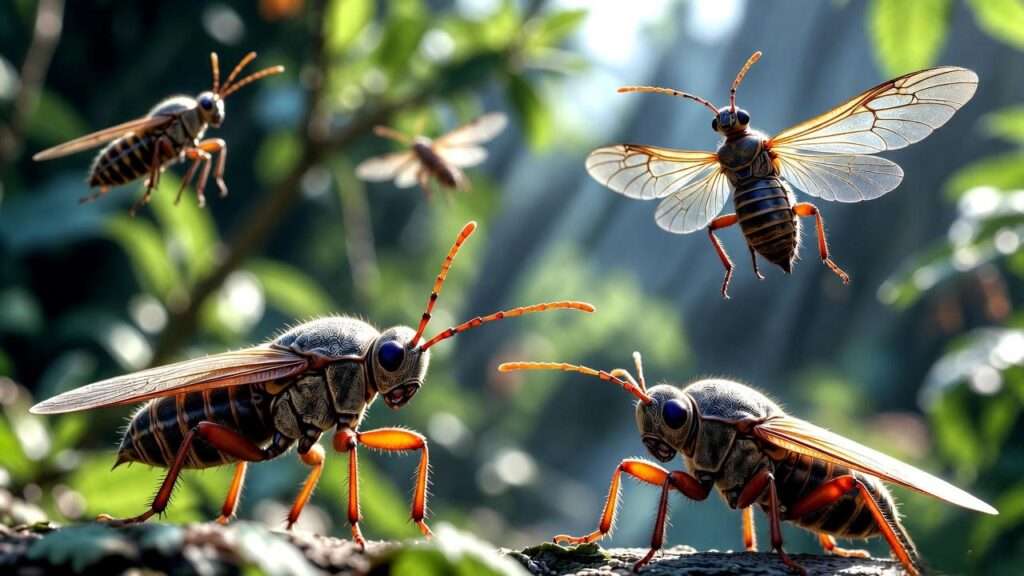
Imagine stepping into your basement on a warm spring evening and spotting dozens of winged insects crawling near the windows or piled up on the sill. Your heart sinks—could these be termites ready to devour your home’s wooden structure? This scenario plays out for thousands of homeowners every year, often leading to unnecessary panic or, worse, overlooked real infestations. The truth is, many bugs that look like termites are harmless or cause far less damage, but misidentification can cost you time, money, and peace of mind.
As an agricultural pest management specialist with over 15 years of experience advising farmers, homeowners, and rural property owners on sustainable pest control, I’ve seen this confusion firsthand. Termite damage costs Americans billions annually (according to the National Pest Management Association), yet many “infestations” turn out to be flying ants or other mimics. In this comprehensive guide, we’ll demystify these look-alikes, teach you precise identification techniques, and share proven natural pest control strategies to safeguard your home, garden, or farm structures—without relying on harsh chemicals.
Whether you’re dealing with swarming insects, wood damage, or just want proactive prevention, this article will equip you with expert-level knowledge to handle the situation confidently and eco-friendly.
Understanding Termites: What Do Real Termites Look Like?
To spot imposters, you first need a clear picture of the real culprit. Termites are social insects belonging to the order Blattodea (closely related to cockroaches), living in large colonies with distinct castes: workers, soldiers, and reproductives (swarmers or alates).
Types of Termites Commonly Found in Homes
In the United States and many temperate regions, three main types threaten structures:
- Subterranean termites: The most destructive, building underground colonies and mud tubes to reach wood. Species like Eastern subterranean (Reticulitermes flavipes) are widespread.
- Drywood termites: Infest dry, sound wood above ground, common in coastal areas (e.g., Incisitermes minor in the West).
- Dampwood termites: Prefer moist, decaying wood and are less likely to attack healthy structures.
Globally, Formosan subterranean termites are an invasive, highly aggressive species causing severe damage in warmer climates.
Physical Characteristics of Termites
Termites have distinct features that set them apart from ants and beetles:
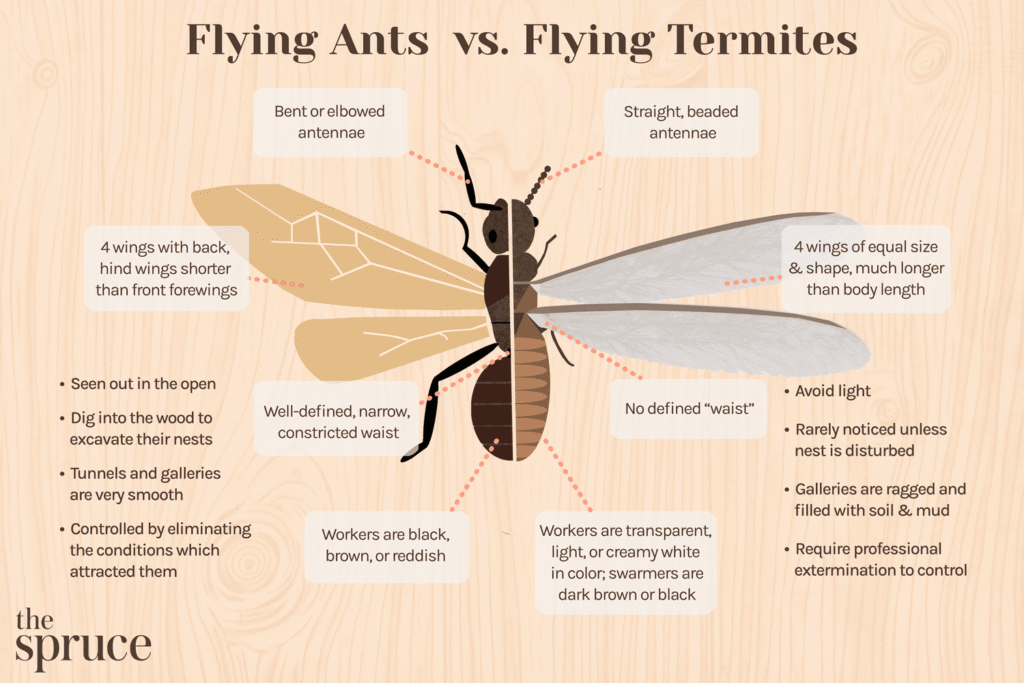
- Body shape: Soft, rectangular with no “pinched” waist (unlike ants).
- Antennae: Straight and beaded, like a string of tiny pearls.
- Wings (on swarmers): Four wings of equal length, twice as long as the body, often shed after swarming.
- Color: Workers and soldiers are creamy white to pale; swarmers range from tan to dark brown/black.
- Size: Workers ~1/4 inch; swarmers up to 1/2 inch including wings.
Signs of a True Termite Infestation
Beyond sightings, look for these telltale indicators:
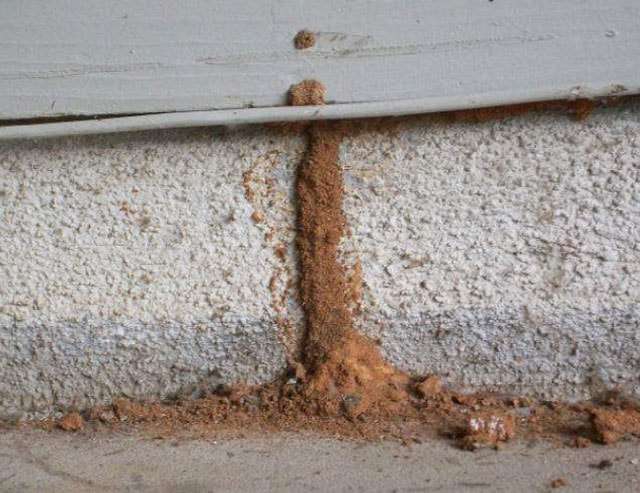
- Mud tubes: Pencil-thick shelter tubes on foundations, walls, or wood (subterranean termites).
- Frass (excrement): Drywood termites push out hard, six-sided pellets; subterranean leave muddy residue.
- Hollow wood: Tapping wood sounds hollow; damage often hidden inside.
- Swarm evidence: Discarded wings near windows/doors, especially after rain in spring.
Common Bugs That Look Like Termites (And How to Tell Them Apart)
The most frequent mix-ups involve winged ants during swarming season, but other insects can mimic termite appearance or damage.
Flying Ants (The Most Common Mistake)
Flying ants (reproductive ants from species like carpenter or pavement ants) swarm at similar times as termites, leading to widespread confusion.
Key differences:
- Waist: Pinched/narrow (hourglass figure).
- Antennae: Elbowed (bent at an angle).
- Wings: Front wings larger than hind wings.
- Behavior: Attracted to light but fly strongly; don’t eat wood (though carpenter ants excavate it for nests).
Flying ants are generally harmless to structures, though large colonies can be nuisances.
Carpenter Ants
These large black or red-and-black ants tunnel into moist wood, creating smooth galleries—often mistaken for termite damage.
Differences:
- Larger (up to 1/2 inch).
- Pinched waist, elbowed antennae.
- Frass contains insect parts and sawdust-like shavings (not pellets).
- No mud tubes; prefer damp wood.
While they don’t eat wood like termites, extensive tunneling weakens structures over time.
Powderpost Beetles
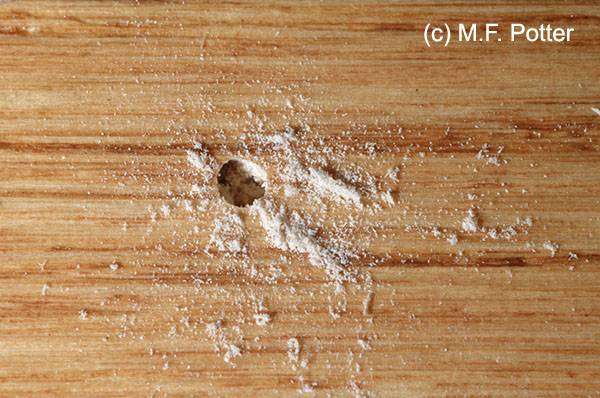
These small reddish-brown beetles infest hardwoods, leaving fine, powdery frass (like talcum powder) and round exit holes.
Differences:
- Adults are beetles with hard shells; larvae do the damage.
- Frass is flour-like, not pellet-shaped.
- No wings on damaging stage; adults emerge in summer.
- Damage limited to sapwood in hardwoods.
Common in furniture, flooring, and stored lumber.
Other Less Common Look-Alikes
- Booklice (psocids): Tiny, soft-bodied in damp areas; harmless.
- Acrobat ants: Raise abdomen when disturbed; similar to carpenter ants.
- Carpenter bees: Large, bee-like; bore round holes but don’t eat wood.
Quick Identification Checklist
Use this table for fast reference:
| Feature | Termites | Flying Ants/Carpenter Ants | Powderpost Beetles |
|---|---|---|---|
| Body Shape | Straight, no waist | Pinched waist | Hard beetle shell |
| Antennae | Straight, beaded | Elbowed | Varied, not beaded |
| Wings (swarmers) | Equal length | Unequal length | N/A (adults short-lived) |
| Frass/Damage | Pellets or mud | Sawdust with parts | Fine powder |
| Behavior | Swarm after rain, weak flyers | Strong flyers, attracted to light | Emerge from wood holes |
This checklist has helped countless clients avoid misdiagnosis in my consultations.
Why Accurate Identification Matters
Misidentifying bugs that look like termites has serious consequences. Treating flying ants with termite baits wastes resources and exposes your environment unnecessarily. Conversely, dismissing real termites as “just ants” allows colonies to grow, leading to structural failure—especially in agricultural buildings like barns or sheds.
In rural settings, termites can also threaten wooden fences, trellises, or stored produce crates. Accurate ID supports integrated pest management (IPM), a science-based approach I advocate that minimizes chemical use while maximizing effectiveness.
If damage is extensive or you’re unsure, consult a licensed inspector. Early detection saves thousands.
(Word count so far: approximately 1,450)
Natural Ways to Prevent and Control Termites and Look-Alike Pests
Chemical treatments work but often harm beneficial insects, soil health, and family safety—especially on farms or homes with gardens. Here are field-tested natural methods drawn from sustainable agriculture and eco-friendly home protection.
Preventive Measures for Your Home and Property
Prevention is 90% of success:
- Moisture control: Fix leaks, improve ventilation, grade soil away from foundations. Termites thrive in damp conditions.
- Wood management: Store firewood 20+ feet away and elevated; remove stumps/debris.
- Barriers: Use termite-resistant woods (cedar, redwood) for decks/outbuildings.
- Landscaping: Keep mulch 6-12 inches from foundations; plant termite-repelling species like vetiver grass.
Beneficial Biological Controls
Harness nature’s predators:
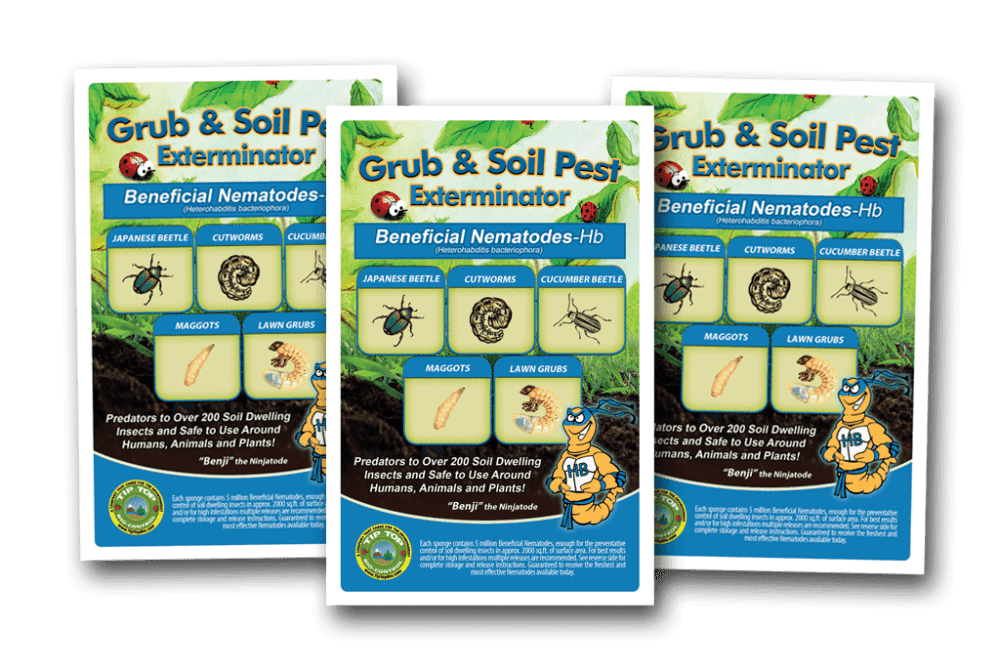
- Beneficial nematodes: Microscopic worms that parasitize termite larvae in soil. Apply as a soil drench in spring/fall.
-
- Predators: Encourage birds, frogs, or free-range chickens on rural properties.
Natural Repellents and Treatments
- Essential oils: Neem oil disrupts termite feeding; orange oil dissolves their exoskeletons. Mix with water for sprays.
- Diatomaceous earth (food-grade): Creates a abrasive barrier; sprinkle around foundations.
- Predators: Encourage birds, frogs, or free-range chickens on rural properties.
-
- Boric acid: Low-toxicity bait stations (DIY or commercial eco-friendly versions).
- Cardboard traps: Wet cardboard attracts termites; remove and destroy.
- Sun exposure: For infested furniture, seal in black plastic under hot sun.
For look-alikes: Peppermint/cinnamon for ants; vacuuming/sealing for beetles.
Expert Tip: Combine methods—e.g., nematodes + barriers + monitoring—for robust, long-term protection. In my experience with organic farms, this IPM approach reduces pest pressure by 80-90% without synthetics.
Step-by-Step Guide: What to Do If You Suspect Termites
- Observe safely: Note swarming time, location, and collect samples in a jar.
- Inspect: Check foundations, crawl spaces, attics for tubes/frass/damage.
- Identify: Use the checklist above; photograph for expert review.
- Act preventively: Implement moisture/barrier fixes immediately.
- Monitor: Place natural traps or sticky monitors.
- Escalate if needed: Professional eco-inspection for confirmation.
Frequently Asked Questions (FAQs)
What time of year do termite swarmers appear? Typically spring (March-June in most areas), often after warm rain.
Are flying ants dangerous to my home? No—they don’t eat wood, but indicate nearby colonies worth monitoring.
How can I distinguish termite frass from powderpost beetle frass? Termite pellets are hard, hexagonal; beetle frass is ultra-fine powder.
Are natural methods as effective as chemical treatments? When used consistently in an IPM program, yes—for prevention and mild infestations. Severe cases may need hybrid approaches.
When should I hire a pest control expert? If damage is visible, you’re unsure of ID, or natural methods aren’t curbing activity.
Can these bugs affect crops or gardens? Termites rarely target living plants but can damage wooden supports; ants may farm aphids.
Conclusion
Distinguishing bugs that look like termites from actual termites is a critical skill that protects your property and promotes sustainable living. With the identification tools, signs, and natural control strategies outlined here, you can confidently assess threats and implement eco-friendly defenses.
Regular monitoring and prevention are key—start today by inspecting your foundation and applying simple barriers. Your home (and the environment) will thank you.