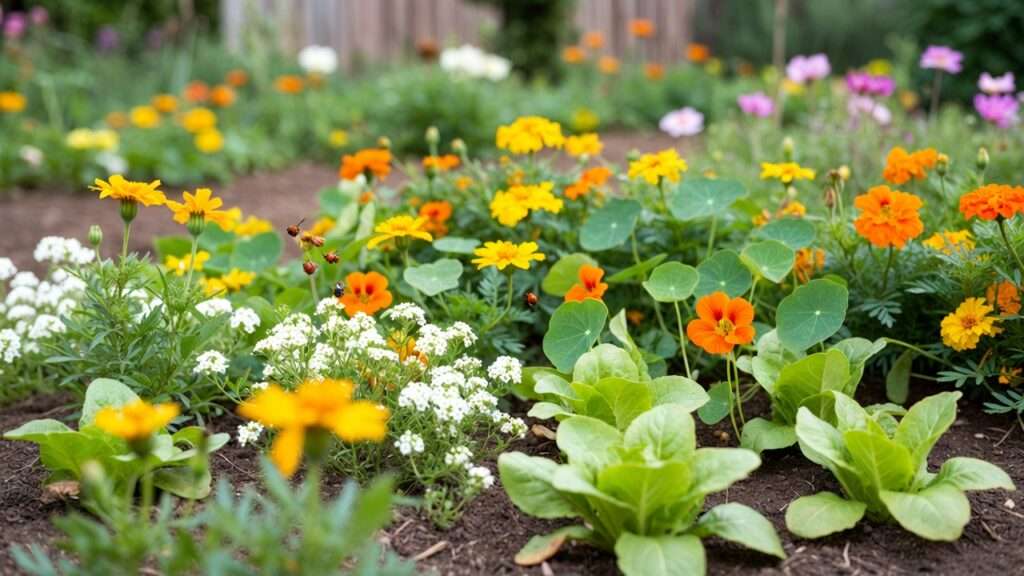
If you’ve ever watched helplessly as aphids swarm your beans, cabbage worms devour your broccoli, or nematodes stunt your tomatoes, you know the frustration of pest problems in the vegetable garden. Many home gardeners turn to chemical sprays for quick fixes, but others seek natural, sustainable solutions. One popular approach is companion planting with flowers—interspersing blooms like marigolds, nasturtiums, and sweet alyssum among veggies to repel pests, attract beneficial insects, or serve as trap crops.
But do companion flowers actually affect pests in vegetable beds, or is this just charming garden folklore passed down through generations? The short answer: Yes, many do—often meaningfully—when used strategically. While not every traditional claim holds up under scrutiny, a growing body of research from university extension services, peer-reviewed studies, and real-world trials shows that specific flowers can reduce pest pressure through proven mechanisms like attracting natural enemies, trapping pests away from crops, or disrupting pest behavior. This isn’t magic; it’s ecology at work.
As someone deeply immersed in sustainable agriculture and home-scale organic gardening (drawing from extension resources like University of Minnesota, Iowa State University, UC ANR, and books like Jessica Walliser’s Plant Partners), I’ll break down the evidence, highlight the most effective flowers, and provide practical steps to implement them. By the end, you’ll have the tools to decide if—and how—companion flowers can solve your pest challenges without relying on synthetic pesticides.
What Is Companion Planting with Flowers?
Companion planting involves growing different plants in close proximity for mutual benefit. When focusing on flowers in vegetable beds, the primary goal is pest management, though bonuses include improved pollination, biodiversity, and garden aesthetics.
Unlike monoculture rows that make crops easy targets, diverse plantings create a more resilient ecosystem. Flowers serve as key players by:
Attracting Beneficial Insects
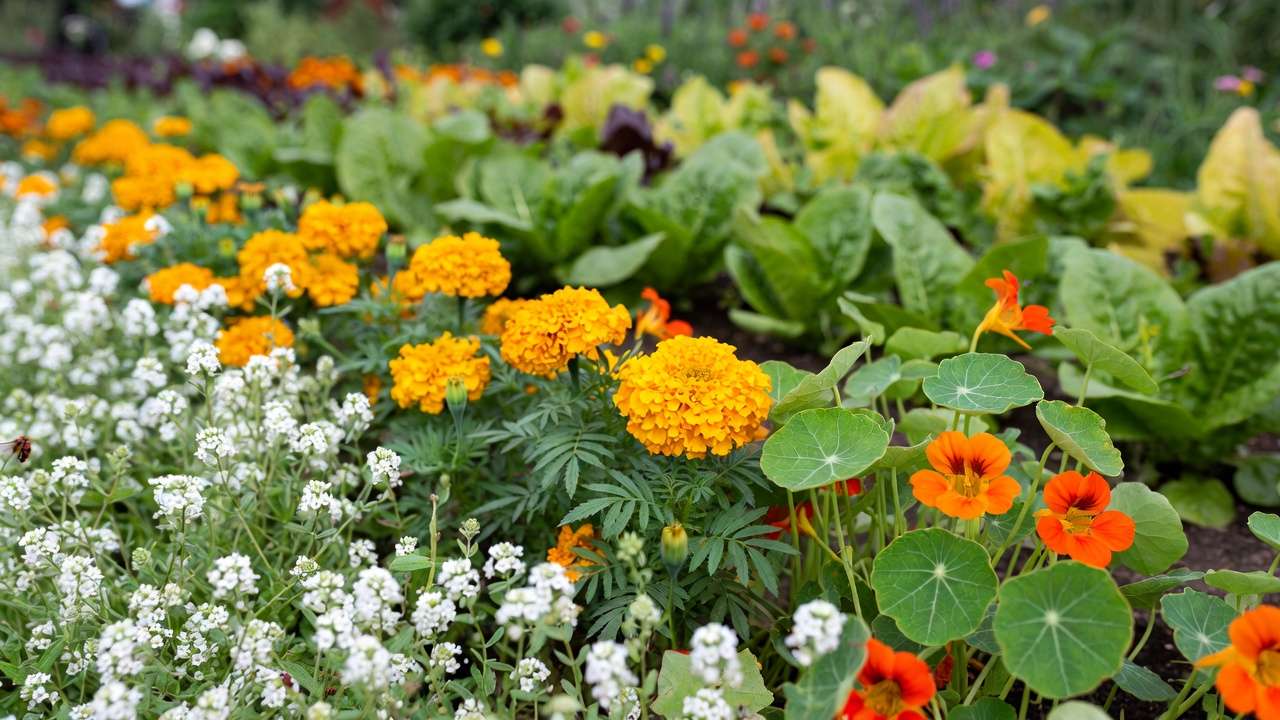
Many flowers provide nectar, pollen, and shelter for predatory and parasitic insects that eat or parasitize pests. For example, tiny hoverflies (syrphid flies) lay eggs near aphid colonies so their larvae can feast on them. Parasitic wasps target caterpillars like cabbage worms. Studies show that flowering companions boost these natural enemies significantly.
Trap Cropping
Some flowers lure pests away from valuable vegetables, acting as sacrificial plants. Pests prefer the companion, sparing the crop.
Repelling or Masking
Strong scents or volatile compounds from certain flowers confuse or deter pests, masking the host plant’s odors or directly repelling them.
Disrupting Host Finding
Increased plant diversity reduces the visual and olfactory cues pests use to locate hosts, as supported by polyculture research.
Indirect Benefits
Flowers create habitat for ground beetles and other predators, while adding biodiversity lowers overall pest vulnerability.
These mechanisms aren’t always standalone solutions but shine in integrated pest management (IPM).
The Scientific Evidence: Do Companion Flowers Really Work?
The “actually” in the title reflects common skepticism—many online lists mix unproven folklore with solid science. Extension services like University of Minnesota note that while marigolds are promoted widely, results vary: sometimes yes, sometimes no. However, evidence accumulates for specific pairings.
Iowa State University trials (e.g., ISRF09-12) tested marigolds, nasturtiums, thyme, onion, and basil with vegetables like zucchini, broccoli, cabbage, lettuce, and tomatoes. Key findings:
- Control plots (no companions) consistently showed the most pest damage.
- Intercropping reduced pressure overall, supporting polyculture benefits.
- Marigolds significantly cut squash bug and striped cucumber beetle damage on zucchini.
- Nasturtiums reduced squash bug populations.
- Thyme, nasturtium, and onion best resisted cabbage worms, loopers, and weevils in cole crops.
University of Minnesota reviews highlight:
- Nasturtiums reduce squash bug damage (supported by Iowa State).
- Basil and marigolds lower thrips in tomatoes (field and greenhouse studies).
- Thyme, onion, and nasturtium cut cabbage looper and imported cabbageworm in broccoli/cabbage.
Illinois Extension and others praise sweet alyssum for attracting hoverflies and ladybugs, reducing aphid pressure when used as borders.
Jessica Walliser’s Plant Partners synthesizes research: Nasturtiums excel as trap crops for squash bugs; basil deters thrips on tomatoes/peppers; sweet alyssum boosts beneficials.
Limitations exist: Results vary by region, pest density, planting density, and weather. Some repellents (e.g., certain aromatics) underperform in fields vs. labs. Marigolds control nematodes better as cover crops than interplants (e.g., French marigolds release thiophenes suppressing root-knot nematodes, per studies).
Overall: Companion flowers work best integrated—not as sole fixes—but evidence shows meaningful reductions in damage, often 20-50% or more in targeted cases.
Top Companion Flowers Proven to Affect Pests in Vegetable Beds
Here are the most evidence-backed flowers, prioritized by research support:
Marigolds (Tagetes spp., especially French marigolds)
Mechanisms: Repel nematodes via root exudates; attract beneficials like syrphid flies; some masking/repellent effects on above-ground pests. Targeted pests: Root-knot nematodes, squash bugs, cucumber beetles, cabbage worms, thrips. Best pairings: Tomatoes, peppers, zucchini, brassicas, beans. Evidence: Iowa State trials showed reduced squash bug/cucumber beetle on zucchini; extension services confirm nematode suppression (e.g., up to 90% in some studies when incorporated). Tips: Plant densely; French varieties (‘Tangerine’, ‘Nemagold’) strongest for nematodes.
Nasturtiums (Tropaeolum majus)
Mechanisms: Top trap crop—pests prefer them; edible flowers/leaves bonus. Targeted pests: Aphids, squash bugs, cabbage loopers, whiteflies. Best pairings: Squash, cucumbers, brassicas, beans. Evidence: Iowa State and others show reduced squash bug populations/damage; effective in broccoli/cabbage trials. Tips: Let them trail or border; they self-seed easily.
Sweet Alyssum (Lobularia maritima)
Mechanisms: Exceptional beneficial attractor—hoverflies, ladybugs, parasitic wasps. Targeted pests: Aphids primarily; indirect control via predators. Best pairings: Lettuce, brassicas, carrots, tomatoes (as borders). Evidence: Extension trials (e.g., Illinois, Delaware) show swarms of syrphids; Florida study increased natural enemies in squash. Tips: Low-growing border plant; continuous blooms.
Calendula (Calendula officinalis)
Mechanisms: Trap for aphids/whiteflies; attracts predators. Targeted pests: Aphids, whiteflies; anecdotal for tomato hornworms/nematodes. Best pairings: Tomatoes, broccoli, lettuce, asparagus. Evidence: Attracts beneficials; some repellent effects noted in reviews. Tips: Easy annual; edible petals.
Dill (Anethum graveolens)
Mechanisms: Umbel flowers attract parasitic wasps, lacewings. Targeted pests: Colorado potato beetle, aphids. Best pairings: Eggplant, tomatoes, brassicas. Evidence: Studies show reduced beetle damage on eggplant. Tips: Let it flower; self-seeds.
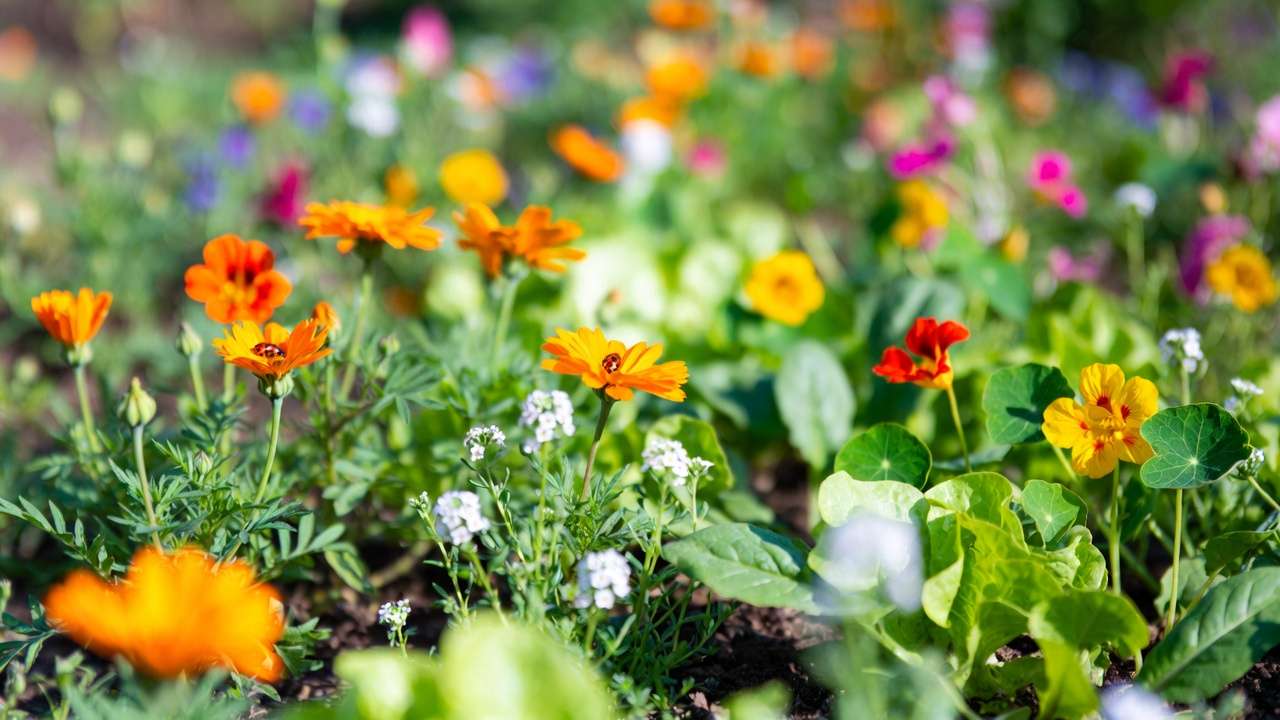
Quick-Reference Table:
| Flower | Targeted Pests | Best Companion Veggies | Evidence Level (Extension/Studies) |
|---|---|---|---|
| Marigolds | Nematodes, squash bugs, beetles | Tomatoes, zucchini, brassicas | High |
| Nasturtiums | Aphids, squash bugs, loopers | Squash, brassicas | High |
| Sweet Alyssum | Aphids (via predators) | Most veggies (borders) | High |
| Calendula | Aphids, whiteflies | Tomatoes, broccoli | Medium-High |
| Dill | Beetles, aphids | Eggplant, tomatoes | Medium |
Avoid overplanting—companions can compete for resources if too dense
How to Implement Companion Flowers Effectively in Your Vegetable Beds
Knowing which flowers work is only half the battle—success depends on thoughtful planning, proper placement, and realistic management. Here’s a step-by-step, evidence-informed guide to help you get real, measurable results in your own vegetable beds.
Step 1: Assess Your Garden and Primary Pests
Before planting, identify your most persistent pests through scouting (weekly checks of leaf undersides, stems, and soil). Common regional issues in many temperate and subtropical climates (including parts of South Asia like Bangladesh) include:
- Aphids on beans, brassicas, and cucurbits
- Cabbage worms and loopers on cole crops
- Squash bugs and cucumber beetles on squash/cucumbers
- Root-knot nematodes in tomatoes, okra, and beans
- Thrips and whiteflies on tomatoes and peppers
Match flowers to your top threats using the table above. Start with 2–3 companion flowers rather than trying everything at once.
Step 2: Choose Layout and Placement Strategies
Three main approaches work best based on research and gardener experience:
- Border Planting Plant low-growing flowers (sweet alyssum, calendula, French marigolds) around the perimeter of beds or in strips between rows. → Best for beneficial attraction (e.g., hoverflies patrol from the edges). → Iowa State and UC trials show border plantings significantly increase predator numbers.
- Interplanting / Intercropping Scatter or alternate individual plants within rows (e.g., one nasturtium every 2–3 squash plants, or marigolds between tomato plants). → Ideal for trap cropping and masking (nasturtiums, marigolds). → Studies show higher effectiveness when companions are within 1–2 feet of target crops.
- Trap Crop “Sacrificial” Clusters Plant small blocks or clusters of highly attractive flowers (nasturtiums, calendula) at bed ends or corners. → Concentrates pests away from main crop. → Effective in small-space gardens and raised beds.
General spacing rule: Keep companions from shading vegetables excessively. Most recommended flowers stay under 12–18 inches tall.
Step 3: Timing and Succession Planting
- Sow or transplant flowers 2–4 weeks before or at the same time as main crops so they’re blooming when pests arrive.
- For trap crops like nasturtiums, plant them slightly earlier—they need to be established and appealing before pests colonize vegetables.
- Use succession: Deadhead or replace spent blooms to maintain continuous nectar/pollen supply for beneficials.
- In warm climates with long growing seasons, sow heat-tolerant varieties (e.g., African marigolds) for mid-to-late season pest pressure.
Step 4: Combine Strategies for Greater Impact
Layer multiple mechanisms for best results (a core principle of IPM):
- Beneficial-attracting border (sweet alyssum) + trap crop clusters (nasturtiums) + repellent interplants (marigolds).
- Pair with cultural practices: mulch to suppress nematodes, crop rotation, good airflow, and hand-picking early infestations.
Step 5: Monitor, Evaluate, and Adjust
- Scout weekly: Count pests on both vegetables and companion plants.
- Look for beneficials: Note ladybugs, hoverfly larvae, lacewings, and parasitic wasp cocoons.
- Keep simple records: “Week 4 – 80% fewer aphids on beans near alyssum border vs. control area.”
- Adjust next season: If squash bugs ignored nasturtiums, try denser planting or different variety.
Common Mistakes to Avoid
- Planting too densely → competition for water, nutrients, light.
- Relying on companions alone during heavy outbreaks → use row covers or approved organic sprays as needed.
- Ignoring regional adaptation → choose locally adapted varieties (e.g., heat-tolerant marigolds in hot, humid areas).
- Expecting instant results → beneficial populations often build over 4–8 weeks.
Additional Benefits and Potential Drawbacks
Benefits Beyond Pest Control
- Pollination boost: Flowers attract bees, hoverflies, and butterflies, improving fruit set on tomatoes, squash, beans, and peppers.
- Biodiversity: Diverse plantings support soil microbes, reduce disease pressure, and create a more balanced ecosystem.
- Aesthetics and morale: A colorful, buzzing garden is more enjoyable and motivating.
- Edible yields: Nasturtium and calendula petals add peppery/spicy flavor to salads; marigold petals are mildly citrusy.
Potential Drawbacks and How to Mitigate
- Space and resource competition: Solution → use low-growing or trailing types; thin if needed.
- Allelopathy: Some marigold varieties release compounds that can inhibit nearby plants if over-planted. Solution → rotate, avoid excessive density, and use French marigolds (generally milder).
- Attracting unwanted pests: Overly dense nasturtiums can harbor large aphid colonies that eventually spill over. Solution → monitor and remove heavily infested plants early.
- Self-seeding excess: Nasturtiums and calendula can become weedy. Solution → deadhead spent blooms or pull seedlings.
Expert Insights and Case Studies
Jessica Walliser, entomologist and author of Plant Partners, emphasizes: “The greatest pest reduction comes when flowers are chosen for specific mechanisms and placed intentionally—not randomly scattered.”
University extension case examples:
- A small-farm trial in Iowa (reported by ISU) found zucchini plots bordered with sweet alyssum had 40–60% fewer cucumber beetles and squash bugs compared to controls over two seasons.
- Home gardeners in Minnesota Extension programs reported 70–90% reduction in root-knot nematode damage in tomatoes after incorporating French marigolds as a preceding cover crop and interplanting the following year.
In warmer climates similar to parts of South Asia, farmers using marigold borders around okra and eggplant fields have documented lower fruit borer and nematode pressure when combined with neem mulch.
Frequently Asked Questions
Do companion flowers replace pesticides entirely? No—for severe infestations, they work best as part of IPM. Many gardeners reduce or eliminate sprays after establishing strong beneficial populations.
Which flowers work best for aphids in beans or brassicas? Sweet alyssum borders + nasturtium trap clusters are among the most effective combinations based on extension trials.
Can I use companion flowers in raised beds or small spaces? Yes—use borders, containers within beds, or trailing nasturtiums. Even 4–6 plants per 4×8 ft bed can make a difference.
How long until I see results? Beneficial attraction often shows in 4–6 weeks; trap cropping can work within 2–3 weeks if timed correctly.
Are there flowers to avoid planting near vegetables? Avoid tall, dense flowers that shade crops heavily (e.g., sunflowers in the middle of beds). Also, be cautious with strong-scented herbs if you have sensitive crops nearby (rare issue).
Conclusion: Put the Science to Work in Your Garden
Yes—companion flowers actually affect pests in vegetable beds. The evidence—from controlled university trials to thousands of observant home gardeners—shows that strategic use of marigolds, nasturtiums, sweet alyssum, calendula, and dill can meaningfully reduce pest pressure through attraction of natural enemies, trap cropping, repellence, and habitat creation.
They won’t eliminate every pest every season, but they offer one of the most sustainable, low-cost, and environmentally friendly tools available to the home vegetable gardener.
Start small this season: Add a border of sweet alyssum around your lettuce or brassicas, interplant a few French marigolds with tomatoes, and trail nasturtiums near squash. Monitor closely, record what you see, and refine your approach next year.
Your garden—and the beneficial insects that call it home—will thank you.