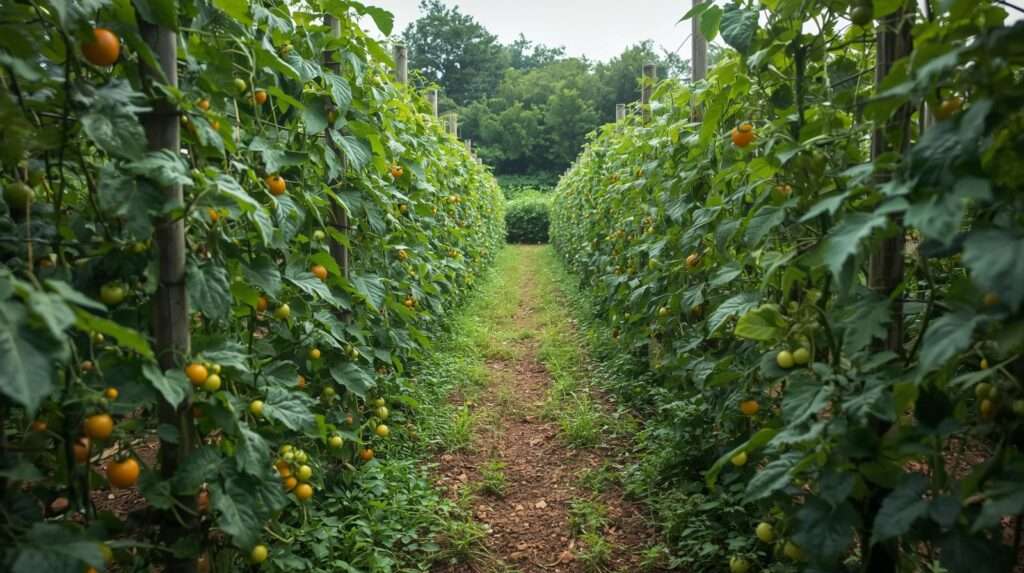
Imagine planting a row of vibrant tomato vines on a sturdy trellis, envisioning a bountiful harvest of juicy fruits dangling like ornaments. But as the season progresses, the plants become a tangled mess—leaves overlapping, airflow stifled, and diseases like powdery mildew taking hold, leading to stunted growth and disappointing yields. This common frustration plagues many gardeners, from backyard enthusiasts in the US Midwest to small-scale farmers in subtropical regions like Bangladesh. The culprit? Improper crop spacing around trellises. Optimizing crop spacing around trellises is key to unlocking healthier plants, better disease resistance, and significantly higher yields, often boosting productivity by 20-50% while maximizing limited garden space.
As a horticulture expert with over 10 years of experience advising on sustainable vegetable production in tropical and subtropical climates, including hands-on work in Dhaka Division, I’ve seen firsthand how precise spacing transforms vertical gardens. Drawing from university extension resources like those from the University of Minnesota and Virginia Tech, this guide delves into evidence-based strategies for trellis plant spacing, vertical gardening techniques, and vining crop management. Whether you’re dealing with indeterminate tomatoes in a raised bed or climbing beans in a compact urban plot, proper spacing ensures improved air circulation, nutrient access, and sunlight penetration—essentials for thriving crops globally.
In this comprehensive article, we’ll explore why spacing matters, key factors to consider, crop-specific recommendations, setup tips, maintenance strategies, common pitfalls, and advanced techniques. By the end, you’ll have the tools to create a productive, disease-resistant garden that saves space and time. Let’s dive in and elevate your gardening game.

Why Proper Crop Spacing Around Trellises Matters
In vertical gardening, where plants climb supports like A-frames or panels, spacing isn’t just about fitting more in—it’s a science-backed approach to plant health and efficiency. Proper crop spacing around trellises enhances air circulation, which is crucial for drying foliage quickly after rain or irrigation, reducing the risk of fungal diseases such as blight and powdery mildew. According to Alabama Cooperative Extension System, adequate spacing promotes better airflow, minimizing humid microclimates that foster pathogens.
Beyond disease prevention, optimal spacing allows for superior light penetration, enabling even photosynthesis and fruit ripening across the plant. This leads to higher yields; studies from Purdue University show that well-spaced trellised crops can increase output per square foot by maximizing vertical space without ground sprawl. For instance, trellised tomatoes or cucumbers can yield up to 50% more than ground-grown counterparts due to reduced competition for resources.
Other benefits include easier pollination by bees and beneficial insects, simplified harvesting (no bending to search through dense foliage), and less nutrient and water competition. In regions with high humidity, like parts of the US South or Bangladesh during monsoon season, this spacing strategy is especially vital to prevent rot and pest infestations. A real-world example: A Virginia gardener reported doubling their cucumber harvest after adjusting from overcrowded 12-inch in-row spacing to 18-24 inches on a panel trellis, citing improved vine vigor and fruit quality.
To visualize the impact, consider this side-by-side comparison:

Key Factors to Consider When Determining Crop Spacing Around Trellises
Determining the right crop spacing around trellises requires evaluating several interrelated factors to tailor your setup for success. First, assess the plant’s growth habit: Vining crops like indeterminate tomatoes or vigorous cucumbers need more room (18-36 inches in-row) due to their expansive spread, while determinate varieties or bush types can be closer (12-24 inches).
Trellis type and dimensions play a pivotal role. A-frame trellises, ideal for heavier fruits, allow for slightly closer in-row spacing (e.g., 12-18 inches) thanks to their stability, but require 3-5 feet between rows for access. Panel trellises, with their flat mesh (4-inch grids recommended), suit lighter vines and permit 2-4 foot row spacing. Always ensure the trellis height (at least 5-6 feet) accommodates mature plant size to avoid top-heavy collapse.
Garden layout influences spacing too—orient rows north-south to minimize shading, especially in northern US latitudes or shaded Bangladeshi plots. Environmental factors like soil fertility (rich soils support denser planting), climate zone (hotter areas need more space for airflow), and humidity/disease pressure (wider spacing in wet climates) must be factored in.
Finally, incorporate companion planting: Pair trellised beans with nitrogen-fixing benefits alongside corn, or intercrop marigolds for pest control, adjusting spacing to avoid overcrowding. Expert insight from NC State Extension emphasizes site-specific adjustments: “Group tall trellised vines on the north side to prevent shading shorter crops.”
General Spacing Guidelines for Trellised Crops
For trellised crops, distinguish between in-row (plant-to-plant) and between-row spacing. Measure on-center—from the center of one plant to the next—to ensure accuracy. A general rule: Follow seed packet or extension recommendations for ground planting, then adjust slightly closer in-row for vertical support (due to upward growth), but maintain wider row spacing (2-5 feet) for harvesting and maintenance.
Here’s a summary table of general ranges for common vining crops:
| Crop Type | In-Row Spacing (inches) | Between-Row Spacing (feet) | Notes |
|---|---|---|---|
| Tomatoes (Indeterminate) | 18-36 | 3-5 | Prune for airflow |
| Cucumbers (Vining) | 12-24 | 3-4 | Closer with strong trellis |
| Pole Beans | 4-8 | 2-3 | Dense per pole |
| Peas | 1-3 | 2-3 | Double rows possible |
| Squash/Melons | 24-36 | 4-6 | Support heavy fruit |
These guidelines, adapted from University of Wisconsin Extension, promote optimal plant density without compromising health. In intensive methods like square-foot gardening, you can tighten to 1-2 plants per square foot for trellised vines.
Crop-Specific Spacing Recommendations
Tailoring spacing to individual crops ensures maximum yields and minimal issues. Below are detailed, evidence-based guidelines, with variations for standard vs. intensive setups.
Tomatoes
Indeterminate tomatoes thrive on trellises like stake-and-weave or string systems. Space 18-36 inches in-row (commonly 24 inches) and 3-5 feet between rows to allow pruning to 1-2 stems and prevent overcrowding. Determinate varieties can be closer at 18-24 inches. In subtropical climates, wider spacing (up to 36 inches) combats heat stress. Tip: Use cages for bushier plants, ensuring 2-foot diameter for airflow.
:max_bytes(150000):strip_icc()/GettyImages-1368056090-f196e8f115434b14a726b350b0f773df.jpg)
Cucumbers
For vining cucumbers, aim for 12-24 inches in-row and 3-4 feet between rows. Closer spacing (12-18 inches) works with robust trellising and regular pruning to maintain airflow. Bush types need less room, but vertical training boosts yields by 30%. In humid areas like Bangladesh, avoid ground training to prevent soil-borne diseases; trellis instead for cleaner fruit.
Pole Beans and Peas
Pole beans: 2-8 inches in-row (often 4-6 per pole) and 2-3 feet between rows. Peas: 1-3 inches in-row, with double rows 3-6 inches from the trellis for support. These nitrogen-fixers benefit from dense planting on lightweight netting, but thin if overcrowding occurs to ensure pod development.
Melons, Squash, and Other Vining Crops
Melons and squash: 24-36 inches in-row, with slings for heavy fruit on trellises. Include trellised peppers or eggplants at 18-24 inches. For winter squash, use arch trellises to save space, spacing 18-24 inches in-row in raised beds.
How to Set Up Trellises for Optimal Crop Spacing
Choosing the right trellis type sets the foundation for effective spacing. A-frame trellises (pros: sturdy for heavy loads; cons: more material needed) suit tomatoes and squash, with 5-6 foot heights and 3-4 foot widths. Panel trellises (pros: easy access; cons: less stability for wind) work for beans and peas, using 4-inch mesh.
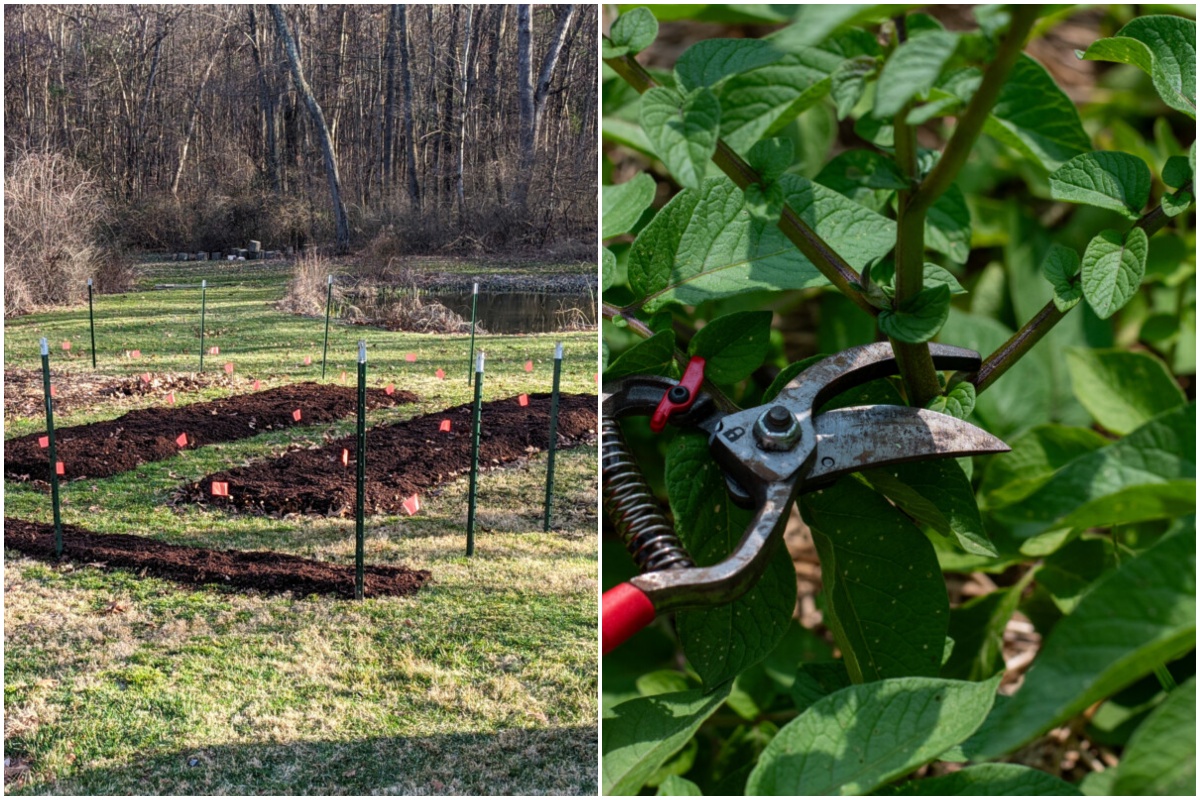
Placement tips: Position on the north side for tall crops to avoid shading; allow 2-4 feet for paths. Step-by-step installation:
- Drive stakes 2 feet into ground, 12-20 feet apart.
- Attach crossbars or mesh securely.
- Orient north-south.
- Plant at base, matching recommended spacing.
In raised beds, integrate trellises directly for space efficiency.
:strip_icc()/7003223-13400-10_8eC6xSe2KojA-3m-pttkcq-8b32a623d84748b38713350d7061399a.jpg)
Training, Pruning, and Maintenance Tips to Maintain Ideal Spacing
Early vine training is essential: Gently tie or clip stems to the trellis as they grow, using soft ties to avoid damage. Prune suckers on tomatoes and lower leaves on cucumbers for airflow.
Monitor for overcrowding; thin seedlings if needed. Ongoing care includes consistent watering (drip irrigation preferred), balanced fertilizing, and pest scouting. In global contexts, mulch to retain moisture in dry US areas or drain excess in rainy Bangladesh.
Common Mistakes in Crop Spacing Around Trellises — and How to Fix Them
Mistake #1: Overcrowding, leading to disease and yield loss. Fix: Thin to recommended spacing; e.g., space cucumbers 12-24 inches instead of 6.
Mistake #2: Ignoring mature plant size or trellis capacity. Fix: Choose trellises 6+ feet tall; adjust for vigorous varieties.
Mistake #3: Poor orientation or row spacing. Fix: Reorient north-south; ensure 3- feet paths.
Before-and-after examples: An overcrowded bean trellis with powdery mildew versus spaced one with healthy pods.
Advanced Strategies for Maximizing Yields with Proper Spacing
For intensive planting, adapt square-foot methods: 1 tomato per square on trellises. Succession planting—follow peas with beans—keeps space productive. Rotate crops annually to prevent soil depletion.
Integrate companions like basil under tomatoes for pest control. Track yields with journals to refine spacing over seasons.
Real-World Examples and Layout Plans
Sample plan: In a 4×8 raised bed, place an arch trellis with tomatoes at 24 inches in-row on one side, cucumbers opposite. Case study: A US urban gardener increased yields 40% by spacing peas 2 inches apart on netting.

Frequently Asked Questions (FAQs)
- How close can I space tomatoes on a trellis? 18-36 inches in-row, depending on variety.
- Does trellising allow closer spacing than ground growing? Yes, often 20-30% closer due to vertical support.
- What if my plants are already overcrowded? Prune aggressively and thin; replant next season.
- Best trellis for small spaces? Panel or obelisk types for compact vertical growth.
- How does spacing affect disease in humid climates? Wider spacing improves airflow, reducing fungal risks.
- Can I trellis squash in raised beds? Yes, with 24-36 inch spacing and fruit slings.
- What’s the ideal row spacing for beans? 2-3 feet for easy access.
- How to measure on-center spacing? From stem center to center for accuracy.
- Are there spacing differences for organic vs. conventional? Organic may need wider for natural pest control.
- Best practices for melons on trellises? 24-36 inches; use supports for heavy fruit.
Conclusion
Optimizing crop spacing around trellises is a game-changer for achieving healthier plants and higher yields, addressing common issues like disease and low productivity head-on. By applying these guidelines—from general rules to crop-specific tips—you’ll create an efficient vertical garden suited to US temperate zones or global subtropical areas like Bangladesh. Start small: Assess your space, choose the right trellis, and adjust as you observe. Share your successes in the comments, and subscribe for more agricultural insights.
Written by Khadija, a horticulture expert specializing in tropical/subtropical vegetable production in regions like Bangladesh.