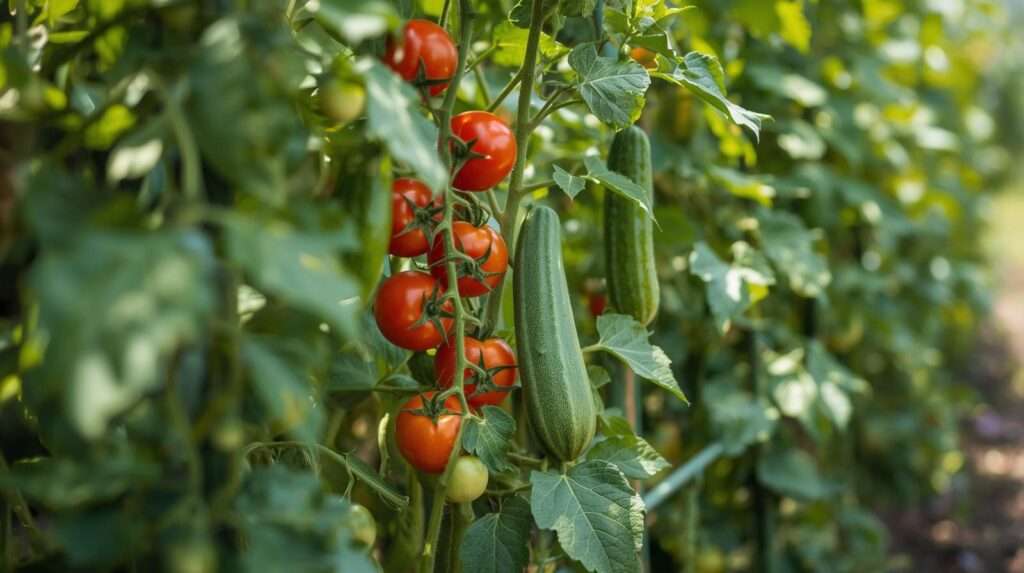
Imagine walking out to your garden and seeing your cucumber vines sprawling across the ground, smothering your cherry tomato plants, while both crops suffer from rot, poor airflow, and disappointing yields. Sound familiar?
For most gardeners with limited space—whether it’s a small backyard, a raised bed, a balcony, or a few containers—this exact scenario plays out every season. The good news? You can dramatically change that outcome by growing cucumbers and cherry tomatoes together on the same trellis — and doing it the right way.
When properly supported vertically, these two popular crops not only coexist peacefully but actually help each other produce more fruit, stay healthier, and take up far less ground space. Many experienced gardeners report 40–70% higher yields per plant, significantly lower disease pressure, and much easier harvesting once both crops are trained upward instead of allowed to sprawl.
In this comprehensive guide, we’ll show you exactly how to build and manage a cucumbers and cherry tomatoes trellis system that maximizes production in small spaces. You’ll learn:
- Which varieties work best together
- The strongest, most practical trellis designs for dual cropping
- Correct spacing and training techniques that prevent one crop from overwhelming the other
- Nutrient, watering, and pest management strategies tailored for both plants growing side-by-side
- The most common (and costly) mistakes — and how to avoid them
Whether you’re a beginner trying vertical gardening for the first time or an intermediate gardener looking to seriously boost output in a compact area, this step-by-step system is designed to deliver real, measurable results.
Let’s dive in and build the most productive small-space trellis setup you’ve ever had.
Why Grow Cucumbers and Cherry Tomatoes on the Same Trellis?
Growing cucumbers and cherry tomatoes together vertically offers several powerful advantages that horizontal growing simply can’t match:
1. Dramatic space savings Both crops are naturally sprawling plants. A single untrained cucumber vine can easily cover 6–10 square feet. Cherry tomato plants (especially indeterminate varieties) are similarly space-hungry. Training both upward on one trellis can reduce the ground footprint by 70–90% while still allowing full-sized plants to produce heavily.
2. Much better disease prevention Powdery mildew on cucumbers, early blight and septoria leaf spot on tomatoes — these common diseases thrive in humid, shaded, soil-contact conditions. Vertical growth improves airflow, speeds drying after rain or watering, and keeps foliage far from soil-borne pathogens.
3. Higher fruit quality and easier harvesting Fruit that hangs freely receives better light and air circulation, leading to sweeter cherry tomatoes and straighter, cleaner cucumbers. Harvesting becomes a simple reach-and-pick task instead of a back-breaking hunt under dense foliage.
4. Improved pollination Bees and other pollinators can more easily access flowers when they’re held aloft rather than hidden under leaves. This is especially valuable for cucumbers, which need thorough pollination for well-shaped fruit.
5. Extended harvest window Vertical plants often stay healthier longer into the season, delaying the onset of major disease and allowing you to pick fresh fruit weeks longer than ground-grown counterparts.
6. Aesthetic bonus A well-managed dual-crop trellis creates an attractive living green wall covered in bright red, yellow, or orange cherry tomatoes and crisp green cucumbers — perfect for balconies, patios, or small urban gardens.
When done correctly, this combination becomes one of the most efficient and productive small-space growing strategies available to home gardeners.
Do Cucumbers and Cherry Tomatoes Actually Grow Well Together on One Trellis?
Yes — but success depends on making smart choices in varieties, spacing, and training.
Here’s a quick compatibility breakdown:
| Factor | Cucumbers | Cherry Tomatoes | Compatibility Notes |
|---|---|---|---|
| Sunlight | Full sun (6–10 hours) | Full sun (8+ hours preferred) | Excellent match |
| Soil pH | 6.0–6.8 | 6.0–6.8 | Perfect match |
| Temperature range | 70–85°F (21–29°C) optimal | 70–85°F (21–29°C) optimal | Very similar needs |
| Water needs | Consistently moist, high | Even moisture, moderate-high | Close enough — cucumbers are thirstier |
| Nutrient demand | Heavy feeders (especially nitrogen) | Heavy feeders (higher potassium later) | Manageable with proper fertilization |
| Growth habit | Aggressive vines | Vining / indeterminate | Both need strong support and regular training |
| Weight of mature fruit | Moderate to heavy | Light | Cucumbers put more mechanical stress on structure |
Verdict: These two crops are highly compatible when you choose compact-to-moderately vigorous varieties, provide a strong enough trellis, and train both plants diligently. The main challenges are:
- Cucumbers can become more aggressive and shade tomatoes if not pruned properly
- Cucumbers put more weight stress on the trellis structure
- Cucumbers usually need slightly more frequent watering
All three issues are easily managed with the right techniques — which we’ll cover in detail.
Best Cucumber and Cherry Tomato Varieties for Shared Trellising
Choosing the right varieties is the single most important decision for success when trellising cucumbers and cherry tomatoes together.
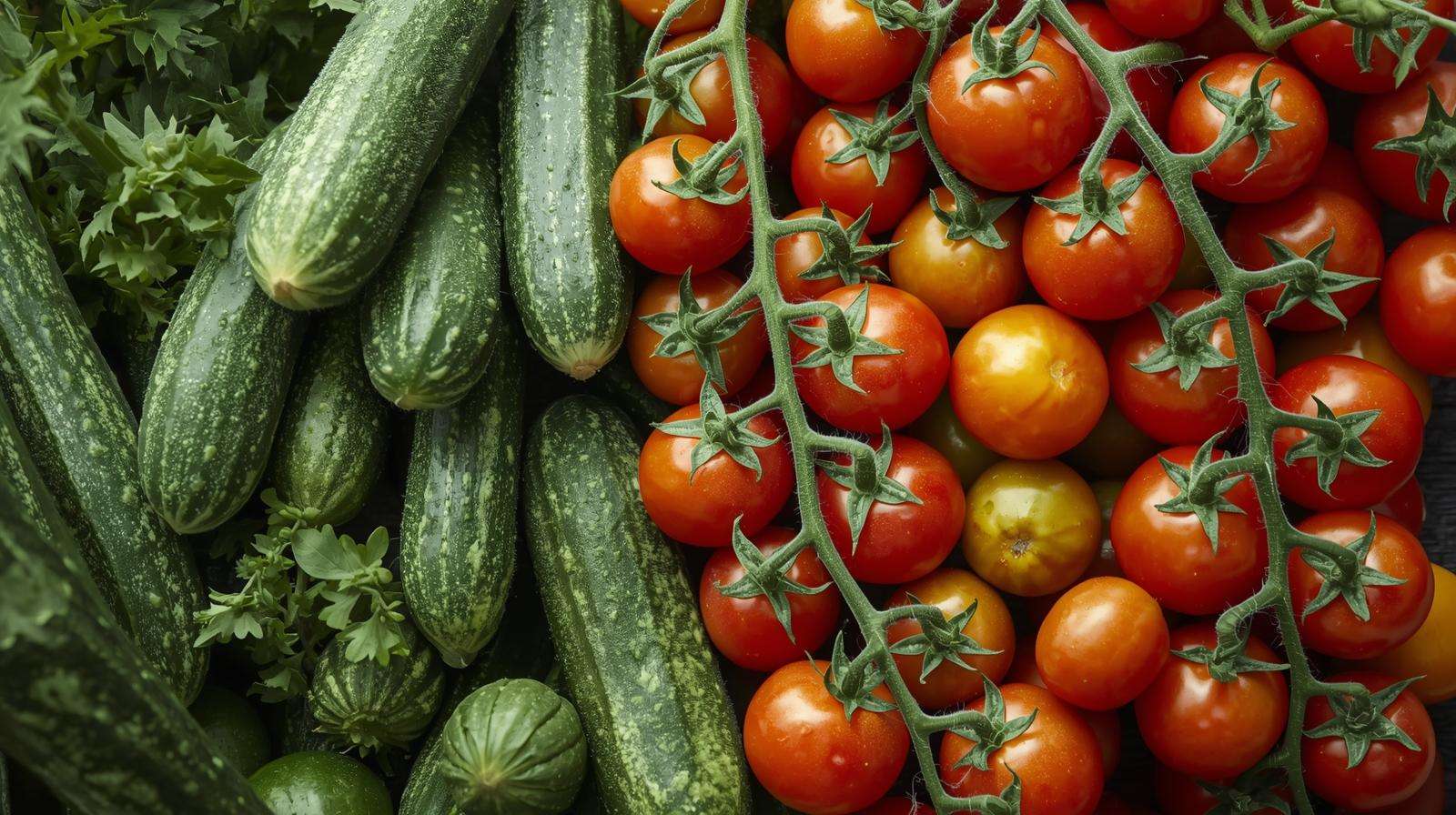
Recommended Cherry Tomato Varieties
Top picks for vertical / shared-trellis growing:
- Sungold
- Type: Indeterminate
- Fruit: Golden-orange, very sweet
- Pros: Extremely productive, excellent flavor, vigorous but manageable
- Cons: Needs consistent pruning
- Sweet 100
- Type: Indeterminate
- Fruit: Bright red, high sugar content
- Pros: Prolific, disease-tolerant, long clusters
- Cons: Can become very tall (8–10 ft)
- Black Cherry
- Type: Indeterminate
- Fruit: Mahogany-red, rich flavor
- Pros: Unique taste, good disease resistance
- Cons: Slightly less productive than Sungold
- Jasper
- Type: Determinate / semi-determinate
- Fruit: Red, crack-resistant
- Pros: More compact, excellent disease package, great for small trellises
- Cons: Slightly less sweet than classic varieties
- Terenzo or Red Robin
- Type: Determinate dwarf
- Pros: Perfect for very small spaces or containers, bushy habit
- Cons: Lower total yield than indeterminates
Best choice for most shared trellises: Sungold or Jasper (depending on how much pruning time you want to invest).
Recommended Cucumber Varieties
Top picks for vertical / shared-trellis growing:
- Marketmore 76
- Type: Monoecious slicing
- Pros: Classic flavor, disease resistant, long thin fruit
- Cons: Needs consistent pruning
- Straight Eight
- Type: Heirloom slicing
- Pros: Uniform fruit, excellent quality
- Cons: Less disease resistance
- Diva
- Type: Parthenocarpic (seedless)
- Pros: Very high yield, thin skin, no pollination needed, disease resistant
- Cons: Slightly more expensive seeds
- Picolino or Fancipak
- Type: Mini / pickling types
- Pros: Compact vines, high productivity, great for small trellises
- Cons: Smaller fruit size
- Lemon or Crystal Apple
- Type: Specialty round cucumbers
- Pros: Fun appearance, very mild flavor, manageable vines
- Cons: Lower total yield
Best all-round choices:
- Diva (easiest and most forgiving)
- Picolino (most compact)
- Marketmore 76 (classic high-yield option)
Choosing the Right Trellis Style for Cucumbers + Cherry Tomatoes
The trellis is the backbone of this system. Cucumbers — especially slicing varieties — become surprisingly heavy when loaded with mature fruit and wet foliage. Cherry tomatoes are lighter but can still exert considerable leverage when vines reach 7–10 feet tall.
A weak or poorly anchored trellis will collapse, snap, or lean badly by mid-season, ruining months of work.
Comparison Table – Trellis Types
| Trellis Style | Approx. Cost (USD) | Strength (1–10) | Space Efficiency | Ease of Setup | Dual-Crop Suitability | Best For |
|---|---|---|---|---|---|---|
| Simple stake + twine | $5–15 | 3–4 | Medium | Very easy | Poor | Only very small setups |
| Commercial tomato cages | $10–30 each | 4–6 | Low | Easy | Fair | Single plants, not shared |
| Heavy-duty tomato cage clusters + netting | $25–60 | 6–7 | Medium | Easy | Good | Small raised beds |
| Vertical wall / panel trellis | $30–80 | 6–8 | High | Moderate | Very good | Against fences/walls |
| A-frame / lean-to trellis | $40–120 | 8–9 | Very high | Moderate | Excellent | Most small-space gardeners |
| Cattle panel arch tunnel | $60–150 | 9–10 | Very high | Moderate–hard | Outstanding | Serious small-space growers |
| DIY wooden frame + netting | $25–70 | 7–9 | High | Moderate–hard | Very good | Budget-conscious DIYers |
Top recommendation for most readers: A-frame / lean-to trellis or cattle panel arch — these two designs consistently deliver the best balance of strength, space efficiency, longevity, and ease of training both crops.
Top Recommended Systems (Detailed)
- Sturdy A-frame or Lean-to Trellis Most versatile and beginner-friendly option for shared cucumber + cherry tomato growing.
- Provides two sloping sides (plant one crop on each side or stagger both crops on both sides)
- Excellent airflow from both directions
- Easy to reach fruit from either side
- Can be built 6–8 ft tall without excessive shading
- Cattle Panel Arch Tunnel The gold standard for maximum yield in small footprints (especially 4×8 ft or 4×10 ft beds).
- Uses one 16 ft × 50 inch cattle panel bent into an arch
- Extremely strong — can handle wet, loaded vines of both crops
- Creates a beautiful tunnel effect and allows picking from both sides
- Can be made taller (7–8 ft peak) than most A-frames
- Heavy-duty Tomato Cage Clusters + Netting Good transitional option if you already own large cages.
- Use 5–6 ft tall heavy wire cages (not the flimsy 3–4 ft ones)
- Connect 3–4 cages together and wrap with strong garden netting
- Less ideal long-term but works well for the first 1–2 seasons
- Simple Vertical Wall Trellis with Horizontal Supports Perfect when growing against an existing fence, wall, or garage side.
- Install 2×4 or metal T-posts vertically
- Run strong horizontal wires, cattle panels, or heavy netting
- Excellent sun exposure on one side only — plant the thirstier cucumbers on the sunnier side when possible
Step-by-Step: How to Build the Best Dual-Crop Trellis
(The Most Recommended Design: Reinforced A-frame / Lean-to)
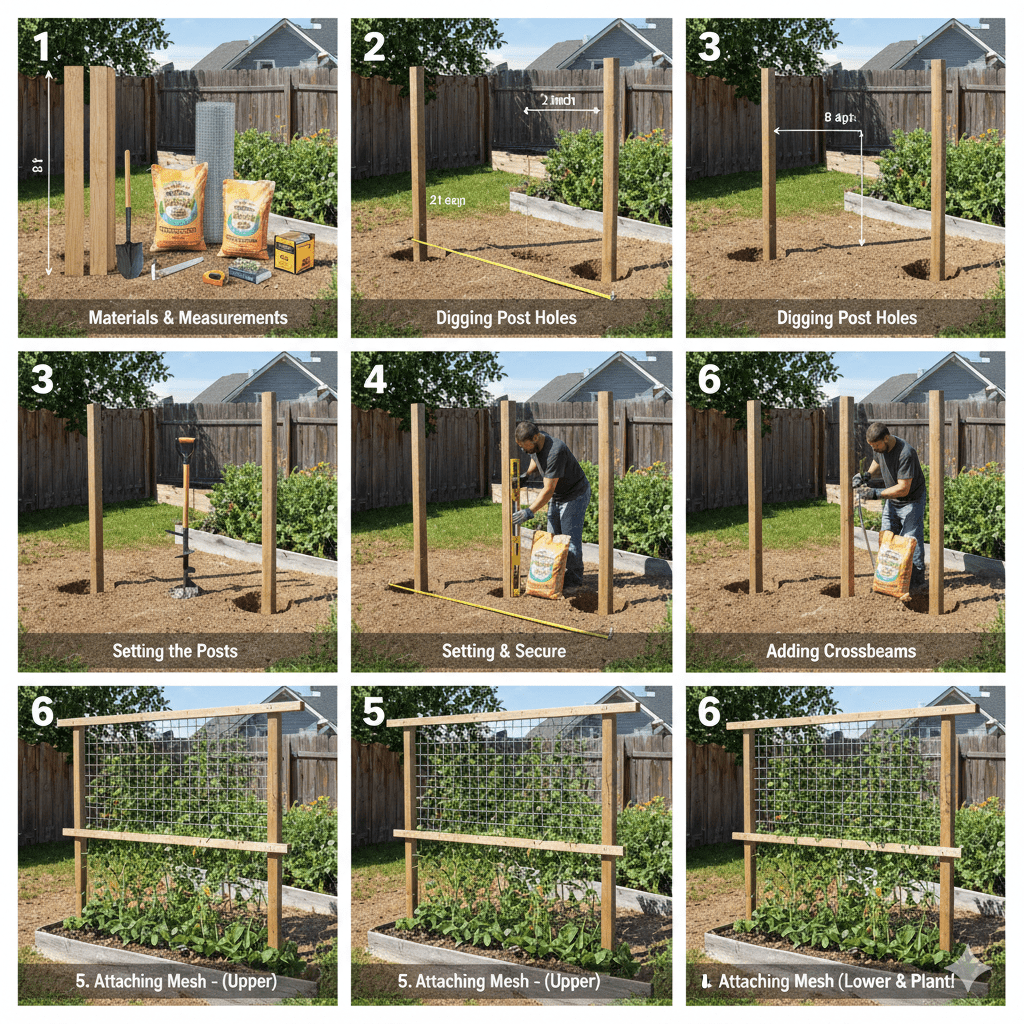
Materials (for a 6 ft tall × 8 ft wide A-frame — adjustable)
- 6–8 pieces of 2×3 or 2×4 lumber (8 ft lengths) or metal T-posts
- 1–2 sheets of 4×8 ft cattle panel (or heavy-duty galvanized wire mesh / garden netting)
- 50–80 ft strong garden twine, jute, or velcro plant ties
- Zip ties, wire, screws or nails
- 4–8 rebar stakes or concrete anchors (for stability)
- Optional: turnbuckles for tightening horizontal wires
Tools needed
- Post-hole digger or shovel
- Hammer or mallet
- Drill + screws (if using wood)
- Wire cutters
- Measuring tape
- Level
Step-by-step construction
- Choose location Full sun (minimum 7–8 hours), good drainage, away from large trees that drop debris.
- Set the vertical supports
- Place two pairs of upright posts 7–8 ft apart (this becomes the width).
- Sink posts 18–24 inches into the ground (deeper in windy areas).
- Angle them inward slightly to form the A-shape (60–70° angle works best).
- Create the ridge / peak
- Attach a horizontal crossbeam (2×4 or metal bar) at the top of each pair of posts.
- This is where the cattle panel or netting will rest.
- Install the climbing surface
- Bend or cut cattle panel to span from ground to peak on both sides.
- Secure tightly with zip ties, wire, or staples every 6–8 inches.
- If using netting: stretch tightly between posts and horizontal supports.
- Add diagonal bracing
- Run diagonal braces from bottom of one post to middle of opposite post.
- This prevents side-to-side wobbling under load.
- Anchor everything
- Drive 3–4 ft rebar stakes beside each main post and wire them together.
- In windy regions or on decks: use concrete anchors or heavy-duty deck brackets.
Pro tips for extra strength
- Double-layer cattle panel at the bottom 3 ft (where most weight accumulates).
- Add a second horizontal wire at 18–24 inches from the ground — cucumbers love to grab this early.
- Paint wood with non-toxic outdoor sealant to extend lifespan.
Planting Layout That Actually Works for Both Crops
The single biggest reason shared-trellis attempts fail is poor planting layout — especially overcrowding or letting the more aggressive crop (usually cucumbers) dominate light and space.
Here’s the layout system that consistently delivers the best balance of health, airflow, and total yield.
Ideal Spacing Guidelines
- Between plants of the same crop
- Cherry tomatoes: 18–24 inches apart (closer for compact/dwarf types, wider for vigorous indeterminates)
- Cucumbers: 12–18 inches apart (closer for mini/pickling types, wider for standard slicing varieties)
- Between different crops (tomato ↔ cucumber)
- Minimum 24–30 inches when planted side-by-side on the same face of the trellis
- Ideal: 30–36 inches when possible (gives each plant breathing room)
- Plants per linear meter of trellis base
- Conservative (highest success rate): 3–4 plants per meter (≈1 plant every 10–13 inches)
- Aggressive (higher yield potential): 5 plants per meter (≈1 plant every 8 inches) — only if using very compact varieties and diligent pruning
Recommended Planting Patterns
Pattern A – Staggered Alternating (Most Recommended)
- Plant one cherry tomato, skip a spot, plant one cucumber, skip a spot, repeat
- Stagger the rows slightly so no two tomatoes or two cucumbers are directly beside each other
- Result: Better light penetration, less direct competition, easier access for training and harvesting
Pattern B – Side-by-Side Blocks
- Dedicate one entire side/slope of the A-frame or arch to cucumbers
- Dedicate the opposite side to cherry tomatoes
- Advantages: Easier watering and feeding adjustments, less inter-tangling
- Disadvantages: Slightly less efficient use of total trellis area
Pattern C – Tomato-Heavy (for tomato lovers)
- Plant 2 cherry tomatoes : 1 cucumber ratio
- Place cucumbers at the ends or corners (they can spread outward more easily)
Quick rule of thumb for beginners Use Pattern A (staggered alternating) with 24-inch spacing between plants and 30-inch minimum between different crops. This layout gives you the highest chance of success the first season.
Which Crop Should Go on the Sunnier / Windier Side?
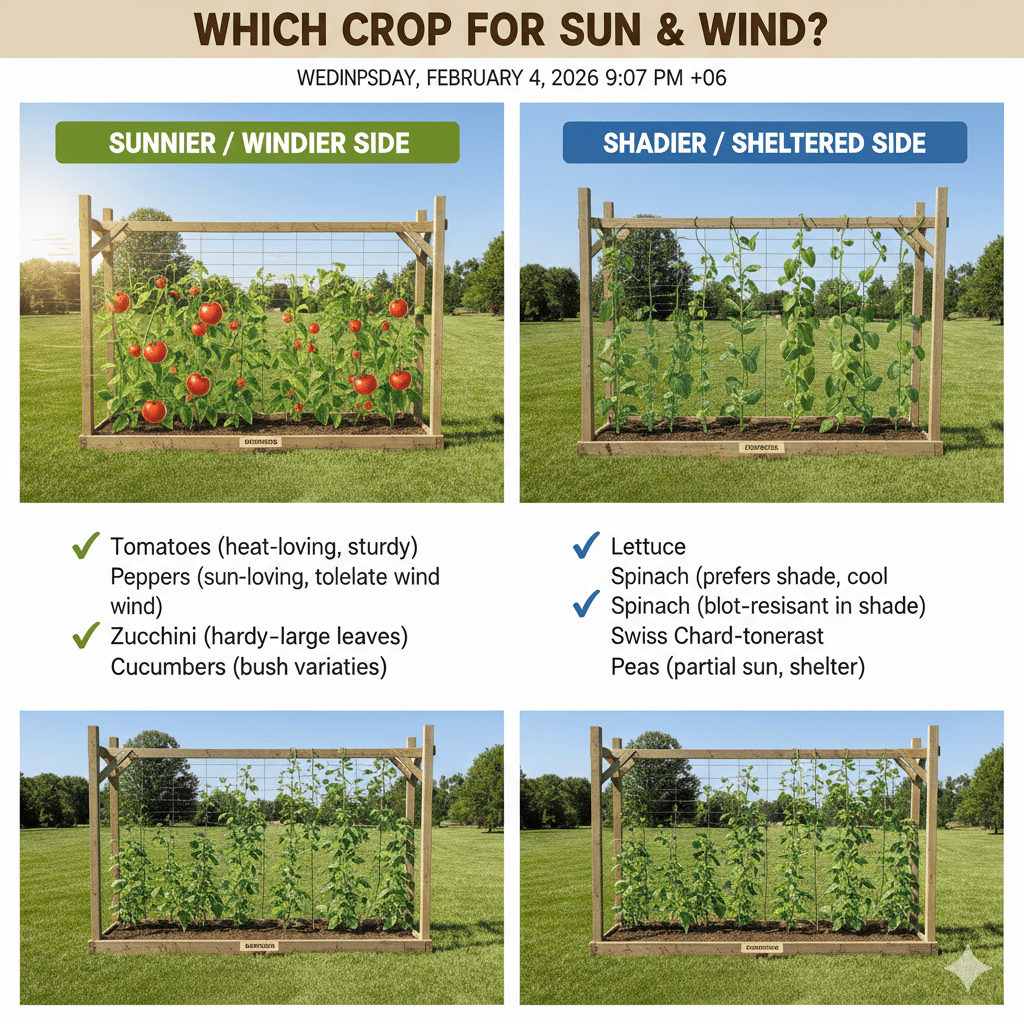
- Put cucumbers on the sunnier, warmer, more sheltered side whenever possible
- Cucumbers are more sensitive to cold nights and wind damage early in the season
- They also have higher water needs and benefit from slightly more heat
- Put cherry tomatoes on the slightly shadier or windier side if you must choose
- Most modern cherry tomato varieties tolerate (and even prefer) a little afternoon shade in hot climates
- Better airflow helps prevent fungal diseases on tomatoes
Companion Planting Boosters (Optional but Helpful)
Add these low-growing companions at the base of the trellis:
- Basil (repels thrips, hornworms, and flies; enhances tomato flavor)
- Marigolds (deters nematodes and some beetles)
- Nasturtium (trap crop for aphids; edible flowers)
- Dwarf French marigolds or alyssum (attract beneficial insects)
Keep companions 8–12 inches away from the main stems to avoid root competition.
Training and Pruning Techniques for Success
Training is non-negotiable when growing both crops on the same structure. Without it, vines will tangle, shade each other, and collapse under their own weight.
Training Cucumbers on the Trellis
- Start early — Begin guiding vines when they are 8–12 inches tall.
- Use a single-leader or two-leader system
- Single leader: Remove all side shoots, keep only the main vine
- Two leaders: Allow the two strongest basal shoots, remove the rest (Two-leader method often gives higher total yield on strong trellises)
- Tie gently but frequently
- Use soft twine, velcro ties, or plastic plant clips every 8–12 inches
- Never tie so tightly that you constrict the stem
- Manage lateral shoots aggressively
- Pinch or cut side shoots when they’re 4–8 inches long
- The goal is one (or two) strong vertical vines per plant
Training Cherry Tomatoes on the Trellis
- Choose your pruning style early
- Single leader (most common for shared trellises): Remove every sucker
- Double leader: Keep one strong sucker below the first flower cluster, remove all others
- Prune suckers regularly
- Check every 4–7 days
- Remove suckers when they’re 2–4 inches long (easier and less stressful to the plant)
- Tie vines loosely
- Use the same soft ties as cucumbers
- Create figure-8 loops so stems can expand
- Top the plant (optional)
- In short-season climates or very tall trellises: top the vine 2–3 weeks before first expected frost
- This directs energy into ripening existing fruit
Key timing difference Cucumbers need more frequent pruning of laterals early in the season. Tomatoes need consistent sucker removal throughout the entire growing cycle.
Watering, Feeding & Nutrient Management for Two Crops
Although cucumbers and cherry tomatoes have broadly similar needs, there are meaningful differences in quantity, timing, and sensitivity that become very important when they share the same root zone and trellis.
Do They Have the Same Water Needs?
No — cucumbers are noticeably thirstier.
- Cucumbers: Require consistently moist (never soggy) soil. Even one day of drought stress can cause bitter fruit, blossom-end rot (rare but possible), or aborted fruit.
- Cherry tomatoes: Prefer even moisture but tolerate short dry periods better. Overwatering late in the season often leads to cracking and diluted flavor.
Practical compromise for shared trellis Aim for the higher end of tomato needs — which is usually sufficient for cucumbers if you mulch well and check soil moisture frequently.
Best Irrigation Methods for Vertical Systems
- Drip irrigation or soaker hoses (best choice)
- Lay one line along the base of each side of the trellis
- Use emitters or holes spaced 12–18 inches apart
- Water slowly and deeply (30–60 minutes per session)
- Hand watering with a wand
- Direct water to the root zone, avoid wetting foliage
- Essential during early establishment and fruit set
- Overhead watering — avoid after flowering
- Increases fungal disease risk dramatically on both crops
Frequency guideline (adjust for your climate and soil)
- Early growth (first 4–5 weeks): 2–3 times per week
- Flowering & fruiting: 3–5 times per week (daily in hot, dry, windy conditions)
- Always check soil 4–6 inches deep — water when the top 1–2 inches feel dry
Mulching tip Apply 2–3 inches of straw, shredded bark, or compost around the base. This reduces evaporation by 30–50%, keeps soil temperature stable, and dramatically lowers watering frequency.
Fertilizer Schedule (Organic & Conventional Options)
Both crops are heavy feeders, but nutrient priorities shift over the season.
Phase 1: Transplant to first flowers (≈ weeks 1–5)
- Goal: Strong vegetative growth
- N-P-K emphasis: Higher nitrogen
- Organic: Fish emulsion, liquid kelp, or compost tea (every 7–10 days)
- Conventional: Balanced 10-10-10 or 20-20-20 (half strength) every 10–14 days
Phase 2: Flowering through early fruit set (≈ weeks 5–9)
- Goal: Strong blooms and fruit initiation
- N-P-K emphasis: Balanced → slightly higher phosphorus
- Organic: Bone meal or rock phosphate side-dressed + liquid seaweed
- Conventional: Switch to 5-10-10 or tomato-specific fertilizer
Phase 3: Heavy fruit production (≈ week 9+)
- Goal: Fruit size, sweetness, and continued production
- N-P-K emphasis: Higher potassium, lower nitrogen
- Organic: Wood ash (lightly), kelp meal, banana peel water, or comfrey tea
- Conventional: 5-10-15 or 0-10-10 every 10–14 days
Important shared-trellis adjustments
- Cucumbers continue to need moderate nitrogen longer into the season
- Cherry tomatoes suffer from too much nitrogen late (lots of leaves, few sweet fruits) → Feed the whole bed with a balanced product early, then switch to low-nitrogen/high-potassium formulas around first fruit set. Top-dress cucumbers individually with a light nitrogen source if they start yellowing.
Common Deficiency Symptoms & Quick Fixes
- Yellowing between veins (older leaves) → Nitrogen deficiency → Apply fish emulsion or blood meal immediately
- Purpling on undersides of leaves → Phosphorus deficiency → Side-dress bone meal or rock phosphate
- Brown, scorched leaf edges → Potassium deficiency → Apply kelp meal, wood ash, or sulfate of potash
- Blossom-end rot (tomatoes mostly) → Calcium + inconsistent moisture → Add crushed eggshells or gypsum + stabilize watering
- Bitter cucumbers → Water stress or potassium imbalance → Increase watering consistency + add potassium source
Pest and Disease Prevention on a Shared Trellis
Vertical growing is one of the most effective cultural controls for the worst diseases of both crops — but vigilance is still required.
Most Common Problems When Growing Both Together
- Cucumbers
- Powdery mildew
- Downy mildew (more humid climates)
- Cucumber beetles (vectors of bacterial wilt)
- Aphids
- Cherry tomatoes
- Early blight
- Septoria leaf spot
- Late blight (cool, wet conditions)
- Hornworms / fruitworms
- Blossom-end rot (physiological)
Early Warning Signs
- White powdery coating on upper leaf surfaces → powdery mildew
- Yellow angular spots that turn brown → downy mildew
- Tiny holes in leaves + striped beetles → cucumber beetles
- Dark concentric rings on lower leaves → early blight
- Small dark spots with yellow halos → septoria
- Green caterpillars with white stripes → hornworms
Cultural Controls That Work Best in Vertical Systems
- Morning watering only — foliage dries quickly
- Excellent airflow — prune aggressively and avoid overcrowding
- Remove lower leaves — anything touching or within 12 inches of soil
- Rotate crops yearly — even in raised beds/containers
- Clean up all plant debris at season end
- Use disease-resistant varieties (already covered)
Organic Spray Options (with Realistic Effectiveness)
| Issue | Organic Treatment | Effectiveness | Frequency | Notes |
|---|---|---|---|---|
| Powdery mildew | 1:9 milk:water OR potassium bicarbonate | High | Every 7–10 days | Milk works surprisingly well preventatively |
| Downy mildew | Copper-based fungicide (OMRI) | Medium–High | At first sign | Use sparingly |
| Early blight / Septoria | Bacillus subtilis (Serenade) | Medium–High | Every 7–14 days | Very safe |
| Aphids | Insecticidal soap + neem oil | High | As needed | Spray undersides of leaves |
| Cucumber beetles | Row cover early + hand-picking | High | Daily inspection | Yellow sticky traps also help |
| Hornworms | Hand removal + Bt (Bacillus thuringiensis) | Very High | As soon as spotted | Look for black frass |
Rescue strategy if one crop gets badly diseased
- Isolate affected plant immediately (cut and remove)
- Increase airflow around remaining plants
- Apply appropriate organic spray to healthy plants preventatively
- In most cases the second crop can still be saved if caught early
Harvesting Tips to Maximize Yield and Quality
Proper harvesting technique directly influences total season-long production and fruit quality — especially when two heavy-producing crops share the same structure.
Best practices for both crops
- Harvest frequency Pick every 1–2 days during peak production. Leaving over-mature fruit on the plant dramatically slows new flowering and fruit set.
- Best time of day Early morning is ideal — fruits are crisp, fully hydrated, and have peak flavor. Avoid harvesting during the hottest part of the day (fruit can soften and become prone to bruising).
- How to harvest without damaging vines
- Use sharp scissors or garden snips (never pull or twist)
- Support the fruit with one hand while cutting the stem with the other
- For cucumbers: leave ¼–½ inch of stem attached to prevent rot entry
- For cherry tomatoes: snip the entire cluster or pick individual fruits — avoid pulling on the vine
- Continuous picking strategy The more you harvest, the more the plant produces. A neglected cucumber left to yellow and enlarge can reduce new fruit set by 30–50% for several days.
Expected yield increase from proper trellising Gardeners using a well-managed dual-crop trellis typically see:
- Cucumbers: 40–80% more fruit per plant
- Cherry tomatoes: 50–100% more fruit per plant compared to the same varieties grown on the ground without support.
Common Mistakes That Destroy Dual-Crop Trellis Results
These are the errors most frequently seen when gardeners first try combining cucumbers and cherry tomatoes vertically:
- Using a weak or poorly anchored trellis
- Choosing overly vigorous, old-fashioned cucumber varieties
- Planting too densely (less than 18–20 inches between plants)
- Not pruning suckers and laterals regularly
- Letting cucumbers grow over and shade tomato plants
- Watering inconsistently (especially during fruit development)
- Failing to remove lower leaves touching the soil
- Using flimsy twine or ties that cut into stems
- Over-fertilizing with nitrogen late in the season (lots of leaves, few fruits)
- Not inspecting daily for cucumber beetles or hornworms
Avoiding just the top 3–4 of these mistakes usually transforms a mediocre harvest into an outstanding one.
Seasonal Timeline – Month by Month Checklist
(Assuming a typical temperate growing season with planting in late spring)
March–April (pre-season) □ Build and install trellis □ Prepare soil (add compost, ensure good drainage) □ Order/buy seeds or healthy transplants □ Plan variety combination and layout
May (planting & early growth) □ Plant hardened-off transplants after last frost □ Install drip/soaker system + mulch □ Begin gentle training as soon as vines reach 8–12 inches □ Water consistently, fertilize lightly with balanced feed
June (vegetative growth & first flowers) □ Train vines weekly □ Prune suckers (tomatoes) and laterals (cucumbers) aggressively □ Switch to bloom/fruit fertilizer □ Monitor for cucumber beetles and powdery mildew
July–August (peak production) □ Harvest every 1–2 days □ Continue pruning and tying □ Maintain high potassium feeding □ Watch for hornworms, blight symptoms, and water stress □ Add shade cloth if afternoon temperatures exceed 95°F (35°C)
September–October (late season) □ Reduce nitrogen completely □ Top indeterminate vines if desired □ Continue daily picking to prolong production □ Remove diseased foliage immediately □ Prepare for season-end cleanup
Frequently Asked Questions
Can I grow indeterminate tomatoes with cucumbers on the same trellis? Yes — in fact, most successful shared-trellis gardeners use indeterminate cherry tomatoes (Sungold, Sweet 100, etc.) because they make the best use of vertical space. Just be diligent about pruning suckers and keeping both crops balanced.
How tall should the trellis be? 6–8 feet is ideal for most home gardeners. This allows 7–10 feet of usable vine length while remaining easy to reach and manage. Trellises taller than 8 feet become hard to harvest and train without ladders.
Will cucumbers strangle or overtake the tomato plants? They can — if left untrained. Aggressive pruning of cucumber laterals and proper spacing (minimum 24–30 inches between crops) usually prevents this. Staggered planting also helps.
What if one crop gets diseased — can I save the other? Often yes. Remove the affected plant(s) completely, increase airflow around the remaining plants, and apply a preventive organic spray (Bacillus subtilis or potassium bicarbonate). Many gardeners lose only one crop in a bad disease year.
Can I do this in containers? Yes, but use large containers (20–30 gallons per 2–3 plants) and a very strong trellis system (e.g., heavy-duty cages or wall-mounted panels). Watering will need more attention.
What’s the best trellis netting material? Plastic garden netting with 4–6 inch openings works well. Cattle panels are even better (no sagging), but netting is lighter and easier for beginners.
How much sun do I really need? Minimum 7–8 hours of direct sun daily. 8–10+ hours produces noticeably higher yields and sweeter fruit. Less than 6 hours will result in disappointing production.
Final Thoughts & Quick Reference Cheat Sheet
Growing cucumbers and cherry tomatoes together on one well-designed trellis is one of the most efficient and rewarding ways to garden in limited space. When you choose compatible varieties, build a strong structure, train both crops diligently, and stay consistent with watering and pruning, the results are often dramatically better than growing either crop alone on the ground.
If you only remember 5 things…
- Use disease-resistant, moderately vigorous varieties
- Build a strong trellis (A-frame or cattle panel arch recommended)
- Space plants properly and stagger them when possible
- Prune aggressively and train vines upward from the very beginning
- Harvest frequently — the more you pick, the more you get
Quick Reference Cheat Sheet
- Best cherry tomatoes: Sungold, Jasper, Sweet 100
- Best cucumbers: Diva, Picolino, Marketmore 76
- Spacing: 18–24″ tomatoes, 12–18″ cucumbers, 24–30″ between crops
- Trellis height: 6–8 ft
- Leader system: Single or double for both crops
- Peak feeding: High potassium once fruit sets
- Harvest: Every 1–2 days, early morning, with snips
Thank you for reading — happy gardening and enjoy your most productive small-space harvest yet!