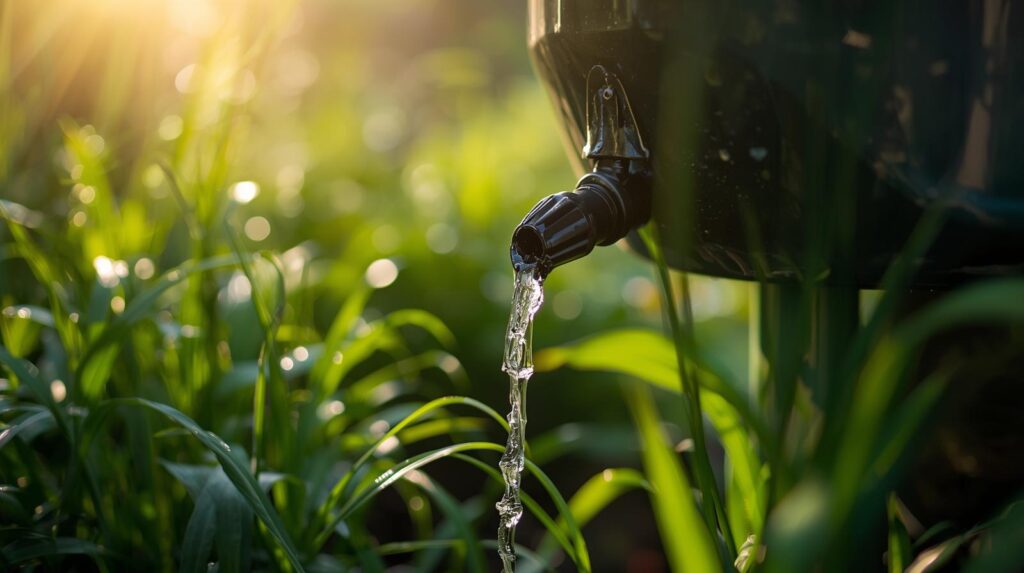
Every growing season, gardeners face the same frustrating dilemma: plants need consistent moisture, yet water is becoming more expensive, restricted, and unreliable. Hand watering wastes time, sprinklers lose water to evaporation, and municipal water often contains chemicals that aren’t ideal for soil health. This is exactly why drip irrigation from rain barrels has emerged as one of the most efficient, sustainable, and practical solutions for modern gardens.
By combining harvested rainwater with targeted drip irrigation, gardeners can deliver moisture directly to plant roots—slowly, evenly, and with minimal waste. From an agricultural efficiency standpoint, this approach mirrors best practices used in professional crop production, scaled down perfectly for home gardens, raised beds, and small plots.
In this comprehensive guide, you’ll learn how drip irrigation from rain barrels works, whether it’s right for your garden, what components you need, and how to design a reliable low-pressure system that saves water while improving plant health and yields.
What Is Drip Irrigation from Rain Barrels?
Understanding Low-Pressure Drip Irrigation Systems
Drip irrigation is a method of watering plants by delivering small amounts of water directly to the soil near plant roots through tubing and emitters. Unlike sprinklers, drip systems minimize evaporation, runoff, and leaf wetness.
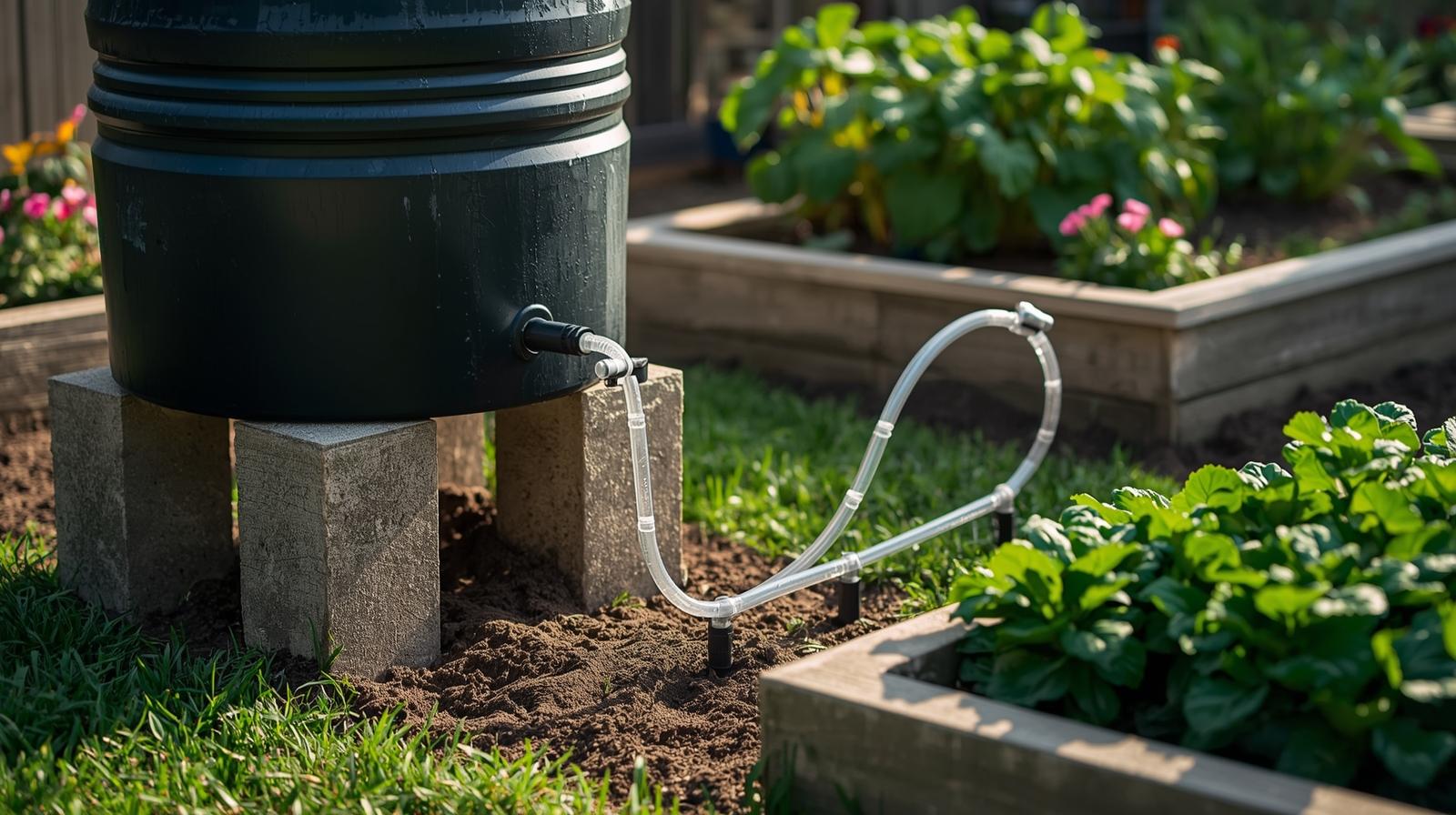
When paired with rain barrels, drip irrigation becomes a low-pressure, gravity-fed system. Instead of relying on municipal water pressure, water flows from elevated rain barrels through tubing using gravity alone—or with minimal pump assistance.
This approach is especially well-suited to:
-
Raised bed gardens
-
Vegetable plots
-
Container gardens
-
Urban and suburban landscapes
How Rain Barrels Supply Water to Drip Lines
Rain barrels collect runoff from rooftops and store it for later use. When connected to drip irrigation tubing, water exits the barrel through a spigot and flows into the system.
There are two main methods:
-
Gravity-fed systems (no pump, relies on elevation)
-
Pump-assisted systems (adds pressure when gravity isn’t enough)
Most gardeners start with gravity-fed drip irrigation from rain barrels because it’s simple, affordable, and energy-free.
Who Benefits Most from This System?
From my experience working with both home gardeners and small-scale growers, this system is ideal for:
-
Gardeners facing watering restrictions
-
Anyone seeking to reduce water bills
-
Growers interested in sustainable or regenerative practices
-
Those managing raised beds or compact growing spaces
Benefits of Drip Irrigation from Rain Barrels
Exceptional Water Efficiency
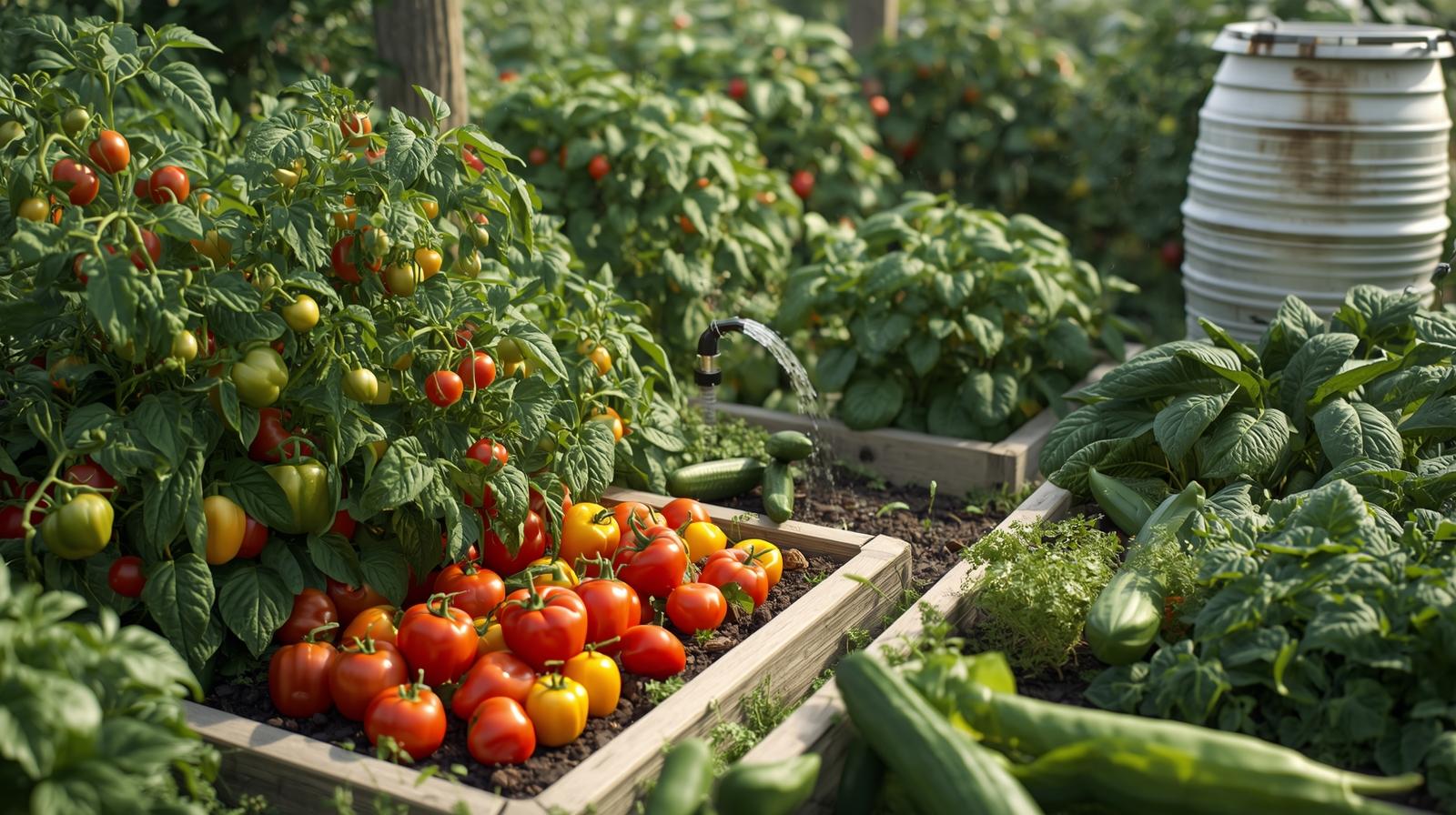
Drip irrigation is widely recognized as one of the most water-efficient irrigation methods available. When combined with rainwater harvesting, efficiency increases even further.
Key advantages include:
-
Water delivered directly to roots
-
Minimal evaporation and runoff
-
Reduced weed growth between rows
In agricultural systems, drip irrigation can reduce water use by 30–60% compared to overhead watering—similar savings are achievable in home gardens.
Improved Plant Health and Yield
Consistent moisture at the root zone reduces plant stress, leading to:
-
Stronger root development
-
More uniform growth
-
Reduced blossom end rot in tomatoes and peppers
-
Fewer fungal diseases caused by wet foliage
Rainwater itself is naturally soft and free of chlorine, making it ideal for vegetables, herbs, and fruiting plants.
Cost Savings and Sustainability
Drip irrigation from rain barrels reduces reliance on municipal water, which means:
-
Lower water bills
-
Less strain on local water supplies
-
Greater resilience during droughts
From a sustainability perspective, this system checks all the boxes: conservation, efficiency, and long-term soil health.
Is Drip Irrigation from Rain Barrels Right for Your Garden?
Garden Size, Layout, and Crop Types
This system works best for:
-
Raised beds (excellent gravity flow)
-
Row gardens under 500–1,000 square feet
-
Containers and grow bags
Vegetables like tomatoes, peppers, cucumbers, squash, beans, leafy greens, and herbs respond especially well to drip irrigation.
Large in-ground gardens can still use rain-barrel-fed drip systems but may require multiple barrels or a pump.
Rainfall Patterns and Storage Capacity
Before installing, consider:
-
Average rainfall in your area
-
Roof catchment size
-
Number and size of rain barrels
A single 55-gallon barrel can irrigate a small raised bed garden for several watering cycles, but larger systems benefit from multiple connected barrels.
Limitations to Be Aware Of
While effective, drip irrigation from rain barrels does have constraints:
-
Low pressure limits system length
-
Uneven terrain may reduce flow
-
Extended dry periods can empty barrels quickly
These limitations can be managed with good planning and system design.
Essential Components for a Rain Barrel Drip Irrigation System
Rain Barrels and Water Storage
The foundation of the system is the rain barrel itself. Best practices include:
-
Food-safe, BPA-free materials
-
Capacity of 40–80 gallons per barrel
-
Secure lids with mesh screens
Elevating barrels 12–24 inches significantly improves water pressure.
Drip Irrigation Hardware
A basic low-pressure drip system requires:
-
Mainline tubing (½-inch poly tubing)
-
Drip lines or emitter tubing
-
Barbed fittings and connectors
-
End caps and stakes
Choose emitters designed for low-pressure or gravity-fed systems, typically rated at 0.5–1 GPH (gallons per hour).
Filters and Pressure Considerations
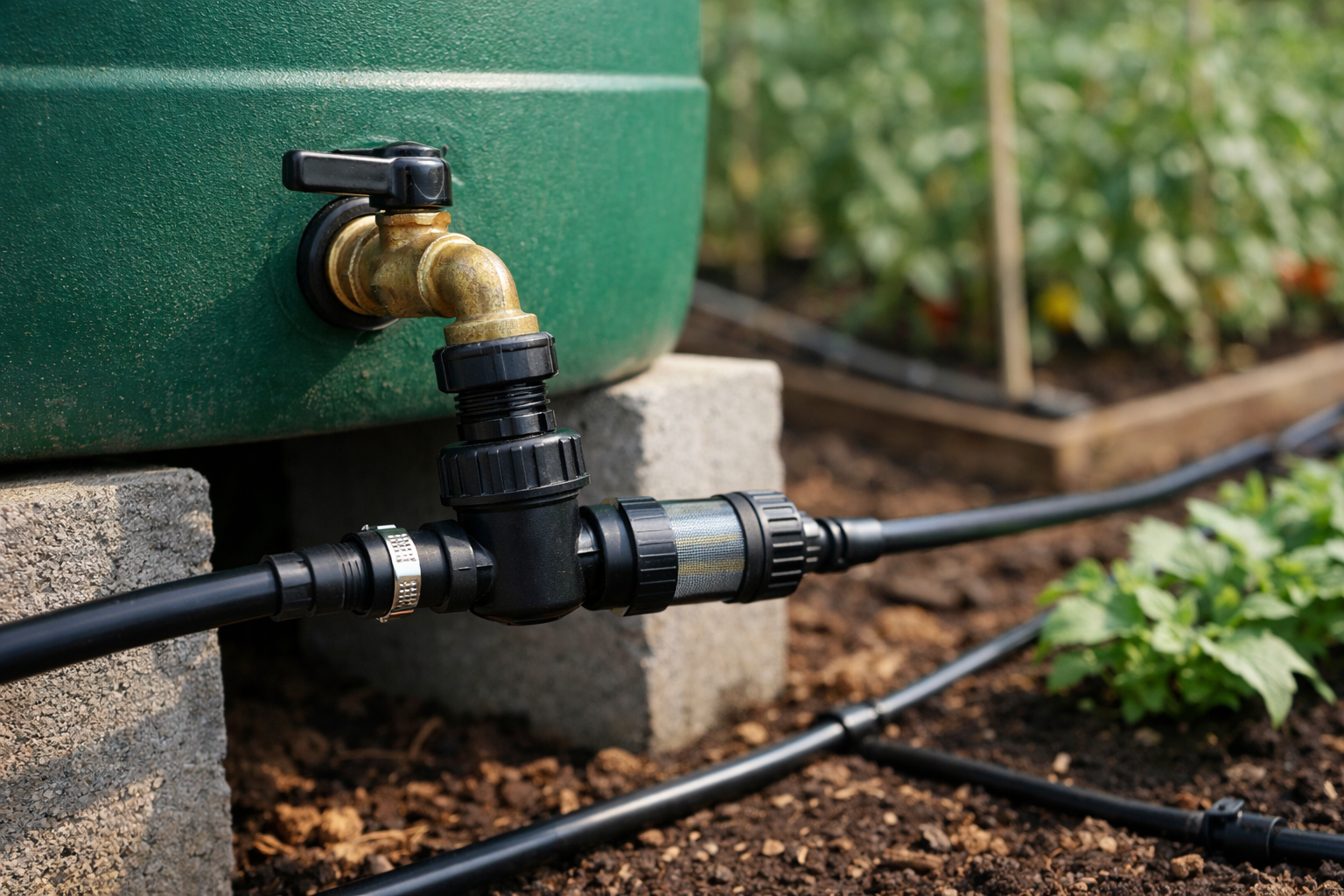
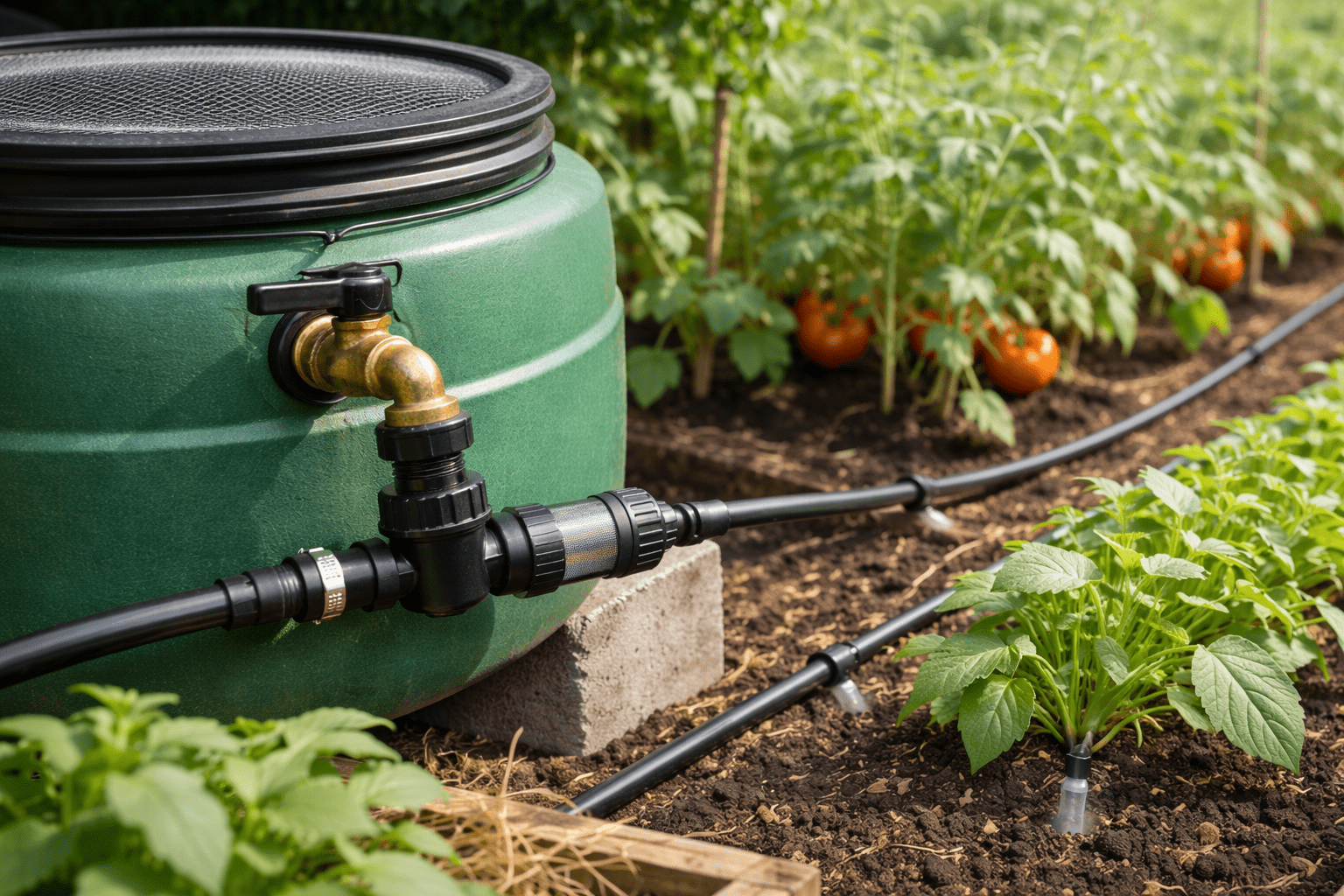
Even rainwater contains fine debris. A simple inline filter helps prevent clogging. Avoid standard pressure regulators designed for municipal systems—they often restrict flow too much for gravity-fed setups.
Step-by-Step Guide: How to Set Up Drip Irrigation from Rain Barrels
Planning Your System Layout
Start by mapping:
-
Garden beds and rows
-
Distance from rain barrel to plants
-
Number of plants and emitters needed
This planning stage prevents uneven watering and flow issues later.
Installing the Rain Barrel Correctly
Key installation steps include:
-
Connecting the barrel to a downspout
-
Installing an overflow outlet
-
Elevating the barrel on a stable base
Always direct overflow water away from foundations.
Connecting Drip Lines to Rain Barrels
Use a threaded adapter at the barrel spigot to connect mainline tubing. Secure fittings tightly to prevent leaks.
Once connected:
-
Run mainline tubing to garden beds
-
Attach drip lines or emitters near plants
-
Secure tubing with stakes
Testing and Adjusting Water Flow
Before relying on the system:
-
Fill the barrel completely
-
Open the valve slowly
-
Check for leaks and uneven flow
Make small adjustments to emitter spacing or tubing layout as needed.
Gravity-Fed vs. Pump-Assisted Drip Irrigation from Rain Barrels
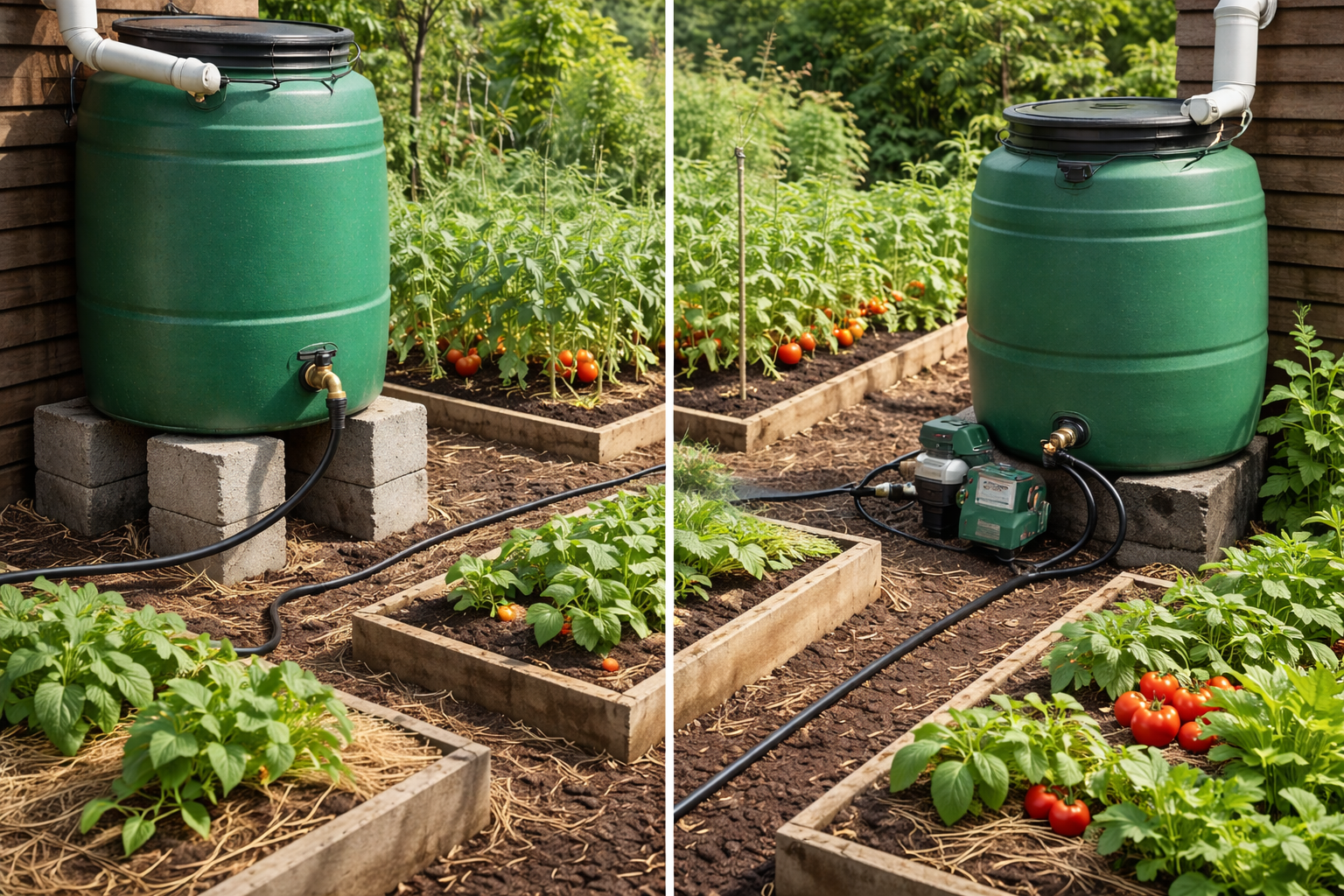
Choosing between a gravity-fed system and a pump-assisted system is one of the most important design decisions when setting up drip irrigation from rain barrels. Each approach has clear advantages depending on garden size, layout, and water needs.
Gravity-Fed Drip Irrigation Systems
Gravity-fed systems rely entirely on elevation to move water through the drip lines. The higher the rain barrel sits above the garden, the more pressure is generated.
Advantages:
-
No electricity required
-
Simple and reliable
-
Low upfront and operating cost
-
Ideal for raised beds and compact gardens
Limitations:
-
Lower water pressure
-
Limited line length and number of emitters
-
Slower watering times
In practice, gravity-fed systems work best when rain barrels are elevated at least 18–24 inches and drip lines are kept relatively short.
Pump-Assisted Drip Irrigation Systems
Pump-assisted systems use a small electric or solar pump to increase water pressure.
Advantages:
-
Supports larger gardens
-
Allows longer tubing runs
-
More consistent emitter output
Considerations:
-
Higher upfront cost
-
Requires power source
-
Additional maintenance
Many experienced gardeners start with gravity-fed drip irrigation from rain barrels and upgrade to a pump only if system expansion demands it.
Which System Is Right for You?
From a professional irrigation standpoint:
-
Choose gravity-fed for simplicity, sustainability, and small to medium gardens
-
Choose pump-assisted for larger plots or complex layouts
Best Practices for Using Drip Irrigation from Rain Barrels
Smart Watering Schedules
Drip irrigation works best when used intentionally. Expert guidelines recommend:
-
Watering early in the morning
-
Allowing soil to dry slightly between watering cycles
-
Adjusting frequency based on weather and crop stage
Rainwater is especially valuable during hot periods when consistent moisture prevents plant stress.
Matching Emitters to Plant Needs
Different crops require different water volumes:
-
Leafy greens: lower flow, more frequent watering
-
Fruiting plants: deeper, less frequent watering
-
Root crops: consistent moisture without saturation
Low-flow emitters (0.5–1 GPH) are ideal for rain barrel systems.
Combine Drip Irrigation with Mulching
One of the most effective strategies is pairing drip irrigation with organic mulch. This:
-
Reduces evaporation
-
Keeps soil temperature stable
-
Improves soil structure over time
From an agricultural efficiency perspective, this combination maximizes every gallon of harvested rainwater.
Maintenance, Safety, and System Longevity
Keeping Water and Lines Clean
Regular maintenance ensures reliable performance:
-
Flush drip lines every few weeks
-
Clean filters regularly
-
Inspect emitters for clogs
Rainwater is cleaner than many sources, but sediment can still accumulate.
Preventing Mosquitoes and Algae
Properly managed rain barrels do not attract mosquitoes:
-
Use sealed lids and fine mesh screens
-
Keep barrels shaded to reduce algae growth
-
Drain and refill systems regularly
Seasonal Maintenance and Winterization
In colder climates:
-
Drain barrels before freezing temperatures
-
Disconnect drip lines
-
Store tubing indoors if possible
These steps prevent cracking and extend system lifespan.
Common Problems and How to Fix Them
Low Pressure or Uneven Watering
Causes:
-
Insufficient barrel elevation
-
Too many emitters
-
Long tubing runs
Solutions:
-
Elevate the barrel higher
-
Reduce the number of emitters
-
Shorten or split irrigation zones
Clogged Emitters and Filters
Sediment buildup is the most common issue. Prevent it by:
-
Using inline filters
-
Flushing lines regularly
-
Avoiding very fine emitters
Running Out of Stored Rainwater
If barrels empty too quickly:
-
Add additional barrels
-
Reduce watering frequency
-
Prioritize high-value crops
Experienced growers often design systems with flexibility to adapt to rainfall variability.
Real-World Example: A Backyard Garden Using Drip Irrigation from Rain Barrels
A gardener with four raised beds installed two 55-gallon rain barrels connected to a gravity-fed drip irrigation system. The barrels were elevated 24 inches and connected with ½-inch mainline tubing and low-flow emitters.
Results after one growing season:
-
Over 50% reduction in municipal water use
-
Improved tomato yield and fruit consistency
-
Healthier soil moisture levels during heat waves
This mirrors results seen in many small-scale agricultural systems using low-pressure drip irrigation.
Cost Breakdown and Return on Investment
Initial Setup Costs
Typical costs include:
-
Rain barrels
-
Drip tubing and fittings
-
Filters and adapters
Gravity-fed systems are generally affordable, while pump-assisted systems cost more upfront.
Long-Term Savings and Efficiency Gains
Savings come from:
-
Reduced water bills
-
Lower plant loss due to stress
-
Increased yields per unit of water
From an agricultural economics perspective, drip irrigation from rain barrels offers one of the highest efficiency gains for home gardens.
Frequently Asked Questions About Drip Irrigation from Rain Barrels
Can drip irrigation work with low rain barrel pressure?
Yes, with proper elevation and low-flow emitters designed for gravity-fed systems.
How high should a rain barrel be for drip irrigation?
At least 18 inches is recommended; higher elevation improves flow.
Can drip irrigation from rain barrels be automated?
Yes, but automation typically requires a pump or low-pressure timer.
Is rainwater safe for edible crops?
Yes, when applied at soil level and produce is washed before consumption.
How many plants can one rain barrel support?
This depends on crop type, weather, and system efficiency, but a 55-gallon barrel can support a small raised bed garden for multiple watering cycles.
Conclusion: Is Drip Irrigation from Rain Barrels Worth It?
Drip irrigation from rain barrels combines two of the most effective water-management strategies available to gardeners today. By delivering harvested rainwater directly to plant roots, this system reduces waste, improves plant health, and lowers long-term costs.
From both professional agricultural experience and real-world gardening results, this approach is practical, scalable, and environmentally responsible. Whether you manage a few raised beds or a compact backyard plot, drip irrigation from rain barrels offers a smarter, more sustainable way to water your garden.
For gardeners serious about efficiency, resilience, and healthy crops, this system is well worth the investment.