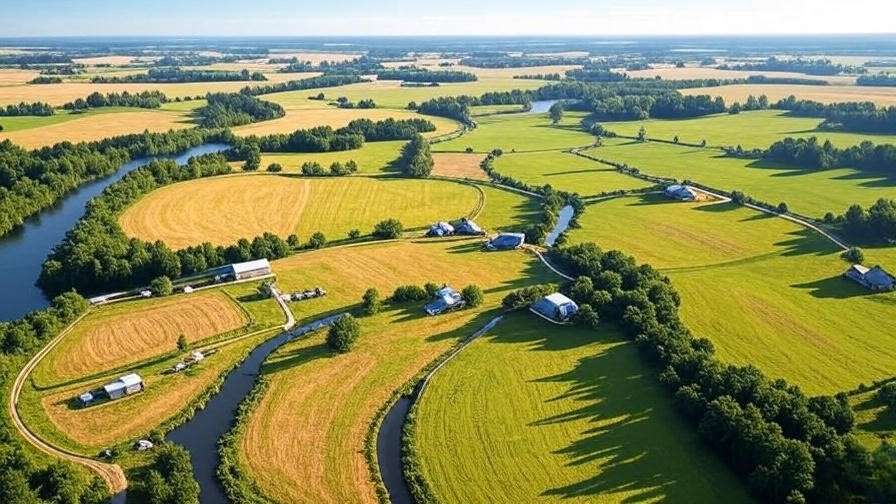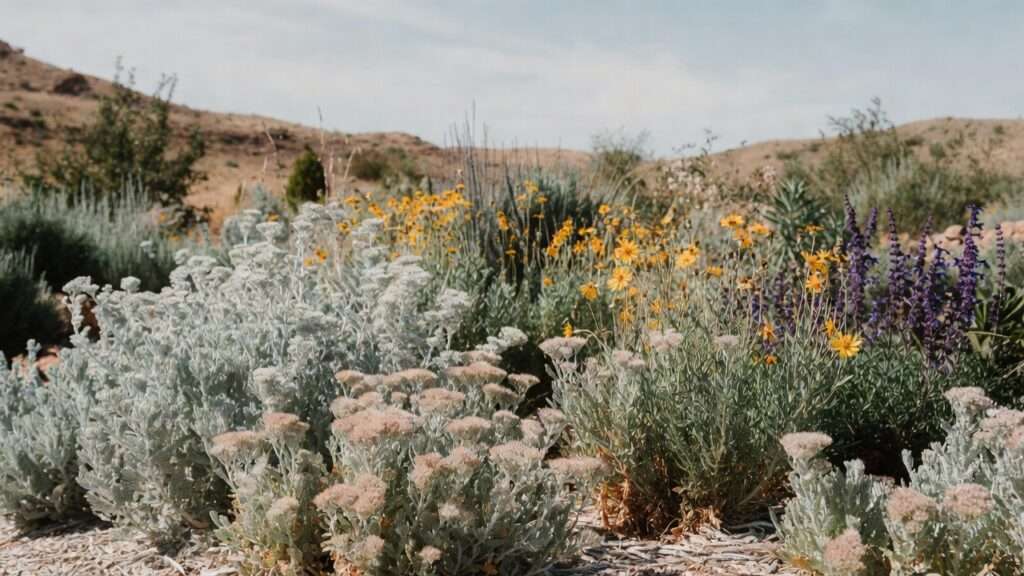
Imagine stepping into your garden during a scorching midsummer heatwave—temperatures soaring above 95°F (35°C), no rain in weeks, and water restrictions in full force—yet your borders burst with vibrant blooms, silvery foliage swaying gently, and pollinators buzzing happily. No wilting annuals, no daily watering marathons, no guilt over the hose. This isn’t a fantasy; it’s the reality for gardeners who embrace drought- and heat-tolerant perennials.
In an era of changing climates, prolonged dry spells, and rising utility costs, these resilient plants offer a practical solution. They return reliably year after year, demand far less irrigation once established (often 50-75% less water than traditional perennials), support essential pollinators and beneficial insects, prevent soil erosion on slopes or in poor ground, and deliver multi-season beauty with minimal fuss. Whether you’re managing a backyard plot, enhancing farm edges, or creating sustainable landscapes in hot, dry regions, these perennials solve the core challenge: how to maintain an attractive, functional garden without constant resource drain.
As an agricultural and horticultural expert drawing from university extension trials (e.g., Colorado State, Oklahoma State, Penn State, and others), field observations, and proven cultivar performance, this comprehensive guide goes beyond basic lists. We’ll explore the science behind their toughness, detail 15+ top-performing selections with zones, care specifics, and real-world insights, share planting and design strategies, maintenance secrets, common pitfalls, and answers to frequent questions. By the end, you’ll have the tools to build a low-water, resilient garden that thrives through heat, drought, and time.
Why Choose Drought- and Heat-Tolerant Perennials?
These plants aren’t just survivors—they’re masters of adaptation evolved in harsh environments like prairies, Mediterranean hillsides, and arid steppes. Key physiological traits include:
- Deep, extensive root systems that access moisture far below the surface.
- Reduced leaf surface area, silvery or fuzzy (pubescent) foliage that reflects sunlight and traps humid air to minimize transpiration.
- Thick, waxy cuticles or succulent-like tissues that store water.
- Efficient photosynthesis strategies, such as in some salvias and sedums, that conserve energy during stress.
- Dormancy or semi-dormancy mechanisms in extreme conditions, allowing quick recovery when rain returns.
The advantages extend beyond survival:
- Water conservation: Once established (typically after 1–2 seasons), many need supplemental water only during prolonged extremes.
- Climate resilience: They handle temperature swings, poor soils (sandy, rocky, low-fertility), and wind better than many ornamentals.
- Lower maintenance and costs: Minimal fertilizing, pruning, or pest interventions; reduced mowing or weeding in borders.
- Ecological benefits: Nectar-rich blooms sustain bees, butterflies, hummingbirds, and predatory insects; many are native or nativar-friendly, boosting biodiversity.
- Sustainability: Lower carbon footprint from decreased irrigation and inputs, ideal for eco-conscious gardeners or small-scale agricultural settings.
These perennials suit hot-summer regions (USDA zones 5–10 commonly), areas with summer drought, xeriscape principles, or anyone seeking water-wise, low-effort beauty.
Key Characteristics to Look for in Drought- and Heat-Tolerant Perennials
To succeed, prioritize plants with these traits:
- Full sun requirement (6+ hours direct sunlight daily)—essential for compact growth and abundant blooms.
- Well-drained soil preference—they resent “wet feet”; amend heavy clay with grit or plant on raised beds/slopes.
- Native or regionally adapted origins—prairie natives (e.g., Echinacea, Rudbeckia) or Mediterranean types (Lavandula, Salvia) excel.
- Low nutrient demands—over-fertilizing causes leggy growth and reduced drought tolerance.
- Built-in resistance—to pests, diseases, deer/rabbits (aromatic or fuzzy foliage helps).
- Extended bloom or interest—diverse flowering times ensure season-long appeal.
- Hardiness match—check USDA zones; most listed here span 4–9 or 5–10 for broad applicability.
Top Drought- and Heat-Tolerant Perennials: Our Expert Recommendations
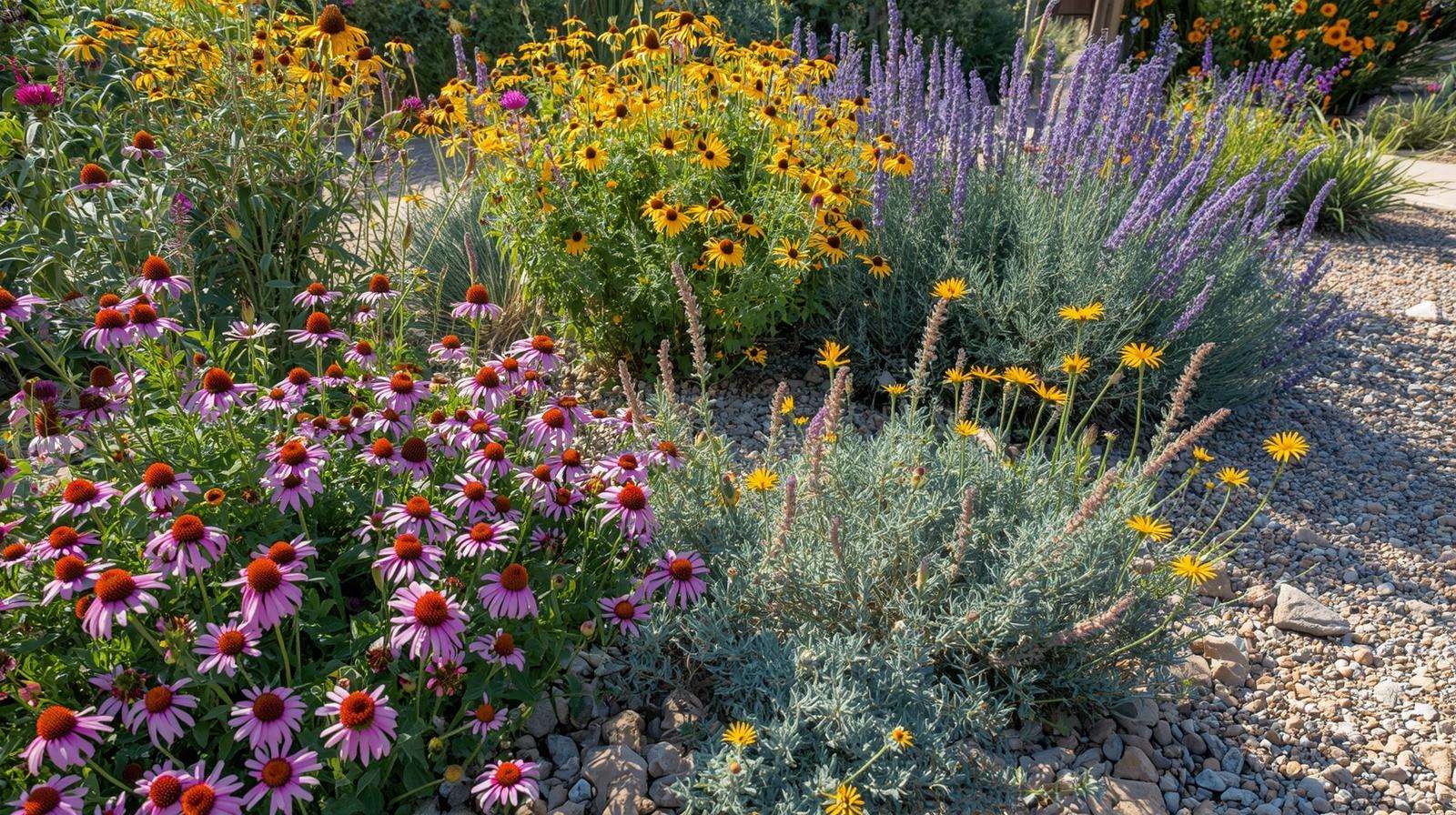
Here are standout choices, grouped for design ease. Selections draw from extension-recommended lists, Proven Winners trials, and gardener reports for reliability in hot, dry conditions. All prefer full sun and well-drained soil unless noted.
Flowering Stars (H3)
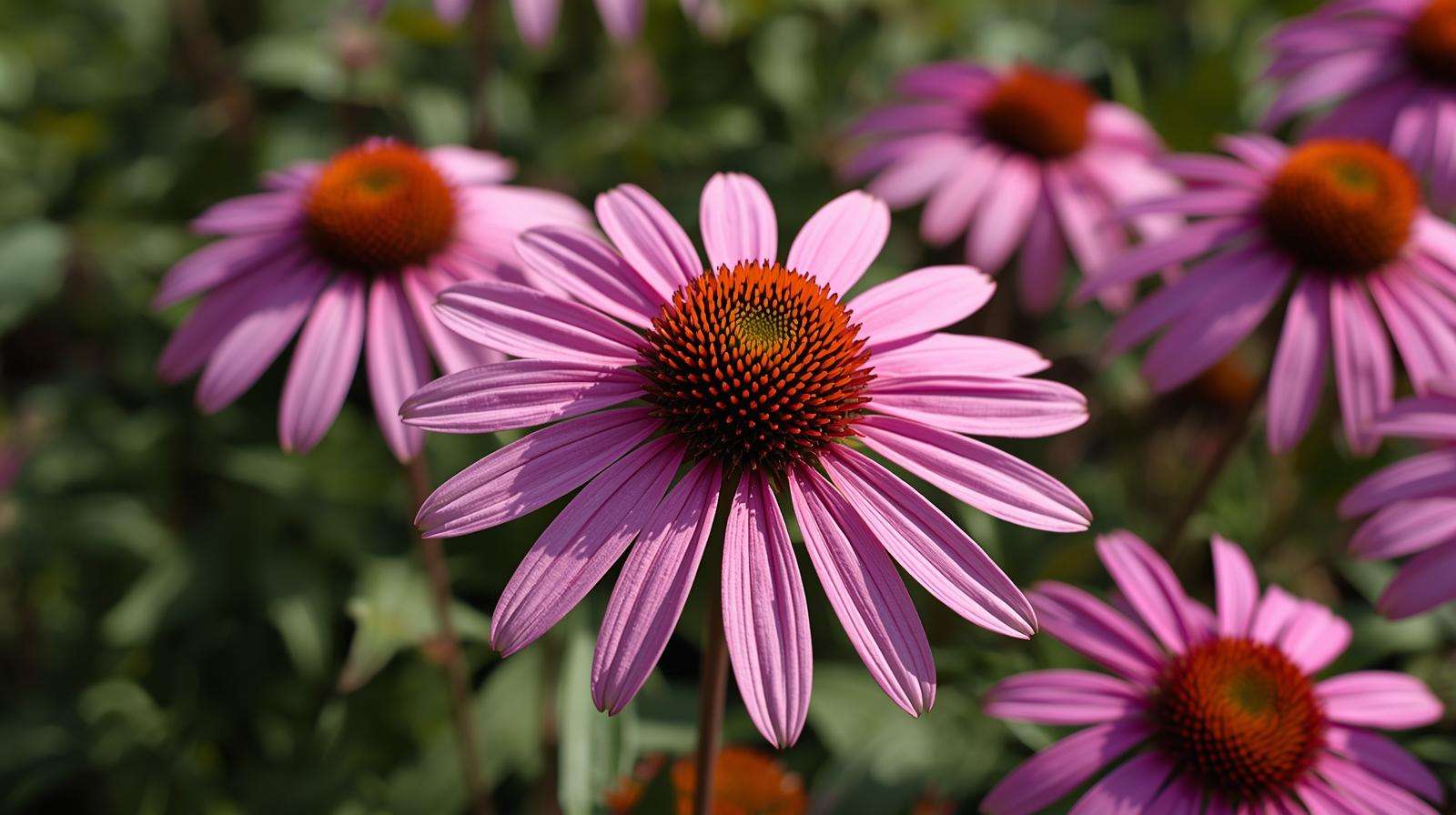
- Echinacea purpurea (Purple Coneflower) — Zones 3–9, 2–4 ft tall, summer blooms in pink/purple/white. Iconic daisy-like flowers with prominent cones attract butterflies; deep taproots make it extremely drought-tolerant once established. Deer-resistant; deadhead for rebloom. Cultivars like ‘Magnus’ or ‘White Swan’ perform reliably.
- Rudbeckia hirta / fulgida (Black-Eyed Susan) — Zones 3–9, 1–3 ft, midsummer–fall golden-yellow petals with dark centers. Prolific self-seeder; thrives in heat and poor soil. ‘Goldsturm’ is a classic; ‘American Gold Rush’ offers disease resistance.
- Achillea spp. (Yarrow) — Zones 3–9, 1–3 ft, flat-topped clusters in yellow, pink, red. Ferny foliage; excellent cut flower. ‘Moonshine’ (pale yellow) and ‘Paprika’ (red) hold color in heat. Shear after bloom for compact growth.
- Salvia nemorosa / greggii (Perennial salvias) — Zones 4–9, 1–3 ft, spikes of purple/blue/pink. Aromatic leaves deter deer; long bloom (early summer–fall with deadheading). ‘May Night’ and ‘Caradonna’ are top performers; heat-loving and pollinator magnets.
- Gaillardia (Blanket Flower) — Zones 3–10, 1–2 ft, daisy-like red/yellow bicolor. Blooms all summer; short-lived but self-seeds. ‘Arizona Sun’ is compact and prolific.
- Agastache spp. (Anise Hyssop / Hummingbird Mint) — Zones 5–9, 2–4 ft, tubular spikes in purple/blue. Licorice-scented foliage; hummingbirds adore it. ‘Black Adder’ excels in heat.
Foliage and Texture Standouts (H3)
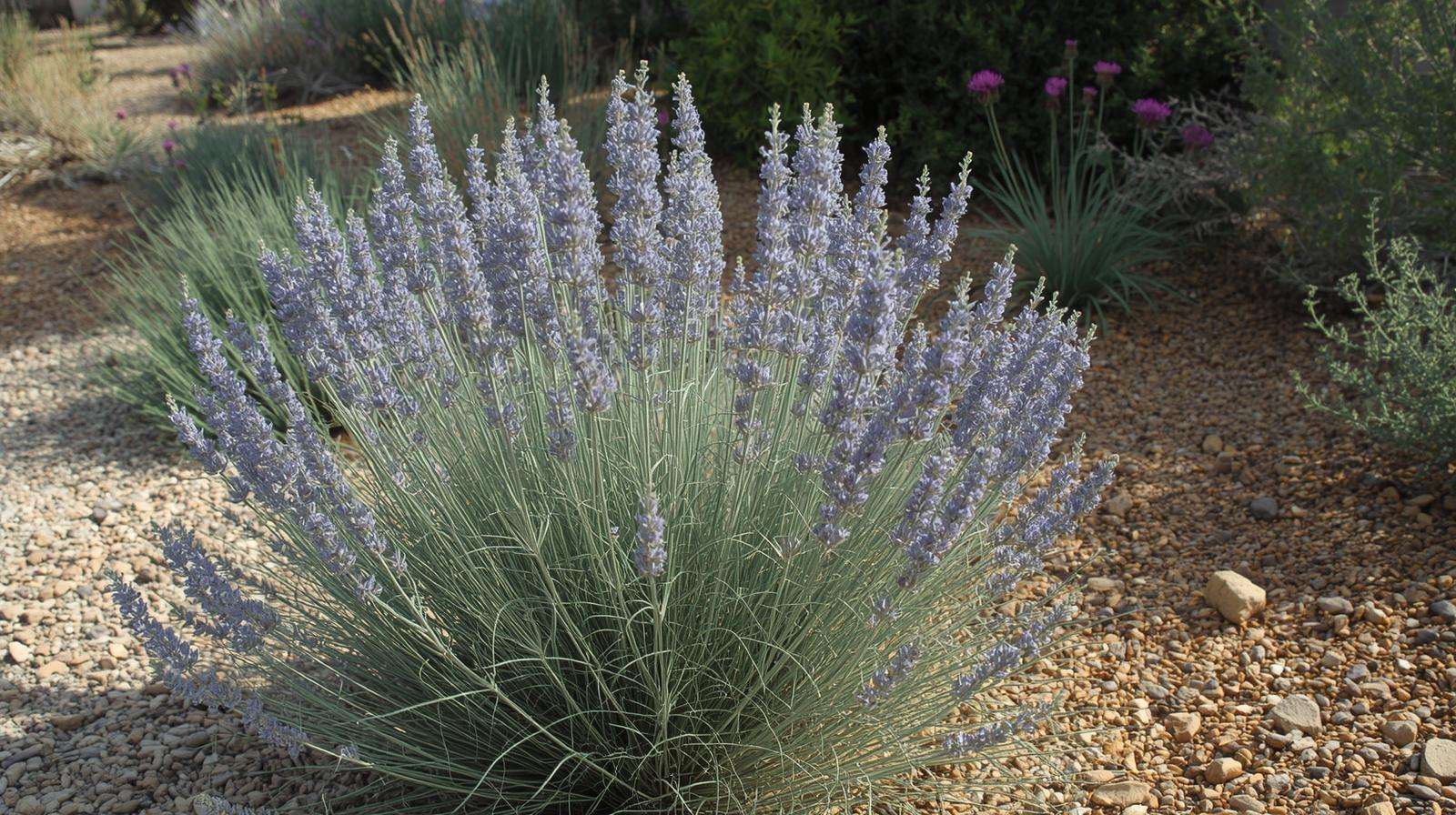
- Lavandula angustifolia (English Lavender) — Zones 5–9, 1–2 ft, purple spikes with silvery foliage. Classic fragrance; excellent drainage critical. ‘Hidcote’ or ‘Munstead’ are hardy choices.
- Perovskia atriplicifolia (Russian Sage) — Zones 4–9, 3–4 ft, airy blue-purple haze. Silvery stems; cut back in spring. ‘Little Spire’ for smaller spaces.
- Sedum / Hylotelephium (Stonecrop) — Zones 3–9, 6–24 in, succulent leaves, pink/red fall blooms. ‘Autumn Joy’ is foolproof; drought-proof succulent.
- Nepeta spp. (Catmint) — Zones 3–8, 1–2 ft, lavender-blue spikes. Aromatic; shear for rebloom. ‘Walker’s Low’ is a superstar.
Native Powerhouses and Pollinator Favorites (H3)
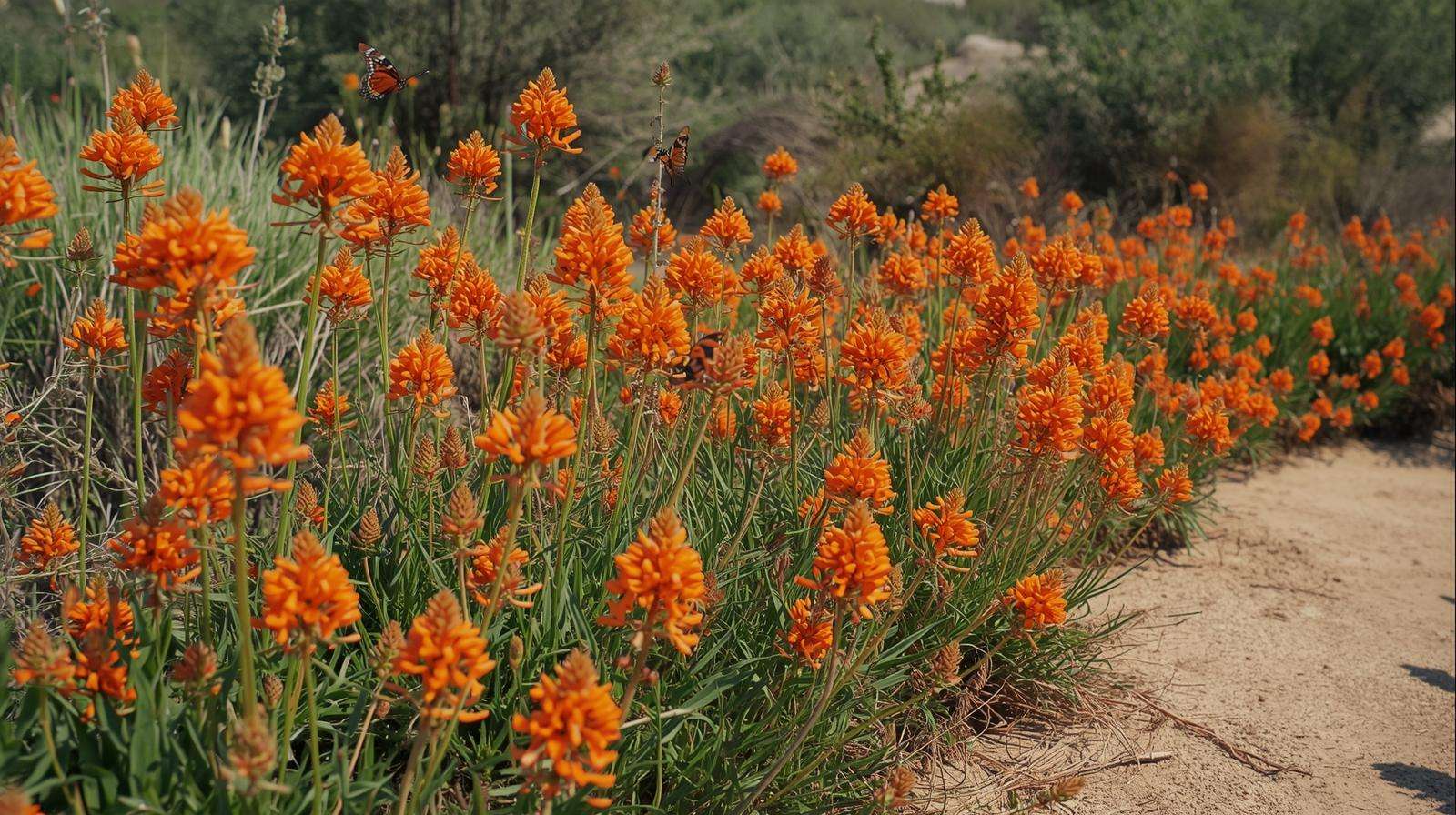
- Asclepias tuberosa (Butterfly Milkweed) — Zones 3–9, 1–2 ft, bright orange clusters. Essential for monarchs; taprooted for drought tolerance.
- Amsonia hubrichtii (Arkansas Bluestar) — Zones 5–9, 2–3 ft, blue spring stars, golden fall foliage.
- Penstemon spp. (Beardtongue) — Zones 3–9, 1–3 ft, tubular flowers in red/pink/purple. Pineleaf types excel in heat.
- Coreopsis verticillata (Threadleaf Coreopsis) — Zones 3–9, 1–2 ft, yellow daisies all summer. ‘Moonbeam’ is heat-proof.
Honorable mentions: Kniphofia (Red Hot Poker), Stachys byzantina (Lamb’s Ears), Liatris spicata.
These plants, when grouped thoughtfully, create dynamic, low-water displays.
How to Select and Plant Drought- and Heat-Tolerant Perennials
Success starts with site prep:
- Assess sun, slope, and soil (test drainage—dig hole, fill with water; should drain in hours).
- Amend minimally: Add gravel/sand for drainage; avoid rich organics.
- Plant in spring or fall for root establishment before heat.
- Water deeply but infrequently initially (1–2 inches weekly first season) to train deep roots.
- Mulch with gravel, bark, or low-water organics to retain moisture and suppress weeds.
- Space according to mature size; companions like grasses add structure.
Garden Design Ideas for Maximum Impact
- Create xeriscape borders with gravel mulch and layered heights.
- Design pollinator meadows mixing natives for biodiversity.
- Use as foundation plantings or edging veggie plots for low-maintenance agriculture.
- Layer textures/colors: tall Russian sage behind compact yarrow, sedum foreground.
Maintenance Tips for Long-Term Success
Once established, drought- and heat-tolerant perennials are among the lowest-maintenance plants in the garden. The goal is to mimic their natural prairie or steppe habitats: minimal interference, infrequent deep watering, and light seasonal cleanup.
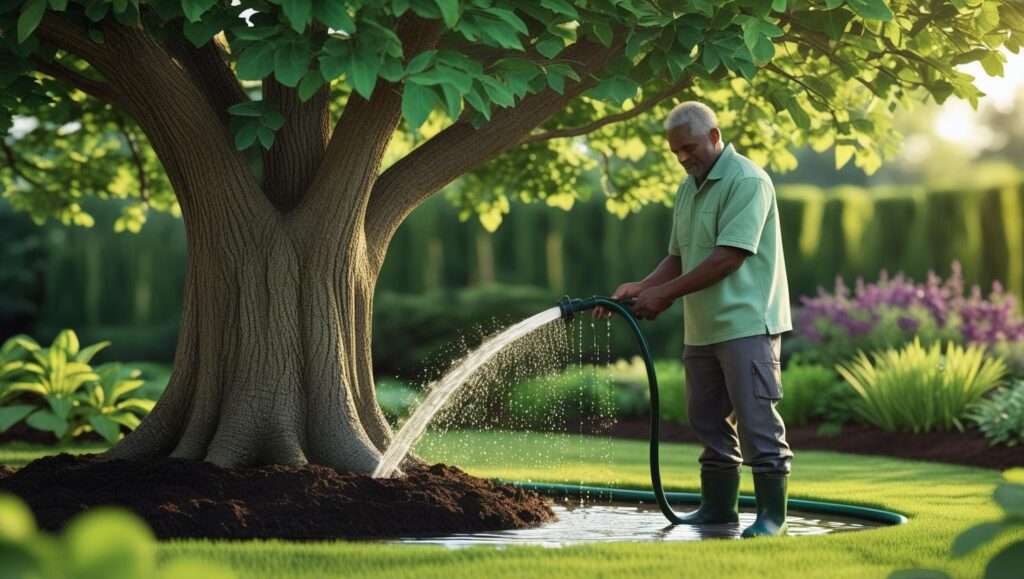
- Watering after establishment After the first full growing season (and sometimes two in very hot/dry climates), most of these perennials require little to no supplemental water except during multi-week droughts exceeding normal regional patterns. When you do water, apply deeply (1–2 inches) to the root zone rather than frequent shallow sprinkling—this reinforces deep rooting. Use a soaker hose or drip irrigation placed at the base to minimize leaf wetting and fungal risk.
- Pruning and deadheading schedules
- Spring: Cut back Russian sage, lavender, and catmint to 6–12 inches (or to new growth) to encourage bushy regrowth and prevent woodiness.
- Summer: Deadhead coneflowers, black-eyed Susans, blanket flowers, salvias, and coreopsis regularly to extend bloom time and prevent excessive self-seeding if undesired.
- Fall: Leave seed heads on Echinacea, Rudbeckia, and Gaillardia for winter interest and bird food; cut back only after hard frost if you prefer a tidier look. Sedum and yarrow can be left standing for structure.
- General rule: Avoid heavy shearing in late summer/fall to protect overwintering buds.
- Division timing for overcrowding Divide every 3–5 years in early spring or fall when clumps become dense in the center or flowering declines. Coreopsis, Nepeta, Achillea, and Salvia respond especially well. Discard the woody center and replant vigorous outer sections. This rejuvenates plants and provides free propagation material.
- Fertilizer Use sparingly—or not at all. These plants evolved in low-nutrient soils; excess nitrogen produces lush, weak growth that flops and suffers more in heat/drought. If growth seems poor, apply a light top-dressing of compost in spring or a balanced, slow-release granular fertilizer (e.g., 5-10-10) at half strength once per year. Many gardeners achieve excellent results with zero supplemental feeding.
- Pest and disease management Issues are rare due to tough foliage and natural defenses.
- Powdery mildew can occasionally appear on yarrow or phlox relatives in humid heat—ensure excellent air circulation and avoid overhead watering.
- Aphids or spider mites may visit stressed plants—blast with strong water stream or introduce ladybugs.
- Deer and rabbits usually avoid aromatic (Lavandula, Nepeta, Agastache, Salvia) or fuzzy (Stachys) types, though young Echinacea or Rudbeckia shoots may need temporary protection.
- Winter protection in colder zones In zones 4–6, apply 2–3 inches of loose mulch (shredded bark, straw, or pine needles) after the ground freezes to insulate roots. Avoid heavy wet mulch that can cause crown rot. Most listed plants are reliably hardy without extra cover in zones 5+.
Common Mistakes to Avoid
Even experienced gardeners can stumble when transitioning to water-wise perennials. Here are the most frequent pitfalls and how to sidestep them:
- Overwatering young plants — The #1 killer. New transplants need consistent moisture for the first 6–12 weeks, but many gardeners continue heavy watering out of habit. Shift to deep, infrequent watering as soon as roots take hold.
- Planting in poorly drained soil — These perennials hate soggy roots far more than drought. If drainage is slow, build raised beds, plant on berms, or incorporate coarse sand/gravel.
- Expecting instant maturity — Perennials invest energy in roots the first year; top growth and blooms often explode in year 2 or 3. Patience pays off.
- Planting in too much shade — Full sun is non-negotiable for compact habit and heavy flowering. Even partial shade reduces drought tolerance.
- Heavy mulching with organic material — While fine in moderation, thick layers of wood chips or compost retain too much moisture near crowns and invite rot in dry climates.
- Ignoring microclimates — A south-facing wall or reflected heat from pavement can push plants beyond their comfort zone—choose tougher selections (e.g., Russian sage, yarrow) for the hottest spots.
FAQs About Drought- and Heat-Tolerant Perennials
How long does it take for these perennials to become truly drought-tolerant? Typically 1–2 full growing seasons. Year 1 focuses on root establishment with regular deep watering; by year 2, most handle normal dry periods with little help. In very arid regions, allow 3 years for full resilience.
Are these plants deer-resistant? Many are (Lavandula, Nepeta, Salvia, Agastache, Russian sage, yarrow) due to strong aroma or fuzzy texture. Echinacea, Rudbeckia, and Gaillardia are more palatable when young—use temporary netting or repellents until established.
Which perform best in clay soil? Sandy soil? Clay: Improve drainage first with grit amendments; Penstemon, Achillea, and Nepeta tolerate amended clay well. Sandy: Almost all excel—Lavandula, Russian sage, Sedum, Asclepias tuberosa, and Coreopsis thrive naturally.
Do they attract pollinators? Absolutely—Echinacea, Rudbeckia, Agastache, Asclepias, Salvia, Gaillardia, and Penstemon are among the best nectar and pollen sources for bees, butterflies, and hummingbirds.
Can they handle high humidity combined with heat? Some do better than others. Salvia greggii, Agastache, and Gaillardia perform well in humid heat (e.g., Southeast U.S.). Echinacea and Rudbeckia are solid. Russian sage and lavender prefer drier air and may struggle with prolonged humidity.
What’s the difference between these perennials and drought-tolerant annuals? Perennials return for years, building larger root systems and requiring less replanting effort. Annuals (e.g., zinnias, portulaca) provide quick color but must be reseeded annually and often need more consistent water early on.
Conclusion
Drought- and heat-tolerant perennials represent one of the smartest, most sustainable choices for modern gardening and small-scale agriculture. They deliver lasting beauty, ecological value, and significant resource savings while standing strong against the challenges of hotter, drier seasons. Start small—perhaps with a few tough performers like Echinacea, Salvia ‘May Night’, and Russian sage—observe their performance in your specific conditions, and gradually expand your resilient landscape.
The reward is a garden that looks intentional and abundant even when the weather turns punishing, freeing you to enjoy it rather than constantly maintain it. Which of these plants are you most excited to try? Share your experiences or regional adaptations in the comments below—we’d love to hear how they perform in your garden.