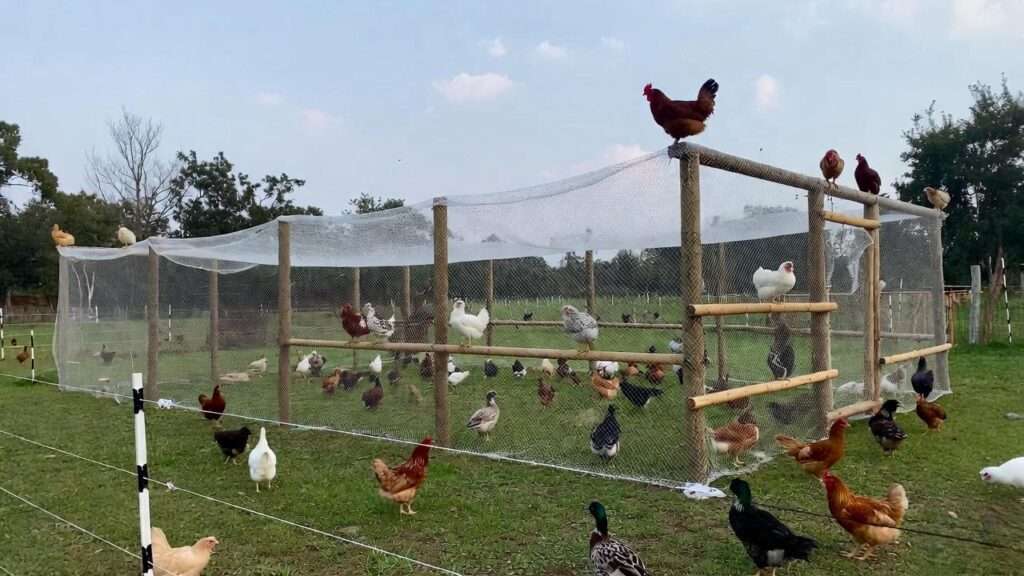
Imagine stepping outside one morning to find feathers scattered across your yard and several of your prized hens gone—victims of a sneaky fox or raccoon that easily breached your basic fencing. For many small homesteaders raising 10–50 chickens, this heartbreaking scenario is all too common when relying on traditional chicken wire alone. That’s where electric poultry nets for small homesteads come in, offering a portable, electrified solution that can dramatically improve predator protection and flock management.
As a long-time homesteader with over a decade of experience managing free-range and pastured poultry on properties ranging from backyard setups to multi-acre plots, I’ve seen firsthand how electric poultry netting transforms small-scale chicken keeping. It not only deters ground predators effectively but also enables rotational grazing, leading to healthier birds, richer eggs, and better soil fertility. However, it’s not a one-size-fits-all fix—costs, maintenance, and setup can be hurdles for some.
In this comprehensive guide, we’ll dive deep into what electric poultry nets are, how they stack up against simple wire fencing, the real pros and cons backed by homestead experiences, cost breakdowns, setup tips, and when they’re truly worth the investment. Whether you’re dealing with persistent predators or wanting to maximize your limited pasture, this article will help you decide if electric poultry nets are right for your small homestead.

What Are Electric Poultry Nets and How Do They Work?
Electric poultry nets, also known as electric netting or electronet, are portable fencing systems designed specifically for containing poultry while deterring predators. Unlike static fences, they deliver a short, sharp (but safe) electric pulse that trains animals to respect boundaries.
Key Components of a Typical Setup
A standard electric poultry net consists of:
- Netting material: Woven polywire with stainless steel conductors for excellent conductivity, combined with plastic vertical stays for structure.
- Mesh design: Smaller openings at the bottom (typically 2–3 inches) to block weasels, raccoons, and digging predators, graduating to larger at the top.
- Heights: Common options are 42″ for heavier breeds or lower predator pressure, and 48″ for flightier birds or higher-risk areas.
- Built-in posts: Double-spiked fiberglass or PVC posts every 8–12 feet for easy step-in installation.
- Energizer: The power source—solar, battery, or plug-in—with output measured in joules (0.25–1+ joules recommended for netting).
- Accessories: Grounding rods, testers, connectors, and sometimes repair kits.
Popular brands include Premier 1 Supplies (known for durable PoultryNet Plus), Starkline (affordable and conductive options), Gallagher, and RentACoop.
How the Electric Shock Deterrent Functions
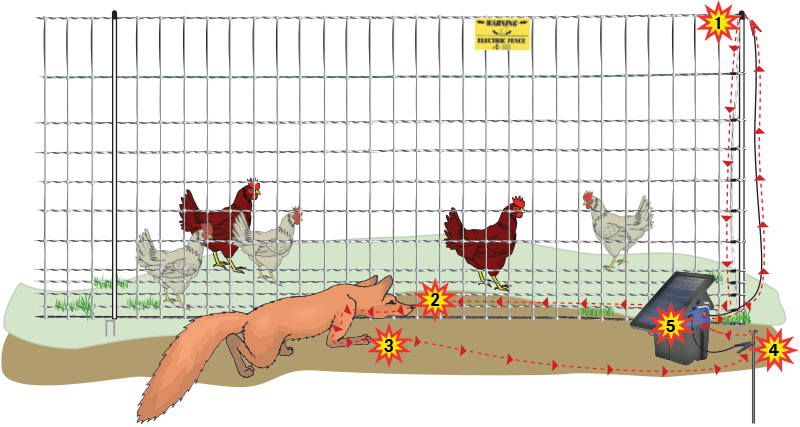
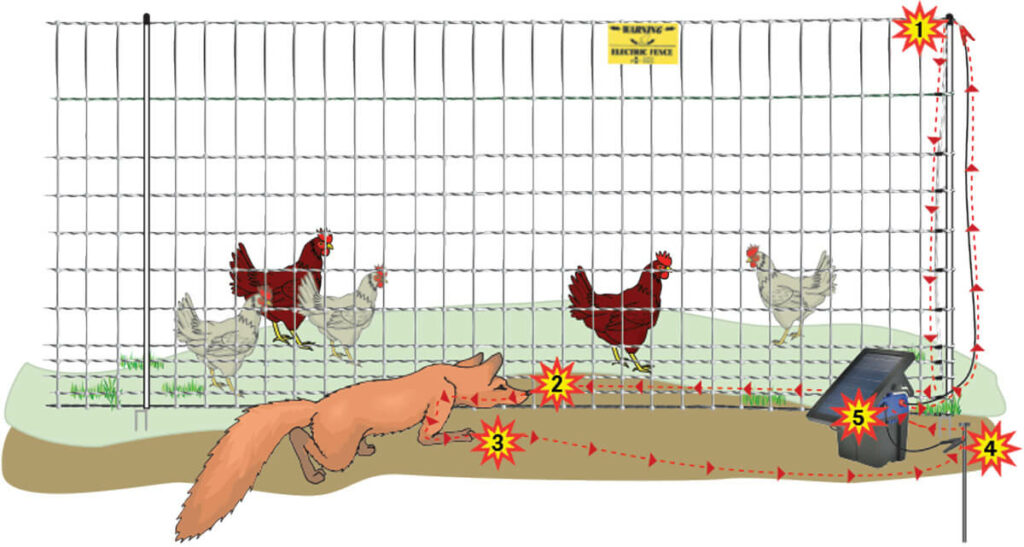
The system works via pulsed electricity: The energizer sends short bursts (about once per second) through the horizontal live wires. When a predator or chicken touches a live strand while grounded, it completes the circuit, delivering a memorable shock. This “psychological barrier” is highly effective—predators learn quickly to avoid it, and chickens stay inside after one or two zaps.
For dry or poor-soil conditions, positive/negative (pos/neg) nets alternate live and ground wires, improving performance without deep grounding.
Expert tip: Always choose an energizer rated at least 0.25 joules per net length, and oversize for vegetation contact or future expansion. In my experience, a 1-joule solar unit handles multiple nets reliably even in cloudy weather.
Popular Brands for Small Homesteads
| Brand | Key Features | Price Range (164 ft net) | Best For |
|---|---|---|---|
| Premier 1 | Durable, closer posts, excellent conductivity | $250–$350 | Long-term use, high predators |
| Starkline | Affordable, braided options for better shock | $150–$250 | Budget homesteads |
| Gallagher | Reliable solar energizers | $200–$300 | Off-grid setups |
| RentACoop | Kits with accessories | $200–$400 (full kit) | Beginners |

Simple Wire Fencing vs. Electric Poultry Nets: A Head-to-Head Comparison
Traditional chicken wire or welded wire is cheap and simple, but electric nets offer superior performance in key areas for small homesteads.
Containment: Keeping Chickens In
- Simple wire: Good for non-flighty breeds in fixed runs, but flyers like Leghorns easily escape over 4–5 ft heights.
- Electric nets: The shock creates a strong psychological barrier; most birds learn to stay in after initial training.
Predator Protection: The Biggest Difference
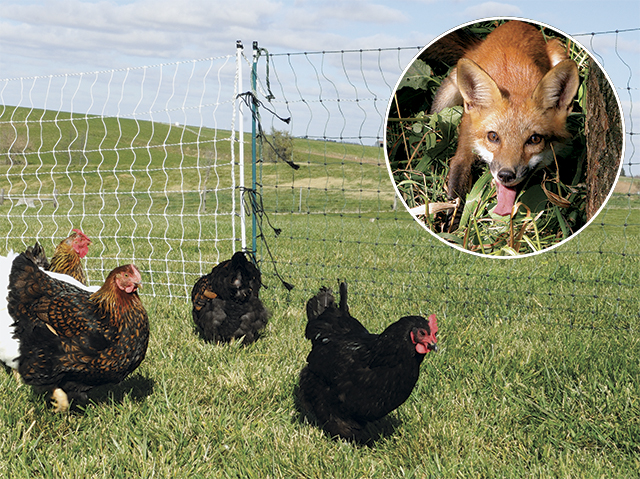
Predation causes significant losses on small farms—studies show 7–10% of backyard flocks annually to foxes, raccoons, coyotes, dogs, and more. Simple wire deters casual intruders but fails against diggers, climbers, or pushers. Electric nets excel here, with many homesteaders reporting zero ground predator losses after switching.
Portability and Flexibility
- Simple wire: Permanent; moving requires major work.
- Electric nets: Setup in 15–30 minutes, perfect for rotational grazing on small plots.
Limitations Both Share
Neither protects fully from aerial predators like hawks or owls—add overhead netting or supervised ranging for that.
| Aspect | Simple Wire | Electric Poultry Net | Winner for Small Homesteads |
|---|---|---|---|
| Initial Cost | Low ($50–150 for equivalent area) | Higher ($300–600 setup) | Simple Wire |
| Predator Deterrence | Moderate (physical only) | Excellent (shock + physical) | Electric Net |
| Portability | None | High | Electric Net |
| Maintenance | Low | Moderate (vegetation control) | Simple Wire |
| Rotational Grazing | No | Yes | Electric Net |
Pros of Electric Poultry Nets for Small Homesteads
Electric poultry nets shine brightest in areas where simple wire falls short, particularly for homesteaders prioritizing predator protection, flock health, and sustainable land management. Here are the key advantages, backed by real-world results.
Superior Predator Deterrence
The electrified pulse is the game-changer. Ground predators like foxes, raccoons, coyotes, dogs, and even bears receive a strong shock upon contact, deterring them permanently after one or two attempts. In my own homestead, switching to electric netting eliminated nighttime losses entirely after years of occasional raids on a welded wire setup.
Many homesteaders report similar success: On forums like BackYard Chickens and Reddit’s r/homestead, users frequently share stories of going from multiple losses per year to zero after installing nets with at least 4,000–6,000 volts.
Healthier Chickens Through Rotational Grazing
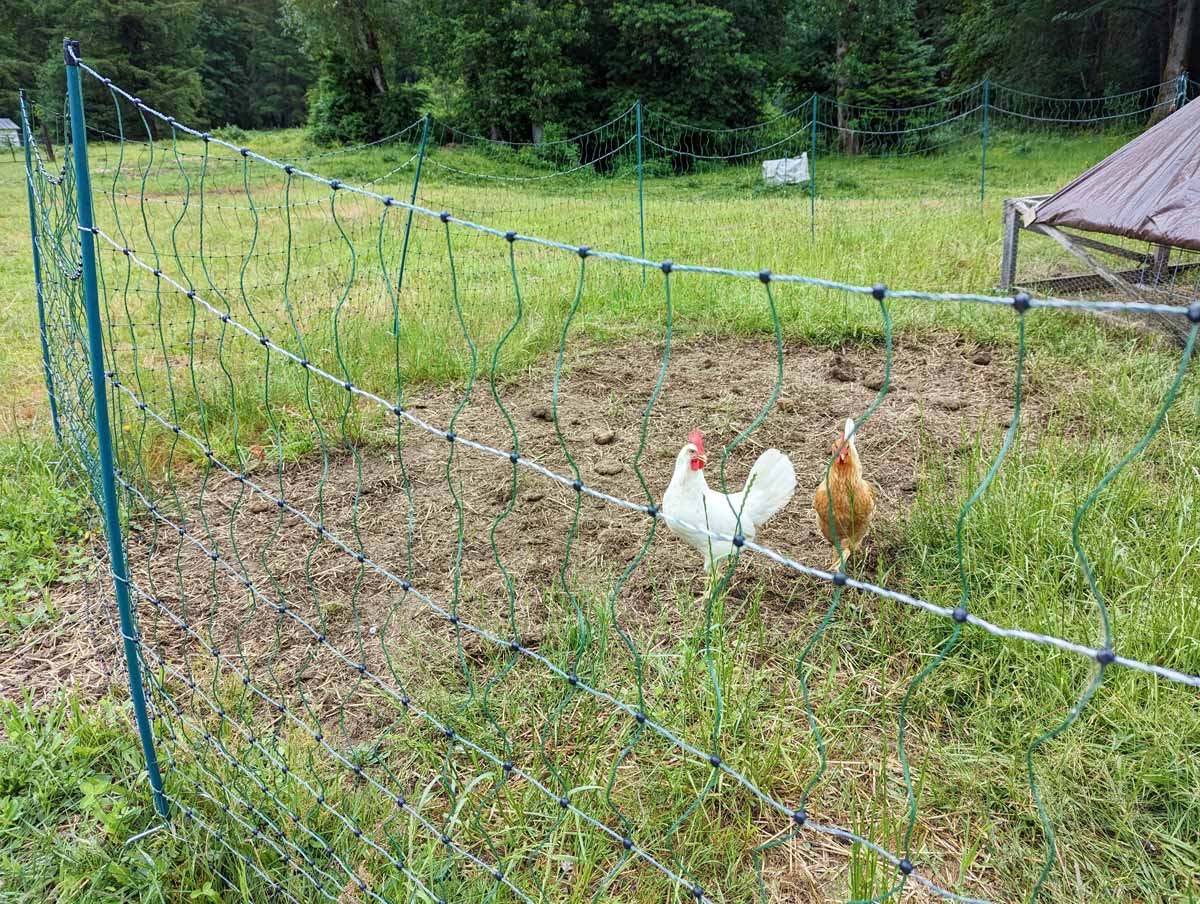
Portable electric nets make rotational or managed intensive grazing feasible on small properties. By moving the enclosure every few days or weeks, chickens access fresh forage, reducing supplemental feed needs by 20–50% while improving egg quality (deeper yolks, higher omega-3s from greens and bugs).
This practice also breaks internal parasite cycles—worms can’t complete their life cycle when birds are rotated—and evenly distributes manure as natural fertilizer, enhancing soil health without overgrazing patches.

Ease of Use and Versatility
One person can set up or move a 164-foot net in 15–30 minutes. This portability suits small homesteads with limited space, allowing integration with gardens (chickens follow crops to clean pests) or orchards.
Scalability is another plus—start with one net for a backyard flock and expand as needed.
Long-Term Durability
Quality nets from reputable brands last 10–15 years with proper care (winter storage, avoiding excessive tension). UV-resistant materials hold up well in various climates.
Real Homestead Quote: “After 8 years, my Premier 1 net is still going strong—worth every penny for the peace of mind.” (Common sentiment from long-term users on permaculture forums.)
Cons of Electric Poultry Nets (and How to Mitigate Them)
No solution is perfect, and electric nets have drawbacks that can make simple wire preferable in certain scenarios.
Higher Upfront and Ongoing Costs
A basic setup (164 ft net + energizer) runs $400–800, compared to $100–300 for equivalent permanent wire. Solar energizers add reliability but increase initial outlay.
Maintenance Requirements
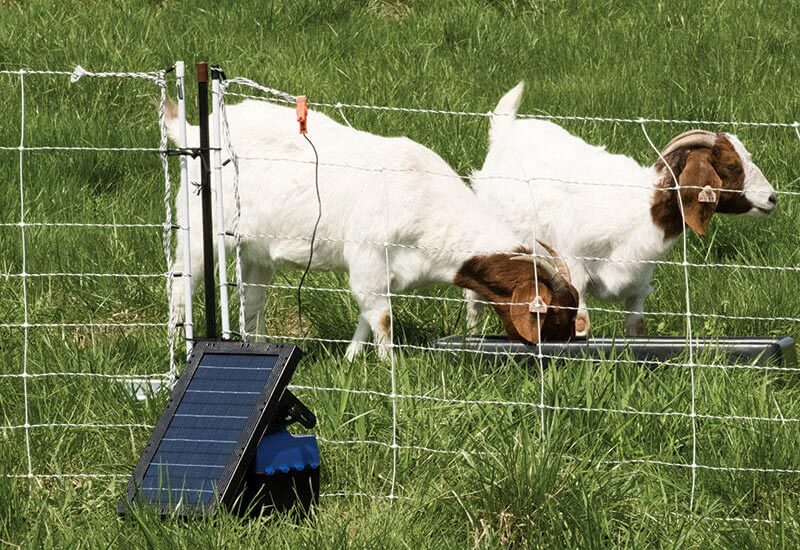
Vegetation touching the bottom wires causes shorts, dropping voltage. Weekly mowing or trimming under the fence line is essential. Voltage testing (aim for 3,000+ volts minimum) should be routine.
In winter, snow can ground the fence; store nets indoors if possible.
Potential Issues
- Sagging or tangling in high winds (mitigate with tighter corners and guy lines).
- Less effective on very uneven/rocky terrain (double-spike posts help).
- Initial training period for birds and predators.
Not Ideal For…
Fixed, small runs with no predator pressure, or homesteaders unwilling to maintain the system. In low-risk urban/suburban areas, simple wire plus buried apron often suffices.
Mitigation Tip: Use a weed trimmer weekly and invest in a digital fault finder for quick troubleshooting—cuts maintenance time significantly.
Real Homestead Experiences: Case Studies and Reviews
Drawing from thousands of shared stories across homesteading communities (as of late 2025):
- Success Story 1: A Midwest homesteader with 30 layers reported losing 10 birds yearly to coyotes on wire fencing. After electric nets and a 1-joule solar energizer, zero losses in 4 years—plus 40% feed savings from pasture rotation.
- Success Story 2: Pacific Northwest family integrated nets into vegetable garden rotation: Chickens cleared pests post-harvest, fertilized beds, and produced superior eggs. “Best decision for our 1-acre setup.”
- Challenge Overcome: Initial shorts from tall grass frustrated a beginner, but switching to pos/neg netting and routine mowing resolved it. Now recommends to all new flock owners.
- Mixed Review: Some with static coops prefer hardware cloth bury for permanence, citing electric nets as “great for mobile but extra work.”
Recent 2024–2025 feedback highlights improved solar energizers handling cloudy winters better than older models.
Cost Breakdown: Is It Worth the Investment?
Initial Setup Costs for a Typical Small Homestead (Enclosing 1/4–1 Acre)
- Budget Option: Starkline net ($200) + 0.5-joule solar energizer ($200) + accessories = ~$450–600.
- Premium Setup: Premier 1 PoultryNet Plus ($350) + 1-joule energizer ($300–400) = ~$800–1,200.
- Vs. Simple Wire: Welded wire + posts + buried hardware cloth = $300–600 (but permanent).
Long-Term Savings
- Feed reduction: $100–300/year saved.
- Bird replacement: Avoid $200–500 losses annually.
- Payback: Typically 1–3 years for moderate predator areas.
| Scenario | Annual Cost/Savings | Break-Even Time |
|---|---|---|
| High Predators + Rotation | +$400 savings | 1–2 years |
| Low Predators, Fixed Run | -$100 (extra maint) | Never |
| Moderate Use | +$200 savings | 2–4 years |
Budget-Friendly Tips
Buy used nets from local groups, start with one section to test, or choose AC-powered if near outlets.
Step-by-Step Guide to Setting Up Electric Poultry Nets
Setting up electric poultry nets correctly is crucial for reliability and safety. Follow this proven process—refined from years of trial and error on my own homestead and helping dozens of beginners.
Choosing the Right Net and Energizer
- Assess your needs: For small homesteads (10–50 birds, 1/4–1 acre paddocks), start with 164–328 feet of 42–48″ netting.
- Predator profile: Higher voltage (0.5+ joules) for coyotes/bears; lower for raccoons/dogs.
- Power source: Solar for off-grid (best in 2025 models with improved panels), battery for portability, or plug-in if near the house.
- Pro tip: Buy pos/neg netting if your soil is dry or sandy—ensures shock even in poor grounding conditions.
Site Preparation and Installation
- Clear the area: Mow or trim grass/weeds to under 4 inches along the fence line to prevent shorts.
- Plan layout: Square or rectangular shapes tension better; avoid sharp angles.
- Start at a corner: Push in the first double-spiked post firmly.
- Unroll and tension: Walk the net out, stepping in posts every 8–12 feet. Keep bottom wire 2–4 inches off ground.
- Connect sections: Use included clips for multiple nets.
- Install grounding: Drive 3–6 ft rods (at least three for solar units) in moist soil; connect to energizer’s ground terminal.
- Hook up energizer: Connect live terminal to the net’s top or live wires.
- Test voltage: Use a digital tester—aim for 4,000–7,000 volts initially.
Training Your Flock
- Introduce birds gradually—place feed/water inside near the net.
- Most learn after one mild shock; supervise first few days.
- For chicks, use smaller-mesh chick netting or wait until feathered.
Daily and Weekly Maintenance
- Check voltage daily at first, then weekly.
- Trim vegetation under the bottom strand.
- Inspect for damage (deer can tangle nets).
- In wet seasons, clean insulators if needed.
Seasonal Considerations
- Winter: Store nets if heavy snow grounds them; use elevated bottom wire in mild climates.
- Summer: Monitor for grass growth; solar units excel here.
Alternatives and When Simple Wire Might Be Enough
While electric nets are superior for many, alternatives work better in specific cases:
- Permanent welded wire + buried hardware cloth: Ideal for fixed coops/runs in low-predator urban areas. Bury 12–18 inches outward to stop diggers.
- Chicken tractors: Mobile wood-framed pens for daily moves—great for gardens but labor-intensive.
- Free-ranging with supervision or guardian animals: Dogs, geese, or donkeys deter predators naturally.
Simple wire is sufficient if:
- You have zero ground predator pressure.
- Your run is small and permanent.
- Budget or maintenance time is severely limited.
Expert Tips for Maximizing Success
- Layer defenses: Combine nets with livestock guardian dogs or overhead hawk netting for comprehensive protection.
- Integrate with crop rotation: Move chickens through garden beds post-harvest—they till, fertilize, and control pests naturally.
- Common mistakes to avoid:
- Undersized energizer (causes weak shocks).
- Poor grounding (most failures stem from this).
- Letting grass grow tall under the fence.
- Skipping voltage checks.
- Pro upgrade: Add a fence alarm or remote monitor for peace of mind.
FAQs
Are electric poultry nets safe for chickens and chicks? Yes—pulses are short and high-voltage but low-amperage. Chickens get a mild zap (like static shock) and learn quickly. Avoid very young chicks until they’re larger or use dedicated chick netting.
How much voltage do I need for coyotes/foxes? Minimum 4,000 volts at the farthest point; 6,000+ ideal for reliable deterrence.
Can I use them in winter or wet conditions? Yes—many work well in snow/rain if elevated slightly and well-grounded. Solar units handle wet climates fine.
What’s the best brand for beginners? Premier 1 Supplies for quality and support; RentACoop for complete beginner kits.
Do they work against hawks? No—electric nets deter ground predators only. Use overhead netting, scare devices, or roosters for aerial threats.
How long do quality nets last? 10–15 years with proper storage and care.
Conclusion: Are Electric Poultry Nets Worth It for Your Small Homestead?
For most small homesteaders facing predator pressure and wanting healthier, more productive flocks through rotational grazing, electric poultry nets for small homesteads are absolutely worth the investment. The superior protection, portability, and long-term benefits—healthier birds, reduced feed costs, better pasture management, and priceless peace of mind—typically outweigh the higher upfront cost and moderate maintenance.
If your area has minimal predators and you prefer a set-it-and-forget-it permanent run, simple wire may suffice. But in today’s reality, where foxes, coyotes, and raccoons are increasingly bold around human habitats, electric netting has become the gold standard for sustainable small-scale poultry keeping.
Assess your predator risks, space, and goals. Start small if unsure—many homesteaders begin with one net and quickly expand once they see the results. Your flock (and your sleep) will thank you.