Imagine watching your carefully germinated seedlings turn pale, stretch weakly toward the light, or worse—develop burned leaf tips just as they unfurl their first true leaves. For many indoor gardeners and commercial propagators, this frustrating scenario is all too common when starting seeds in soilless mix. The root cause? Misunderstanding nutrient management. Feeding seedlings in soilless mix is fundamentally different from growing in garden soil because these sterile, inert media supply zero natural fertility. Get it wrong, and your seedlings suffer deficiencies or toxicity; get it right, and you’ll produce stocky, vigorous plants with superior root systems ready for transplant success.
This in-depth guide, drawing from decades of horticultural research, university extension recommendations, and practical experience in both hobby and professional propagation, will walk you through every aspect of feeding seedlings in soilless mix. Whether you’re using peat-based seed-starting blends, coconut coir, rockwool cubes, or pure hydroponic media, you’ll learn proven strategies to deliver balanced nutrition without overwhelming delicate young roots.
What Is a Soilless Mix and Why Use It for Seedlings?
Understanding Soilless Growing Media
Soilless mixes, also called substrate or propagation media, are engineered blends formulated specifically for seed germination and early seedling development. Unlike garden soil, which contains minerals, organic matter, and microbial life, soilless mixes are intentionally inert or nearly inert. Their primary roles are physical support, optimal aeration, water retention, and disease suppression.
Common ingredients include sphagnum peat moss, coconut coir fiber, perlite, vermiculite, and sometimes rockwool or phenolic foam. These materials create an ideal root zone environment: high oxygen levels around roots, rapid drainage to prevent rot, and consistent moisture without compaction.
Common Types of Soilless Mixes
- Peat-Based Mixes The traditional standard (e.g., Pro-Mix, Sunshine Mix, or Jiffy pellets). These blends typically combine peat moss with perlite and vermiculite in ratios like 70/20/10. They hold moisture well but often come with a small “starter nutrient charge” that lasts only 7–21 days.
- Coconut Coir (Coco) Mixes An increasingly popular, renewable alternative to peat. Pure coir or coir-perlite blends (commonly 70/30) are pH-neutral and have excellent cation exchange capacity, but they contain virtually no nutrients and require immediate calcium and magnesium supplementation.
- Rockwool and Other Inert Hydroponic Media Mineral wool cubes or slabs used extensively in commercial hydroponics. Completely sterile and inert—seedlings must receive nutrients from the very first watering.
- Specialty Blends Some brands add biochar, rice hulls, or mycorrhizal inoculants for enhanced performance, but the nutrient profile remains minimal.
Benefits Over Soil
University studies consistently show soilless mixes outperform garden soil for seedling production:
- Up to 50% reduction in damping-off disease (Pythium, Rhizoctonia) due to sterility.
- Faster germination and more uniform stands.
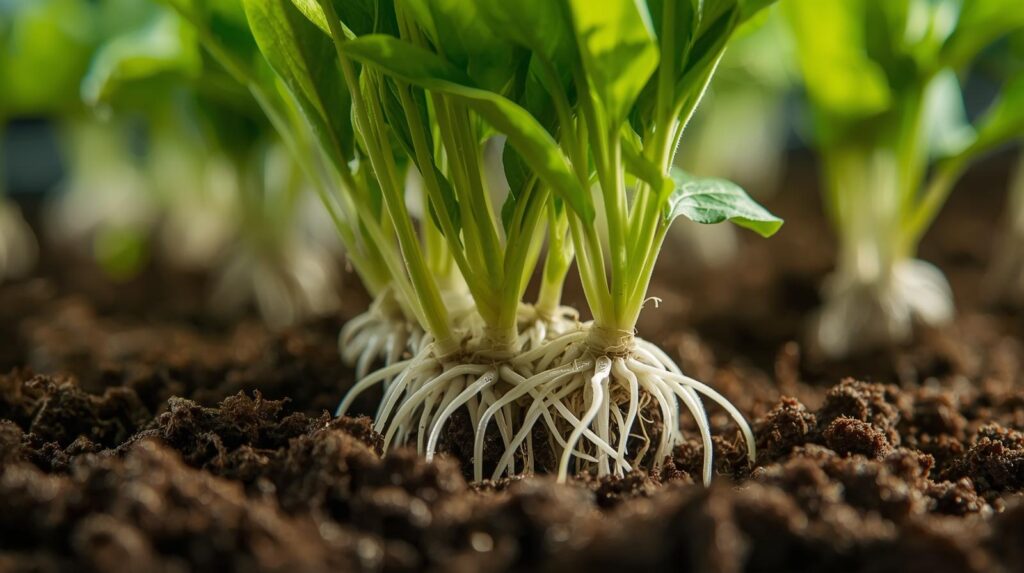
- Superior root branching and white, healthy appearance.
- Easier control of pH and electrical conductivity (EC).
Drawbacks and Why Feeding Matters
The biggest drawback is the absence of inherent fertility. Seedlings rely entirely on stored cotyledon reserves for the first 7–14 days. Once those reserves deplete and true leaves begin photosynthesizing, active roots demand a steady supply of macro- and micronutrients. Without proper feeding in soilless mix, classic deficiency symptoms appear quickly: chlorosis, purpling, stunting, or necrosis.
Experienced propagators treat soilless seedling production more like hydroponics than traditional soil gardening—this mindset shift is key to success.
Seedling Growth Stages and Nutrient Needs
Understanding developmental phases allows precise timing and formulation of fertilizer applications.
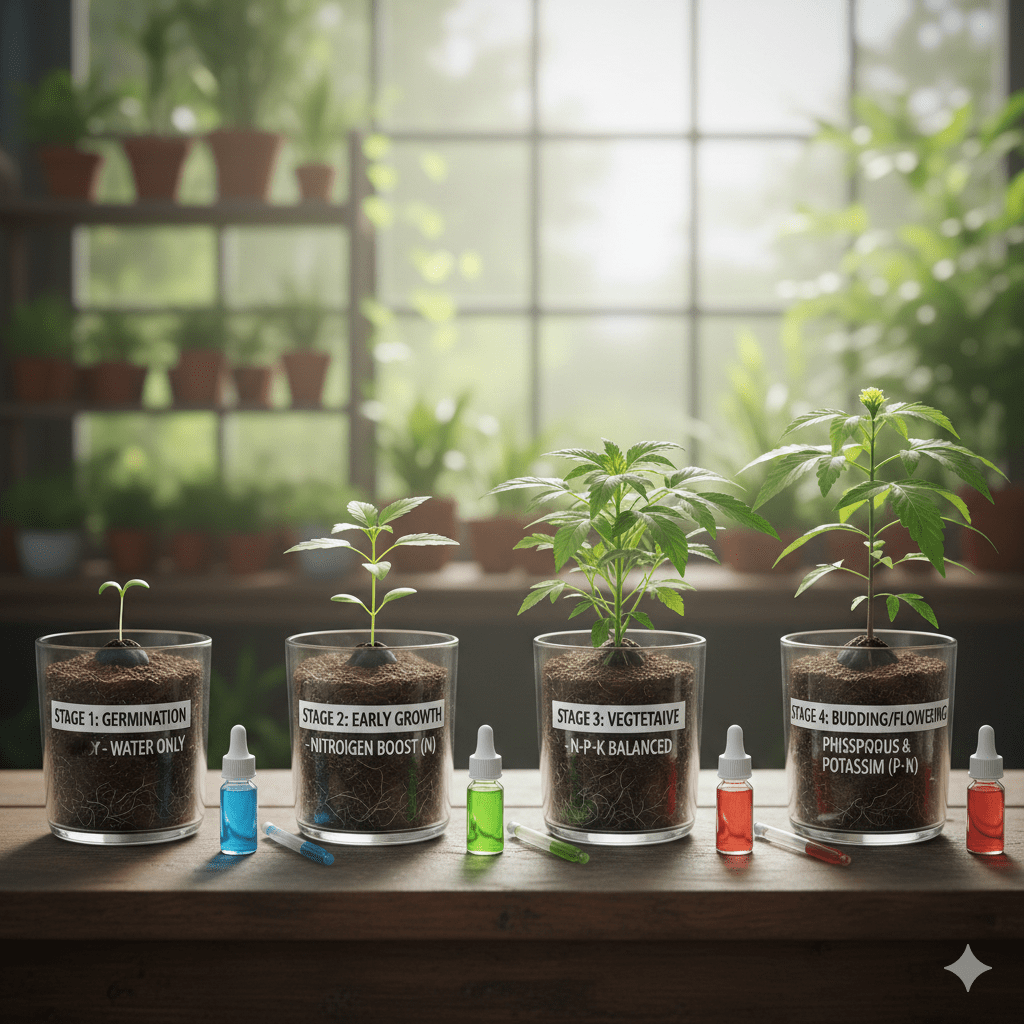
Stage 1: Germination to Cotyledons
From sowing until cotyledons (seed leaves) fully expand. The embryo draws entirely on endosperm or cotyledon-stored starches, proteins, and minerals. No external fertilization is required or recommended—excess salts can inhibit germination or damage emerging radicles.
Optimal conditions: consistent moisture, temperatures 70–80°F (21–27°C), high humidity, and gentle bottom heat if needed.
Stage 2: First True Leaves Appear
Typically 10–21 days after sowing, depending on species. Cotyledons begin to yellow naturally as reserves transfer to the growing shoot. Roots are still fine and fragile, but active uptake begins.
Introduce nutrients at very low strength (1/4 to 1/8 recommended label rate) to prevent shock.
Stage 3: 2–4 Sets of True Leaves
Exponential growth phase. Stem elongation, leaf expansion, and root mass increase dramatically. Nutrient demand rises accordingly—gradually step up to 1/2 strength solutions.
Focus shifts toward balanced N-P-K with emphasis on phosphorus for root development and calcium for cell wall strength.
Stage 4: Pre-Transplant (4–6 Weeks)
Seedlings approach transplant size. Begin hardening off and transition to full-strength feeding appropriate for the final growing system (garden soil, containers, or hydroponics).
When to Start Feeding Seedlings in Soilless Mix
Timing is arguably the most critical factor.
General Rule of Thumb
Begin light feeding once the first set of true leaves is fully expanded. This usually occurs 1–3 weeks after germination. Earlier feeding risks osmotic burn on tender roots; delaying too long triggers mobile nutrient deficiencies (nitrogen, magnesium).
Variations by Media Type
- Peat-based or starter mixes with nutrient charge Wait until true leaves appear or until you notice slight yellowing of cotyledons. The pre-charged lime and fertilizer typically suffice for 10–14 days.
- Coconut coir Many experts recommend a very light feed (EC 0.4–0.6 mS/cm) from the first watering after radicle emergence, as coir is completely inert and often binds calcium.
- Rockwool or pure inert hydro media Feed from day one with a seedling-specific hydroponic solution at 1/4–1/3 strength.
Monitor plant response more than the calendar—healthy dark green foliage and steady growth indicate proper timing
Choosing the Best Nutrients for Soilless Seedlings
Selecting the right fertilizer is crucial because seedlings in soilless mix have no buffer against imbalances. The goal is a complete, readily available nutrient solution that supports root establishment without promoting excessive top growth.
Synthetic vs. Organic Options
Synthetic (Water-Soluble or Hydroponic) Fertilizers These provide immediate, precise nutrition with known N-P-K ratios and micronutrient packages. They dissolve completely, leaving no residue that could clog root zones. Popular among commercial propagators and hydroponic growers for consistency and rapid uptake.

Examples:
- General Hydroponics Flora Series (or Maxi Series for simplicity)
- Jack’s Classic 20-20-20 or Jack’s 321 (widely used in university research)
- Advanced Nutrients Sensi Grow A+B (pH-perfect line)
- Masterblend 4-18-38 tomato formula (cost-effective for large-scale)
Organic Fertilizers Slower release, microbial-dependent, and better suited for growers transitioning to living soil later. They add beneficial biology but can be inconsistent in inert media.
Examples:
- Liquid fish hydrolysate + kelp (e.g., Neptune’s Harvest 2-4-1 or GS Plant Foods)
- Worm casting tea or compost tea (aerated 24–48 hours)
- BioThrive Grow (General Organics line)
- Earth Juice Grow (fully vegan organic)
Many experienced growers use a hybrid approach: synthetic base for reliability plus organic supplements (kelp, fulvic acid, mycorrhizae) for enhanced biology.
Key Nutrients and Formulations for Seedlings
Seedlings need a balanced but gentle ratio. Avoid high-nitrogen “veg” formulas that cause stretching.
- Recommended N-P-K range: 1:1:1 to 1:2:2 (e.g., 5-10-10, 10-20-20 at half strength)
- Higher phosphorus encourages root development.
- Calcium and Magnesium are non-negotiable—especially in coco coir, which has high potassium and can lock out calcium.
- Micronutrients (iron, manganese, zinc, boron, molybdenum, copper) must be chelated for availability at seedling pH.
Specialized “seedling” or “starter” formulas often have lower overall PPM and added vitamins/hormones (B1, auxins).
Recommended Products by Media Type
- Peat-based mixes: Any all-purpose water-soluble at ¼–½ strength (Miracle-Gro, Peters 20-20-20, or Dyna-Gro Grow 7-9-5).
- Coco coir: Coco-specific lines (Canna Coco A+B, House & Garden Coco, or Advanced Nutrients pH Perfect Sensi Coco Grow). Always add Cal-Mag from day one (e.g., Botanicare Cal-Mag Plus or CaliMagic).
- Rockwool/hydroponics: True hydroponic nutrients from the start (General Hydroponics FloraMicro + FloraGro + FloraBloom, or Athena Pro Line Core + Grow).
pH and EC Management
Soilless seedlings thrive at pH 5.8–6.2 (slightly lower end for coco and hydro). Outside this range, lockouts occur rapidly.
- Invest in a reliable pH meter (Apera, Bluelab) and calibrate monthly.
- Electrical Conductivity (EC) for seedlings should stay 0.4–1.2 mS/cm (400–1200 µS). Start low and increase gradually.
- Always pre-mix nutrients in RO or distilled water, adjust pH last, and let sit 15–30 minutes before use.
How to Feed Seedlings: Step-by-Step Techniques
Dilution and Frequency Guidelines
- Weeks 1–2 (true leaves emerging): ¼ to ⅓ label strength, EC 0.5–0.8.
- Weeks 3–4: ½ strength, EC 0.8–1.2.
- Weeks 5–6 (pre-transplant): ¾ to full strength, EC 1.2–1.6.
Frequency depends on media:
- Peat/perlite mixes: Feed once per week; plain pH’d water the rest.
- Coco coir: Feed at every watering (daily or every other day) to 10–20% runoff.
- Rockwool: Constant or frequent dilute feed with runoff.
Application Methods
Top Watering Pour gently around the stem base or in a circle to encourage outward root growth. Use a small watering can with a rose for even distribution.
Bottom Watering Place trays in a shallow reservoir of nutrient solution for 10–20 minutes. Excellent for uniformity and preventing stem rot.
Foliar Feeding Apply very dilute solution (⅛ strength) as a fine mist early morning or under low light. Great for quick correction of micronutrient deficiencies (iron, magnesium).
Monitoring and Adjusting
Daily visual checks are essential:
- Dark green leaves, sturdy stems = optimal.
- Pale new growth = nitrogen deficiency or low light.
- Yellow lower leaves with green veins = magnesium issue (common in coco).
- Brown leaf tips/margins = fertilizer burn; flush immediately.
Weekly testing of runoff pH and EC reveals salt buildup. If runoff EC exceeds input by >0.3 mS/cm, leach with plain pH’d water.
Common Mistakes When Feeding Seedlings in Soilless Mix (And How to Avoid Them)
Mistake 1: Feeding Too Early or Too Strong
Tender roots lack protective hairs and burn easily. Fix: Wait for fully expanded first true leaves. Always start at ¼ strength.
Mistake 2: Treating Soilless Like Garden Soil
Garden soil has slow-release nutrients and microbial buffering; soilless does not. Delaying feeding leads to starvation within days. Fix: Adopt a proactive hydroponic mindset—feed consistently and monitor EC.
Mistake 3: Ignoring Cal-Mag in Coco Coir
Coir’s high potassium and sodium compete with calcium and magnesium. Fix: Add Cal-Mag at every feeding (2–4 ml/gallon) from day one.
Mistake 4: Overwatering Alongside Overfeeding
Saturated media excludes oxygen and promotes Pythium. Fix: Let the top ½ inch dry slightly in peat mixes; maintain moist but aerated in coco.
Mistake 5: Never Flushing or Checking Runoff
Salts accumulate silently. Fix: Flush with 2–3 volumes plain pH’d water every 2–3 weeks or when EC creeps up.
Advanced Tips and Expert Insights
Boosting Root Development
- Add silicon (e.g., Pro-TeKt, Rhino Skin) at ¼ seedling dose for stronger cell walls.
- Inoculate with beneficial mycorrhizae (Great White, Orca) when roots touch media sides.
- Use mild rooting hormones (IBA-based) during transplant for faster establishment.
Transitioning to Final Medium
Gradually increase nutrient strength over 7–10 days when moving to soil, containers, or full hydro. This prevents shock.
Crop-Specific Considerations
- Tomatoes & Peppers: Favor higher phosphorus early (e.g., 5-10-5 ratio) for robust roots.
- Lettuce & Leafy Greens: Slightly higher nitrogen once established to promote foliage.
- Herbs (Basil, Cilantro): Moderate feeding; prone to burn—stay at ½ strength longer.
- Cannabis in Coco/Rockwool (where legal): Daily light feeds from sprout, strict pH 5.8–6.0, heavy Cal-Mag.
Troubleshooting Table
| Symptom | Likely Cause | Immediate Fix |
|---|---|---|
| Pale new growth | Nitrogen deficiency / low EC | Increase feed strength gradually |
| Yellow lower leaves, green veins | Magnesium deficiency | Add Cal-Mag; foliar magnesium sulfate |
| Brown, crispy leaf tips | Fertilizer burn / high EC | Flush with plain water; reduce strength |
| Purple stems/leaves | Phosphorus deficiency or cold | Raise root zone temp; use higher-P formula |
| Stunted, no new growth | pH lockout or root damage | Test runoff pH; correct to 5.8–6.2 |
| Leggy, stretched seedlings | Insufficient light + overfeeding | Increase light intensity; reduce N
|
Frequently Asked Questions (FAQs)
Do I need to feed seedlings if my soilless mix has a “starter nutrient charge”?
Yes, but only lightly and temporarily. Most commercial seed-starting mixes (like Pro-Mix BX or Sunshine Mix) include a small amount of lime and slow-release fertilizer designed to last 7–21 days. This “starter charge” supports germination and early cotyledon stages but depletes quickly once true leaves appear and growth accelerates. Once you see the first true leaves or slight yellowing of cotyledons, begin supplementing with dilute liquid fertilizer. Relying solely on the starter charge beyond two weeks often leads to nutrient deficiencies and stunted seedlings.
Can I use regular soil fertilizers in soilless media?
It’s not recommended. Granular or slow-release soil fertilizers (e.g., Osmocote, bone meal) release inconsistently in inert media and can cause salt buildup or uneven nutrition. Instead, use fully water-soluble fertilizers—either hydroponic nutrients or all-purpose soluble powders—that dissolve completely and deliver nutrients immediately to roots. These give you precise control over strength and pH, which is essential in soilless systems.
How much runoff should I aim for when feeding in coco coir?
Target 10–20% runoff every time you feed. This practice flushes excess salts, prevents EC creep, and ensures fresh nutrients reach the entire root zone. For example, if watering a 1-gallon pot with 1 liter of solution, collect 100–200 ml of runoff. Measure the runoff EC periodically—if it’s significantly higher than your input EC, perform a full flush with plain pH’d water.
Is foliar feeding safe and effective for seedlings in soilless mix?
Yes, when done correctly. Very dilute foliar sprays (⅛ to ¼ strength) provide a rapid boost of micronutrients and can correct deficiencies faster than root feeding alone. Apply early in the day or under low light to avoid leaf burn, and use a fine mist sprayer. Foliar feeding is especially useful for iron or magnesium shortages. Avoid foliar applications of high-nitrogen solutions on seedlings, as they can encourage weak, leggy growth.
When is it safe to transplant seedlings that have been fed in soilless mix?
Transplant once seedlings have 4–6 sets of true leaves, a sturdy stem, and a well-developed root system that holds the plug together (typically 4–8 weeks after sowing, depending on species). Harden off gradually over 7–10 days by exposing plants to outdoor conditions or stronger light. If moving to garden soil, reduce nutrient strength slightly during the first week post-transplant to ease the transition from inert media to microbial-rich soil.
What water should I use for mixing nutrients?
Reverse osmosis (RO), distilled, or rainwater is ideal because it starts with near-zero EC and allows full control over nutrient levels. Tap water can work if your source has low total dissolved solids (<200 ppm) and reasonable pH, but always test EC first and adjust. If tap water EC exceeds 0.3 mS/cm, consider blending with RO or installing a small filter.
My seedlings are wilting even though the media is moist—what’s wrong?
Wilting with moist media usually indicates root damage from overfeeding, extreme pH, or pathogen issues (less common in sterile soilless mixes). Check runoff pH and EC immediately. Flush with plain pH’d water (5.8–6.2) for several waterings and resume feeding at ¼ strength once recovery begins.
Mastering the art of feeding seedlings in soilless mix is one of the most impactful skills any grower—whether hobbyist or professional—can develop. Unlike garden soil, soilless media offer unparalleled control over aeration, drainage, and disease prevention, but they demand a proactive, precise approach to nutrition. By understanding your media type, timing feeds to true-leaf emergence, starting with dilute solutions, monitoring pH and EC religiously, and adjusting based on plant response, you’ll consistently produce compact, healthy seedlings with explosive root systems and exceptional vigor.
The difference between average and outstanding transplants often comes down to these early weeks of careful feeding. Avoid the common traps of over- or under-fertilizing, embrace the hydroponic mindset required for inert substrates, and watch your success rate soar.
Whether you’re starting tomatoes for a summer bounty, propagating flowers for market, or dialing in a hydroponic crop, the principles in this guide—backed by university research, commercial propagation protocols, and years of real-world experience—will serve you reliably season after season.
Happy growing, and may your seedling trays always be filled with strong, vibrant plants ready to thrive!