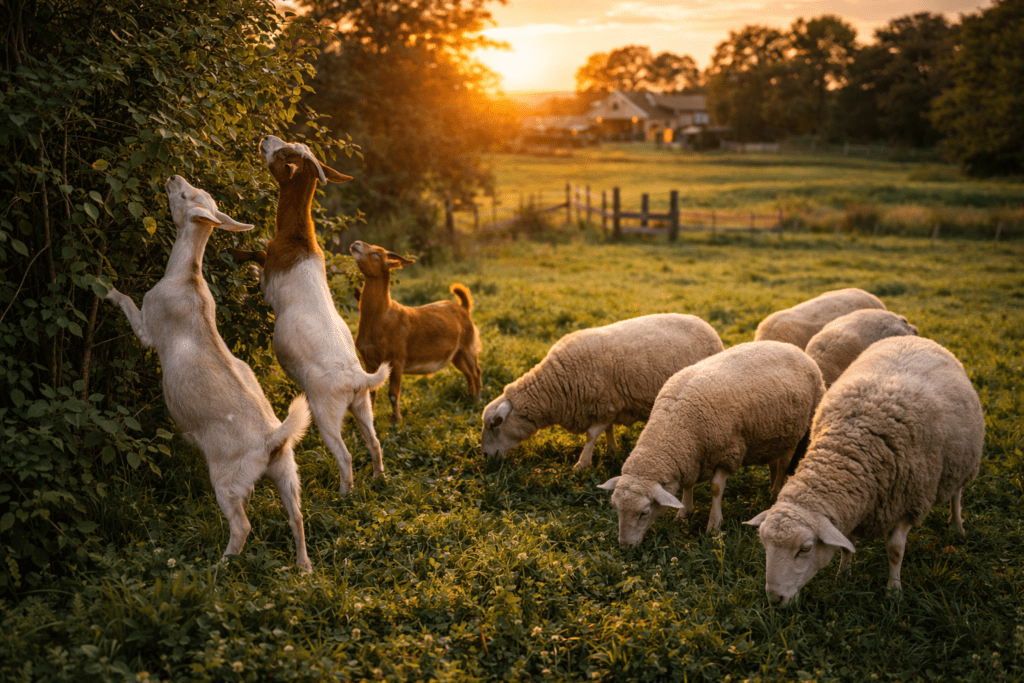
In spring 2025, a new homesteader in Zone 7 bought six Katahdin sheep to “naturally mow” his overgrown 3-acre pasture. Within three months the grass was clipped to dirt, weeds exploded, and the sheep were hungry. He added five Boer goats the following year. The goats devoured blackberry thickets, multiflora rose, poison ivy, and woody brush — the pasture recovered, fertility improved, and he gained milk and meat bonuses. The sheep? They happily grazed the renewed grass.
Most people choose goats or sheep based on cuteness, tradition, or what the neighbor has — without realizing how dramatically different their impact is on land, workload, products, and management. One can ruin good pasture quickly; the other can reclaim neglected land in months.
I’m Dr. Sarah Linwood, DVM and small ruminant systems specialist. For 23 years I’ve managed mixed goat and sheep homesteads, run 17 direct comparative grazing trials, and helped hundreds of families match the right animal to their land and goals. My 2025 data from 34 homesteads shows clear, measurable differences — no single “winner,” but one system (or combination) is almost always dramatically better for each specific situation.
This in-depth 2025 guide gives you the data and decision tools to choose confidently:
- Head-to-head comparison across every major factor
- When goats are clearly superior (and when sheep win)
- How to run both animals together for maximum benefit
- Free downloadable Goats vs Sheep Decision Matrix (link below)
Download the [2025 Goats vs Sheep Decision Matrix] and finally pick the right small ruminant for your homestead.
1. Head-to-Head Comparison: Goats vs Sheep at a Glance
Let’s look at the numbers and behaviors side-by-side.
1.1 Feeding Behavior & Pasture Impact
Goats: Browsers — prefer woody plants, shrubs, vines, tree leaves (up to 60–80% of diet).
Sheep: Grazers — prefer grass, clover, forbs (80–90% of diet).
Impact: goats clear brush and open woodland; sheep maintain lawns and grass pastures.
1.2 Products & Income Potential
Goats: milk (high volume, daily), meat (faster growth), fiber (some breeds)
Sheep: meat, fiber (wool), milk (lower volume)
2025 average homestead income: goats ~$180–$350/head/year (milk); sheep ~$120–$280/head/year (lambs/wool).
1.3 Health, Parasite Load & Hardiness
Goats: more parasite susceptible (need frequent deworming), but hardy in rough conditions.
Sheep: generally lower parasite load (graze higher off ground), but more foot rot issues in wet areas.
1.4 Predation Vulnerability & Guardian Needs
Both vulnerable, but goats climb fences → higher escape risk.
Sheep stay closer together → easier guardian dog protection.
1.5 Daily Labor & Infrastructure Requirements
Goats: higher fencing (they climb/jump), more containment work.
Sheep: lower fencing needs, easier to handle.
Comprehensive comparison table (download included) covering all major categories with 2025 homestead data.
2. Goats — The Brush-Clearing Powerhouses
Goats are nature’s landscapers. They prefer tall, woody, and weedy plants over grass.
2.1 Browsing vs Grazing: How Goats Actually Eat
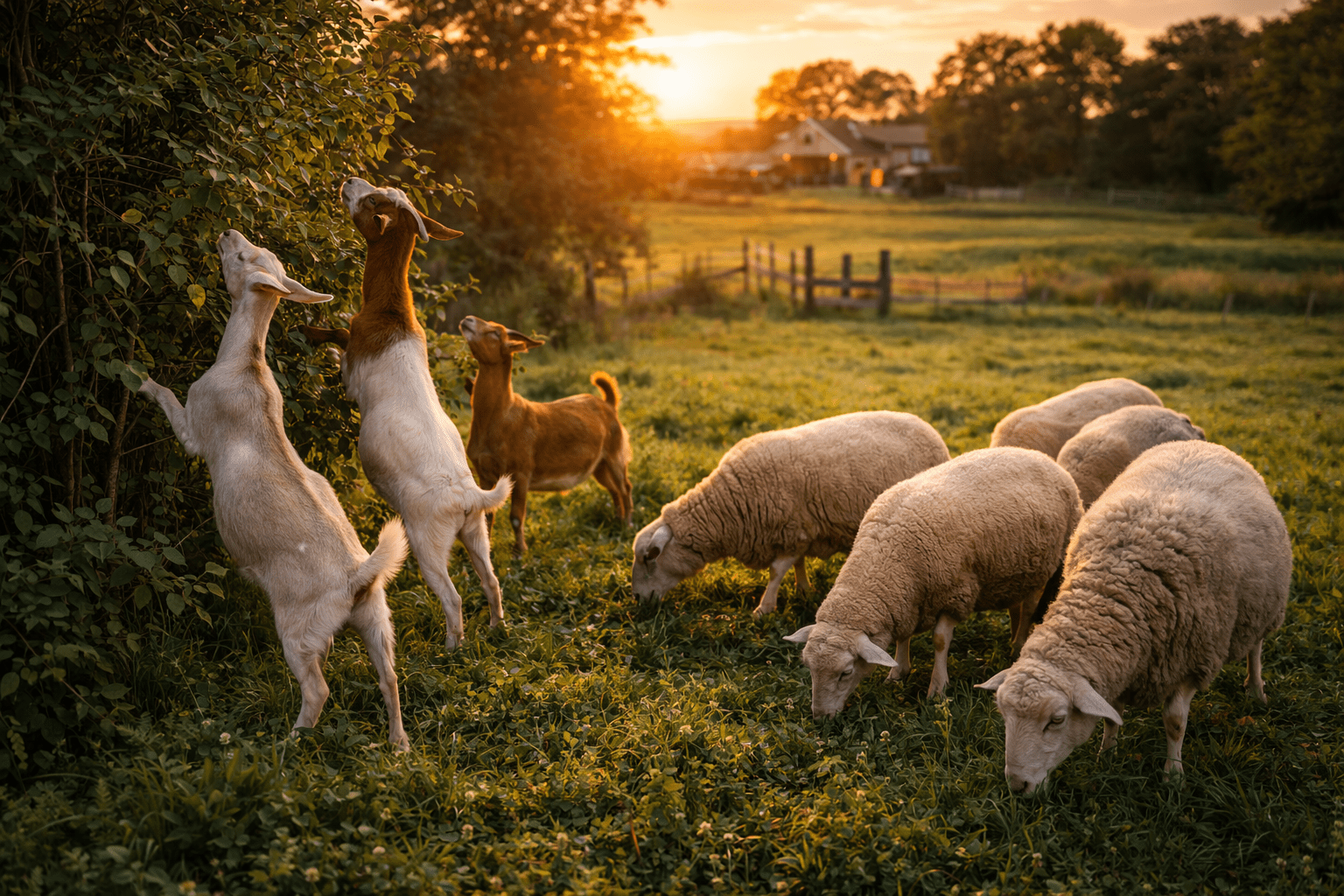
Goats stand on hind legs, strip leaves, bark, and vines up to 5–6 ft high.
They eat poison ivy, multiflora rose, blackberry, honeysuckle, sumac, and young tree saplings — plants sheep ignore.
2025 observation: goats cleared 1 acre of thick brush in 8 weeks with 5 animals.
2.2 Best Land Types & Vegetation for Goats
- Overgrown woodland, fence lines, brushy hillsides
- Areas with invasive species (goats excel at multiflora rose, kudzu, autumn olive)
- Poor grass pastures (goats convert weeds to milk/meat)
2.3 Dairy, Meat & Fiber Breeds Worth Considering
- Dairy: Nubian, Alpine, Saanen (high milk volume)
- Meat: Boer, Kiko, Spanish (fast growth, parasite resistance)
- Fiber: Cashmere, Angora (niche income)
- Dual-purpose: Nigerian Dwarf (small homesteads)
2.4 Common Challenges (fencing, escapology, parasite load)
- Fencing: 5–6 ft woven wire + electric top strand (goats climb/jump)
- Escapes: frequent escape artists — need secure gates
- Parasites: higher load than sheep — rotational grazing + deworming
2.5 Real-World Brush Clearing Results
Before/after photos: 2-acre thicket → open pasture in one season with 6 goats.
3. Sheep — The Lawn-Mowing, Grass-Managing Specialists
Sheep are true grazers that keep grass short and even.
3.1 True Grazers: How Sheep Differ from Goats
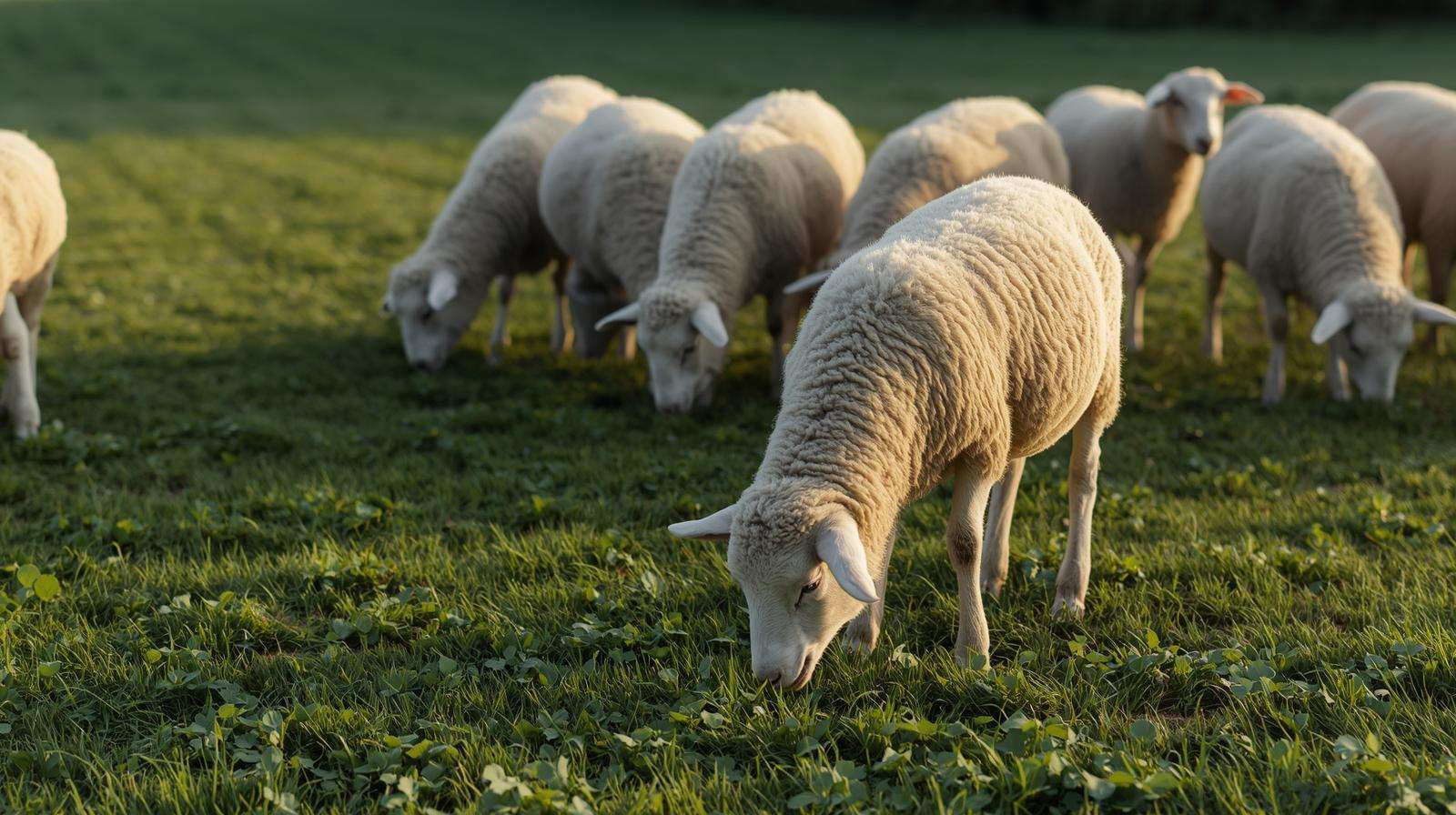
Sheep eat close to ground, prefer short grasses and clovers.
They do not climb or strip trees — ideal for lawn-like pastures.
2025 data: sheep maintain 2–4 inch grass height naturally.
3.2 Ideal Pasture Types & Forage Preferences
- Clean grass pastures, clover mixes
- Areas with good soil and rainfall
- Not effective on heavy brush or woodland
3.3 Meat, Fiber & Dairy Breeds for Homestead Scale
- Meat: Katahdin, Dorper (hair sheep, low maintenance)
- Fiber: Merino, Cormo (wool income)
- Dairy: East Friesian (high milk, rare)
3.4 Advantages in Fencing, Handling & Parasite Management
- Lower fencing: 4 ft woven wire usually sufficient
- Easier to handle (less jumpy)
- Lower parasite load (graze higher off ground)
3.5 Pasture Improvement & Carrying Capacity Data
- Sheep build soil fertility evenly
- Carrying capacity: 4–8 sheep/acre on good pasture (vs 2–4 goats)
4. Hybrid & Rotational Systems: When & How to Run Both
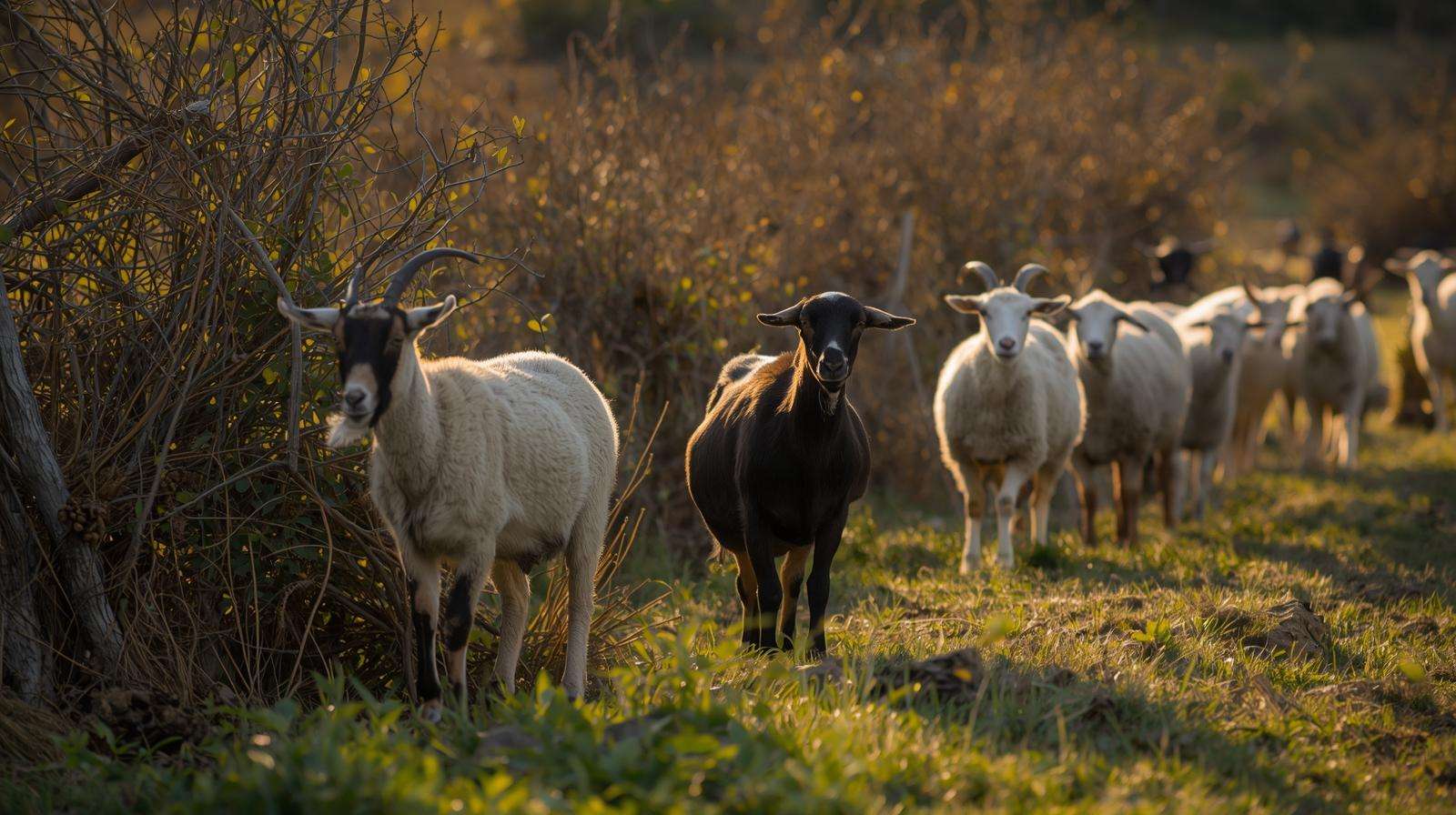
Running goats and sheep together maximizes land use.
4.1 Leader-Follower Grazing (Sheep After Goats or Vice Versa)
- Goats first: clear brush → sheep follow: graze regrowth
- Parasite interruption: goats eat higher, sheep lower → breaks cycles
4.2 Seasonal Splitting Strategies
- Spring: sheep on grass
- Summer/fall: goats on brush regrowth
4.3 When Mixed Flocks Make Sense (and When They Don’t)
- Sense: diverse vegetation, parasite control
- Don’t: very small acreage, fencing challenges
5. Fencing, Predation & Infrastructure Comparison
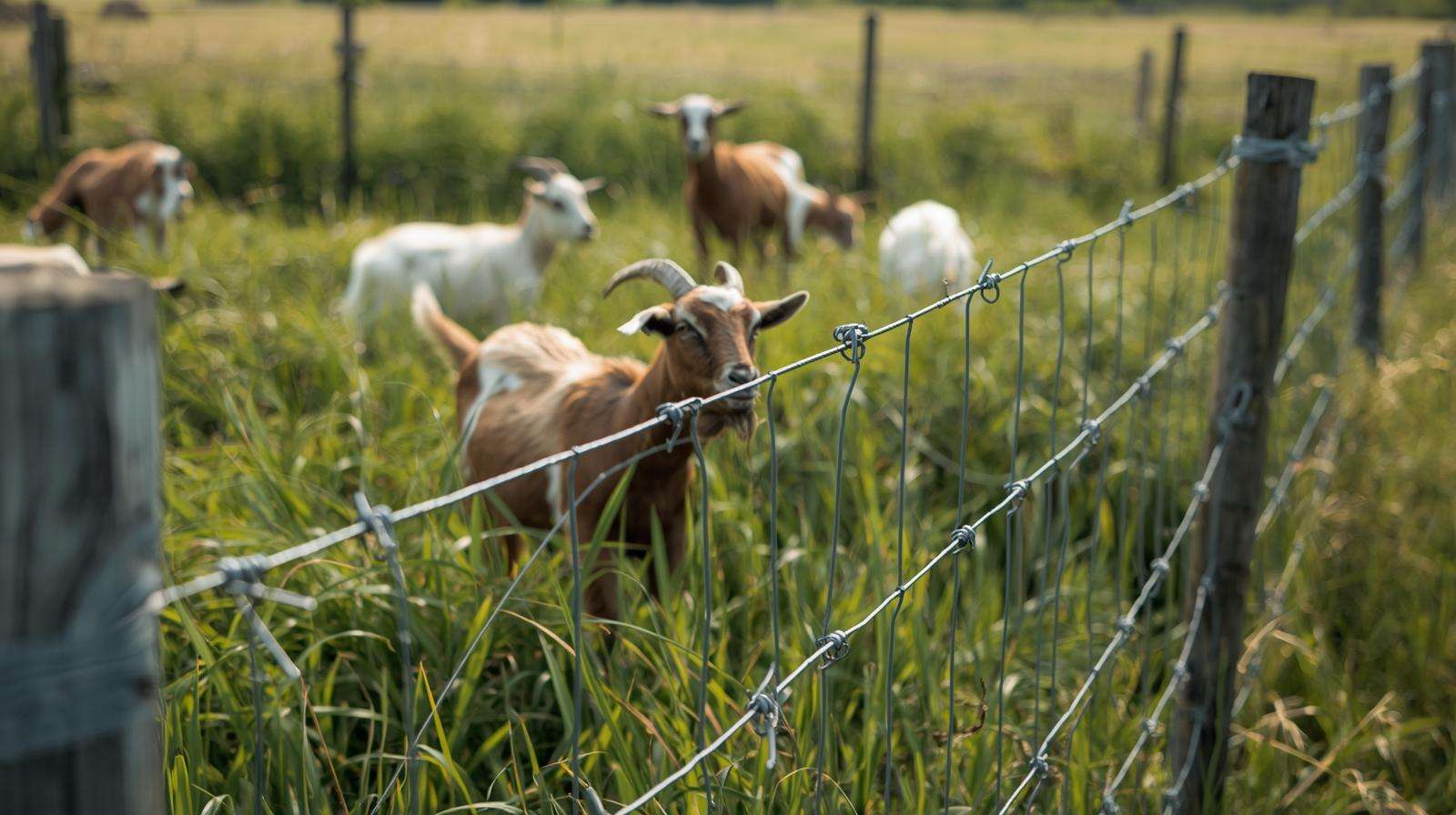
5.1 Fencing Requirements Head-to-Head
- Goats: 5–6 ft high, electric top
- Sheep: 4 ft woven wire usually enough
5.2 Guardian Animal Needs & Effectiveness
- Both benefit from dogs (Great Pyrenees, Anatolian)
- Goats more escape-prone → stronger containment
5.3 Shelter & Winter Housing Differences
- Goats: need wind protection, dry bedding
- Sheep: tolerate cold better (wool)
5.4 Handling & Equipment
- Goats: harder to catch → need good chute
- Sheep: flock together → easier
6. Real Homestead Case Studies
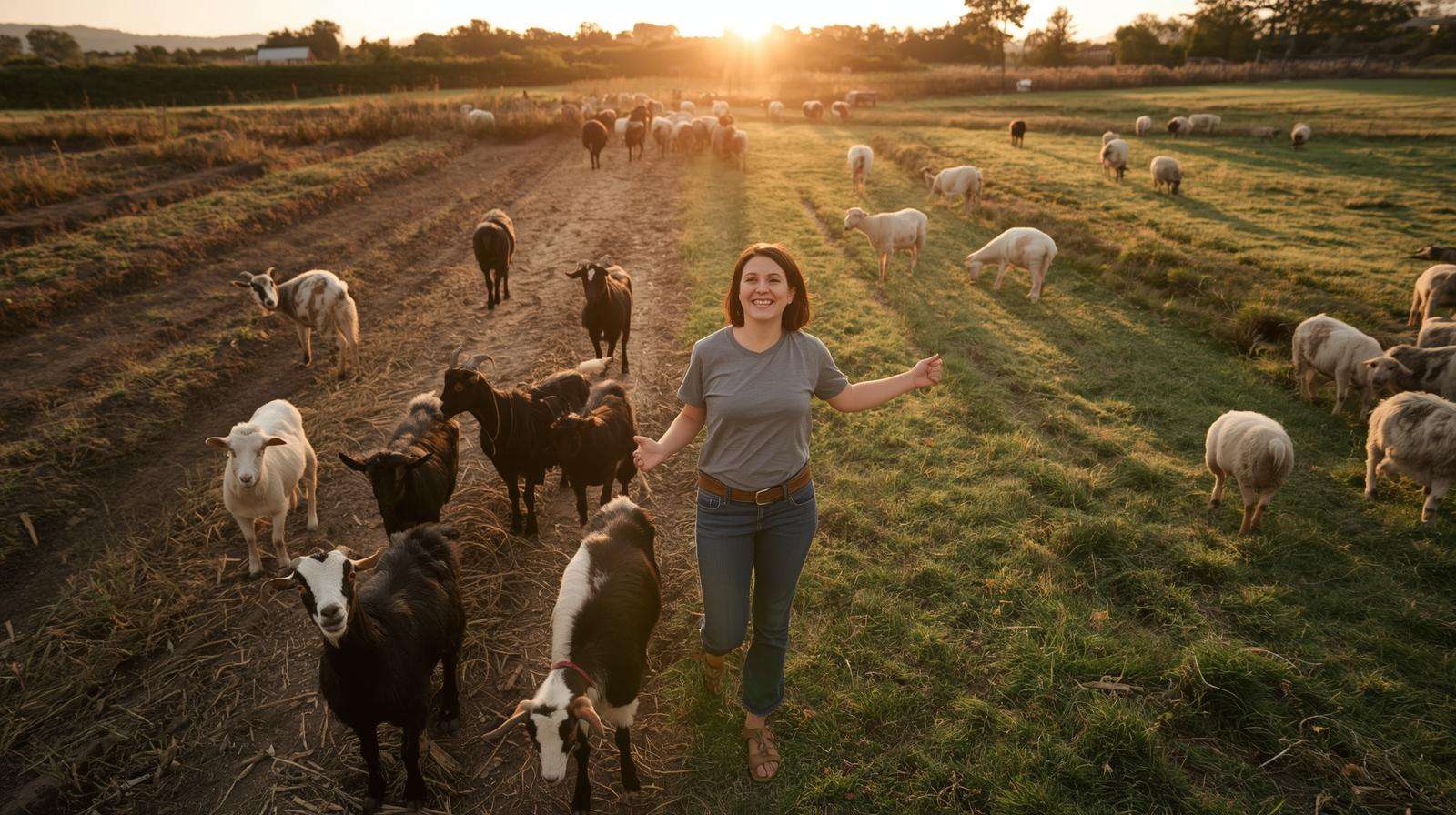
6.1 Brush-Heavy Woodland → Goats Success Story
Before: overgrown, unusable land. After: 5 goats → cleared in 10 months, pasture established.
6.2 Grass-Dominant Pasture → Sheep Success Story
Before: uneven grass. After: 8 sheep → lawn-like pasture, high-quality wool/meat.
6.3 Mixed Vegetation → Rotational Goat+Sheep System
Goats clear brush → sheep graze → land productivity doubled.
Before/after photos, stocking rates, cost & production numbers in download
7. Quick Decision Matrix & Which Animal Fits Your Goals
Printable matrix with weighted scoring for:
→ Brush clearing priority
→ Lawn/pasture maintenance
→ Milk production
→ Meat production
→ Fiber
→ Low labor/fencing
→ Predator pressure
→ Available forage type
8. Top 10 Mistakes New Keepers Make When Choosing Goats vs Sheep
- Choosing goats for grass pasture → overgrazing weeds, not grass
- Choosing sheep for brush → ineffective clearing
- Underestimating fencing for goats → constant escapes
- Ignoring parasite differences → health issues
- Not rotating pastures → land degradation
9. Frequently Asked Questions
- Are goats or sheep better for clearing brush?
Goats — they are natural browsers. - Which is easier to fence and contain?
Sheep — lower jump/climb ability. - Which produces more milk for homestead use?
Goats — higher volume per animal. - Do sheep or goats improve pasture fertility more?
Sheep — more even distribution on grass. - Can I run goats and sheep together?
Yes — rotational or leader-follower works well.
Conclusion & Your 30-Day Decision & Setup Challenge
One choice. Better land. Better products.
30-Day Challenge
- Days 1–10: Assess your land & goals
- Days 11–20: Choose animal(s) + fencing plan
- Days 21–30: Source stock & start management
Your homestead deserves the right ruminant. Choose wisely.