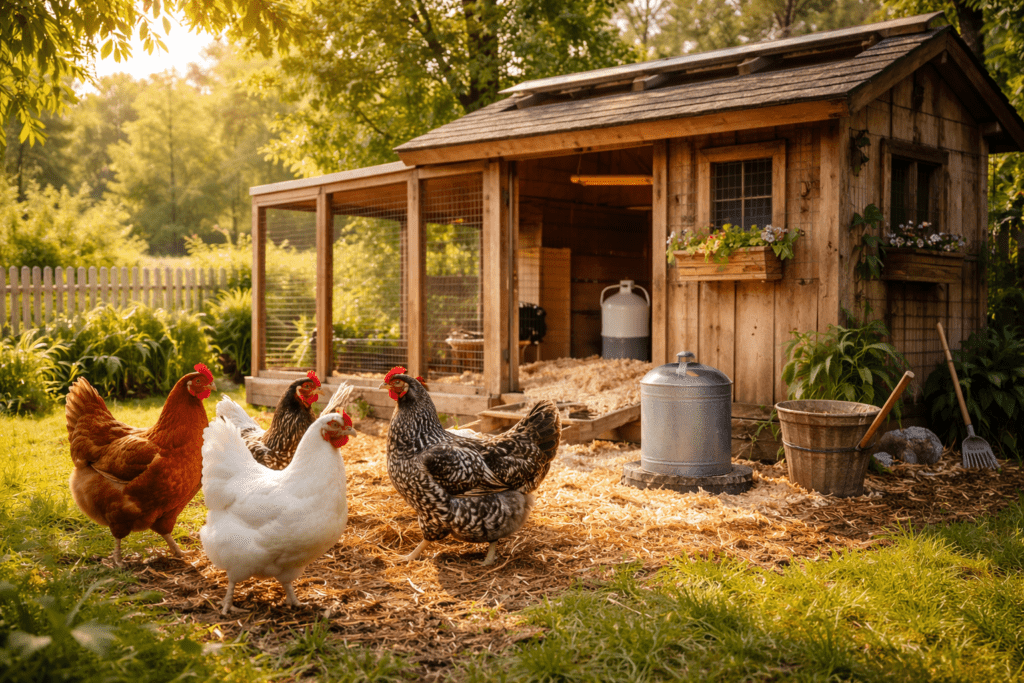
Many chicken keepers spend money on quality feed, supplements, and vaccines—yet still struggle with sick birds, poor egg production, or unexplained losses. The real problem often isn’t the chickens at all. It’s the coop.
A Healthy Chicken Coop is the single most important factor in raising strong, productive, and disease-resistant flocks. Long before illness appears, poor ventilation, damp bedding, overcrowding, and bad design quietly weaken birds day by day.
If you want healthier chickens, cleaner eggs, fewer vet bills, and better productivity, this guide will show you exactly how to build and maintain a coop that supports chicken health year-round. Whether you keep five backyard hens or manage a larger flock, the principles are the same—and they work.
What Makes a Chicken Coop Truly Healthy?
Many people assume a healthy coop simply means “clean.” In reality, cleanliness is only one part of a much bigger picture.
Defining a Healthy Chicken Coop (Expert Perspective)
From a poultry health standpoint, a healthy coop is one that:
-
Maintains clean air quality
-
Stays dry and well-ventilated
-
Prevents disease and parasites
-
Reduces stress and aggressive behavior
-
Supports consistent egg production
A coop can look tidy and still be unhealthy if airflow is poor or moisture is trapped inside.
Common Myths About Chicken Coop Health
Let’s clear up a few dangerous misconceptions:
-
“If it doesn’t smell bad, it’s fine.”
Ammonia damage often begins before strong odors appear. -
“More insulation is always better.”
Insulation without ventilation traps moisture and gases. -
“Ventilation causes chickens to get cold.”
Drafts cause cold stress; proper ventilation does not.
Understanding these myths helps prevent long-term health problems.
How an Unhealthy Coop Affects Chicken Health and Productivity
A poorly designed or maintained coop creates the perfect environment for disease and stress.
Diseases Linked to Poor Coop Conditions
Unhealthy coops are strongly associated with:
-
Respiratory infections (from ammonia and dust)
-
Coccidiosis (from damp bedding)
-
Mold and fungal infections
-
External parasites like mites and lice
These problems rarely appear overnight—they build slowly due to environmental stress.
Behavioral and Productivity Problems
Even before illness shows up, chickens in unhealthy coops often display:
-
Increased aggression and feather pecking
-
Reduced egg laying
-
Poor feed conversion
-
Slow growth in young birds
Healthy housing supports both physical health and natural behavior.
Healthy Chicken Coop Design: Getting the Basics Right
A healthy coop starts with smart design choices—not expensive materials.
Choosing the Right Location for Your Coop
Location matters more than many people realize.
Best practices:
-
Place the coop on slightly elevated ground to prevent flooding
-
Avoid low, damp areas
-
Allow morning sunlight to dry moisture
-
Position away from standing water and heavy shade
Dry ground is the foundation of a disease-free environment.
Coop Size and Space Requirements
Overcrowding is one of the most common causes of coop-related health problems.
Minimum space guidelines:
-
Inside coop: 3–4 sq ft per chicken
-
Outdoor run: 8–10 sq ft per chicken
Crowded chickens produce more waste, more moisture, and more stress—all enemies of a healthy coop.
Ventilation: The Most Critical (and Most Ignored) Factor
If poultry experts had to choose one feature that defines a healthy chicken coop, it would be ventilation.
Why Proper Ventilation Is Essential
Chickens produce moisture and ammonia every day through breathing and droppings. Without ventilation:
-
Moisture builds up
-
Ammonia damages lungs and eyes
-
Bacteria and mold thrive
Even in winter, fresh air is non-negotiable.
How to Ventilate Without Causing Drafts
Drafts occur at chicken level. Ventilation should happen above the birds.
Best ventilation design:
-
High vents near the roof
-
Ridge vents or gable vents
-
Covered openings to block rain and snow
Air should flow out, not blow directly onto chickens.
Ventilation Guidelines by Climate
-
Hot climates: Large openings, cross-ventilation, shaded airflow
-
Cold climates: Smaller but continuous airflow, never sealed tight
-
Mixed climates: Adjustable vents or windows
Good ventilation adapts with the seasons.
Flooring, Bedding, and Waste Management
The coop floor and bedding directly affect moisture, odor, and disease risk.
Best Flooring Options for a Healthy Chicken Coop
Each option has pros and cons:
-
Dirt floors: Natural drainage but harder to sanitize
-
Wood floors: Easy to clean but must stay dry
-
Concrete: Durable and sanitary but cold without bedding
The key is moisture control, regardless of material.
Bedding Materials Compared
Common bedding choices include:
-
Pine shavings: Excellent absorption and odor control
-
Straw: Cheap but traps moisture
-
Sand: Easy cleaning but poor insulation
-
Deep litter method: Effective if managed correctly
Pine shavings are often the best all-around option for beginners.
Managing Moisture and Odor
A healthy coop should smell like wood—not ammonia.
Key strategies:
-
Add bedding regularly
-
Remove wet spots immediately
-
Avoid water spills
-
Improve ventilation before adding more bedding
Ammonia odor means lung damage is already happening.
Nesting Boxes and Roosting Areas: Hygiene Matters
Clean eggs and healthy feet start with proper interior design.
Proper Nest Box Design for Clean Eggs
Best practices:
-
1 nesting box per 4–5 hens
-
Place boxes lower than roosts
-
Use clean, dry bedding
-
Keep boxes slightly dark and private
Dirty nesting boxes lead to dirty eggs and higher bacterial risk.
Roost Design for Health and Comfort
Healthy roosts:
-
Are 2–4 inches wide
-
Have rounded edges
-
Allow 8–10 inches per bird
-
Are placed higher than nesting boxes
Poor roost design can cause foot injuries and breast bone damage.
Cleaning and Disinfection: Building a Sustainable Routine
Cleaning should be consistent—not exhausting.
Daily, Weekly, and Monthly Cleaning Tasks
Daily:
-
Check waterers
-
Remove obvious wet bedding
-
Observe bird behavior
Weekly:
-
Refresh nesting boxes
-
Stir bedding
-
Inspect for pests
Monthly:
-
Deep clean surfaces
-
Check ventilation openings
-
Replace heavily soiled bedding
Routine maintenance prevents major outbreaks.
Safe Cleaning Products for Chicken Coops
Use:
-
Mild soap
-
Vinegar solutions
-
Poultry-safe disinfectants
Avoid:
-
Bleach fumes in enclosed spaces
-
Harsh chemical cleaners
-
Strong fragrances
Chickens have sensitive respiratory systems.
Disinfection After Disease or New Birds
When disease occurs:
-
Remove birds temporarily
-
Clean thoroughly
-
Disinfect all surfaces
-
Allow the coop to dry completely
Quarantine new birds for at least 2–4 weeks before introduction.
Biosecurity: Protecting Your Healthy Chicken Coop
Even the best-designed coop can become unhealthy if disease is introduced from outside. Biosecurity is often overlooked by backyard keepers, yet it plays a critical role in maintaining a healthy chicken coop.
Preventing Disease Introduction
The most common ways disease enters a coop include:
-
New birds
-
Shared equipment
-
Visitors who keep poultry elsewhere
Best biosecurity practices:
-
Quarantine new birds for 2–4 weeks
-
Wash hands and change footwear before coop access
-
Avoid sharing feeders, crates, or tools
-
Limit unnecessary visitors to your flock
Simple precautions dramatically reduce disease risk.
Pest and Predator Control
Rodents and insects spread disease and contaminate feed.
Key control measures:
-
Store feed in sealed containers
-
Repair holes and gaps in coop walls
-
Use hardware cloth instead of chicken wire
-
Remove spilled feed daily
A pest-free coop stays cleaner and healthier.
Climate Control Inside a Healthy Chicken Coop
Climate stress weakens immune systems, even in otherwise healthy birds.
Managing Heat Stress
In hot weather, your coop should focus on cooling without increasing humidity.
Effective heat management strategies:
-
Maximize shade
-
Increase ventilation
-
Provide constant fresh water
-
Freeze water bottles for extreme heat
-
Avoid overcrowding
Heat stress kills faster than cold in most climates.
Managing Cold Stress
Cold is less dangerous than moisture and drafts.
Cold-weather best practices:
-
Insulate walls but never block airflow
-
Use deep litter for natural heat
-
Seal drafts at bird level
-
Apply petroleum jelly to combs in extreme cold
Dry air and clean bedding protect birds better than heaters.
Healthy Coop Lighting and Its Impact on Chickens
Light affects laying cycles, behavior, and stress levels.
Natural vs Artificial Lighting
Natural daylight is best. Artificial lighting can help in winter—but must be used carefully.
Guidelines:
-
Limit total light to 14–16 hours per day
-
Use low-wattage bulbs
-
Avoid sudden light changes
Over-lighting causes stress and reproductive issues.
Lighting Best Practices
-
Use timers for consistency
-
Position lights safely away from bedding
-
Choose warm-toned bulbs
Proper lighting supports productivity without harming health.
Signs Your Chicken Coop Is Healthy (or Not)
Chickens are excellent indicators of their environment.
Positive Signs of a Healthy Chicken Coop
-
Clean, fresh-smelling air
-
Dry bedding
-
Bright eyes and active behavior
-
Consistent egg production
-
Minimal illness
A healthy coop feels comfortable—not stuffy or damp.
Warning Signs of an Unhealthy Coop
-
Strong ammonia smell
-
Wet or caked bedding
-
Sneezing or coughing birds
-
Pale combs
-
Increased aggression or feather loss
Address these signs immediately to prevent serious problems.
Common Mistakes That Prevent a Healthy Chicken Coop
Even well-intentioned keepers make these errors:
-
Overcrowding “just one more bird”
-
Blocking ventilation in winter
-
Infrequent cleaning
-
Ignoring seasonal changes
-
Treating illness without fixing the environment
Most health issues return unless the root cause is corrected.
Expert Tips from Experienced Poultry Keepers
Seasoned poultry keepers focus on prevention, not reaction.
Proven expert advice:
-
Design for airflow first, insulation second
-
Keep coops dry at all costs
-
Observe birds daily—they tell you everything
-
Improve one thing at a time
Small changes often produce big improvements.
Frequently Asked Questions (FAQ)
How Often Should I Clean a Chicken Coop?
Spot-clean daily, refresh weekly, and deep-clean monthly. Adjust based on flock size and weather.
Can a Coop Be Too Ventilated?
Yes—if airflow creates drafts at bird level. Proper ventilation removes moisture without chilling birds.
What’s the Best Bedding for a Healthy Chicken Coop?
Pine shavings are the most balanced option for moisture control, comfort, and cleanliness.
Do Backyard and Commercial Coops Have Different Standards?
The principles are identical—only scale changes. Clean air, dry bedding, and space are universal.
How Do I Keep a Coop Healthy Year-Round?
Adapt ventilation, bedding, and cleaning routines with the seasons. Consistency is key.
Final Verdict: Building and Maintaining a Healthy Chicken Coop
A healthy chicken coop is not complicated—but it must be intentional. When airflow, dryness, space, and cleanliness work together, chickens thrive naturally.
Key Takeaways:
-
Ventilation matters more than temperature
-
Dryness prevents most diseases
-
Space reduces stress and aggression
-
Routine maintenance beats emergency treatment
Investing in a healthy coop pays off in fewer losses, better production, and happier birds.
Bonus: Healthy Chicken Coop Checklist
Before Building or Upgrading
-
Proper location and drainage
-
Adequate space per bird
-
High-level ventilation
-
Predator-proof construction
Weekly Health Maintenance Checklist
-
Check airflow
-
Inspect bedding
-
Clean waterers
-
Observe flock behavior
Closing Thoughts from a Poultry Expert
The healthiest flocks are not the result of luck—they’re the result of good housing decisions made early and maintained consistently. A healthy chicken coop protects your birds every hour of every day, even when you’re not there.
By applying the principles in this guide, you’ll create an environment where chickens can express natural behaviors, resist disease, and reward you with strong performance year after year.